Why is my cat panting? Here’s the most important thing to know first: unlike dogs, cats don’t pant to cool down under normal circumstances. A dog panting is routine. A cat panting is not.
While some causes are harmless, panting in a cat is far more likely to signal a real problem than it is in a dog. The key is telling the harmless kind from the kind that means go to the vet now.
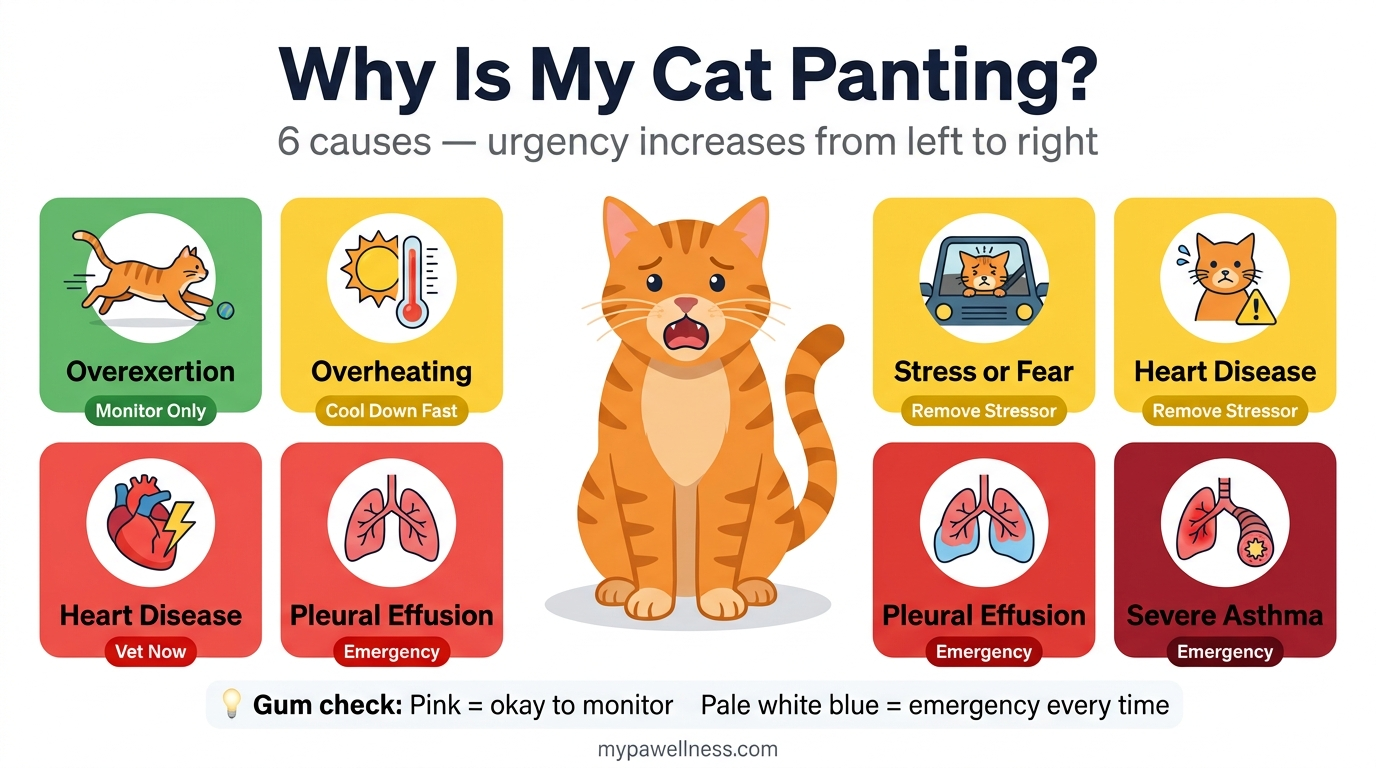
Brief panting right after intense play or in genuine heat, that stops within a few minutes while your cat rests, is usually not an emergency. Panting at rest, panting that doesn’t quickly settle, open-mouth breathing with visible effort, or panting with pale or blue gums is a medical emergency — go to the vet immediately. Cats don’t pant casually the way dogs do, so any panting is worth paying close attention to.
- Panting while at rest, with no heat or exercise to explain it
- Open-mouth breathing that doesn’t stop within a few minutes
- Breathing with visible effort — belly heaving, sides pulling in hard
- Showing pale, white, grey, or blue-tinged gums or tongue
- Panting alongside lethargy, collapse, or not eating
- Breathing fast and open-mouthed together
Panting at rest in a cat can mean heart disease, fluid around the lungs, asthma, or another serious problem restricting oxygen. This is one of the situations where waiting to “see if it passes” is genuinely dangerous. Call ahead and go.
Normal vs Concerning Panting
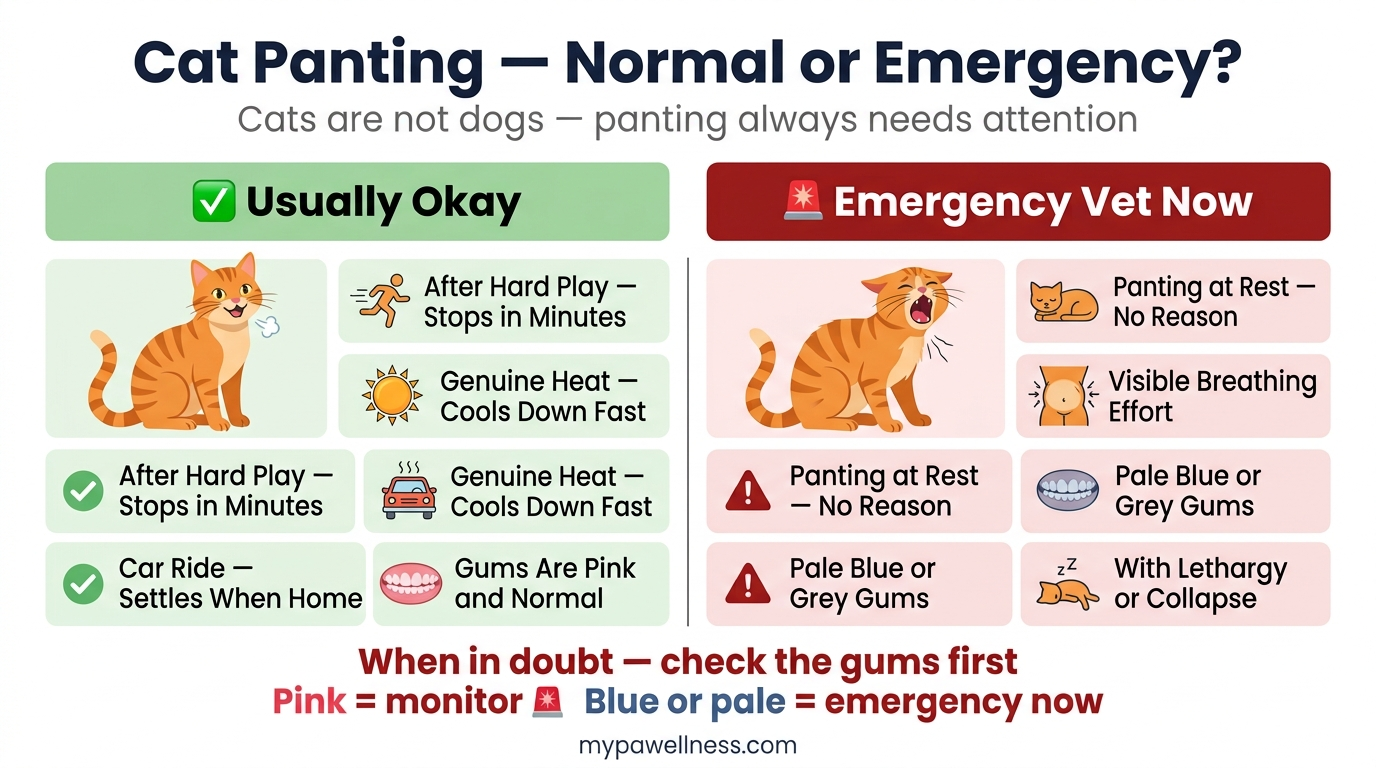 The single most useful thing you can do is judge the panting against two questions: is there an obvious reason (heat or exertion), and does it stop quickly when your cat rests? This table sorts it out:
| What You See | What It Suggests | Action |
|---|---|---|
| Brief panting after hard play, stops within minutes of resting | Overexertion — usually harmless | Let the cat rest; monitor |
| Panting in a genuinely hot room, settles once cooled | Overheating — provide cool water and shade | Cool the environment; monitor |
| Panting during a stressful event (car, vet), stops when it ends | Stress response | Remove the stressor; monitor |
| Panting at rest, no heat or exercise | Possible heart, lung, or airway problem | 🚨 Vet immediately |
| Open-mouth breathing with visible effort | Respiratory distress | 🚨 Vet immediately |
| Panting with pale, grey, or blue gums | Oxygen deprivation | 🚨 Emergency vet now |
| Frantic gasping with gagging or pawing at the mouth | Possible airway obstruction | 🚨 Emergency vet now |
| Panting plus coughing, wheezing, or lethargy | Asthma, infection, or systemic illness | Vet same day |
When Panting Is Probably Okay
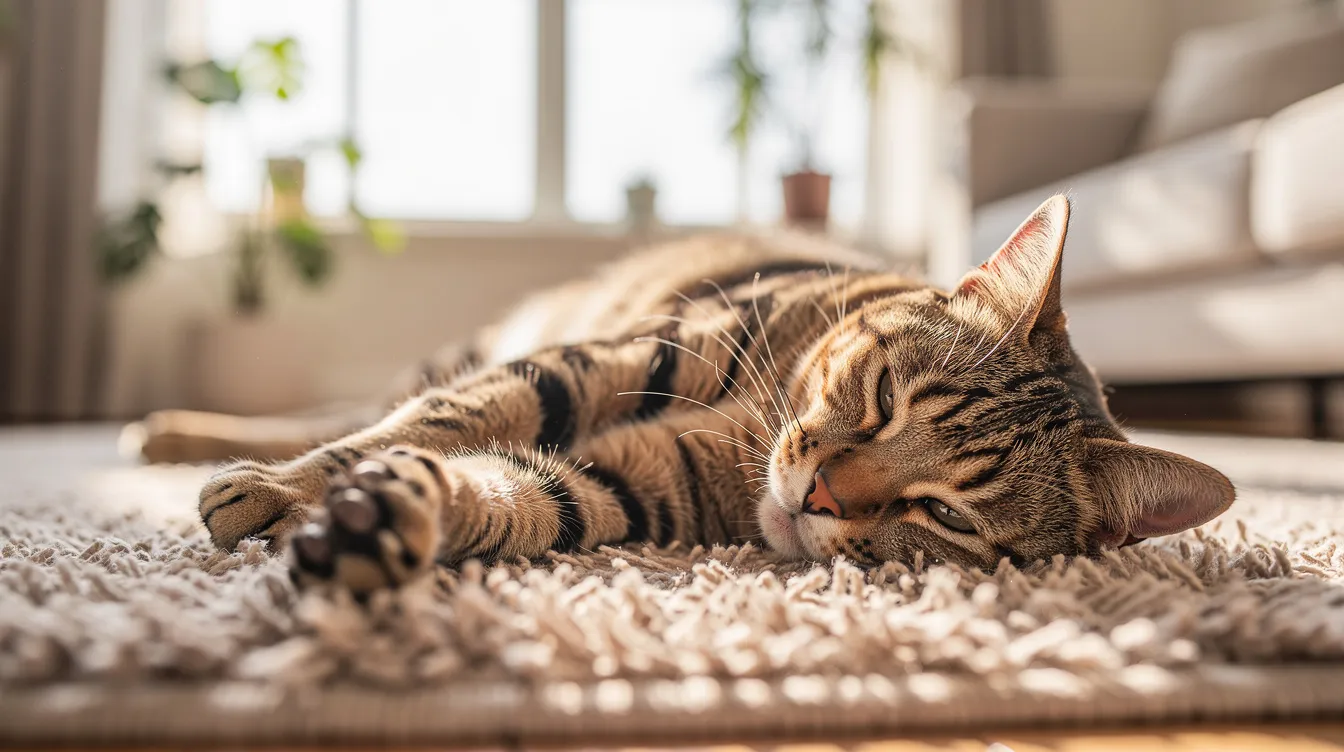 There are a few situations where brief panting in a cat isn’t cause for alarm, as long as it resolves quickly:
- After intense play or running around — an energetic burst can leave a cat briefly panting, the same way a sprint leaves you breathing hard. It should settle within a few minutes of stopping.
- In real heat — cats don’t sweat like humans, so in a genuinely hot room or on a hot day they may pant a little to cool down. It’s a less efficient system than a dog’s, and it should stop once they’re somewhere cooler with water.
- During a stressful moment — a car ride, a vet visit, or a frightening event can trigger stress panting that eases once the stressor is gone.
The common thread: there’s an obvious trigger, and the panting stops fairly quickly once the trigger is removed. If your cat is panting for no clear reason, or the panting keeps going after they’ve rested and cooled down, that moves it out of the “probably okay” category.
When Panting Is an Emergency
Because cats don’t pant casually, panting without an obvious harmless trigger is treated as a potential emergency until proven otherwise. Take it seriously — and act quickly — when panting comes with any of these:
- It happens at rest — no heat, no exercise, no stress to explain it
- It doesn’t stop — panting that continues well past when the cat has calmed and cooled
- Visible effort — the belly heaving, the sides pulling in hard with each breath, or the head and neck extended to breathe
- Abnormal gum colour — pale, white, grey, or blue instead of healthy pink
- Other symptoms alongside it — lethargy, collapse, refusing food, coughing, or wheezing
The reason for the urgency is what’s usually behind rest panting: heart disease, fluid building up around the lungs, a severe asthma attack, or another condition limiting how much oxygen your cat is getting. These deteriorate fast and need veterinary treatment, not home monitoring.
If you’re weighing whether it’s an emergency, treat it as one — the cost of an unnecessary vet visit is far smaller than the cost of waiting on a cat that can’t breathe.
Related: Why Is My Cat Breathing Fast — how to count breathing rate, another key sign that something’s wrong.
What Causes Panting in Cats
Overexertion
The most benign cause. A burst of hard play or running can leave a cat briefly panting. It resolves within a few minutes of rest and needs no action beyond letting them settle.
Heat
Cats cool themselves far less efficiently than dogs and don’t pant readily, so panting from heat suggests they’re genuinely too warm. Move them somewhere cool, offer water, and watch that it settles. Panting that doesn’t stop once cooled — or signs like drooling, wobbliness, or a very warm body — can mean heatstroke, which is an emergency.
Stress or anxiety
Fear and stress — a car ride, a vet trip, a frightening noise, a new environment — can trigger panting that eases once the cat calms down. It’s real, but it should be short-lived and tied to an obvious cause.
Heart disease
One of the serious causes, and a common reason for panting at rest. Conditions like hypertrophic cardiomyopathy can lead to fluid around or in the lungs, making a cat pant or breathe with an open mouth. This is a leading reason rest panting is treated as an emergency. Related: Why Is My Cat Breathing Fast covers the cardiac connection in more depth.
Asthma and respiratory disease
Feline asthma, infections, and other airway problems can cause panting, wheezing, coughing, and open-mouth breathing. An asthma attack in particular can escalate quickly and needs prompt veterinary care.
Pain
A cat in significant pain may pant as a stress response, even without heat or exertion. If panting appears alongside hiding, reluctance to move, or sensitivity to touch, pain is worth investigating.
Airway obstruction
Something lodged in the throat or airway — a piece of toy, a bone fragment, or a stuck hairball — can cause frantic open-mouth gasping that looks like panting. Signs include gagging, pawing at the mouth, and obvious distress. This is an immediate emergency: don’t attempt to remove a deep object yourself, and go to the vet straight away.
Anemia
When red blood cells are low, the body struggles to carry enough oxygen, and a cat may pant or breathe fast to compensate. Pale gums alongside panting is a strong pointer toward anemia and is an emergency.
Why Is My Cat Panting in the Car?
Car panting is almost always stress. Cats are territorial and a car ride removes them from their safe space into a moving, unfamiliar, loud environment — their heart rate rises, and panting can follow. It usually eases once the journey ends and they’re back somewhere secure.
To reduce it: let your cat get familiar with the carrier at home before travel days, cover the carrier to reduce visual stimulation, and consider a calming pheromone spray for longer trips. That said, watch for the line between stress and something worse — if the panting comes with drooling, collapse, or doesn’t settle after the ride, that’s a vet call, not just travel nerves.
Why Is My Cat Panting After Playing?
A short bout of panting after an intense play session is the most likely cause to be harmless — an energetic cat can genuinely wind themselves, especially kittens and high-drive cats. It should stop within a few minutes of resting.
The thing to watch is recovery. Panting that lingers well after your cat has stopped and settled, or a cat that seems to tire far too easily from mild play, isn’t normal exertion — it can be an early sign of a heart or respiratory problem, and it’s worth a vet check. Healthy cats recover their breath quickly; a slow or incomplete recovery is the signal.
Why Is My Cat Panting With the Mouth Open?
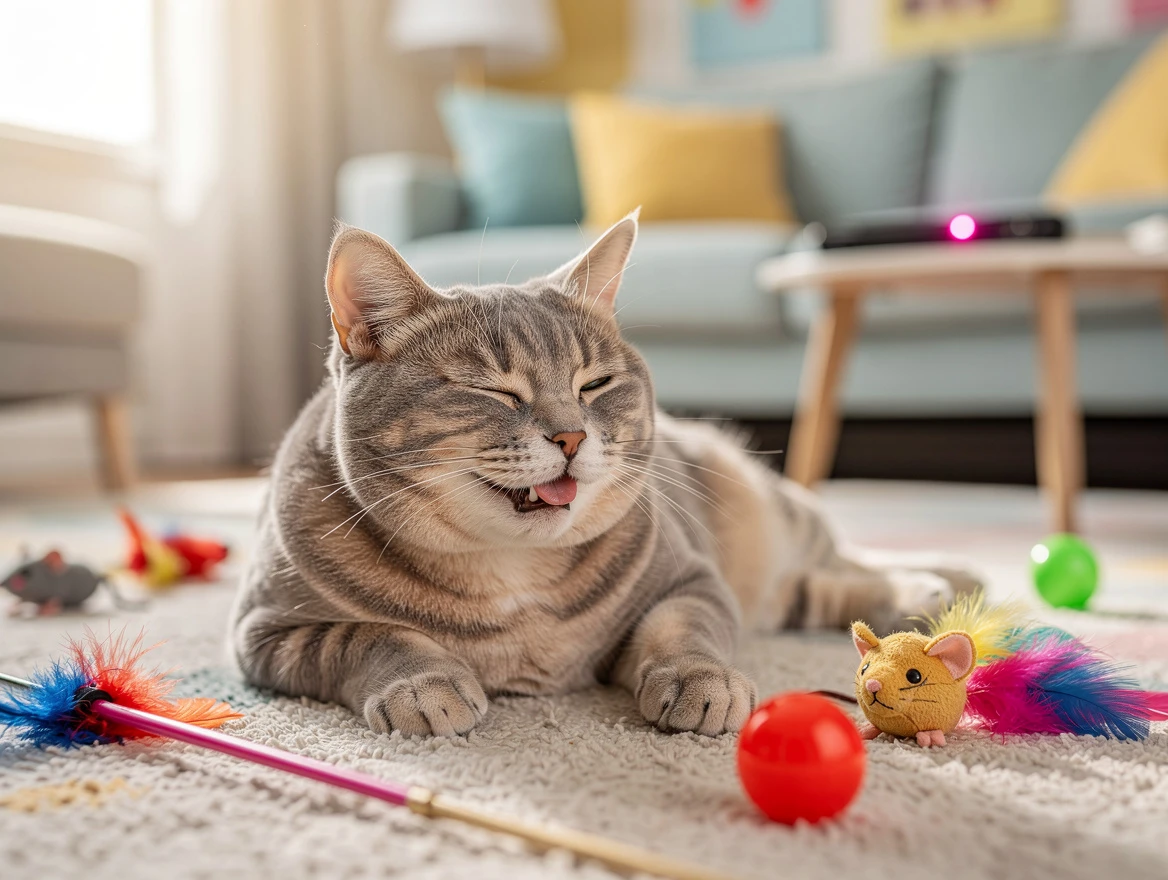 Open-mouth breathing is more concerning than nose breathing, because cats are obligate nose-breathers under normal conditions — they breathe through the mouth mainly when they can’t get enough air through the nose, or when they’re in distress.
Brief open-mouth panting right after hard play or in heat, that resolves quickly, follows the same rules as any exertion panting. But open-mouth breathing at rest, or that doesn’t settle, is a red flag for respiratory or heart trouble and should be treated as an emergency. If your cat is breathing open-mouthed and you can’t tie it to obvious heat or exertion, go to the vet.
If the open-mouth breathing comes alongside a hoarse or lost meow rather than laboured breathing, that points somewhere different — see Laryngitis in Cats, which covers inflammation of the voice box and how to tell it apart from a breathing problem.
When It’s Not Actually Panting
One thing owners often mistake for panting: the flehmen response. This is when a cat opens its mouth slightly, curls back the upper lip, and appears to grimace after sniffing something — a food bowl, another animal’s scent, a new object. It looks a bit like panting or gaping, but it’s completely normal. The cat is using a scent organ on the roof of the mouth to “taste” a smell more deeply.
The difference: the flehmen response is brief, deliberate, and tied to sniffing something interesting, with no laboured breathing. True panting is rapid, repeated open-mouth breathing. If your cat only “pants” for a second or two right after investigating a smell, and is otherwise breathing normally, that’s flehmen — nothing to worry about.
What a Vet Does
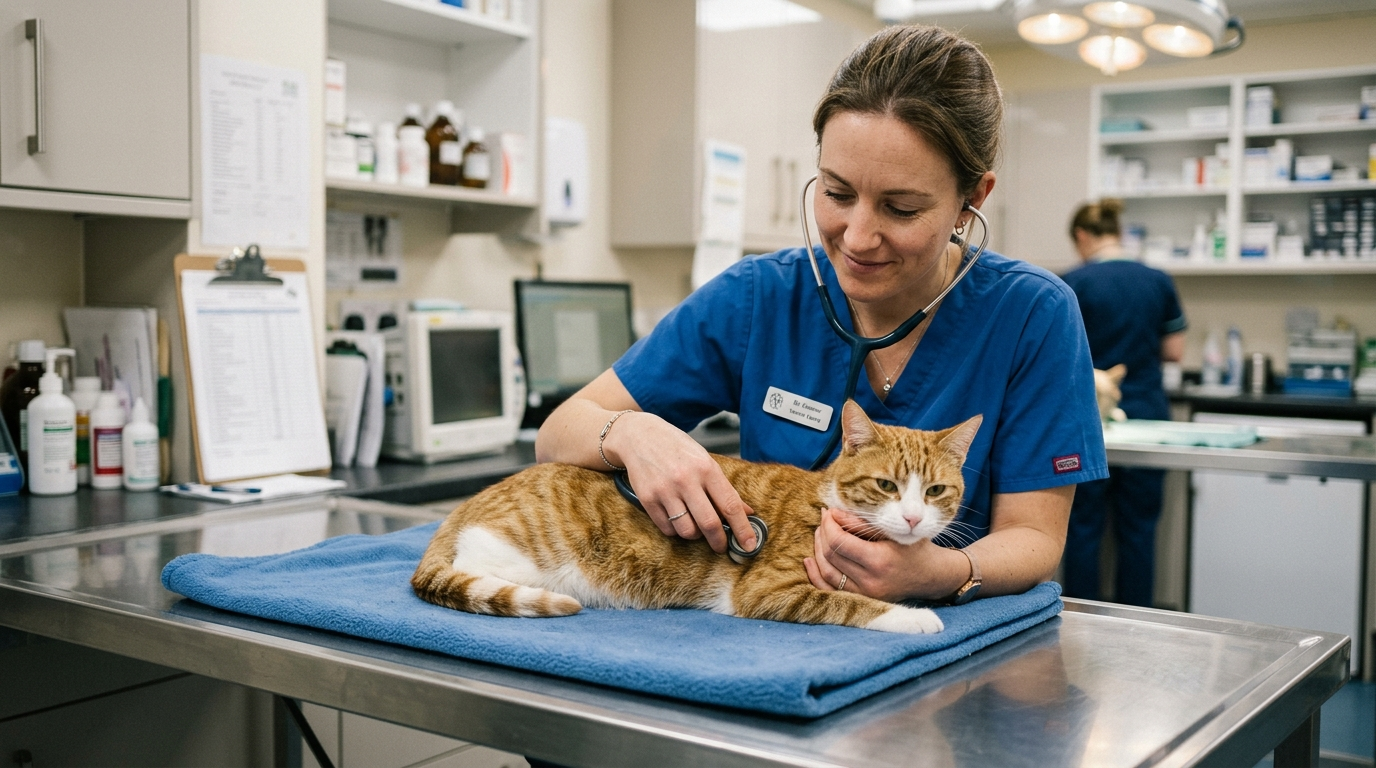 If panting isn’t clearly explained by heat or exercise, a vet’s job is to find out why — and because the serious causes affect the heart and lungs, that’s where they look first:
- Immediate assessment — checking gum colour, breathing effort, and heart and lung sounds; a cat in respiratory distress may be given oxygen before anything else
- Imaging — X-rays or ultrasound to look for fluid around the lungs, heart enlargement, or airway problems
- Blood tests — to check for anemia, organ function, and signs of systemic illness
- Treatment matched to the cause — this varies enormously depending on whether it’s heart disease, asthma, pain, or something else, which is exactly why panting needs a real diagnosis rather than home guesswork
Bring any detail you can: when the panting started, how long it lasts, what your cat was doing, and any other symptoms. That history genuinely helps the vet narrow things down.
Frequently Asked Questions
Not in the way it’s normal for dogs. Brief panting after intense play or in real heat can be normal if it stops quickly. But cats don’t pant casually to cool down, so panting — especially at rest or without an obvious trigger — is usually a sign to pay close attention, and often a reason to see a vet.
Worry when panting happens at rest, doesn’t stop within a few minutes, comes with visible breathing effort, or is paired with pale or blue gums, lethargy, or not eating. Any of those means an emergency vet visit. Panting with a clear trigger (play, heat) that resolves quickly is far less concerning.
Cats don’t pant to cool down the way dogs do, so a cat “panting like a dog” is more significant than it looks. If it’s brief and follows hard play or heat, it may be harmless. If it’s happening at rest or won’t settle, it can point to a heart or respiratory problem and needs a vet.
Yes — fear and stress from a car ride, vet visit, or frightening event can trigger panting that eases once the cat calms. The key is that it’s tied to an obvious stressor and short-lived. Stress panting that doesn’t settle, or comes with other symptoms, still warrants a vet check.
Yes. Excess weight puts extra load on the chest and diaphragm, so an overweight cat has to work harder to breathe and may pant after mild activity that wouldn’t affect a lean cat. It’s worth mentioning to your vet, because weight is manageable — but don’t assume weight is the whole explanation, since overweight cats also get heart and respiratory disease.
The flehmen response is a brief, deliberate open-mouth “grimace” right after sniffing something, with no laboured breathing — it’s normal scent behaviour. True panting is rapid, repeated open-mouth breathing. If the mouth-opening only happens for a moment after investigating a smell, it’s flehmen, not panting.
The Bottom Line
Cats aren’t built to pant the way dogs are, so panting always deserves attention. The one distinction that matters most: brief panting with an obvious cause — hard play or real heat — that stops quickly once your cat rests is usually fine. Panting at rest, panting that won’t settle, open-mouth breathing with effort, or pale and blue gums is an emergency.
When in doubt, check the gums and watch the breathing, then err toward the vet. With panting in cats, a quick check that turns out to be nothing is a far better outcome than waiting on a cat that’s struggling to breathe.
Related Articles
How to count breathing rate — the sign that most often reveals a hidden problem.
My Cat Is Lethargic But Eating and Drinking
Panting plus lethargy together is a warning sign.
Signs of Kidney Failure in Cats
Another serious condition worth screening for in an unwell cat.