Why do cats make biscuits on me? If your cat climbs into your lap, starts pushing their paws in and out like they’re kneading dough, and purrs while they do it — that’s one of the clearest signs of trust a cat can give.
The behaviour starts in the first days of kittenhood, and when an adult cat does it on you, they’re treating you the way they once treated their mother.
Here’s what “making biscuits” actually means, why cats choose you to do it on, and what to do when those paws come with claws.
At a Glance: What Your Cat’s Kneading Means
| Reason | What It Looks Like | What It Means for You |
|---|---|---|
| Kittenhood comfort | Slow, rhythmic kneading, often with purring | Your cat feels as safe with you as it did with its mother |
| Contentment | Kneading on your lap before settling down | Your cat is relaxed and happy |
| Scent marking | Pressing paw pads firmly into you or a blanket | Your cat is claiming you as “theirs” |
| Making a bed | Kneading a spot, then turning and lying down | Getting comfortable before a nap |
| Self-soothing | Kneading during a stressful moment | Your cat is calming itself down |
| Stretching | Kneading right after waking up | Loosening paws and front legs |
Cats make biscuits — knead with their paws — because it’s a comfort behaviour left over from nursing, when kittens knead their mother to help milk flow.
When your cat kneads on you, it usually means they feel safe, relaxed, and content with you. Kneading also leaves scent from glands in their paw pads, quietly marking you as theirs. It’s almost always a good sign.
What “Making Biscuits” Means
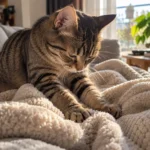
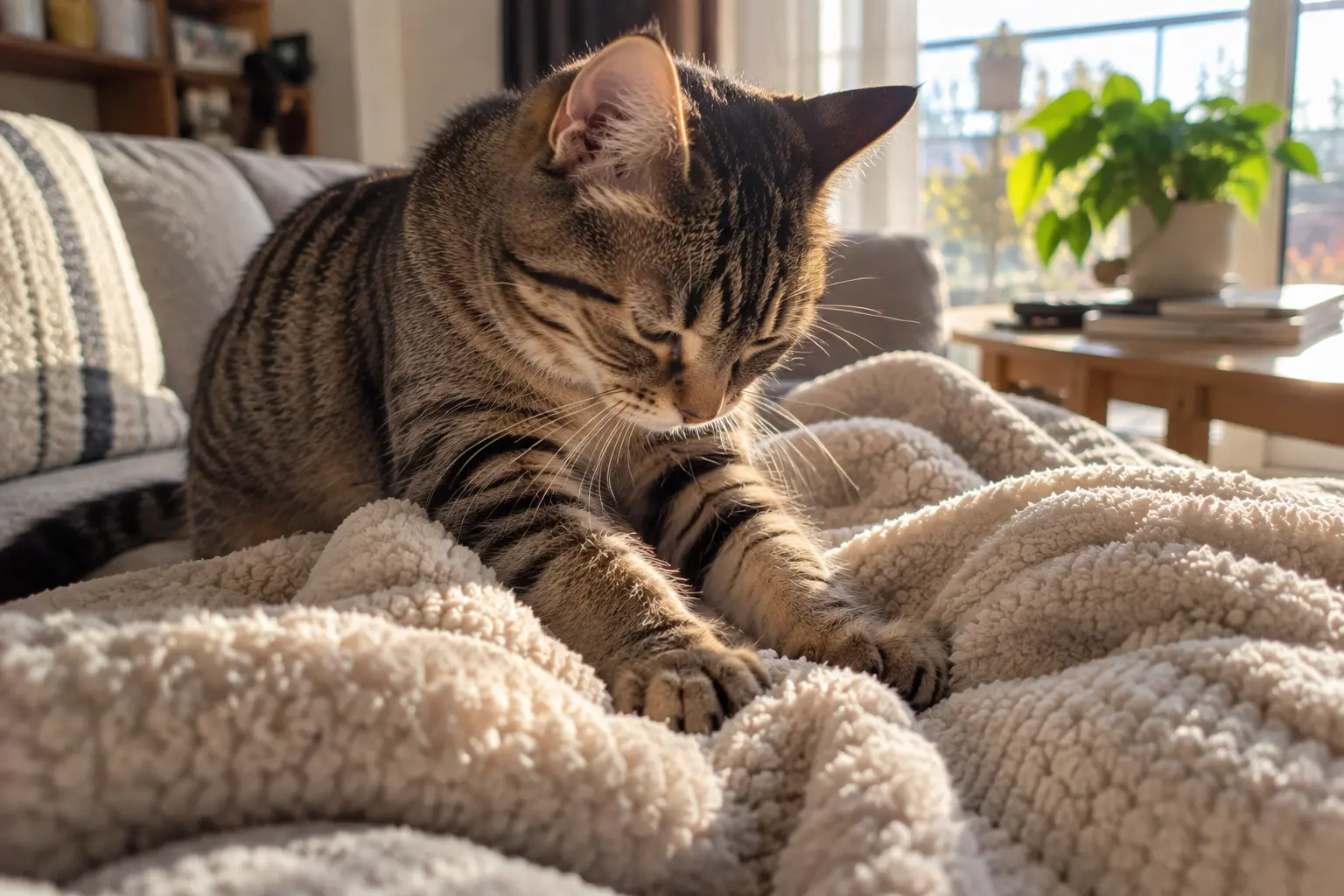
 “Making biscuits” is the popular name for kneading: a cat pushes one front paw down, then the other, in a steady rhythm, often with their claws flexing in and out. It looks exactly like someone kneading bread dough — hence the name.
Cats usually knead on something soft: a blanket, a pillow, a jumper, or you. Many close their eyes, purr, and look almost trance-like while doing it. Some drool a little. All of that is normal and usually means the cat is deeply relaxed.
Some cats even make “air biscuits” — kneading the air while lying on their back or side, paws pumping at nothing. It’s the same comfort behaviour, just without a surface, and it usually shows up when a cat is very relaxed or half asleep.
Why Cats Knead
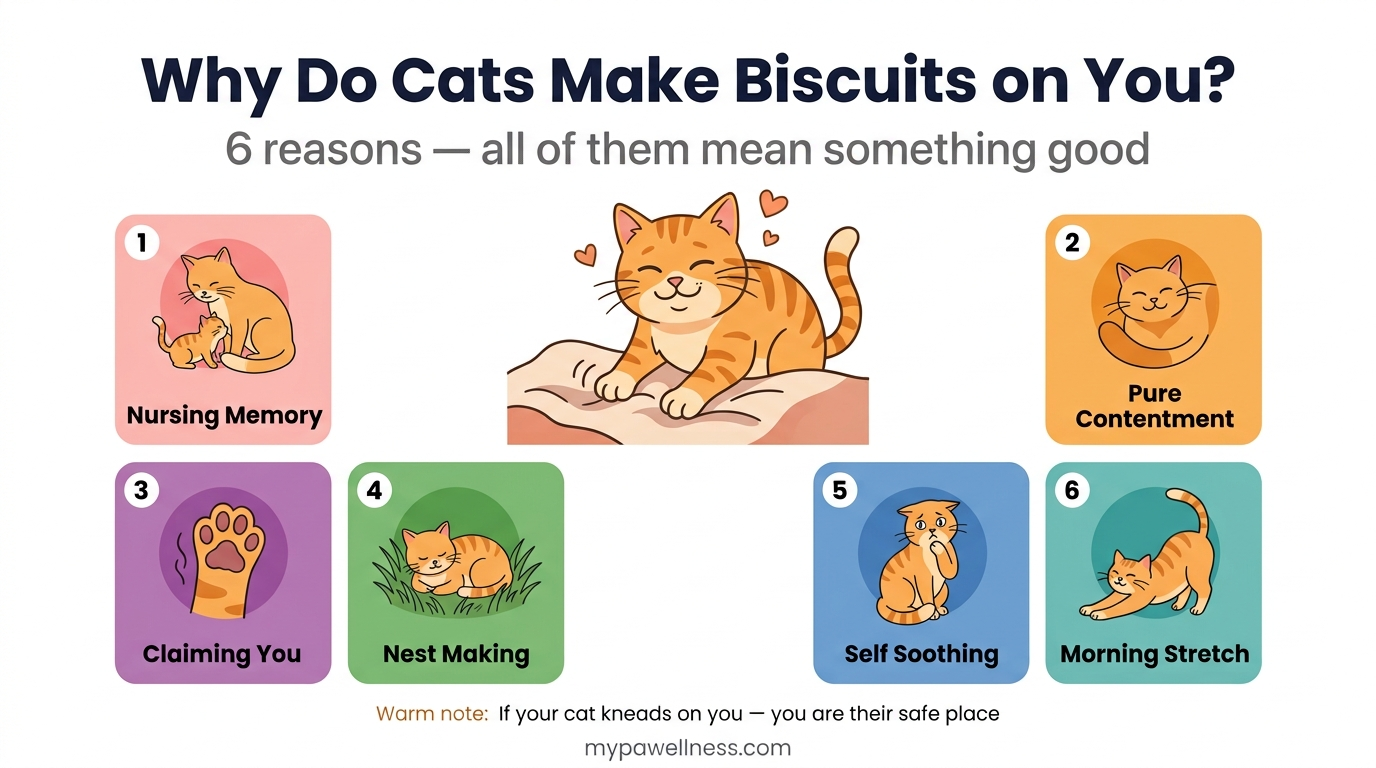 There isn’t one single reason — kneading does several jobs at once. The main ones:
1. It started with nursing
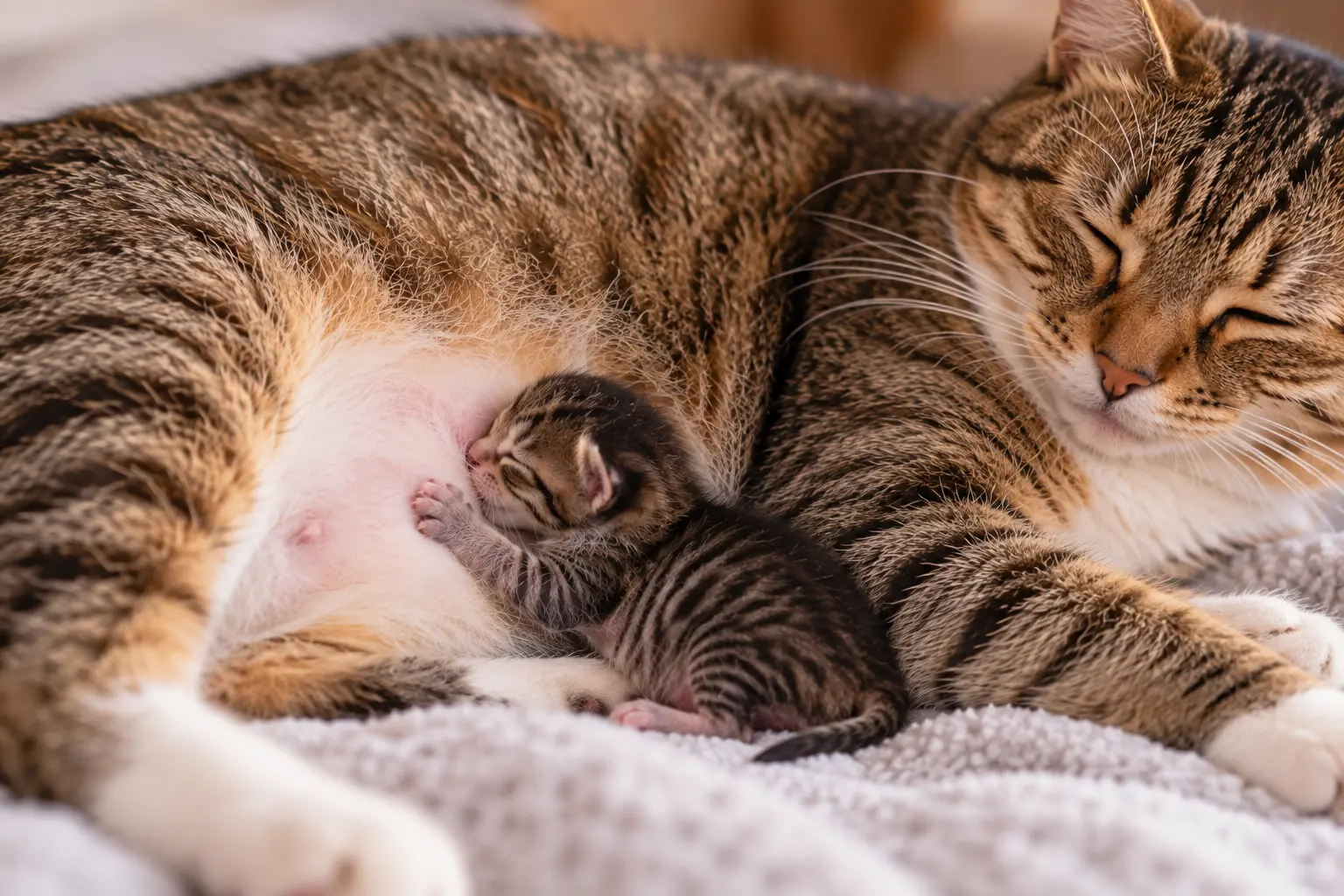 Newborn kittens knead their mother’s belly while they nurse, which helps stimulate milk flow. That rhythm becomes linked with warmth, food, and safety. Many cats keep the behaviour into adulthood as a way of recreating that same feeling of comfort.
2. Contentment and relaxation
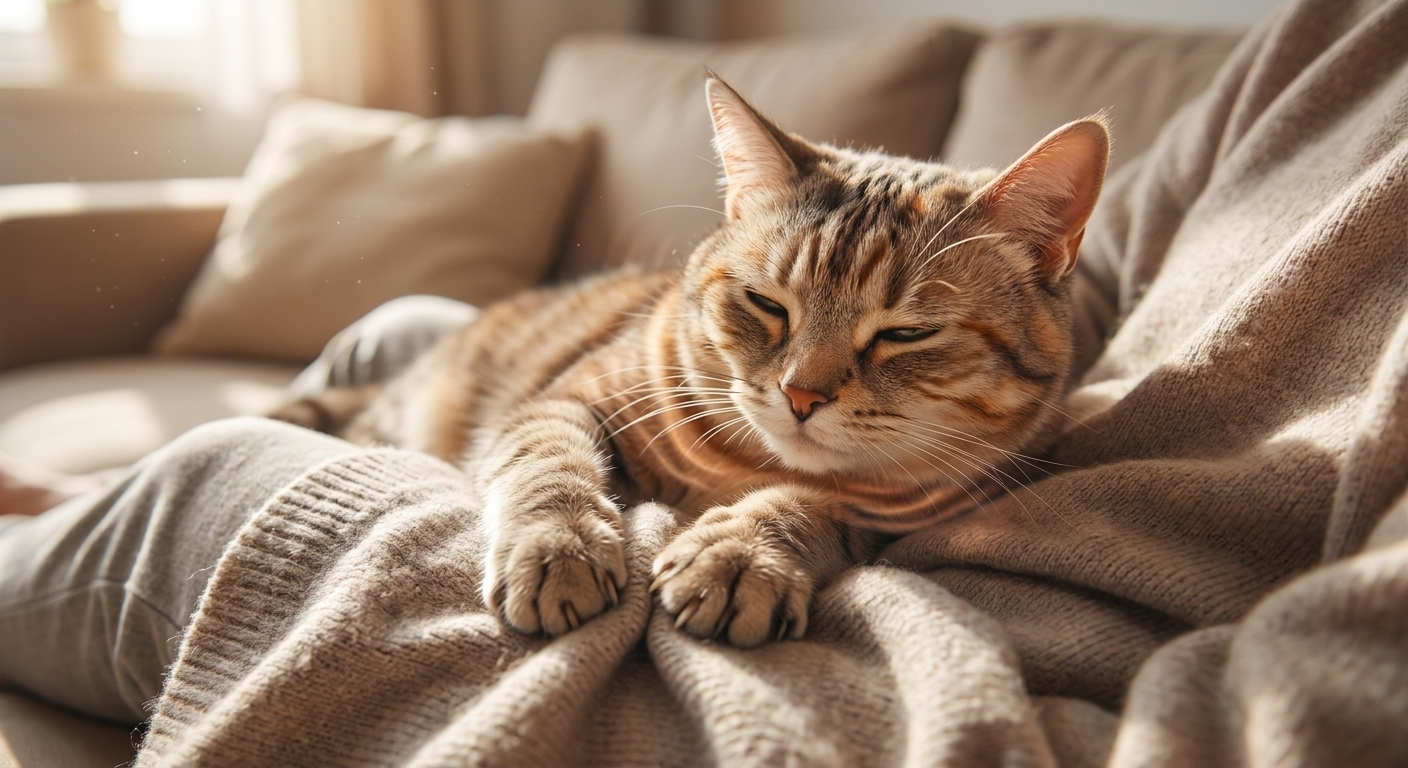 Adult cats most often knead when they’re settled and happy — on a warm lap, a soft bed, or right before a nap. It’s one of the most reliable signs that a cat feels at ease.
3. Scent marking
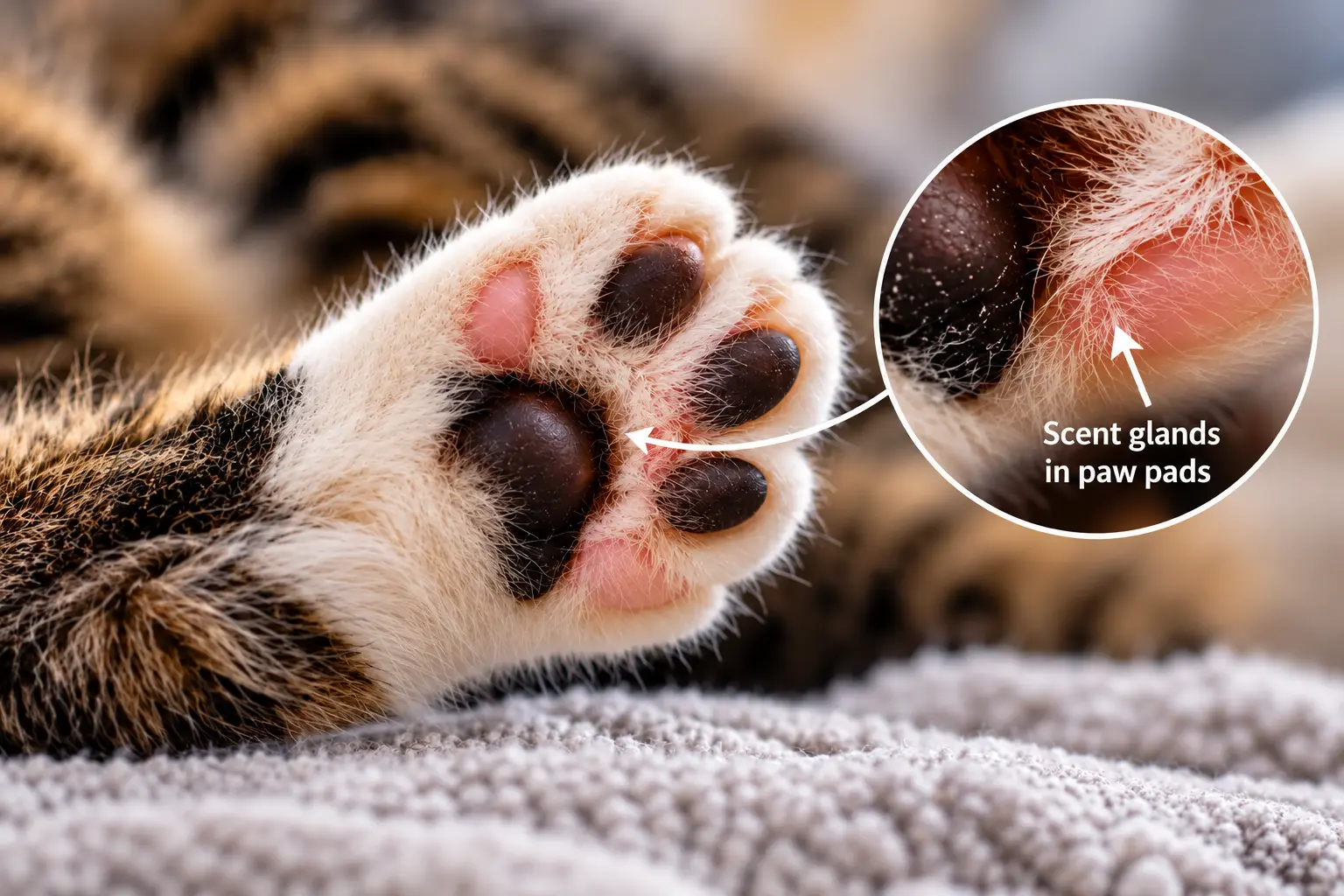 Cats have scent glands between the pads of their paws. Kneading leaves a scent signal that humans can’t smell but other cats can — a quiet way of saying “this is mine.” The same glands are part of why cats scratch.
4. Making a bed
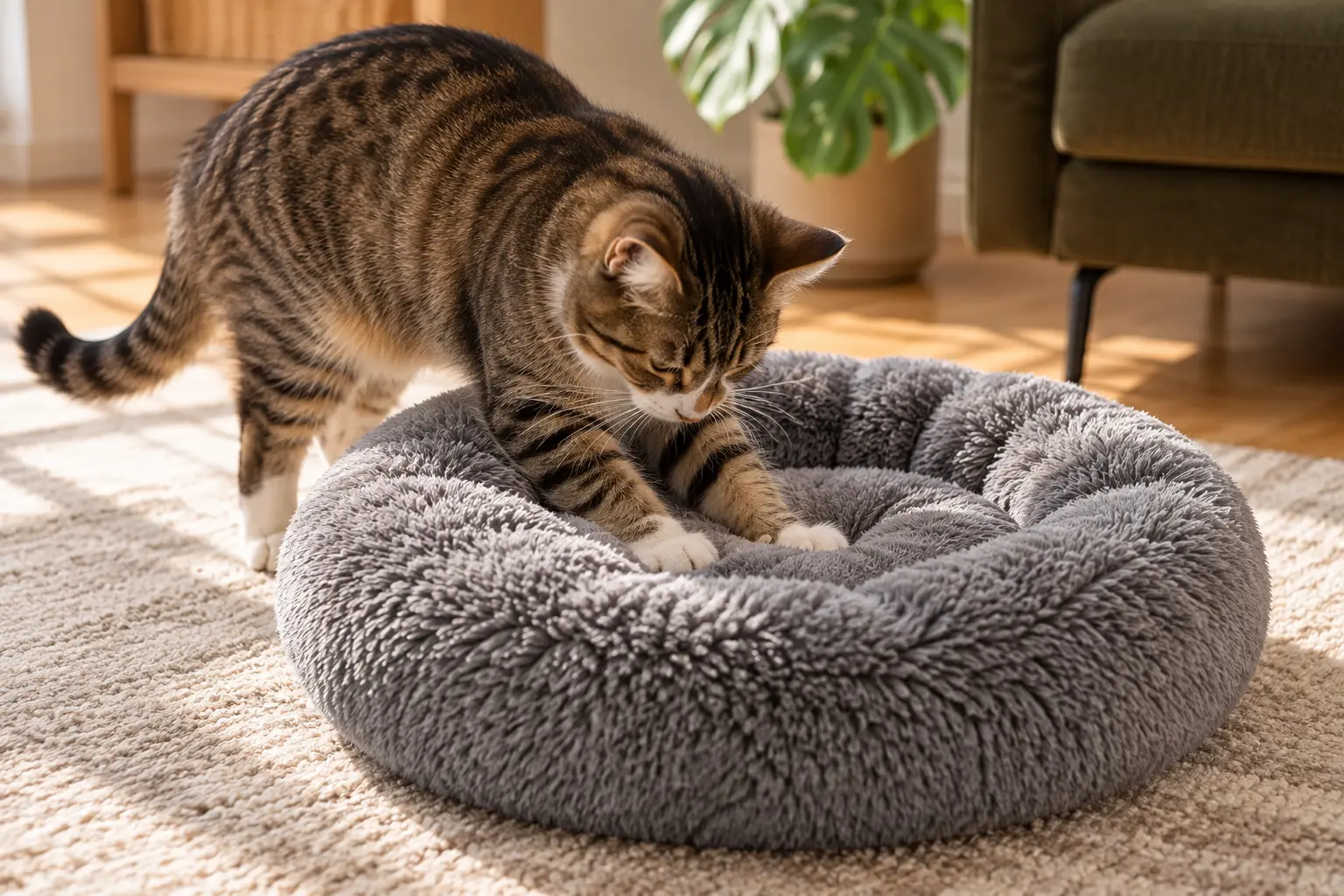 A commonly held explanation is that kneading is inherited from wild ancestors who trampled grass or leaves into a comfortable, safe nest before lying down. It fits with how often cats knead a spot right before settling on it.
5. Self-soothing
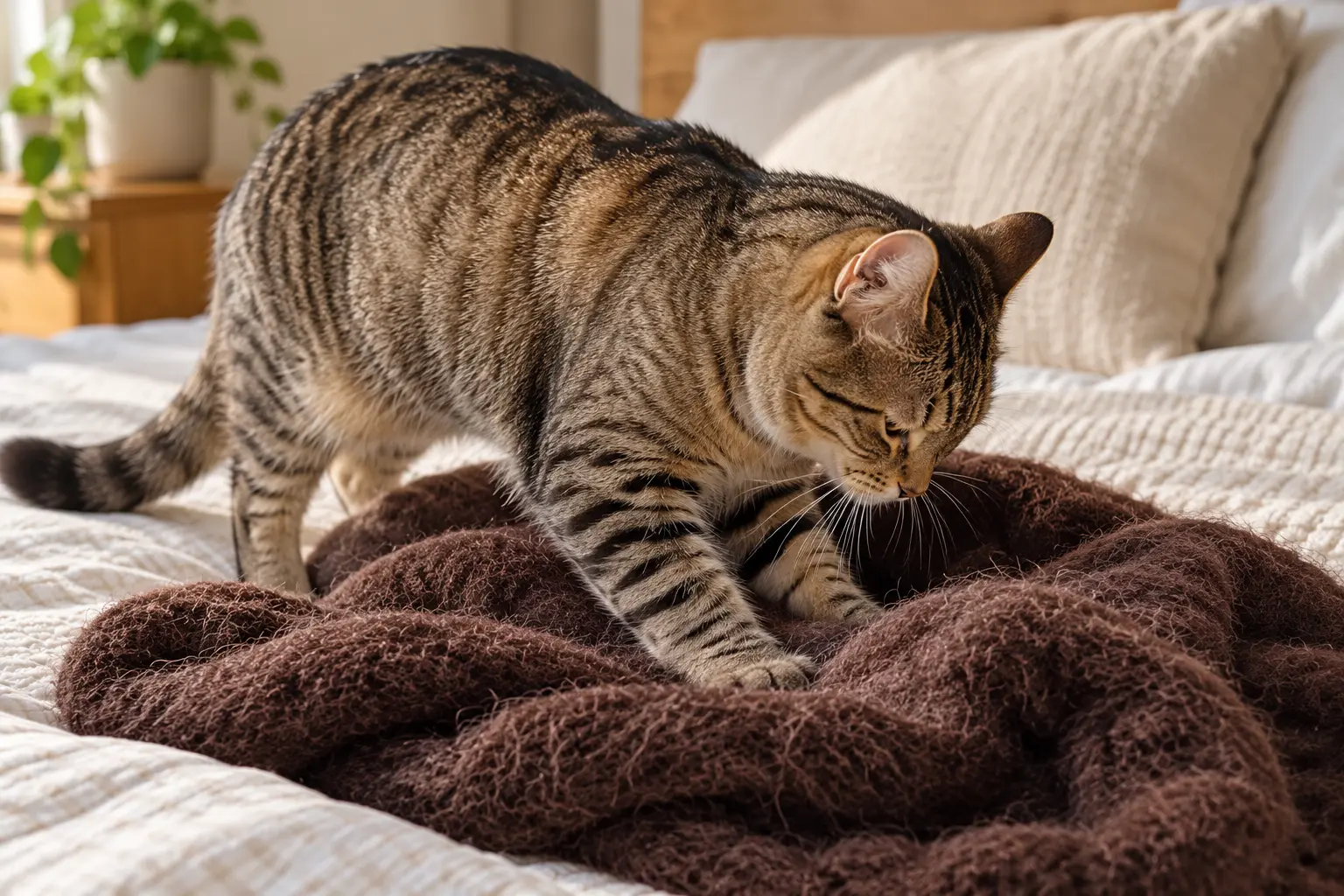 Some cats knead when they’re a little anxious, using the familiar, comforting rhythm to calm themselves — much like a child reaching for a comfort blanket. A new home, visitors, or a change in routine can bring it on.
6. A stretch
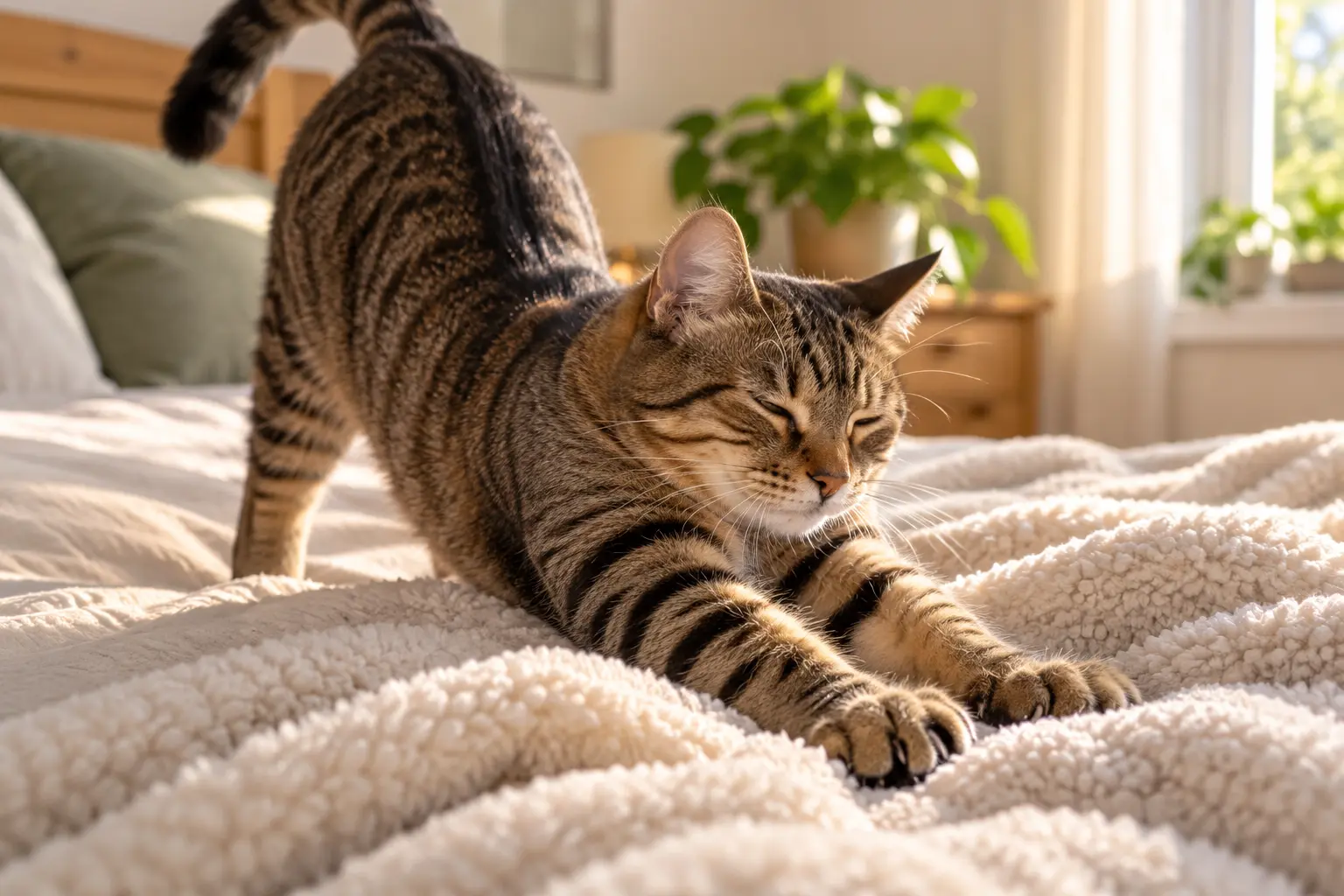 Kneading also works the muscles in the paws and front legs, which is part of why cats often do it right after waking up.
Why Do Cats Make Biscuits on Me Specifically?
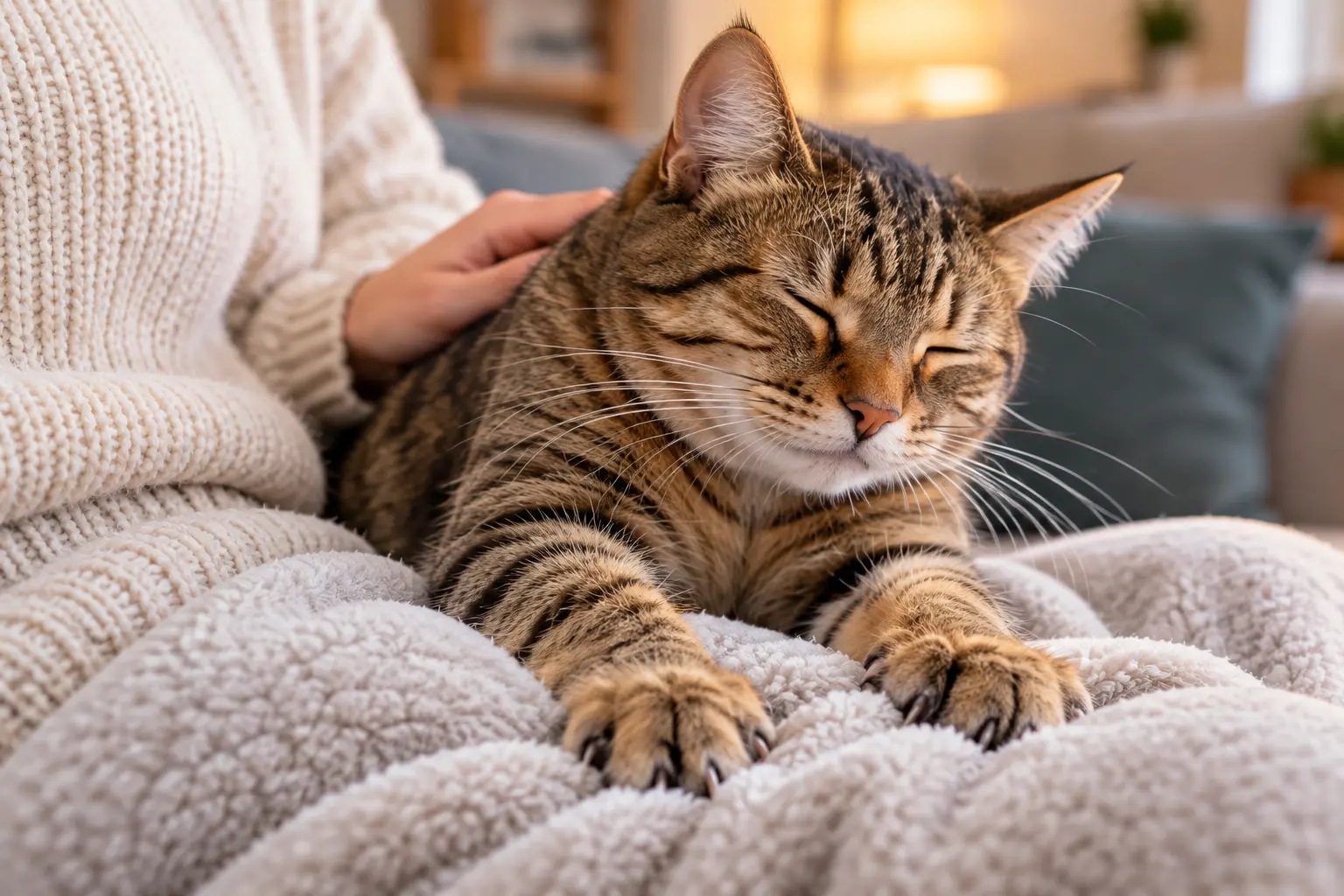 This is the part most people really want to know. Of all the soft surfaces in your home, why you?
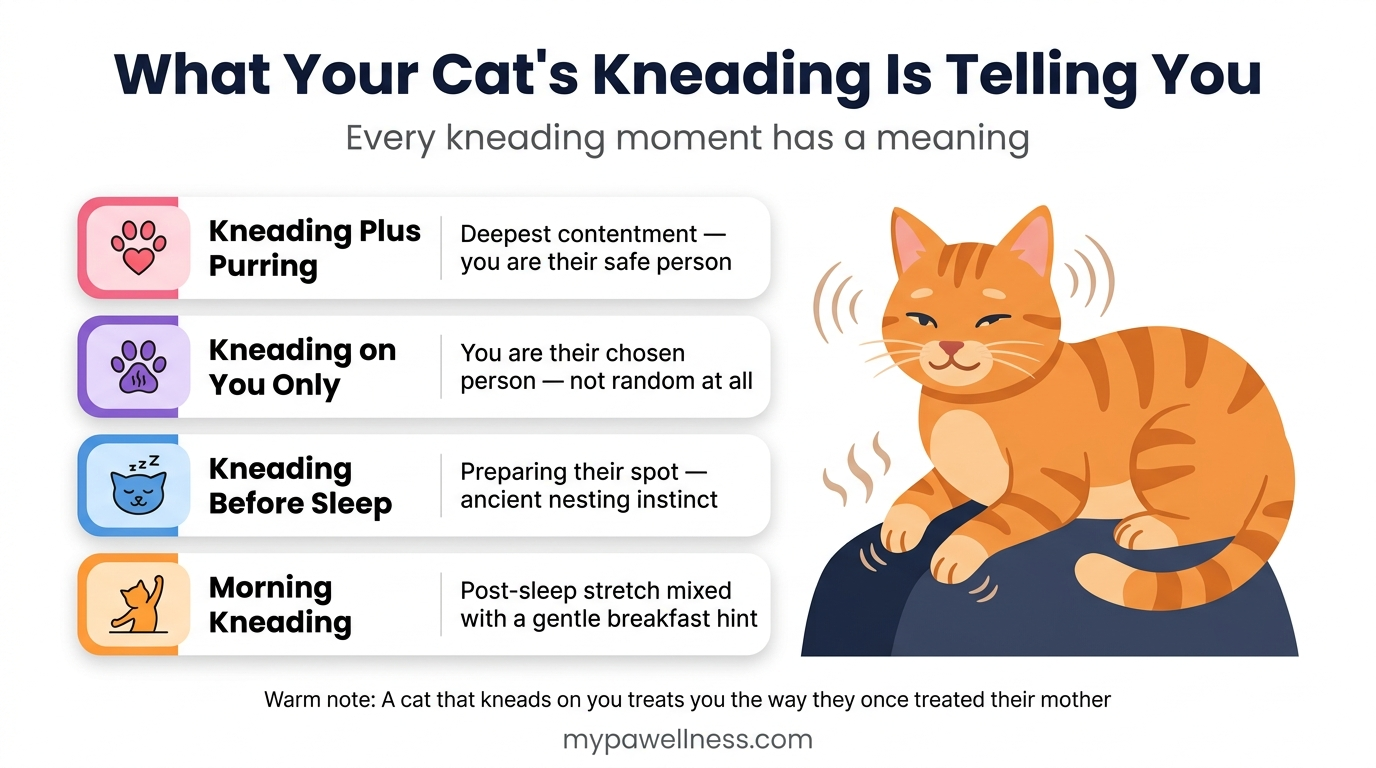
- You represent safety. A cat that kneads on you is re-enacting the most secure moment of its early life. In a very real sense, they’re treating you like their mother.
- You’re warm and soft. Your lap ticks the same boxes as a mother cat’s belly.
- They’re marking you. The scent from their paw pads claims you as part of their territory and their group.
- They’re relaxed with you. Cats don’t knead on people they’re wary of. It’s a behaviour reserved for people they trust enough to let their guard down around.
So if your cat makes biscuits on you but not on other people, that’s not coincidence — it’s a sign of a particular bond. Related: Signs Your Cat Loves You.
One of my cats only ever kneads on me in the evening, right when I sit down after dinner — never on anyone else in the house. It took me a while to realise it wasn’t random at all; it’s her winding-down routine, and I’m part of it.
Why Is My Cat Making Biscuits on Me and Purring?
Kneading plus purring is the classic combination of a completely content cat. Both behaviours trace back to nursing: kittens purr while they knead and feed, and adult cats bring the two back together when they feel that same sense of safety.
If your cat is kneading, purring, and half-closing their eyes, you’re looking at a cat that’s about as relaxed as a cat gets. Some cats also drool during this — that’s normal too, and part of the same deep relaxation.
At Night, in the Morning, or While You Sleep
At night and while you sleep: many cats knead as part of settling down to rest — preparing the spot, then curling up. If you’re in bed, you’re the warmest, softest spot available, so they knead you before lying down against you.
In the morning: morning kneading often mixes contentment with a stretch after sleep — and, for many cats, a gentle hint that breakfast is due. If it’s usually followed by walking toward the food bowl, you have your answer.
Neither is anything to worry about. If night-time kneading is waking you up, putting a soft blanket over your legs or chest gives them the same comfort without the claws reaching you.
On Blankets and on Your Stomach
Blankets: soft, fluffy blankets are a favourite kneading spot because the texture closely resembles a mother cat’s fur. Some cats have one particular blanket they return to again and again.
Your stomach or chest: these are soft, warm, and rise and fall as you breathe — which may be part of the appeal. Kneading on your stomach is also the closest position to how a kitten nursed, so it’s especially common in cats that are very bonded to you.
When Your Cat Kneads With Claws Out
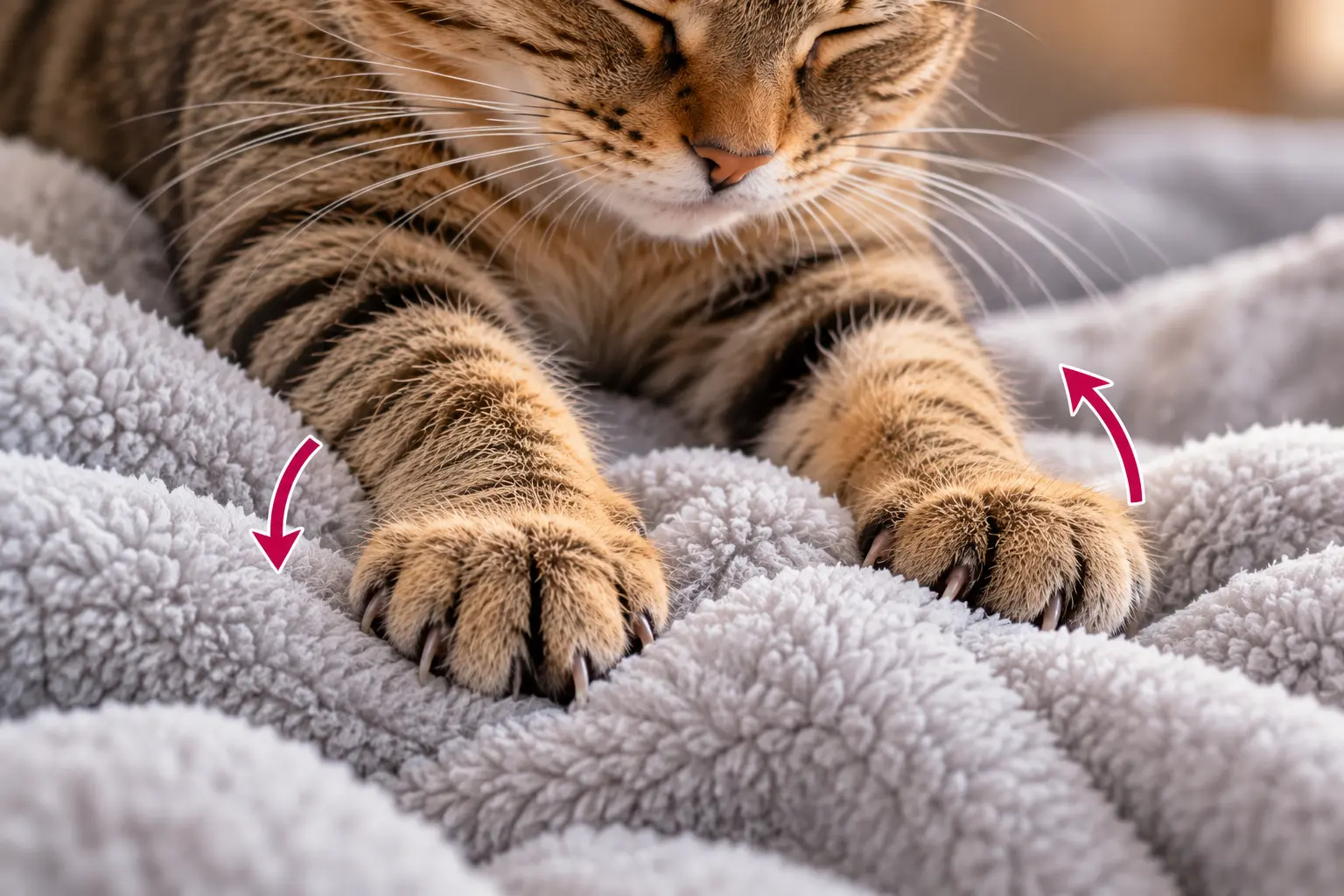 The one downside of making biscuits: some cats extend their claws with each push, and on bare skin or thin clothing that hurts.
Don’t punish it. Your cat isn’t doing it to hurt you — they’re in a relaxed, almost automatic state. Pushing them away or scolding teaches them that affection with you isn’t safe, without stopping the kneading itself.
What works instead:
- Put a thick blanket or towel on your lap before they settle. They get to knead; you don’t get scratched.
- Keep their claws trimmed. Blunting the sharp tip makes a huge difference. Related: Can You Trim Cat’s Nails?
- Gently redirect — lift their paws onto the blanket or a cushion beside you, calmly and without fuss.
- Try soft nail caps for cats who knead often and hard.
What Are “Sin Biscuits”?
“Sin biscuits” is internet slang for kneading combined with humping or mounting — usually a blanket, a pillow, or a soft toy — sometimes with the cat gripping the fabric in its mouth. It looks strange, and owners are often embarrassed to ask about it, but it’s a real and fairly common behaviour.
Can girl cats make sin biscuits? Yes. It’s most common in unneutered males and in females in heat, but neutered and spayed cats of both sexes do it too.
Why it happens:
- Hormones — the most common reason in unneutered cats and females in heat. Spaying or neutering usually reduces it a lot.
- Overexcitement — some cats tip from relaxed kneading into mounting when they get very worked up or overstimulated.
- Stress or self-soothing — like kneading, it can be a way of coping with anxiety or boredom.
- Habit — once a cat has a favourite blanket, the behaviour can simply become routine.
It isn’t harmful in itself. The things worth watching are the same as with kneading: a cat that’s actually eating fabric, a sudden big increase alongside other signs of stress, or mounting other pets in a way that causes conflict.
If your cat isn’t spayed or neutered, that’s the first thing to talk to your vet about.
Why Some Cats Knead More Than Others
Some cats knead every time they sit on you; others do it once a month. A few things influence how much:
- Personality. Affectionate, laid-back cats tend to knead more. Independent cats often show contentment in quieter ways.
- Early weaning. Kittens separated from their mother very young often knead more — and more intensely — as adults, possibly because the nursing association stayed strong.
- Age. Many cats knead less as they get older, though plenty keep doing it for life.
- Stress. A cat that’s unsettled by a move or a new pet may knead more than usual to comfort itself.
Some breeds are often described as bigger kneaders — Ragdolls and Siamese come up a lot — but individual personality matters far more than breed.
What If My Cat Never Makes Biscuits?
That’s completely normal. Not every cat kneads, and it says nothing about how happy they are or how much they like you.
Some cats simply never picked up the habit, some stop as they get older, and some show affection in other ways entirely — slow blinking, head bunting, following you from room to room, or sleeping near you.
When Kneading Is Worth a Closer Look
Kneading itself is almost never a problem. A few patterns are worth paying attention to:
- Sudden, constant kneading alongside other changes — restlessness, hiding, changes in appetite, or over-grooming — can point to stress or anxiety rather than contentment. Related: Is My Cat Depressed?
- Kneading combined with sucking or chewing fabric (“wool-sucking”) is more common in cats weaned very early. It’s usually harmless, but a cat that actually eats fabric can develop a dangerous intestinal blockage, and that needs a vet.
- Frequent kneading and rolling in an unspayed female may be a sign she’s in heat.
- A cat that suddenly stops kneading when they always did — especially an older cat — can occasionally mean joint pain in the front legs. Worth mentioning at the next vet visit if it comes with other changes like reluctance to jump.
Frequently Asked Questions
Usually, yes. Kneading is most often a sign of contentment and relaxation, especially when it comes with purring and half-closed eyes. Occasionally cats knead to soothe themselves when they’re stressed, so look at the rest of their behaviour — a relaxed body and purring means a happy cat.
Yes, if you’re comfortable with it — it’s a sign of trust and there’s no reason to stop it. If the claws hurt, put a blanket on your lap and keep their nails trimmed rather than pushing them away.
Gentle petting is usually welcome, since your cat is already relaxed and seeking closeness. Some cats prefer to be left to it, though — if they stop, flatten their ears, or flick their tail, give them space and let them knead in peace.
Drooling during kneading is a sign of deep relaxation and is linked to the same nursing instinct — kittens associate the rhythm with feeding. It’s harmless in this context. Drooling that happens without kneading, or is thick or excessive, is a different matter and worth checking.
Not literally — but kneading on you is a behaviour cats originally did with their mother, so in a sense they’re treating you the same way.
Researchers who study cat–owner bonds have found that many cats relate to their owners in ways that resemble how kittens relate to their mother: looking to them for security and comfort. Kneading is one of the clearest signs of that.
There’s no single answer, but kneading on you is high on the list, along with slow blinking, sleeping on or against you, showing you their belly, and head-bunting. All of them say the same thing: your cat feels safe enough to be vulnerable around you. More on this in Signs Your Cat Loves You.
Cats often bond more strongly with one person. Signs include kneading on you but not others, following you from room to room, choosing to sleep near you, greeting you at the door, and relaxing fully in your lap.
If your cat makes biscuits on you and nobody else, that’s a good indication you’re their person.
Yes. Kneading is common in both, whether or not they’re neutered. Unspayed females may knead more when they’re in heat, but otherwise sex makes little difference.
The Bottom Line
Why do cats make biscuits on me? Because you make them feel the way they felt as kittens: safe, warm, and cared for. Kneading is a leftover nursing behaviour, a way of relaxing, and a scent mark that quietly claims you as theirs.
If the claws are a problem, a blanket and a nail trim solve it without taking away something your cat clearly finds comforting. And if your cat never kneads at all, that’s fine too — they’ll be showing you they care in other ways.