
Is my cat depressed? If your cat is hiding more than usual, refusing food, or has stopped playing entirely, they may be dealing with feline depression. Yes, cats absolutely can get depressed, and the signs are often subtle enough that owners miss them for weeks.
I first learned to spot this after we moved to a new apartment and one of my cats hid under the bed for days, barely eating, refusing toys she normally loved. The change was so dramatic I thought she was physically sick. It turned out to be a straightforward adjustment reaction, and with patience and routine she was back to herself within a couple of weeks.
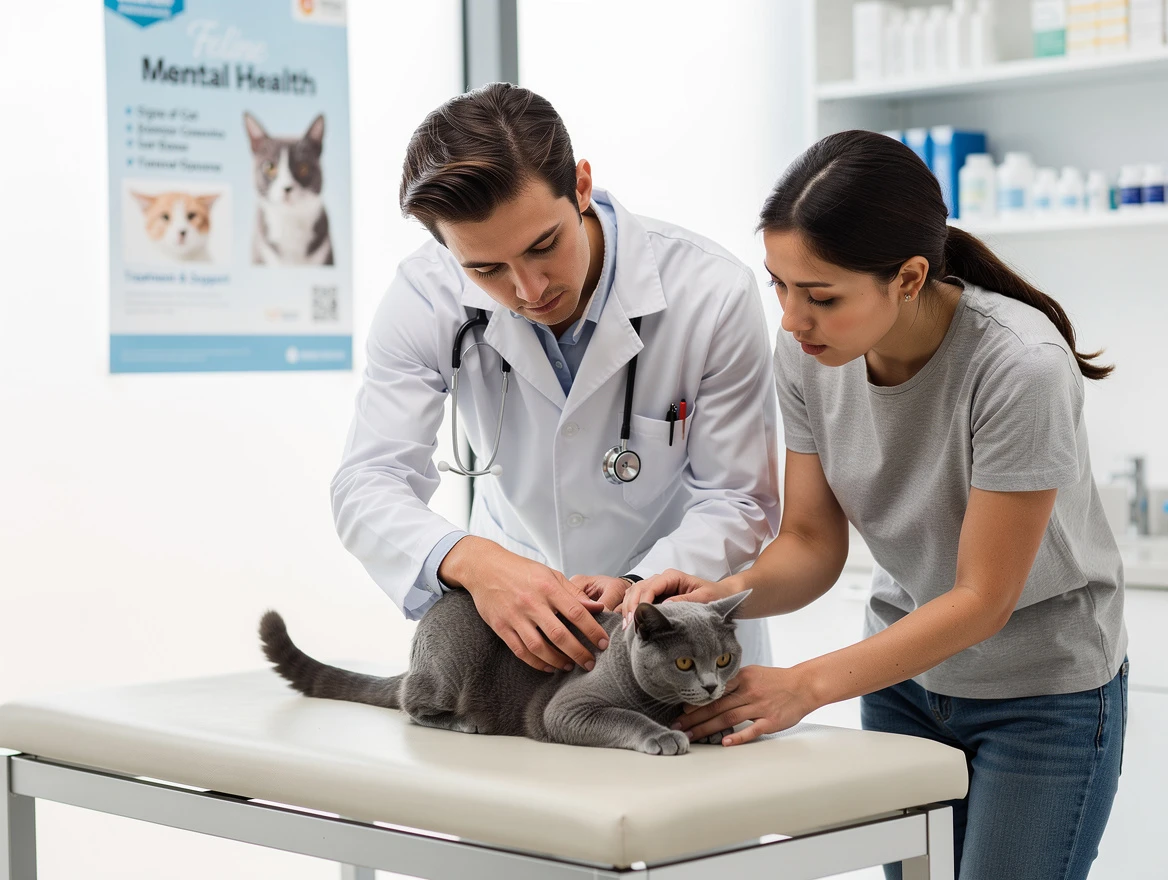
Look for these key signs: withdrawal and hiding, loss of appetite, decreased playfulness, excessive sleeping, neglected grooming, litter box accidents, unusual vocalization, and irritability. Common triggers include loss of a companion, environmental changes, boredom, and illness. Most cat depression responds well to environmental enrichment, routine, and attention within 2–4 weeks. If symptoms persist or worsen, see your vet to rule out medical causes.
8 Signs of Depression in Cats
1. Withdrawal and Hiding
A cat that suddenly starts hiding under beds, in closets, or in unusual corners is showing one of the clearest signs of depression in cats. Occasional alone time is normal, constant hiding and avoiding you is not.
2. Loss of Appetite or Changes in Eating
Refusing favorite foods, eating significantly less, or sudden weight loss signals something is wrong. Some depressed cats eat more as a comfort behavior, but most eat less. Related: My Cat Is Not Eating and Very Weak, appetite loss lasting 48+ hours needs vet attention.
3. Loss of Interest in Play
A cat that ignores toys they previously loved, shows zero interest in chasing, pouncing, or interacting, this is a major sign. The difference between depression and just being a low-key cat is whether this is their normal personality or a sudden change. Lazy cats still engage occasionally. Depressed cats stop entirely.
4. Excessive Sleeping
Cats already sleep 12–16 hours daily. But a depressed cat may sleep 18–20+ hours and seem completely lethargic when awake. If your cat looks sad and tired, sleeping far more than usual and seeming exhausted even when awake, depression or illness is likely.
5. Neglected Grooming
Cats are meticulous groomers. A depressed cat stops caring about their coat, resulting in matted fur, dandruff, greasy appearance, or an unkempt look. This is one of the most reliable signs because healthy cats almost never neglect grooming. Related: How Can I Soothe My Cat’s Itchy Skin.
6. Litter Box Accidents
Urinating or defecating outside the litter box, especially in a cat that was previously reliable, is a stress and depression signal. Rule out medical causes first, then consider emotional triggers. Related: Why Is My Cat Peeing Everywhere.
7. Unusual Vocalization
Mournful meowing, yowling, or crying, especially at night or in rooms where a lost companion used to be, indicates emotional distress. Some depressed cats become completely silent instead. Both extremes are concerning.
8. Irritability and Aggression
Hissing, biting, or scratching more than usual, especially from a cat that was previously gentle, can indicate depression-driven frustration. This is the most misunderstood sign because owners interpret it as anger rather than sadness. Related: Why Is My Cat Hissing at Me.
Depressed Cat Body Language
Depressed cat body language is distinct from a relaxed or sick cat. Here’s what to look for:
| Body Signal | What It Means |
|---|---|
| Ears flattened or turned sideways | Anxiety, stress, or sadness |
| Tail tucked close to body | Fear or withdrawal |
| Dilated pupils in a calm environment | Stress or hypervigilance |
| Hunched posture | Pain or emotional distress |
| Turning away from interaction | Disinterest or avoidance |
| Slow blinking absent | Lack of trust or emotional disconnection |
| Belly never exposed | Feels unsafe. Related: Signs Your Cat Loves You |
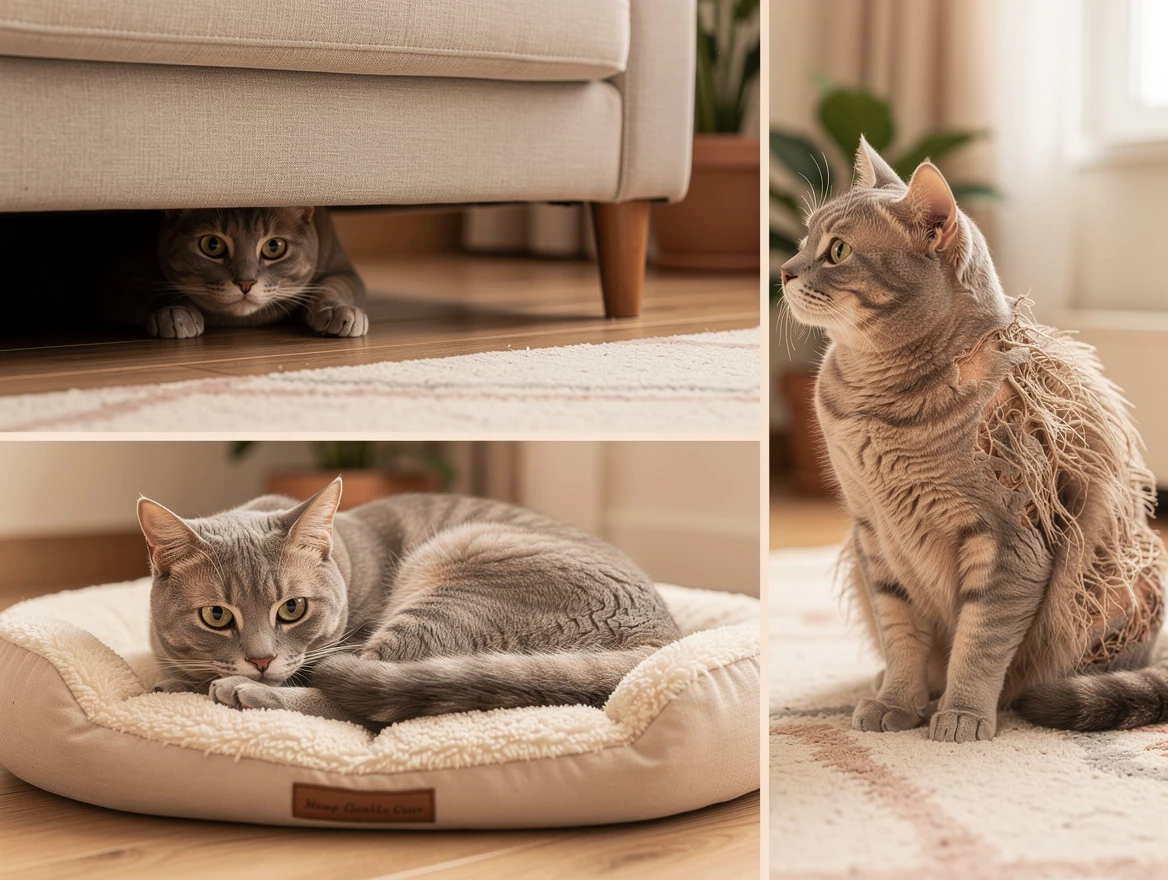
Depressed or Just Lazy
This is one of the most common questions. The key difference is change:
- Lazy cat (normal personality) — has always been low-energy, still eats well, grooms normally, responds to interaction when offered, is content and relaxed
- Depressed cat (behavioral change) — was previously active but suddenly became withdrawn, appetite changed, grooming declined, no longer responds to favorite toys or treats
If your cat has always been a couch potato, they’re probably just lazy. If active behavior changed to inactive, that’s depression or illness. Ask yourself: did something change recently? New home, lost companion, schedule change? If yes, depression is likely. If nothing changed and they seem physically off, illness is more likely.
What Causes Cat Depression
- Loss of a companion — another cat, a dog, or a human family member. This is one of the most common triggers.
- Environmental changes — moving, renovations, new furniture, or rearranging their space
- New additions — a new pet, a new baby, or a new partner in the home
- Boredom — indoor cats without stimulation, play, or enrichment. Related: Cats and Boxes, simple enrichment ideas.
- Owner absence — change in work schedule, travel, or less time at home. Related: How Long Can You Leave a Cat Alone.
- Medical illness — pain, chronic disease, or hormonal imbalances mimic depression. Related: Cat Diabetes Symptoms.
- Seasonal changes — some owners notice lower activity in winter, though this isn’t well studied in cats the way it is in humans
After Another Cat Died
Yes, cats grieve. Research confirms cats form social bonds with companion animals, and losing one causes genuine behavioral changes. Signs include searching for the missing cat, vocalizing at the door, sleeping in the deceased cat’s spot, and appetite loss.
Most cats show improvement within 2–6 weeks. Some take months. Don’t rush to replace the companion, your grieving cat needs time to adjust before meeting a new animal.
Does Having Other Cats Help
It depends on the relationship those cats actually had. If your grieving cat was genuinely bonded with the cat you lost, other surviving cats in the household don’t automatically fill that gap, and in some cases the household dynamic shifts in ways that add stress rather than comfort (a formerly middle-ranked cat suddenly navigating a different social structure, for instance). If your remaining cats were more like polite roommates than close companions, they’re unlikely to be either the cause or the cure.
What helps more reliably is keeping each remaining cat’s routine, resources, and attention consistent rather than assuming the group will simply sort it out. Watch each cat individually rather than treating “the cats” as one unit during this adjustment period.
How to Help a Depressed Cat
- Maintain routine — feed at the same times, keep litter in the same spot. Predictability is comforting.
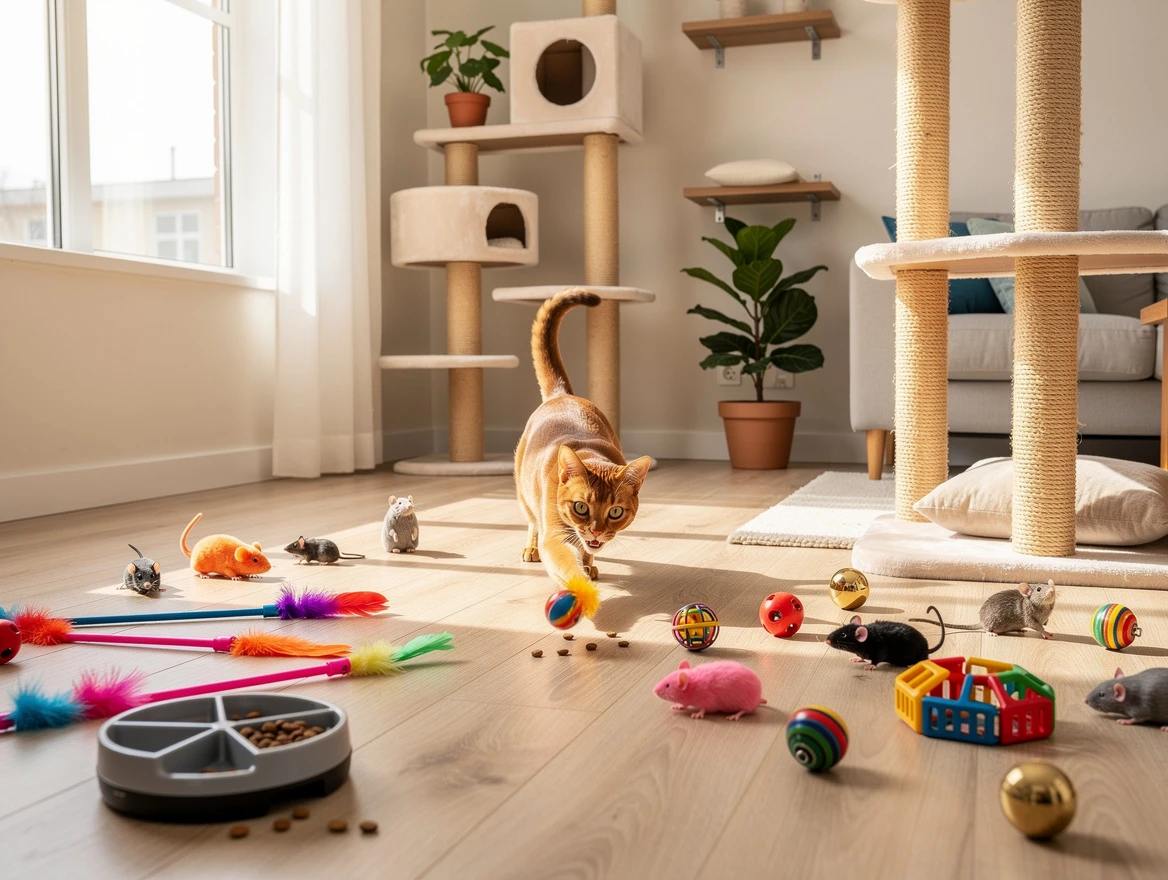
- Interactive play — 15–20 minutes daily of wand toys, laser pointers, or feather toys. Play stimulates endorphins.
- Environmental enrichment — window perches, cat trees, puzzle feeders, boxes, and bird-watching stations
- Quiet companionship — sit near your cat without forcing interaction. Let them come to you.
- Familiar scents — leave a worn shirt near their bed. Your scent is comforting.
- Sunlight access — natural light improves mood. Open curtains and create sunny resting spots.
- Feliway diffuser — synthetic pheromone that reduces stress and anxiety in cats
- Calm music or TV — cat-specific music or nature documentaries provide auditory stimulation
How Long Does a Cat Stay Depressed
It depends on the cause:
| Cause | Typical Duration | When to Worry |
|---|---|---|
| Environmental change (move, furniture) | 1–3 weeks | Beyond 4 weeks |
| New pet or baby | 2–4 weeks | Beyond 6 weeks |
| Loss of companion | 2–6 weeks (some longer) | Beyond 2 months with no improvement |
| Owner schedule change | 1–2 weeks | Beyond 3 weeks |
| Boredom | Ongoing until enrichment provided | Any duration, fix the environment |
| Medical illness | Does not resolve without treating the illness | See vet immediately |
When to See the Vet
🩺 See Your Vet If:
- Depression symptoms last more than 2 weeks without improvement
- Cat stops eating for more than 48 hours
- Weight loss alongside behavioral changes
- Vomiting, diarrhea, or other physical symptoms. Related: Cat Vomiting White Foam
- No obvious trigger (no loss, no change, no new pet), medical cause is likely
- Litter box accidents that do not resolve
- Symptoms worsen progressively
- Lethargy so severe the cat does not respond to any stimulation
Your vet will run blood work, check for pain, thyroid issues, and other medical conditions that mimic depression. Many “depressed” cats actually have undiagnosed pain or illness. Related: Signs of Kidney Failure in Cats, kidney disease causes lethargy that looks like depression.
Frequently Asked Questions
The 8 clearest signs: hiding and withdrawal, loss of appetite, no interest in play, excessive sleeping, neglected grooming, litter box accidents, unusual vocalization, and irritability or aggression. The key indicator is a sudden change from their normal behavior.
The symptoms overlap heavily. Depression usually follows an identifiable trigger (loss, change, boredom). Illness can appear without any trigger. If there’s no obvious emotional cause, or if physical symptoms like vomiting, weight loss, or diarrhea are present, see your vet to rule out medical conditions.
Absolutely, indoor cats without enrichment, play, or stimulation are prone to depression. Window perches, cat trees, puzzle feeders, interactive play sessions, and even cat TV (bird videos) make a significant difference.
The Bottom Line
If your cat’s behavior has suddenly changed, hiding, not eating, not playing, not grooming, the answer to “is my cat depressed” may well be yes. The good news is that most feline depression responds to environmental enrichment, routine, play, and patience within 2–4 weeks.
The most important step is ruling out medical causes, a vet visit catches pain, illness, and hormonal issues that mimic depression. Once physical health is confirmed, focus on enrichment and companionship. Related: Signs Your Cat Loves You, understanding your cat’s love language helps you reconnect. Also: Why Does My Cat Sleep on Me, sleeping near you is a recovery sign.