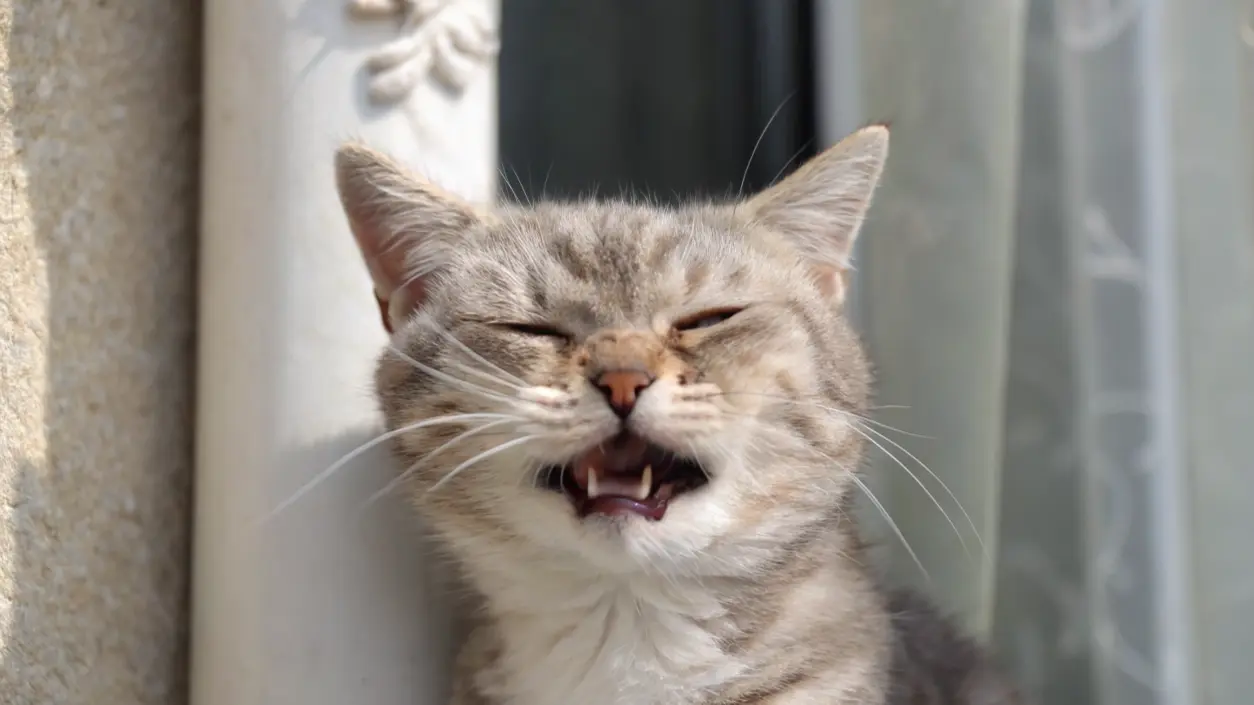
Why is my cat sneezing so much? If your cat keeps sneezing, whether it’s a few times a day or a full-blown sneeze marathon, there is almost always a reason behind it. As someone living with four cats in a NYC apartment, I have sat through more sneezing episodes than I can count, and I have learned exactly when to wait it out and when to call the vet immediately.
This guide covers every cause I have found, what my vet recommended each time, and the exact signs that separate harmless sneezing from something that needs urgent attention.
It usually comes down to one of four causes: upper respiratory infections, allergens or environmental irritants, foreign bodies in the nasal passage, or nasal polyps. Occasional sneezing is harmless. But sneezing more than a few times per hour, for more than a day, or alongside nasal discharge and lethargy, needs a vet visit rather than home monitoring alone.
⚠️ My Cat Won’t Stop Sneezing — When Is It an Emergency?
Most frequent sneezing comes from something manageable, but these specific signs mean you need a vet today, not in a few days.
- Sneezing persisting for more than 24 to 48 hours without improvement
- Nasal discharge that is green, yellow, or bloody, clear is less concerning, colored is not
- Difficulty breathing, noisy breathing, or open-mouth breathing in a cat
- Loss of appetite lasting more than 24 hours alongside sneezing
- Lethargy, your cat is not interested in play, food, or interaction
- Swelling around the nose, eyes, or face
- Kittens or senior cats sneezing frequently, they have less immune reserve
At a Glance: Causes and Actions
| Cause | Key Signs | Action |
|---|---|---|
| Upper Respiratory Infection | Frequent sneezing, nasal discharge, watery eyes | Vet diagnosis, antivirals or antibiotics |
| Allergies or Irritants | Seasonal sneezing, clear discharge, itchy eyes | Remove trigger, vet-approved antihistamines |
| Foreign Body in Nasal Passage | Sudden intense sneezing, pawing at nose | Emergency vet visit |
| Nasal Polyps or Tumors | Persistent one-sided sneezing, facial swelling | Vet examination and possible surgery |
How Much Sneezing Is Too Much — A Quick Scale
“A lot” means different things to different owners, so here’s a way to actually measure what you’re seeing against what it likely means:
| What You’re Seeing | Likely Meaning | Action |
|---|---|---|
| A few sneezes, then normal for hours | Dust, irritant, normal | No action |
| Several sneezes in a fit, a few times a day | Early URI or allergy | Monitor 24–48 hours |
| Repeated fits hourly, clear discharge | Active URI or strong allergen | Home care, vet if no improvement in 48 hours |
| Constant sneezing + colored discharge | Bacterial involvement | Vet this week |
| Sudden violent fits, pawing at nose, one side | Foreign body | Emergency vet |
4 Common Causes Explained
Sneezing almost always comes back to one of these four causes. Identifying which one applies changes both the urgency and the treatment approach completely:
1. Upper Respiratory Infections (URI)
Upper respiratory infections are the most common cause, particularly feline herpesvirus and calicivirus, the two viruses responsible for the majority of cat colds. These spread easily between cats through shared food bowls, grooming, and airborne droplets. URI sneezing is usually accompanied by watery or cloudy eye discharge, nasal congestion, and mild lethargy. Most healthy adult cats recover within seven to twenty-one days with supportive care, though kittens and immunocompromised cats often need antiviral or antibiotic treatment to avoid complications.
2. Allergies and Environmental Irritants
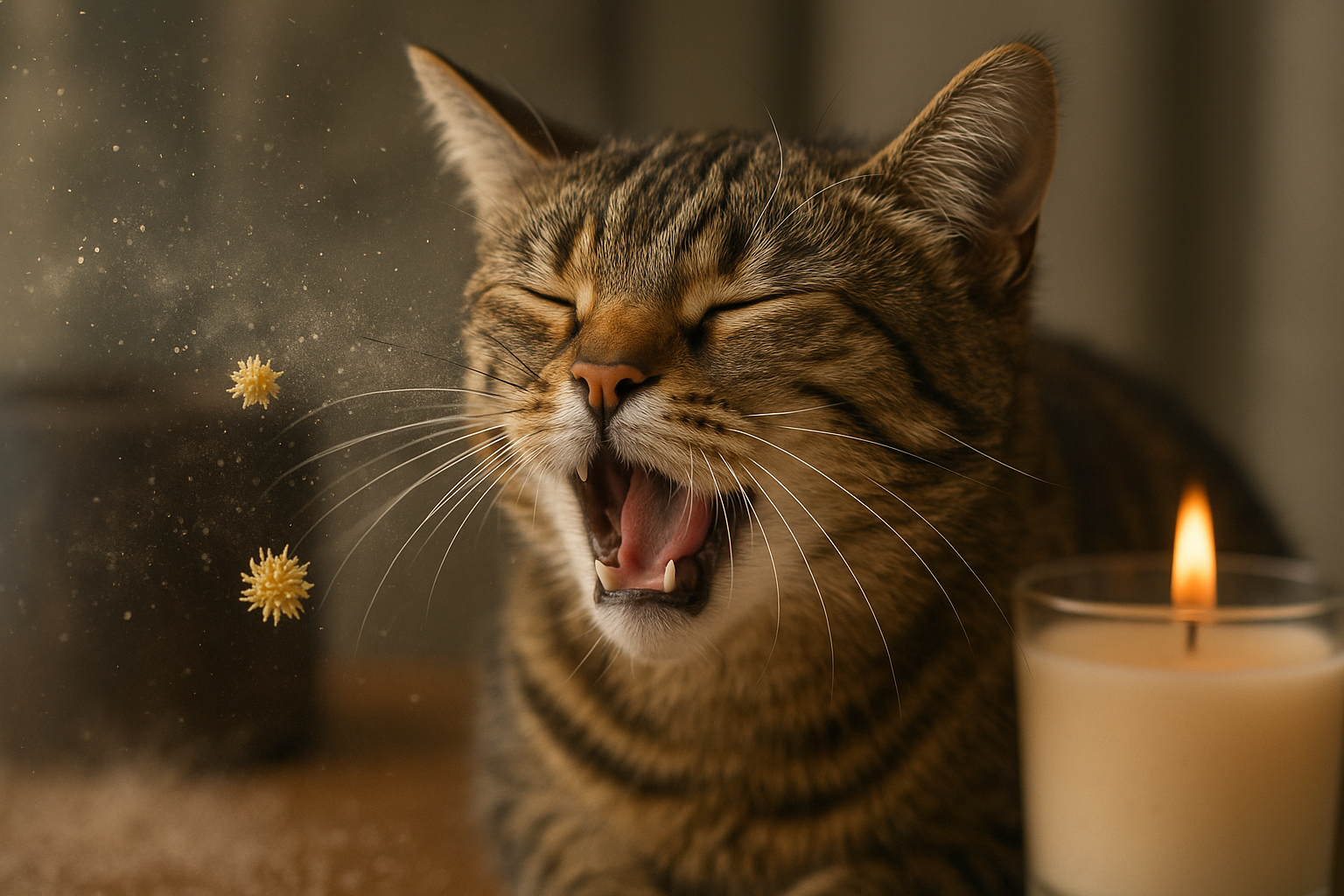
Pollen, dust, mold, cigarette smoke, scented candles, cleaning sprays, and perfumes are all common triggers for allergic sneezing in cats. I discovered this firsthand when one of my cats started a sneezing episode that tracked precisely with when I started using a new scented diffuser. Allergic sneezing typically produces clear nasal discharge and is often seasonal or environment-specific. Removing the trigger resolves the sneezing within 24 to 48 hours in most cases without any medication needed.
3. Foreign Body in the Nasal Passage
A blade of grass, a piece of plant material, or a small object lodged in the nasal passage creates sudden, intense, and persistent sneezing that does not respond to any home care. This type of sneezing has a very abrupt onset and is often accompanied by pawing at the nose and one-sided discharge. This is an emergency that requires a vet to remove the object safely, attempting to do it at home risks pushing it further in or causing damage.
4. Nasal Polyps or Tumors
Nasal polyps are benign growths inside the nasal passage that cause persistent sneezing, especially one-sided sneezing where discharge comes from only one nostril. Nasal tumors, while less common, also produce chronic sneezing that does not respond to standard treatment. Both require a vet examination and potentially imaging to diagnose. The key signal that distinguishes this from other causes is the persistence, nothing reduces the sneezing and it may get progressively worse over weeks.
Why Does My Cat Keep Sneezing?
When sneezing continues beyond 48 hours of home care, that’s usually the sign that home monitoring alone isn’t enough, it almost always means an active cause that needs to be identified and treated rather than waited out.
A cyclical pattern, seeming better for a day then worse again, often points to feline herpesvirus, which is a lifelong infection that causes recurring flare-ups triggered by stress, environmental changes, or other illness. This is one of the most common causes of repeat sneezing episodes in cats that have had a URI in the past. My vet suggested trying a lysine supplement during stressful periods, though it’s worth knowing that more recent research shows the evidence for lysine’s effectiveness is mixed at best, some vets still recommend it as a low-risk option, but it shouldn’t be relied on as a primary treatment.
Sneezing vs Reverse Sneezing vs Coughing
Owners regularly confuse these three, and it changes what you should actually be worried about:
- Regular sneezing — a quick, forceful expulsion of air out through the nose. This is what the rest of this article covers, and it points to nasal irritation, infection, or a foreign body.
- Reverse sneezing — a loud, honking, inward snorting sound, like your cat is trying to suck air in through the nose rapidly and repeatedly. It looks alarming and sounds far worse than it usually is. It’s typically caused by irritation at the back of the throat or soft palate and is usually a benign, self-limiting episode that passes within a minute or two on its own.
- Coughing — a lower, chest-originating sound, sometimes ending in a gagging motion that looks like your cat is trying to bring up a hairball. In cats, persistent coughing is frequently a sign of feline asthma rather than anything related to the nose, and it’s worth a vet visit if it’s recurring rather than a one-off.
If what you’re seeing looks more like your cat gagging or trying to vomit rather than a quick nasal sneeze, coughing and asthma are worth investigating separately rather than assuming it’s part of the same sneezing issue.
Symptoms That Come With Sneezing
Sneezing becomes more urgent when it’s accompanied by any of these additional symptoms:
- Watery or red eyes, common with URI and allergies
- Nasal discharge, clear suggests allergy or early URI, colored suggests bacterial infection
- Coughing or gagging alongside sneezing, indicates lower respiratory involvement
- Reduced appetite, always worth a same-day vet call when combined with sneezing
- Lethargy or reduced playfulness
- Mouth breathing, a serious sign in cats who are obligate nasal breathers
- One-sided symptoms, discharge or swelling on only one side points to foreign body or polyp
If your cat is also refusing to eat alongside frequent sneezing, that combination moves the situation from watchful waiting into a same-day vet call. Loss of appetite in a sneezing cat often means the nasal congestion is blocking their ability to smell food, which in cats directly suppresses eating instinct.
At-Home Care and Treatment Options
When sneezing is frequent but there are no other symptoms, these are the home care steps I take in the first 24 hours before deciding whether a vet visit is needed:
Run a Humidifier or Create Steam
Dry air irritates inflamed nasal passages and makes sneezing more frequent. Running a humidifier in the room where your cat spends most of their time adds moisture that soothes the nasal lining. A steam session also works, bring your cat into the bathroom while you run a hot shower and let them breathe the humid air for 10 to 15 minutes. This is the single most effective home remedy I have found for URI-related sneezing.
Remove All Potential Irritants
Stop using aerosol sprays, scented candles, air fresheners, and strong cleaning products in areas your cat occupies. Switch to unscented cat litter if you use scented, many cats are sensitive to the fragrance. Vacuum and dust more frequently to reduce airborne particles. If you smoke, keep your cat in a completely separate well-ventilated area as cigarette smoke is a direct irritant to feline respiratory tissue.
Gently Clean Around the Nose
Use a warm damp cloth to gently wipe discharge from around your cat’s nostrils. Dried discharge can block nasal airflow and make breathing more difficult, which worsens both sneezing and appetite. Be very gentle, the nasal area is sensitive and your cat will resist if you are not calm and slow about it.
Never Give Human Medications
Do not give human antihistamines, decongestants, or cold medications without explicit vet guidance. Many are toxic to cats, pseudoephedrine and acetaminophen in particular can be fatal. If you believe your cat needs medication, call your vet for a phone consultation before giving anything. Some human antihistamines are used in cats, but only at vet-determined doses, never at human doses and never without that call first.
Common Mistakes Cat Owners Make
- ❌ Assuming it will pass on its own — sneezing that persists beyond 48 hours almost never resolves without treating the underlying cause
- ❌ Giving human cold or allergy medications — many are toxic to cats; always call your vet first
- ❌ Continuing to use scented products at home — even one scented candle or air freshener can maintain the sneezing cycle indefinitely
- ❌ Waiting too long to visit the vet — URI infections that go untreated can progress to pneumonia in cats, especially kittens and seniors
- ❌ Not mentioning other cats in the household — if one cat has a URI, all cats in the home are likely exposed and the vet needs to know
- ❌ Ignoring one-sided symptoms — discharge or swelling on only one side is a specific signal pointing to foreign body or growth that needs prompt diagnosis
How to Prevent Sneezing Episodes
After going through multiple sneezing episodes with four cats, these are the prevention measures that genuinely reduced how often it happens in our household:
- Keep all cats up to date on their feline herpesvirus and calicivirus vaccinations. This reduces severity significantly, but it’s worth knowing the core FVRCP vaccine doesn’t fully prevent infection or stop latent herpesvirus from flaring later, a vaccinated cat can still sneeze.
- Use only unscented cleaning products, litter, and air fresheners
- Keep new cats separated for two weeks before introducing them to existing cats
- Vacuum and change air filters regularly to reduce dust and allergens
- Maintain a smoke-free home environment entirely
- Reduce stress, herpesvirus flare-ups are often stress-triggered, so stable routines help
Causes and Treatments: Comparison
| Cause | Symptoms | Treatment | Prognosis |
|---|---|---|---|
| Upper Respiratory Infection | Sneezing, discharge, watery eyes | Supportive care, antivirals, antibiotics | Very good with treatment |
| Allergies | Clear discharge, itchy eyes, seasonal | Remove allergen, vet-approved antihistamines | Excellent with trigger removed |
| Foreign Body | Sudden intense sneezing, one-sided | Emergency vet removal | Excellent if treated promptly |
| Nasal Polyps or Tumors | Persistent one-sided sneezing, swelling | Vet removal, surgery | Good with timely intervention |
| Environmental Irritants | Occasional sneezing, clear discharge | Remove irritant | Resolves quickly |
Frequently Asked Questions
Worry is warranted when the sneezing has lasted more than 24 hours, when it is accompanied by colored nasal discharge, reduced appetite, or lethargy, or when it started very suddenly and intensely. Occasional sneezing without any other symptoms is normal. The combination of frequency, duration, and additional symptoms is what determines whether this is something to watch at home or something to have assessed today.
No, the viruses that cause human colds do not transfer to cats, and feline respiratory viruses do not transfer to humans. Your cat’s URI and your cold are completely separate infections caused by different pathogens. However, cats can absolutely catch respiratory infections from other cats, which is why keeping a sneezing cat separated from other household cats during recovery is important.
Most healthy adult cats recover from a URI in seven to twenty-one days with supportive care. Kittens, senior cats, and cats with underlying health conditions often take longer and are more likely to need antibiotic or antiviral treatment to recover fully. If your cat is not showing clear improvement after ten days, or if they deteriorate at any point, return to your vet for reassessment rather than continuing to wait.
This can point to allergens that concentrate in your bedroom, dust mites in bedding, a diffuser running at night, or poor ventilation while windows are closed. Wash bedding in hot water, switch off any scented devices in the bedroom, and ensure adequate airflow. If the sneezing continues only at night after those changes, a vet assessment for a specific allergy trigger is worth pursuing.
The Bottom Line
Why is my cat sneezing so much? It’s almost always answerable, and almost always treatable once you identify the cause. Upper respiratory infections, allergens, foreign bodies, and nasal polyps cover the vast majority of cases. The 48-hour rule applies here just as it does with most cat symptoms: one day of home care with humidity, irritant removal, and observation is reasonable. If sneezing is not clearly improving by the 48-hour mark, your vet is the next call.
Living with four cats means I have been through this many times, and the one thing I have learned consistently is that acting early always leads to a faster recovery and lower vet bills than waiting until symptoms become severe. Your cat cannot tell you what is wrong, the sneezing is the only signal they can give you, and it is worth paying attention to.