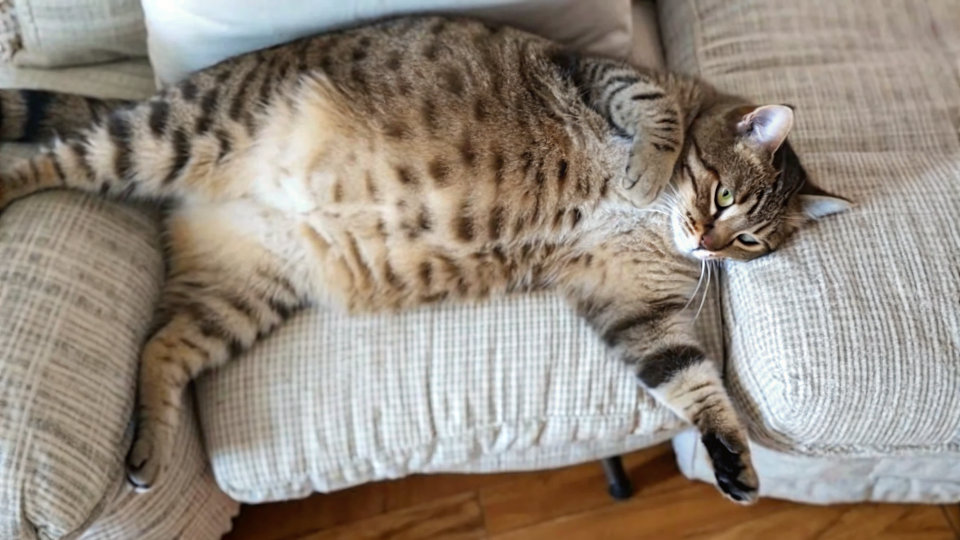
My cat looks bloated but acting normal, a swollen belly on a cat that’s eating, playing, and behaving fine is confusing and alarming at the same time. The problem is that cats hide illness exceptionally well. A cat that “looks fine” can have anything from harmless gas to dangerous fluid buildup happening inside.
One of my cats developed a noticeably rounder belly over about two weeks. She was eating normally, purring, and chasing toys. I assumed she was just gaining weight from treats. When I finally brought her to the vet, it turned out she had intestinal parasites. Two doses of dewormer and her belly was back to normal. The lesson: a bloated belly that isn’t explained by overfeeding always deserves investigation.
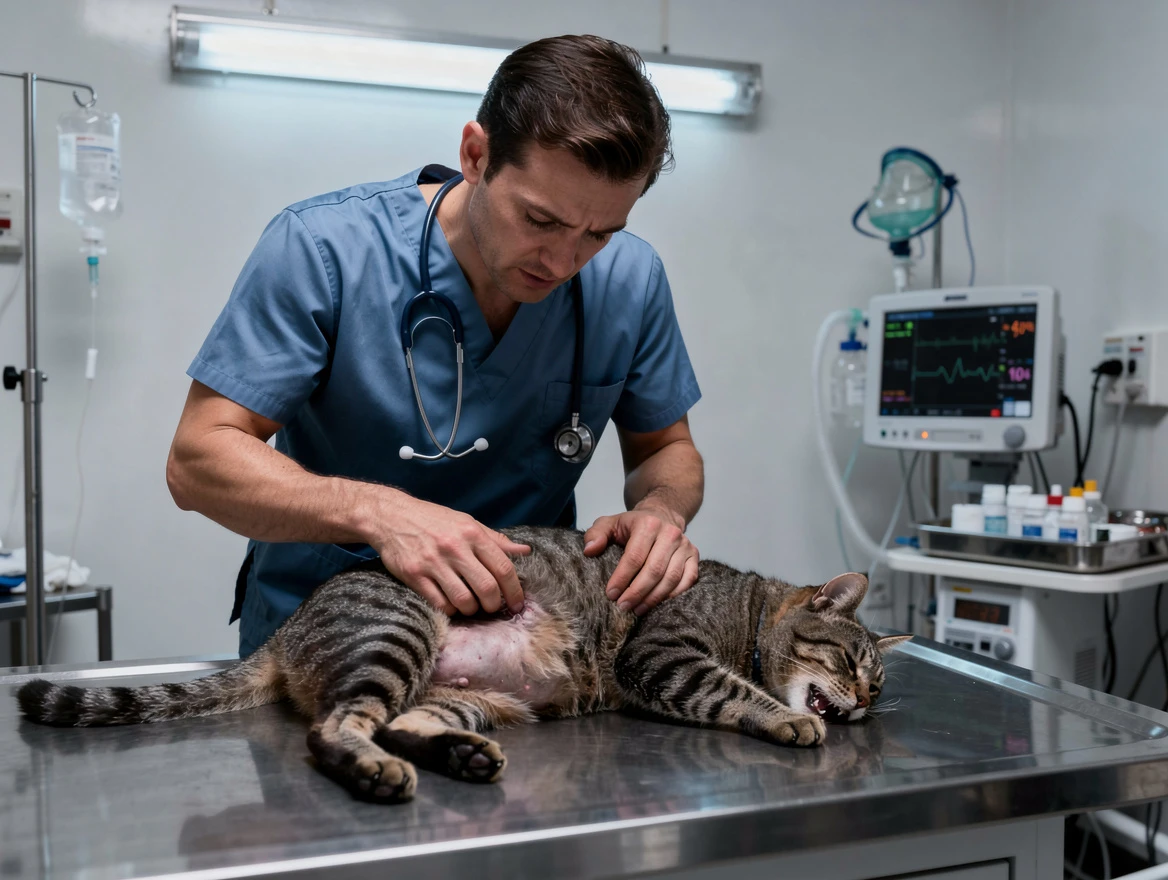
The most common causes are overeating, gas, constipation, or intestinal parasites. The critical test: gently press the belly. Soft and squishy usually means minor (gas, food, weight gain). Hard or firm can be potentially serious (fluid buildup, blockage, organ enlargement). See a vet if the belly is hard, appeared suddenly, or doesn’t improve within 48 hours.
- Belly is hard, tight, or painful to touch
- Male cat straining to urinate or not urinating (possible urinary blockage, life-threatening)
- Bloating appeared suddenly within hours (not gradually over days)
- Cat is vomiting, lethargic, or refusing food alongside bloating
- Rapid breathing or open-mouth breathing
- Pale gums or extreme weakness
How to Tell If Your Cat Is Bloated — The Belly Test
How do you know if your cat is bloated versus just chubby? The belly test is the fastest way to tell. Gently press and compare the feel:
| Belly Feel | What It Usually Means | Urgency |
|---|---|---|
| Soft, squishy, no pain reaction | Overeating, weight gain, mild gas | Monitor 48 hours |
| Soft but larger than usual | Parasites, constipation, early pregnancy | Vet within 1–2 weeks |
| Firm but not rock-hard | Constipation, organ enlargement, early fluid | Vet within days |
| Hard, tight, or drum-like | Fluid buildup (ascites), blockage, organ swelling | 🚨 Vet same day |
| Hard + cat reacts in pain when touched | Urinary blockage, peritonitis, internal emergency | 🚨 Emergency vet NOW |
My Cat Looks Bloated But Acting Normal — 8 Hidden Causes
Here are the 8 most common reasons a cat’s belly looks swollen while they still seem fine, from harmless to serious:
1. Overeating or Weight Gain
The simplest explanation. If your cat has been getting extra food, treats, or table scraps, a round belly may simply be fat, not bloat. Fat accumulates around the belly area first in cats. The belly will feel soft and squishy, not hard. Related: How Much Wet Food to Feed a Cat, overfeeding is the #1 cause of a round belly.
2. Gas and Digestive Upset
Temporary gas from eating too fast, swallowing air, food intolerance, or a sudden diet change can make a cat’s belly look and feel swollen. Gas bloating comes and goes, if the bloating is intermittent and your cat is passing gas or having normal bowel movements, it’s likely temporary. Usually resolves within 24–48 hours.
3. Intestinal Parasites (Worms)
Roundworms, hookworms, and tapeworms cause a distended belly, especially in kittens and outdoor cats. The cat may eat normally and act fine while worms quietly multiply inside. A pot-bellied appearance in an otherwise healthy cat is a classic sign of parasites. A simple fecal test confirms the diagnosis. Related: My Cat Has Worms How Do I Clean My House.
4. Constipation
Severe constipation causes a visibly enlarged, firm belly. The large intestine fills with hard stool, creating a swollen appearance. You may notice your cat straining in the litter box with little output, or not pooping for 2+ days. Related: What Can I Give My Cat for Constipation.
5. Fluid Buildup (Ascites)
Fluid accumulation in the abdomen is one of the most serious causes of a belly that looks bloated in a cat still acting normal. The belly feels heavy and fluid-like, if you gently press one side, you may feel a “wave” on the other side. Ascites can be caused by heart disease, liver disease, kidney failure, or FIP (Feline Infectious Peritonitis). This is serious and requires immediate veterinary evaluation. Related: Signs of Kidney Failure in Cats.
6. Organ Enlargement
An enlarged liver, spleen, or kidney can push the abdomen outward. Causes include infection, cancer, or organ-specific disease. The cat may act completely normal in the early stages while the organ slowly enlarges. Sudden puffiness combined with a firm belly suggests something is growing or swelling internally.
7. Digestive Blockage
Cats that swallow non-food items, string, hair ties, rubber bands, small toys, can develop intestinal blockages that cause the abdomen to swell. This is dangerous. Signs include vomiting, loss of appetite, and a progressively swollen belly. Blockages require surgery. Related: Cat Vomiting White Foam, vomiting plus bloating together is a warning sign.
8. Pregnancy
An unspayed female cat with a bloated belly could simply be pregnant. Pregnancy becomes visible around weeks 4–5 with gradual belly enlargement, pink nipples, and increased appetite. Related: How Long Is a Cat Pregnant.
When It’s a Male Cat
This deserves extra urgency because of one specific risk: urinary blockage. Male cats have a narrower urethra than females, making them significantly more prone to blockages from crystals, stones, or mucus plugs. A blocked male cat’s bladder fills with urine it cannot pass, causing the abdomen to swell.
A urinary blockage in a male cat is a life-threatening emergency. If your male cat has a bloated belly AND is straining in the litter box, producing little or no urine, or crying while trying to pee, this is an emergency vet visit, not a “wait and see” situation.
When It’s a Female Cat
The first question is: is she spayed? An unspayed female with a gradually enlarging belly may be pregnant. Check for pink, enlarged nipples and increased appetite alongside the belly growth.
If she is spayed, the same causes as male cats apply, gas, parasites, constipation, fluid buildup, or organ issues. Spayed females can also develop pyometra (uterine infection) if the spay was incomplete, though this is rare. Any unexplained abdominal swelling in a spayed female cat should be investigated by your vet.
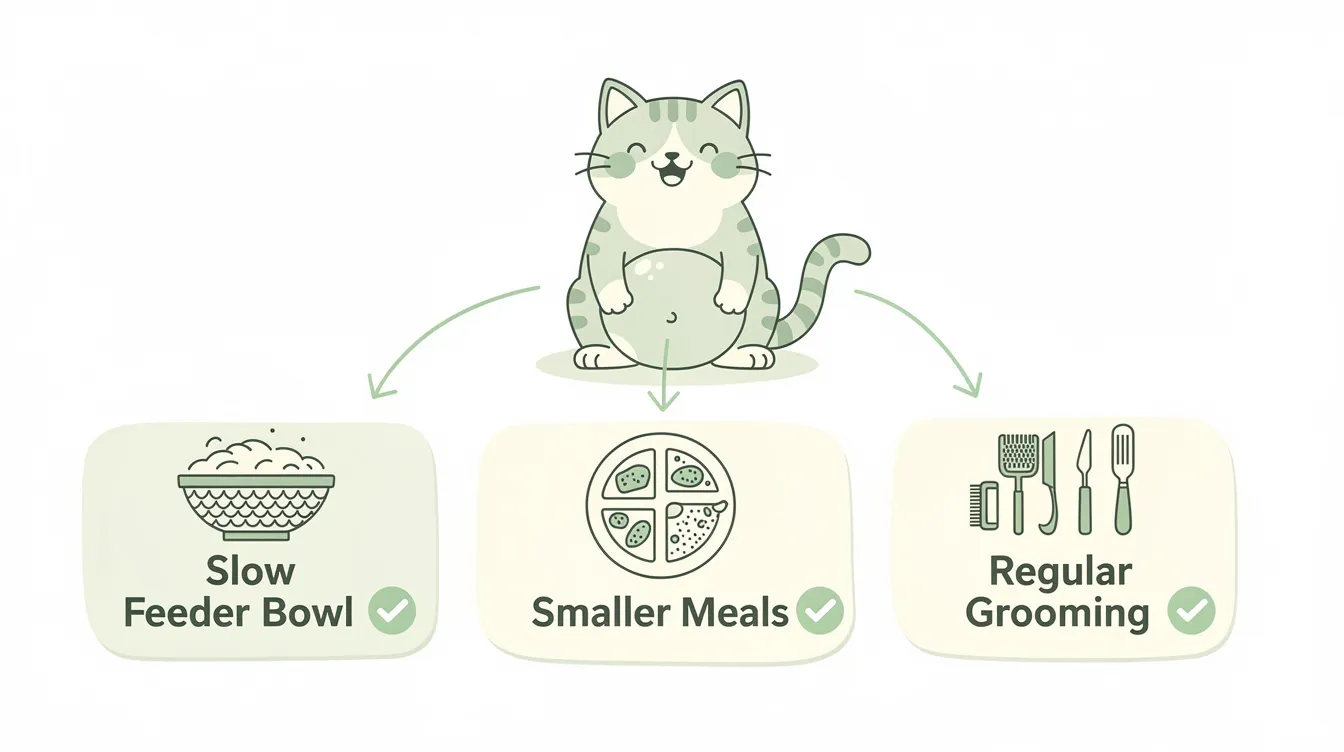
Elderly Cat Bloated Stomach
This carries more concern because senior cats are prone to conditions that cause abdominal swelling: kidney disease, liver disease, heart disease, cancer, and fluid buildup (ascites). An older cat may act completely normal while a serious condition develops slowly inside.
If your senior cat (10+ years) develops a bloated belly, don’t wait, schedule a vet visit even if they seem fine. Blood work and imaging can catch age-related conditions early, when treatment is most effective. Related: Cat Diabetes Symptoms, diabetes can cause weight and body changes in senior cats.
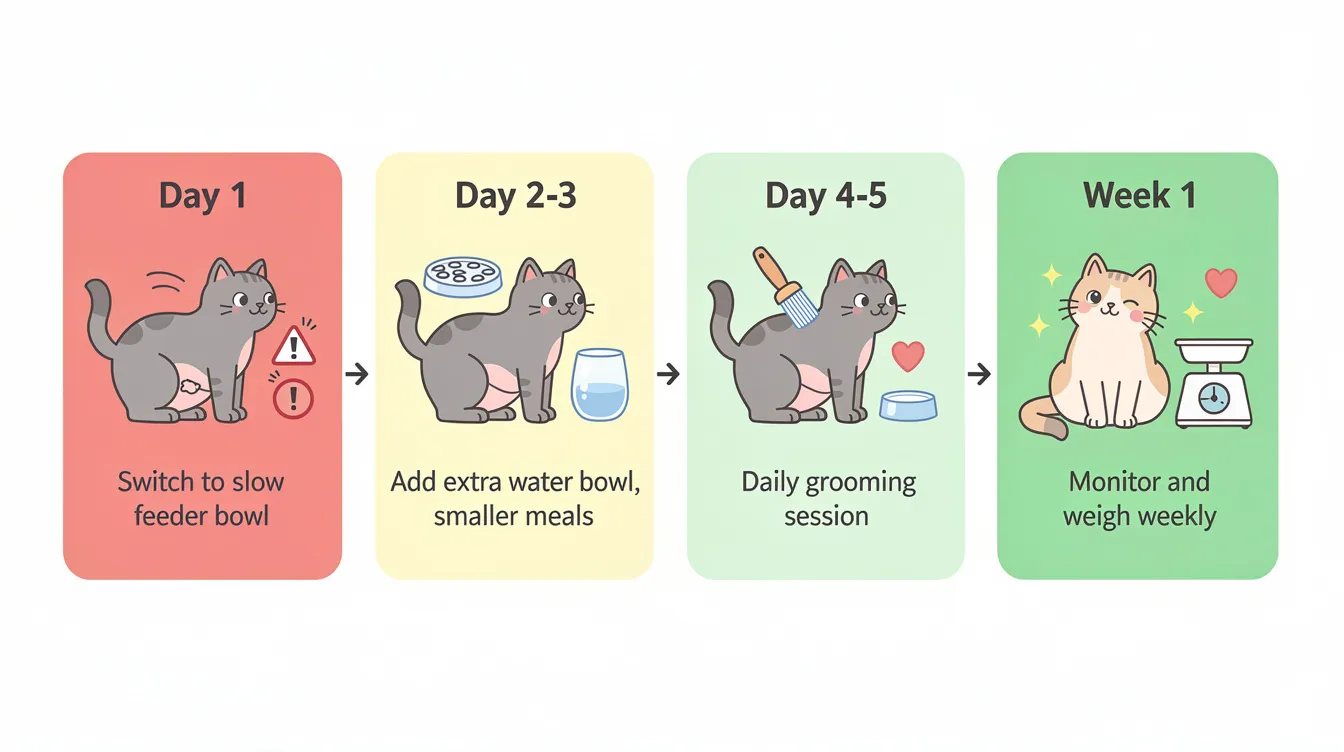
Home Remedies for Bloated Cat
These are appropriate ONLY when the belly is soft, the cat is eating and pooping normally, and you suspect gas or overeating:
- Feed smaller, more frequent meals — prevents overeating and air swallowing. Related: How Often Should I Feed My Cat Wet Food.
- Slow-feeder bowl — prevents eating too fast, which causes gas
- Pumpkin puree — 1 teaspoon per meal adds fiber and relieves mild constipation
- Increase water intake — water fountain, wet food, or adding water to meals
- Gentle belly massage — light circular motions can help move trapped gas
- Probiotics — cat-specific probiotics improve gut balance and reduce gas
- Deworming — if your cat isn’t up to date on deworming, this could resolve the bloating entirely
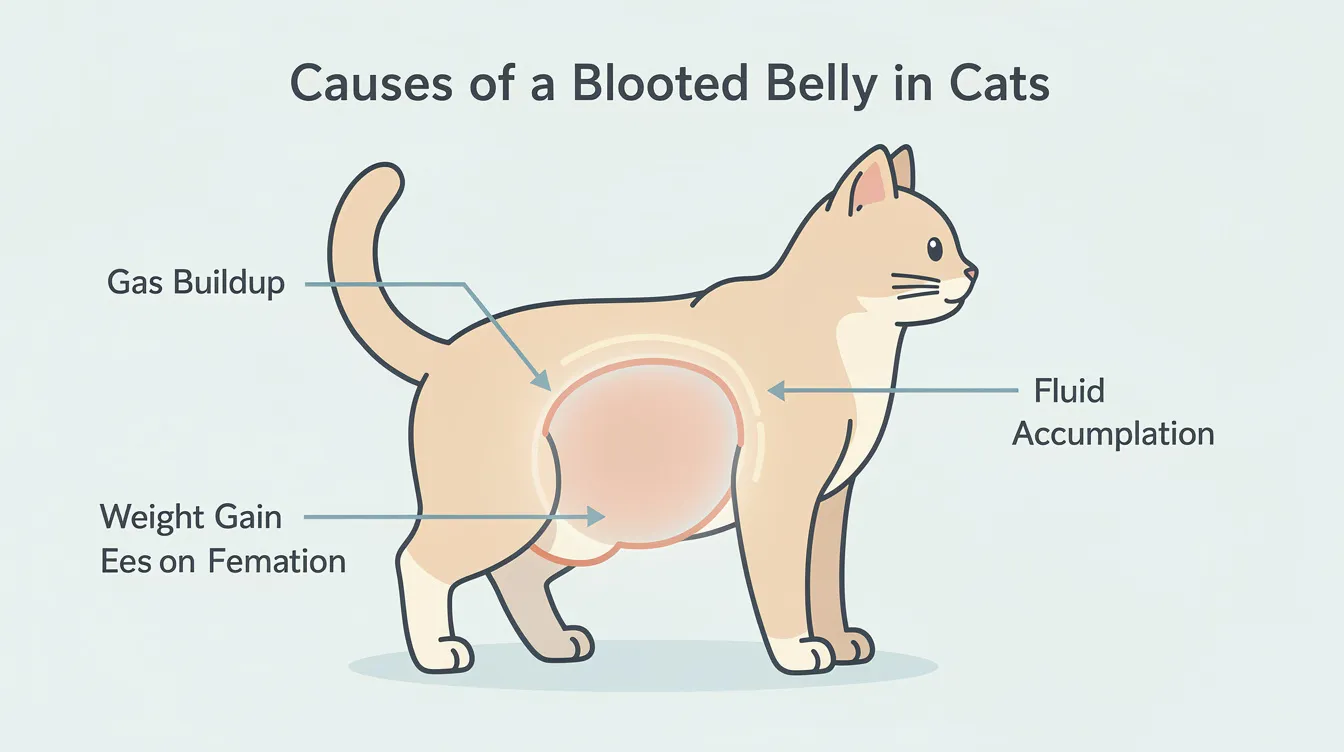
When to See the Vet
🩺 See Your Vet If:
- Belly is hard, firm, or painful to touch
- Bloating appeared suddenly (hours, not days)
- Male cat straining to urinate — 🚨 EMERGENCY
- Bloating has not improved after 48 hours
- Cat is vomiting alongside bloating. Related: Why Is My Cat Throwing Up
- Cat stops eating or drinking
- Lethargy, hiding, or behavioral changes develop
- Belly is growing progressively larger over days/weeks
- Senior cat (10+) with any abdominal swelling
- You feel a “fluid wave” when pressing the belly
- Cat hasn’t been dewormed recently and has a pot-bellied appearance
Your vet will perform a physical exam, may take X-rays or ultrasound, run blood work, and check for fluid accumulation. If your cat also seems weak, see: My Cat Is Not Eating or Drinking and Very Weak.
Common Mistakes
- Assuming “acting normal” means nothing is wrong — cats hide pain. A normal-acting cat with a bloated belly still needs investigation.
- Waiting too long with male cats — urinary blockage kills within 24–48 hours if untreated
- Confusing fat with bloat — fat is soft and gradual. Bloat can be firm and sudden. The belly test tells the difference.
- Skipping deworming — parasites are one of the most common and fixable causes of a bloated belly
- Giving human medications — no Gas-X, no Pepto-Bismol, no antacids without vet guidance
Frequently Asked Questions
It depends on the belly feel. Soft belly plus eating and pooping normally usually means something minor, like gas, overeating, or weight gain. Hard belly, sudden onset, or additional symptoms means it’s time to see your vet. When in doubt, a vet visit is always safer than waiting.
FIP (Feline Infectious Peritonitis) in its wet form causes progressive fluid buildup, the belly becomes pendulous, firm, and heavy, enlarging over days to weeks. The cat may act relatively normal initially. FIP primarily affects young cats under 2 and older cats over 10. If a young cat’s belly is progressively enlarging alongside fever and weight loss, ask your vet about FIP testing.
Yes, stress triggers gas, constipation, and gut inflammation that can cause a bloated appearance. Cats experiencing territorial pressure, environmental changes, or anxiety are more prone to stress-related digestive issues. Related: Is My Cat Depressed.
The Bottom Line
My cat looks bloated but acting normal, start with the belly test. Soft and squishy usually means minor (gas, overeating, weight). Hard, firm, or painful means a vet visit is needed. Male cats with bloating need extra urgency due to urinary blockage risk. Elderly cats with any abdominal swelling deserve blood work. Home remedies work for mild gas, but a belly that stays swollen beyond 48 hours, hardens, or comes with vomiting or appetite loss needs professional diagnosis.
Related: Why Does My Cat’s Poop Smell So Bad, digestive issues often accompany bloating. Also: Cat Has Diarrhea But Acting Normal, when “acting normal” doesn’t mean everything is fine.