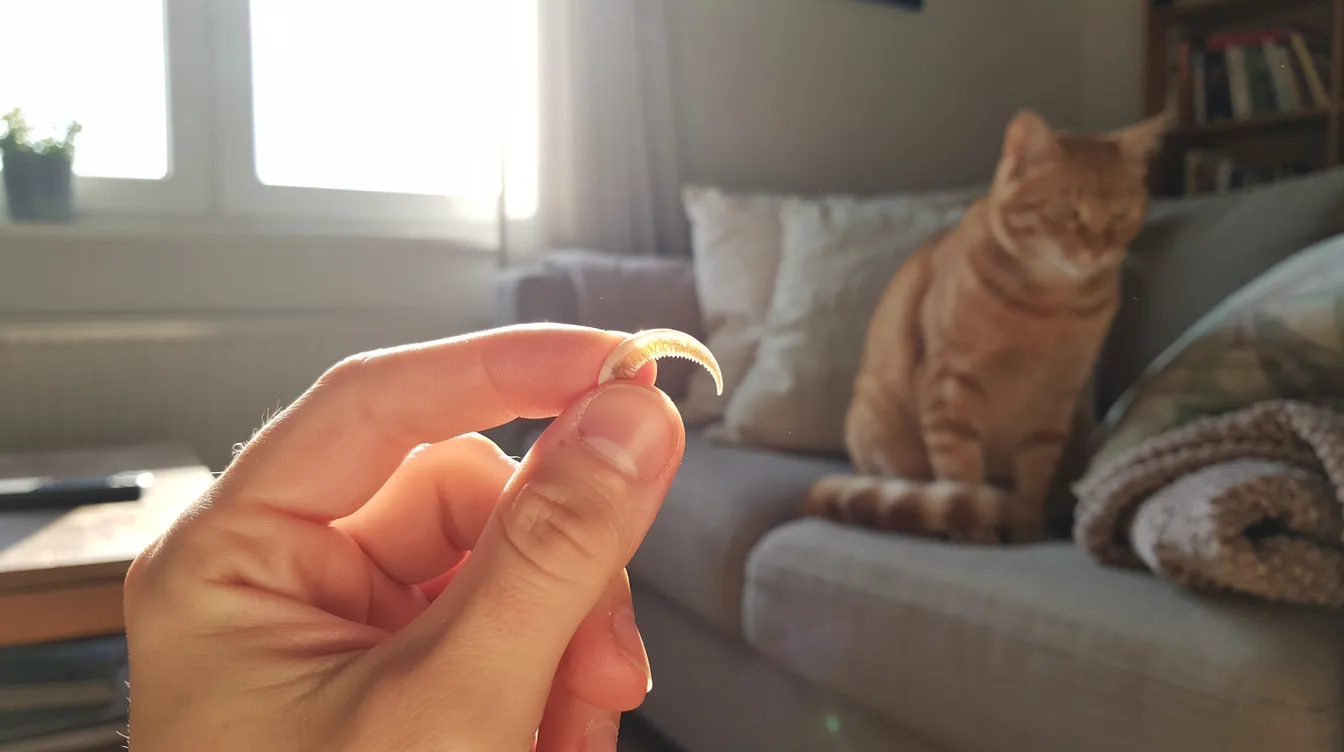
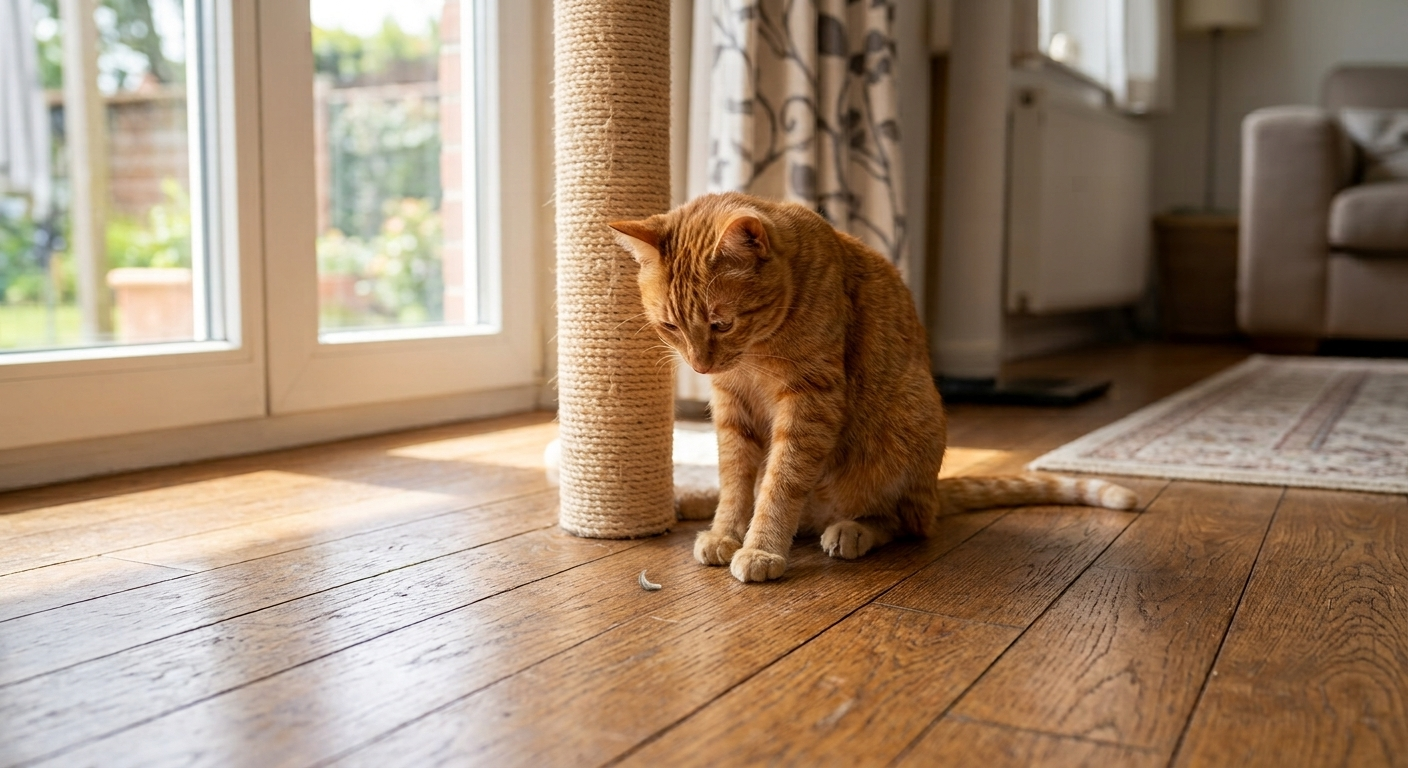
Do cats lose their claws? Yes — and if you’ve just found what looks like a small curved claw on the carpet, near the scratching post, or in your cat’s bed, here’s the reassuring part: that almost certainly isn’t a claw.
It’s the hollow outer sheath that cats shed as part of normal claw growth. The actual claw is still on your cat, sharper than it was before. Most owners find one of these at some point and briefly panic — and in the great majority of cases, nothing is wrong at all.
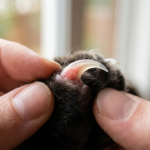
Cats shed the hollow outer layer of each claw every few months as a new, sharper claw grows underneath. What you find on the floor is that empty husk — light, curved, and hollow — not a whole claw. This is completely normal. Losing an entire solid claw, or a claw that bleeds, is a different matter and usually means trauma or infection, which needs a vet.
- Bleeding from the nail bed that doesn’t stop within a few minutes
- A whole solid claw missing, rather than a hollow shell
- Limping, or refusing to put weight on the paw
- Swelling, redness, heat, or discharge around the toe
- Your cat crying out or pulling away when the paw is touched
- Several claws loose, brittle, or falling out at once
Shed Sheath vs Lost Claw — How to Tell
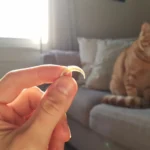
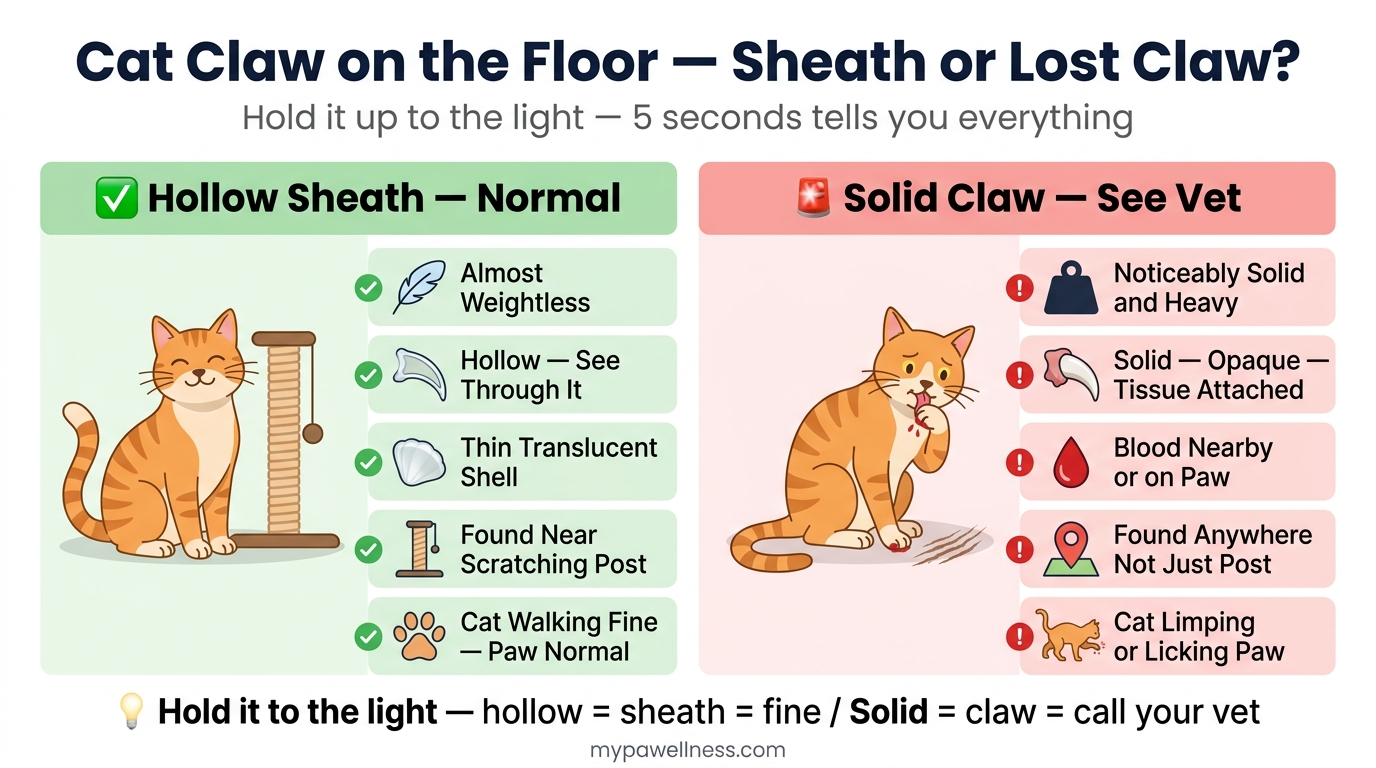 This is the distinction that answers almost everyone’s question, and it takes about five seconds once you know what to look for. Pick up what you found and look at it:
| What You Found | Shed Sheath (Normal) | Lost Claw (Not Normal) |
|---|---|---|
| Weight | Almost weightless | Noticeably more solid |
| Structure | Hollow — open at the wide end, you can see through it | Solid all the way through |
| Appearance | Thin, translucent or brownish shell | Opaque, thicker, often with tissue attached |
| Where you find it | Near the scratching post, cat tree, or favourite scratching spot | Anywhere — often with blood nearby |
| Your cat | Completely normal, no limping, paws look fine | May limp, lick the paw, or avoid using it |
| Bleeding | None | Often, though not always |
| What to do | Nothing — throw it away | 🚨 Check the paw and call your vet |
How Claw Shedding Works
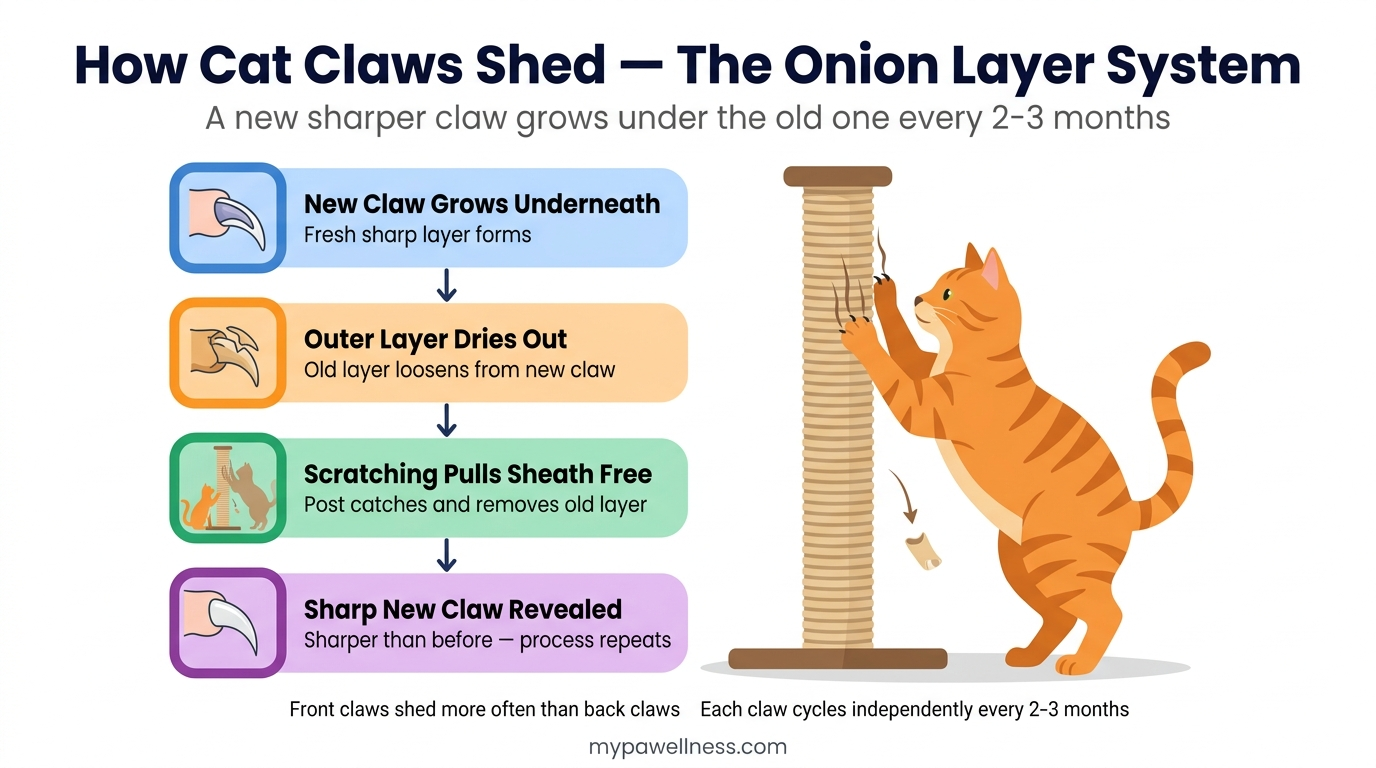 Cat claws don’t grow like human fingernails, which grow outward from the base in a single continuous plate. A cat’s claw grows in layers, a bit like an onion — a new, sharper claw develops underneath while the old outer layer dries out on top.
Once that outer layer has done its job, it loosens and comes away as a hollow husk, revealing the fresh claw beneath. Each of your cat’s claws goes through this independently, so it happens a few at a time rather than all at once.
This is why the sheaths you find are curved and claw-shaped but feel like nothing in your hand — they’re the shell, not the tool.
How Often Do Cats Lose Their Claws?
Each claw typically sheds its outer layer roughly every two to three months, though this varies with age, activity, and how much your cat scratches. An active cat with a well-used scratching post may shed more visibly; an older, less active cat may shed more slowly.
Because the claws cycle independently, you might find a sheath every few weeks around the house rather than a batch all at once. Front claws are shed more often than back claws, partly because cats use their front paws far more for scratching and climbing.
Why Scratching Posts Matter Here
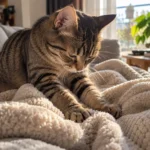
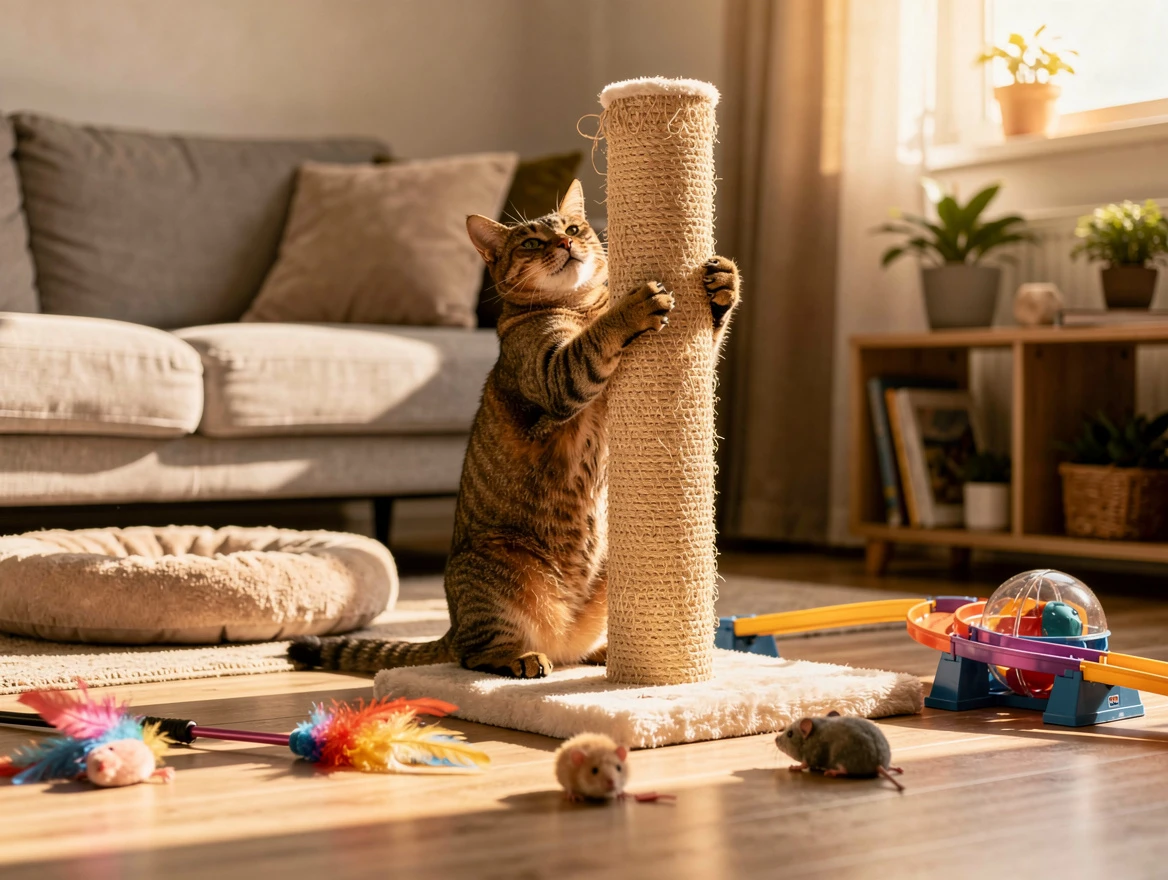 Scratching isn’t just territorial marking or a stretch — it’s the mechanism cats use to pull off those loosened outer sheaths. When your cat drags their claws down a sisal post, they’re catching the old husks and working them free.
This is one of the practical reasons a good scratching post matters: without a suitable surface, old sheaths can stay on longer than they should, and in some cats — especially seniors who scratch less — claws can overgrow. Related: How to Stop a Cat From Scratching Furniture covers choosing a post your cat will actually use.
So finding sheaths near the scratching post isn’t a sign of a problem. It’s a sign the post is doing exactly what it’s for.
When Losing a Claw Isn’t Normal
Total claw loss — an entire solid claw rather than a hollow shell — is a different situation and usually has a cause worth identifying:
Trauma
The most common cause. A claw can be torn out by catching on carpet, fabric, or a screen door, during a fall, or in a fight with another cat. It’s painful and often bleeds. If the claw was ripped rather than shed, the nail bed is exposed and vulnerable to infection, which is why a vet check matters even if the bleeding stops.
Infection
Bacterial or fungal infection in the nail bed can cause claws to become loose, brittle, or fall out, often with swelling, redness, or discharge around the toe. Infections generally need veterinary treatment — they rarely resolve on their own, and the right treatment depends on what’s causing it.
Underlying health conditions
Less commonly, claws falling out — particularly several at once, or claws that are consistently brittle and fragile — can reflect a wider health problem. Immune-related conditions and, rarely, tumours affecting the toe can present this way. This is one reason “several claws at once” is on the vet list rather than the wait-and-see list.
The pattern to watch for: one hollow sheath near the scratching post is routine. A solid claw, blood, limping, or multiple claws coming loose is a vet visit.
Does a Lost Claw Grow Back?
In the case of a normal shed sheath, there’s nothing to grow back — the claw underneath was already there, which is the whole point of the process.
When a claw is torn out through trauma, it will usually regrow — provided the nail matrix is intact. That’s the tissue at the base of the claw that actually produces new claw growth, and it’s the thing your vet will be assessing. If the matrix survived the injury, expect regrowth over several weeks to a couple of months. If it was badly damaged, the claw may come back misshapen or not at all, which is worth knowing in advance rather than worrying about later.
The important exception: a claw removed by declawing does not grow back. Declawing isn’t a nail removal — it’s amputation of the last bone of each toe, which is why it’s permanent and why it’s banned or restricted in many places.
My Cat’s Nail Fell Off but There’s No Blood
This is one of the most common follow-up questions, and it’s usually good news. No blood almost always means what came off was a shed sheath, not the claw itself — there’s no wound because nothing was torn.
Check the paw anyway: look at the toe the sheath would have come from and confirm there’s a healthy, intact claw there. If there is, and your cat is walking normally and not licking at the paw, nothing further is needed.
If the claw genuinely is missing and there’s still no blood, that can happen when the claw came away cleanly or some time earlier. It’s still worth a vet check, because an exposed nail bed can become infected even without visible bleeding.
Older Cats and Claw Retraction
 Senior cats often develop a related but different problem: they become less able to retract their claws fully. This is usually down to arthritis and reduced flexibility in the toes rather than anything wrong with the claws themselves.
The knock-on effect matters. A cat who can’t retract properly and scratches less will shed sheaths less effectively, and the claws can overgrow — occasionally curling far enough to press into the paw pad, which is painful and can cause infection.
If your cat is over about ten, it’s worth checking their claws every few weeks: gently press the toe to extend the claw and look at the length and curve. Senior cats often need regular trimming even if they never did before. Related: Why Is My Cat Limping, since an overgrown claw pressing into the pad is an easily missed cause.
Is It Painful for a Cat to Lose a Claw?
Shedding a sheath is not painful at all — it’s a normal, passive process, and most cats don’t appear to notice it happening.
Losing an actual claw through trauma is painful, sometimes considerably so. The nail bed has a nerve and blood supply, which is why a torn claw bleeds and why cats will often hold the paw up, limp, or lick at it repeatedly. A cat that has genuinely lost a claw usually tells you through behaviour, not just through what you find on the floor.
Frequently Asked Questions
Not if what you found is a hollow, lightweight sheath and your cat is behaving normally — that’s routine shedding. Be concerned if there’s bleeding, limping, swelling, or if what came off is a solid whole claw. Multiple claws loose or falling out at once also warrants a vet visit.
The outer sheaths are, yes — that’s how a cat keeps their claws sharp, with the old layer coming away to expose the new claw beneath. The claw itself is not supposed to fall off. Finding hollow shells is normal; finding whole claws is not.
Check for bleeding and apply gentle pressure with clean gauze if needed. Then call your vet, even if the bleeding stops. Fight injuries carry a high risk of infection because of bacteria from the other cat’s claws or teeth, and an exposed nail bed is an easy entry point. Related: cat abscesses often begin exactly this way.
Older cats don’t lose claws more often, but they do shed sheaths less effectively because they scratch less and may struggle to retract fully. The result is usually overgrown claws rather than lost ones — which is why senior cats often need trimming they never needed before.
The opposite. Scratching pulls off the worn outer sheath and exposes the sharp new claw underneath — which is why cats often seem sharper right after a good session at the post.
The Bottom Line
Do cats lose their claws? They shed the outer sheath of each claw every few months, and the small hollow husk you found is that shell — not a claw, and not a problem. It usually turns up near the scratching post, because scratching is how cats work the old layer free.
The version worth acting on looks different: a solid claw, bleeding, limping, swelling, or several claws coming loose at once. Hold what you found up to the light — if it’s hollow, your cat is fine.
Related Articles
How to Stop a Cat From Scratching Furniture
Scratching is how cats shed those claw sheaths.