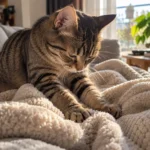
Cat vomiting white foam is one of the most common reasons cat owners panic, and in most cases it turns out to be something manageable. The white foam is a mix of stomach acid, saliva, and mucus that appears when your cat vomits on an empty stomach. But sometimes it signals something that needs veterinary attention.
I’ve dealt with this more times than I can count with my four cats. One of them used to throw up white foam every few weeks, always early morning, always on an empty stomach. A simple feeding schedule change fixed it completely. But another time, the same symptom turned out to be the start of a stomach infection that needed antibiotics. The cause matters.
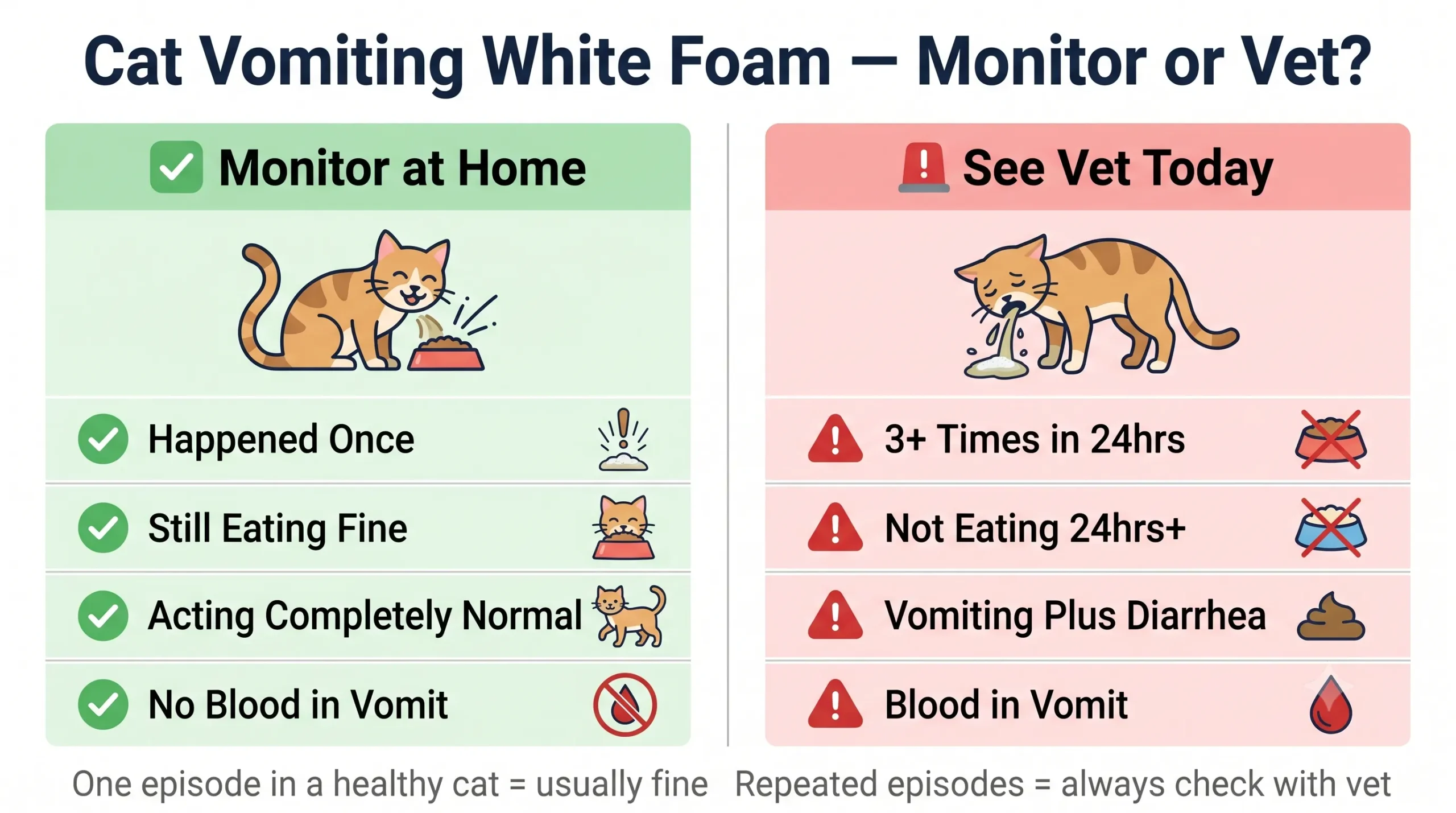
This is usually caused by an empty stomach — stomach acid and mucus with nothing to digest creates the foamy appearance. A single episode in an otherwise healthy cat is rarely serious. See a vet if vomiting happens multiple times in 24 hours, lasts more than 2 days, involves blood, or your cat stops eating and drinking.
- Vomiting multiple times in a few hours
- Blood in the vomit (red or dark brown)
- Cat is not eating AND not drinking — especially for more than 24 hours
- Lethargy — your cat seems weak, unresponsive, or hiding
- Diarrhea alongside the vomiting
- Possible ingestion of a toxic plant or substance
- Kitten under 6 months vomiting repeatedly
What Does Cat Vomiting White Foam Mean
White foam vomit is a combination of stomach acid, saliva, and air. It appears when there’s nothing solid in the stomach to bring up. The bubbles form because excess gas in the stomach mixes with the liquid, creating a foamy texture. This is different from vomiting food (which indicates the stomach had contents to expel) or yellow bile (which means bile from the small intestine backed up into the stomach).
| Vomit Type | What It Looks Like | What It Usually Means |
|---|---|---|
| White foam | Bubbly, frothy white liquid | Empty stomach, acid irritation |
| Yellow or green liquid | Bile-colored, no food | Bile reflux, prolonged empty stomach |
| Undigested food | Recognizable food pieces | Eating too fast, food intolerance |
| Brown or dark | Dark colored, possible blood | Internal bleeding — see vet immediately |
| Hairball with foam | Tube-shaped hair mass with liquid | Normal hairball expulsion |
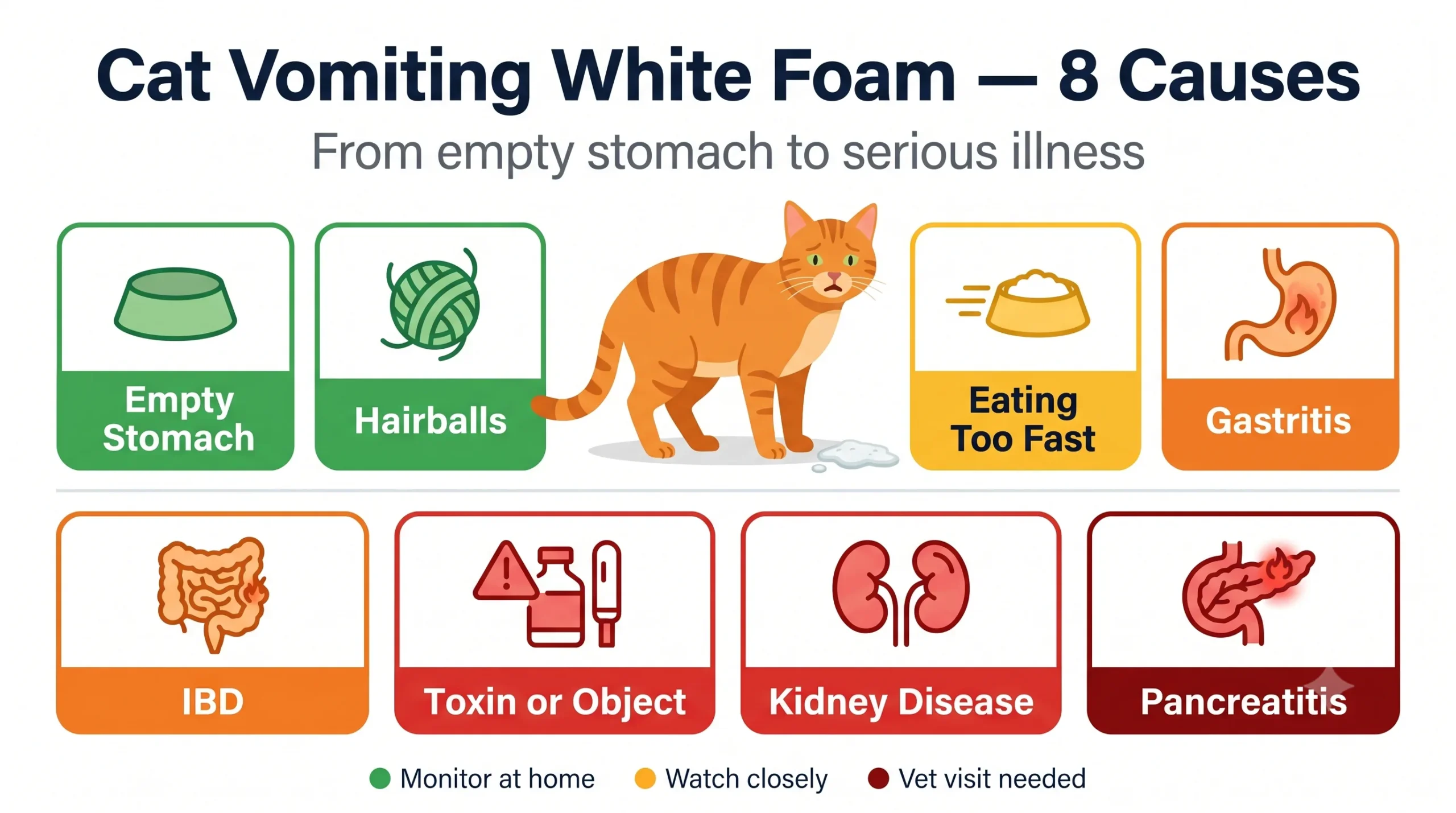
8 Causes of Cat Vomiting White Foam
1. Empty Stomach — The Most Common Cause
When a cat goes too long without eating, stomach acid builds up with nothing to digest. This acid irritates the stomach lining and triggers vomiting, producing white foam because the stomach is empty. This is especially common in the early morning if your cat eats dinner at 6 PM and doesn’t eat again until morning. Repeated lip-licking or swallowing before an episode is a common early sign of the nausea building up. The fix is simple: feed smaller meals more frequently throughout the day, or leave a small amount of dry food available overnight.
2. Hairballs
Cats swallow fur during grooming. Most passes through the digestive system, but some accumulates in the stomach. Before a hairball is expelled, cats often gag and vomit white foam as the stomach works to push the hair mass up. If your cat vomits white foam and then produces a hairball shortly after, that’s completely normal. Regular brushing reduces hairball frequency significantly.
3. Eating Too Fast
Cats that gulp their food swallow air along with it. This can cause immediate vomiting of the food they just ate, or delayed vomiting of white foam as the stomach struggles to process the air and food together. A slow feeder bowl solves this for most cats. If your cat eats too fast consistently, also check that they aren’t being bullied away from food by other pets.
4. Gastritis — Stomach Inflammation
Gastritis means the stomach lining is inflamed. This can be caused by dietary changes, eating something they shouldn’t have, food allergies, or bacterial infection. A cat with gastritis vomits white foam because the inflamed stomach produces excess acid. Mild gastritis resolves with a bland diet for 24–48 hours. Persistent gastritis needs veterinary evaluation.
5. Inflammatory Bowel Disease (IBD)
IBD causes chronic inflammation of the digestive tract. Cats with IBD vomit frequently, often white foam, and may also have chronic diarrhea, weight loss, and decreased appetite. If your cat keeps vomiting white foam regularly over weeks or months, IBD is one of the conditions your vet will want to investigate.
6. Ingestion of a Foreign Object or Toxin
Cats that eat string, rubber bands, small toys, or toxic plants may vomit white foam as the stomach reacts to the irritant. If you suspect your cat ingested something toxic, especially lilies, which are fatal to cats, see the vet immediately, don’t wait. Related: My Cat Ate a Lily and Nothing Happened — lily toxicity can be delayed and silent.
7. Kidney Disease
Chronic kidney disease causes toxin buildup in the blood, which triggers nausea and vomiting. White foam vomiting alongside increased water drinking, weight loss, and decreased appetite can indicate kidney problems, especially in cats over 7 years old. Related: Signs and Symptoms of Kidney Failure in Cats.
8. Pancreatitis
Inflammation of the pancreas causes vomiting, abdominal pain, lethargy, and loss of appetite. Pancreatitis can range from mild to life-threatening. A cat vomiting white foam alongside lethargy and refusing food warrants a same-day vet visit to rule out pancreatitis and other serious causes.
When Vomiting Comes With Food Refusal
When vomiting and not eating happen together, the concern level rises. A cat that vomits once but eats normally afterward is usually fine. A cat that vomits AND refuses food for more than 24 hours may be dealing with something more than an empty stomach — gastritis, pancreatitis, kidney disease, or a foreign body obstruction are all possibilities.
Cats that stop eating for more than 48 hours are at risk of hepatic lipidosis (fatty liver disease), which is a life-threatening condition. Don’t wait longer than 24 hours if your cat is vomiting and refusing all food. Related: My Cat Is Not Eating or Drinking and Very Weak.
When Diarrhea Comes Too
Vomiting and diarrhea together indicate the entire digestive tract is affected, not just the stomach. Common causes include food poisoning, viral or bacterial infection, parasites, or a sudden dietary change. This combination causes dehydration much faster than vomiting alone, especially in kittens and senior cats.
If your cat has both symptoms for more than 24 hours, see the vet. Dehydration in cats escalates quickly.
Vomiting Several Times in a Day
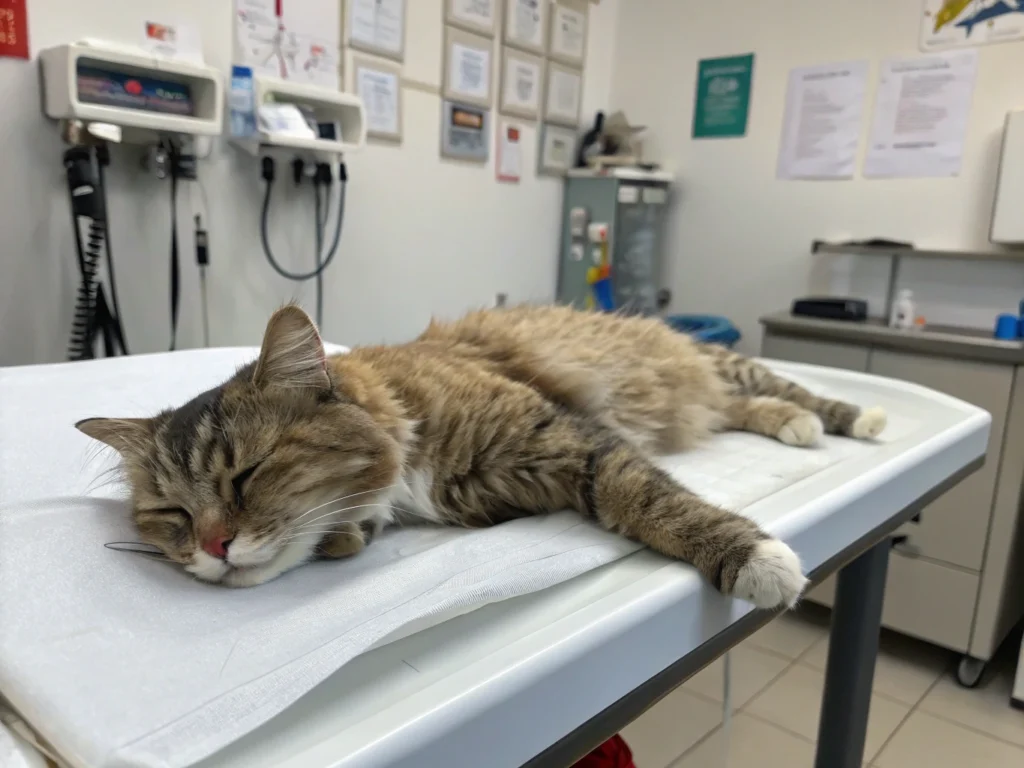
A single episode of white foam vomiting is usually harmless. Multiple episodes in the same day is different, your cat’s stomach is actively irritated and can’t settle. If your cat keeps vomiting white foam 3 or more times in 24 hours, withhold food for 12 hours (water should stay available), then offer a small amount of bland food. If vomiting continues after that, see the vet.
This fasting approach is for cats who are otherwise bright, alert, and drinking normally. It’s not appropriate for kittens, senior cats, or any cat that’s already refusing food, those cats need a vet call rather than a fasting period at home.
| Frequency | Likely Cause | Action |
|---|---|---|
| Once, then normal | Empty stomach, minor irritation | Monitor — usually fine |
| 2–3 times in one day | Gastritis, hairball, dietary issue | Withhold food 12 hrs, bland diet |
| Multiple times daily for 2+ days | Infection, IBD, obstruction, toxin | See vet same day |
| Chronic — weekly for months | IBD, food allergy, kidney disease | Full veterinary workup needed |
Home Remedy for Cat Vomiting White Foam
Home care is appropriate ONLY for mild cases — a single episode or two in a cat that’s otherwise acting normally, eating, drinking, and showing no other symptoms.
- Feed smaller, more frequent meals — 3–4 small meals per day instead of 1–2 large ones prevents the empty stomach acid buildup that causes most white foam vomiting
- Leave a small amount of dry food overnight — prevents early morning empty stomach vomiting
- Use a slow feeder bowl — prevents gulping air and eating too fast
- Bland diet for 24–48 hours — plain boiled chicken or white fish with a small amount of rice settles an irritated stomach. Related: Can Cats Eat Rice — safe when used as a short-term bland diet ingredient
- Ensure fresh water is always available — dehydration worsens nausea
- Brush regularly — reduces hairball-related vomiting significantly
- Remove access to toxic plants and small objects — prevention is the best home remedy
When to See the Vet
🩺 See Your Vet If:
- Vomiting white foam more than 3 times in 24 hours
- Cat is not eating for more than 24 hours
- Vomiting AND diarrhea together
- Blood in vomit — red or dark brown
- Lethargy, weakness, or hiding
- Weight loss alongside chronic vomiting
- Kitten under 6 months — any repeated vomiting
- Senior cat (7+) with new vomiting pattern
- Possible toxin or foreign object ingestion
Your vet will likely run blood work, check for parasites, and may do imaging (X-ray or ultrasound) to identify the cause. If your cat is also showing other symptoms, see: My Cat Is Lethargic But Eating and Drinking — lethargy with vomiting often indicates infection or inflammation.
Frequently Asked Questions
A single episode of white foam vomiting in a cat that’s otherwise eating, drinking, playing, and acting completely normal is almost always fine, likely an empty stomach or minor irritation. Monitor for 24 hours. If it doesn’t repeat and your cat stays normal, no vet visit is needed.
The most commonly recommended approach across sources is a short fast (12 hours, water available) followed by small amounts of bland food, boiled chicken or white fish with plain rice. Ensure hydration is maintained. If vomiting persists beyond 24–48 hours despite home care, see a vet regardless of which home care approach you use.
They’re easy to confuse, but the motion is different. Vomiting involves abdominal heaving and typically produces liquid or food. Coughing is a shorter, more repetitive hacking motion, often ending in a small amount of foam or mucus, without the same forceful abdominal contractions. Cats with asthma or other respiratory issues often “cough up” what looks like vomit but is really just cleared airway mucus. If this happens repeatedly and doesn’t match the pattern of a normal empty-stomach vomit, mention it to your vet as a possible respiratory issue rather than a digestive one.
The Bottom Line
Cat vomiting white foam is usually an empty stomach issue, manageable with more frequent feeding and basic home care. But when it happens repeatedly, comes with food refusal, diarrhea, lethargy, or blood, it signals something that needs veterinary attention. One episode in a healthy cat is rarely serious. Multiple episodes in a day, or vomiting that persists beyond 48 hours, always warrants a vet visit.
Related: Why Is My Cat Throwing Up — the complete guide to all types of cat vomiting.
Related Articles
When vomiting plus food refusal becomes urgent.
Lethargy plus vomiting often means infection or inflammation.