Most articles about how much wet food to feed a cat say things like “1–2 cans per day” — which tells you almost nothing useful. A 3-ounce pouch and a 13-ounce can are not the same. A sedentary 15-pound cat and an active 10-pound cat are not the same. Your cat is an individual, not an average.
Here is the actual formula that works, a feeding chart by weight, and the mistakes that cause most cats to become overweight even with an attentive owner.
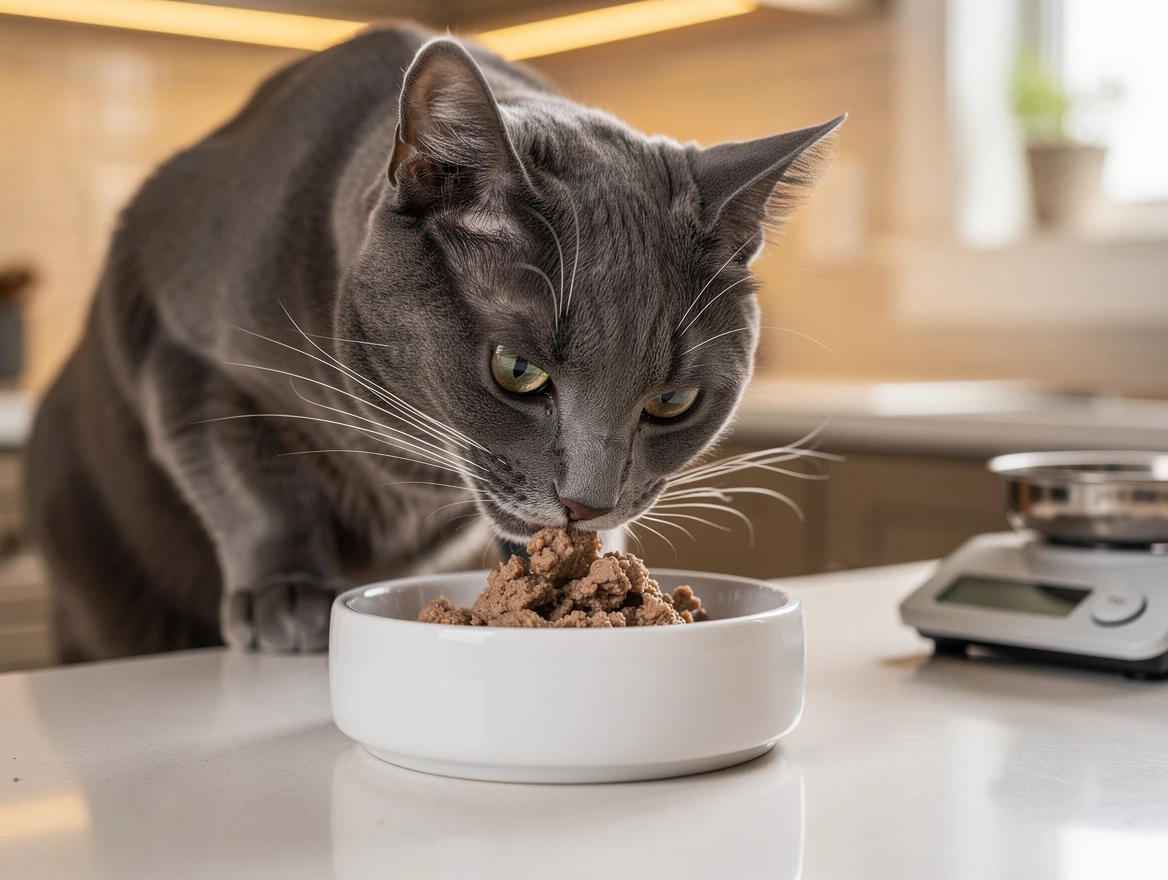
How much wet food to feed a cat comes down to a calorie formula: (weight in lbs × 10) + 70, then divide by the calories in your specific wet food. Split into 2 meals. A typical 10-pound adult cat needs about 170 calories per day — roughly one standard 5.5-oz can total.
The Calorie Formula
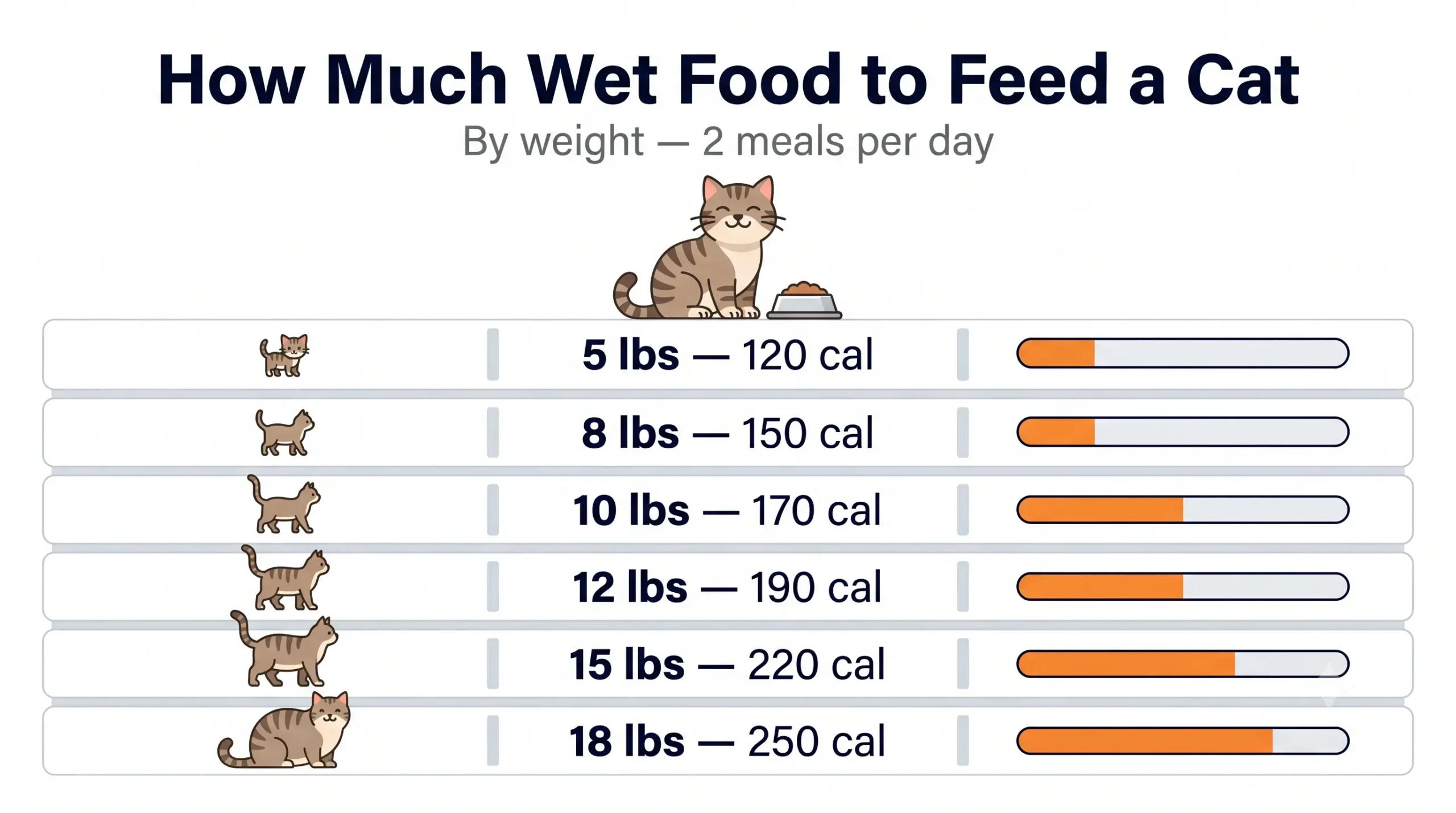
This is what most feeding guides skip. The amount of wet food your cat needs depends entirely on how many calories your specific food contains — not on how many ounces are in the can.
Example — 10 pound adult cat:
(10 × 10) + 70 = 170 calories per day
If your wet food has 180 calories per 5.5-oz can: 170 ÷ 180 = 0.94 cans per day — split into two meals of just under half a can each.
Activity adjustments:
- Very active cat — add 10–15% to the daily calorie total
- Sedentary indoor cat — subtract 10–15%
- Overweight cat needing to lose weight — reduce by 15–20% and increase gradually over months, never crash-diet a cat
Wet Food Portions by Weight Chart
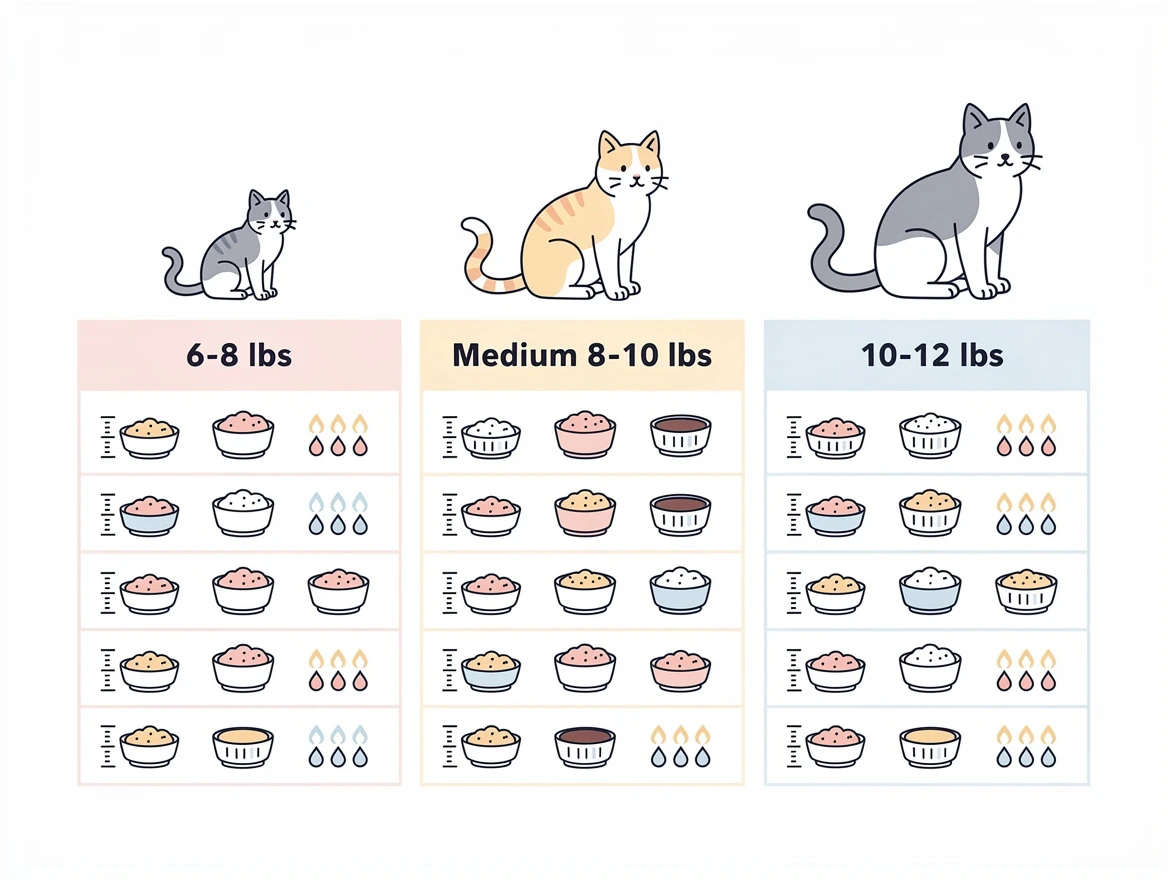
This chart assumes premium wet food at approximately 180 calories per 5.5-oz can. If your food has a different calorie count, adjust the portions accordingly using the formula above.
| Cat Weight | Daily Calories | Daily Wet Food | Per Meal (2x day) |
|---|---|---|---|
| 5 lbs | 120 cal | 0.67 cans | ~⅓ can |
| 8 lbs | 150 cal | 0.83 cans | ~⅜ can |
| 10 lbs | 170 cal | 0.94 cans | ~½ can |
| 12 lbs | 190 cal | 1.06 cans | ~½ can |
| 15 lbs | 220 cal | 1.22 cans | ~⅝ can |
| 18 lbs | 250 cal | 1.39 cans | ~¾ can |
Related: How Often Should I Feed My Cat Wet Food? — feeding frequency guidance alongside these portions.
Wet Cat Food for Kittens
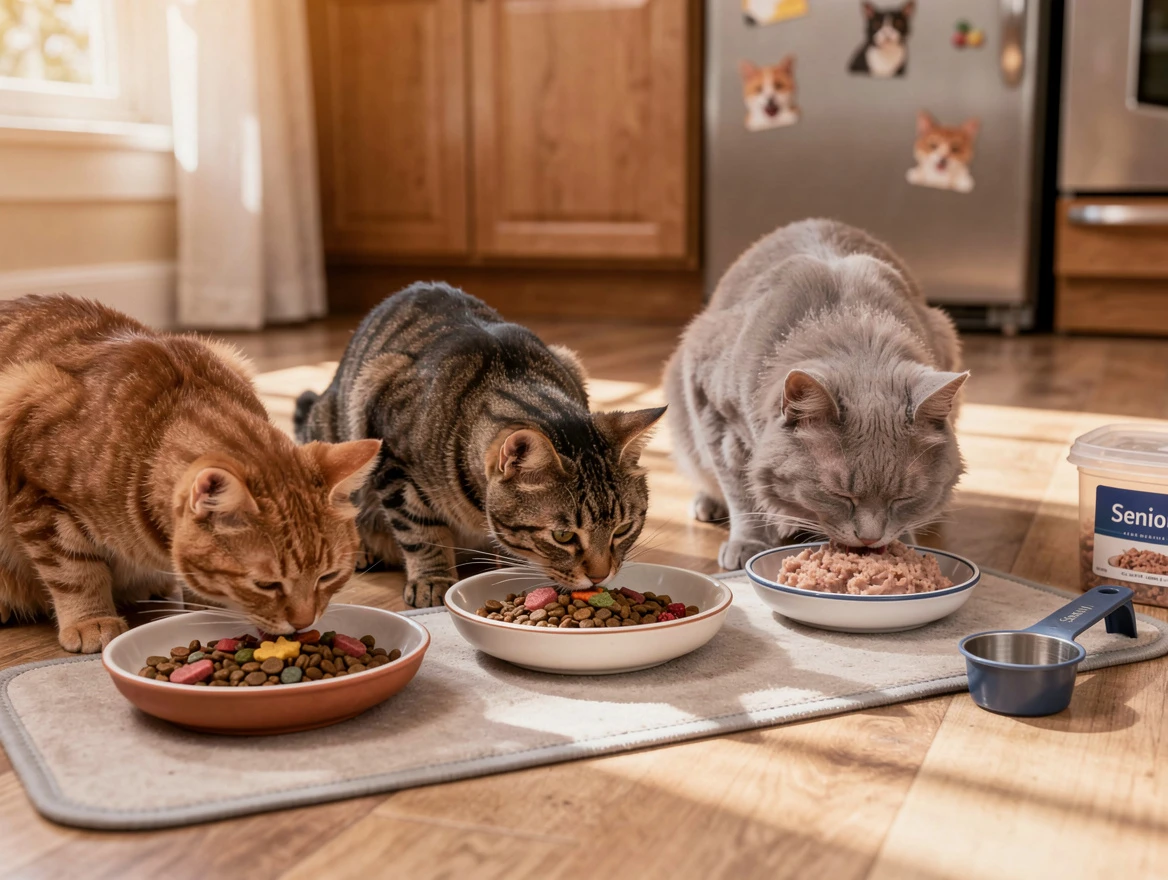
Kittens need close to double the calories of an adult cat per pound of body weight — they’re growing fast and burning energy at a much higher rate. Total daily calories still look lower than an adult’s because a kitten weighs so much less; it’s the per-pound rate that’s elevated, not the total.
| Kitten Age | Typical Weight | Feeding Frequency | Daily Calories | Notes |
|---|---|---|---|---|
| 8–12 weeks | ~2 lbs | 4 meals per day | ~200 cal | Kitten-specific formula required |
| 3–6 months | ~4 lbs | 3–4 meals per day | ~180 cal | High protein, high taurine |
| 6–12 months | ~7 lbs | 3 meals per day | ~160 cal | Transitioning to adult portions |
Use kitten-specific wet cat food until 12 months old. It’s formulated with higher taurine and protein levels that support healthy development. Don’t switch to adult food before the full year mark.
Senior Wet Cat Food — Different Rules
Senior cats (7+ years) have slower metabolisms but actually need more protein — not less — to prevent muscle loss. This surprises most owners.
A 10-pound senior cat still needs roughly 170 calories daily, but the composition matters more than the quantity: higher protein, easier-to-digest ingredients, and ideally joint support (glucosamine). Feeding a senior cat regular adult food at standard quantities can maintain weight on the scale while muscle mass quietly declines — which is exactly what you want to avoid.
Choose a senior wet food formula and feed slightly smaller, more frequent meals rather than large twice-daily portions. If your senior cat’s appetite drops significantly, see the vet — appetite loss in older cats often signals kidney disease, dental pain, or thyroid issues.
Related: Signs of Kidney Failure in Cats — one of the most common health issues affecting senior cat appetite.
How Much Wet and Dry Food to Feed a Cat
Mixing wet and dry food is a valid, popular approach — but the most common mistake is treating them as additions rather than two pieces of the same daily calorie budget.
❌ Wrong: Feed a full wet food portion AND a full dry food portion = 340 calories. This is how cats become overweight.
When working out how much wet and dry food to feed a cat, treat total daily calorie needs as a single budget that wet and dry together must fit inside — not two separate allowances stacked on top of each other.
A typical cup of dry food contains 350–400 calories. Even a small amount of dry food alongside wet food makes a real difference to total daily intake.
How Many Cans of Wet Food Per Day
This depends entirely on can size and calorie content. Here’s a practical breakdown for a 10-pound cat needing 170 calories:
| Food Type | Calories Per Can | Cans Needed (10 lb cat) |
|---|---|---|
| Budget 5.5 oz wet food | ~100–120 cal | 1.4–1.7 cans/day |
| Standard 5.5 oz wet food | ~150–170 cal | ~1 can/day |
| Premium 5.5 oz wet food | ~180–220 cal | 0.8–0.9 cans/day |
| 3 oz pouch | ~70–90 cal | 2–2.4 pouches/day |
Is Wet Food Better for Cats Than Dry
For most cats, yes — wet food is nutritionally preferable. The reasons:
- Hydration — wet food is 70–80% water, closer to what cats would get from prey in the wild. Cats have a low thirst drive and rarely drink enough from a bowl alone.
- Urinary health — higher moisture intake is linked to a lower risk of urinary crystals and blockages, among the more common and serious cat health issues
- Protein content — premium wet food typically runs higher in animal protein and lower in carbohydrates than dry food
- Weight management — wet food is easier to portion accurately because you can see exactly what you’re feeding
This doesn’t mean dry food is harmful — many cats thrive on mixed diets. But if you’re asking whether wet food is better overall, the answer for most cats is yes, particularly for cats prone to urinary issues or ones who need encouragement to stay hydrated.
What a Few Sources Recommend
| Source | Recommendation | Notes |
|---|---|---|
| PetMD | 3–4 oz per meal, 2–3 meals/day for an 8–10 lb cat | Consult a vet for special needs |
| Texas A&M Vet Med | 200–300 calories/day for adult cats | Wet food is 70–80% water |
| AVMA | Calorie-based calculation recommended | Adjust for age, activity, health |
The consistent message across sources: calorie-based calculation beats ounce-based guessing. The formula in this article is how to apply that in practice.
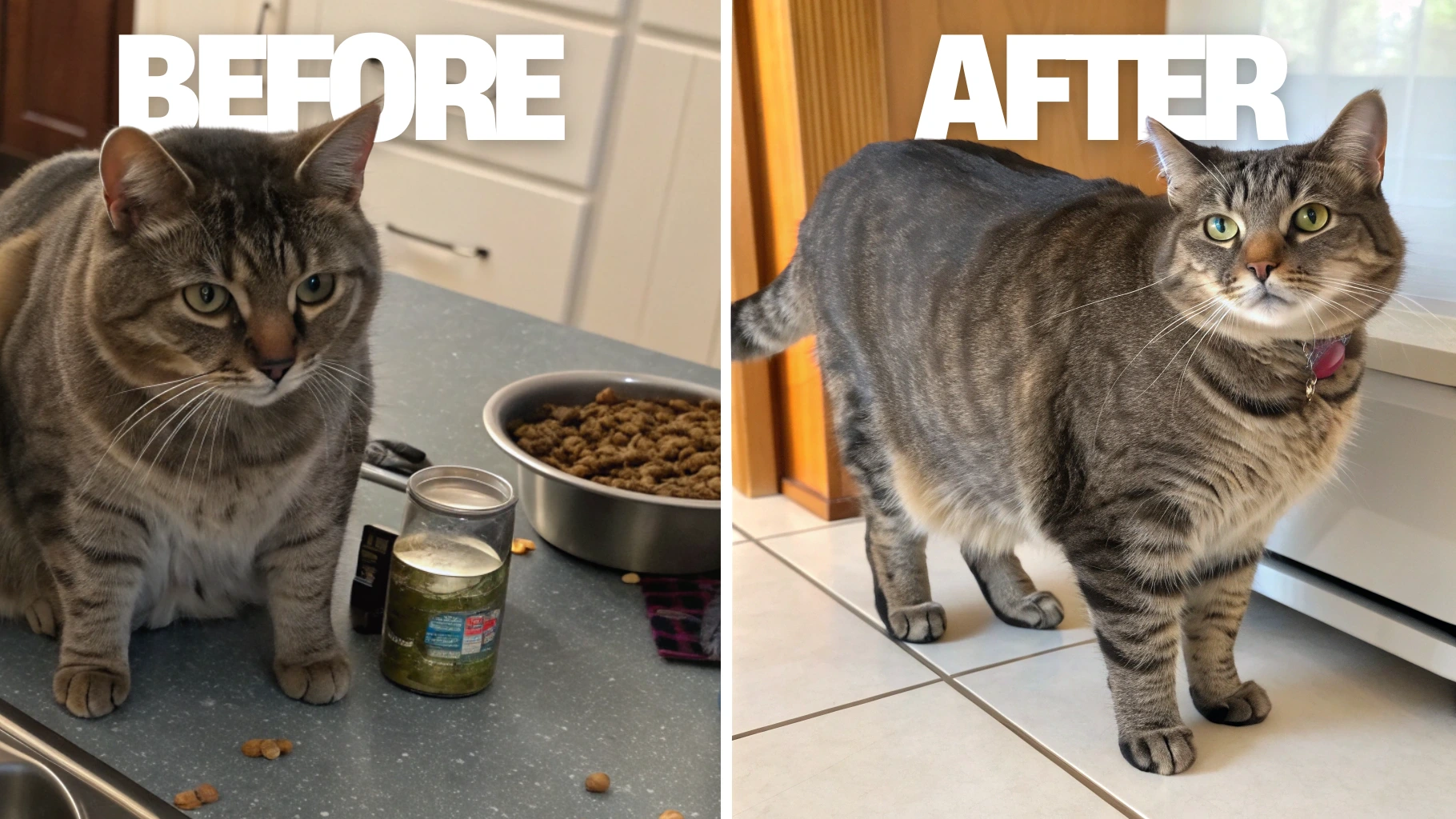
5 Mistakes That Cause Overweight Cats
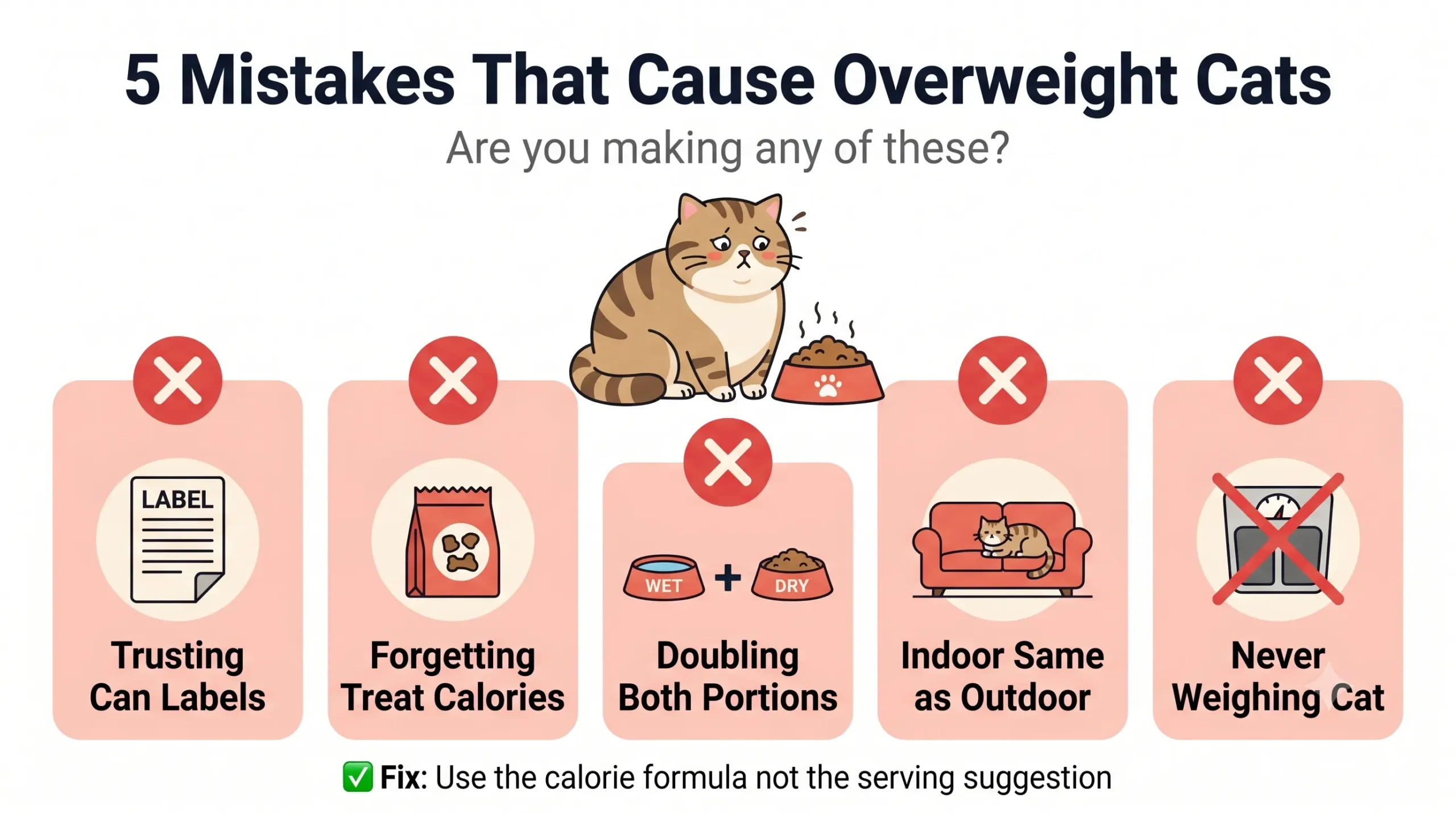
1. Using label serving suggestions as gospel
“1–2 cans daily” on a label has to cover everything from sedentary house cats to active outdoor cats. It’s a range, not a recommendation for your specific cat. Calculate from the formula instead.
2. Forgetting treats in the daily total
Each cat treat is roughly 5–10 calories. Five treats a day adds up to 25–50 calories — 15–30% of some cats’ daily needs. Treats count, and should come out of the wet food portion, not sit on top of it.
3. Adding wet food on top of dry food
The most common cause of overweight cats in mixed-feeding households. Wet and dry food share one daily calorie budget — they don’t each get their own full portion.
4. Not adjusting for indoor vs outdoor
Indoor cats typically need 10–20% fewer calories than outdoor cats of the same weight. Two 12-pound cats can have very different needs depending on how active they actually are.
5. Not monitoring weight monthly
Cats don’t show weight gain visibly until it’s already significant. A monthly weigh-in catches small changes before they become real ones. Most vets will weigh your cat for free between appointments.
Frequently Asked Questions
Use the formula: (weight in lbs × 10) + 70 = daily calories. Divide by the calories per can of your specific food. Split into 2 meals. A typical 10-pound adult cat needs about 170 calories — roughly one 5.5-oz can of standard wet food per day total.
Twice daily is ideal for adult cats. It matches a more natural eating pattern, supports digestion, and avoids the feast-then-fast cycle of once-daily feeding. Kittens need 3–4 meals per day.
Roughly 17–20 calories per pound of body weight per day for an average adult cat. A 10-pound cat lands around 170–200 calories. Adjust for activity level and whether the cat needs to lose, gain, or maintain weight.
For most cats, that’s too much. Two standard 5.5-oz cans at 180 calories each comes to 360 calories, and a 10-pound adult cat only needs about 170. Check your specific food’s calorie content and use the formula rather than estimating by can count.
Not immediately. Cats often act hungry when they’re actually bored, thirsty, or seeking attention. Most cats adjust within 2 weeks on correctly calculated portions. If your cat still seems genuinely hungry after 4 weeks, increase the total by about 10% and keep monitoring weight.
Some sources suggest roughly 3 ounces of wet food per 3 pounds of body weight daily as a rough starting estimate. It’s a reasonable ballpark, but the calorie formula above is more accurate since it accounts for your specific food’s actual calorie density rather than assuming every can is the same.
The Bottom Line
How much wet food to feed a cat isn’t really a can-size question — it’s a calorie question. Use the formula, check your label, split into two meals, and adjust based on how your cat responds over 3–4 weeks.
The single biggest improvement you can make: stop estimating by volume and start calculating by calories. That shift is what turns a well-meaning feeding routine into one that actually keeps your cat at a healthy weight for life.

Related Articles
Formulas worth trying for a cat with digestive issues.