Can you trim cat’s nails at home? Yes — with the right clippers, a calm cat, and one piece of knowledge that makes the whole thing far less scary: where the quick is. Most people who dread trimming their cat’s nails are really afraid of hurting them. Once you can see the quick, that fear mostly goes away.
This guide covers whether your cat actually needs trimming (not every cat does), exactly how to do it, how often, and what to do if your cat hates it — or if you cut too short.
Yes, you can safely trim your cat’s nails at home using cat nail clippers. Gently press the toe to extend the claw, find the pink quick inside, and clip only the sharp white tip — staying well clear of the pink. Most indoor cats benefit from a trim every 2–4 weeks; senior cats often need it more. If you nick the quick, press styptic powder or cornstarch on the tip to stop the bleeding.
Do Cats Actually Need Their Nails Trimmed?
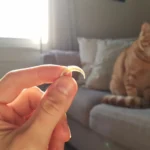
Not all of them — and this is worth knowing before you start. Cats maintain their own claws through scratching, which pulls off the old outer sheath and keeps the claw a healthy length. A young, active cat with a good scratching post may rarely need a trim at all. (Those curved shells you sometimes find near the scratching post are those shed sheaths — see Do Cats Lose Their Claws? )
Trimming becomes genuinely useful, or necessary, when:
- Your cat is a senior — older cats scratch less and often can’t retract their claws fully, so claws overgrow and can curl into the paw pad
- Your cat is indoor-only and doesn’t scratch much
- Claws are catching on carpet, furniture, or clothes
- You have young children, elderly relatives, or someone on blood thinners in the home
- Your cat has mobility problems, arthritis, or is overweight and can’t groom effectively
If you’re unsure whether your cat needs it, check the claws every couple of weeks. If they’re catching on fabric or you can hear them clicking on hard floors, it’s time.
What You Need (and What Not to Use)
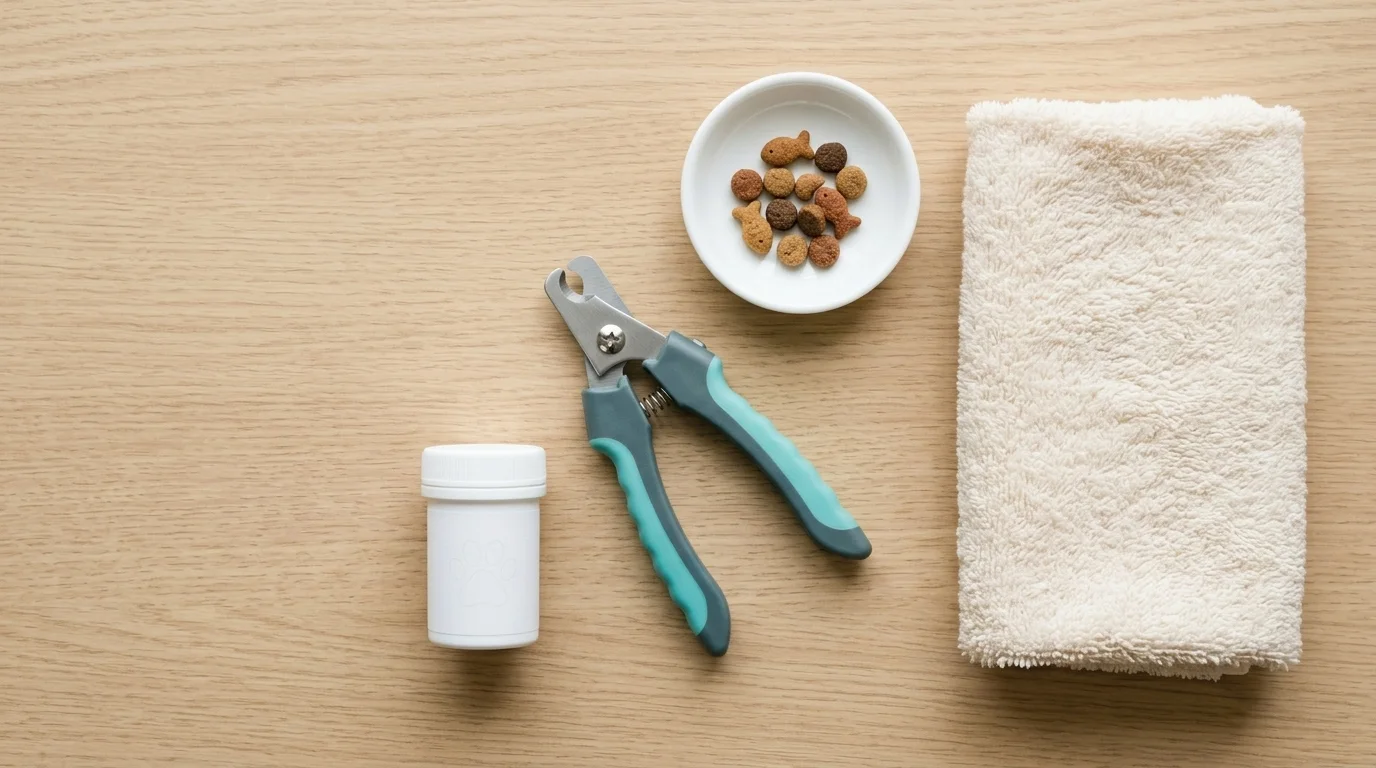
- Cat nail clippers — either scissor-style or small guillotine-style clippers made for cats. They cut cleanly without crushing the claw.
- Styptic powder — stops bleeding fast if you nick the quick. Cornstarch or plain flour works in an emergency.
- Treats — something your cat genuinely loves, used only for nail trims.
- A towel — for gently wrapping a wriggly cat.
- Good light — you need to see the quick clearly.
Which Clippers Should You Use?
| Type | Best For | Drawbacks |
|---|---|---|
| Scissor-style cat clippers | Most owners — precise, easy to control, good for beginners | Take a little practice to position well |
| Guillotine-style cat clippers | Small, thin claws and quick single cuts | Harder to see exactly where you’re cutting; blade needs to stay sharp |
| Electric nail grinder | Patient cats; smooth edges with less risk of cutting the quick | Slower, and the noise and vibration frighten many cats |
| Human nail clippers | An emergency or a kitten’s tiny claws | Can squeeze and split a curved claw — turn them sideways if you must use them |
For most people, a small pair of scissor-style cat clippers is the easiest place to start. Whatever you use, keep it sharp — a dull blade crushes the claw instead of cutting it.
Can you trim cat’s nails with human nail clippers?
You can in a pinch, especially on a kitten’s tiny claws, but they’re not ideal. Human clippers are designed for flat nails; a cat’s claw is curved and rounded, so human clippers tend to squeeze and can split or crush the claw rather than cut it cleanly. If you do use them, turn them sideways so the blades meet across the claw rather than pinching it flat. Cat-specific clippers cost very little and make the job easier and safer.
Can you trim cat’s nails with scissors?
Ordinary household scissors aren’t a good idea — they’re not sharp or precise enough at the tip, and they tend to crush the claw, which is uncomfortable and can cause splitting. Stick to clippers designed for cats.
Finding the Quick — The Most Important Part
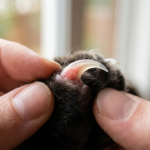
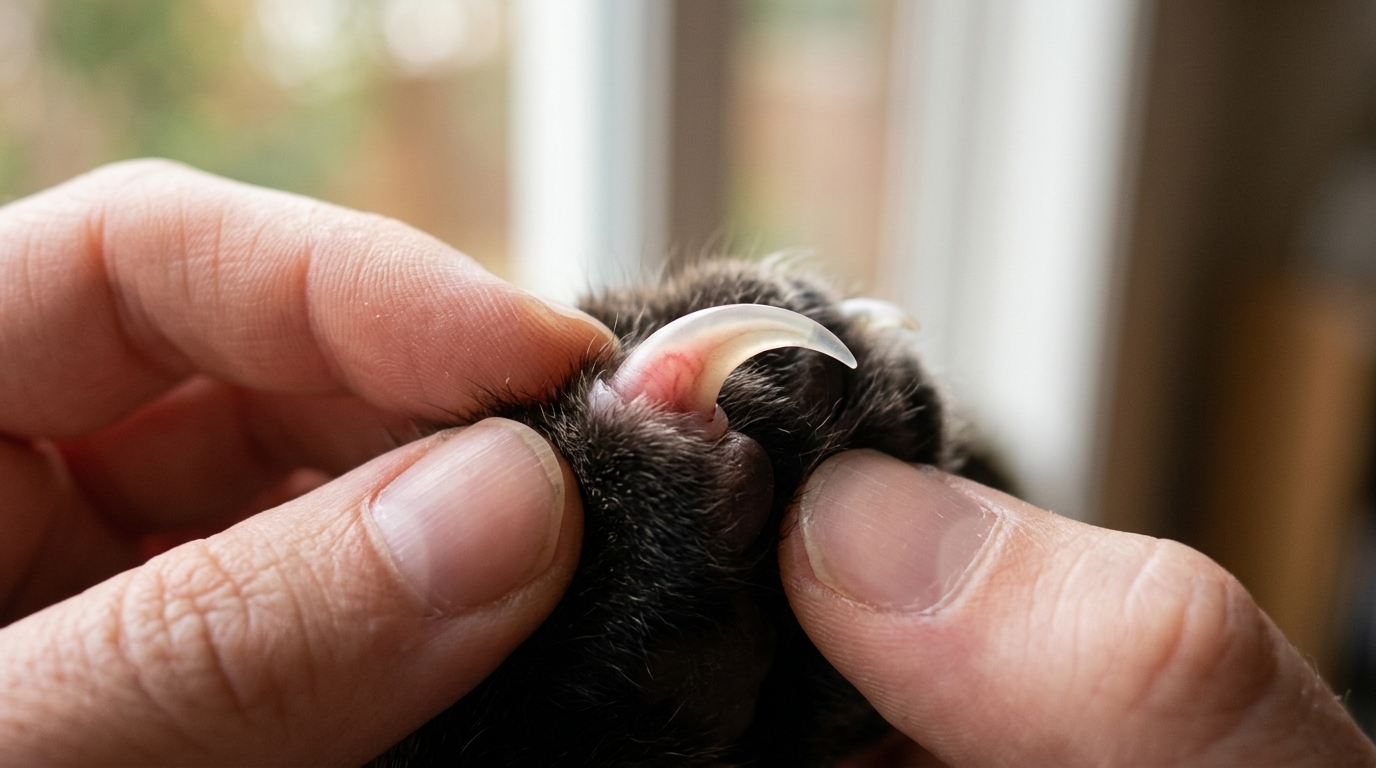
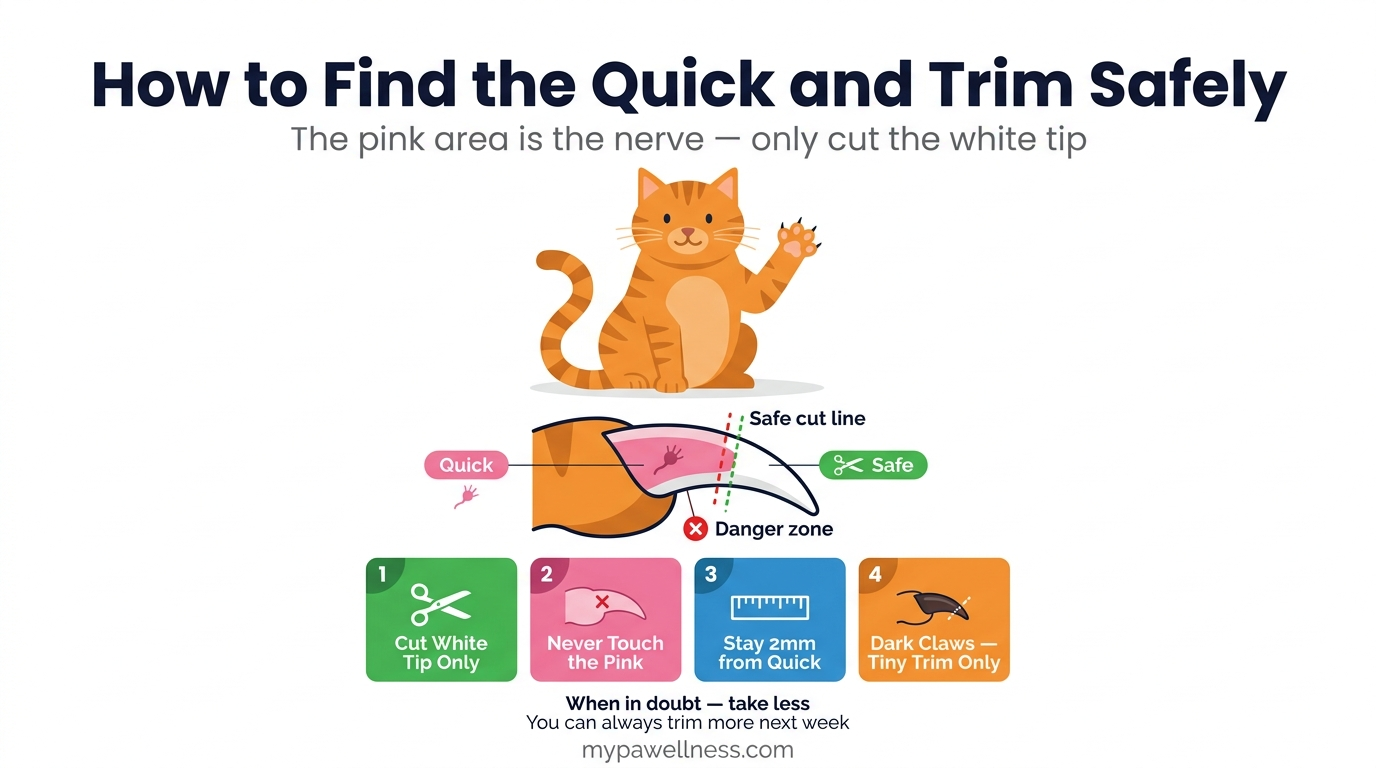 Inside each claw is the quick: the pink area containing blood vessels and nerves. Cutting into it hurts your cat and causes bleeding. Everything about safe trimming comes down to staying clear of it.
To see it, gently press the top and bottom of your cat’s toe — this extends the claw. On a light-coloured claw, you’ll see the pink quick running partway down, with clear or white nail beyond it. You only cut the white or clear tip.
A safe rule: trim no closer than about 2 millimetres from the pink. When in doubt, take less. You can always trim a little more next week; you can’t undo a cut into the quick.
Dark claws are harder because you can’t see the quick through them. In that case, trim only the very sharp, hooked tip — the part that curves downward — and nothing more. Taking tiny amounts more often is much safer than one bigger cut.
How to Trim Your Cat’s Nails, Step by Step
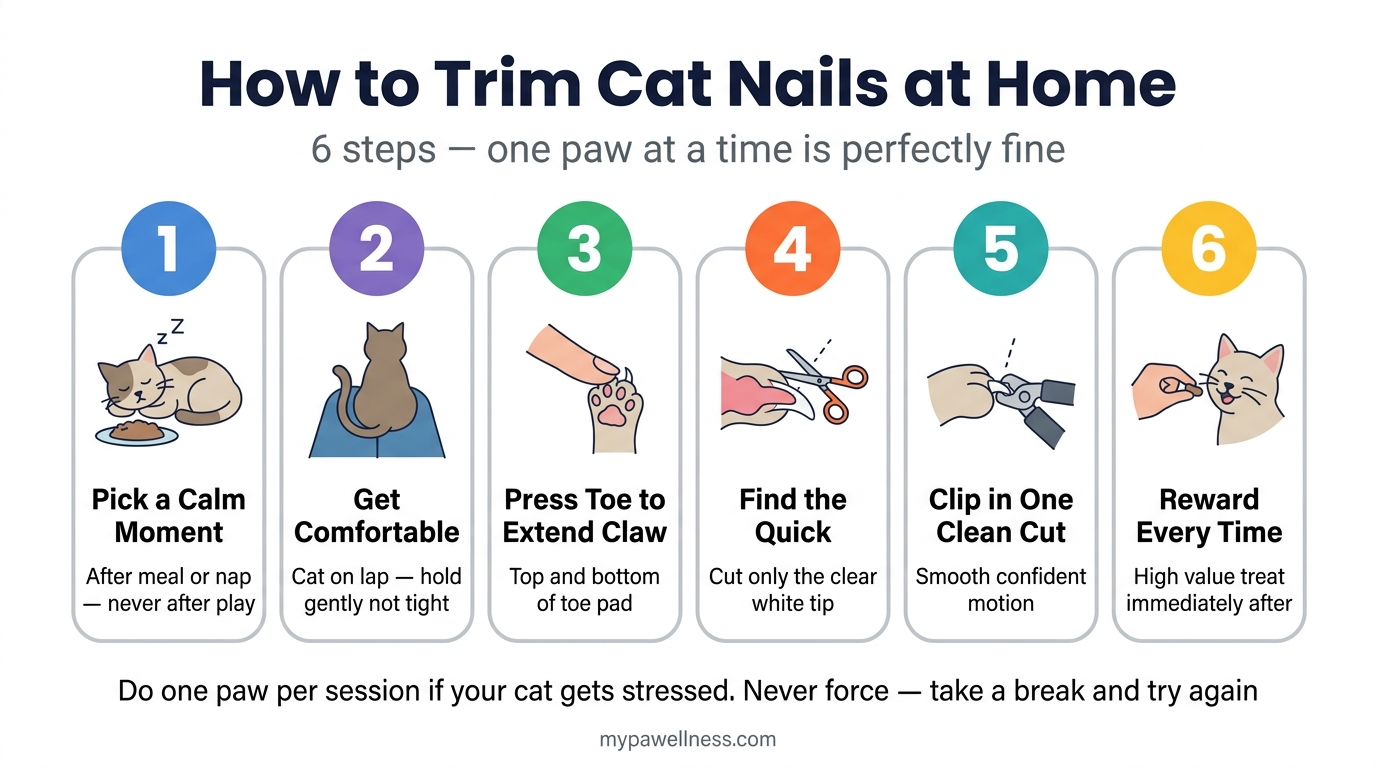
Pick a calm moment
 Choose a time when your cat is relaxed or sleepy — after a meal or a nap, not after play. A drowsy cat is far more cooperative than an alert one.
Get comfortable
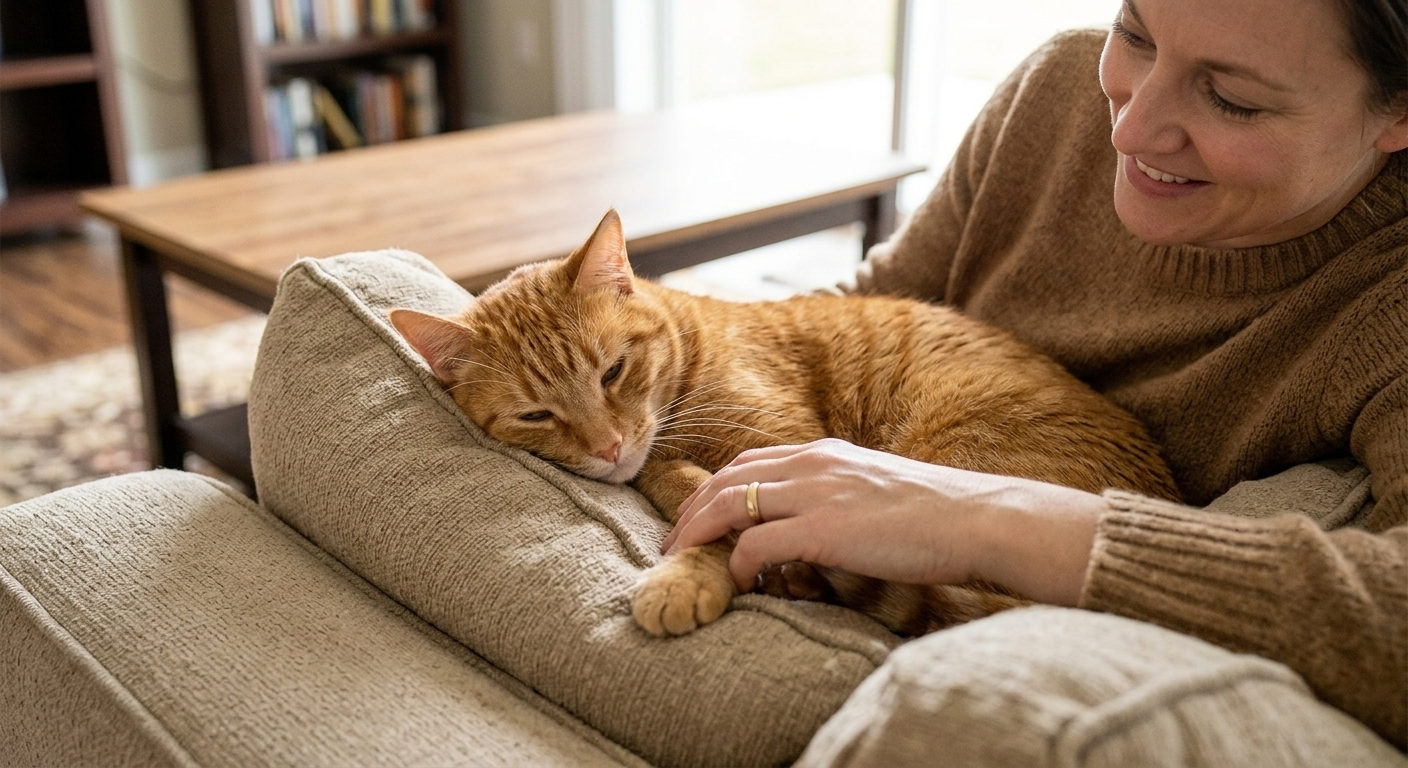
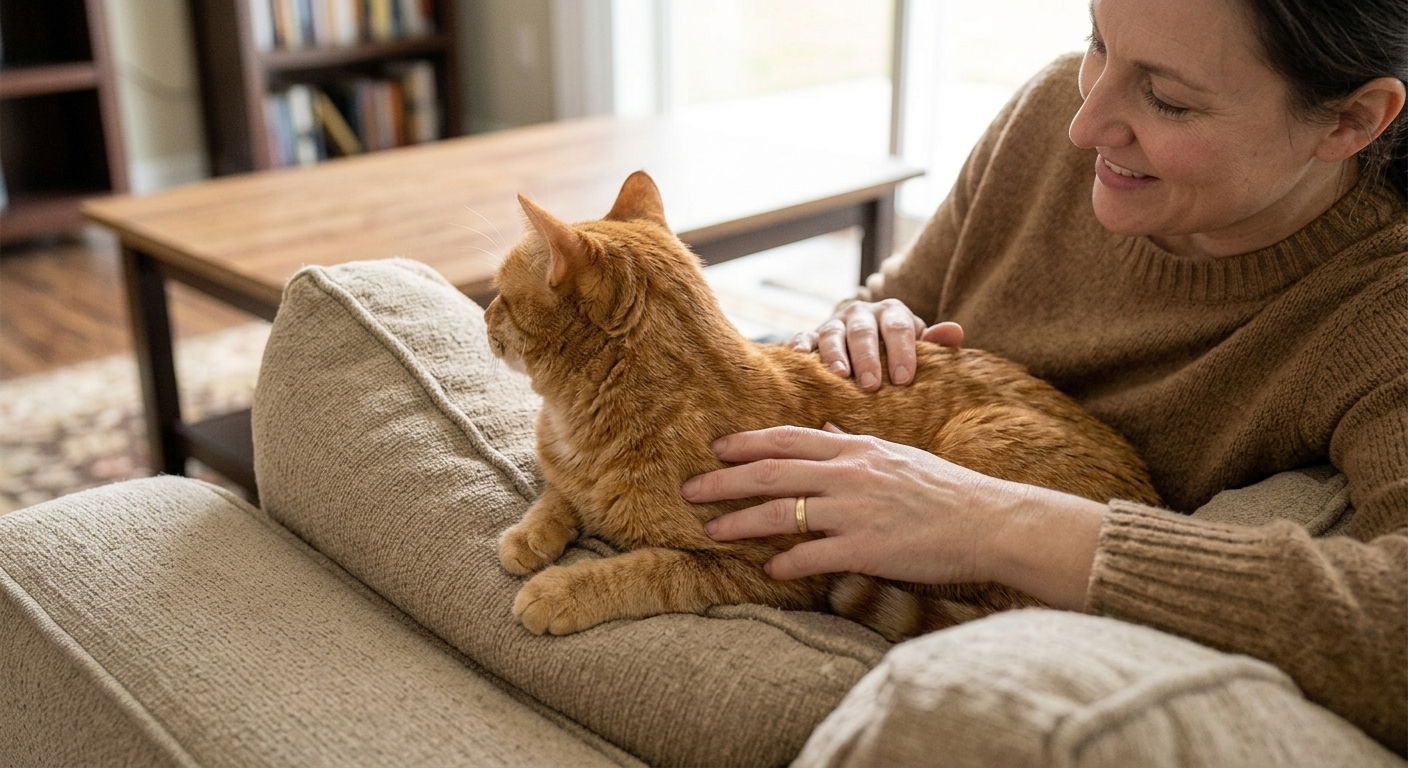 Sit with your cat on your lap facing away from you, or on a table at a comfortable height. Keep your hold gentle and relaxed — a cat that feels trapped will fight harder.
Extend one claw
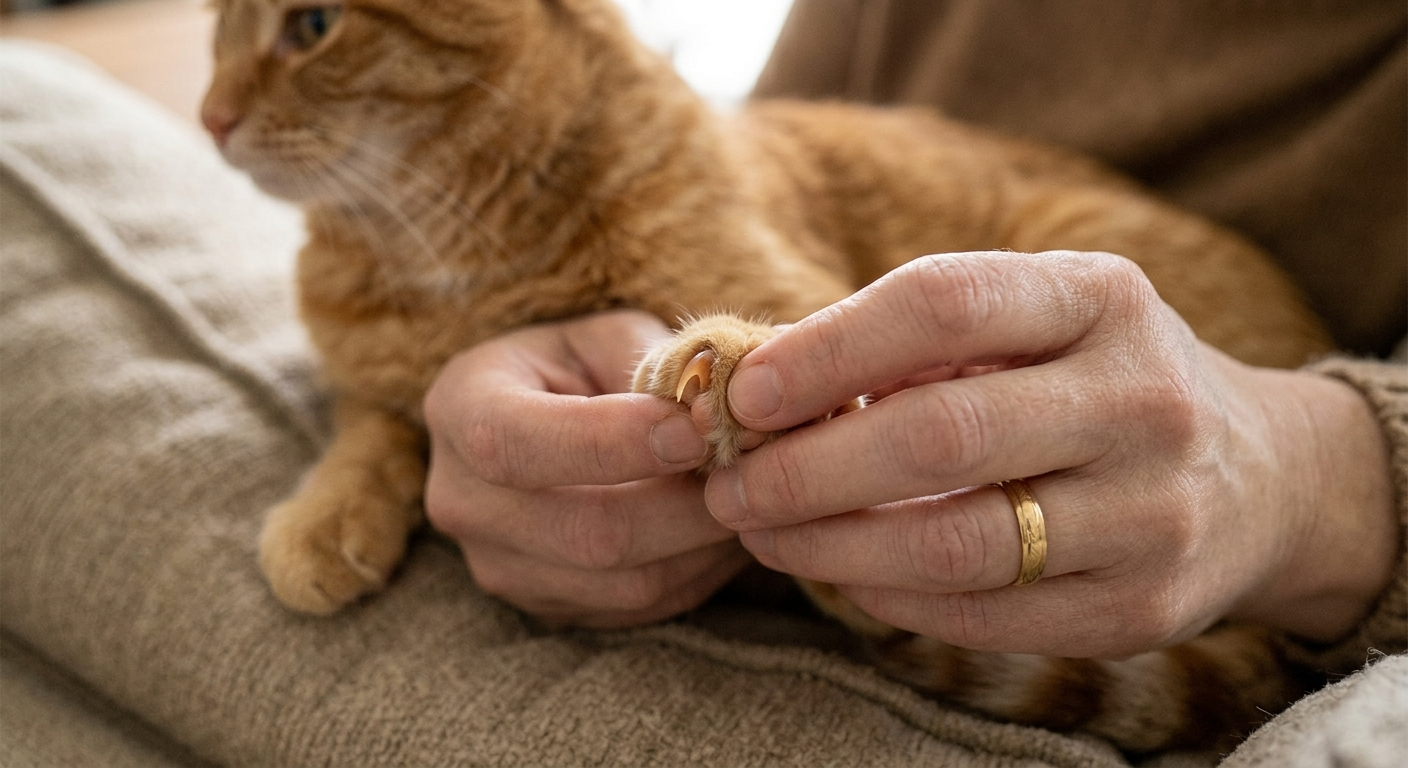 Hold a paw gently and press lightly on the top and bottom of one toe to extend the claw. Find the pink quick.
Clip the tip quickly and cleanly
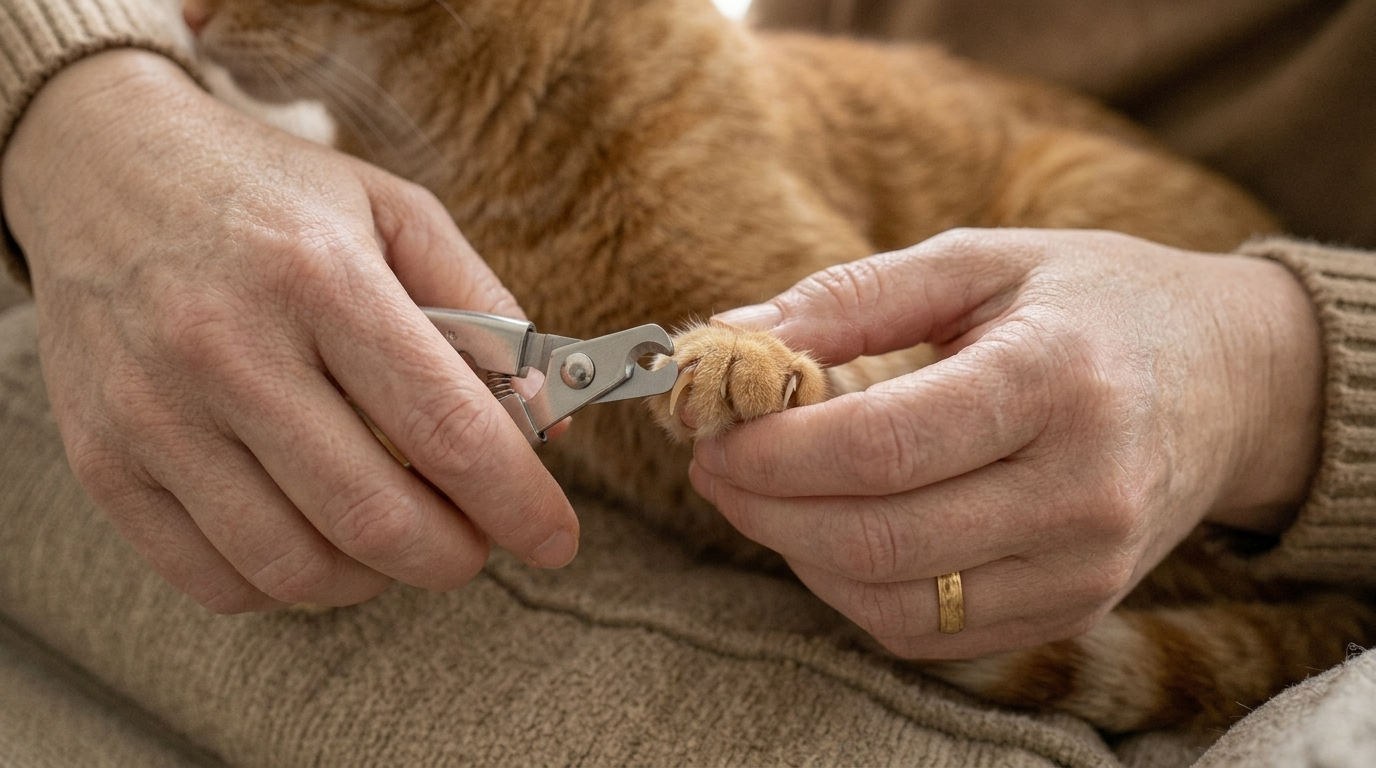 Position the clippers across the white tip, well away from the pink, and make one quick, confident cut. Hesitant, slow cuts are more likely to crush the claw.
Reward and stop early
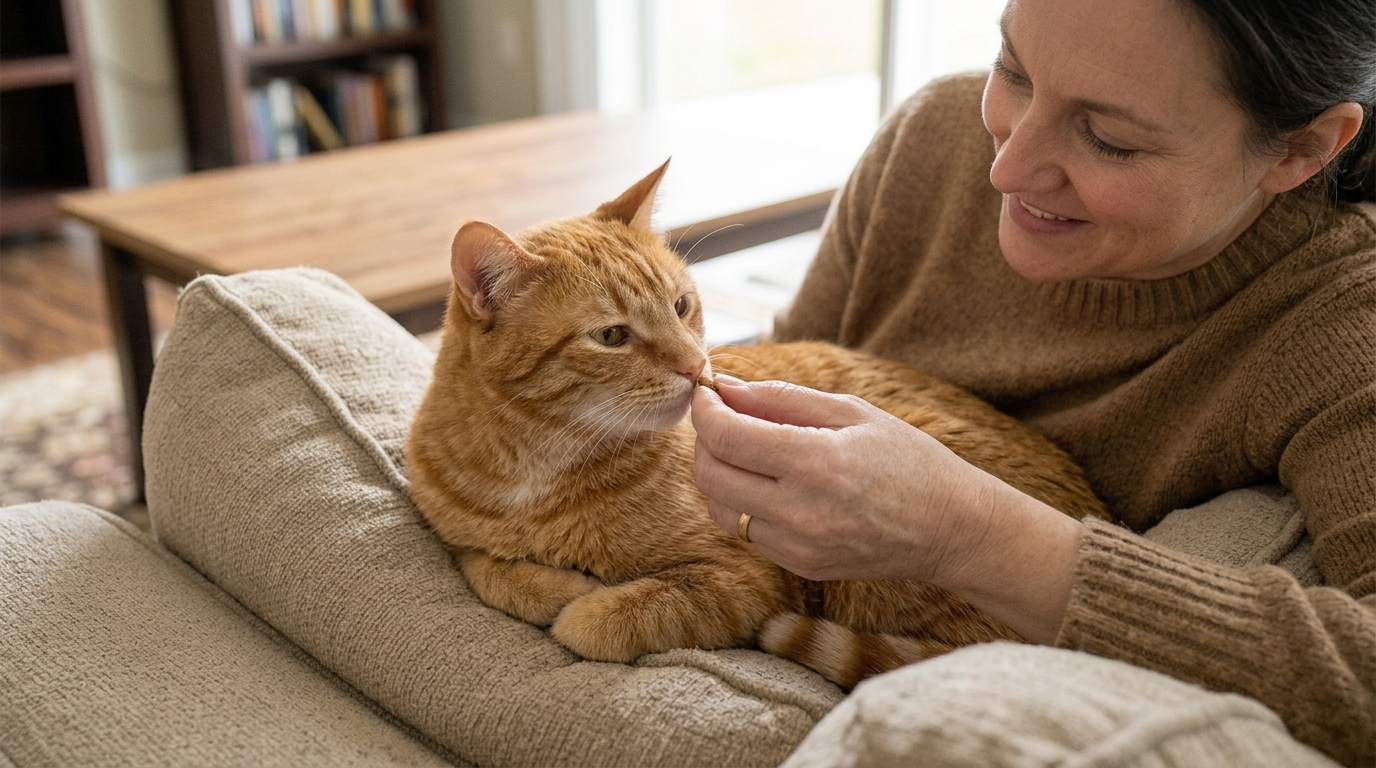 Give a treat after each claw or each paw. You don’t have to do all of them at once — one paw a day is perfectly fine, and ending before your cat gets irritated makes the next session easier.
Don’t forget the dewclaw
Most cats have a dewclaw on the inside of each front leg, a little higher up. Because it never touches the ground, it doesn’t wear down and can overgrow easily. Check it every time.
Watch It Done
If it helps to see the steps in action, this short video from the ASPCA shows the whole process, including how to find the quick:
Video: ASPCA, via YouTube.
How Often and How Short?
How often: For most indoor cats, every 2 to 4 weeks is a reasonable rhythm. Some active cats that scratch a lot can go longer; senior cats and cats that scratch very little may need it more often. The claws themselves tell you — if they’re catching on fabric, they’re due.
How short: Only the sharp, white or clear tip, staying about 2 millimetres away from the pink quick. The goal is to blunt the point, not shorten the claw significantly.
How long can cats go without a trim? Many young, active cats never need one. The real risk is in cats who don’t scratch enough — their claws can grow long enough to curl around and pierce the paw pad, which is painful and can become infected.
Are You Supposed to Trim Back Claws?
You can, but they usually need it far less often. Back claws grow more slowly and wear down more as your cat walks, and most cats scratch mainly with their front paws. Check the back claws occasionally, and trim them if they’re sharp or catching. Many owners only ever trim the fronts, and that’s generally fine.
What Age Can You Start Trimming Cat’s Nails?
As early as you like — kittenhood is the best time to start, because what you’re really doing is getting them used to having their paws handled. Even before a kitten needs trimming, gently touching and holding their paws a little each day makes future trims far easier.
Kitten claws are tiny and very sharp, and the quick is small, so take only the needle-sharp tip. A cat who has been gently handled since kittenhood usually tolerates trims for life. A cat whose paws were never touched until adulthood is the one that fights.
My Cat Won’t Let Me Trim Their Nails
 This is extremely common, and it’s almost always fixable with patience rather than force.
- Go slower than you think you need to. Start by just touching the paw, with a treat, for several days. Then pressing a toe. Then holding the clippers nearby. Then one claw.
- One claw is a win. Stop there, reward, try again tomorrow.
- Try the towel wrap — wrap your cat snugly in a towel with just one paw out. Many cats calm down when gently swaddled.
- Get a helper — one person holds and offers treats, the other trims.
- Try while they sleep. A deeply drowsy cat may let you do a claw or two without waking fully.
- Never punish or force. Every forced, frightening session makes the next one harder.
Stop immediately if your cat starts panting. Open-mouth breathing during handling is a sign of real stress in a cat — unlike dogs, cats don’t pant casually. Let them go, give them space, and try another day. If the panting doesn’t settle within a few minutes of being released, read Why Is My Cat Panting? and call your vet.
If your cat bites when you try: that’s a clear sign you’re moving too fast. Back off to a step your cat tolerates and rebuild from there. It can also help to check whether a paw is sore — a cat that suddenly resists having one foot touched may be in pain.
What can I give my cat so I can trim his nails? Please don’t give your cat anything at home to sedate them — many human calming products and medications are dangerous for cats. If your cat is severely fearful, your vet can advise on options, including medication prescribed specifically for your cat, or can simply do the trim for you. Many clinics and groomers trim nails quickly and cheaply.
What If I Cut My Cat’s Claw Too Short?
It happens to almost everyone eventually, and it’s rarely serious. Your cat will probably flinch or cry, and the claw may bleed.
- Stay calm — your cat will pick up on your stress.
- Press styptic powder onto the tip of the claw for about 30 seconds. Cornstarch or flour works if you don’t have any.
- Keep gentle pressure until the bleeding stops, which is usually within a few minutes.
- Stop for the day and give a treat. Try again another time.
Call your vet if the bleeding doesn’t stop within several minutes, or if the toe later looks swollen, red, or your cat keeps licking it or limps — those can be signs of infection.
How Do I Trim Overgrown Claws?
Very long claws are more delicate because the quick grows longer along with the claw. Trim just a small amount of the tip, then trim again every week or so — the quick gradually recedes as the claw is kept shorter, letting you bring the claw back to a normal length over several weeks.
If a claw has already curled into the paw pad, don’t try to deal with it yourself. It’s painful, often infected, and needs a vet to trim and treat properly. Related: Why Is My Cat Limping — an ingrown claw is one of the easily missed causes.
Alternatives to Clipping
- Scratching posts — the natural way cats maintain their claws. A tall, sturdy sisal post does a lot of the work for you. Related: How to Stop a Cat From Scratching Furniture.
- Nail caps — soft vinyl caps glued over the claws, lasting several weeks. Useful for protecting furniture, though some cats dislike them.
- A nail file or grinder — works for some patient cats, though many dislike the vibration and noise.
- Letting your vet or groomer do it — entirely reasonable for cats who genuinely won’t tolerate it at home.
One thing that is not an alternative: declawing. It isn’t a nail trim — it’s amputation of the last bone of each toe, and it’s banned or restricted in many places for good reason.
Frequently Asked Questions
For many young, active cats with good scratching surfaces, yes — they maintain their own claws. It’s not okay for cats whose claws are overgrowing, especially seniors and less active cats, where long claws can curl into the paw pad and cause pain and infection. Check the claws every couple of weeks and trim only when they need it.
Yes. Trimming doesn’t stop the urge to scratch — scratching is instinctive and also about stretching and scent-marking. Trimmed claws just do less damage when they scratch. Keep providing a good scratching post.
Clipping leaves a fresh, clean edge, which can feel sharp for a day or two. The edge dulls quickly with normal walking and scratching. If it bothers you, a quick pass with a nail file smooths it down.
Cats whose claws were overgrown or catching often move more comfortably afterwards, especially seniors. For cats whose claws were already a healthy length, trimming mainly benefits you and your furniture rather than the cat.
Generally, yes, for indoor cats and especially for senior cats, as routine care — trimmed only at the tip and never into the quick. For outdoor cats, vets usually advise leaving the front claws intact.
The Bottom Line
Can you trim cat’s nails at home? Yes, and once you know where the quick is, it’s a quick, low-stress job. Use cat clippers, take only the white tip, reward generously, and don’t be afraid to do one paw at a time.
Not every cat needs regular trims — active cats with good scratching posts often manage on their own. But seniors, indoor cats that scratch little, and any cat whose claws are catching will genuinely benefit. And if your cat simply won’t allow it, a vet or groomer can do it in a couple of minutes.

Related Articles
How to Stop a Cat From Scratching Furniture
Scratching posts do half the nail maintenance for you.