Why does my cat have diarrhea but is acting normal? This is one of the most confusing situations for cat owners. Your cat is eating, playing, purring, and behaving completely fine, but the litter box tells a different story. The good news is that when a cat has diarrhea but is still eating and drinking normally, the cause is usually minor and treatable at home.
One of my cats had runny poop for four straight days last year. She was eating her food, chasing the other cats, and sleeping normally. I panicked and called the vet, who asked one question: “Did you change her food recently?” I had switched brands three days before the diarrhea started. Switched back, and within 48 hours the stool was normal again. Sometimes the answer really is that simple.
The most common causes are a sudden food change, food intolerance, mild stress, or a hairball. If your cat is eating, drinking, and behaving normally, try a bland diet for 48–72 hours. See a vet if diarrhea lasts more than 3 days, contains blood, or your cat stops eating.
Stool Type — What It Tells You
Not all diarrhea is the same. The consistency and color help narrow down the cause:
| Stool Type | What It Usually Means | Urgency |
|---|---|---|
| Soft but formed (mushy) | Mild food sensitivity or transition — not technically diarrhea | Monitor — usually resolves in 1–2 days |
| Loose/unformed (pudding-like) | Food change, stress, mild infection | Bland diet for 48–72 hours |
| Watery (no shape) | More significant — infection, parasites, IBD | Vet if lasts more than 24 hours |
| Mucus-covered | Colitis — large intestine inflammation | Vet within 48 hours |
| Blood mixed in | Parasites, infection, colitis, or injury | 🚨 Vet same day |
| Black/tarry | Upper GI bleeding | 🚨 Emergency vet NOW |
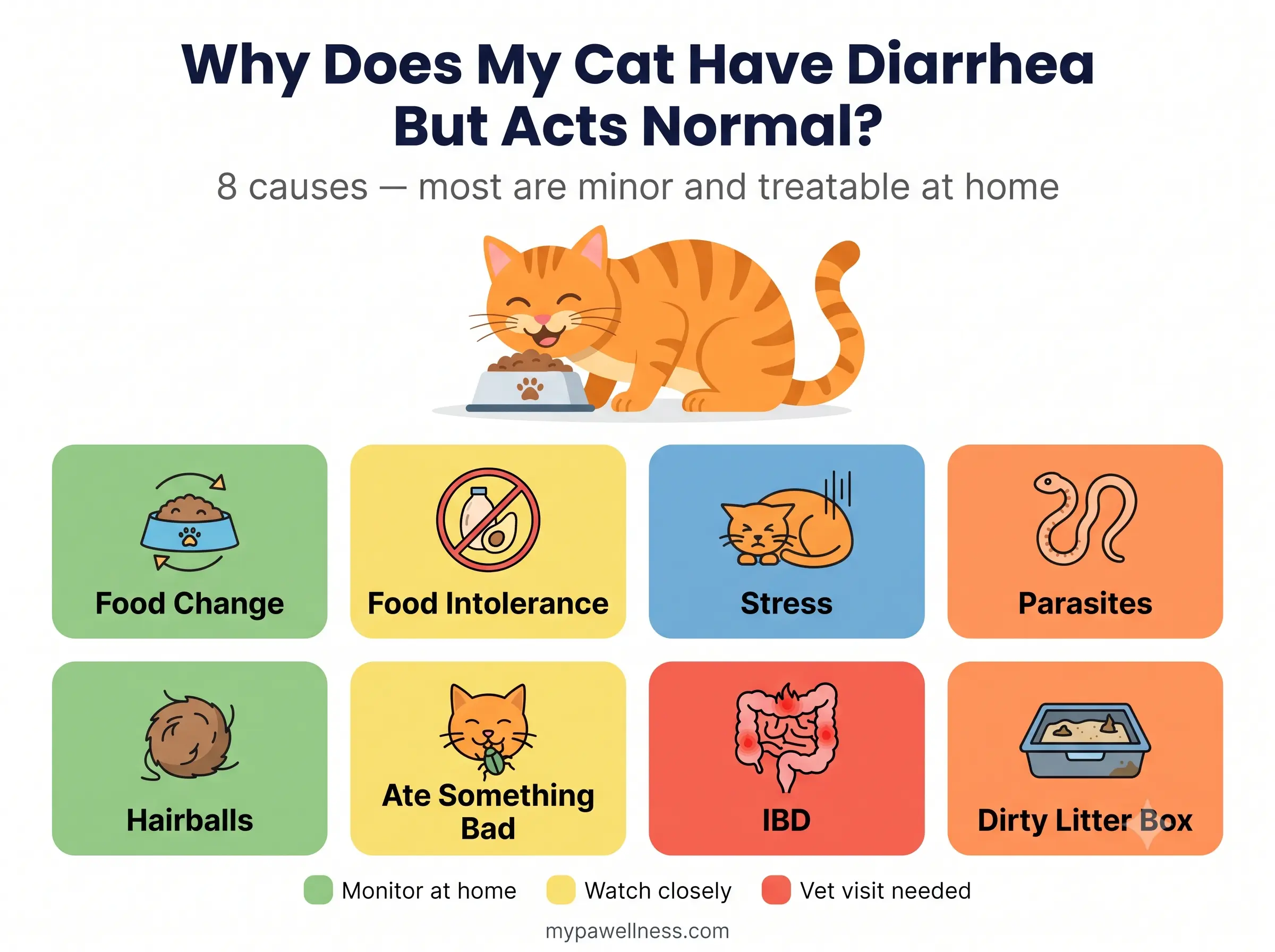
8 Common Causes
1. Sudden Food Change
The number one cause. Switching brands, flavors, or protein sources too quickly overwhelms the digestive system. Even a “better” food causes diarrhea if introduced abruptly. In most cases where diarrhea starts suddenly, something changed in the bowl. Always transition food gradually over 7–10 days. Related: How Often Should I Feed My Cat Wet Food.
2. Food Intolerance or Allergy
Some cats can’t digest certain proteins, grains, or additives. Intermittent diarrhea that comes and goes often points to a food the cat eats regularly but doesn’t tolerate well. Common triggers include chicken, dairy, fish, corn, and soy. A limited-ingredient elimination diet for 8–12 weeks identifies the culprit. Related: How Can I Soothe My Cat’s Itchy Skin — food allergies affect both skin and digestion.
3. Stress
Cats are creatures of routine. Moving, a new pet, guests, construction noise, or schedule changes can trigger stress-related diarrhea, even in a cat that seems perfectly calm otherwise. Stress colitis causes loose stool that usually resolves within 3–5 days once the environment stabilizes. Related: Is My Cat Depressed.
4. Parasites
Roundworms, hookworms, giardia, and coccidia can cause chronic loose stool while the cat behaves completely normally, eating well, playing, and showing no obvious illness. This combination, normal-acting cat with persistent runny stool, is one of the most common reasons owners end up at the vet confused. A simple fecal test confirms the diagnosis. Related: My Cat Has Worms How Do I Clean My House.
5. Hairballs
Hairballs passing through the digestive tract can irritate the intestinal lining and cause temporary loose stool. This is more common in long-haired breeds and during heavy shedding seasons. The diarrhea typically resolves once the hairball passes. Regular brushing reduces how much hair your cat ingests in the first place.
6. Dietary Indiscretion (Ate Something Unusual)
Your cat ate a bug, a piece of human food, or something from the garbage. Sudden diarrhea with no other explanation is often something they ate that their stomach couldn’t handle. If the cat is otherwise normal, this usually passes within 24–48 hours.
If you know or suspect your cat chewed on a houseplant, treat that separately from ordinary dietary indiscretion — some common plants, like lilies and tulips, are genuine toxicity emergencies rather than a “wait and see” situation, so check whether the specific plant is toxic before assuming it’ll pass on its own.
7. Inflammatory Bowel Disease (IBD)
IBD causes chronic inflammation in the digestive tract, producing intermittent diarrhea in a cat that otherwise seems completely healthy. When diarrhea comes and goes for weeks or months with no clear trigger, IBD is a leading suspect. It requires vet diagnosis and dietary management. Related: Cat Vomiting White Foam — vomiting alongside diarrhea may indicate IBD.
8. Dirty Litter Box
A box that isn’t scooped regularly can harbor parasite eggs and bacteria that reinfect your cat every time they groom. If your cat steps in contaminated litter and then cleans their paws, they reintroduce pathogens to their digestive system. Scoop daily, change litter weekly, and wash the box with hot water monthly.
Causes Specific to Indoor Cats
Indoor cats seem protected, but they’re actually prone to specific diarrhea triggers:
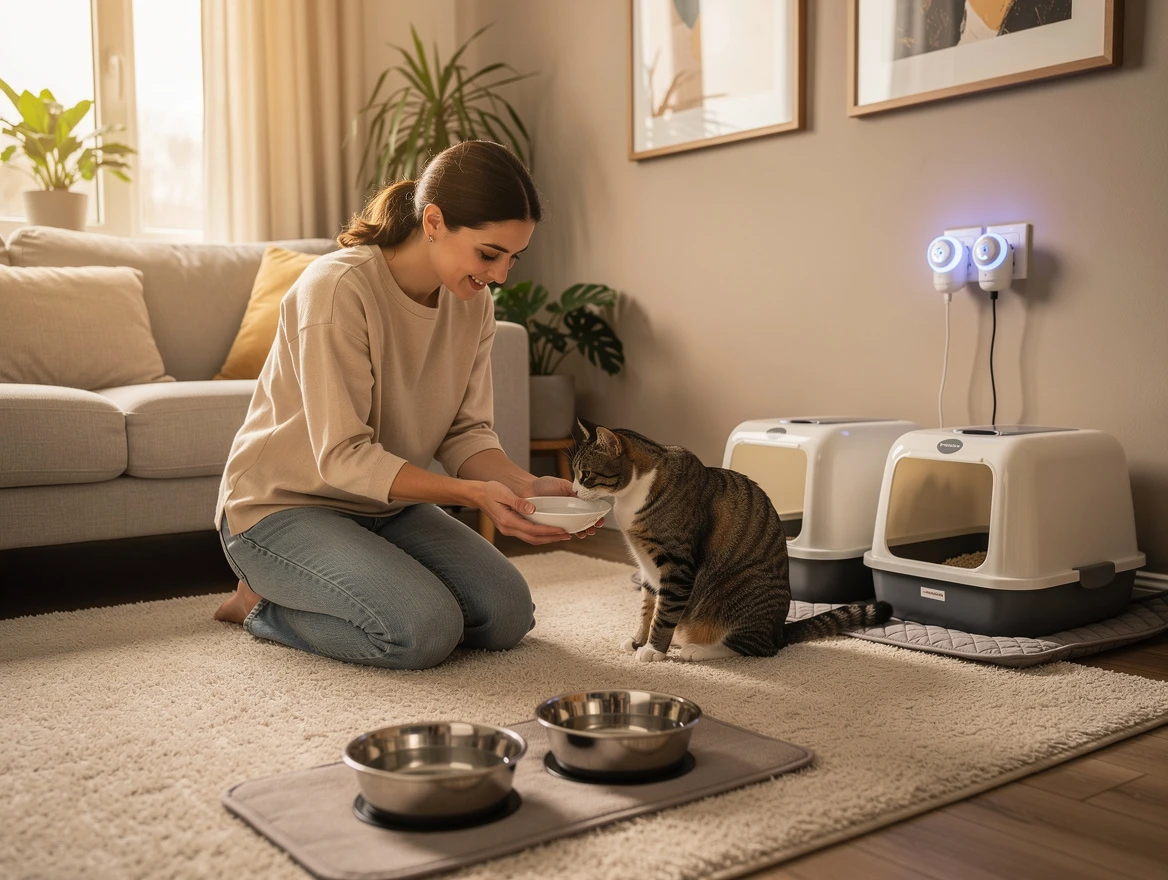
- Food-related — food change, treats, table scraps, eating houseplants
- Stress — indoor cats are more sensitive to environmental changes (furniture, guests, noise)
- Hairballs — indoor cats groom more due to less stimulation
- Dirty litter box — bacteria and parasite reinfection
- Hidden parasites — fleas, other pets, or contaminated food can introduce parasites indoors
- Eating non-food items — string, rubber bands, small toys causing GI irritation
What to Feed a Cat With Diarrhea
A temporary bland diet helps the gut recover:
- Plain boiled chicken — shredded, no skin, no bones, no seasoning. The easiest and safest option.
- Plain pumpkin puree (not pie filling) — 1 teaspoon per meal. Fiber helps firm up stool.
- Boiled white fish — plain, no seasoning
- Prescription GI diet — your vet may recommend a therapeutic gastrointestinal formula
- Probiotics — cat-specific probiotics restore gut bacteria. Sprinkle on food daily.
Feed the bland diet for 48–72 hours. Then transition back to regular food slowly over 5–7 days. Ensure fresh water is always available, diarrhea causes dehydration. Related: How Much Wet Food to Feed a Cat — proper portions prevent overfeeding that worsens diarrhea. Also: Can Cats Eat Rice — small amounts can be part of a bland diet.
When It’s Lasted a Week
This is too long for a “wait and see” approach. While your cat may be eating and acting normal, a week of diarrhea causes chronic dehydration and nutrient loss that your cat may be hiding.
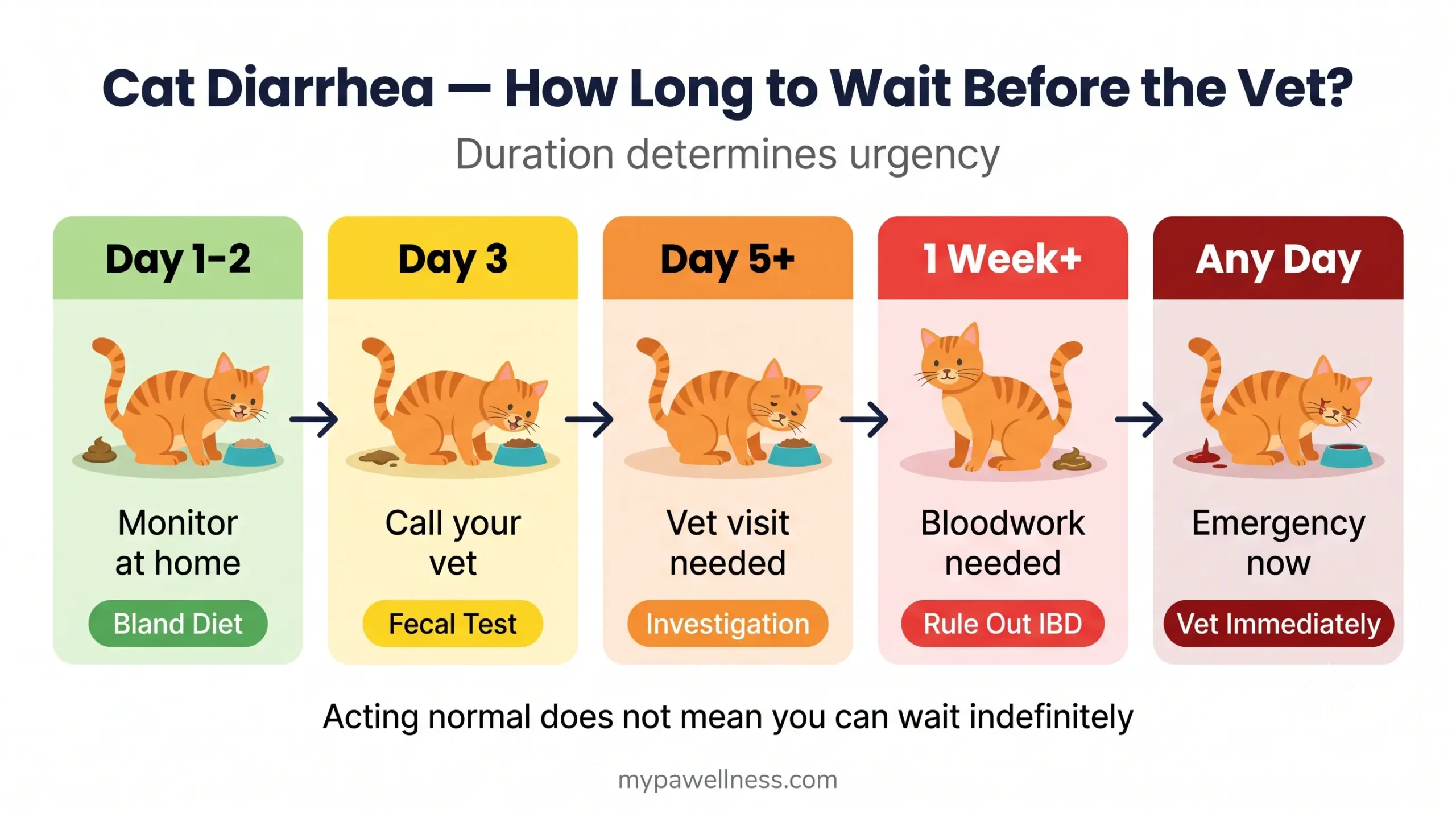
The general rule: 1–2 days of mild diarrhea in an otherwise healthy cat means monitor at home. Beyond 3 days means a vet visit. A full week definitely needs investigation, fecal test at minimum to rule out parasites and infection.
When It’s a Senior Cat
This deserves extra caution. Senior cats are more prone to hyperthyroidism, kidney disease, IBD, and cancer, all of which can cause chronic diarrhea while the cat appears normal in the early stages.
If your cat is over 7 and has diarrhea lasting more than 2 days, even if they seem fine, schedule bloodwork alongside the fecal test. Early detection of age-related conditions significantly improves outcomes. Related: Signs of Kidney Failure in Cats.
When to See the Vet
🩺 See Your Vet If:
- Diarrhea lasts more than 3 days despite bland diet
- Blood in stool — bright red or dark. Related: Cat Pooping Blood But Acting Normal
- Cat stops eating or drinking
- Vomiting alongside diarrhea. Related: Why Is My Cat Throwing Up
- Lethargy, hiding, or weight loss develops
- Diarrhea is watery (no form at all)
- Kitten with diarrhea — dehydration risk is much higher
- A full week of diarrhea with no improvement, even if the cat seems fine
- Older cat (7+) with diarrhea lasting more than 2 days
- Diarrhea keeps coming back (on and off pattern)
Duration Action Guide
| Duration | Cat’s Behavior | Action |
|---|---|---|
| 1 day | Eating, drinking, active | Monitor. Bland diet. Ensure hydration. |
| 2 days | Eating, drinking, active | Continue bland diet. Add probiotics. |
| 3 days | Still eating but diarrhea unchanged | ⚠️ Call vet — schedule fecal test |
| 5+ days | Acting normal but diarrhea persists | 🚨 Vet visit — needs investigation |
| 1 week+ | Seems fine but chronic loose stool | 🚨 Vet — bloodwork + fecal + possible imaging |
| Any duration | Stops eating, vomiting, blood in stool, lethargy | 🚨 Vet immediately — do not wait |
Common Mistakes
- Switching food abruptly — the most common cause of diarrhea and the most preventable
- Giving dairy — most cats are lactose intolerant. Milk causes diarrhea, not treats it.
- Waiting too long — a cat that seems fine doesn’t mean the diarrhea is harmless after a week
- Skipping the fecal test — a $30–$50 fecal test catches parasites before they cause real damage
- Over-feeding during diarrhea — feed smaller, more frequent meals to reduce gut workload
- Giving human medication — no Pepto-Bismol, no Imodium. Both are unsafe for cats without vet guidance.
Frequently Asked Questions
The most common causes are a sudden food change, food intolerance, mild stress, hairballs, or parasites. When a cat is eating, drinking, and behaving normally, the cause is usually minor. Try a bland diet for 48–72 hours. See a vet if it lasts more than 3 days.
An occasional episode that resolves in 1–2 days isn’t unusual, it can happen from eating something unusual or mild stress. But recurring or frequent diarrhea is not normal and should be investigated for parasites, food intolerance, or IBD.
The Bottom Line
In most cases, the answer is a food change, food intolerance, or mild stress. A cat that’s still eating and drinking normally is usually a good sign. Try a bland diet for 48–72 hours, ensure hydration, and add probiotics.
If diarrhea lasts beyond 3 days, contains blood, or your cat stops eating, see the vet. A $30 fecal test catches parasites before they become a bigger problem.
Related: Why Does My Cat’s Poop Smell So Bad — when smell and consistency both change.