Why is my cat pooping blood but acting normal? Seeing blood in your cat’s stool is alarming, especially when your cat is eating, playing, and behaving as if nothing is wrong. The good news is that small amounts of blood in an otherwise healthy cat often point to minor, treatable causes.
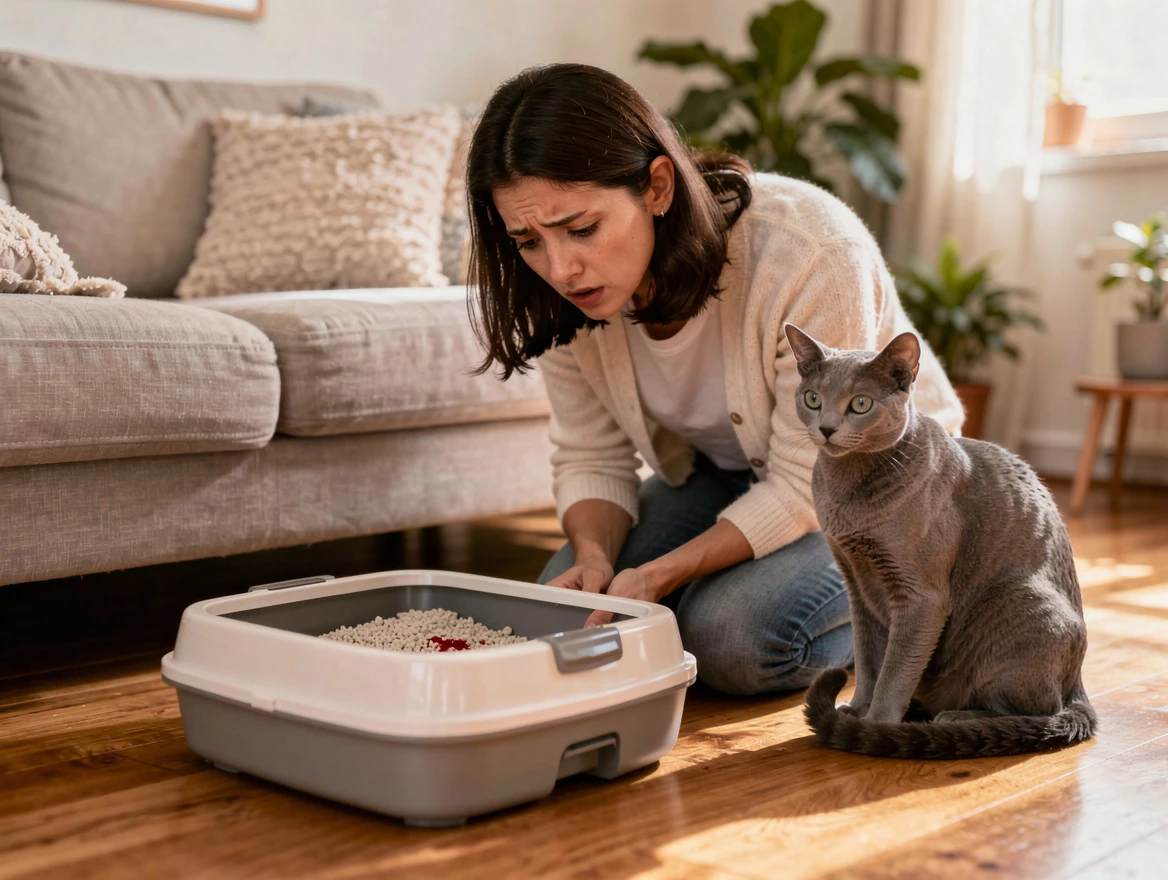 But blood in cat stool should never be ignored completely. The color, amount, and frequency tell you a lot about what’s happening inside, and whether you can monitor at home or need a vet visit.
The most common causes are dietary changes, mild constipation, or colitis (inflammation of the large intestine). A small streak of bright red blood on otherwise normal stool, happening once or twice, is usually not an emergency. See a vet if blood appears for more than 2 days, the amount increases, stool is black or tarry, or your cat stops eating.
- Black, tarry stool — indicates bleeding in the upper digestive tract (stomach or small intestine)
- Large amounts of blood — more than a few drops or streaks
- Blood AND diarrhea together for more than 24 hours
- Cat stops eating or drinking
- Lethargy, weakness, or hiding
- Vomiting alongside bloody stool
- Kitten under 6 months with any blood in stool
- Blood in stool AND straining in the litter box with no output — possible blockage
What the Blood Color Tells You
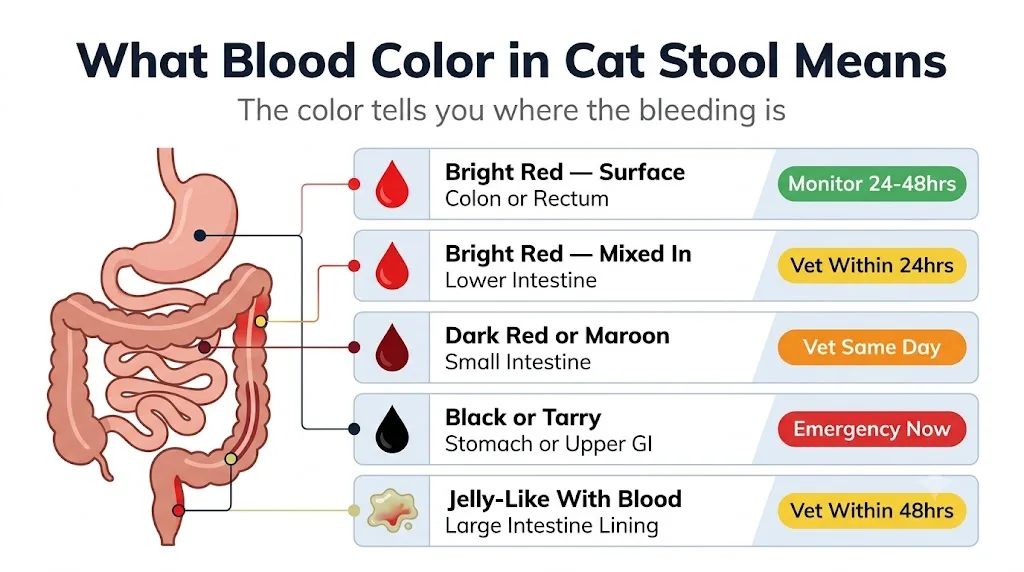 The color of blood in your cat’s stool is the single most important diagnostic clue. It tells you where in the digestive tract the bleeding is happening.
| Blood Color | Where It Comes From | What It Usually Means | Urgency |
|---|---|---|---|
| Bright red (on surface) | Lower digestive tract — colon or rectum | Colitis, constipation, minor irritation | Monitor 24–48 hours |
| Bright red (mixed in) | Lower digestive tract | More significant colitis or infection | Vet within 24 hours |
| Dark red or maroon | Small intestine | Infection, parasites, IBD | Vet same day |
| Black, tarry | Stomach or upper intestine | Ulcer, serious internal bleeding | Emergency vet NOW |
| Jelly-like mucus with blood | Large intestine lining | Colitis, parasites, stress | Vet within 24–48 hours |
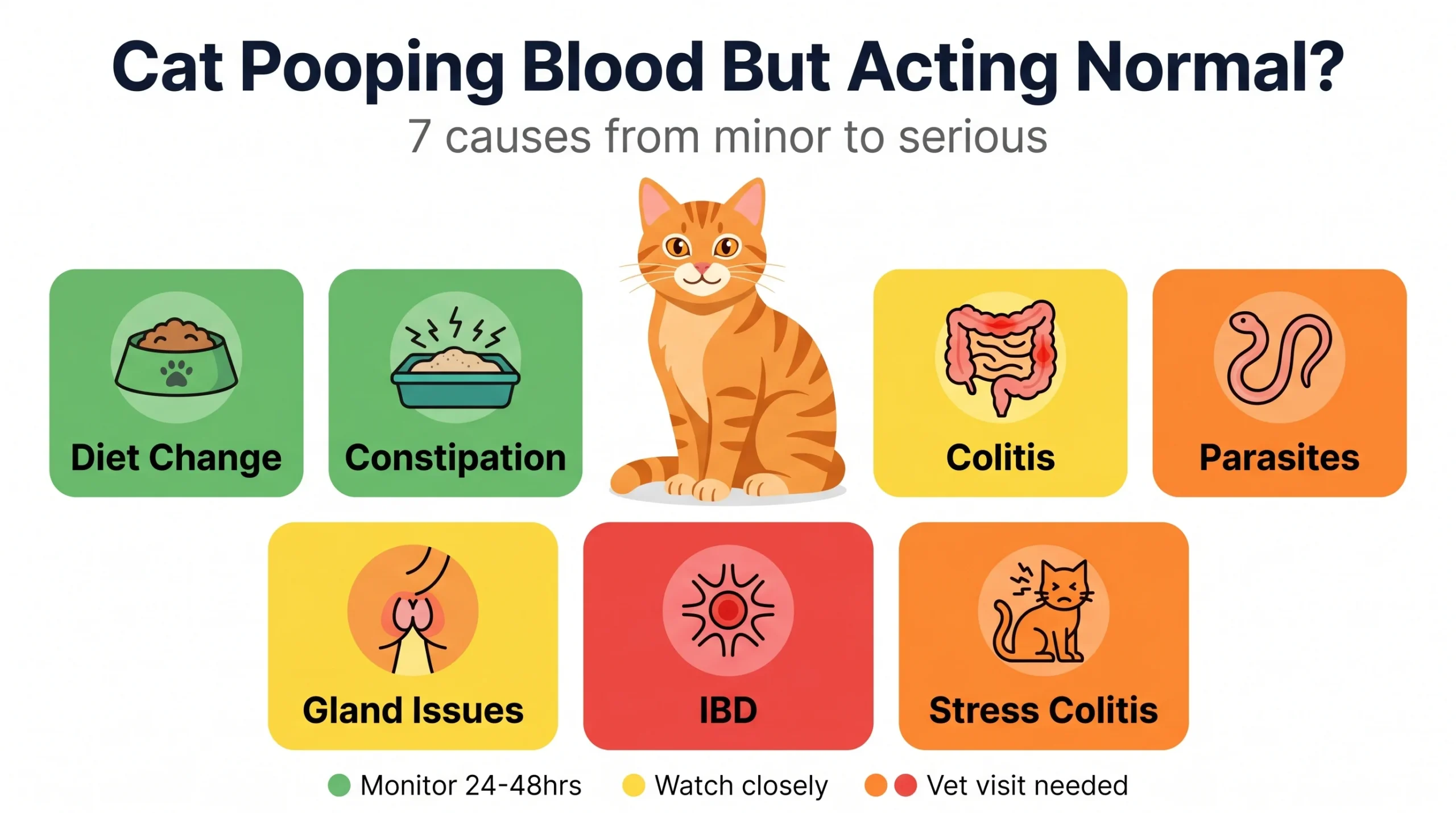
Why Is My Cat Pooping Blood But Acting Normal? 7 Causes
1. Dietary Change or Food Intolerance
The most common cause. A sudden food change irritates the digestive lining, causing mild inflammation and small amounts of blood. Even switching brands of the same type of food can trigger this. The blood usually appears as a bright red streak on the stool surface and resolves within 2–3 days as the gut adjusts.
If you recently changed food, transition back to the old food or slow the transition to 7–10 days. Related: How Much Wet Food to Feed a Cat — proper feeding prevents digestive upset.
2. Constipation and Straining
Hard, dry stool scrapes the lining of the colon and rectum as it passes, leaving bright red blood on the surface. You may also notice your cat straining in the litter box or spending longer than usual there. Constipation is common in cats that eat only dry food, don’t drink enough water, or have mobility issues.
Related: What Can I Give My Cat for Constipation — safe home remedies for mild cases.
3. Colitis — Inflammation of the Large Intestine
One of the most common reasons for blood appearing while a cat seems otherwise fine. The large intestine becomes inflamed, producing mucus and small amounts of blood in the stool. Causes include stress, dietary intolerance, mild infection, or IBD.
Colitis often produces a jelly-like substance with blood, this combination is a classic colitis sign. Mild colitis in an otherwise healthy cat often resolves with a bland diet for 48–72 hours.
4. Parasites — Worms and Protozoa
Roundworms, hookworms, coccidia, and giardia can all cause blood in the stool. Hookworms in particular feed on blood from the intestinal wall. Your cat may show no other symptoms, acting completely normal while parasites quietly cause internal damage.
If your cat goes outdoors, hunts, or was recently adopted, parasites should be the first thing ruled out. A simple fecal test at the vet confirms the diagnosis. Related: My Cat Has Worms How Do I Clean My House.
5. Anal Gland Issues
Cats have two small glands near the anus that can become impacted, infected, or abscessed. When this happens, bright red blood appears on the stool or around the rectum. You may notice your cat scooting, licking their rear, or a foul smell. Your vet can express the glands and treat any infection.
6. Inflammatory Bowel Disease (IBD)
IBD causes chronic inflammation of the digestive tract. Cats with IBD may have intermittent blood in stool for weeks or months while otherwise acting normal, eating well, playing, and maintaining weight. Over time, IBD can cause weight loss and decreased appetite. It requires veterinary diagnosis and ongoing management.
Related: Cat Vomiting White Foam — vomiting alongside bloody stool may indicate IBD affecting the entire digestive tract.
7. Stress-Induced Colitis
Stress can trigger inflammation in the colon even without any dietary change or infection. Moving to a new home, a new pet, construction noise, or changes in routine can cause stress colitis, resulting in bloody stool in a cat that’s otherwise eating and behaving normally.
If blood appeared after a stressful event, the connection is likely. Stress colitis usually resolves within 3–5 days once the environment stabilizes. Related: Is My Cat Depressed — chronic stress affects both behavior and digestion.
What to Feed a Cat With Bloody Stool
If a dietary cause seems likely, a temporary bland diet helps the digestive tract recover:
- Boiled plain chicken — shredded, no seasoning, no skin, no bones
- Plain pumpkin puree (not pie filling) — 1 teaspoon mixed into food. Soothes the digestive tract and adds fiber
- Boiled white fish — plain, no seasoning
- Prescription GI diet — your vet may recommend a therapeutic gastrointestinal formula for more persistent cases
Feed the bland diet for 48–72 hours, then transition back to regular food gradually over 5–7 days. Related: Can Cats Eat Rice — small amounts of plain rice can be part of a bland diet.
Ensure fresh water is always available. Dehydration worsens digestive inflammation and makes bloody stool more likely to recur.
Home Remedies for Blood in Cat Stool
Home care is appropriate ONLY when the blood is a small amount of bright red on formed stool, your cat is acting completely normal, and it has happened fewer than 3 times.
- Switch to bland diet for 48–72 hours
- Add pumpkin puree — 1 teaspoon per meal softens stool and reduces straining. This is for mild cases, if blood recurs despite this, a fecal test comes before more home care.
- Increase water intake — add water to food, use a cat fountain
- Reduce stress — keep routine consistent, provide quiet space
- Monitor the litter box — check every stool for 3–5 days. Take a photo to show your vet if needed
- Slow food transitions — if you changed food recently, go back to old food or transition over 7–10 days
Senior Cats
In cats over 10 years old, blood in stool carries more concern even when the cat seems fine. Senior cats are more prone to kidney disease, hyperthyroidism, GI tumors, and chronic IBD, all of which can cause intermittent blood in stool while the cat maintains a normal appetite and behavior in the early stages.
If your senior cat has blood in stool, even once, schedule a vet visit rather than waiting to see if it resolves. Early detection of age-related conditions significantly improves outcomes. Related: Signs and Symptoms of Kidney Failure in Cats.
Kittens
Kittens deserve their own category here, because the same amount of blood that’s a low-key “monitor for a day” situation in an adult cat is a much higher-stakes situation in a kitten under 6 months. This is the case even when the kitten is acting normal, playing, and eating well right now.
Kittens dehydrate dramatically faster than adult cats because of their smaller body mass, and a mild GI issue that would be minor in an adult can escalate quickly in a kitten’s system. Parasites are also disproportionately common in kittens, especially recently adopted or previously stray ones, and hookworms specifically feed directly on blood from the intestinal lining, which can cause anemia on top of the visible blood loss.
The practical takeaway: any blood in a kitten’s stool, even a small streak, even with a kitten who seems totally fine, warrants a same-day vet call rather than the 24-48 hour monitoring window that’s reasonable for a healthy adult cat. A fecal test is inexpensive and rules out the most common kitten-specific cause immediately.
When to See the Vet
🩺 See Your Vet If:
- Blood in stool for more than 2 consecutive days
- Amount of blood is increasing
- Stool is black, tarry, or dark — upper GI bleeding
- Blood AND diarrhea together
- Cat stops eating or drinking
- Vomiting alongside bloody stool. Related: Why Is My Cat Throwing Up
- Straining in litter box with little or no output
- Weight loss, lethargy, or behavioral changes develop
- Senior cat (10+) with any blood in stool
- Kitten under 6 months
- Blood in stool AND very smelly — may indicate infection or parasites
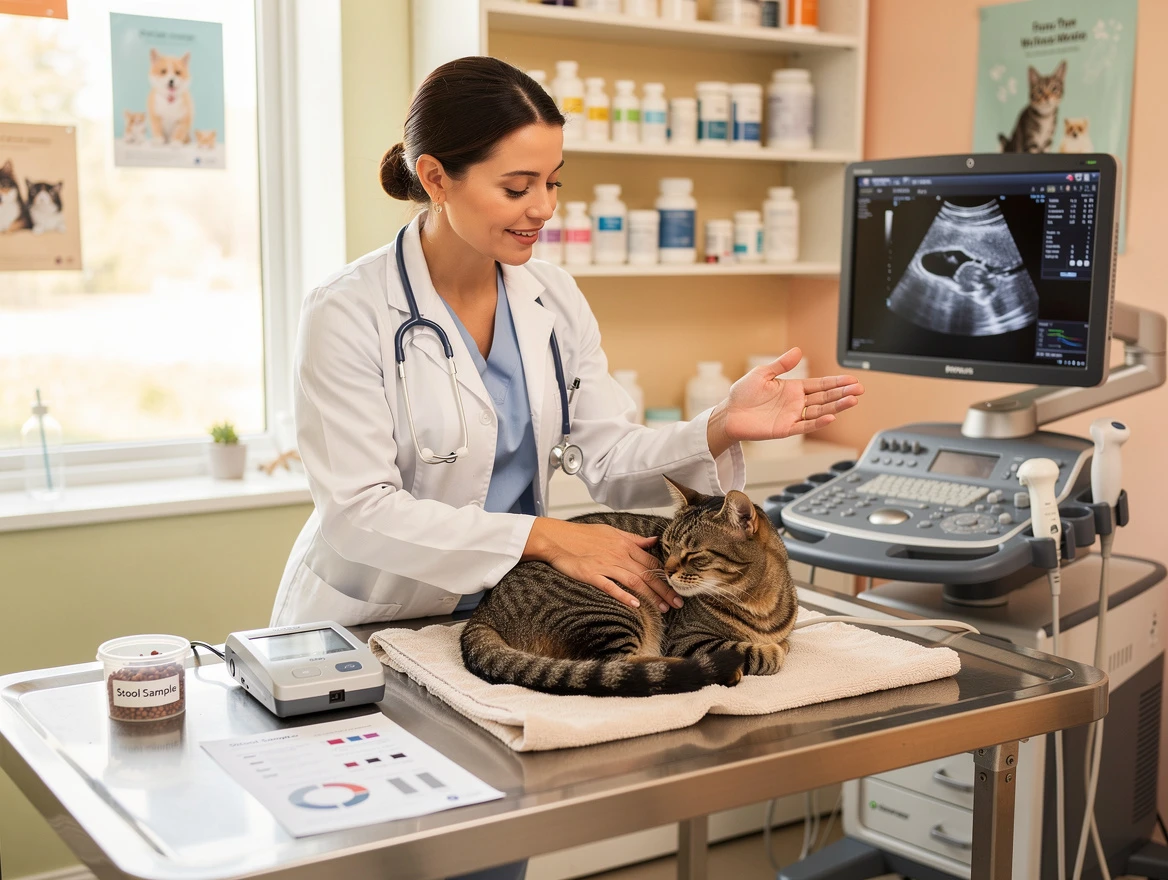
Your vet will likely run a fecal exam (checking for parasites), blood work, and may recommend imaging (X-ray or ultrasound) if an obstruction or tumor is suspected. If your cat also seems weak, see: My Cat Is Not Eating or Drinking and Very Weak.
Common Mistakes Owners Make
- Assuming it will go away — one episode is usually fine, but repeated blood needs investigation
- Giving human medication — aspirin, ibuprofen, and Pepto-Bismol are all toxic to cats
- Ignoring dark or black stool — this indicates upper GI bleeding and is always an emergency
- Not collecting a stool sample — if you’re going to the vet, bring a fresh sample. It saves time and money.
- Waiting too long with kittens — young cats dehydrate much faster. Any blood in kitten stool needs same-day vet attention
Frequently Asked Questions
The most common causes are dietary changes, mild constipation, colitis, or parasites. A small streak of bright red blood on formed stool in an otherwise healthy cat is usually not an emergency, but should be monitored for 24–48 hours and investigated if it continues.
Foul-smelling bloody stool often indicates infection (bacterial or parasitic), a severe dietary reaction, or a more serious GI condition. The smell comes from abnormal bacteria or blood being digested in the tract. See your vet, a fecal exam will identify the cause.
This combination is treated as more urgent than either symptom alone, because it usually means the inflammation or infection is more widespread rather than a small, localized irritation. It’s more consistent with colitis, a GI infection, or parasites than with something as minor as simple straining. If blood and diarrhea are both present for more than 24 hours, that’s a same-day vet situation rather than a wait-and-monitor one.
Yes, meaningfully so. Kittens have far less physiological reserve than adult cats and can go from fine to seriously dehydrated much faster. Parasites, especially hookworms, are also more common in kittens and can cause both blood loss and anemia. Any blood in a kitten’s stool warrants a same-day vet visit, not the 24-48 hour monitoring window that’s reasonable for a healthy adult.
The Bottom Line
Why is my cat pooping blood but acting normal? In most cases a small streak of bright red blood on formed stool points to a dietary change, mild constipation, or stress colitis.
Monitor for 24–48 hours with a bland diet and increased water. If blood continues, increases, turns dark, or is accompanied by diarrhea, vomiting, or appetite loss, see the vet. Black or tarry stool is always an emergency, and kittens need a lower threshold for concern than adult cats.
Related: My Cat Is Lethargic But Eating and Drinking — if lethargy appears alongside the blood, the monitoring window closes and it’s time to call the vet.
Related Articles
My Cat Is Not Eating or Drinking and Very Weak
When appetite loss plus bloody stool becomes urgent.