
How Often Should I Feed My Cat Wet Food? Complete Guide
How often should I feed my cat wet food — twice daily for most healthy adult cats, 3–4 times daily for kittens, and 2–3 smaller meals for seniors. According to the Cornell Feline Health Center, approximately 50% of domestic cats are overweight — and feeding schedule is the single biggest controllable factor. The right frequency depends on your cat’s age, weight, and whether you are combining wet food with dry.
I feed four cats at completely different life stages, and what works for my youngest is nothing like what my senior cat needs. This guide covers every scenario so you can build a feeding routine that actually fits your cat. Feed at consistent times, never leave wet food out longer than 1 hour, and calculate total calories from all food sources combined.
Feeding Chart — How Often Should I Feed My Cat Wet Food Per Day by Age
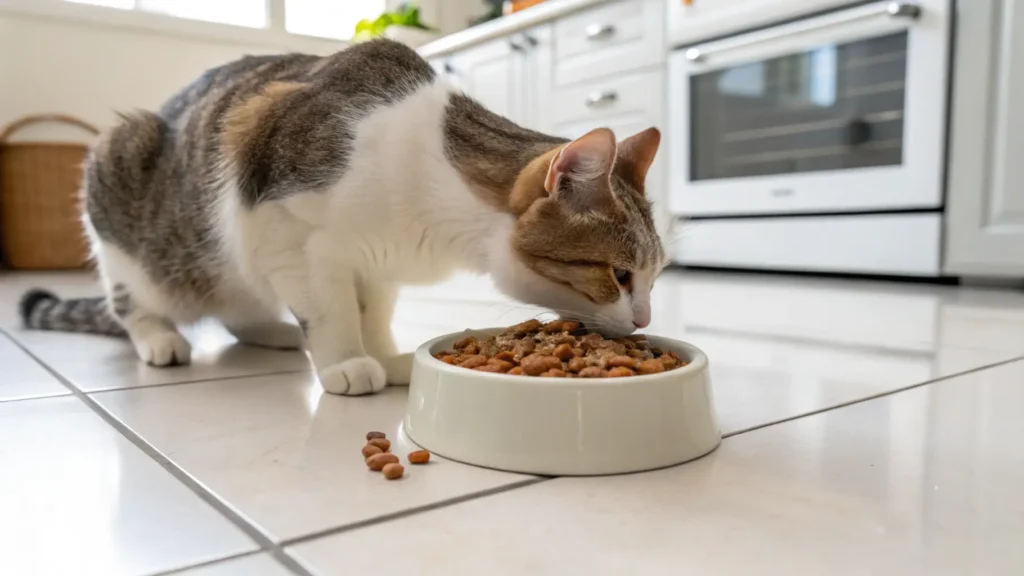
This wet food feeding chart shows how often should I feed my cat wet food a day at every life stage. Use it as a quick reference — bookmark it for later:
| Life Stage | Age | Wet Food Frequency | Portion Per Meal (avg cat) |
|---|---|---|---|
| Kitten | 0–6 months | 3–4x daily | 1–2 tablespoons |
| Junior | 6–12 months | 2–3x daily | 2–3 oz |
| Adult | 1–7 years | 2x daily | 3–4 oz (85–113g) |
| Senior | 7+ years | 2–3x daily | 2–3 oz (smaller meals) |
| Pregnant/Nursing | Any | 3–4x daily | Increased — vet-directed |
| Overweight | Any | 2x daily | Reduced — calorie-counted |
| Diabetic | Any | 2x daily (timed with insulin) | Vet-directed |
General rule: an average adult cat (8–10 lbs) needs approximately one 3-oz can per 3–3.5 lbs of body weight per day, split across meals. Always check your specific food’s calorie content.
Adult Cats (1–7 Years) — Twice Daily
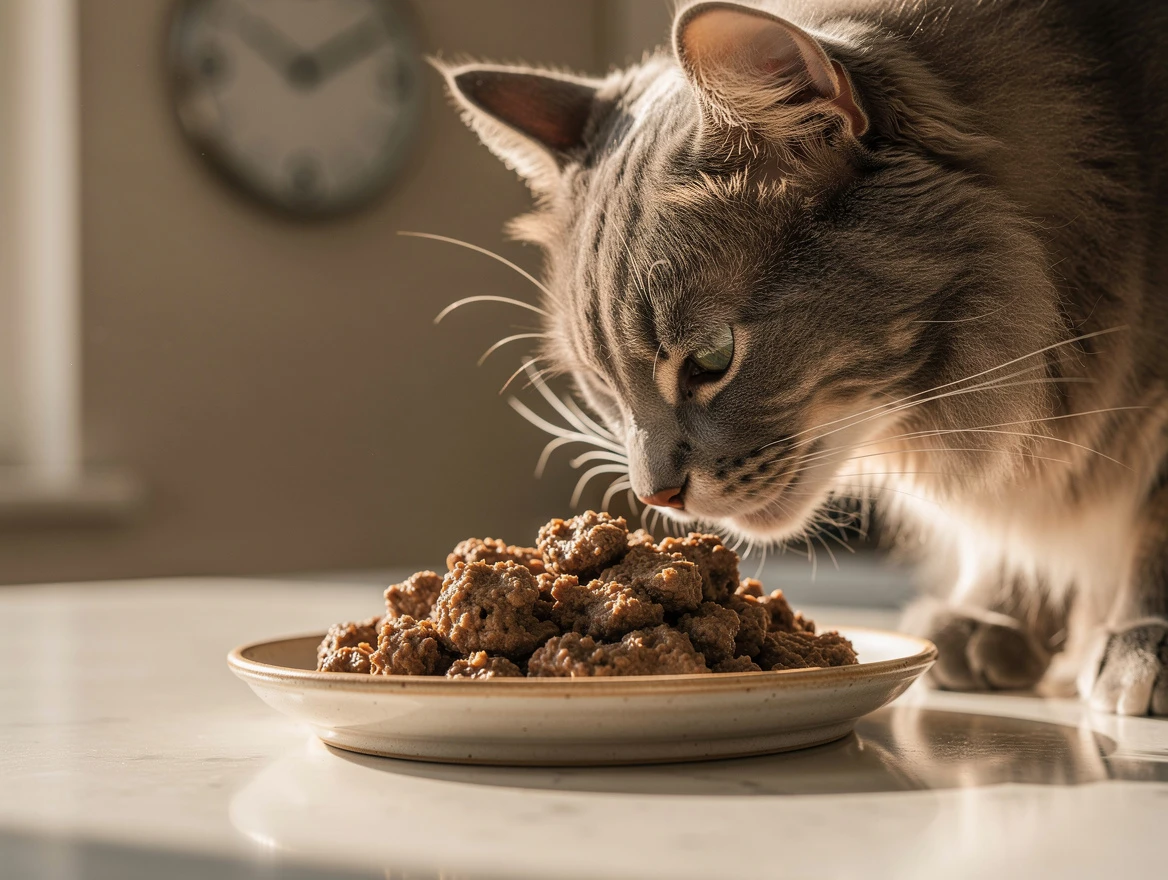
For most healthy adults, how often should I feed my cat wet food is simple — twice daily, morning and evening. I feed my four cats at 7:30 AM and 6:30 PM every single day. Keeping this exact schedule reduced begging between meals dramatically — within two weeks, they stopped crying at random hours and started waiting calmly near their bowls at feeding time.
That is 14 wet food meals per week — how often should I feed my cat wet food a week is simply twice daily, every day. The 12-hour gap matches a cat’s natural dawn-and-dusk hunting cycle. Two meals also makes it easy to monitor intake — if your cat leaves food, you are overfeeding. If they finish instantly and cry for more, portions may be too small.
How often should I feed my adult cat wet food — for an average 8–10 lb adult cat eating wet food only — approximately 3–4 oz per meal, twice daily. If combining with dry food, reduce wet portions accordingly. Related: How Much Wet Food to Feed a Cat — exact portion calculations.
Kittens (0–12 Months) — 3–4 Times Daily
Kittens have tiny stomachs and enormous energy needs. How many times should I feed my kitten wet food — 3–4 times daily in small portions (1–2 tablespoons per feeding) until 6 months old, then transition to 2–3 meals daily from 6–12 months.
Wet food is especially critical for kittens because they dehydrate quickly and need high-protein content for development. I fed my youngest cat four times daily during her first six months — 7 AM, 12 PM, 4 PM, and 8 PM. The difference in her energy and coat quality compared to a friend’s kitten on twice-daily dry food was night and day.
Never leave wet food out longer than 30–60 minutes — bacteria multiply rapidly at room temperature. Discard uneaten portions and rinse the bowl.
Senior Cats (7+) — 2–3 Smaller Meals
How often should I feed my senior cat wet food — 2–3 smaller meals per day rather than 2 larger ones. Aging cats digest less efficiently, and smaller meals reduce strain on kidneys and digestive organs.
Senior cats also lose muscle mass (sarcopenia), making high-protein wet food increasingly important. Look for senior formulas with elevated protein and reduced phosphorus for kidney health.
If your senior cat has lost interest in food, warm the wet food slightly (10–15 seconds in microwave, test temperature) to release aroma. My oldest cat went from ignoring cold food entirely to cleaning her bowl in minutes after I started warming it. That one change saved me a vet visit. Related: My Cat Is Not Eating or Drinking and Very Weak — when appetite loss becomes urgent.
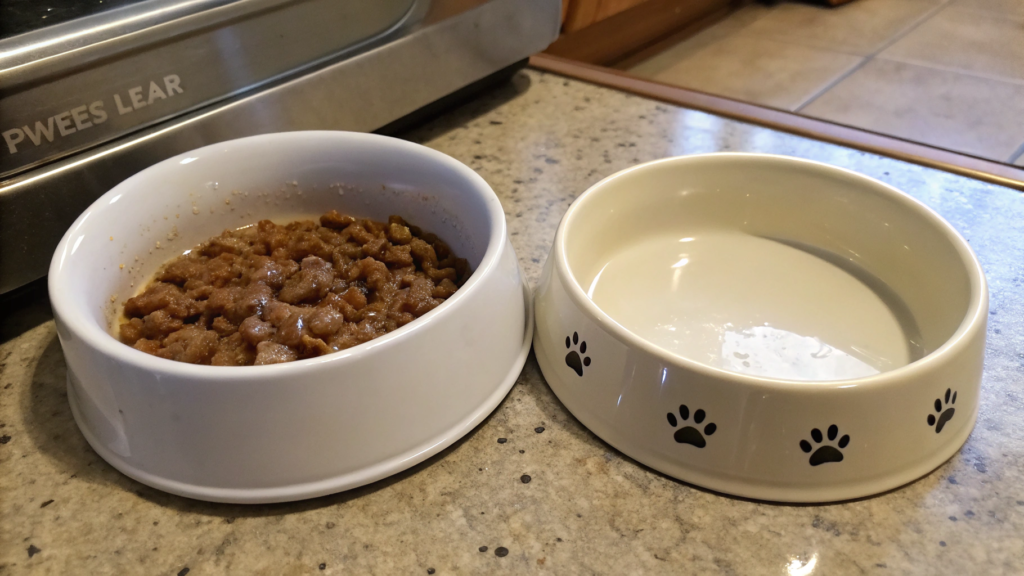
How Often Should I Feed My Cat Wet Food and Dry Food (Wet Food vs Dry Food)
Combining wet and dry is the most common approach — and the one most likely to lead to overfeeding if you are not careful.
| Approach | Best For | Benefit | Watch Out |
|---|---|---|---|
| Wet food only | Urinary issues, kidney disease, overweight cats | Maximum hydration | Higher cost, needs refrigeration |
| Dry food only | Busy schedules | Convenience | Low moisture, higher carbs |
| Wet 2x daily + dry free choice | Healthy, active cats | Balance of hydration + convenience | Easy to overfeed total calories |
| Wet 2x daily + measured dry | Most cats (recommended) | Best calorie control | Requires measuring both |
The critical rule: calculate total daily calories from BOTH food sources combined. Most owners underestimate calories from dry food left out between wet food meals. Related: How to Get Cat to Eat Wet Food — if your cat resists the switch.
“I feed my cats wet food morning and evening, with a small measured amount of dry food available during the day. The key was actually weighing the dry food — I was shocked at how much I was overpouring before I started measuring.” — Luna
How Often Should I Feed My Indoor Cat Wet Food
Same frequency — twice daily — but with reduced portions. Indoor cats burn 20–30% fewer calories than outdoor cats due to lower activity levels. The risk with indoor cats is not feeding frequency but feeding too much.
Indoor cats that are bored often become food-motivated, leading owners to overfeed in response to begging. Strict meal times (not free-feeding) is the single most effective intervention for preventing indoor cat obesity. Puzzle feeders add mental stimulation and slow eating speed.
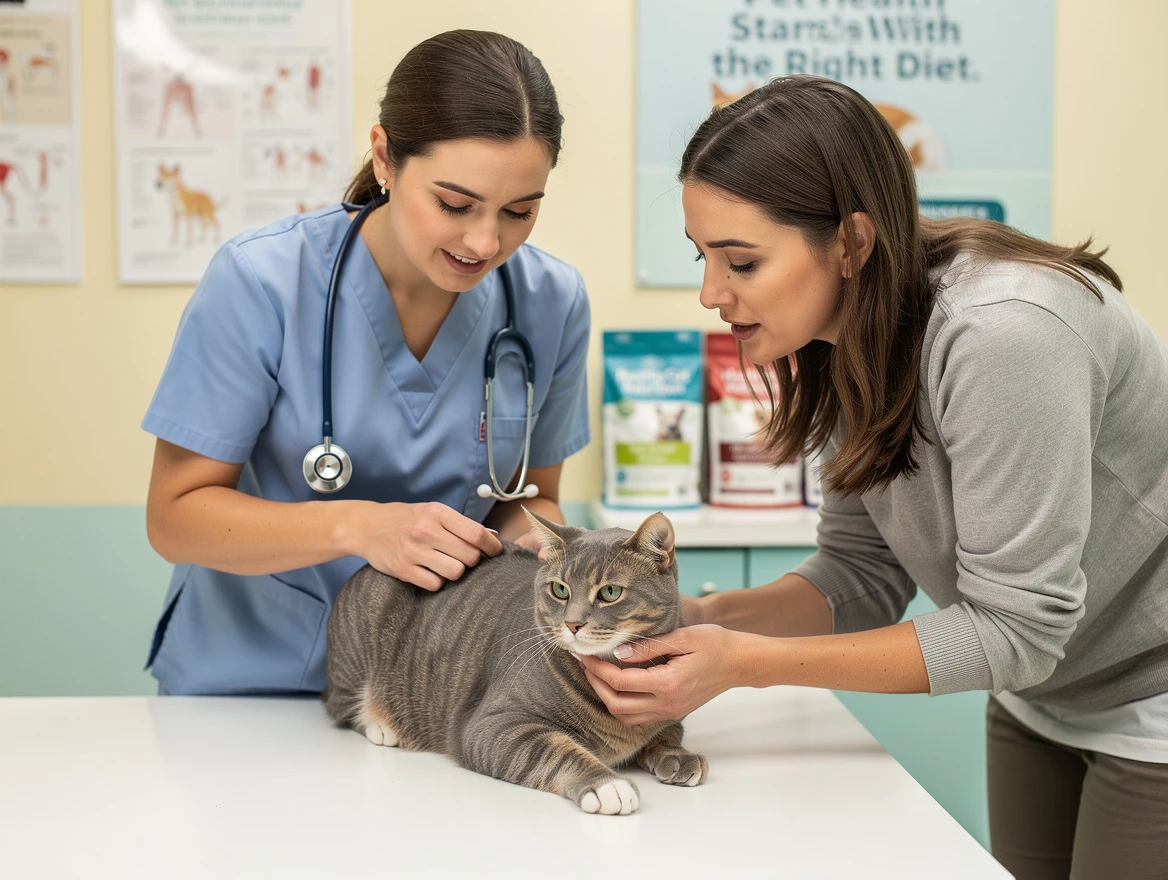
Overweight Cats — Precise Portions, Same Frequency
How often should I feed my overweight cat wet food — still twice daily, but with precisely measured, reduced portions using a calorie-counted high-protein wet food.
If your cat has been gaining weight, see: My Cat Looks Bloated But Acting Normal — bloating may indicate a health issue beyond simple overfeeding.
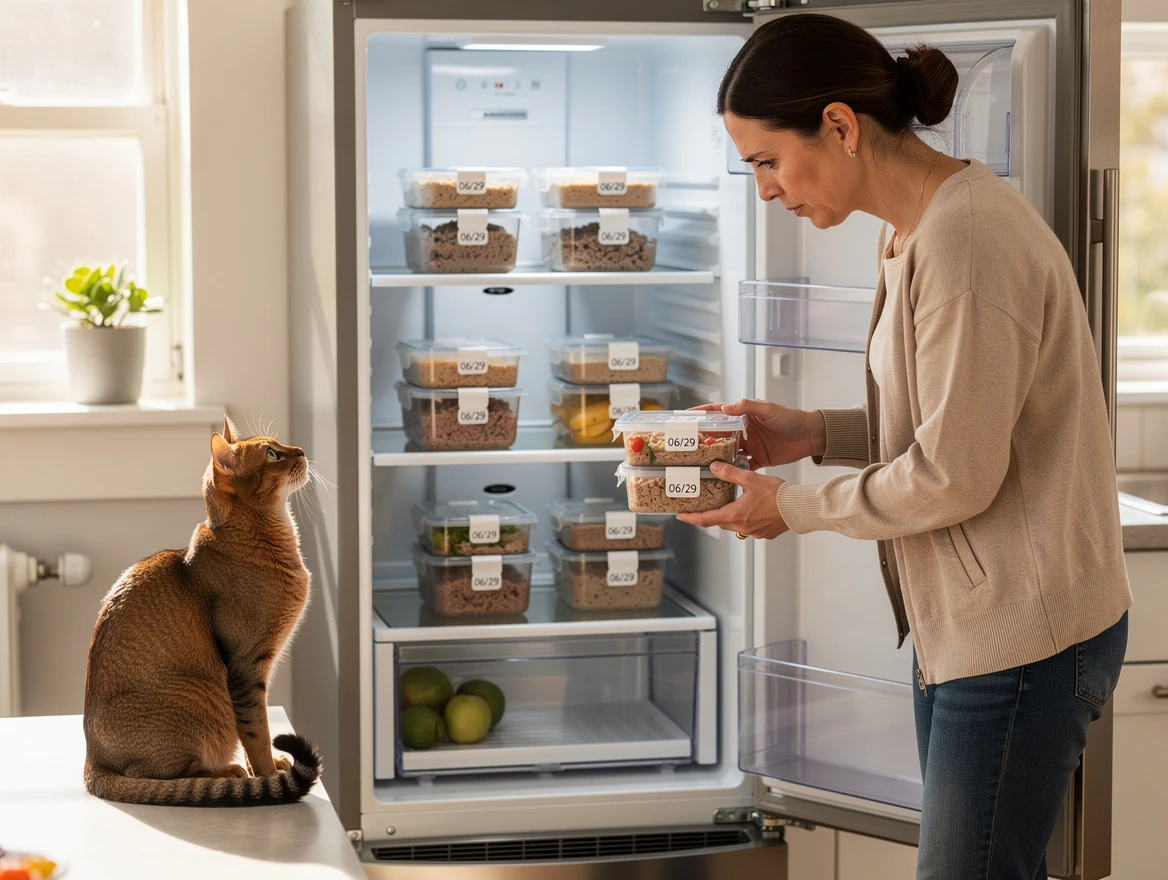
How to Store Leftover Wet Food
- Opened cans: cover and refrigerate immediately, use within 3–5 days
- Room temperature: never leave wet food out longer than 1 hour
- Before serving refrigerated food: warm to room temperature — cold food is less palatable and harder to digest
- Bulk storage: freeze unopened cans, thaw in refrigerator 24 hours before use
- Discard: any food with unusual smell, color change, or mold
Related: How Long Can Wet Cat Food Sit Out — detailed storage and safety guidelines.
Should I Feed My Cat Wet Food Right Now?
| Situation | Feed Wet Food? | Notes |
|---|---|---|
| Healthy adult, regular schedule | ✅ Yes — twice daily | Morning and evening |
| Kitten under 6 months | ✅ Yes — 3–4x daily | Small frequent meals |
| Senior cat 7+ years | ✅ Yes — 2–3x daily | Smaller portions, warmed |
| Cat is vomiting after meals | ⚠️ Pause and call vet | May need diet change or exam |
| Diabetic cat | ⚠️ Timed with insulin only | Ask vet for exact schedule |
| Cat refusing wet food | ⚠️ Try warming it first | If still refuses — vet check |
| Just switched food brands | ✅ Yes — transition over 7–10 days | Mix old and new gradually |
| Cat had surgery today | ❌ Follow vet instructions | May need fasting period first |
Common Mistakes
- Not calculating total calories — when mixing wet and dry, most owners overfeed because they do not count dry food calories
- Free-feeding wet food — wet food spoils at room temperature. Always serve measured portions and remove after 1 hour.
- Feeding one large meal per day — causes stomach upset, longer hunger periods, and food-anxiety behaviors
- Ignoring life stage differences — kittens, adults, seniors, and overweight cats all have different needs
- Switching food abruptly — transition gradually over 7–10 days to prevent vomiting and diarrhea. Related: Why Is My Cat Throwing Up
- Using the same portions for indoor and outdoor cats — indoor cats need 20–30% fewer calories
Signs Your Feeding Schedule Is Working
| Good Signs ✅ | Too Much Food ⚠️ | Not Enough Food ⚠️ |
|---|---|---|
| Cat waits calmly at meal times | Consistently leaves food | Finishes instantly, cries for more |
| Finishes food in 15–20 min | Visible weight gain | Visible weight loss |
| Stable weight month to month | Loose stools after eating | Lethargy or reduced activity |
| No food-related anxiety | Begging between meals (often boredom) | Waking you early for food |
Frequently Asked Questions
How often should I feed my cat wet food?
Twice daily for most healthy adult cats — morning and evening. Kittens need 3–4 meals per day, seniors benefit from 2–3 smaller meals. Feed at consistent times each day.
Should cats eat wet food every day?
Yes — daily wet food provides hydration (70–80% moisture), high-quality protein, and lower carbohydrates than dry food. It supports urinary tract health and helps maintain healthy weight.
How often should I feed my cat wet food at night?
Most cats do well with their second wet food meal in the evening, around the same time each day. Avoid feeding too close to bedtime if your cat tends to demand food early in the morning.
How often should I feed my cat wet food and dry food?
Feed wet food twice daily and a measured portion of dry food between meals or alongside one wet meal. Calculate total daily calories from both sources combined to prevent overfeeding.
Can I feed my cat wet food once a day?
Once daily is not recommended. One large meal causes stomach upset, longer hunger periods, and increased food-anxiety behaviors. Two smaller meals match how cats are designed to eat.
How many times should I feed my kitten wet food?
3–4 times daily until 6 months old, then 2–3 times daily from 6–12 months. Kittens have small stomachs and high energy needs — frequent small meals are essential for proper growth.
How much wet food and dry food to feed a cat per day?
For an average 10-lb adult cat: approximately 2–3 oz wet food per meal (twice daily) plus 1/4 cup measured dry food. Check calorie labels on both foods and adjust to your cat’s specific calorie needs.
How many times should I give my cat wet food in a week?
Most vets recommend wet food daily — ideally twice per day, 7 days a week. That is 14 servings per week for an adult cat. Wet food provides essential hydration (75–80% moisture) that dry food cannot match. If budget is a concern, even once daily with dry food available between meals is beneficial.
Is 2 pouches of cat food enough per day?
It depends on pouch size and your cat’s weight. Most standard pouches are 3 oz (85g). Two pouches (6 oz total) is appropriate for an average 8–10 lb adult cat eating wet food only. If your cat also eats dry food, 2 pouches plus a measured amount of kibble is typically sufficient. Check the calorie content on your specific brand — Sheba pouches, for example, contain roughly 40–50 calories each.
How much canned wet food should a cat eat a day?
An average adult cat (8–10 lbs) needs approximately 6–8 oz of canned wet food per day when feeding wet food only, split into 2 meals. That equals roughly two 3-oz cans or one 5.5-oz can plus a small portion. Adjust based on your cat’s weight, activity level, and whether you also feed dry food.
Is there a wet food feeding calculator?
A simple formula: your cat needs roughly 20 calories per pound of body weight per day. Check the calorie content on your wet food label (usually 70–100 calories per 3-oz can), then divide daily calories needed by calories per can. Example: a 10-lb cat needs ~200 calories daily = approximately two to three 3-oz cans depending on the brand. Related: How Much Wet Food to Feed a Cat — detailed portion calculations.
How often should I feed my cat Sheba wet food?
Sheba wet food follows the same guidelines as any wet food — twice daily for adults. Sheba Perfect Portions are designed as single servings (1.32 oz each, sold in twin packs). Most adult cats need 2–3 twin packs per day depending on weight. Feed at consistent times morning and evening.
My cat throws up after wet food — what’s wrong?
Occasional vomiting from eating too fast is common — try a slow-feeder bowl or flat plate. If vomiting is frequent, see: Cat Vomiting White Foam for causes worth investigating.
Is free feeding bad for cats?
Free feeding wet food is never recommended — it spoils within 1 hour at room temperature. Free feeding dry food leads to overeating and obesity in most cats, especially indoor cats. Scheduled, measured meals give far better weight control and reduce food anxiety.
Should wet food stay out all day?
No — never leave wet food out longer than 1 hour. Bacteria multiply rapidly at room temperature. Serve fresh portions, remove uneaten food after 30–60 minutes, and refrigerate any remaining canned food immediately.
How much wet food per meal for an average cat?
An average 8–10 lb adult cat needs approximately 3–4 oz of wet food per meal when fed twice daily (wet food only). If combining with dry food, reduce to 2 oz wet per meal. Always check the calorie content on your specific food’s label.
How often should I feed my cat dry food?
If feeding dry food only, twice daily in measured portions. Avoid free-feeding (leaving a full bowl out all day) as it leads to overeating, especially in indoor cats. Measured meals give better weight control.
The Bottom Line
How often should I feed my cat wet food — twice daily for adults, 3–4 times for kittens, 2–3 times for seniors. Consistent timing matters as much as frequency: feed at the same hours every day. Calculate total calories from all food sources, never leave wet food out longer than 1 hour, and adjust portions based on life stage and activity level. Related: Wet Cat Food for Sensitive Stomach — choosing the right food is as important as the schedule. Also: Can Cats Eat Eggs — safe supplemental foods for variety.
Still unsure how much wet food your specific cat needs? Our complete guide to wet food portions has exact calculations by body weight. And if your cat is refusing wet food entirely, see how to get your cat to eat wet food for proven transition strategies.
Related reading: How to Get Cat to Eat Wet Food, How Long Can Wet Cat Food Sit Out, Why Is My Cat Throwing Up, 7 Diabetic Cat Signs, and Wet Cat Food for Sensitive Stomach.