Cat diabetes symptoms often start so subtly that most owners miss them for weeks or even months. Your cat drinks a little more water than usual. The litter box is heavier. They lose a pound but still eat normally. These early signs are easy to dismiss, but catching them early is the difference between a manageable condition and a life-threatening crisis.
A friend’s cat was diagnosed with diabetes after months of “normal” behavior changes that she assumed were just aging. Looking back, every single early sign was there, she just didn’t know what to look for. That experience made me research cat diabetes symptoms extensively, and now I check my own senior cats regularly.
The earliest signs are increased thirst, increased urination, weight loss despite a normal or increased appetite, and lethargy. These four signs together, especially in an overweight cat over 7 years old, strongly suggest diabetes.
If your cat is drinking noticeably more water and the litter box is heavier than usual, see your vet for a blood glucose test.
- Cat is vomiting repeatedly and cannot keep food down
- Sweet or fruity breath odor (diabetic ketoacidosis). Related: Why Does My Cat’s Breath Smell So Bad
- Extreme weakness, inability to stand, or walking flat on hocks (back legs collapsing)
- Rapid breathing, disorientation, or seizures
- Complete refusal to eat or drink
Diabetic ketoacidosis (DKA) is a life-threatening emergency. These symptoms require immediate veterinary care — do not wait.
10 Early Cat Diabetes Symptoms
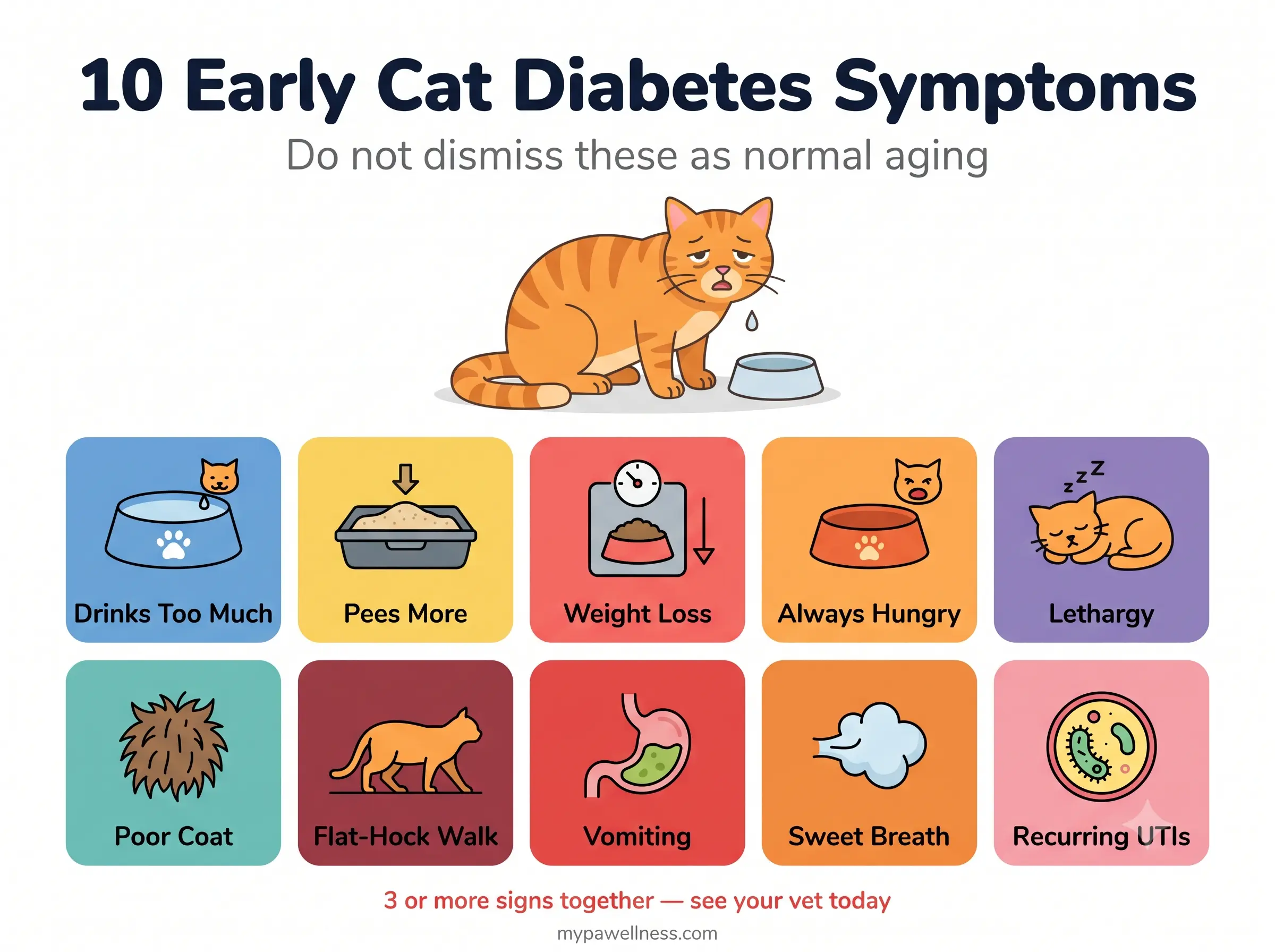
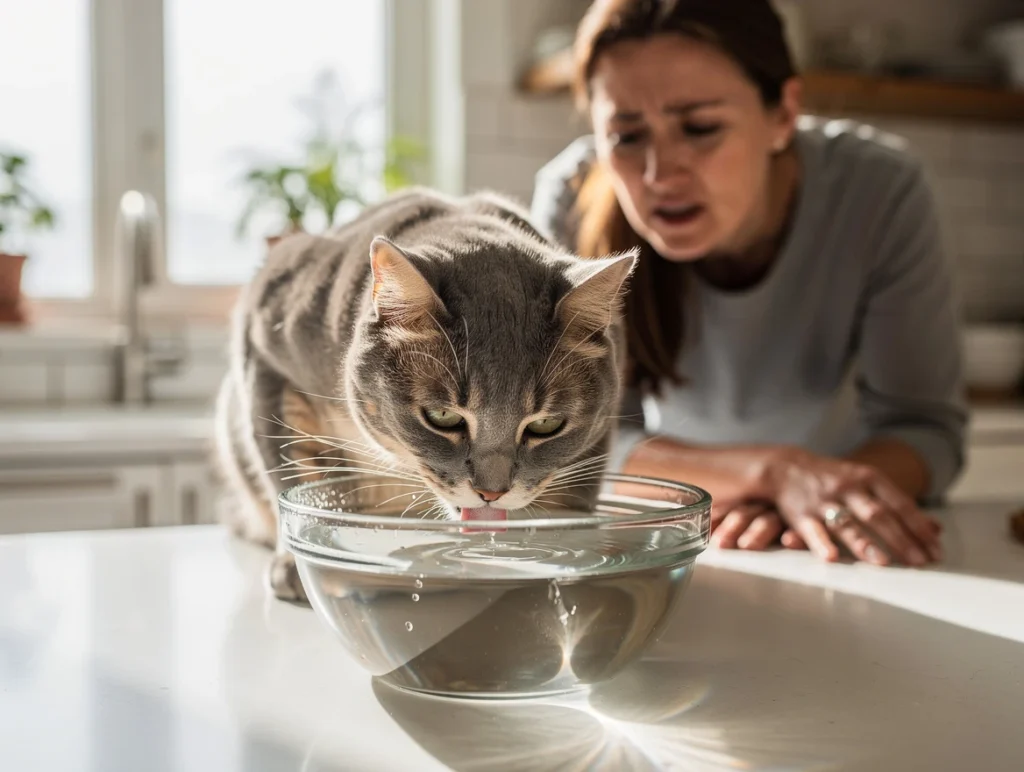
1. Drinking More Water Than Usual (Polydipsia)
This is usually the first symptom owners notice. Your cat visits the water bowl more often, drinks for longer, or seeks water from unusual places — sinks, toilets, dripping faucets. High blood sugar pulls water from the body, creating constant thirst. A normal cat drinks roughly 1 ounce of water per pound of body weight per day. Noticeably exceeding that is a red flag.
2. Urinating More Frequently (Polyuria)
More water in means more urine out. The litter box becomes heavier, the clumps are larger, and you find yourself cleaning it more often. Some cats start urinating outside the litter box because the urgency is too intense. If your cat is peeing everywhere suddenly, diabetes is one of the causes to rule out. Related: Why Is My Cat Peeing Everywhere.
3. Weight Loss Despite Eating Normally or More
This is the most confusing symptom for owners. Your cat is eating the same amount, or even more, but losing weight. Without insulin to process glucose, the body can’t use the calories from food. It starts breaking down fat and muscle for energy instead. Unexplained weight loss in a cat that’s eating well should always trigger a vet visit.
4. Increased Appetite (Polyphagia)
Because cells can’t access glucose for energy, the body sends hunger signals constantly. Your cat may beg for food, eat faster, or seem unsatisfied after meals. The cruel irony of cat diabetes: your cat is starving at the cellular level while eating more than ever.
5. Lethargy and Reduced Activity
Without glucose reaching the cells, energy drops. Your once-active cat sleeps more, plays less, and seems generally slower. This symptom is easy to dismiss as “just getting older,” especially in senior cats, but combined with increased thirst and urination, it forms the classic diabetes triad. Related: My Cat Is Lethargic But Eating and Drinking.
6. Dull, Unkempt Coat
Diabetic cats often stop grooming themselves as thoroughly. The coat becomes dull, dry, matted, or dandruff-covered. Poor nutrition at the cellular level affects skin and fur quality. If your cat’s coat looks worse alongside other symptoms, the condition may already be progressing. Related: How to Treat Dandruff on Cat’s Back Near Tail.
7. Walking Flat on Hocks (Plantigrade Posture)
This is one of the most distinctive symptoms. Instead of walking on their toes like normal, a diabetic cat drops down and walks on the full length of their back legs, flat from the ankle down. This is called diabetic neuropathy, caused by nerve damage from prolonged high blood sugar. If you see this posture, diabetes is advanced and needs immediate treatment.
The encouraging part: this specific symptom is often at least partially reversible. With consistent insulin treatment and tight glucose control, some cats regain more normal leg function within weeks to months, though the degree of recovery varies and severe, long-standing nerve damage may not fully resolve.
8. Vomiting
Frequent vomiting, especially alongside increased thirst and weight loss, can indicate diabetes or its dangerous complication, diabetic ketoacidosis (DKA). DKA occurs when the body breaks down fat too rapidly, producing toxic ketones. This is a medical emergency. Related: Cat Vomiting White Foam.
9. Sweet or Fruity Breath
A distinctive sweet or fruity smell on your cat’s breath indicates ketone buildup, a hallmark of diabetic ketoacidosis. Normal cats should have neutral breath. Sweet breath alongside any other diabetes symptom is an emergency sign. Related: Why Does My Cat’s Breath Smell So Bad.
10. Urinary Tract Infections (Recurring)
High blood sugar creates a sugar-rich environment in urine, perfect for bacterial growth. Diabetic cats are prone to recurring UTIs. If your cat keeps getting UTIs despite treatment, undiagnosed diabetes may be the underlying cause.
⚠️ A Common Confusion: Weight Gain vs Weight Loss
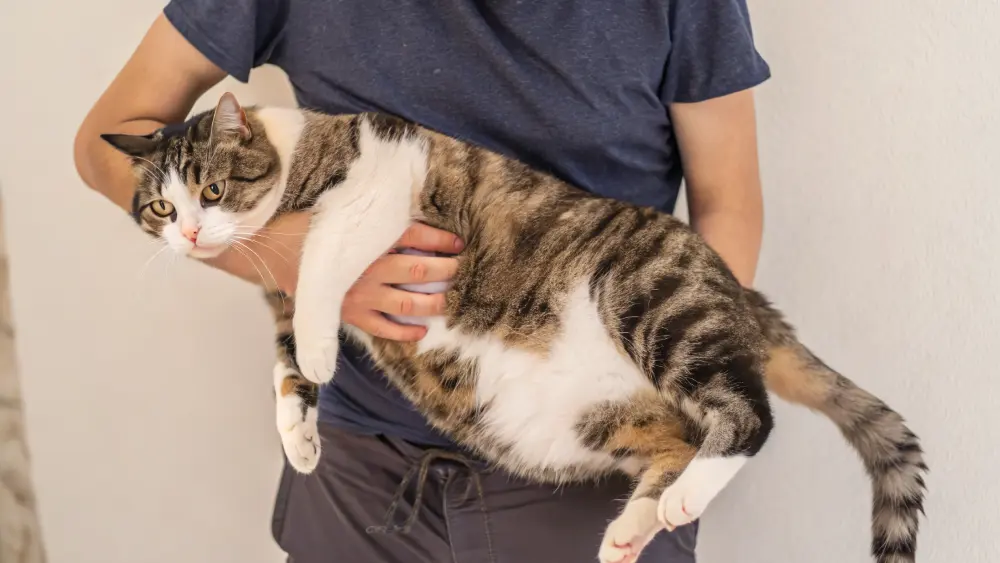
This trips up a lot of owners: weight gain and obesity are the biggest risk factor that leads to diabetes developing in the first place, but once diabetes actually sets in, the classic symptom is weight loss despite normal or increased eating. If your cat has been steadily overweight for a while, that’s a risk factor to watch, not a current symptom. If a previously overweight cat suddenly starts losing weight without a diet change, that’s the pattern that points toward diabetes itself.
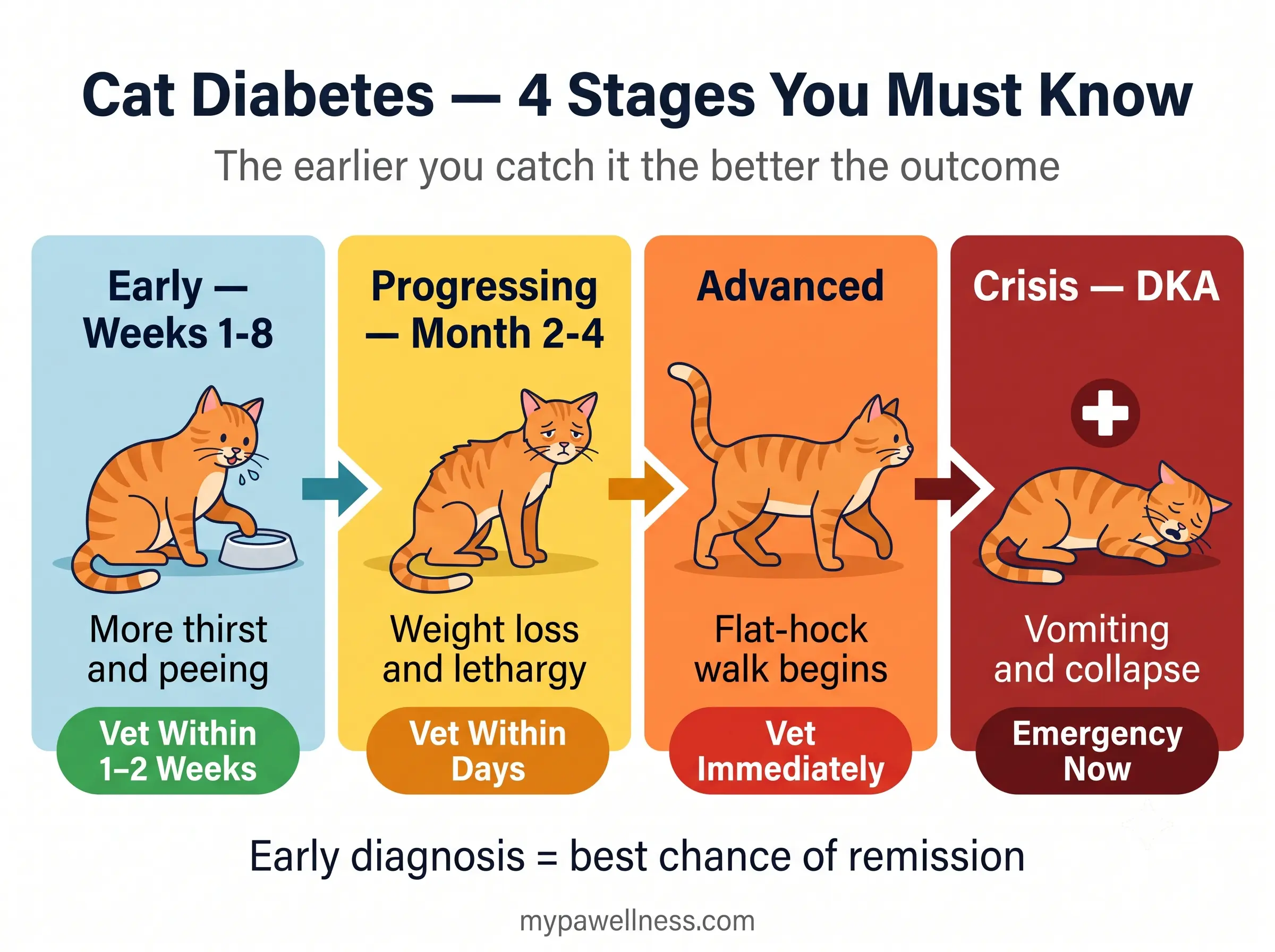
Early vs Advanced Symptoms
| Stage | Symptoms | Urgency |
|---|---|---|
| Early (weeks 1–8) | Increased thirst, increased urination, subtle weight loss, slightly increased appetite | Vet within 1–2 weeks |
| Progressing (months 2–4) | Noticeable weight loss, dull coat, reduced activity, larger urine clumps | Vet within days |
| Advanced | Walking flat on hocks, muscle wasting, vomiting, sweet breath | 🚨 Vet immediately |
| Crisis (DKA) | Vomiting, rapid breathing, collapse, seizures, fruity breath | 🚨 Emergency vet NOW |
Left untreated, diabetes doesn’t stay stable — it progresses. Persistently high blood sugar continues to damage nerves, which is what drives the leg weakness and altered gait described above. Left unmanaged long enough, the body eventually tips into diabetic ketoacidosis, and once DKA sets in, an untreated cat can decline and die within days to a few weeks. This is why “watching and waiting” isn’t a safe long-term strategy for diabetes the way it might be for a milder, self-limiting condition.
Which Cats Are Most at Risk
- Overweight or obese cats — obesity is the single biggest risk factor
- Male cats — males are diagnosed at nearly twice the rate of females
- Senior cats (7+ years) — risk increases significantly with age
- Indoor-only sedentary cats — low activity plus high calorie intake
- Burmese breed — genetically predisposed
- Cats on steroid medications — long-term corticosteroid use raises blood sugar
- Cats fed high-carbohydrate dry food — kibble-only diets increase diabetes risk
Cat Diabetes Causes — Why Does It Happen
Understanding the causes helps with prevention. The most common ones are:
- Obesity — the single biggest cause. Fat cells create insulin resistance.
- High-carb diet — dry kibble diets with 30–50% carbs overload the insulin system over time
- Genetics — Burmese cats are genetically predisposed
- Age — risk increases significantly over age 7
- Long-term steroid use — corticosteroids raise blood glucose
- Chronic pancreatitis — damages insulin-producing cells
- Sedentary lifestyle — indoor-only cats with low activity burn fewer calories
Before full diabetes develops, some cats show borderline high glucose on blood tests alongside mild increases in thirst and urination. This “pre-diabetic” stage is the ideal time to intervene with diet and weight management. Ask your vet to check fasting glucose at annual visits for at-risk cats.
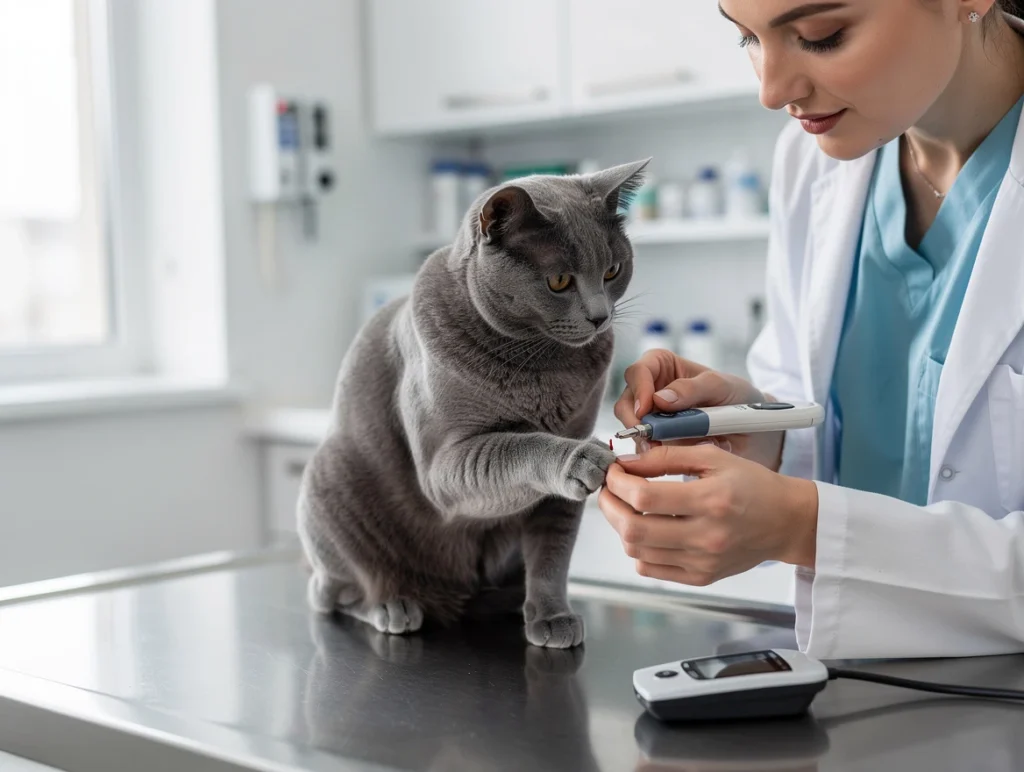
How Cat Diabetes Is Diagnosed
Diagnosis requires a simple blood test measuring fasting blood glucose and fructosamine levels (which show average blood sugar over the past 2–3 weeks). A urine test may also check for glucose and ketones in the urine.
| Test | Normal Range | Diabetic Range |
|---|---|---|
| Fasting blood glucose | 80–120 mg/dL | Consistently above 200 mg/dL |
| Fructosamine | 190–365 µmol/L | Above 400 µmol/L |
| Urine glucose | Negative | Positive |
| Urine ketones | Negative | Positive (DKA risk) |
One high reading isn’t enough — stress can temporarily raise blood glucose in cats (called stress hyperglycemia). Your vet will use fructosamine levels to confirm whether elevated glucose is chronic or temporary.
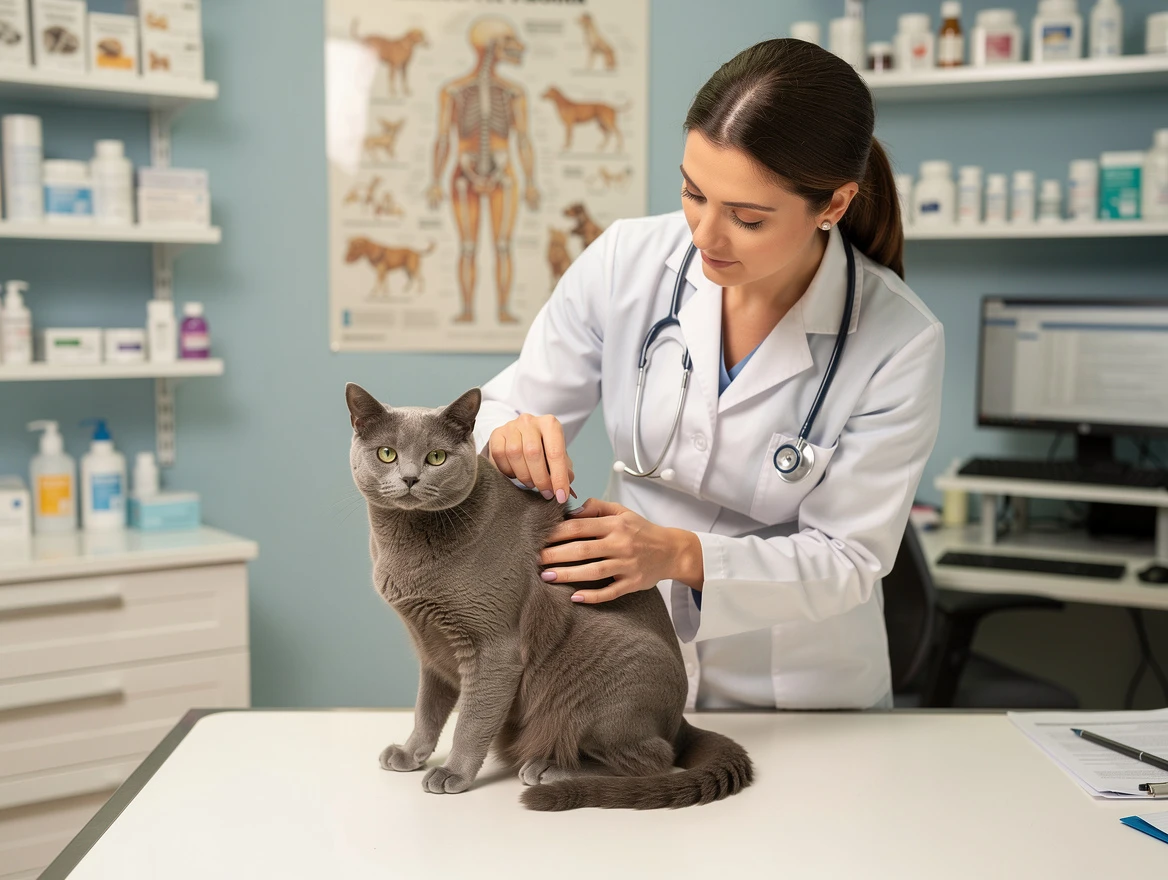
Treatment Overview
Cat diabetes is manageable. Most cats need:
- Insulin injections — twice daily, at home, given just under the skin. Most owners learn within a few days. It’s far easier than it sounds.
- Diet change — high-protein, low-carbohydrate wet food. This is critical. Some cats achieve remission with diet change alone. Related: How Much Wet Food to Feed a Cat.
- Weight management — gradual, vet-supervised weight loss for overweight cats
- Home glucose monitoring — some vets recommend home testing with a pet glucometer
- Regular vet checkups — every 3–6 months to monitor glucose curves and adjust insulin
Managing Diabetes at Home
- Feed at consistent times — coordinate meals with insulin injections. Consistency matters more than perfection. Related: How Often Should I Feed My Cat Wet Food.
- Monitor water intake — track how much your cat drinks daily. Increasing consumption may mean glucose isn’t controlled.
- Track litter box output — larger, more frequent clumps can mean a possible glucose spike
- Weigh weekly — stable weight means treatment is working. Ongoing loss means adjustment needed.
- Watch for low blood sugar signs — wobbliness, disorientation, seizures. If your cat is on insulin and shows these signs, rub corn syrup or honey on the gums and go to the vet immediately. This is for insulin-treated cats only, and it buys time on the way to the clinic — it isn’t a substitute for the visit.
- Never skip insulin without vet guidance — even if your cat isn’t eating, call your vet before skipping a dose
Common Mistakes
- Dismissing early signs as “aging” — increased thirst and weight loss in a senior cat is not normal aging. It’s a vet visit.
- Continuing dry food only — high-carb kibble worsens diabetes. Wet, high-protein, low-carb food is essential.
- Assuming diabetes is a death sentence — it’s not. With proper management, most diabetic cats live happy, comfortable lives for years.
- Skipping insulin because “the cat seems fine” — cats hide discomfort. Follow the insulin schedule your vet prescribed.
- Not monitoring at home — tracking water intake, weight, and litter box changes catches problems before they become crises
Frequently Asked Questions
With proper management (insulin, diet, monitoring), many diabetic cats live 3–5+ additional years after diagnosis. Some cats live a normal lifespan. Quality of life is generally excellent with treatment.
Initial diagnosis and stabilization typically costs $300–$800. Ongoing costs include insulin ($30–$100/month), syringes, food, and vet checkups every 3–6 months. Total annual cost ranges from $500–$2,000 depending on your location and specific needs.
Female cat diabetes symptoms are the same as male — increased thirst, urination, weight loss, and lethargy. However, male cats are diagnosed at nearly twice the rate of females. Both sexes show plantigrade posture (walking flat on hocks) in advanced cases.
Yes, though less common than in dogs, cats can develop cataracts from prolonged high blood sugar. Eye symptoms may include cloudiness, vision changes, or squinting. Regular vet exams monitor for eye complications. Related: Why Is My Cat Squinting One Eye.
Approximately 1 in 100–200 cats develops diabetes, making it one of the most common feline endocrine diseases. The rate has been increasing alongside rising pet obesity. Indoor, overweight, senior male cats are the most commonly diagnosed.
Most diabetic cats (80–95%) have type 2 diabetes, where the body produces insulin but cells resist it. Type 1 diabetes (the body stops producing insulin entirely) is rare in cats. Type 2 is strongly linked to obesity and has the best chance of remission with weight loss and dietary changes.
Not typically. Diarrhea isn’t one of the classic diabetes signs — the hallmark symptoms are increased thirst, urination, weight loss, and increased appetite. If a diabetic cat has diarrhea, it’s usually worth looking for a separate cause, like a diet change, pancreatitis, or an unrelated GI issue, rather than assuming it’s the diabetes itself.
The Bottom Line
Cat diabetes symptoms start subtly: more water, more pee, weight loss while eating well. These signs are easy to dismiss as aging, but catching them early can mean the difference between diabetic remission and permanent nerve damage.
If your cat is over 7, overweight, and drinking more than usual, get a blood glucose test. Diabetes is not a death sentence. With insulin, low-carb wet food, and home monitoring, most diabetic cats live comfortable, happy lives.
Related: Signs of Kidney Failure in Cats — kidney disease shares some symptoms with diabetes and should be ruled out. Also: My Cat Is Not Eating or Drinking and Very Weak — when diabetes becomes a crisis.
Related Articles
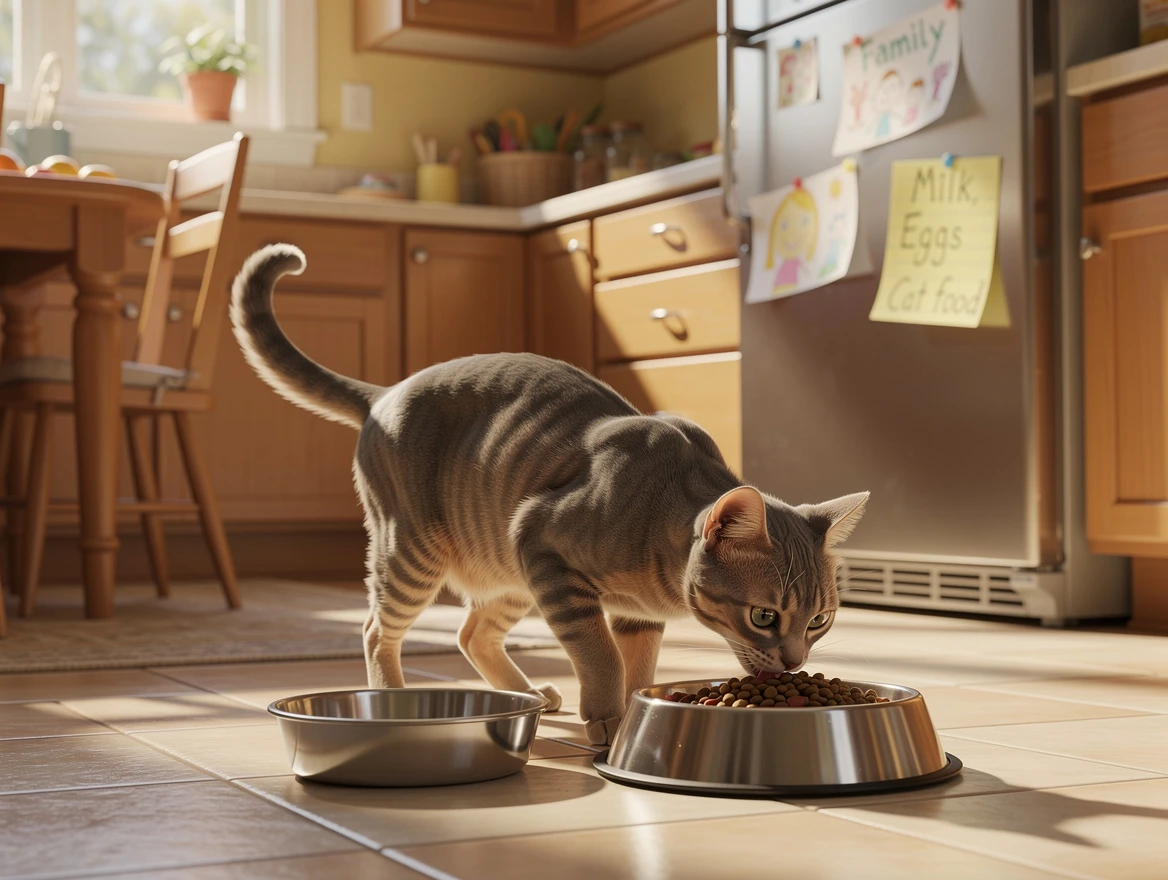
Timed feeding is essential for insulin management.