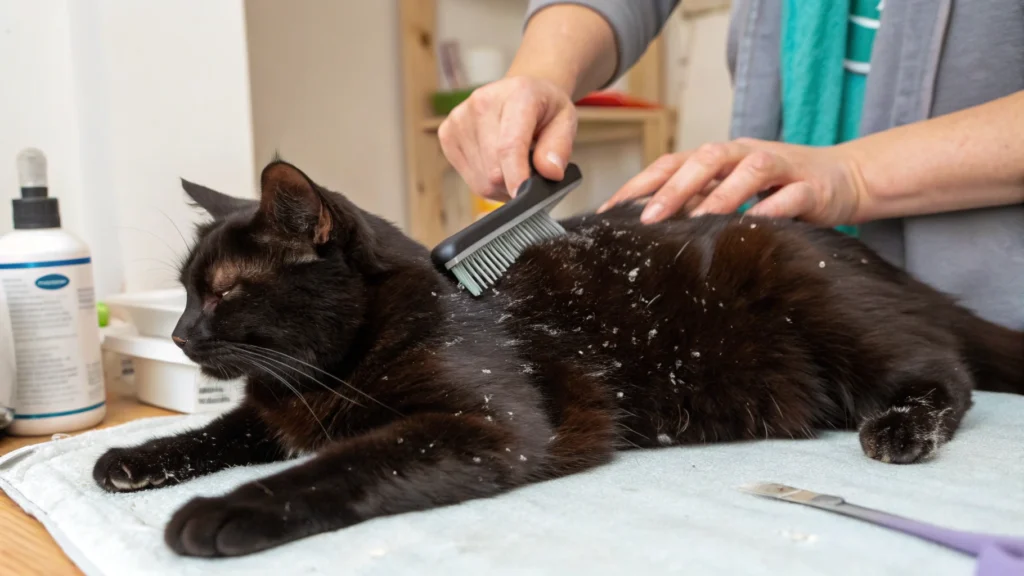
How to treat dandruff on cat’s back near tail — those white flakes on your cat’s lower back are dead skin cells shedding faster than normal. In most cases it’s completely treatable at home with simple changes to grooming, diet, and hydration.
Two of my four cats have had dandruff near the tail at different times. One was a diet issue, she was eating only dry kibble. The other was a grooming issue, he gained weight and simply could not reach that spot anymore. Both resolved completely within a month of targeted treatment.
Brush daily, add omega-3 supplements, switch to wet food, and use a humidifier. Most cases improve within 2–4 weeks. See a vet if dandruff comes with hair loss, itching, red skin, or moving flakes (mites).
Can Cat Dandruff Be Serious?
Most dandruff near the tail is harmless, caused by dry skin, poor grooming, or diet issues. However, it can sometimes indicate parasites, allergies, skin infections, or underlying illness like diabetes or kidney disease.
If dandruff appears suddenly, comes with hair loss or intense itching, see your vet. For most cats, the 8 remedies below resolve it within 2–6 weeks.
Why Does Dandruff Appear Near the Tail Specifically
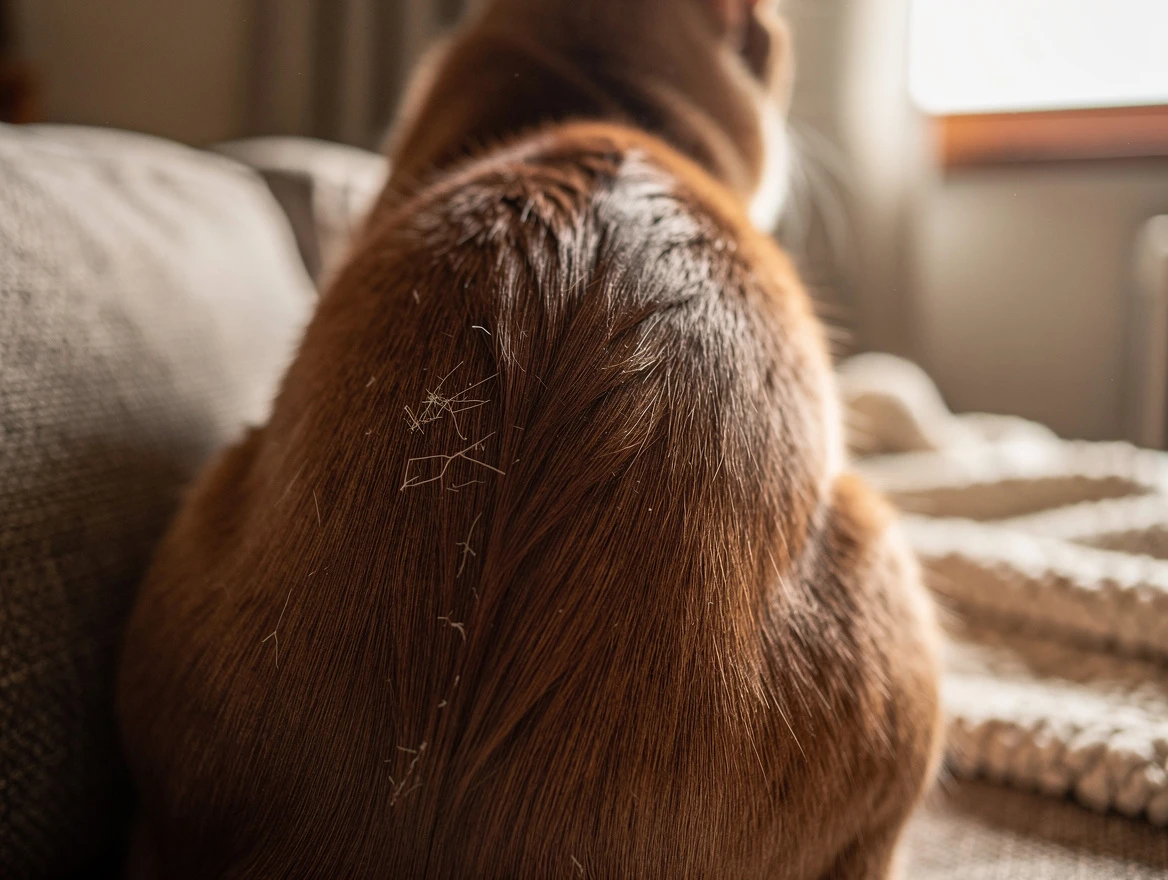
There’s a specific anatomical reason dandruff concentrates on the lower back near the tail. Cats have a cluster of oil-producing glands at the tail base called the supracaudal gland. When this gland over- or under-produces oil, it creates the perfect conditions for flaking in that exact area.
The second reason is equally important: many cats physically cannot reach this spot to groom themselves. Overweight cats, senior cats with arthritis, and cats recovering from injury all struggle to twist far enough to clean their lower back. Without regular grooming, dead skin cells accumulate and become visible dandruff.
Common Causes
- Difficulty self-grooming — obesity, arthritis, or old age
- Dry air — indoor heating strips moisture, especially in winter
- Poor diet — lacking omega fatty acids. Dry kibble is roughly 10% moisture vs 75–80% in wet food
- Dehydration — cats have a low thirst drive
- Allergies — food or environmental
- Parasites — fleas and mites target the tail base. Related: How to Tell If My Cat Has Fleas
- Underlying illness — diabetes, hyperthyroidism, kidney disease
Dandruff vs Fleas vs Mites — How to Tell the Difference
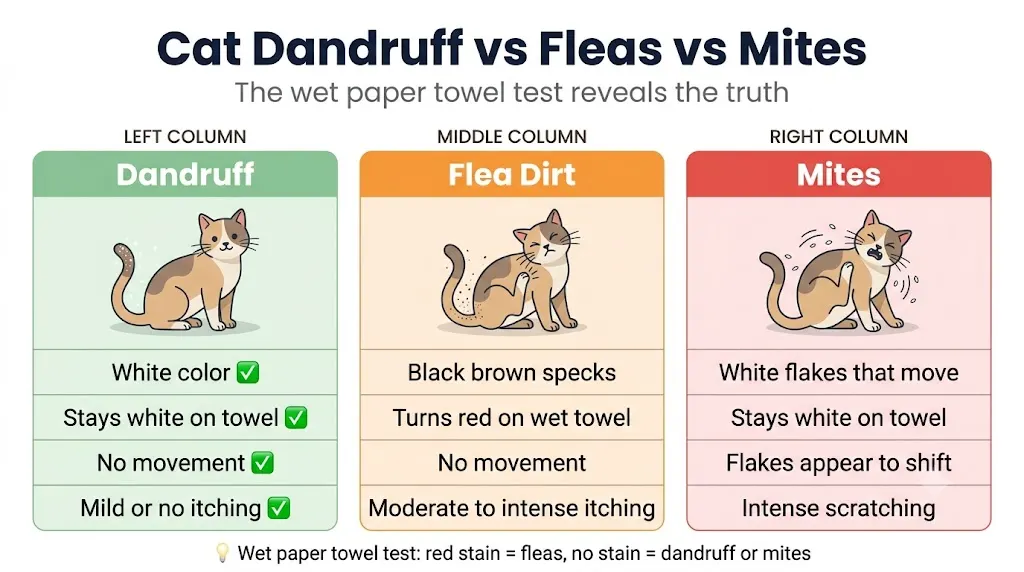
| Feature | Dandruff | Flea Dirt | Mites (Cheyletiella) |
|---|---|---|---|
| Appearance | White, dry flakes | Small black/brown specks | White flakes that move |
| Wet paper towel test | Stays white, dissolves | Turns reddish-brown (dried blood) | Stays white |
| Movement | No movement | No movement | Flakes appear to shift slowly |
| Itching | Mild or none | Moderate to intense | Intense scratching |
| Hair loss | Usually none | Possible near tail base | Common around affected area |
| Treatment | Home remedies work | Flea treatment needed | Prescription antiparasitic from vet |
Condition Comparison — What Is Causing the Flakes?
| Condition | White Flakes | Itching | Hair Loss | Other Signs |
|---|---|---|---|---|
| Dry skin | Yes | Mild or none | Rare | Dull coat, worse in winter |
| Fleas | Black specks (flea dirt) | Severe | Common near tail | Tiny moving insects in fur |
| Cheyletiella mites | Yes — moving flakes | Moderate to severe | Common | Spreads to other pets |
| Food allergy | Sometimes | Moderate | Possible | Vomiting, diarrhea, ear issues |
| Ringworm | Yes — crusty patches | Mild to moderate | Circular bald spots | Red ring-shaped lesions |
| Kidney disease | Yes — dry, flaky | None | Possible | Increased thirst, weight loss |
8 Remedies for Dandruff Near the Tail
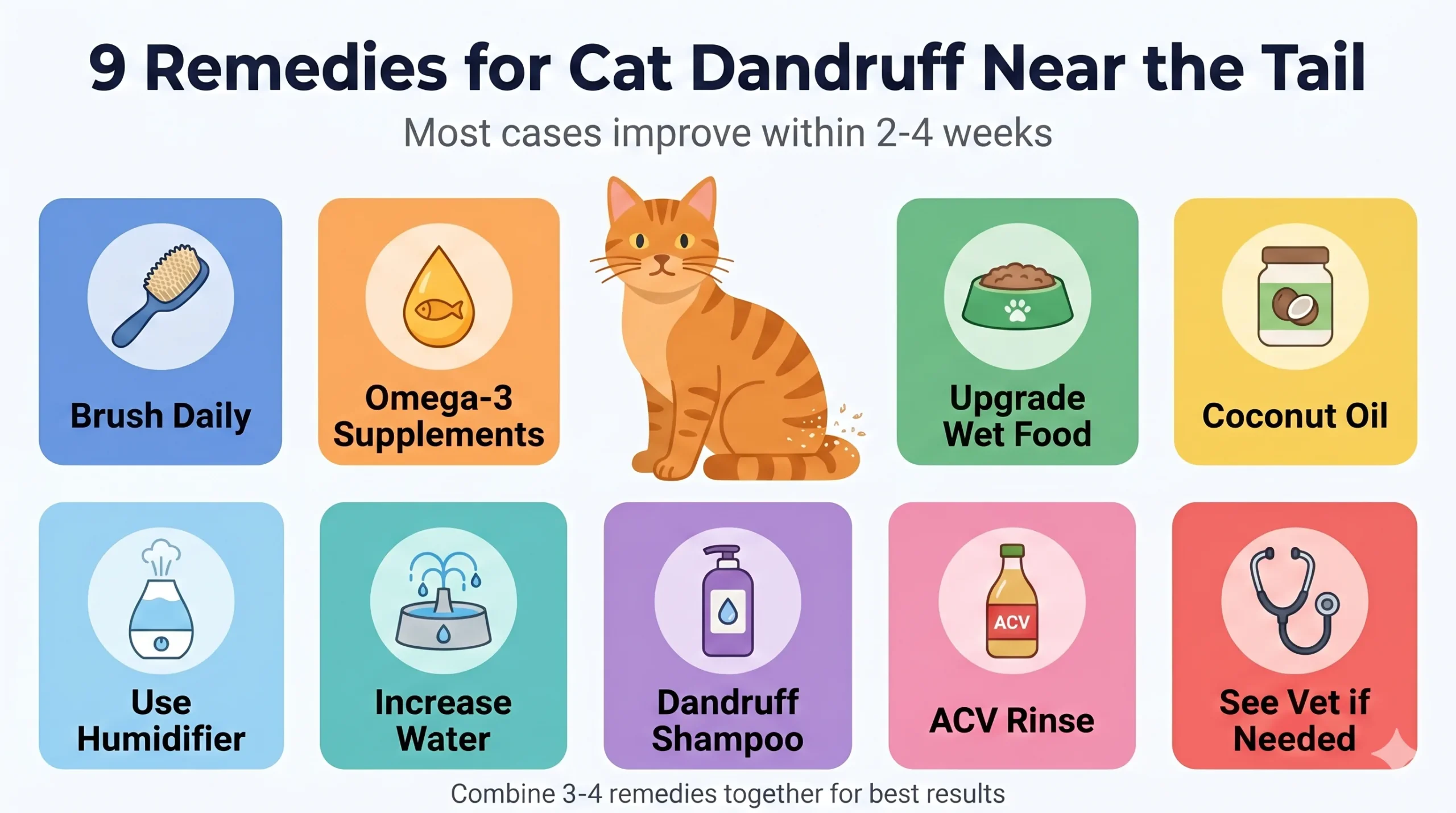
1. Brush the Area Daily
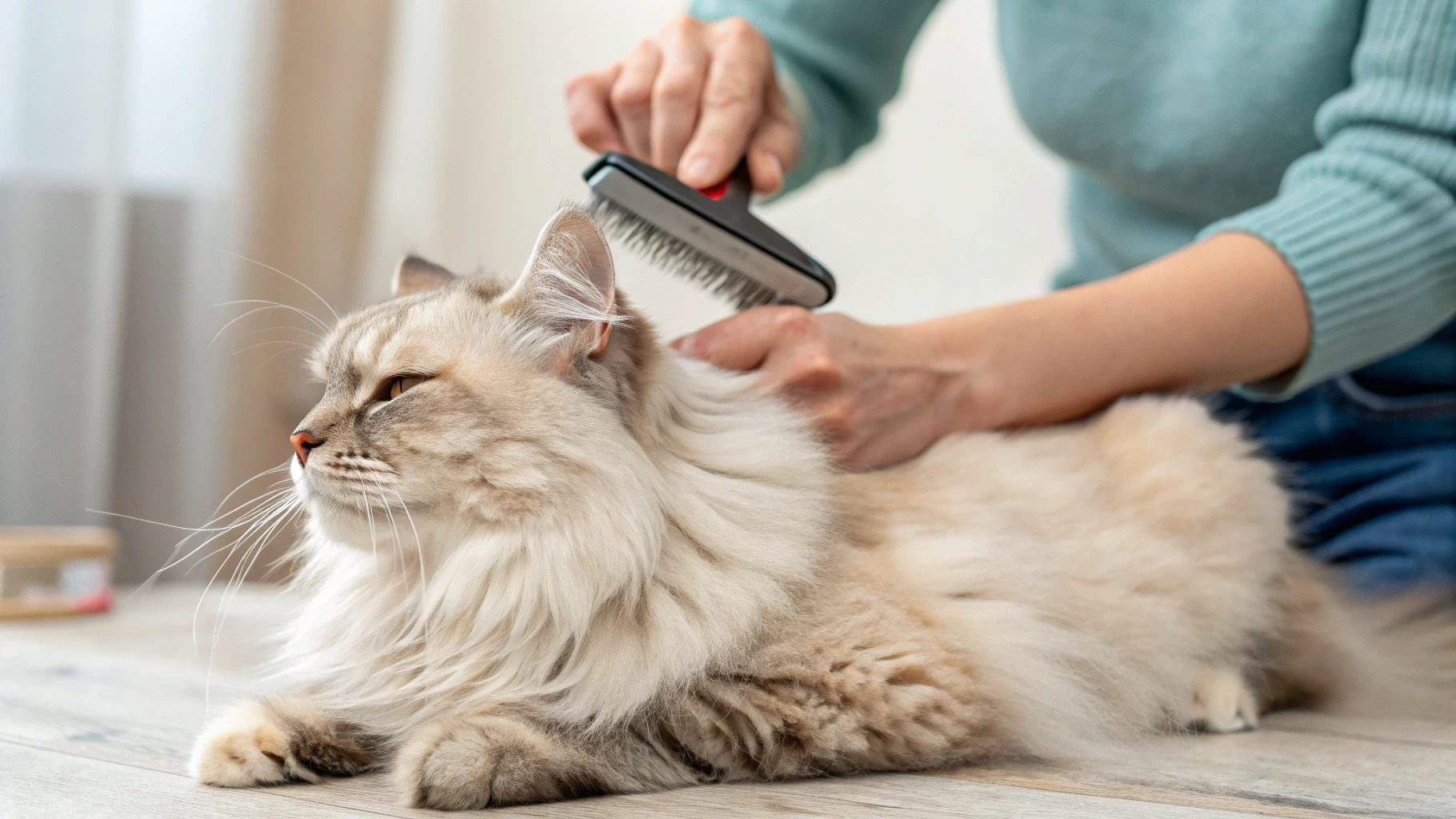
Use a soft-bristle brush or rubber mitt, 5–10 minutes daily. Removes dead skin, stimulates blood flow, distributes natural oils. Visible improvement within 1–2 weeks.
2. Add Omega-3 Supplements
Fish oil (EPA and DHA) strengthens skin cells and reduces inflammation. Add wild-caught fish oil to food daily, follow the product dosage for cats. Avoid cod liver oil (too much vitamin A for cats).
Results take 4–6 weeks, but this is one of the most effective long-term solutions on this list.
3. Upgrade to High-Quality Wet Food
Switch to wet food (75–80% moisture vs 10% in kibble). Transition gradually over 7–10 days. Improvement in 3–6 weeks. Related: How Much Wet Food to Feed a Cat.
4. Coconut Oil Topically (Modest Expectations)
Some owners find a small amount of virgin coconut oil massaged into the flaky area helps soothe dry patches. The evidence for this is limited, and most of what you apply gets groomed off within minutes, so treat it as a minor comfort measure rather than a primary treatment. If you try it, a pea-sized amount 2–3 times weekly is plenty, and never apply to broken skin.
5. Use a Humidifier
Place a cool-mist humidifier in your cat’s favorite room. Aim for 45–55% humidity. Improvement within 1–2 weeks if dry air was the cause.
6. Increase Water Intake
A cat water fountain encourages drinking, cats prefer running water. Place multiple bowls around the house and add water to food at meals. A 10-pound cat needs roughly one cup of water total daily, including moisture from food, so a cat mostly eating wet food will get much of that from meals rather than the bowl.
7. Cat Dandruff Shampoo (Every 2–4 Weeks)
Use cat-formulated oatmeal-based shampoo only, never human dandruff shampoo. Lukewarm water, leave on 3–5 minutes, rinse thoroughly. Maximum once every 2–4 weeks.
8. See Your Vet
If no improvement after 4–6 weeks, see your vet. They will check for mites, infections, allergies, and underlying conditions. Related: Signs of Kidney Failure in Cats.
Why Indoor Cats Get More Dandruff
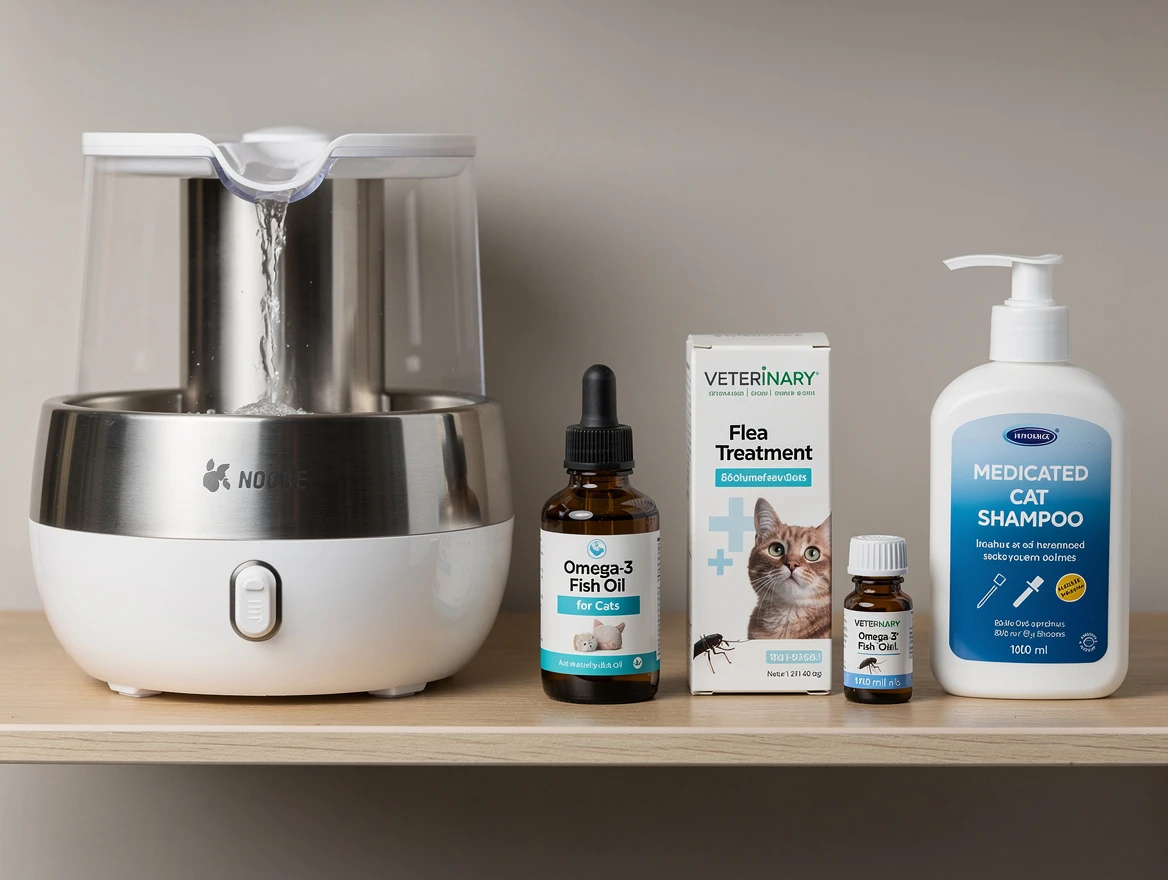
Indoor cats are more prone to dandruff, dry heated air, less activity leading to weight gain, and diets lacking fatty acids all contribute. A humidifier plus wet food plus daily brushing addresses the three most common indoor causes simultaneously.
When to See the Vet
🩺 See Your Vet If:
- Dandruff comes with significant hair loss or bald patches
- Intense scratching, biting, or itching at the skin
- Red, inflamed, or scabby skin underneath the flakes
- Flakes appear to move, possible Cheyletiella mites
- Black or dark flakes instead of white (possible flea dirt or fungal infection)
- No improvement after 4–6 weeks of consistent home treatment
- Dandruff appeared suddenly with no obvious cause
- Other symptoms: weight loss, increased thirst, lethargy, or vomiting
If dandruff doesn’t improve with the remedies above, or if any of these emergency signs appear, a vet visit will confirm whether parasites, allergies, or an underlying condition is the real cause.
Common Mistakes to Avoid
- Using human shampoo — toxic to cats. Cat-formulated only.
- Over-bathing — strips natural oils, makes dandruff worse
- Skipping parasite prevention — mites cause dandruff that brushing cannot fix
- Overloading supplements — follow product dosing, consult vet
- Ignoring persistent dandruff — may indicate diabetes, thyroid, or kidney disease
Home Remedies vs Veterinary Treatment
| Approach | Best For | Pros | Cons |
|---|---|---|---|
| Home remedies | Mild dandruff, maintenance | Low cost, easy, natural | May be insufficient for severe cases |
| Veterinary treatment | Persistent, severe, or infection-related | Targeted, medically supervised, effective | Higher cost, may stress the cat |
Frequently Asked Questions
Brush daily, add omega-3 fish oil, switch to wet food, use a humidifier, and increase water intake. Most cases improve within 2–4 weeks. See a vet if no improvement after 6 weeks.
Dandruff itself is not contagious, but fleas and mites spread between cats. If multiple cats develop dandruff, rule out parasites with your vet.
Long-coated breeds (Persians, Maine Coons, Ragdolls) trap more dead skin. Overweight cats of any breed are also more prone due to grooming difficulty.
The Bottom Line
Treating dandruff near the tail comes down to a few reliable basics: brush daily, improve diet with omega-3s and wet food, keep the air humid, and ensure proper hydration. Most cases are a simple combination of dry skin and limited self-grooming in that hard-to-reach area. Start with 3–4 remedies simultaneously and stay consistent for at least a month. If no improvement after 6 weeks, or if dandruff comes with itching, hair loss, or other symptoms, see your vet to rule out mites, allergies, or underlying health conditions.
Related: How Can I Soothe My Cat’s Itchy Skin, the same omega-3 and allergy-management approach applies to skin issues beyond just dandruff.