Why is my cat squinting one eye? Squinting is almost always a sign of pain or irritation in that eye. Cats squint to protect a sore eye, it’s a reflex, not a choice. The cause may be as simple as a speck of dust or as serious as a corneal scratch or infection that needs urgent vet care.
One of my cats squinted her left eye for two days before I realized something was wrong. I assumed she was just sleepy. When I finally got her to the vet, she had a tiny corneal scratch from playing with my other cat. Two days of eye drops and it healed completely, but the vet told me that waiting longer could have turned it into an ulcer that threatened her vision.
The most common causes are a corneal scratch, foreign object (dust, litter, eyelash), eye infection (conjunctivitis), or feline herpesvirus flare-up. If squinting lasts more than a few hours, comes with discharge, redness, or swelling, see a vet. Eye problems can worsen rapidly and threaten vision.
- Eye is completely shut and your cat will not open it
- Visible wound, scratch, or cloudiness on the eye surface
- Green or yellow discharge (sign of bacterial infection)
- Eye appears swollen, bulging, or sunken
- Your cat is pawing at the eye aggressively
- Both eyes affected plus sneezing and nasal discharge (upper respiratory infection)
- Pupil size looks different between the two eyes. Related: My Cat’s Pupils Are Different Sizes
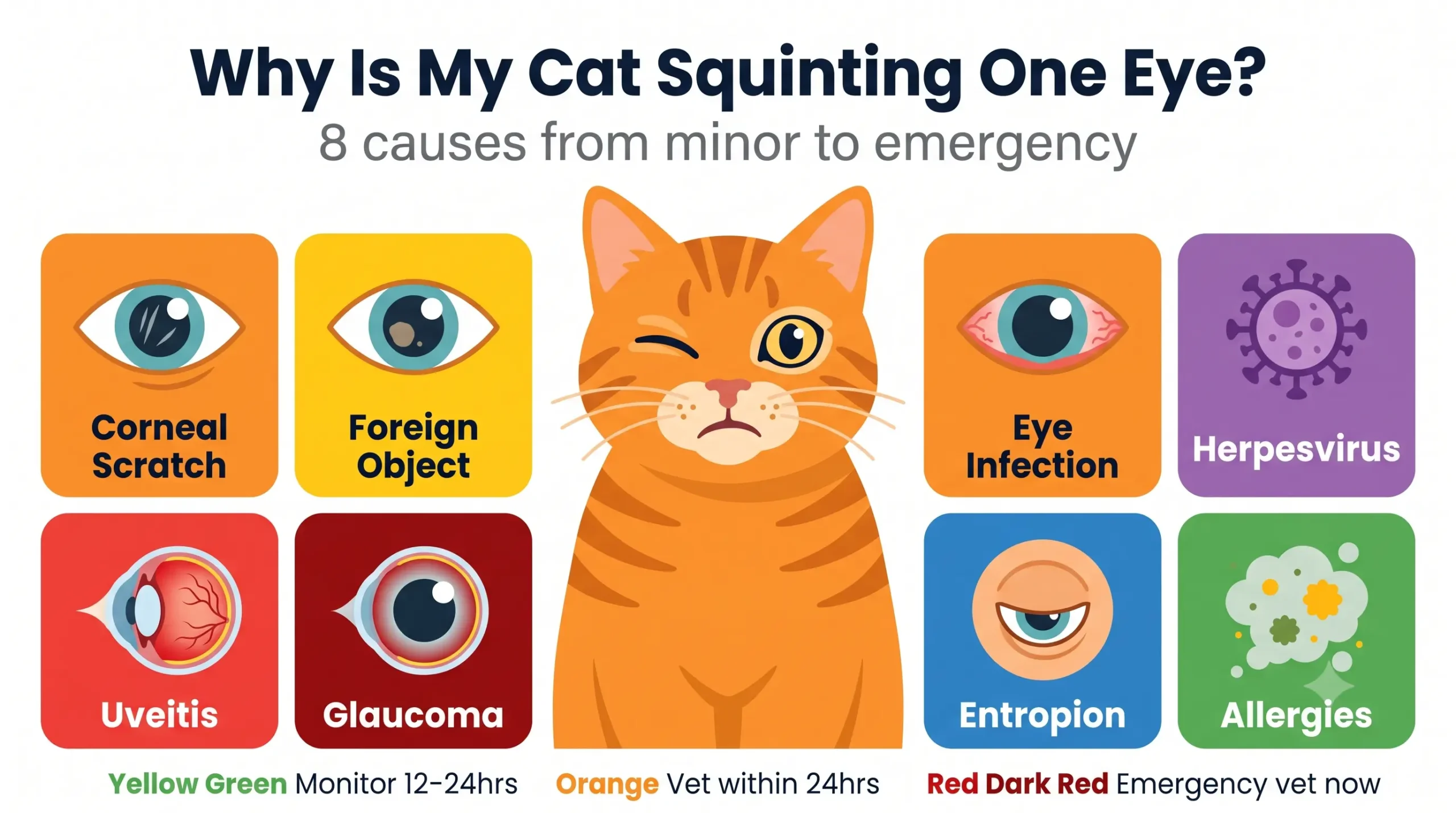
Why Is My Cat Squinting One Eye? 8 Causes
1. Corneal Scratch (Most Common)
A scratch on the clear surface of the eye, often from play fighting, grooming, or running through bushes. Corneal scratches are extremely painful and cause immediate squinting, tearing, and sensitivity to light. This is the most common reason for sudden one-eye squinting. Without treatment, a scratch can progress to a corneal ulcer, a much more serious condition. Vet treatment: antibiotic eye drops and pain medication, usually heals in 3–7 days.
2. Foreign Object in the Eye
Dust, litter particles, a stray eyelash, grass, or sand trapped under the eyelid or on the eye surface causes immediate irritation and squinting. This often explains why a cat is squinting with no other symptoms, the eye is irritated but there’s no infection yet. You may see your cat pawing at the eye or tearing excessively.
3. Eye Infection (Conjunctivitis)
Bacterial or viral infection of the eye lining causes redness, swelling, discharge, and squinting. Bacterial conjunctivitis produces thick yellow or green discharge. Viral conjunctivitis (often from feline herpesvirus) produces watery, clear discharge with sneezing. Related: Cat Eye Infection Facts — complete guide to eye infections in cats.
4. Feline Herpesvirus (FHV-1)
Feline herpesvirus is one of the most common causes of recurring eye problems in cats. Once infected, the virus stays dormant and can flare up during stress, illness, or immune suppression, causing squinting, watery eyes, sneezing, and nasal discharge. Flare-ups are managed with antiviral eye drops; L-lysine supplements were long recommended for this, but recent controlled studies show little to no benefit, so many vets no longer advise it. The virus is never fully eliminated.
5. Uveitis (Inflammation Inside the Eye)
Uveitis is inflammation of the internal structures of the eye. It causes deep pain, squinting, tearing, a constricted pupil, and sometimes a visible color change in the iris. Uveitis can be triggered by infections, trauma, or autoimmune disease. This is a serious condition that requires urgent vet treatment to prevent permanent vision damage.
6. Glaucoma (High Eye Pressure)
Glaucoma causes dangerously high pressure inside the eye. Signs include squinting, a bulging or enlarged eye, cloudiness, and visible pain. The affected pupil may be larger than the other eye’s pupil. Glaucoma is an emergency, untreated, it causes permanent blindness within hours to days. Related: My Cat’s Pupils Are Different Sizes — unequal pupils can signal glaucoma.
7. Entropion (Inward-Rolling Eyelid)
Entropion is a condition where the eyelid rolls inward, causing eyelashes to constantly rub against the eyeball surface. This creates chronic irritation, squinting, tearing, and eventually corneal damage. Some breeds (Persians, Himalayans) are more prone. Treatment is surgical correction.
8. Allergies or Irritants
Environmental irritants — smoke, cleaning products, dust, pollen, air fresheners — can irritate one or both eyes, causing temporary squinting and tearing. This usually resolves once the irritant is removed. If squinting persists after removing the trigger, the cause is likely something else.
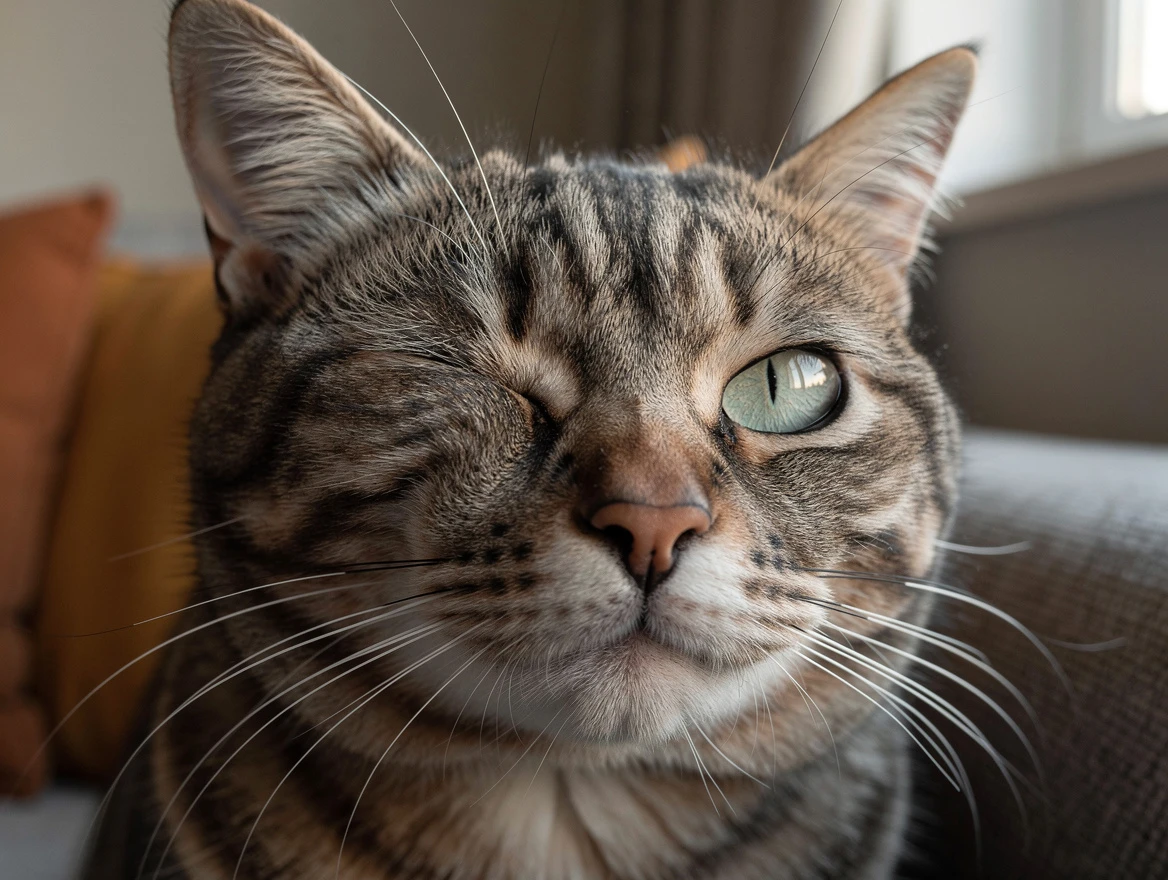
With vs Without Discharge
The presence or absence of discharge helps narrow down the cause:
| Symptom | Likely Cause | Urgency |
|---|---|---|
| Squinting + no discharge, no other symptoms | Foreign object, mild irritant, early scratch | Monitor 12–24 hours |
| Squinting + clear watery discharge | Allergies, herpesvirus, early infection | Vet within 24 hours |
| Squinting + thick yellow/green discharge | Bacterial infection, advanced corneal issue | Vet same day |
| Squinting + eye completely shut | Corneal ulcer, severe infection, uveitis | Emergency vet NOW |
| Squinting + swollen/bulging eye | Glaucoma, abscess behind eye | Emergency vet NOW |
| Squinting + sneezing + nasal discharge | Upper respiratory infection (herpesvirus) | Vet within 24 hours |
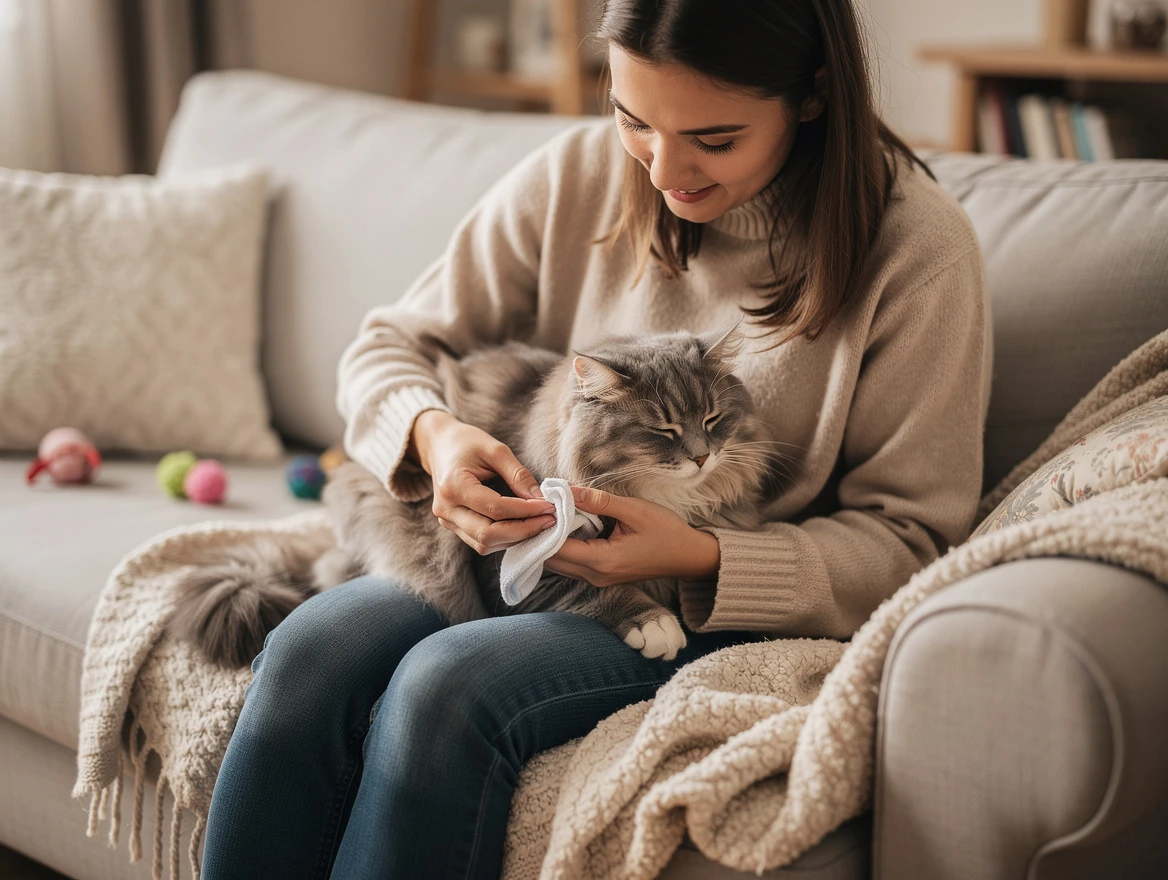
Home Remedy
Home care is appropriate ONLY when the squinting just started, there’s no discharge, the eye isn’t swollen, and your cat isn’t pawing at it aggressively.
- Saline rinse — use sterile saline solution (contact lens saline with NO additives) to gently flush the eye. This can remove dust, litter particles, or loose debris. Squeeze a few drops into the eye while holding the eyelids open gently. Never use tap water.
- Remove environmental irritants — turn off air fresheners, open windows, remove scented candles or new cleaning products
- Dampen a cotton ball with warm water — gently wipe away any crusty discharge around (not in) the eye. Use a fresh cotton ball for each wipe.
- Keep the area clean — prevent your cat from rubbing the eye. A soft recovery cone may be needed if pawing is intense.
- Monitor closely — if squinting doesn’t improve within 12–24 hours, or worsens at any point, see the vet
What NEVER to Put in Your Cat’s Eye
- Human eye drops (Visine, Clear Eyes) — contain vasoconstrictors and preservatives toxic to cats
- Leftover prescription eye drops from another cat or previous visit — wrong medication can worsen the problem
- Hydrogen peroxide — damages eye tissue
- Tea tree oil or essential oils — toxic to cats
- Chamomile tea bags — despite popular advice, chamomile can cause allergic reactions in some cats
- Apple cider vinegar — burns eye tissue and causes extreme pain
When to See the Vet
🩺 See Your Vet If:
- Squinting lasts more than 24 hours
- Any discharge — clear, yellow, or green
- Eye is red, swollen, cloudy, or looks different from the other eye
- Cat is pawing at the eye or rubbing face on furniture
- Visible scratch, wound, or cloudiness on the eye surface
- Squinting starts suddenly after play fighting or outdoor time
- Pupil size is different between the two eyes
- Squinting plus sneezing, lethargy, or appetite loss
- Squinting does not improve after removing obvious irritants
Your vet will use a fluorescein stain test (orange dye that highlights scratches under blue light) to check for corneal damage, measure eye pressure for glaucoma, and examine the internal structures. If your cat also has a swollen eye, see: Why Is My Cat’s Eye Swollen.
Recovery Time by Cause
| Cause | Treatment | Recovery Time |
|---|---|---|
| Foreign object/debris | Saline flush, vet exam if needed | 1–3 days |
| Corneal scratch | Antibiotic eye drops + pain meds | 3–7 days |
| Conjunctivitis (bacterial) | Antibiotic eye drops | 7–14 days |
| Herpesvirus flare-up | Antiviral drops | 1–3 weeks (recurs) |
| Corneal ulcer | Prescription antibiotics + monitoring | 2–4 weeks |
| Allergies | Remove irritant; vet-prescribed medication if persistent | Variable — ongoing |
| Uveitis | Steroids, anti-inflammatories | Weeks to months |
| Glaucoma | Emergency — surgery or eye drops | Variable — may be permanent |
Common Mistakes to Avoid
- Waiting too long — eye problems escalate fast. A treatable scratch today becomes a corneal ulcer by tomorrow.
- Using human eye drops — most contain ingredients toxic to cats
- Assuming “no discharge = no problem” — squinting with no discharge still warrants attention if it persists past 24 hours
- Trying to remove a stuck object yourself — if you cannot see it clearly or flush it out with saline, let the vet handle it
- Ignoring squinting after a cat fight — corneal scratches from claws are extremely common and need antibiotic drops
Frequently Asked Questions
If the eye is completely shut, has visible damage, or has colored discharge, go immediately. For mild squinting with no other symptoms, monitoring 12–24 hours is reasonable. Beyond 24 hours of persistent squinting, see the vet.
The squinting itself is not contagious, but some causes are. Bacterial and viral conjunctivitis (especially feline herpesvirus) can spread between cats through close contact. If one cat has an eye infection, keep them separated from other cats until treated.
The Bottom Line
Why is my cat squinting one eye? Squinting means your cat’s eye is in pain. The most common causes are corneal scratches, foreign objects, infections, and herpesvirus flare-ups.
Flush with sterile saline, remove environmental irritants, and monitor for 12–24 hours. If squinting persists, worsens, or comes with discharge, redness, or swelling, see your vet. Eye problems escalate fast and early treatment protects your cat’s vision.
For more on your cat’s eye health, see: Cat Eye Infection Facts and Why Is My Cat’s Eye Swollen.
Related Articles
Sneezing plus squinting can mean upper respiratory infection.