Why is my cat peeing everywhere? It’s one of the most frustrating and worrying situations a cat owner can face. The good news: it’s almost always fixable once you identify the cause. The bad news: the cause can be medical, behavioral, or environmental — and treating the wrong one wastes time while your cat continues to suffer.
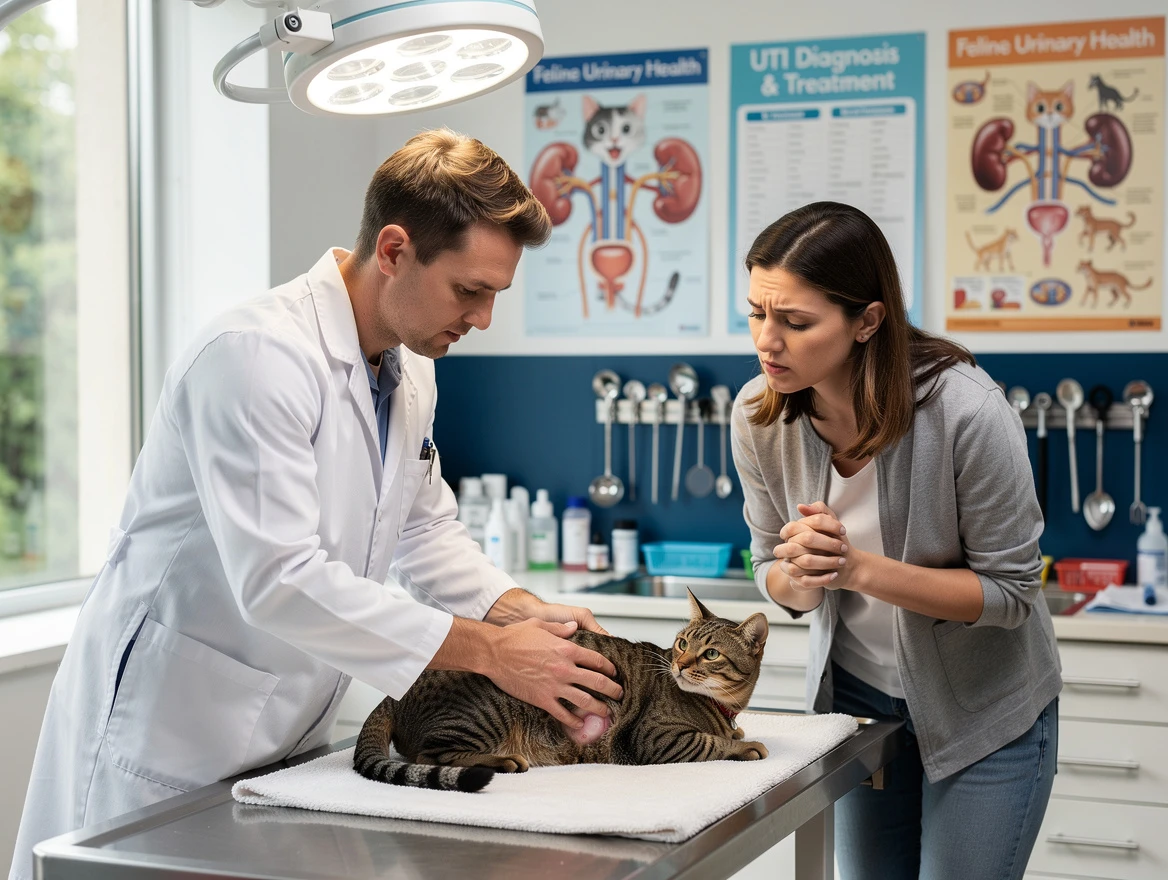
One of my cats suddenly started peeing on the bathroom mat despite a perfectly clean litter box. I assumed it was behavioral — maybe stress from a new piece of furniture. My vet found a UTI within minutes of a urine test. Antibiotics solved it in five days. I nearly spent weeks trying behavioral fixes for a medical problem.
The top causes are urinary tract infection, bladder stones or crystals, stress-related cystitis, litter box aversion, territorial marking, and diabetes or kidney disease. Always rule out medical causes with a vet visit first, especially in male cats, before assuming it’s behavioral. A cat peeing outside the box is always communicating something is wrong.
Male cats straining to urinate with little or no output, crying in the litter box, or repeatedly visiting the box without producing urine may have a urinary blockage. This is life-threatening and can kill within 24-48 hours if untreated. This is NOT the same as peeing everywhere from behavioral causes. If your male cat cannot urinate at all, go to an emergency vet immediately.
The 9 Most Common Causes
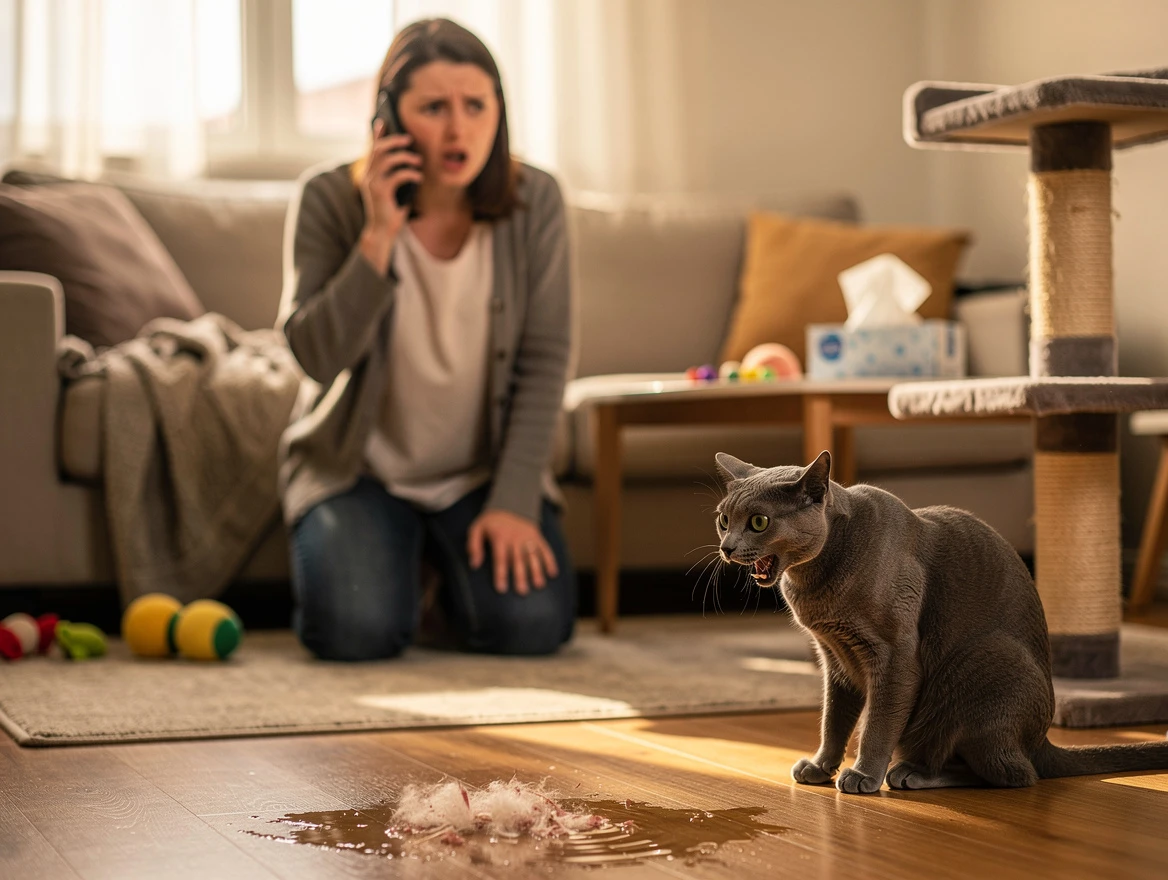
Once you’re past the panic of finding an accident, “why is my cat peeing everywhere” almost always has an answer that falls into one of these nine categories.
1. Urinary Tract Infection (UTI)
Bacterial infection in the bladder or urethra causes pain, urgency, and frequent small urinations – often outside the box because the cat associates the box with pain. Blood may be visible in the urine. A urine test confirms diagnosis; antibiotics resolve it within days. True bacterial UTIs are most common in senior cats and cats with other conditions like diabetes — in younger cats, vets more often find stress cystitis (see #3) instead.
2. Bladder Stones or Crystals
Mineral crystals or stones in the bladder cause pain, blood in urine, and straining. This is especially dangerous in male cats due to their narrow urethra, which can become blocked. Diet change and sometimes surgery are needed.
3. Feline Interstitial Cystitis (Stress-Related Bladder Inflammation)
Stress causes bladder wall inflammation even without infection. This is extremely common and often triggered by environmental changes. Stress cystitis frequently presents this way — with normal appetite and energy, but abnormal urination.
4. Litter Box Aversion
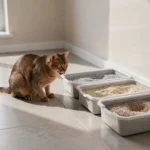
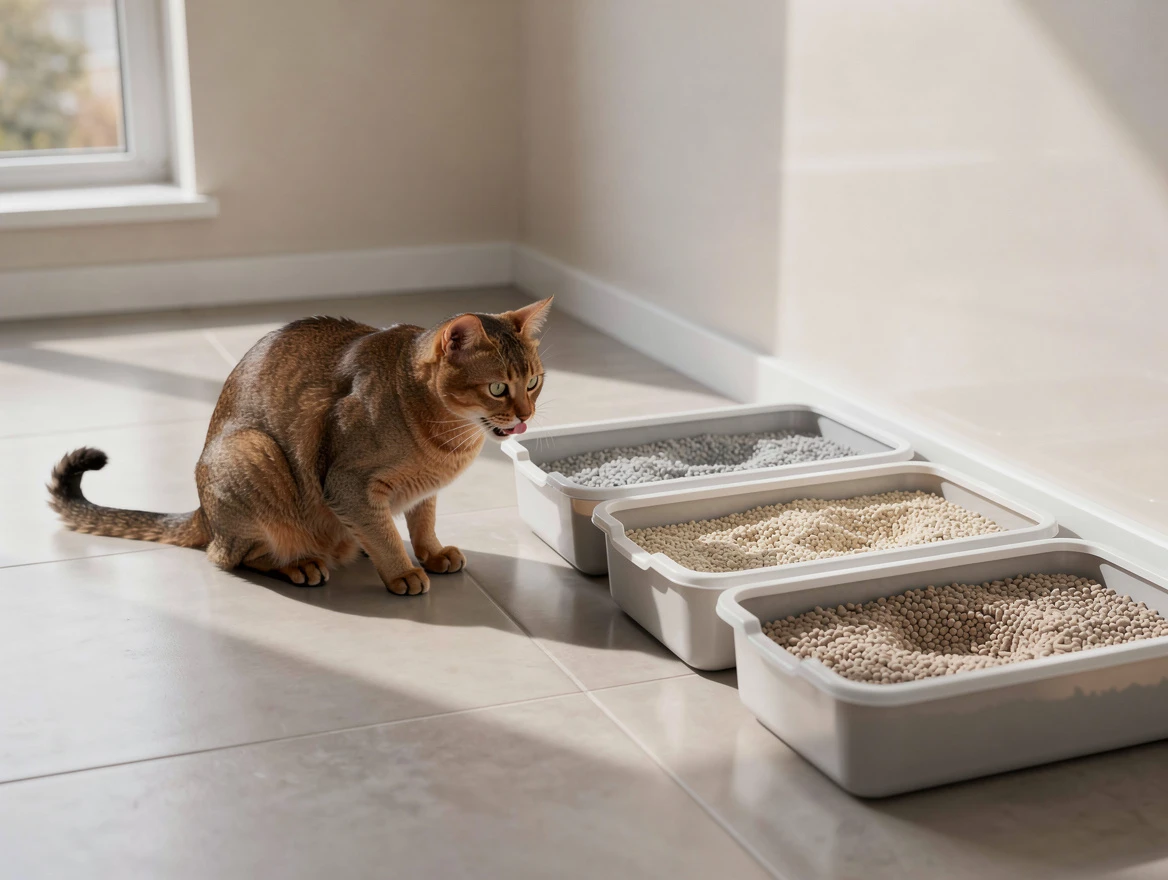
A dirty box, wrong litter type, box in a noisy or high-traffic area, or a box too small or hard to access (especially for senior cats with joint pain) causes cats to avoid it entirely. Even a visibly clean box can still have an issue: wrong location, too few boxes, or a scent your cat dislikes.
5. Territorial Marking (Spraying)
Small amounts of urine on vertical surfaces (walls, curtains, furniture) indicate spraying, not litter box avoidance. This is triggered by seeing outdoor cats through windows, new pets, or feeling territorially threatened. Unneutered males spray most frequently.
6. Not Enough Litter Boxes
The rule is one box per cat plus one extra. In multi-cat households, too few boxes causes competition and avoidance. A dominant cat may guard the box, forcing others to go elsewhere.
7. Diabetes
Increased urination volume and frequency from diabetes can overwhelm litter box habits, causing accidents. Excessive thirst accompanies this. Related: Cat Diabetes Symptoms.
8. Kidney Disease
Chronic kidney disease is sometimes called a “silent killer” in cats — common in senior cats and causing increased urination, increased thirst, and sometimes accidents as the disease progresses. Early detection through bloodwork significantly improves outcomes. Related: Signs of Kidney Failure in Cats.
9. Environmental or Household Changes
Moving homes, new furniture, new pets, new people, schedule changes, or even renovations trigger anxiety-driven urination. Cats are extremely sensitive to routine disruption. Related: Is My Cat Depressed – similar triggers cause both conditions.
Why Is My Cat Peeing Everywhere But Acting Normal
This is actually the most common presentation, and it often misleads owners into assuming the issue is purely behavioral. Cats hide pain exceptionally well. Normal eating, playing, and energy levels do not rule out a UTI, stress cystitis, or early kidney disease.
Do not wait for your cat to “act sick” before investigating. A urine test is quick, affordable, and rules out the most common medical causes immediately.
Why Is My Cat Peeing Everywhere Even With a Clean Litter Box
A clean box doesn’t eliminate all possible box-related issues:
- Wrong litter type – some cats dislike scented litter, certain textures, or a recent brand switch
- Box location – too close to food/water, in a loud area, or hard to reach
- Box size – too small for the cat, especially larger breeds
- Covered vs uncovered – some cats feel trapped in covered boxes
- Medical pain – a clean box does not help if urination itself is painful
- Not enough boxes – one clean box is not enough for multiple cats
When It’s a Male Cat, Peeing and Meowing
The combination of frequent urination attempts and vocalization strongly suggests pain — most commonly from a UTI, bladder stones, or early urinary blockage. Male cats’ narrow urethra makes them significantly more prone to blockages than females.
Sudden onset in males is a red flag for urinary tract issues. Monitor closely for straining or inability to urinate – this becomes a life-threatening emergency within hours.
When It’s a Female Cat
Female cats are less prone to blockages but equally susceptible to UTIs, stress cystitis, and behavioral marking. Unspayed females may also urinate more frequently or mark territory when in heat.
Unspayed females in heat commonly increase urination frequency and may spray to attract mates. Spaying resolves this permanently and has additional health benefits.
Why Is My Cat Peeing Everywhere After Being Neutered
This can happen for a few reasons: residual hormonal marking behavior that takes weeks to fade, stress from the surgery and recovery cone, or a pre-existing litter box issue unrelated to the neutering. If the behavior does not improve within 4-6 weeks post-surgery, investigate other causes.
How to Stop It
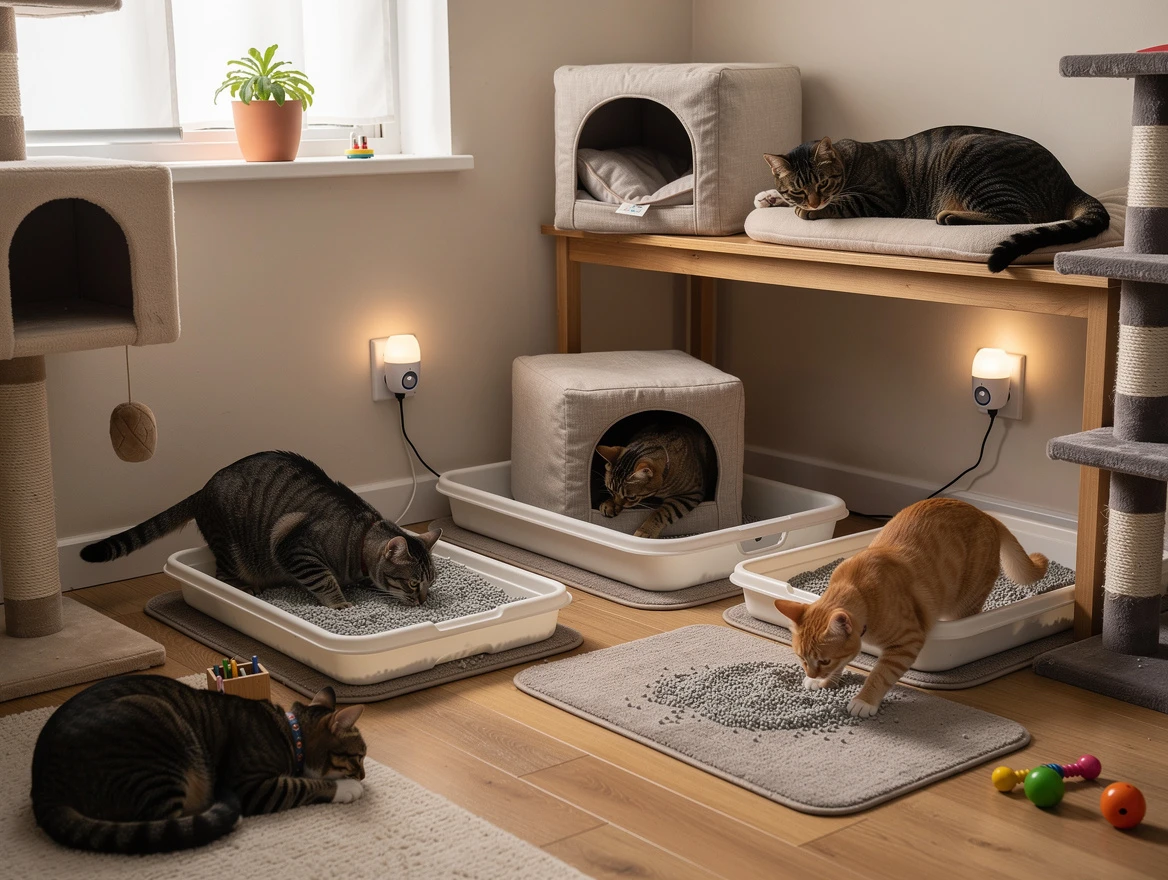
- Rule out medical causes first – urine test at the vet before anything else
- Clean accidents with enzymatic cleaner – regular cleaners do not remove the scent marker that draws cats back to the same spot
- Add more litter boxes – one per cat plus one extra, in different locations
- Try unscented, fine-grain litter – most cats prefer this over scented or coarse options
- Relocate boxes – quiet, accessible, away from food and high-traffic areas
- Reduce stress – Feliway diffusers, consistent routine, vertical space, hiding spots
- Spay or neuter – eliminates most hormonal marking behavior
- Block window views of outdoor cats – reduces territorial triggers
When to See the Vet
See Your Vet If:
- Male cat straining or unable to urinate – EMERGENCY
- Blood visible in urine
- Crying or vocalizing while urinating
- Increased thirst alongside increased urination
- Sudden onset with no environmental trigger
- Behavior persists beyond 1-2 weeks despite box changes
- Weight loss, lethargy, or appetite changes alongside urination issues
- Senior cat with new urination changes – screen for kidney disease and diabetes
Frequently Asked Questions
Top causes: UTI, bladder stones, stress-related cystitis, litter box aversion, territorial marking, diabetes, or kidney disease. Always start with a vet visit and urine test to rule out medical causes before addressing behavior.
Sudden onset points strongly to a medical cause – UTI, bladder stones, or stress from a recent household change. A urine test at the vet is the fastest way to identify the cause.
First rule out medical causes with a vet visit. Then add more litter boxes (one per cat plus one), use unscented fine-grain litter, clean accidents with enzymatic cleaner, reduce stress, and consider spaying/neutering if not already done.
This specific split often points to pain associated with urination rather than the box itself — cats with a UTI, bladder stones, or cystitis frequently still use the box normally for bowel movements, since that doesn’t trigger the same discomfort. It can also mean the box itself is fine, but something about urinating specifically has become unpleasant. A vet visit and urine test is the fastest way to tell.
Not always, but it’s worth taking seriously either way. In male cats, this combination is a common early sign of urinary blockage and needs same-day vet attention. In female cats or when it’s less severe, it can still point to a painful UTI or bladder inflammation — the vocalizing is often a response to discomfort during urination. Either way, increased crying alongside inappropriate urination warrants a vet visit rather than waiting it out.
That term usually refers to chronic kidney disease — it’s called this because it progresses quietly for a long time before obvious symptoms appear, and by the time signs like increased urination and thirst show up, significant kidney function may already be lost. This is exactly why unexplained changes in urination, especially in senior cats, are worth a vet visit and bloodwork rather than a wait-and-see approach.
The Bottom Line
If you’re still asking why is my cat peeing everywhere after reading this, the short answer is: always start with a vet visit and a urine test, especially for male cats, where urinary blockage is a life-threatening emergency. Once medical causes are ruled out, address litter box setup, reduce environmental stress, and consider spaying/neutering. Most cases resolve completely once the actual cause is identified and treated correctly.
Related: Cat Diabetes Symptoms – increased urination can signal diabetes. Also: Signs of Kidney Failure in Cats – a common cause in senior cats.