Why is my cat breathing fast? A normal resting cat takes 20–30 breaths per minute. Anything consistently above 30 at rest is too fast and shouldn’t be ignored. The tricky part is that cats can breathe fast while acting completely normal — eating well, playing, and purring — while something serious develops silently underneath.
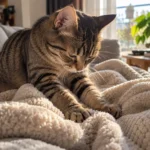
I noticed one of my cats breathing fast in his sleep last year — about 40 breaths per minute. He was eating normally, acting fine, and showed no other symptoms. My vet ran tests and found early-stage heart disease that had zero visible signs other than that breathing rate. If I hadn’t been paying attention during a nap, I would have missed it entirely. That experience taught me to count breaths during sleep — it takes 30 seconds and can catch problems months before they become emergencies.
Count breaths while your cat is resting or sleeping. Normal is 20–30 per minute. If consistently above 30, the most common causes are stress, heat, heart disease, respiratory infection, asthma, or pain. A cat breathing fast but otherwise normal often points to early heart disease — the most common “silent” cause. See a vet if the rate stays above 30 at rest, or immediately if your cat is open-mouth breathing.
- Open-mouth breathing (cats should NEVER breathe through the mouth at rest)
- Tongue out, or a blue or purple tongue — signals oxygen deprivation
- Labored breathing with visible rib/belly effort
- Fast breathing combined with not eating — signals serious illness
- Breathing rate above 50 breaths per minute at rest
- Pale or blue gums
How to Count Your Cat’s Breathing Rate
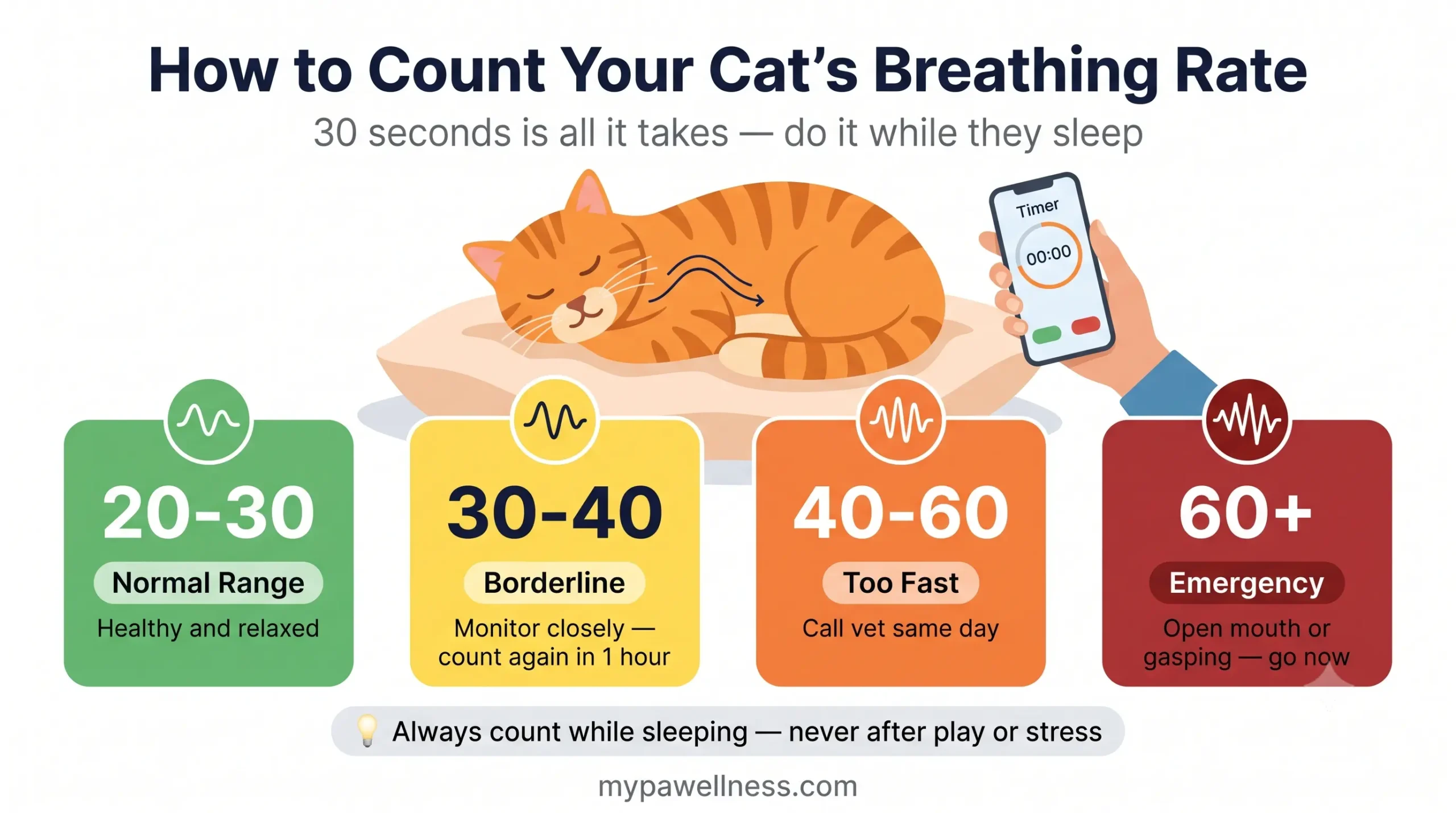
Before worrying about the number itself, count the actual rate. Here’s how:
- Wait until your cat is resting or sleeping (not after play, eating, or stress)
- Watch the chest or belly rise and fall — one rise + one fall = one breath
- Count for 30 seconds, then multiply by 2
- Repeat 2–3 times over an hour to get an accurate average
| Breathing Rate | What It Means | Action |
|---|---|---|
| 15–20 breaths/min | Normal — deeply relaxed or asleep | No action needed |
| 20–30 breaths/min | Normal resting range | No action needed |
| 30–40 breaths/min | Elevated — may be stress, heat, or early issue | Recount in 1 hour. If still elevated, call vet. |
| 40–50 breaths/min | Abnormally fast — medical cause likely | ⚠️ Call vet today |
| 50+ breaths/min | Dangerous — respiratory distress | 🚨 Emergency vet NOW |
Why Is My Cat Breathing Fast? 9 Possible Causes
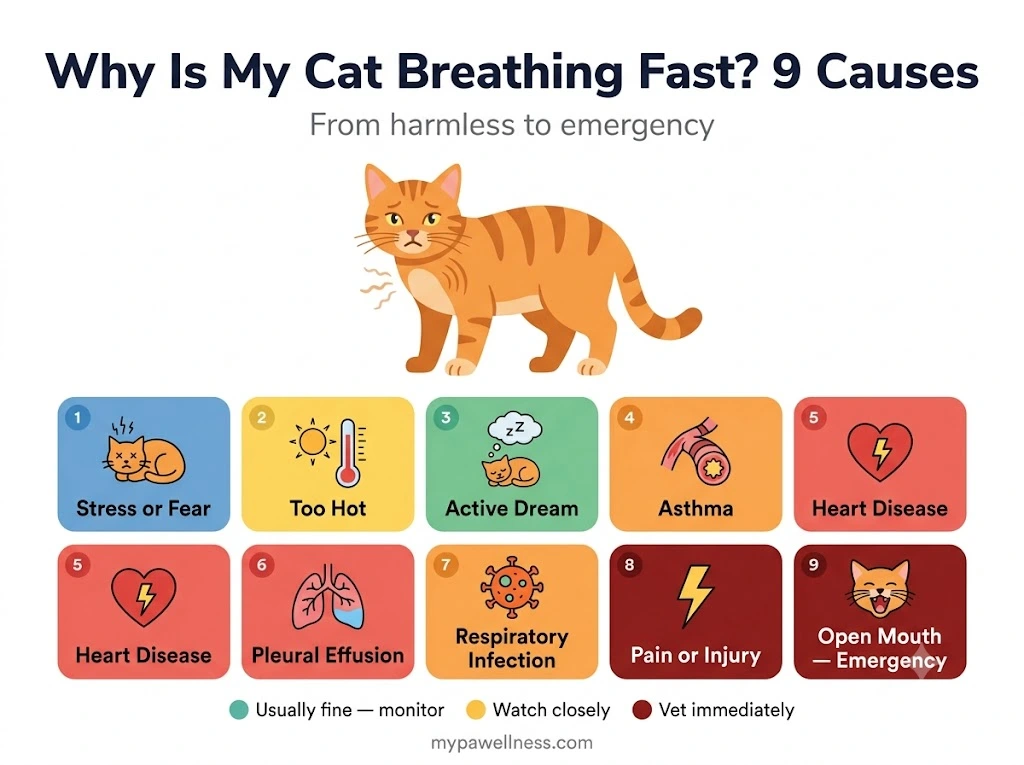
Heart Disease (The Silent Killer of Cats)
Hypertrophic cardiomyopathy (HCM) — a thickening of the heart muscle — is estimated to affect roughly one in ten cats, though estimates vary by population studied, and it develops silently with no visible symptoms until it’s advanced. An elevated resting breathing rate is often the first detectable sign, appearing months before any other symptom. This is exactly why fast breathing in a cat that otherwise seems fine is worth investigating. Related: Cat Diabetes Symptoms — another silent condition worth checking at the same visit.
Respiratory Infection
Upper respiratory infections (URI) — feline herpesvirus, calicivirus, or bacterial infections — cause congestion, sneezing, discharge, and fast breathing. Breathing fast specifically through the nose often points to nasal congestion from a URI. Related: Why Is My Cat Sneezing So Much.
Asthma
Feline asthma affects 1–5% of cats and causes airway inflammation that makes breathing harder. Symptoms include fast breathing, wheezing, coughing, and labored exhales. Attacks can be triggered by dust, smoke, pollen, cleaning products, or scented litter — heavy, labored breathing that comes and goes often points here.
Stress or Anxiety
Cats breathe faster when stressed — vet visits, car rides, new environments, loud noises, or unfamiliar people. This type of fast breathing resolves once the stressor is removed. If your cat’s breathing returns to normal within 30 minutes of the stressor ending, it was likely anxiety. Related: Is My Cat Depressed.
Heat or Overheating
Cats don’t sweat like humans — they cool down through rapid breathing and paw sweating. A hot room, direct sunlight, or summer heat causes faster breathing. Ensure fresh water, shade, and a cool environment. If breathing doesn’t slow once the cat cools down, another cause is involved.
Pain
Cats in pain breathe faster — it’s a stress response. Injuries, urinary blockage, dental pain, or internal issues can all elevate breathing rate without any other visible symptom. If your cat is breathing fast and hiding or avoiding touch, pain is a strong suspect. Related: Why Is My Cat Limping — pain from limping can cause faster breathing.
Pleural Effusion (Fluid Around the Lungs)
Fluid buildup in the chest cavity compresses the lungs, forcing the cat to breathe faster and shallower to get enough oxygen. This can develop from heart disease, infection, or cancer. The breathing is typically fast and shallow with visible effort. This is serious and requires immediate veterinary care.
Anemia
When red blood cells are low, the body compensates by breathing faster to deliver more oxygen. Anemia can result from fleas, parasites, chronic disease, or internal bleeding. A pale nose and gums alongside fast breathing strongly suggests anemia. Related: How to Tell If My Cat Has Fleas — severe flea infestation causes anemia.
Obesity
Overweight cats breathe faster because excess body fat compresses the chest and diaphragm. If your cat is overweight and breathes fast after minimal activity or while resting, weight is likely a contributing factor. Related: How Much Wet Food to Feed a Cat — proper portions prevent obesity.
Why Is My Cat Breathing Fast While Sleeping?
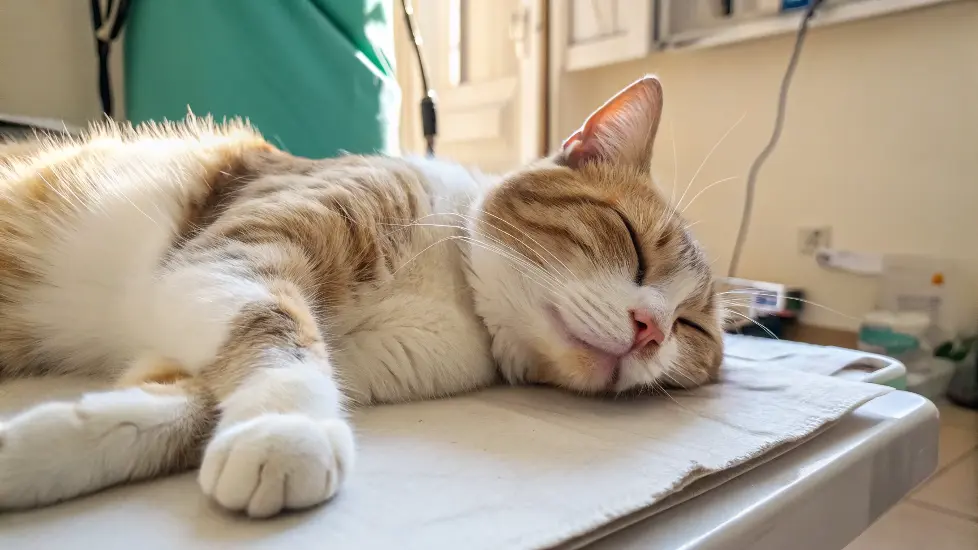
This is actually the most accurate time to measure, because the cat is fully relaxed. Brief episodes of faster breathing during REM sleep (when dreaming) are completely normal — you may see twitching, whisker movements, and irregular breathing for 30–60 seconds. This is harmless.
A consistent rate above 30 breaths per minute across multiple sleep sessions is not normal and should be evaluated. Sleeping respiratory rate is considered one of the most reliable early indicators of heart disease in cats, because stress, activity, and temperature are eliminated as variables.
Fast Breathing While Resting
The same logic applies at rest as during sleep — a resting cat should be between 20–30 breaths per minute. A cat that’s breathing fast but otherwise seems normal while resting often points to heart disease, early asthma, or pain the cat is hiding. This comes up often in owner communities, and the general consensus is consistent: count the rate, and see a vet if it stays above 30.
Fast Breathing While Purring
This one’s confusing, because purring makes it harder to count breaths accurately, and purring can also slightly elevate breathing rate on its own. If the fast breathing only happens during purring and normalizes when the cat stops, it’s likely harmless. If the breathing is still fast when the cat is quiet and not purring, investigate further.
Female Cats, Kittens, and After Birth
| Situation | Normal Fast Breathing? | When to Worry |
|---|---|---|
| Female cats | Same causes as males — heat, stress, heart, lungs | If unspayed: could be pregnancy, labor, or pyometra |
| After giving birth | Normal for 1–2 hours post-delivery (exertion) | If still fast 3+ hours after, or with fever/lethargy — vet immediately |
| Kittens while sleeping | Kittens breathe faster naturally (30–40 normal) | Above 40 at rest, open-mouth breathing, or lethargy = vet |
The birthing process is physically exhausting, and breathing should normalize within 1–2 hours. If rapid breathing continues beyond 3 hours, or is accompanied by fever, foul discharge, or refusing to nurse the kittens, see a vet immediately. Related: How Long Is a Cat Pregnant.
How to Calm Your Cat’s Breathing
If the cause is stress or heat:
- Move to a cool, quiet room — reduce temperature, noise, and stimulation
- Fresh water available — dehydration worsens breathing rate
- Remove the stressor — if a car ride, vet visit, or new environment triggered it
- Dim the lights — reduces stimulation and helps the cat relax
- Do NOT hold or restrain the cat — restraint increases stress and breathing rate
- Feliway diffuser — pheromone diffuser can help reduce ambient stress
- Wait and recount in 30 minutes — if breathing normalizes, it was situational
When to See the Vet
🩺 See Your Vet If:
- Resting breathing rate consistently above 30 breaths/min
- Open-mouth breathing at any time (always abnormal in cats)
- Tongue out or blue/purple gums
- Visible effort — belly heaving, ribs pulling in with each breath
- Fast breathing and not eating
- Fast breathing plus coughing, wheezing, or nasal discharge
- Fast breathing plus lethargy or hiding. Related: My Cat Is Not Eating and Very Weak
- Fast breathing that doesn’t resolve after removing stress/heat
- Fast breathing at night while lying down (possible fluid in chest)
- Any cat over 7 with new onset fast breathing — screen for heart disease
Your vet will listen to the heart and lungs, may take X-rays, and may recommend an echocardiogram (heart ultrasound). If your cat is also drooling, see: Why Is My Cat Drooling Thick Saliva.
Common Mistakes
- Counting after play or activity — always count during rest or sleep for an accurate reading
- Assuming purring means fine — cats purr when stressed or in pain, not only when happy
- Dismissing fast breathing because the cat seems normal otherwise — this is exactly how early heart disease presents
- Waiting for open-mouth breathing — by then the condition is advanced. Elevated resting rate appears months earlier.
- Not taking a video — your cat may breathe normally at the vet. A home video with a timer is the best evidence.
Frequently Asked Questions
The most common causes are stress, heat, heart disease, respiratory infection, asthma, pain, or anemia. Count the resting breathing rate — 20–30 is normal. Consistently above 30 needs veterinary evaluation. Above 50 is an emergency.
Yes, if the rate is consistently above 30 breaths per minute at rest. Brief episodes from dreaming, heat, or stress that resolve quickly are less concerning. Persistent elevation without an obvious cause always warrants a vet visit.
Fast, shallow chest or belly movements — more than 30 rises per minute. In severe cases: visible rib movement with each breath, belly heaving, open mouth, tongue out, or flared nostrils. Normal breathing should be barely noticeable.
Shallow, fast breathing — small, quick chest movements rather than full breaths — tends to point toward something restricting lung expansion, like fluid around the lungs or significant pain, rather than a straightforward cause like heat or mild stress. It’s generally a sign to treat more urgently than fast-but-deep breathing.
The Bottom Line
Count the resting rate first. Normal is 20–30 breaths per minute. Briefly fast during dreams or stress is usually fine. Consistently above 30 at rest needs a vet, especially when a cat seems otherwise fine, because that’s exactly how early heart disease hides. Open-mouth breathing is always an emergency in cats. Take a video, count the rate, and don’t wait for other symptoms to appear. Early detection saves lives.
Related: Why Is My Cat Sneezing So Much — respiratory infections cause both sneezing and fast breathing. Also: My Cat Looks Bloated But Acting Normal — when multiple subtle signs appear together.
Related Articles
Respiratory infections cause both sneezing and fast breathing.