Published: March 11, 2026 | Last Updated: March 11, 2026 | Read Time: 12 minutes
You don’t need to spend a single dollar to remove pet hair from your home. Everything you need is probably sitting in your kitchen, bathroom, or laundry room right now. I live with four cats in a New York apartment, and after years of trying expensive pet hair removal products and gadgets, I’ve found that the simplest household items actually work better than most of what you’d buy.
This guide covers 10 ways to remove pet hair from every surface — furniture, clothes, carpet, car interiors, bedding, and laundry — using things you already own. No shopping required.
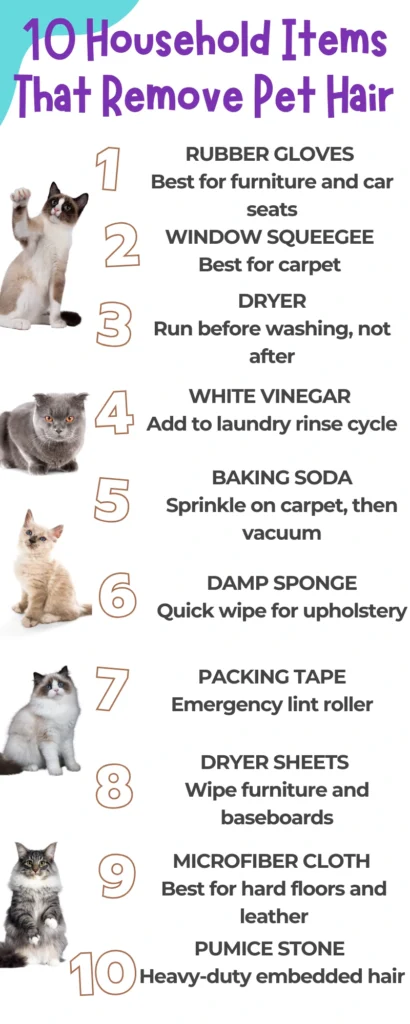
Quick Answer: The Best Household Item for Each Surface
| Surface | Best Household Item | How It Works |
|---|---|---|
| Fabric couch/sofa | Damp rubber glove | Friction balls hair into clumps |
| Leather furniture | Damp microfiber cloth | Hair clings to damp cloth |
| Clothes | Dryer + white vinegar | Tumbling loosens hair, vinegar releases it from fabric |
| Carpet | Window squeegee | Rubber edge pulls hair from fibers |
| Car seats | Damp rubber glove + vacuum | Same friction method as furniture |
| Bedding/blankets | Dryer cycle before washing | Lint trap catches bulk of hair |
| Hardwood/tile | Damp microfiber mop | Static attracts hair instead of scattering it |
| Laundry | White vinegar in rinse cycle | Softens fibers so hair rinses away |
Every method below uses items that cost nothing because you already have them. Keep reading for the detailed hack for each surface.
Hack #1: Damp Rubber Gloves — The Best Pet Hair Remover You Already Own
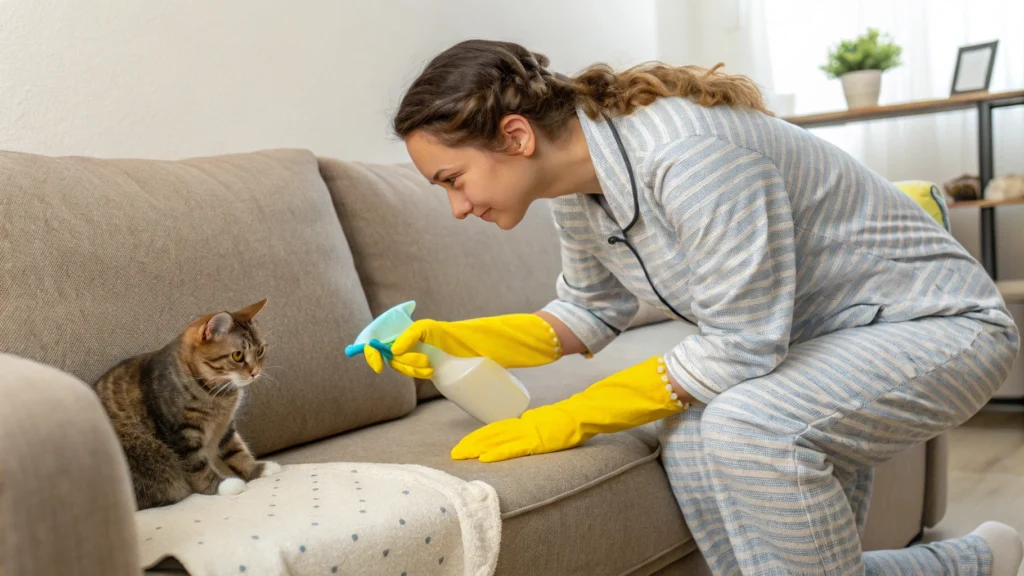
This is the single most effective way to remove pet hair from furniture, and it costs absolutely nothing if you have a pair of rubber cleaning gloves under your sink.
How to do it:
- Put on a regular rubber cleaning glove (the yellow dishwashing kind)
- Get it slightly damp — not soaking, just moist
- Run your hand across the fabric surface in one direction
- The rubber creates friction that balls pet hair into clumps
- Pick up the clumps and rinse the glove
- Repeat until the surface is clean
It takes about 5 minutes to do a full couch. I use this method every time before guests come over — it’s faster than any lint roller and doesn’t cost anything to refill.
This works on fabric couches, armchairs, car seats, cushions, curtains, and even lamp shades. Basically any fabric surface where pet hair sticks.
Why it works: Rubber creates static friction against fabric. When you drag a damp rubber surface across upholstery, it generates enough grip to pull pet hair out of the weave and ball it together. The dampness helps the hair clump instead of scattering.
Pro tip: After the rubber glove pass, vacuum the surface with the upholstery attachment. The glove loosens deeply embedded hair that the vacuum alone would miss, and the vacuum picks up what the glove leaves behind. Together, they remove pet hair far more thoroughly than either method alone.
Hack #2: Window Squeegee on Carpet — This Shouldn’t Work, But It Does
A regular rubber window squeegee is one of the most surprisingly effective ways to remove pet hair from carpet. I was skeptical the first time I tried it. I’m not skeptical anymore.
How to do it:
- Grab a rubber window squeegee (the kind you’d use on glass)
- Drag it across the carpet in short, firm strokes in one direction
- Watch the pet hair ball up in front of the squeegee
- Collect the hair clumps and vacuum afterward
Your regular vacuum misses a shocking amount of embedded pet hair. The rubber edge of a squeegee physically drags hair up from between carpet fibers in a way that suction alone can’t.
I tried this on a section of carpet I had just vacuumed. The amount of cat hair the squeegee pulled up after the vacuum had “cleaned” it was genuinely disturbing. Now I squeegee before vacuuming once a week in the areas where my cats hang out most.
Works great on: Carpet, area rugs, car floor mats, upholstered stairs (where a broom is awkward)
Doesn’t work well on: Hard floors, delicate fabrics, leather
Hack #3: Dryer First, Wash Second — The Laundry Game-Changer
This is the hack that changed my entire approach to remove pet hair from laundry. Most people wash their hairy clothes first and then dry them. Flip that order.
How to do it:
- Throw pet-hair-covered clothes in the dryer for 10 minutes on low heat or no-heat tumble
- The tumbling loosens hair and the lint trap catches most of it
- Clean the lint trap (it’ll be full)
- NOW wash the clothes as normal
- Dry again as usual
The dryer-first method removes more pet hair than the washing machine ever will. Water can actually push hair deeper into fabric weave, making it harder to remove. Tumbling dry first loosens it when it’s still sitting on the surface.
I figured this out after months of pulling clothes from the washer still covered in cat hair. Tried the dryer-first method once and the difference was immediate. My black jeans actually looked black again.
Extra boost: Add 1/2 cup of white vinegar to the wash rinse cycle. According to the American Cleaning Institute, vinegar acts as a natural fabric softener that loosens the grip pet hair has on fabric fibers. The hair rinses away with the water instead of staying stuck. Your clothes won’t smell like vinegar once they’re dry.
Hack #4: White Vinegar — The Pet Hair Secret Weapon in Your Kitchen
White vinegar deserves its own section because it does so much for pet hair removal that most people don’t know about.
In the washing machine: 1/2 cup in the rinse cycle softens fabric fibers, releasing trapped pet hair so it washes away. This alone makes a noticeable difference in how much hair survives the laundry cycle.
As a fabric spray: Mix equal parts white vinegar and water in a spray bottle. Lightly mist fabric furniture, wait 5 minutes, then wipe with a damp cloth or rubber glove. The vinegar loosens hair from the fabric surface. The smell disappears within 30 minutes as it dries.
On hard floors: Add 1 cup of white vinegar to a bucket of warm water. Mop with a microfiber mop. The vinegar cuts through the static cling that makes pet hair stick to hardwood and tile. Plus it disinfects and removes pet odors at the same time.
In the dryer: Soak a clean washcloth in white vinegar, wring it out well, and toss it in the dryer with your clothes. It works like a dryer sheet — reducing the static that makes hair cling to fabric — without the chemicals or cost.
One bottle of white vinegar costs about $2 and lasts months. It’s the most cost-effective pet hair removal tool that exists.
Hack #5: Baking Soda on Carpet — Loosens Hair AND Kills Odors
Baking soda isn’t just for baking. It’s one of the most useful household items for pet owners, and it helps remove pet hair from carpet in a way most people don’t expect.
How to do it:
- Sprinkle a thin layer of baking soda across the carpet (focus on areas where pets rest)
- Let it sit for 10-15 minutes
- Vacuum thoroughly on a high-suction setting
Why it works: Baking soda loosens pet hair from carpet fibers by reducing the static cling that holds hair in place. It essentially breaks the bond between hair and fabric. As a bonus, it absorbs pet odors trapped deep in the carpet — so your room smells fresher even after vacuuming.
I do this once a month in my living room. The first time, I was shocked at how much extra cat hair the vacuum picked up compared to vacuuming without the baking soda. Now it’s part of my monthly deep-clean routine.
Works on: Carpet, area rugs, fabric-covered pet beds, upholstered furniture
Cost: About $1 per treatment using a standard box of baking soda.
Hack #6: Damp Sponge on Upholstery — Simple and Effective
You have a kitchen sponge. You have water. That’s all you need to remove pet hair from most fabric surfaces.
How to do it:
- Get a clean kitchen sponge slightly damp
- Drag it across fabric upholstery in one direction using firm, even strokes
- Hair collects on the damp surface of the sponge
- Rinse the sponge when it’s loaded with hair
- Repeat
This works on the same principle as the rubber glove method — dampness plus friction equals pet hair removal. A sponge is slightly less effective than rubber gloves but it’s what you reach for when you don’t have gloves handy.
Best for: Quick touch-ups on couches, chairs, and car seats. Also works surprisingly well on lampshades and curtains that collect hair.
Hack #7: Packing Tape — The Emergency Pet Hair Remover
You’re about to walk out the door and you’re covered in pet hair. No lint roller in sight. Grab packing tape.
How to do it:
- Tear off a strip of wide packing tape (masking tape works too, but packing tape is stickier)
- Wrap it around your hand with the sticky side out
- Pat and press across your clothes
- Replace the tape when it’s covered with hair
It’s a lint roller made from tape. Less convenient, but equally effective for emergencies. I keep a roll of packing tape in my desk drawer specifically for this.
Also works for: Removing pet hair from throw pillows, car seats, small fabric surfaces, and even book covers that have collected hair.
Hack #8: Dryer Sheets on Furniture and Baseboards
Used dryer sheets still have enough anti-static charge to grab pet hair from surfaces. Don’t throw them away after the laundry — give them a second life.
How to use them:
- Wipe across fabric furniture to pick up surface hair
- Run along baseboards where pet hair tumbleweeds collect
- Wipe down blinds (pet hair clings to blinds more than you’d think)
- Run across electronics and TV screens that attract hair with static
- Tuck under couch cushions and replace weekly — they help repel new hair from settling
The science: Dryer sheets work by neutralizing static electricity. Pet hair sticks to surfaces partly because of static cling. The anti-static coating on dryer sheets disrupts that bond and lets you wipe hair away easily.
Fresh dryer sheets work better than used ones, but even used sheets do a decent job for light maintenance between deeper cleans.
Hack #9: Damp Microfiber Cloth on Hard Floors and Leather
If you’re using a regular broom on hardwood or tile floors, you’re just pushing pet hair around. A damp microfiber cloth or mop is dramatically better.
For hard floors:
- Slightly dampen a microfiber mop head
- Wipe across the floor in long, even strokes
- Hair clings to the damp microfiber instead of scattering
- Rinse the mop head when it’s loaded
For leather furniture:
- Dampen a microfiber cloth (not soaking — lightly moist)
- Wipe in one direction across leather surfaces
- Hair transfers from the leather to the cloth
- Follow with a dry microfiber cloth to remove any moisture
Why microfiber works better than regular cloths: The ultra-fine fibers create millions of tiny hooks that trap hair at a microscopic level. A regular cotton cloth just pushes hair around. Microfiber actually grabs and holds it.
Never use rubber tools on leather. Rubber can scratch or damage leather finishes. Microfiber is safe for all leather and faux leather surfaces.
Hack #10: The Pumice Stone for Deeply Embedded Hair
This is the heavy-duty hack for surfaces where pet hair has been building up for months and nothing else seems to work. A dry pumice stone — the kind you’d use on your feet — can pull embedded pet hair out of tightly woven fabrics and car upholstery.
How to do it:
- Use a clean, dry pumice stone
- Drag it VERY gently across the fabric surface using light pressure
- The porous texture catches and pulls hair that’s woven deep into the fabric
- Vacuum afterward to pick up everything that was loosened
Important: Be gentle. You’re not scrubbing. You’re lightly dragging. Too much pressure can damage delicate fabrics. Test on a hidden area first.
Best for: Car seats, heavily embedded couch cushions, fabric that hasn’t been cleaned in a long time, tightly woven upholstery where rubber gloves aren’t effective enough.
Don’t use on: Leather, silk, delicate fabrics, knit materials, or anything with a loose weave.
Surface-by-Surface Quick Guide
Now that you know the 10 hacks, here’s which combination works best for each surface:
Remove Pet Hair From Furniture
- Quick clean: Damp rubber gloves (Hack #1) — fastest way to remove pet hair from sofa fabric
- Deep clean: Rubber gloves first, then vacuum, then dryer sheet wipe-down
- Maintenance: Dryer sheet wipe-down every few days
- For leather: Damp microfiber cloth only (Hack #9)
Remove Pet Hair From Clothes
- Before washing: 10-minute dryer cycle first (Hack #3)
- During wash: White vinegar in rinse cycle (Hack #4)
- Emergency: Packing tape wrap (Hack #7)
- Prevention: Keep dark clothes in a closed closet, not draped on furniture
Remove Pet Hair From Carpet
- Best method: Window squeegee + vacuum (Hack #2)
- Monthly deep clean: Baking soda + vacuum (Hack #5)
- Daily maintenance: Regular vacuuming (every 2-3 days in pet-heavy areas)
Remove Pet Hair From Car
- Fabric seats: Damp rubber gloves (Hack #1) + vacuum
- Deep embedded hair: Pumice stone gently (Hack #10) + vacuum
- Leather seats: Damp microfiber cloth (Hack #9)
- Floor mats: Remove, shake outside, squeegee, then vacuum
Remove Pet Hair From Bedding
- Wash day: Dryer first method (Hack #3) + vinegar in wash (Hack #4)
- Between washes: Shake outside + dryer sheet wipe-down (Hack #8)
- Prevention: Washable pet blanket on top of bedding
Remove Pet Hair From Laundry
- Complete method: Dryer first (Hack #3) → shake out → wash with vinegar (Hack #4) → dry with vinegar-soaked washcloth (Hack #4)
- Key rule: Wash pet-heavy items separately from your clean clothes
Remove Pet Hair From Hard Floors
- Best method: Damp microfiber mop (Hack #9)
- Deep clean: Vinegar water mop solution (Hack #4)
- Never: Regular broom — it scatters hair everywhere
How to Stop Pet Hair From Taking Over Your Home
Removing pet hair is one battle. Preventing it from building up is the real long-term win.
Brush your pet regularly. Every hair you capture in a brush is one that doesn’t end up on your couch. For cats, 2-3 times per week minimum. For long-haired breeds, daily. If your cat resists brushing — some cats nip or bite during grooming — our guide on why cats bite when you pet them explains how to handle it. My brushing routine is every other evening while watching TV. All four cats expect it now.
Vacuum or mop every 2-3 days in areas where your pets spend the most time. Preventing hair from embedding into surfaces is much easier than removing it after weeks of buildup.
Use washable covers on pet-favorite furniture spots. My cats each have their favorite spot on the couch, so I put washable covers just on those spots. When they get hairy, I throw the cover in the wash instead of deep-cleaning the whole couch.
Keep a “pet blanket” on your bed. If your cats sleep on your bed (and they will no matter what you decide), put a washable blanket on top. Wash just the blanket instead of stripping the whole bed every week. If you’re figuring out the right feeding approach for your cats, our guide on how much wet food to feed a cat can help — well-fed cats on quality food actually shed less.
Run an air purifier. According to the EPA’s guide on indoor air quality, air purifiers with HEPA filters capture airborne pet dander and hair particles before they settle on surfaces. Especially helpful for bedrooms.
Feed a quality diet. According to veterinary nutrition research from Tufts University, omega-3 fatty acids improve coat health and reduce excessive shedding. If you’re looking at food options, our guide on wet cat food for sensitive stomachs covers what to look for.
Frequently Asked Questions About Pet Hair Removal
What is the best way to remove pet hair at home?
A pair of damp rubber cleaning gloves is the single most effective household item for pet hair removal. Put them on, get them slightly damp, and run your hands across any fabric surface — furniture, car seats, cushions, curtains. The rubber friction balls hair into clumps you pick right off. It costs nothing, works in minutes, and handles most surfaces better than expensive pet hair removal products. For carpet, a rubber window squeegee is equally impressive.
Does vinegar help remove pet hair?
Yes — white vinegar is one of the most useful household items for pet hair removal. Adding 1/2 cup to your washing machine’s rinse cycle softens fabric fibers, loosening the grip pet hair has on your clothes and bedding so it rinses away with the water. According to the American Cleaning Institute, vinegar acts as a natural fabric softener. You can also mix equal parts vinegar and water in a spray bottle and mist furniture before wiping with a damp cloth to loosen surface hair.
How do you get embedded pet hair out of a couch?
For deeply embedded pet hair, you need to remove pet hair from couch cushions in stages: first use a damp rubber glove or dry pumice stone to physically drag hair to the surface, then vacuum with the upholstery attachment, then wipe down with a used dryer sheet. This three-step process removes pet hair that’s been building up for weeks or months. For regular maintenance, a quick rubber glove pass every few days prevents hair from embedding in the first place.
How do you remove pet hair from clothes without a lint roller?
Several household items work just as well: wrap packing tape around your hand with the sticky side out and pat your clothes. Run slightly damp hands across the fabric — moisture grabs loose hair. Rub a used dryer sheet across the surface. Or throw the clothes in the dryer for 10 minutes before wearing — the tumbling and lint trap catch most of the hair. The dryer method is actually more thorough than a lint roller for heavily covered clothes.
How do you remove pet hair from a car?
Knowing how to remove pet hair from car seats saves hours of frustration. Use a damp rubber glove on fabric car seats — same method as furniture. Rub in one direction to ball up the hair, then vacuum it up. For deeply embedded hair in car seats, a dry pumice stone dragged very gently across the fabric works remarkably well. For leather seats, use a damp microfiber cloth. Keep a squeegee in your glove box for quick cleanups between deeper sessions. Prevention tip: a washable seat cover saves hours of cleaning.
What removes pet hair from carpet better than vacuuming?
A rubber window squeegee dragged across carpet removes significantly more pet hair than vacuuming alone. The rubber edge physically pulls hair up from between carpet fibers that vacuum suction misses. Sprinkling baking soda on carpet before vacuuming also helps — it loosens the static bond between hair and fiber, letting the vacuum pick up more. The best approach is squeegee first to loosen everything, then vacuum to pick it all up.
Bottom Line
You don’t need to buy a single product or any fancy pet hair removal tools to keep your home clean. A pair of rubber gloves, a bottle of white vinegar, a squeegee, and your dryer handle 90% of all pet hair problems.
The three things that make the biggest difference: rubber gloves for furniture (5 minutes before guests arrive), the dryer-first method for laundry (eliminates the “my clean clothes are still hairy” problem), and a squeegee on carpet once a week (removes more hair than your vacuum alone).
Will you ever fully win the war against pet hair with four cats? No. But at least now I’m winning most of the battles — and my couch no longer looks like it’s growing its own fur coat.
More cat care tips from My Paw Wellness:
- Cat Vomiting White Foam: 7 Critical Causes and What to Do — Know when it’s serious and when it’s not.
- Cat Breathing Fast but Otherwise Normal — When rapid breathing is okay and when it’s not.
- How Much Wet Food to Feed a Cat — Get portions right for your cat’s weight and age.
- How Much Water to Rehydrate Dried Cat Food — The easy way to add moisture to your cat’s diet.
- Why Does My Cat Bite Me When I Pet Him? — Understanding overstimulation and what your cat is telling you.