Diabetic cat signs are easy to miss in the early stages because cats hide discomfort well and the symptoms develop gradually. By the time most owners notice something is wrong, the diabetes has often been present for weeks or months.
Knowing what to look for, and acting early, improves your cat’s chances of remission and generally makes the condition easier to manage long term.
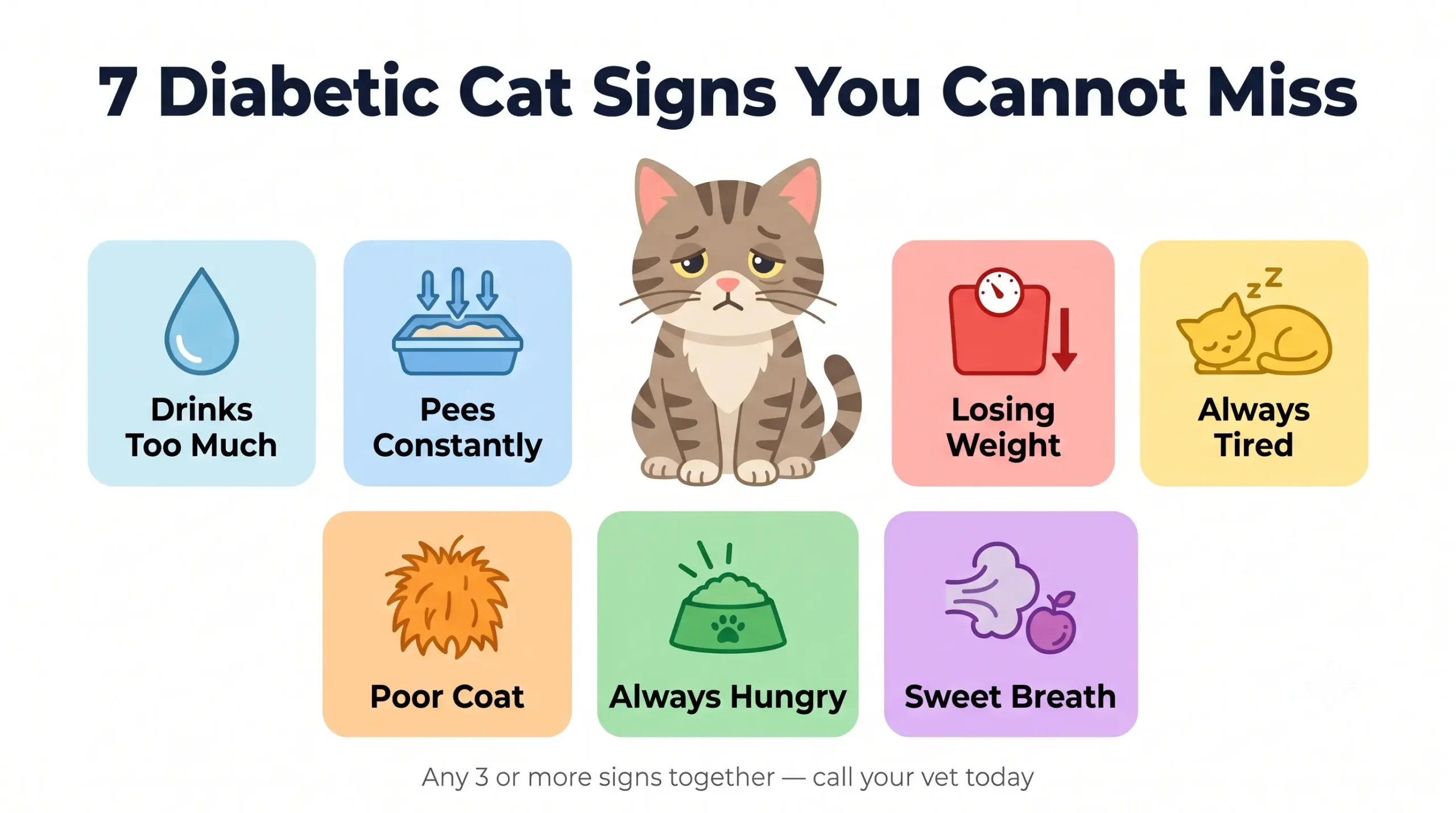
The main diabetic cat signs are excessive thirst, frequent urination, weight loss despite a good appetite, lethargy, poor coat condition, sweet or fruity breath, and a changed walking style where the cat walks on its hocks instead of its toes. If you notice two or more of these, see the vet this week.
- Vomiting repeatedly, this is a red flag for diabetic ketoacidosis
- Complete refusal to eat or drink
- Extreme lethargy or inability to stand
- Seizures or tremors, signs of a low blood sugar emergency
- Sweet or acetone smell on the breath
- Collapsing or unconsciousness
7 Diabetic Cat Signs at a Glance
| Sign | What You See | Why It Happens |
|---|---|---|
| Excessive thirst | Refilling water bowl 2–3x more than usual | Body flushing excess glucose through kidneys |
| Frequent urination | More litter box visits, larger clumps, accidents | Glucose pulls water into urine |
| Weight loss despite eating | Losing weight while appetite is normal or increased | Cells cannot access glucose, burning fat instead |
| Lethargy | Less playful, sleeping more, less interactive | Cells starved of energy |
| Poor coat condition | Dull, greasy, matted fur especially on the back | Poor nutrient absorption and dehydration |
| Sweet or fruity breath | Acetone-like smell, not food related | Ketone buildup from fat metabolism |
| Plantigrade stance | Walking flat on hocks instead of toes | Nerve damage from prolonged high blood sugar |
Each Sign Explained
1. Excessive Thirst
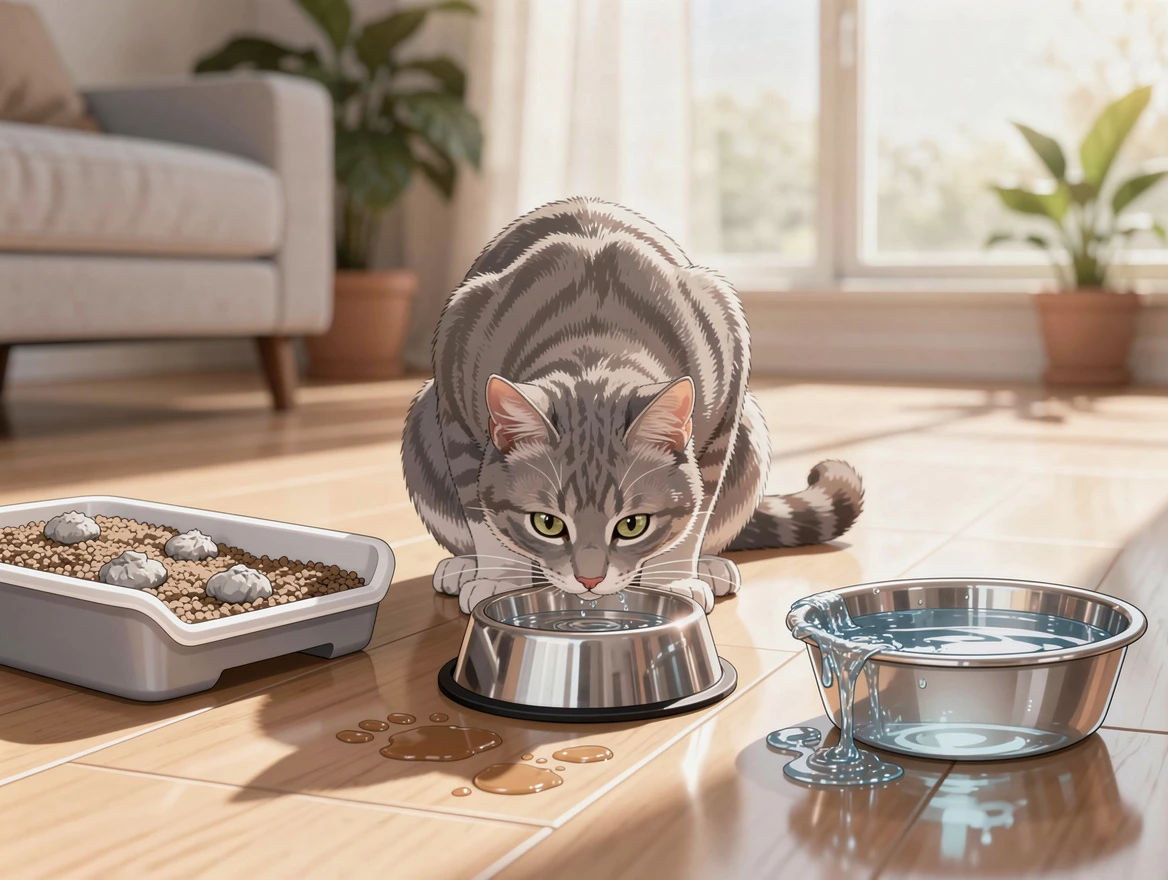
When blood sugar rises, the kidneys work overtime filtering glucose and drag large amounts of water out with it. The body compensates by triggering intense thirst. If you are refilling the water bowl significantly more than usual, or finding your cat drinking from taps, sinks, or unusual places, this is one of the earliest signs to appear.
2. Frequent Urination and Accidents
All that extra water intake has to go somewhere. Diabetic cats urinate far more frequently and in larger volumes. Litter clumps become noticeably larger. Many cats start having accidents outside the litter box, not from behavioral issues but from urgency they cannot control, especially at night.
3. Weight Loss Despite Eating Well
This is the sign that confuses owners most. The cat is eating normally or even more than usual, but getting visibly thinner. This happens because insulin is not working correctly, so cells cannot access the glucose from food. The body starts breaking down muscle and fat for fuel instead, causing rapid weight loss.
4. Lethargy

A diabetic cat’s cells are literally running on empty. Even with plenty of food, the energy cannot reach where it is needed. Cats become less playful, sleep more, and stop greeting you at the door. The change is gradual, which is why owners often only notice in retrospect how much their cat’s energy has declined.
5. Poor Coat Condition
Cats with diabetes often develop dull, greasy, or matted coats, especially along the back near the tail. This happens because they feel unwell and groom less, and because poor nutrient absorption affects coat quality. Sudden changes in a previously well-groomed cat are worth investigating.
6. Sweet or Fruity Breath
A sweet, acetone-like smell on the breath indicates ketones, produced when the body burns fat for fuel instead of glucose. This is a more serious sign and can indicate early diabetic ketoacidosis. If you notice this smell, see the vet the same day.
7. Plantigrade Stance — Walking on the Hocks
Instead of walking on their toes as cats normally do, diabetic cats with nerve damage start walking flat-footed with the hock joints touching the ground. It looks like a crouch or an unusual wobble. This is a sign of peripheral neuropathy from prolonged high blood sugar and means diabetes has been uncontrolled for some time.
What Are the First Signs of Diabetes in Cats
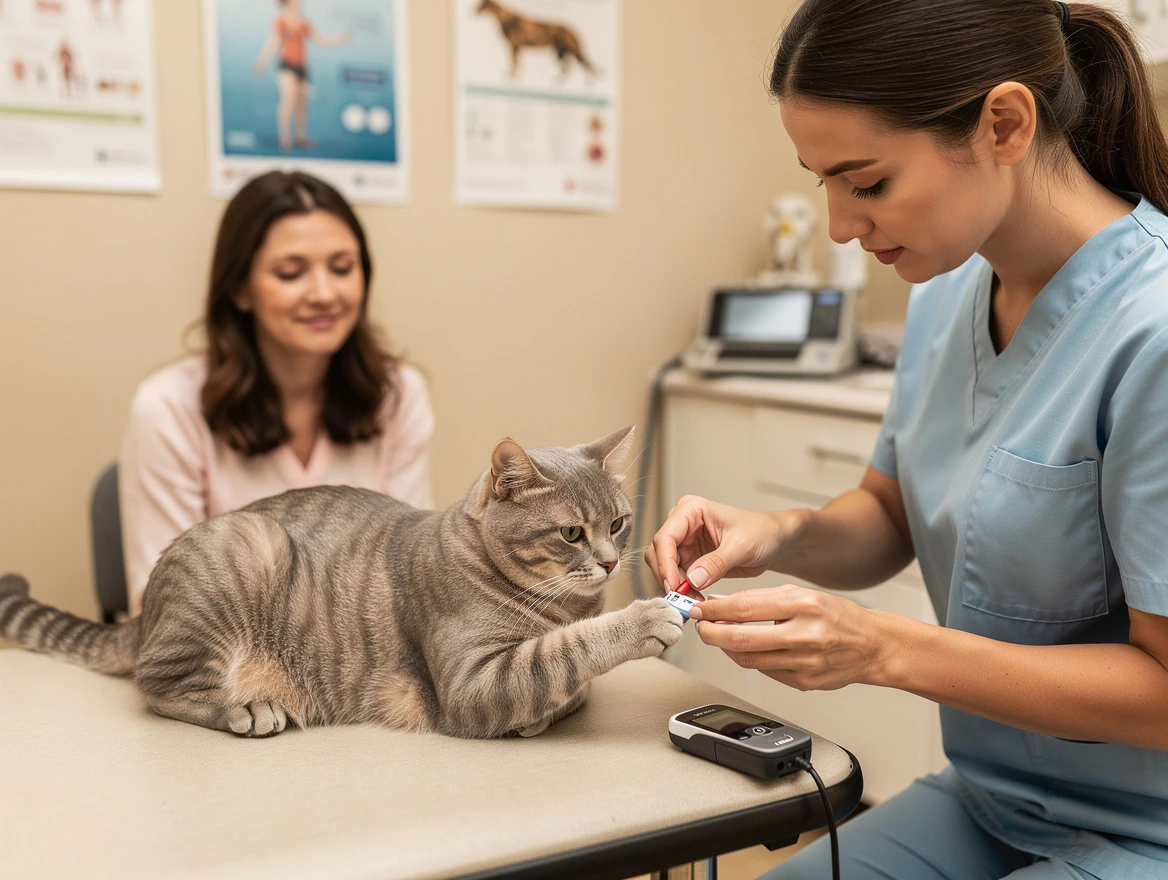
The very first signs to appear are almost always increased thirst and increased urination. These appear before any other symptoms and can be subtle, just a slight increase in how often you refill the bowl or scoop the litter box.
Weight loss and increased appetite usually follow within weeks. Lethargy and coat changes come later as the condition progresses without treatment.
Senior Cat Diabetes Symptoms
Cats over 7 years old are significantly more likely to develop diabetes, especially male cats and overweight cats. Senior cat diabetes symptoms are the same as in younger cats but may be dismissed as normal aging. A cat that is drinking more, losing muscle mass, or seems less sharp than before deserves a vet check and blood glucose test, not just an assumption that they are slowing down with age.
Signs of Low Blood Sugar
Low blood sugar (hypoglycemia) is a medical emergency, more immediately dangerous than high blood sugar. Signs include weakness or wobbling, disorientation or glassy-eyed staring, trembling or seizures, extreme lethargy or unresponsiveness. If your diabetic cat shows these signs, rub a small amount of honey or corn syrup on their gums immediately and go to the vet. Do not wait.
Signs of High Blood Sugar
Signs of high blood sugar are the classic symptoms, excessive thirst, frequent urination, weight loss, lethargy, and sweet breath. Persistent high blood sugar damages nerves (causing the walking changes), kidneys, and eyes over time. This is why consistent management matters, not just getting blood sugar down once but keeping it controlled long term.
Signs of Remission
Some cats, particularly those diagnosed early and treated aggressively, achieve diabetic remission where they no longer need insulin. Signs of remission include: blood glucose consistently in the normal range, no longer needing insulin doses to stay stable, return of normal energy and weight, and normal thirst and urination. Remission is more likely when caught in the first few months and when the cat loses excess weight alongside treatment.
Signs Your Cat Needs More Insulin
If your cat’s diabetes is managed with insulin but symptoms return, increased thirst, accidents, weight loss, this may mean the dose needs adjustment. Blood glucose consistently above target range on home monitoring is another clear sign. Never adjust insulin dose without speaking to your vet first, too much insulin causes dangerous hypoglycemia.
Diabetes vs UTI vs Kidney Disease
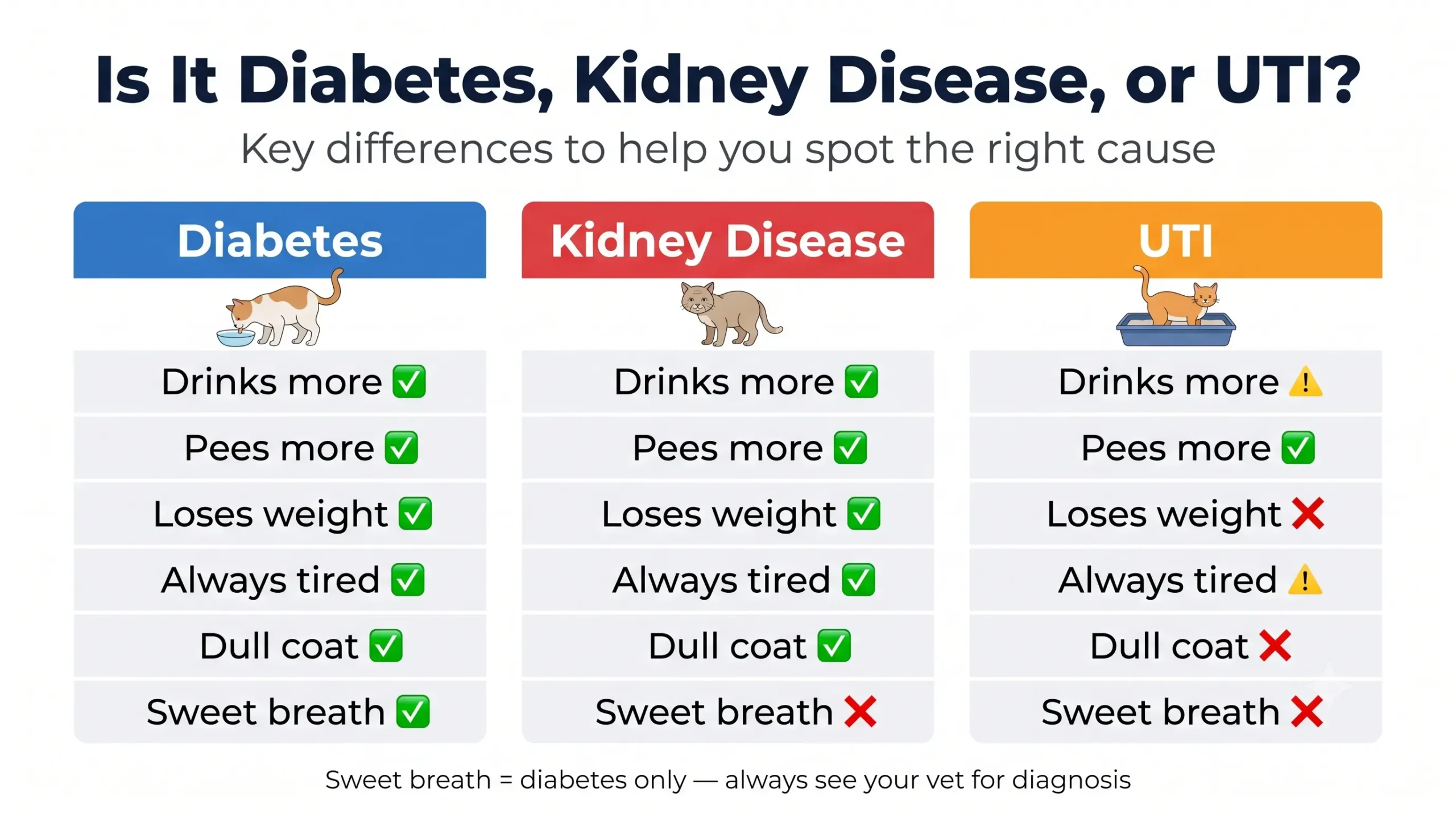
| Sign | Diabetes | UTI | Kidney Disease |
|---|---|---|---|
| Excessive thirst | ✅ Yes | Sometimes | ✅ Yes |
| Frequent urination | ✅ Yes, large volume | ✅ Yes, small painful amounts | ✅ Yes |
| Weight loss with good appetite | ✅ Yes | ❌ No | ✅ Yes |
| Lethargy | ✅ Yes | Possible | ✅ Yes |
| Sweet/fruity breath | Sometimes | ❌ No | ❌ No |
| Plantigrade stance | ✅ Advanced cases | ❌ No | ❌ No |
| Vomiting/diarrhea | In serious cases | Rarely | Common |
Related: Signs of Kidney Failure in Cats, kidney disease shares several of the same signs and both can occur together in older cats.
Cat Diabetes Treatment Overview

Cat diabetes treatment has three pillars:
- Insulin injections — usually twice daily using tiny needles most cats tolerate well
- Diet change — high protein, low carbohydrate wet food to reduce blood sugar spikes. Related: How Often Should I Feed My Cat Wet Food?
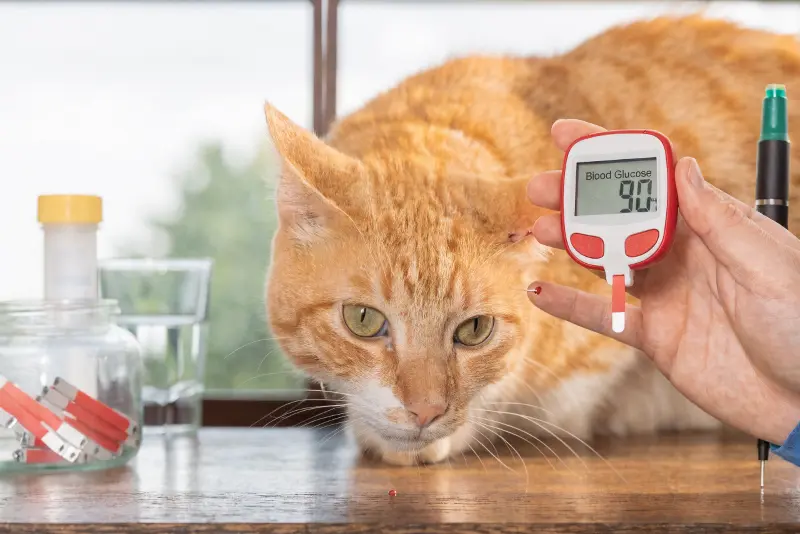
- Regular monitoring — home blood glucose testing or periodic vet visits to adjust insulin dose
Many cats achieve diabetic remission with early aggressive treatment. The key is acting on the signs as soon as you notice them, not waiting until symptoms become severe.
Frequently Asked Questions
Not entirely, but risk can be reduced. Keeping your cat at a healthy weight is the single biggest controllable factor, since obesity significantly raises diabetes risk. Regular wellness checks that catch early bloodwork changes also help, especially in cats over 7 or those already carrying extra weight.
Yes, vomiting and diarrhea occur in more serious cases, particularly when diabetic ketoacidosis is developing. Repeated vomiting in a known diabetic cat is an emergency, go to the vet immediately.
Ongoing treatment typically costs $150–$400 per month covering insulin, testing equipment, and prescription food. Initial diagnosis, bloodwork, and vet visits add to this in the first months.
The Bottom Line
Diabetic cat signs develop gradually, which is exactly why they are easy to miss. The most important thing you can do is pay attention to your cat’s water bowl, litter box, weight, and energy levels. Any two of these changing together is reason for a vet visit this week.
Early diagnosis improves your cat’s chances of remission, though remission also depends on the type of diabetes, how much excess weight your cat is carrying, and how well they respond to treatment. Late diagnosis generally means managing a more complex condition for the rest of your cat’s life.
Related Articles
Lethargy is one of the key diabetic cat signs.
Wet food is the recommended diet for diabetic cats.