How long can wet cat food sit out? Two hours maximum at room temperature. After that, bacterial growth reaches unsafe levels regardless of how the food looks or smells. In hot weather above 90°F, that drops to just 1 hour.
I learned this the hard way. I used to leave wet food out for my cats all morning while I worked. One of them vomited and had diarrhea for two days — the vet said it was almost certainly from eating spoiled food. Since then, I set a phone timer every time I put down a bowl. Twenty seconds of effort saves a $300 vet bill.
How long can wet cat food sit out? 2 hours at room temperature (70–75°F), 1 hour in hot weather (above 90°F). Refrigerate leftovers within 2 hours of opening. Refrigerated wet food lasts 24–48 hours. When in doubt, throw it out — your cat’s health is worth more than a half-eaten can.
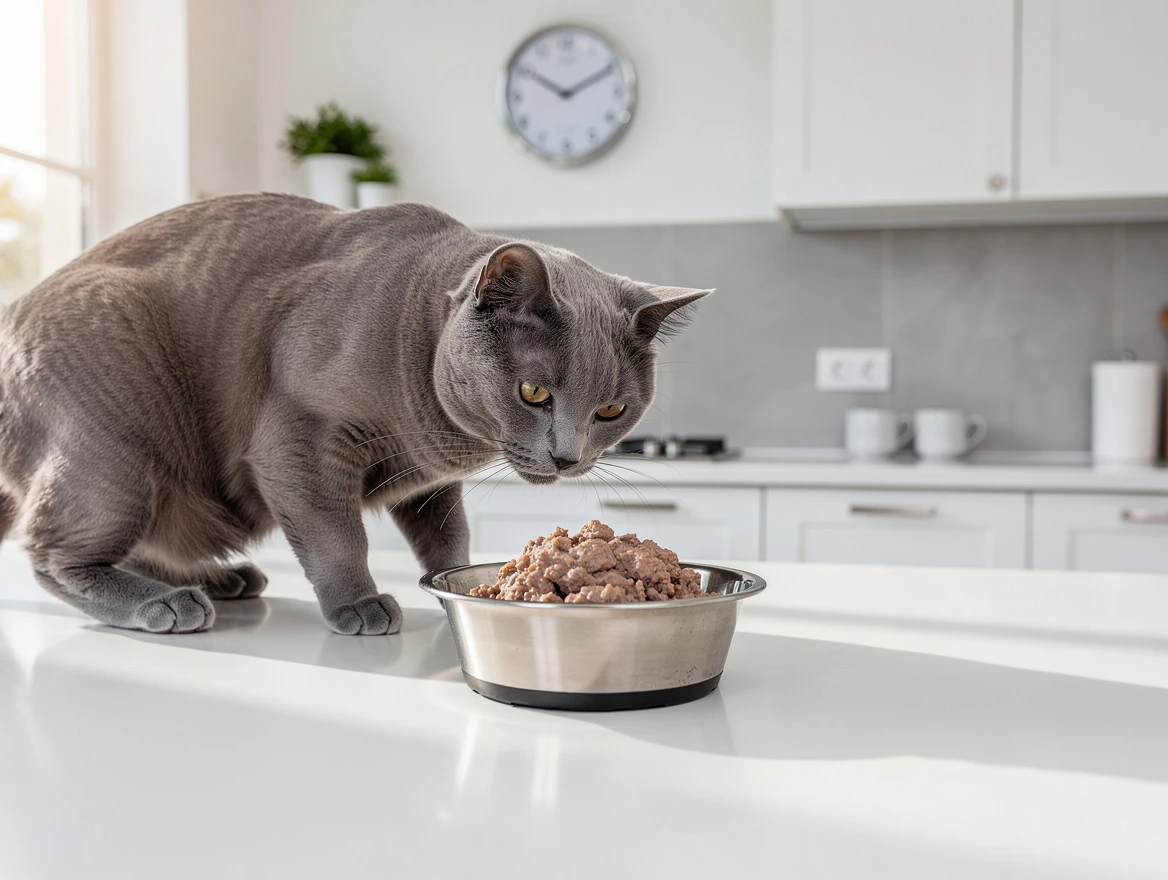
How Long Can Wet Cat Food Sit Out? Time Limits by Temperature
| Situation | Safe Duration | What to Do After |
|---|---|---|
| Room temperature (70–75°F) | 2 hours maximum | Discard or refrigerate immediately |
| Hot weather (above 90°F) | 1 hour maximum | Discard — do not refrigerate food left in heat |
| Cold room (below 60°F) | 2–3 hours (still not ideal) | Follow the 2-hour rule regardless |
| Refrigerated (below 40°F) | 24–48 hours after opening | Discard after 48 hours even if it looks fine |
| Unopened can | Until expiration date | Store in cool, dry place |
| Frozen (opened, portioned) | 2–3 months | Thaw in refrigerator, not at room temperature |
Why Wet Food Spoils So Fast
Wet cat food contains 75–80% moisture and high protein — a perfect environment for bacteria. At room temperature, bacterial growth accelerates rapidly. The USDA calls the 40–140°F range the “danger zone” where bacteria multiply exponentially, and by the 4-hour mark, contamination levels are dramatically higher than at 2 hours.
The food may still look and smell completely normal well past the safe window — this is about invisible bacterial growth that your senses cannot detect, not about appearance or smell.
Bowls specifically add an extra factor. Bacteria from your cat’s saliva contaminate the food the moment they start eating. A licked bowl of food spoils faster than an untouched one. This is also why you should never put served food back in the fridge — once your cat has eaten from it, discard what’s left after 2 hours.
Signs Your Wet Cat Food Has Gone Bad
Knowing the time limit matters — but knowing what spoiled food actually looks like is equally important:
- Sour or rotten smell — fresh wet food has a mild meaty odor. Any sour, acidic, or “off” smell means discard immediately.
- Color change — darkening, graying, or any color shift from when you first opened the can
- Liquid separation — excessive watery liquid pooling around the food (some is normal, excessive is not)
- Slimy or sticky texture — bacterial biofilm creates a slimy coating
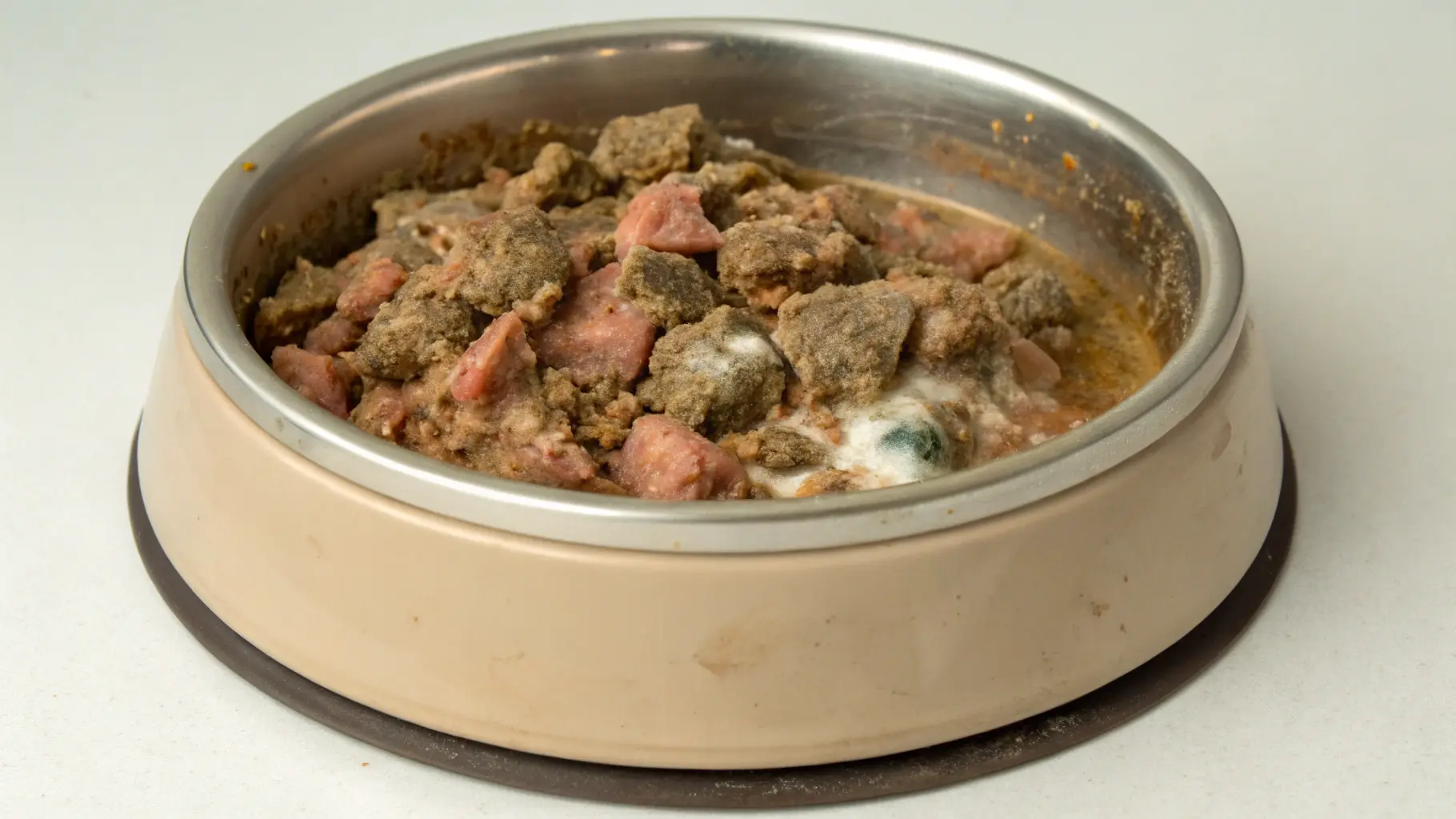
- Visible mold — any fuzzy spots mean the food is heavily contaminated
- Your cat refuses it — cats have a stronger sense of smell than humans. If your cat sniffs and walks away from food they normally love, trust their judgment.
Food can be unsafe BEFORE any visible signs appear. Bacteria reach unsafe levels around the 2-hour mark even when the food looks, smells, and tastes perfectly fine. Never rely on appearance alone — follow the time rule.
What Happens If Your Cat Eats Spoiled Wet Food
Not every cat gets sick from slightly old food, but repeated exposure increases risk significantly — the effect is cumulative over time. Symptoms of food poisoning in cats include:
- Vomiting (often within 2–6 hours of eating spoiled food). Related: Cat Vomiting White Foam
- Diarrhea — sometimes lasting 24–48 hours. Related: Cat Has Diarrhea But Acting Normal
- Loss of appetite
- Lethargy and hiding. Related: My Cat Is Not Eating and Very Weak
- Drooling or lip-smacking
- Fever (in severe cases)
If symptoms are mild (one episode of vomiting, then eating normally), monitor at home. If vomiting or diarrhea persists beyond 24 hours, your cat refuses water, or seems extremely lethargic, see your vet.
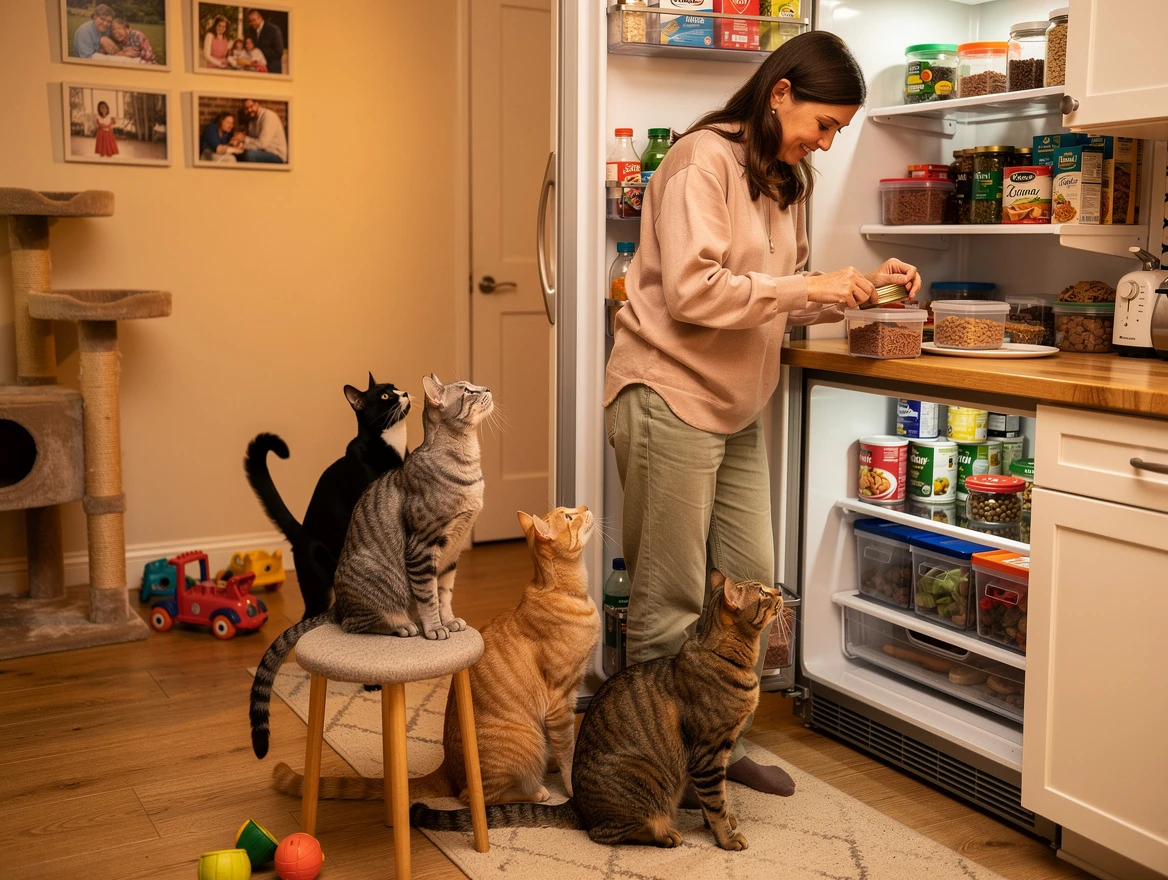
How to Store Leftover Wet Cat Food Properly
- Cover immediately after serving — use a silicone can lid, plastic wrap, or transfer to an airtight container
- Refrigerate within 2 hours of opening — don’t leave the open can on the counter
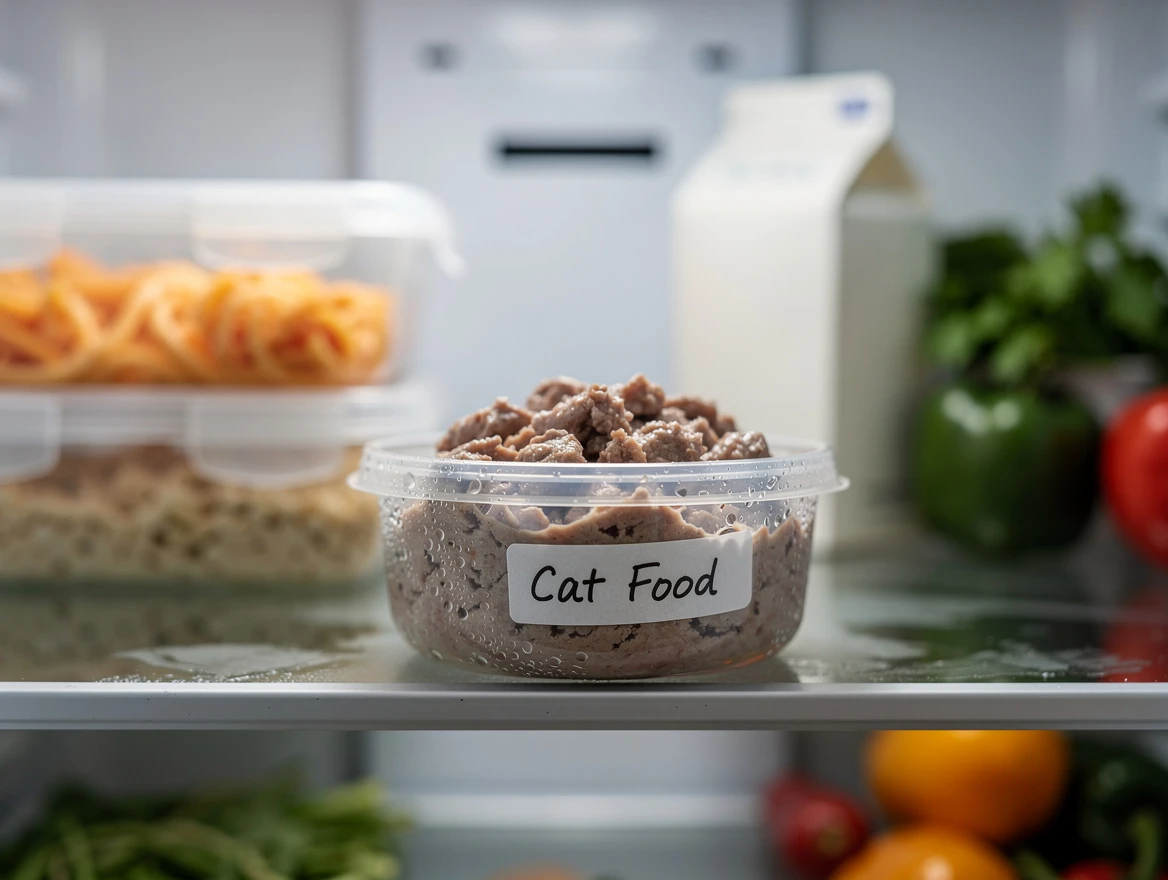
- Label with the date — write the date you opened the can so you know when 48 hours is up
- Use within 24–48 hours — discard after 48 hours regardless of appearance
- Warm before serving — cats prefer room-temperature food. Let refrigerated food sit out for 15–20 minutes or microwave for 5–10 seconds on low power. Stir thoroughly and test temperature before serving.
- Never put served food back in the fridge — once food has been in the bowl and exposed to your cat’s saliva, do not re-refrigerate it. Discard.
Leaving It Out Overnight
Absolutely not recommended. Overnight means 8–12 hours at room temperature, far exceeding the 2-hour safe limit. By morning, wet food left out overnight can carry meaningfully elevated levels of harmful bacteria like Salmonella and E. coli.
If your cat did eat food that sat out overnight, monitor for vomiting, diarrhea, and lethargy over the next 24 hours. Not every cat will get sick, but the risk is real. Don’t make it a habit.
For nighttime feeding, use dry food instead — it remains safe at room temperature for 24–48 hours. Or feed a final wet food meal in the evening and remove the bowl before bed. Related: How Often Should I Feed My Cat Wet Food — scheduling meals prevents overnight food sitting.
Wet Food vs Dry Food — Storage Comparison
| Feature | Wet Food | Dry Food (Kibble) |
|---|---|---|
| Room temperature safe time | 2 hours max | 24–48 hours |
| Moisture content | 75–80% | 6–10% |
| Bacterial risk | High — moisture feeds bacteria | Low — dry environment inhibits growth |
| Refrigeration needed after opening | Yes — within 2 hours | No — seal bag and store cool/dry |
| Fridge life after opening | 24–48 hours | N/A — store at room temp |
| Free-feeding safe? | No — never with wet food | Yes — but measure portions |
| Freezable? | Yes — portion and freeze 2–3 months | Not recommended |
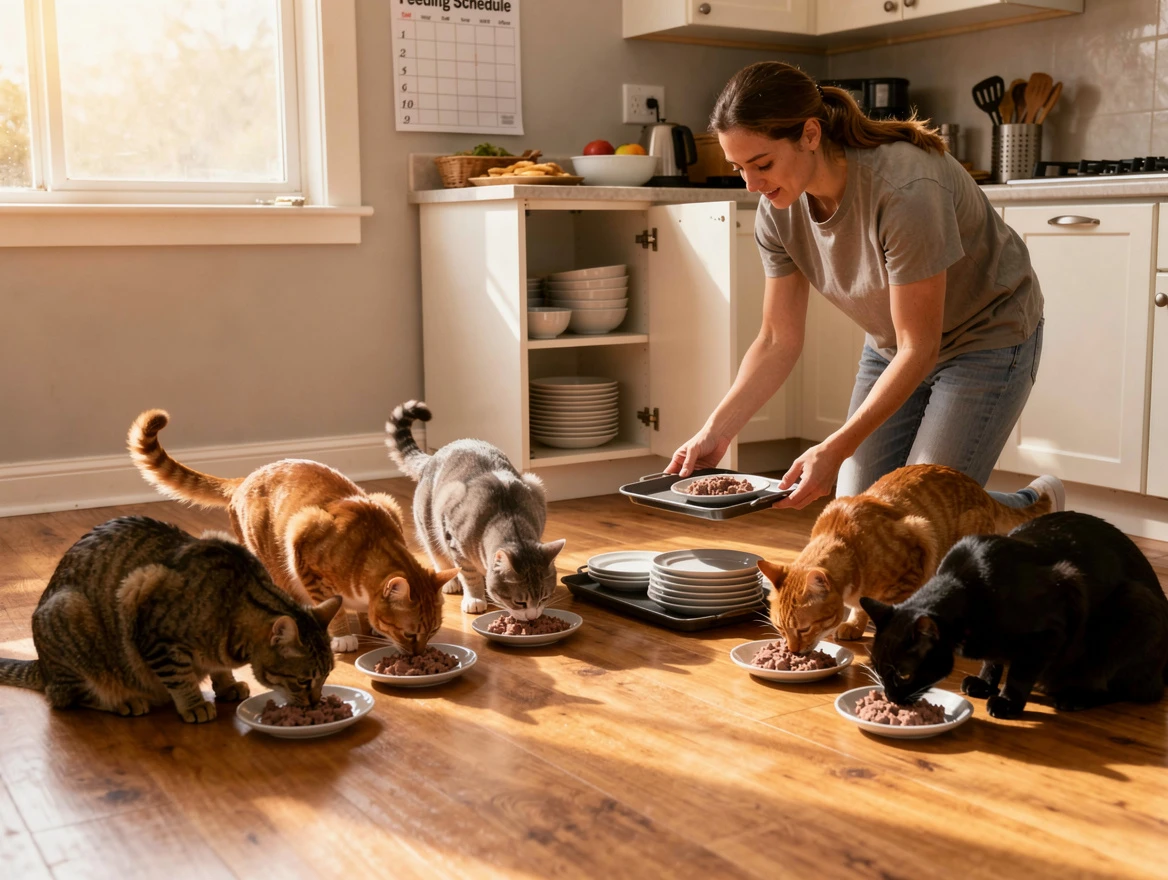
How to Reduce Wet Food Waste
- Buy smaller cans — 3-oz cans match a single meal for most cats. No leftovers.
- Portion immediately — open a large can, divide into single servings in containers, refrigerate all at once
- Feed smaller amounts — start with 2 oz, offer more if your cat finishes. You can always add, you can’t un-spoil.
- Freeze extras — divide into ice cube trays or small containers, freeze for up to 3 months, thaw in fridge before serving
- Scheduled feeding — feed at set times rather than leaving food out. Your cat learns the routine within days. Related: How Much Wet Food to Feed a Cat.
Tips for Multi-Cat Households
With four cats, I had to develop a real system for this or drown in spoiled leftovers. Here’s what works:
- Use separate small plates — individual portions prevent one cat from contaminating another’s food
- Remove all bowls after 1 hour — with multiple cats, food gets licked, left, returned to. A shorter window is safer.
- Stagger feeding times — if cats eat at different speeds, feed the slow eater separately in a quiet room
- Buy 3-oz cans — one can per cat per meal. Zero leftovers, zero waste.
- Wash every bowl between meals — bacteria from one cat’s saliva cross-contaminates the next meal
Common Mistakes
- Judging by smell alone — the real risk is about time, not smell. Bacteria reach unsafe levels before the food smells bad.
- Leaving food out “just a little longer” — 3 hours is not close to 2 hours. The rule exists for a reason.
- Re-refrigerating served food — once it’s been in the bowl, it goes in the trash, not back in the fridge
- Mixing fresh food with leftovers — contaminates the fresh portion. Serve leftovers first, save the new can for next meal.
- Free-feeding wet food — this is never safe. Wet food is not kibble. It spoils.
- Not cleaning the bowl — bacteria from old food contaminate fresh food in an unwashed bowl. Wash between every meal.
Frequently Asked Questions
2 hours maximum at room temperature (70–75°F). In hot weather above 90°F, only 1 hour. After that, discard the food regardless of how it looks or smells. This follows standard food safety guidance for perishable food.
Covering slows drying out and keeps flies away, but it does NOT slow bacterial growth meaningfully. The same 2-hour maximum still applies. Bacteria thrive in warm, moist, enclosed environments — covering keeps the food palatable longer, not safer.
An ice pack underneath the bowl can extend the safe window somewhat by keeping food cooler, but it’s not a precise science — once the ice pack warms up, the same time limits apply. It’s most useful in summer or for cats that graze slowly, and automatic feeders with a built-in cooling compartment are a more reliable option for extended freshness.
This isn’t an official veterinary term, so treat any specific version of it with some skepticism. The guidance that’s actually well-supported is what’s covered throughout this article: no more than 2 hours at room temperature, and use refrigerated leftovers within 2 days (up to 48 hours) for best safety.
Outdoor feeding is riskier — heat, insects, and other animals contaminate food faster. In shade at moderate temperatures, 1–2 hours maximum. In direct sunlight or hot weather, 30 minutes to 1 hour is safer. Feed outdoor cats at set times and remove uneaten food promptly.
Yes — Salmonella and E. coli from spoiled wet cat food can transfer to humans through handling. Wash hands after touching cat food, clean bowls with hot soapy water, and discard spoiled food promptly. Immunocompromised individuals should be especially careful.
The Bottom Line
Two hours, no exceptions. Set a timer, discard what isn’t eaten, refrigerate leftovers immediately, and use them within 48 hours. The cost of wasted food is nothing compared to a vet bill from food poisoning. Buy smaller cans, feed on a schedule, and wash the bowl between every meal.
Related: How Often Should I Feed My Cat Wet Food — scheduled feeding prevents food sitting out. Also: Home Cooked Cat Food Recipes — homemade food follows the same 2-hour rule.