
Can cats eat dog food? Once or twice in an emergency won’t hurt your cat. But feeding dog food regularly — even for a few days — can cause serious nutritional deficiencies, because cats and dogs have fundamentally different dietary needs.
A friend of mine has a dog and two cats, and her cats constantly try to steal the dog’s food. For years she assumed “food is food” and didn’t worry about it. Then her vet explained that cats are obligate carnivores — they REQUIRE nutrients that dog food simply doesn’t contain. That conversation changed how she manages feeding time in her multi-pet household, and it’s exactly the kind of thing worth knowing before you’re in that situation yourself.
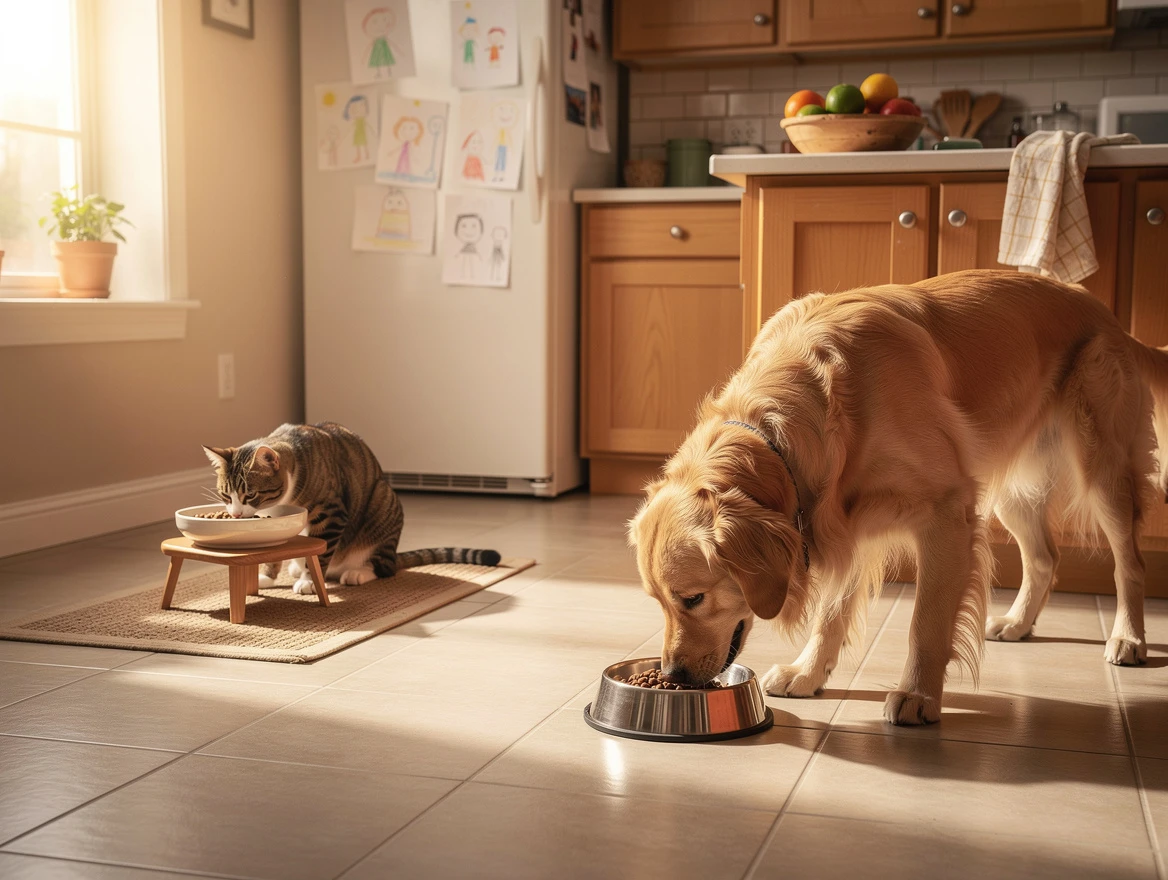
One bite or one emergency meal won’t harm your cat. But dog food lacks taurine, arachidonic acid, and adequate protein levels that cats need to survive. Regular feeding of dog food — even for a couple of days — starts a nutritional deficit. Never use dog food as a substitute for cat food beyond a single emergency meal.
Cat Food vs Dog Food — Key Differences
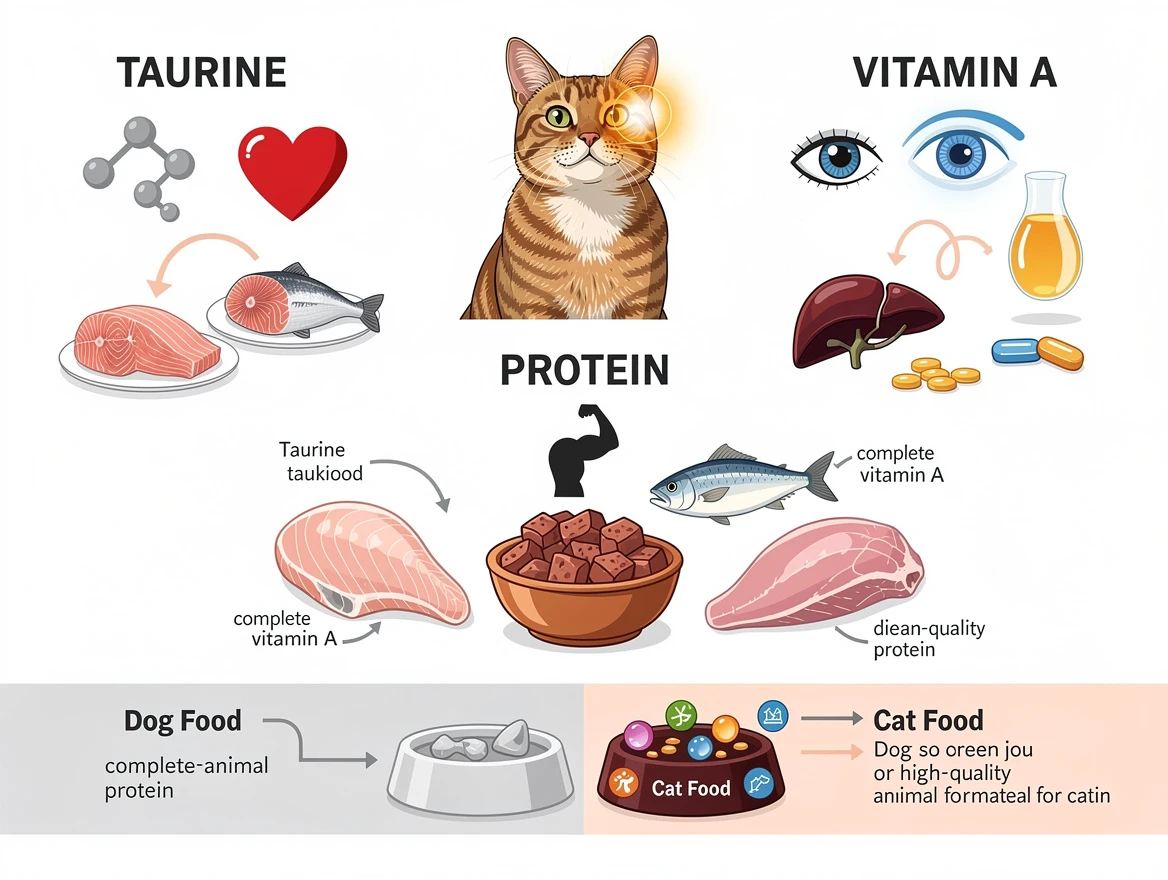
Cats are obligate carnivores — they must eat meat-based nutrition to survive. Dogs are omnivores, able to thrive on a wider range of foods. This fundamental difference means dog food is formulated completely differently from cat food.
| Nutrient | Cat Food | Dog Food | Why It Matters |
|---|---|---|---|
| Taurine | Added (cats cannot make it) | Little or none (dogs make their own) | Deficiency causes blindness and heart failure in cats |
| Protein | 30-50% (high) | 18-25% (lower) | Cats need significantly more protein |
| Arachidonic acid | Added (cats cannot synthesize) | Not added (dogs make their own) | Essential for cat skin, coat, and reproduction |
| Vitamin A | Pre-formed (cats cannot convert from beta-carotene) | May rely on beta-carotene | Cats need pre-formed vitamin A directly |
| Niacin | Higher levels | Lower levels | Cats need more niacin than dogs |
| Calories | Higher calorie density | Lower calorie density | Dog food may not provide enough energy for cats |
A One-Time Emergency Meal
A single meal of dog food won’t harm your cat. One emergency meal — grocery run delayed, ran out unexpectedly, whatever the reason — is genuinely fine.
The nutritional gaps in dog food take real time of exclusive feeding to cause problems. One meal, one day, or even one missed grocery trip where you substitute dog food temporarily is not something to worry about. Just return to cat food as soon as you reasonably can.
A Few Days or a Week
A couple of days of exclusively dog food isn’t an emergency, but it’s also not something to make a habit of — the nutritional gaps start compounding the longer it continues. Your cat will likely be fine for a short stretch, but it’s worth actively working to get real cat food rather than letting it drift on.
A full week starts to matter more. Sustained exclusive dog food feeding over a week or more means going without adequate taurine, protein, and arachidonic acid for a meaningful stretch, which is worth avoiding rather than treating as routine. If you genuinely can’t get cat food for several days, supplement dog food with cooked chicken, eggs, or canned tuna to add real protein in the meantime.
| Duration | Concern Level | Action |
|---|---|---|
| One meal | Not a concern | Return to cat food next meal |
| 1 day | Low concern | Get cat food when you can |
| 2-3 days | Worth addressing | Supplement with cooked chicken or eggs |
| 1 week | Actively work to fix this | Get cat food urgently, supplement heavily with protein in the meantime |
| Weeks to months, exclusively | Real deficiency risk | This is where documented taurine-deficiency problems actually develop — never let it reach this point |
Side Effects to Watch For
What you might notice depends heavily on duration and exclusivity:
Short-term (days):
- Mild digestive upset — different formulation can cause soft stool
- Decreased energy — lower protein and calorie content
- Increased hunger — dog food is less calorie-dense for cats
Longer-term (sustained exclusive feeding):
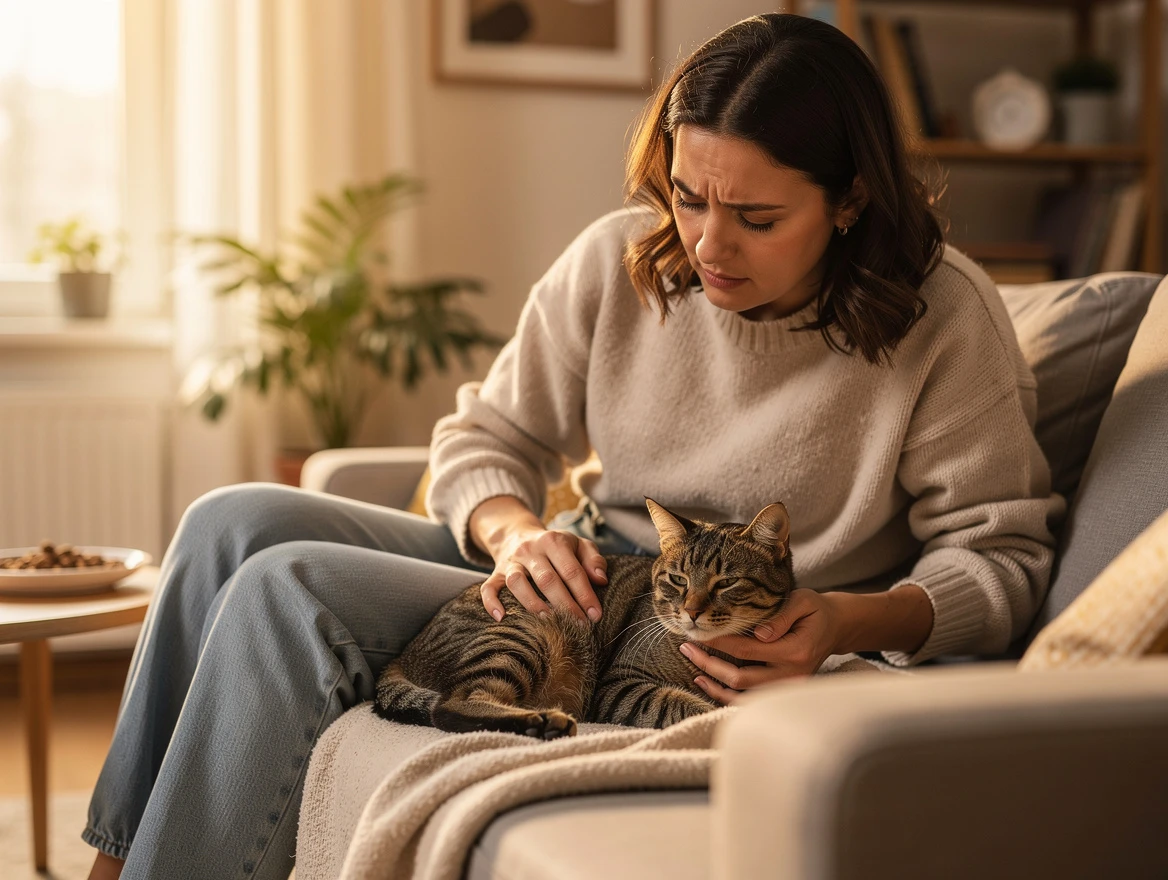
- Taurine deficiency — the documented cause of retinal degeneration (blindness) and dilated cardiomyopathy (heart failure) in cats, though this develops from prolonged exclusive feeding, not a few days
- Dull, dry coat — from arachidonic acid deficiency. Related: How Can I Soothe My Cats Itchy Skin
- Muscle wasting — inadequate protein for obligate carnivore needs
- Immune system weakening
- Reproductive problems in unspayed females
Taurine-deficiency-related vision loss, when it does occur, is not reversible even after switching back to cat food. This is why the emphasis here is on never letting exclusive dog food feeding become a sustained habit — prevention is the only real option, not treatment after the fact.
Why Cats Like Dog Food
Several reasons come up often. Dog food frequently has more carbohydrates and different fat profiles that some cats find appealing. The novelty factor plays a role too — anything the dog has must be better. Some cats are also drawn to the larger kibble size.
In multi-pet households, cats stealing dog food is extremely common. Effective solutions: feed pets in separate rooms, pick up dog food after 15–20 minutes, and use timed feeders. Related: How Often Should I Feed My Cat Wet Food.
Dog Treats
Occasionally, one or two dog treats won’t harm your cat. However, dog treats are formulated for dog nutritional needs and often contain ingredients that aren’t ideal for cats. Some dog treats also contain garlic or onion powder — both toxic to cats. Always check the ingredient list before sharing.
The safest approach: use cat-specific treats. They’re formulated with the right nutrients and without ingredients that are harmful to cats.
Wet, Dry, and Raw Dog Food
| Type | Emergency OK? | Notes |
|---|---|---|
| Dry dog food | Yes — once | Lower moisture, lower protein. Follow with water. |
| Wet dog food | Yes — once | Better hydration than dry. Still lacks taurine. |
| Raw dog food | Risky | Carries the same bacterial risks plus nutritional gaps. Not recommended. |
| Plain cooked meat from the dog’s meal | No specific concern if plain | Seasoned or processed meat is not fine — same rule as always |
Stray and Feral Cats
In an emergency, feeding dog food to a stray or feral cat is far better than feeding nothing. The same reasoning applies to feral colonies — if dog food is genuinely all that’s available, use it temporarily rather than leaving cats unfed.
For regular feeding of community cats, switch to cat food as soon as possible. Many rescue organizations accept donated cat food if cost is a concern.
Kittens are the one clear exception worth calling out — their nutritional requirements are even higher than adult cats, and dog food is completely inadequate for growing kittens. Use kitten-specific food only. Related: How Much Wet Food to Feed a Cat.
Better Emergency Alternatives Than Dog Food
If you’re out of cat food, these are genuinely better short-term options than dog food:
- Plain cooked chicken — no seasoning, no skin, no bones. Best emergency option.
- Plain scrambled eggs — no butter, no salt. Good protein source. Related: Can Cats Eat Eggs
- Canned tuna in water — not in oil. Use sparingly. Related: Can Cats Eat Tuna
- Plain cooked fish — no seasoning
- Plain cooked turkey — no seasoning, no skin
- Small amount of plain rice with chicken — for one meal. Related: Can Cats Eat Rice
Common Mistakes
- Assuming “food is food” — cats and dogs have fundamentally different nutritional requirements
- Letting cats graze from dog bowls daily — even small daily amounts of dog food reduce taurine intake over time
- Feeding dog food to save money — the vet bills from a real deficiency cost far more than cat food ever would
- Not separating feeding areas — multi-pet households need separate feeding stations
- Feeding raw dog food to cats — combines bacterial risk with nutritional inadequacy
Frequently Asked Questions
Actually, both are problematic — just in opposite directions. Cats eating dog food miss essential nutrients they can’t do without. Dogs eating cat food get too much protein and fat relative to their needs, which can contribute to pancreatitis and weight gain. Neither should regularly eat the other’s food.
The Bottom Line
Can cats eat dog food? Once, in an emergency — yes, it’s fine. Regularly — no. The taurine, protein, and fatty acid gaps in dog food can cause real, sometimes irreversible problems for cats over sustained exclusive feeding. Keep feeding areas separate in multi-pet homes, and keep a few emergency cat food alternatives in mind for when you actually need them.
Related: How Much Wet Food to Feed a Cat — proper cat nutrition guide. Also: Can Cats Eat Eggs — safe supplemental protein for cats.