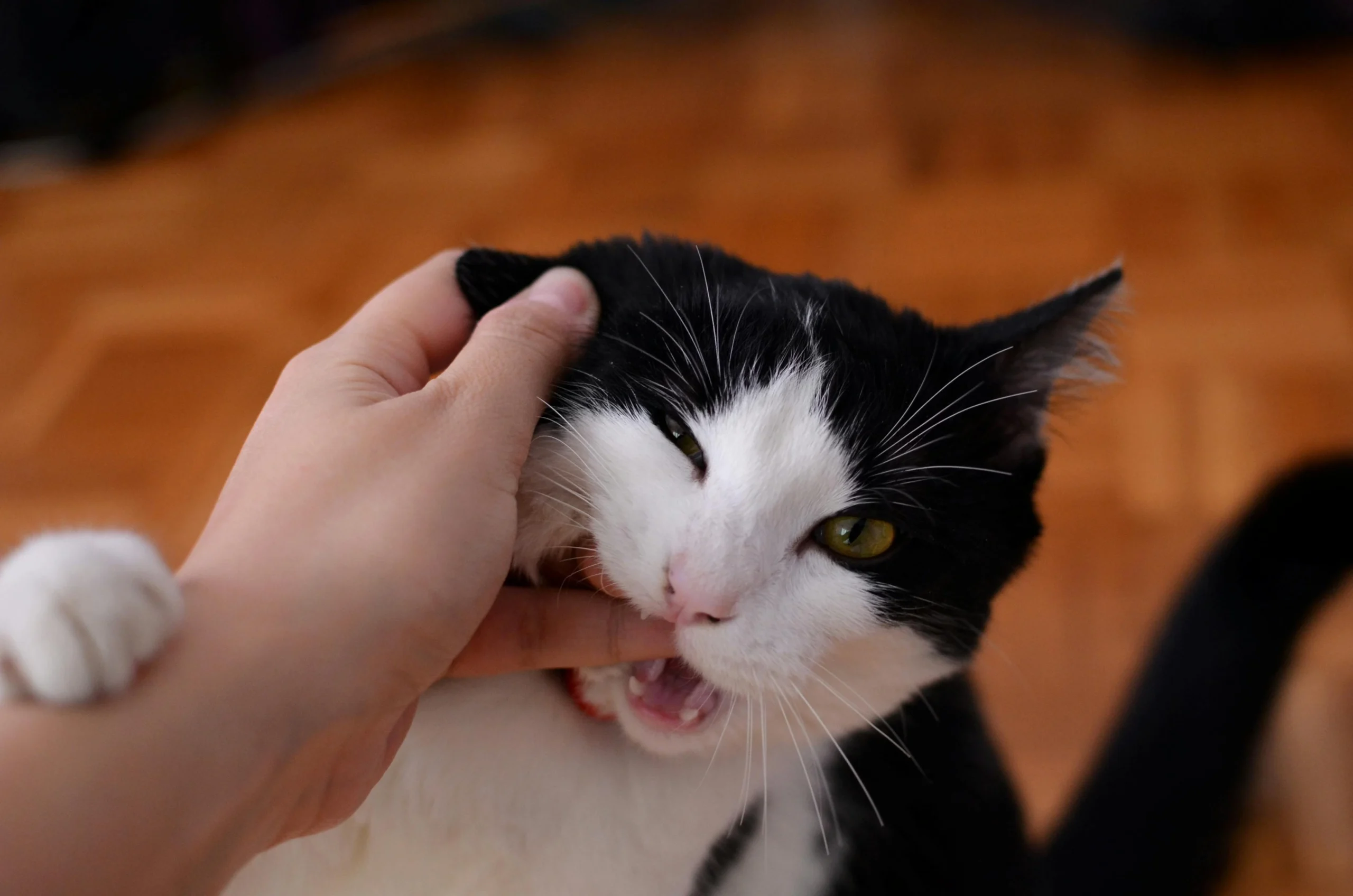
Your cat was purring two seconds ago. Now you have a bite mark on your hand. Why does my cat bite me when I pet him is one of the most common questions I ask myself, I have four cats, and at least two of them have done this to me more times than I can count.
The answer is never random. Cats bite during petting mainly because of overstimulation, a point where pleasant touch crosses into sensory overload and their nervous system says stop. Your cat is communicating something specific every single time, and once you understand what, the biting stops.
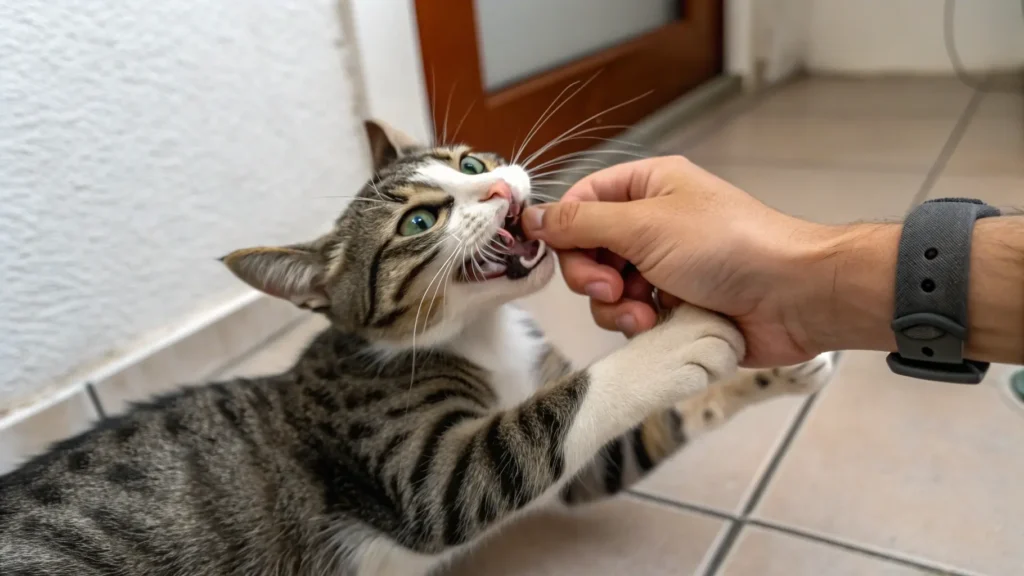
The most common cause is overstimulation. Cats have a petting threshold and when it’s crossed, pleasurable sensations flip to irritation and they bite to stop it. Other causes include play aggression, belly sensitivity, pain, redirected aggression, love bites, or fear. None of these are random, all are communication.
7 Reasons Behind the Bite
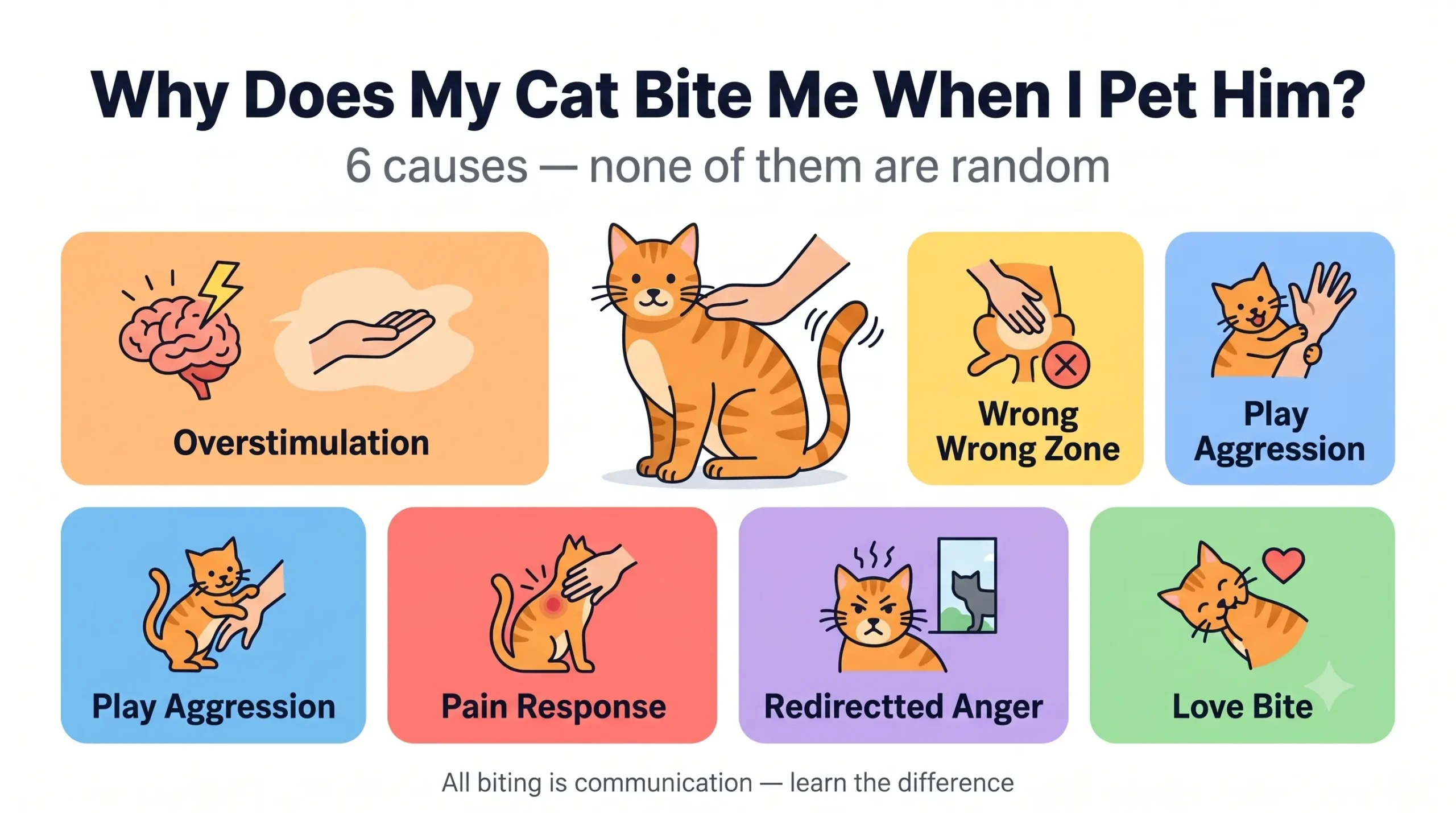
| Cause | Bite Type | Fix |
|---|---|---|
| Overstimulation | Sharp, sudden | Shorter sessions, watch signals |
| Wrong petting zone | Targeted to specific area | Stick to head and chin |
| Play aggression | Grab + bunny kick | Switch to wand toys only |
| Pain or discomfort | New behavior in specific spot | Vet visit first |
| Redirected aggression | Sudden, unprovoked | Give space after stressful events |
| Love bite | Gentle, no pressure | No action needed, it’s affection |
| Fear or anxiety | Defensive, with hissing/wide pupils | Calm environment, give space |
1. Overstimulation — The Most Common Cause
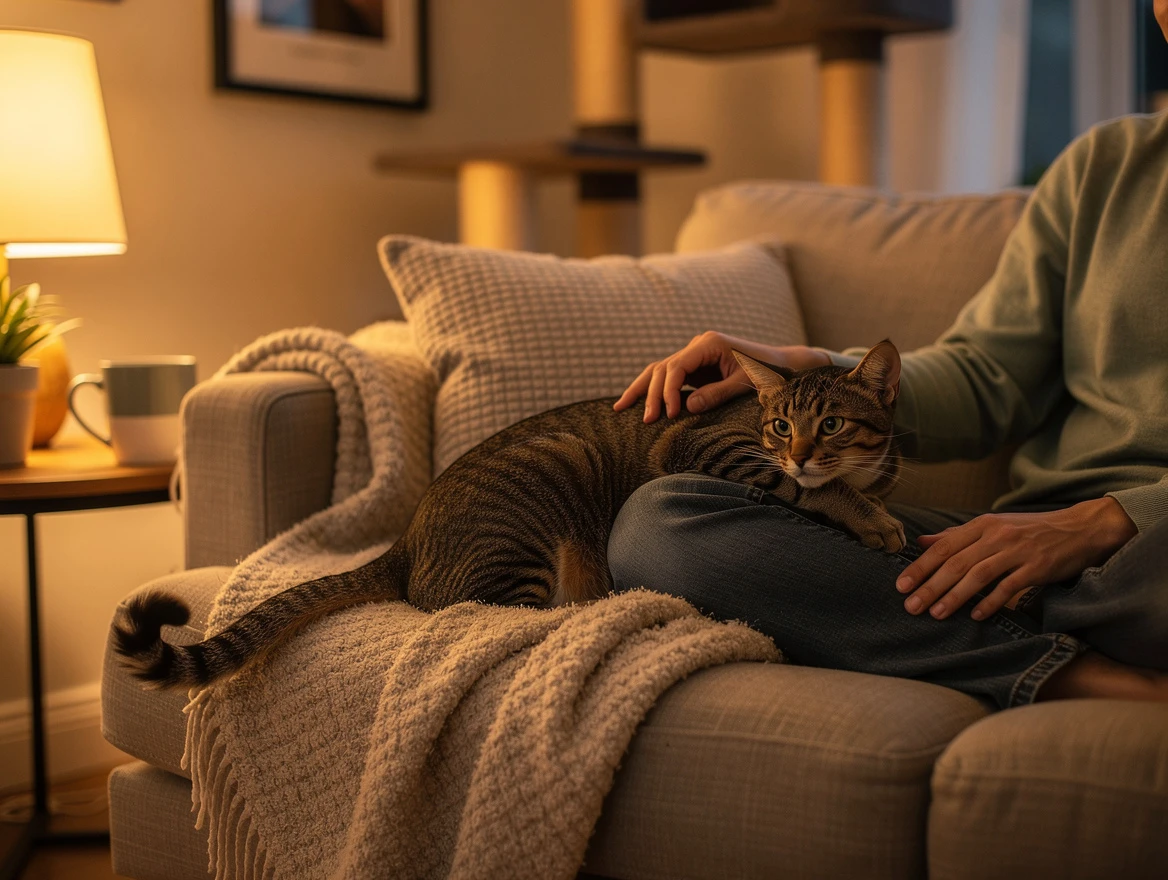
As you pet your cat, pleasurable signals travel to their brain, but cats have a threshold. When crossed, those same sensations flip into sensory overload. Nerve endings in their skin become hypersensitive and what felt good moments ago now feels genuinely irritating. The bite is not anger, it is their body saying: enough. Every cat’s threshold is different and changes day to day based on stress, energy, and health.
2. Wrong Petting Zone
Most cats love being scratched around the head, chin, and cheeks. The belly, base of the tail, and lower back are frequent bite triggers. When your cat bites in a specific spot, they are giving direct feedback about their preferences. The solution is to listen and adjust where you pet, not to keep trying the same spot.
3. Play Aggression
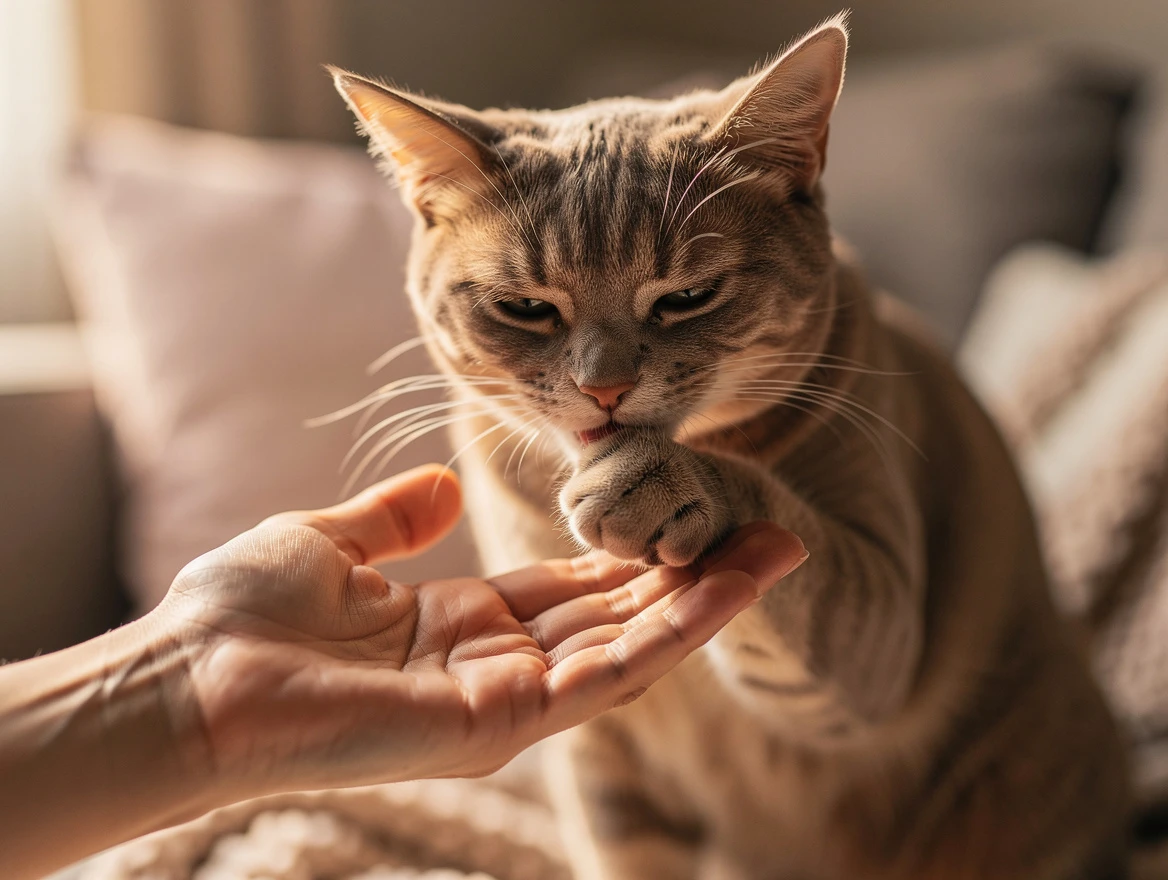
Cats are predators and their play is practice hunting. If a cat was frequently played with using hands instead of toys, they learned that human hands are fair game. This bite looks different, your cat will grab your hand, bunny-kick it, and bite repeatedly. The fix is completely different: switch all play to wand toys and never let hands be used as toys again.
4. Pain or Physical Discomfort
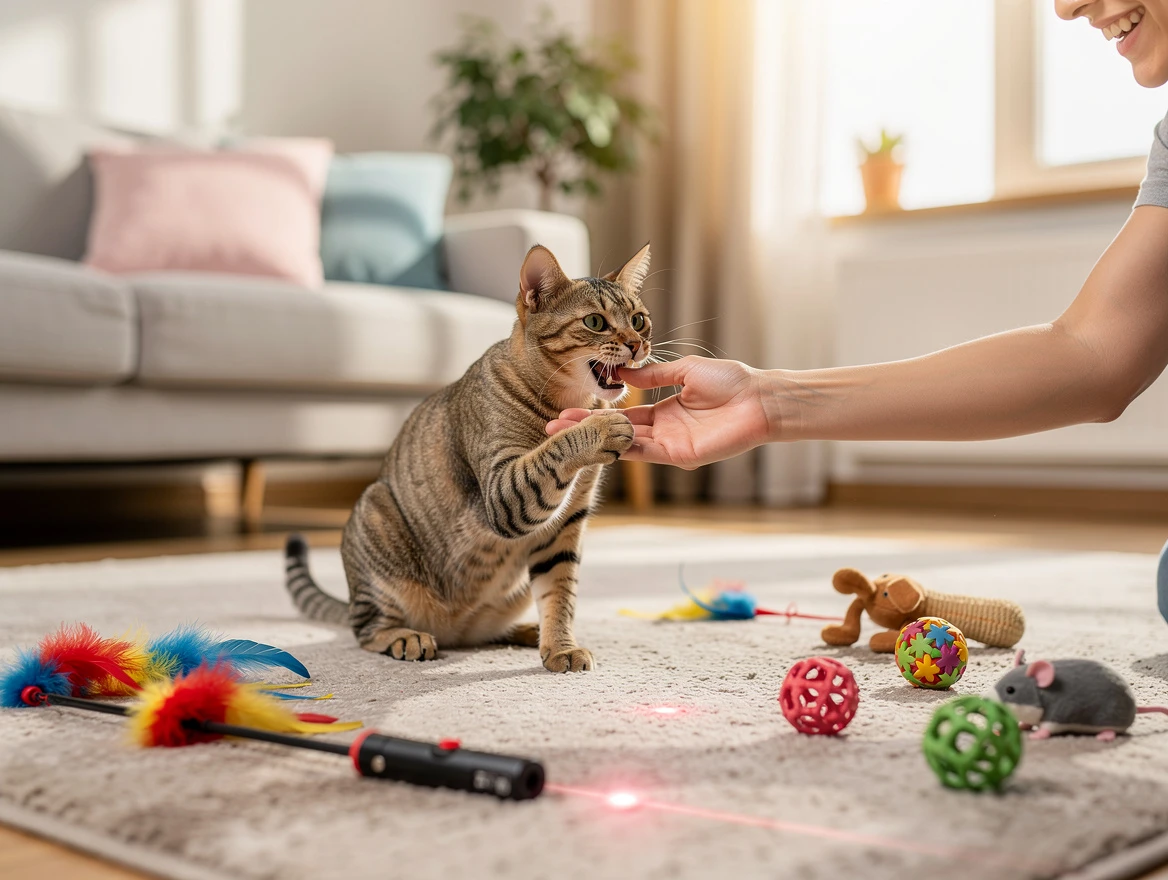
A cat that has never bitten during petting and suddenly starts, especially in a specific body location, may be in pain. Arthritis, skin conditions, dental pain, and internal discomfort all cause previously enjoyable touch to feel painful. If this is new behavior, see the vet before trying any behavioral approach. Cats in pain often show other signs too, reduced appetite or unusual lethargy. Related: My Cat Is Not Eating or Drinking and Very Weak, appetite loss alongside new biting often signals the same underlying issue.
5. Redirected Aggression
Sometimes your cat bites not because of anything you are doing, but because they are already activated from something else, another cat outside, a loud noise, a tense interaction. Their nervous system is still running hot when you reach out, and your touch becomes the trigger. I noticed biting from one of my cats increased significantly after I rearranged the living room furniture, her territory felt disrupted for about a week before she settled. Give your cat space to decompress after any stressful event before attempting to pet them.
6. Love Bites
Not every bite is a problem. Cats groom each other as a bonding ritual and occasionally incorporate gentle nibbles, they extend this to humans they are bonded to. A soft, brief, pressure-free nibble during a relaxed petting session is almost always a love bite. The difference from an overstimulation bite: love bites feel like a soft pinch; overstimulation bites are intentional and sharp. One of my cats only does this during evening petting sessions on the couch, never during the day. It took me weeks to notice the pattern.
7. Fear or Anxiety
Loud noises, sudden movements, strangers, or a stressful event can put your cat’s nervous system on high alert. When you reach out to pet them in that state, even gentle touch can trigger a defensive bite. A fearful bite usually comes with other signals, dilated pupils, hissing, flattened ears, or a hunched posture. Creating a calm environment and giving your cat space after stressful events prevents this entirely.
Warning Signs Before the Bite — Read These
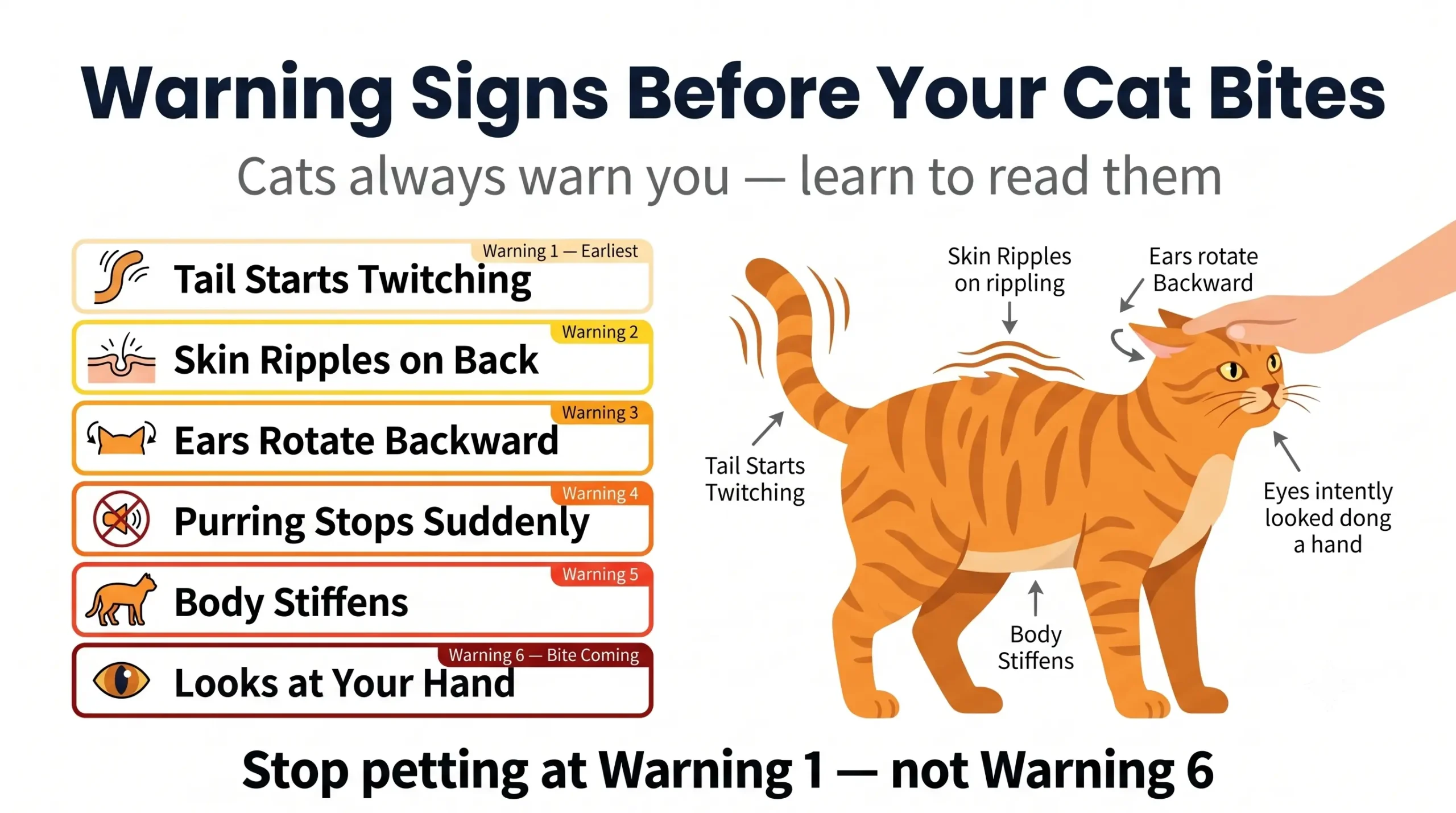
Cats almost never bite without warning. We miss the signals because they are subtle and fast. Learn these, in order from earliest to latest:
- Tail begins to flick or twitch — not slow relaxed movement, but quick agitated flicks. Your earliest warning.
- Skin ripples along the back — the cat’s skin is reacting to sensory overload
- Ears rotate backward or flatten — moving from relaxed forward position toward the sides
- Purring stops suddenly — or changes quality
- Body stiffens — the relaxed melting-into-you feeling disappears
- They turn to look at your hand — this is the final warning before the bite
When you see any of these, stop petting. Not dramatically, just pause. If your cat wants more, they will signal it. If they needed a break, you just prevented a bite and built trust at the same time.
Purring Then Biting — Why It Happens
Purring does not always mean contentment. Cats also purr when overstimulated or stressed. Your cat reached their sensory threshold while still purring, the purr and the bite can coexist because they reflect different systems. Watch the body language, not just the sound. A purring cat with a twitching tail is already approaching their limit.
Biting During Belly Petting
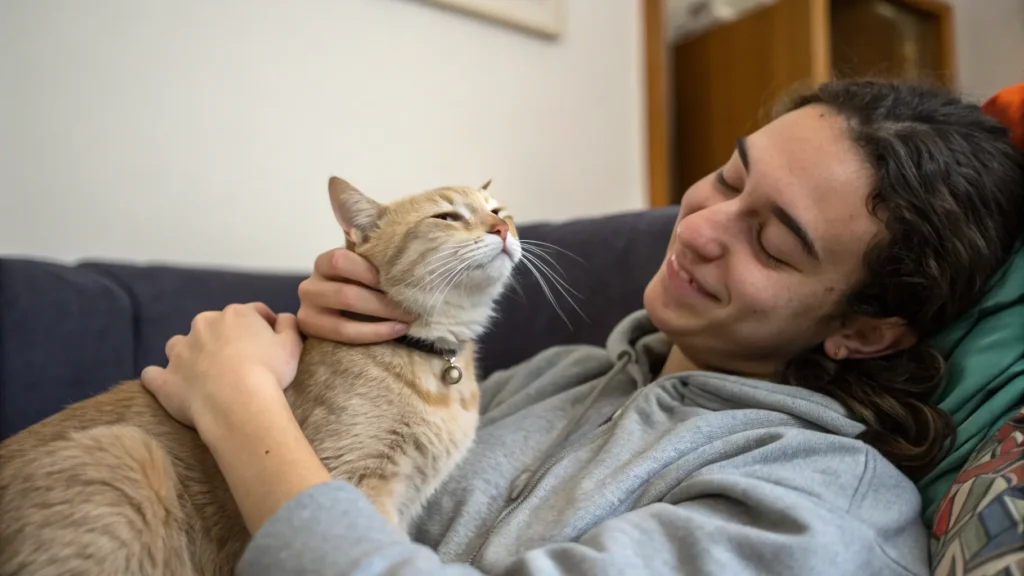
When a cat rolls over and shows their belly, it is a sign of trust, not an invitation to touch. Many cats find belly contact deeply uncomfortable. The belly has concentrated nerve endings and touching it triggers an instinctive defensive response: grab, kick, bite.
Your cat was saying “I trust you,” not “please touch here.” Stick to the head and cheek areas. Only pet the belly if your cat actively pushes into your hand while you are already in that area. I fell for the belly trap with every single one of my four cats before I learned this, it is genuinely one of the most common misunderstandings in cat ownership.
Licking Then Biting
This is social grooming behavior, your cat treating you as a fellow cat. The bite that follows a lick is almost always part of that same affectionate ritual. For the complete breakdown of licking behavior, including when a bite afterward means something different, see: Why Does My Cat Lick Me.
Love Bites Explained
Love bites are your cat’s version of affection, borrowed from how cats interact with other cats they are bonded to. A love bite is gentle, brief, involves no claws, and usually happens during a calm relaxed moment. Your cat is not being aggressive, they are telling you they consider you part of their social group. No correction needed.
Random Biting With No Obvious Trigger
There is always a reason, even when it feels completely unexplained. The most common explanations: you missed the warning signals, redirected aggression from an earlier stressor, or a chronic environmental stressor causing unpredictable activation. When biting is truly unpredictable and daily, a vet visit to rule out pain is the right first step.
Gentle Biting Out of Nowhere
A gentle bite that seems to come from nowhere is almost always a love bite, not a problem to fix. For the full picture on this specific pattern, see: Why Does My Cat Bite Me Gently Out of Nowhere.
My Cat Bit Me and Drew Blood — What to Do
Cat bites are medically more serious than most people realize. Cat teeth are narrow and sharp, they introduce bacteria deep into tissue even through a small puncture. If your cat bit you and broke the skin:
- Wash the wound thoroughly with soap and water for at least 5 minutes
- Apply antiseptic immediately
- Monitor for infection signs: increasing redness, swelling, warmth, red streaking
- If any infection signs develop, see a doctor the same day, not tomorrow
- Cat bite infections escalate quickly, take every broken-skin bite seriously
Signs During Petting and What They Mean
| Sign During Petting | Likely Cause | How to Respond |
|---|---|---|
| Tail twitching, skin rippling | Overstimulation | Stop petting immediately |
| Sudden bite after purring | Threshold crossed | Respect the signal, end session |
| Grab + bunny kick on hand | Play aggression | Switch to wand toys only |
| Hissing, wide pupils, hunched | Fear or anxiety | Give space, calm environment |
| Bite in one specific body area | Pain or discomfort | Vet visit, rule out medical cause |
| Unprovoked sudden bite | Redirected aggression | Identify and remove stressor |
| Gentle nibble, relaxed body | Love bite / affection | No action needed |
Common Mistakes Cat Owners Make
- Ignoring warning signals — tail flicks and skin ripples are warnings, not background noise
- Punishing the bite — yelling or spraying water increases stress and makes biting more likely
- Using hands as toys — every time you allow this, you reinforce that hands are prey
- Petting through the warning signs — hoping the cat will relax if you keep going. They will not.
- Ignoring new biting behavior — if this started recently, pain is the first thing to rule out with a vet

How to Stop Your Cat From Biting When You Pet Him
- Learn your cat’s threshold — start with 30-second sessions and stop before any warning signals appear. Leave every interaction on a positive note.
- Focus on safe zones — base of the ears, under the chin, cheeks, base of the skull. Avoid belly, base of tail, lower back unless your cat actively invites it.
- Never use hands as toys — switch all play to wand toys immediately and permanently.
- Respond to warning signals calmly — tail flick = stop petting. No drama, just pause.
- Never punish a bite — calm withdrawal of attention is the only effective response.
- Rule out pain first — if this is new behavior, vet visit before behavioral work.
Frequently Asked Questions
Yes, petting-induced biting is extremely common. It almost always means overstimulation or boundary-setting, not dislike. Most cats that bite during petting are bonded with their owners, they are simply communicating their limits.
Younger cats bite more frequently due to higher play drive and lower impulse control. Some breeds are more sensitive to touch. But individual personality and early socialization usually matters more than breed.
Usually because you spend the most time petting them, which means you are the most common person to cross their threshold. The person a cat bites most is often the person they are most bonded to.
The Bottom Line
Your cat is always communicating something. Learn the warning signals, respect the threshold, focus on the zones your cat actually enjoys, and if the biting is new or escalating, see the vet before anything else.
Related Articles
A deeper look at gentle, affectionate biting.
Decoding gentle feline communication gestures.