How Much Water to Rehydrate Dried Cat Food
๐Ÿพ MyPawellness.com โ€” Real Advice from a Real Pet Owner
Cat Nutrition

How Much Water to Rehydrate Dried Cat Food โ€” Complete Guide

By Luna Saber | Updated June 2026 | ๐Ÿฑ Owner of 1 dog + 4 cats

How much water to rehydrate dried cat food is one of those questions with a simple answer that makes a real difference. I started adding water to my cats’ dry food after one of them kept vomiting within an hour of eating kibble. The vet told me to soften it first โ€” and the vomiting stopped completely within days.

The standard answer is a 1:1 ratio โ€” equal parts water and dry food. But there are details about temperature, timing, and consistency that matter if you want to get it right.

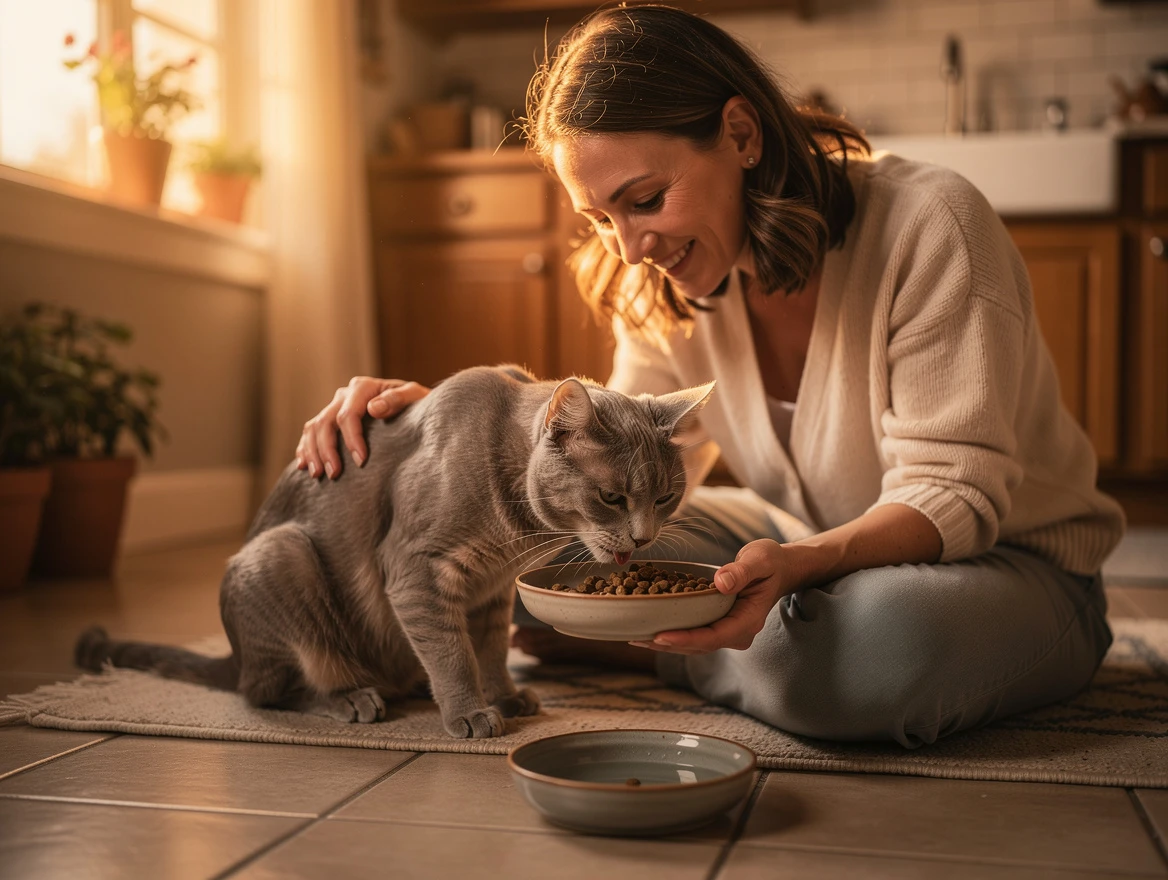
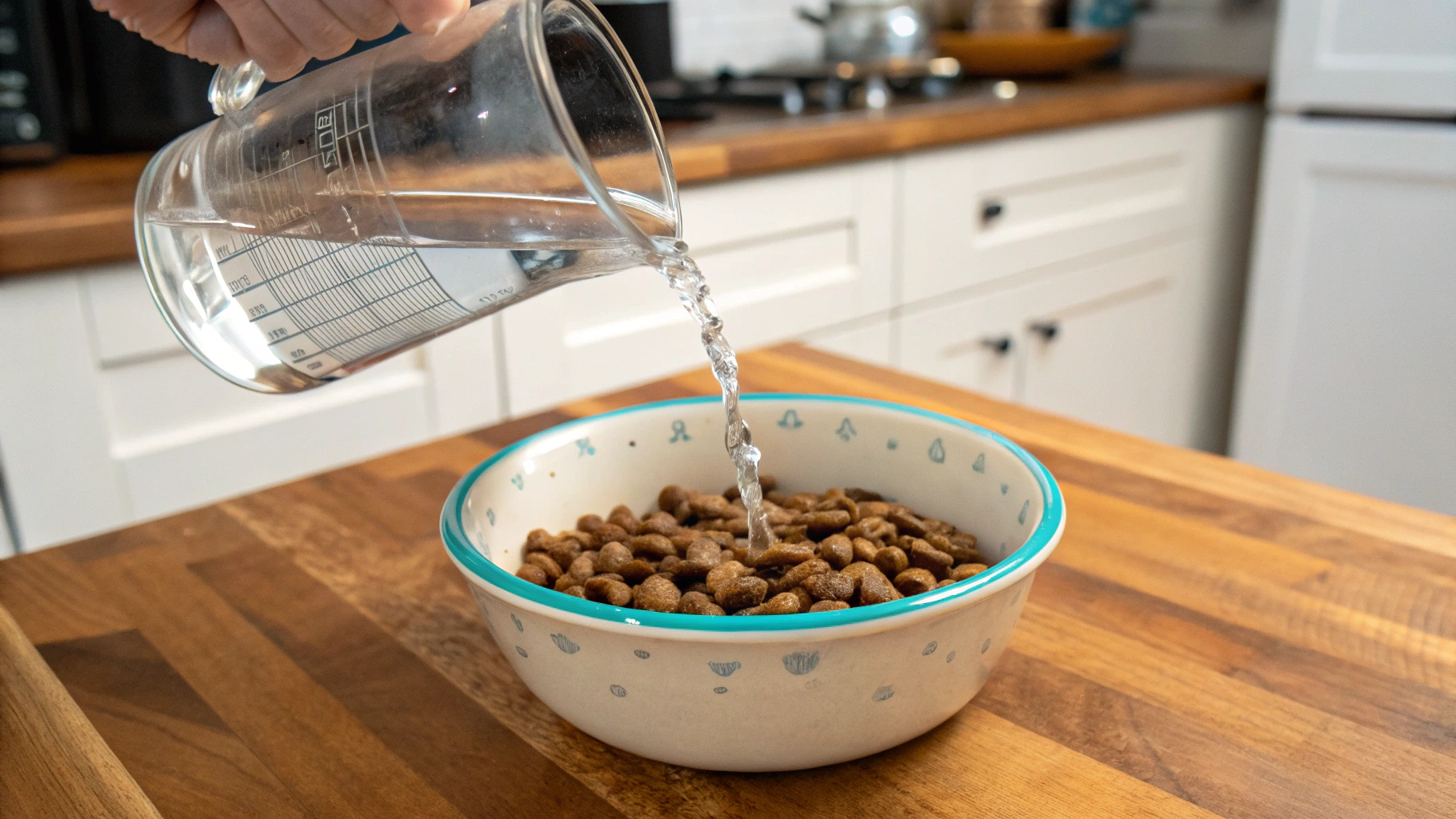
Cat owner pouring water into bowl of dry kibble to rehydrate dried cat food
โšก Quick Answer

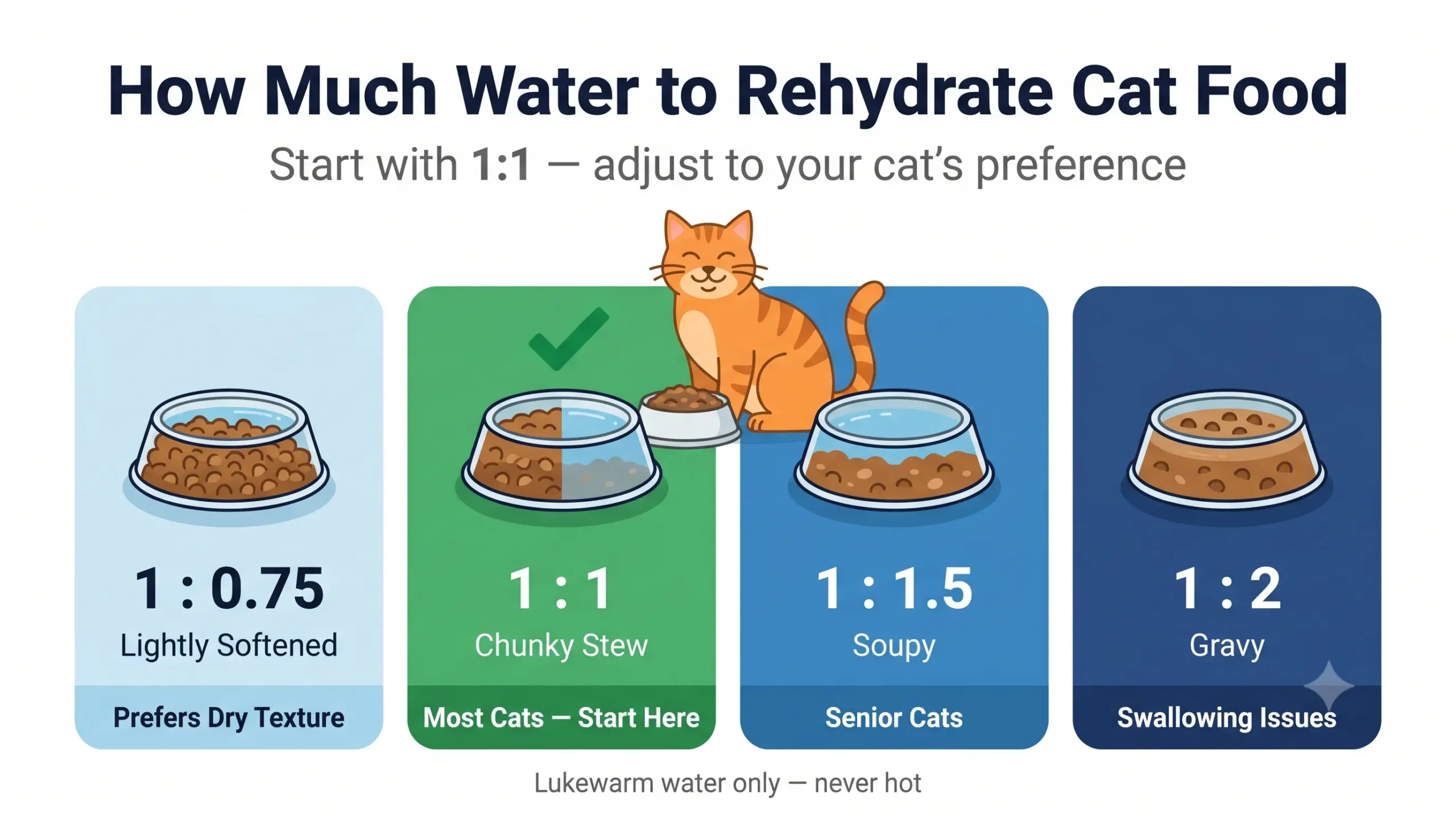
How much water to rehydrate dried cat food โ€” use a 1:1 ratio. For every 1/4 cup of dry food, add 1/4 cup of lukewarm water. Let it sit for 3โ€“5 minutes until the kibble softens to a chunky stew consistency. Adjust wetter (1:1.5) or drier (1:0.75) based on your cat’s preference.


How much water to rehydrate dried cat food โ€” ratio guide infographic

How to Soften Dry Cat Food โ€” Step by Step

Step 1 โ€” Measure the Food

Use a measuring cup. For most adult cats, one meal is 1/4 to 1/3 cup of dry food (about 50โ€“65 grams).

Step 2 โ€” Add Equal Water

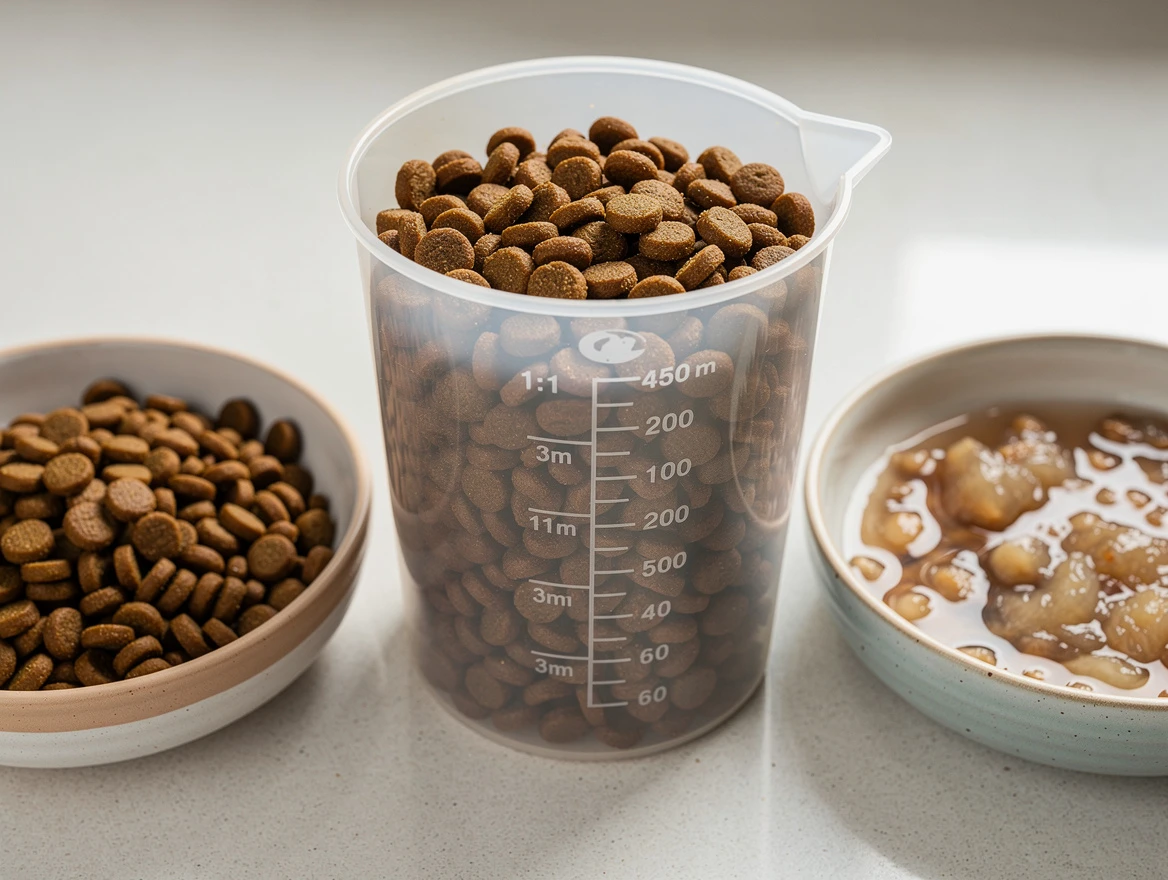
Pour an equal amount of lukewarm water over the kibble. 1/4 cup food = 1/4 cup water. Warm water softens kibble faster and makes the food smell more appealing.

Step 3 โ€” Wait 3โ€“5 Minutes

Let the food sit and absorb. With warm water this takes 3โ€“5 minutes. Room temperature water takes 5โ€“10 minutes. Do not use hot water โ€” it can destroy nutrients and burn your cat’s mouth.

Step 4 โ€” Check Consistency

The goal is a chunky stew โ€” soft pieces with some gravy-like liquid around them. If too dry, add a splash more water. If too soupy, add a few more kibble pieces.

“I prepare my cats’ rehydrated food about 5 minutes before feeding time. I use lukewarm water from the kettle mixed with cold โ€” warm enough to soften fast but cool enough to serve immediately. One of my cats prefers it soupier, the other likes it barely softened. I make two separate bowls.” โ€” Luna

Water Ratios Explained

Measuring cup with dry kibble and rehydrated kibble showing 1:1 water ratio
Ratio (Food : Water)ConsistencyBest For
1 : 0.75Lightly softened, still chunkyCats who prefer dry texture but need slight softening
1 : 1 (standard)Chunky stewMost cats, sensitive stomachs, general rehydration
1 : 1.5Soupy, mostly liquidSenior cats, cats with swallowing issues
1 : 2Very soupy gravyCats with severe digestive issues or refusing food

Start with 1:1 and adjust over 3โ€“4 days. Some cats love it soupy, others refuse anything that is not still slightly crunchy. The right ratio is the one your cat actually eats.


Why Rehydrate โ€” Benefits for Your Cat

Owner feeding senior cat soft rehydrated kibble โ€” benefits of rehydrating cat food

Dry kibble contains only about 10% moisture. A cat’s natural prey contains 60โ€“75% moisture. This gap matters โ€” it affects digestion, hydration, and how well your cat absorbs nutrients from their food.

  • Easier digestion โ€” softened food requires less stomach acid to break down and moves through the tract more smoothly
  • Better hydration โ€” many cats do not drink enough water on their own. Rehydrated food increases daily moisture intake significantly
  • Reduced vomiting โ€” cats that vomit on dry kibble often stop completely when the food is softened first
  • Better for senior cats โ€” older cats with weaker teeth and slower digestion handle softened food much more comfortably
  • Improved nutrient absorption โ€” food that is easier to digest means more of the nutrients actually reach your cat’s body

How Much Dry Cat Food Per Day

Most adult cats need 1/2 to 3/4 cup of dry food per day, split into two meals. This provides roughly 200โ€“250 calories for an average 10-pound cat. The rehydration ratio does not change the portion size โ€” you are adding water, not extra food.

If your cat eats 1/3 cup daily, rehydrate 1/3 cup of dry food with 1/3 cup of water. The calories stay the same. For a complete breakdown of daily portions, see: How Much Wet Food to Feed a Cat โ€” the calorie principles apply to both wet and rehydrated dry food.


Can I Mix Dry and Wet Cat Food

Wet food vs dry food comparison for cats โ€” can i mix dry and wet cat food

Yes โ€” mixing rehydrated dry food with wet food is one of the best feeding strategies for cats. A 50/50 split gives you the nutritional benefits of both formats while reducing cost compared to 100% wet food.

A practical schedule: rehydrated dry food in the morning, wet food in the evening โ€” or the reverse. The combination keeps meals varied and provides excellent moisture content throughout the day. For guidance on choosing wet food, see: Wet Cat Food for Sensitive Stomach.
๐Ÿ’ก If transitioning from 100% dry to mixed feeding, do it gradually over 7โ€“10 days to avoid stomach upset. Start with 75% dry / 25% wet and shift the ratio slowly.

Is Wet Food Better Than Dry Food for Cats

For cats with sensitive stomachs โ€” yes, wet or rehydrated food is almost always better. The higher moisture content aids digestion and reduces vomiting. For healthy cats with no digestive issues, quality dry kibble works fine.

FactorRehydrated DryCanned WetDry Kibble
Cost per meal$0.50โ€“1.00$1.50โ€“3.00$0.30โ€“0.75
Moisture content50โ€“60%75โ€“80%10%
DigestibilityExcellentExcellentFairโ€“Good
Prep time3โ€“5 minutesOpen and servePour and serve
Sensitive stomach friendlyYesYesOften problematic

Rehydrated dry food gets you roughly 80% of the benefits of wet food at 30% of the cost. For most cat owners, a combination approach is the best balance.


Why Does My Cat Vomit After Eating Dry Food

Dry kibble is hard and dense. When a cat swallows it, their stomach has to work much harder to break it down. For cats that eat quickly, the kibble can expand in the stomach as it absorbs gastric fluid โ€” triggering vomiting within 30โ€“60 minutes of eating.

Rehydration solves this by pre-softening the food before it reaches the stomach. The kibble is already expanded and softened, so there is no sudden swelling inside the digestive tract. If your cat regularly vomits after eating dry food, try rehydrating for one week โ€” most cats show improvement within days. For more causes, see: Why Is My Cat Throwing Up.


Can Dry Cat Food Spoil After Rehydrating

Yes โ€” once water is added, the food becomes a breeding ground for bacteria much faster than dry kibble. Safety rules for rehydrated food:

  • Room temperature: discard after 30โ€“60 minutes
  • Warm weather: discard after 15โ€“30 minutes
  • Refrigerated: safe for up to 24 hours
  • Never rehydrate more than one meal at a time

The safest approach is to prepare fresh rehydrated food for each meal. It takes under 5 minutes and ensures your cat always gets food that is safe to eat. Related: How Long Can Wet Cat Food Sit Out โ€” the same food safety principles apply.


Cat refusing dry kibble vs happily eating rehydrated food โ€” improved palatability Rehydrating cat food โ€” benefits and common mistakes infographic

Common Mistakes to Avoid

  • Using hot water โ€” hot water destroys nutrients and can burn your cat’s mouth. Lukewarm is the maximum temperature.
  • Making it too soupy โ€” some cats refuse food that looks like soup. Start with 1:1 and only increase if your cat prefers it wetter.
  • Leaving rehydrated food out too long โ€” moistened food spoils within 30โ€“60 minutes at room temperature. Prepare fresh each meal.
  • Rehydrating large batches in advance โ€” bacteria grows rapidly in moist food. Only prepare what your cat will eat in one sitting.
  • Skipping vet advice for special conditions โ€” cats with kidney disease, diabetes, or urinary tract issues need specific dietary guidance before any food changes. Related: Why Is My Cats Eye Swollen โ€” illness often shows up in multiple symptoms alongside eating changes.

Rehydrating food also supports urinary tract health โ€” the extra moisture dilutes urine and encourages more frequent urination, reducing the risk of crystals and infections. Cats naturally have a low thirst drive inherited from their desert-dwelling ancestors, so getting moisture through food rather than a water bowl is often more effective. For more on cat-safe foods you can add to rehydrated meals, see: Can Cats Eat Rice โ€” plain rice mixed into rehydrated food is a common bland diet approach.


How to Get My Cat to Eat Dry Food

If your cat refuses dry food entirely, rehydration is often the solution. The softer texture and stronger aroma of warm rehydrated food makes it far more appealing. Tips for picky eaters:

  • Use warm water โ€” warmth releases more aroma, which is what attracts cats to food
  • Start soupy โ€” try 1:1.5 ratio first, then reduce water as your cat adjusts
  • Add a tiny splash of low-sodium chicken broth โ€” just for aroma, not as a regular addition
  • Transition gradually โ€” 7โ€“10 days, slowly increasing the rehydrated portion
  • Be patient โ€” some cats need a full week to accept texture changes

For more strategies with cats that refuse food, see: My Cat Won’t Eat.


Frequently Asked Questions

How much water to rehydrate dried cat food?

Use a 1:1 ratio โ€” equal parts water and dry food. For 1/4 cup of kibble, add 1/4 cup of lukewarm water. Let it sit for 3โ€“5 minutes until softened to a chunky stew consistency.

Can I use bone broth instead of water?

Yes, but use low-sodium or sodium-free broth only. Regular broth has too much salt for cats. Use broth occasionally for aroma โ€” water should remain the primary rehydration liquid.

Is dry cat food good for cats?

For cats with no digestive issues, quality dry food is nutritionally complete and convenient. For cats with sensitive stomachs, rehydrating or switching to wet food usually improves digestion significantly.

Should cats eat wet or dry food?

It depends on the cat. Healthy cats with no issues do fine on dry food. Cats with sensitive stomachs, senior cats, and cats that vomit on kibble usually do better on wet or rehydrated food. A combination approach works best for most cats.

How much dry cat food per day?

Most adult cats need 1/2 to 3/4 cup of dry food daily, split into two meals. This provides approximately 200โ€“250 calories for an average 10-pound cat. Rehydrating does not change the portion โ€” you add water, not extra food.

Can rehydrating food help cats with urinary tract issues?

Yes โ€” extra moisture dilutes urine and encourages more frequent urination, which helps prevent crystal formation and urinary tract infections. Rehydrating food is one of the simplest ways to increase daily moisture intake for cats that do not drink enough water on their own.

Can I rehydrate food in advance and refrigerate it?

Yes, but use it within 24 hours. Freshly prepared is always better. Rehydrated food left at room temperature should be discarded after 30โ€“60 minutes.

How to soften dry cat food for older cats?

Use a 1:1.5 ratio with warm water for senior cats. The extra moisture makes it easier to chew and digest. Let it sit for 5โ€“7 minutes for maximum softness.


The Bottom Line

How much water to rehydrate dried cat food โ€” start with a 1:1 ratio, use lukewarm water, wait 3โ€“5 minutes, and adjust based on your cat’s preference. This simple technique costs nothing extra and can solve vomiting, improve digestion, and increase hydration for cats that struggle with dry kibble. Prepare fresh for each meal, never leave rehydrated food out longer than an hour, and transition gradually if your cat is new to softened food.

๐Ÿพ
Luna Saber โ€” Pet Owner and Writer

Real experiences from a dedicated cat owner with 1 dog and 4 cats. Not a vet โ€” always consult your vet before making significant dietary changes.

This article is for educational purposes only and does not replace professional veterinary advice.


Related Articles

Cat Nutrition
How Much Wet Food to Feed a Cat

Daily calorie and portion guidelines.

Cat Nutrition
Wet Cat Food for Sensitive Stomach

Best wet food for cats with digestion issues.

Cat Health
Why Is My Cat Throwing Up

All causes of cat vomiting explained.

Cat Nutrition
How Long Can Wet Cat Food Sit Out

Food safety rules for all cat food types.

Cat Nutrition
My Cat Won’t Eat

Solutions for cats refusing food.

Cat Health
Cat Vomiting White Foam

When vomiting signals a bigger problem.

Search

About Me

Luna is a writer and behavior guide helping dog and cat owners raise happier, healthier pets.

Hi! I’m Luna, cat mom of four and obsessive pet wellness researcher. I dig through veterinary research so you get clear, honest answers for your pets. Follow me on Instagram @lunapawellness