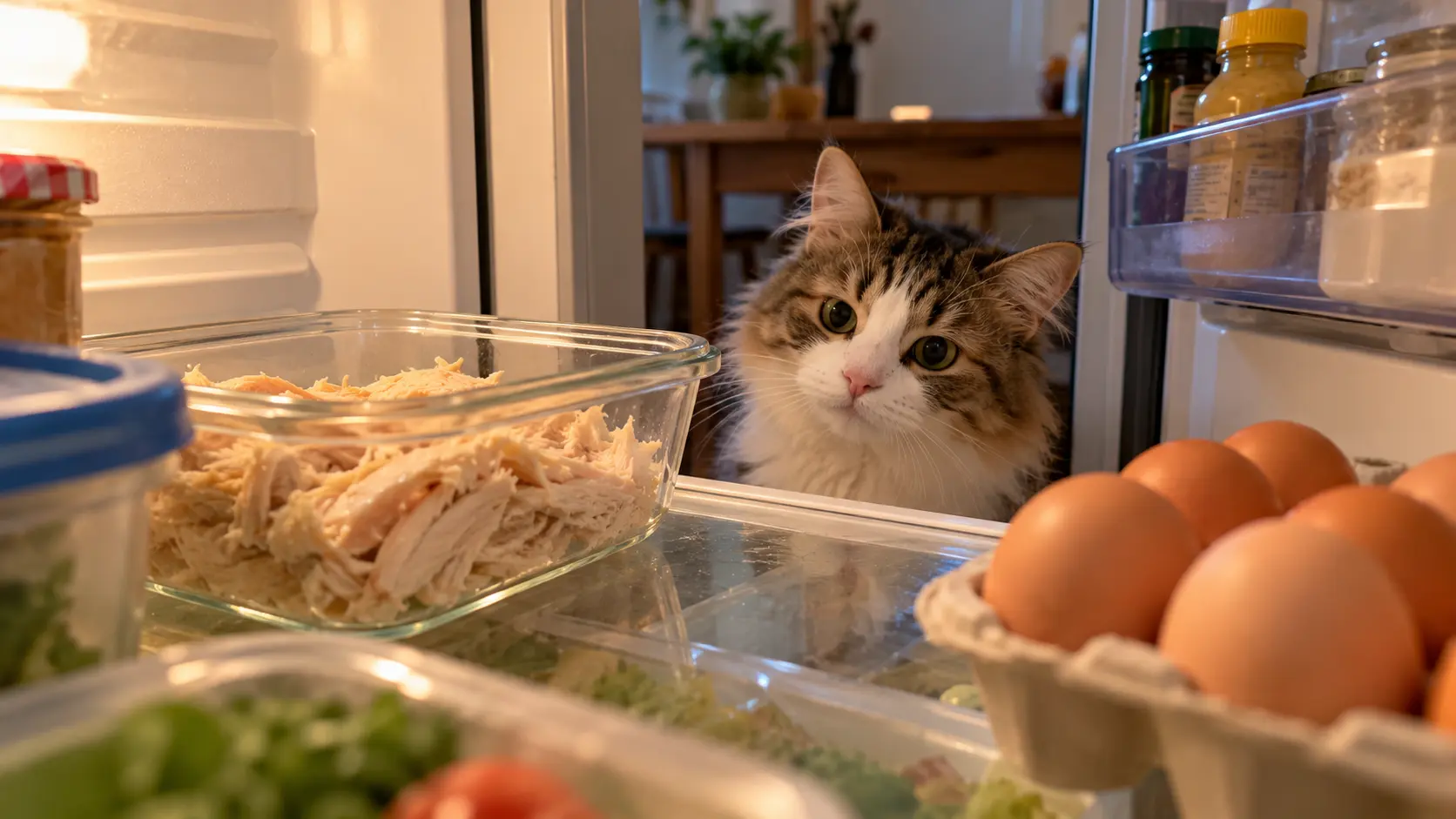
What your cat can and can’t eat comes down to one simple fact: cats are obligate carnivores. Their bodies run on meat, and many “healthy” human foods do nothing for them. Some are actually dangerous. With four cats in my house, someone is always staring at my plate, so I had to learn this list properly instead of guessing.
🐾 Quick Answer
Cats can safely eat small amounts of plain cooked meat, fish, eggs, rice and pumpkin. They should never eat onions, garlic, chocolate, caffeine, alcohol, grapes, raw dough or cooked bones. Keep all treats and human food under 10% of daily calories, and feed a complete cat food for the rest.
📋 Table of Contents
- At a Glance: What Your Cat Can and Can’t Eat
- Why Cats Can’t Eat Like Us
- Foods Your Cat Can Eat
- How Much Is Safe? Portion Guide
- Foods That Are Okay Only Occasionally
- What Can Cats Not Eat?
- What Can Cats Eat From the Fridge?
- What Human Food Can Cats Eat Every Day?
- Can Cats Be Vegetarian?
- What Do Little Cats (Kittens) Eat?
- Signs Your Cat Ate Something Bad
- If Your Cat Ate Something Toxic
- My House Rules for Keeping 4 Cats Safe
- Common Mistakes Cat Owners Make
- FAQ
- The Bottom Line
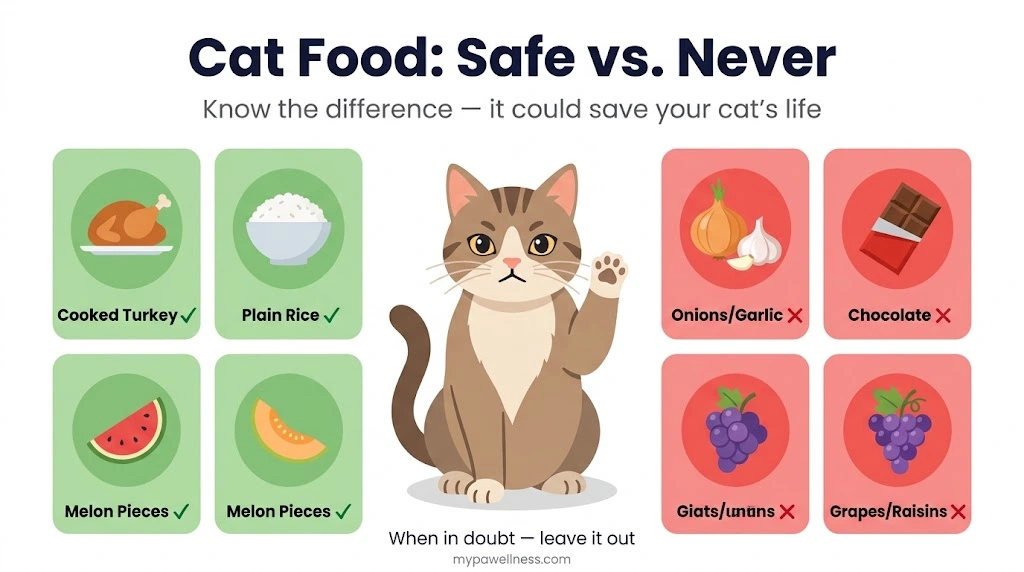
At a Glance: What Your Cat Can and Can’t Eat
Save this table or pin it. It covers the human foods cats ask for most.
| Food | Verdict | Why |
|---|---|---|
| Cooked chicken, turkey, lean beef | ✅ Safe | Pure animal protein, the closest thing to what cats are built to eat |
| Cooked fish (salmon, cod) | ✅ Safe | Good protein; serve plain and boneless |
| Cooked eggs | ✅ Safe | High-quality protein; never raw |
| Plain rice, plain pumpkin | ✅ Safe | Bland and gentle; useful for a short upset stomach |
| Carrots, green beans, peas (steamed) | ✅ Safe | Harmless fiber, but no real nutrition for a cat |
| Blueberries, melon, peeled apple | ✅ Safe | Fine in tiny pieces; cats can’t taste sweet anyway |
| Canned tuna | ⚠️ Sometimes | Addictive and adds mercury if overfed |
| Bread (baked) | ⚠️ Sometimes | Not toxic, just empty calories |
| Cheese, milk, yogurt | ⚠️ Sometimes | Most adult cats are lactose intolerant |
| Liver | ⚠️ Sometimes | Too much vitamin A over time |
| Ham, deli meat, sausage | ⚠️ Sometimes | Very salty; often seasoned with garlic |
| Dog food | ⚠️ Sometimes | Missing enough taurine for cats |
| Onions, garlic, chives, leeks | ❌ Never | Damage red blood cells (anemia) |
| Chocolate | ❌ Never | Theobromine and caffeine; tremors, seizures |
| Coffee, tea, energy drinks | ❌ Never | Caffeine overdose |
| Alcohol | ❌ Never | Dangerous even in small amounts |
| Grapes and raisins | ❌ Never | Linked to kidney failure in dogs; ASPCA says avoid for cats too |
| Raw yeast dough | ❌ Never | Rises in the stomach and produces alcohol |
| Cooked bones | ❌ Never | Splinter and can tear or block the gut |
| Raw fish and raw eggs | ❌ Never | Bacteria, plus they block vitamin B1 and biotin |
| Xylitol (sugar-free gum, some peanut butter) | ❌ Never | Very toxic to dogs; not worth the risk |
Why Cats Can’t Eat Like Us
Cats need nutrients that come mainly from animal tissue: taurine, arachidonic acid, and preformed vitamin A. Humans and dogs can make some of these from plant foods. Cats can’t, or not in useful amounts. That’s why a cat on the wrong diet can develop heart disease or vision problems.
Cats also process some chemicals much more slowly than we do. A food that’s harmless for you can build up in a cat’s small body. So the rule in my house is simple: if I’m not sure it’s safe, the answer is no.
Foods Your Cat Can Eat
Plain Cooked Meat
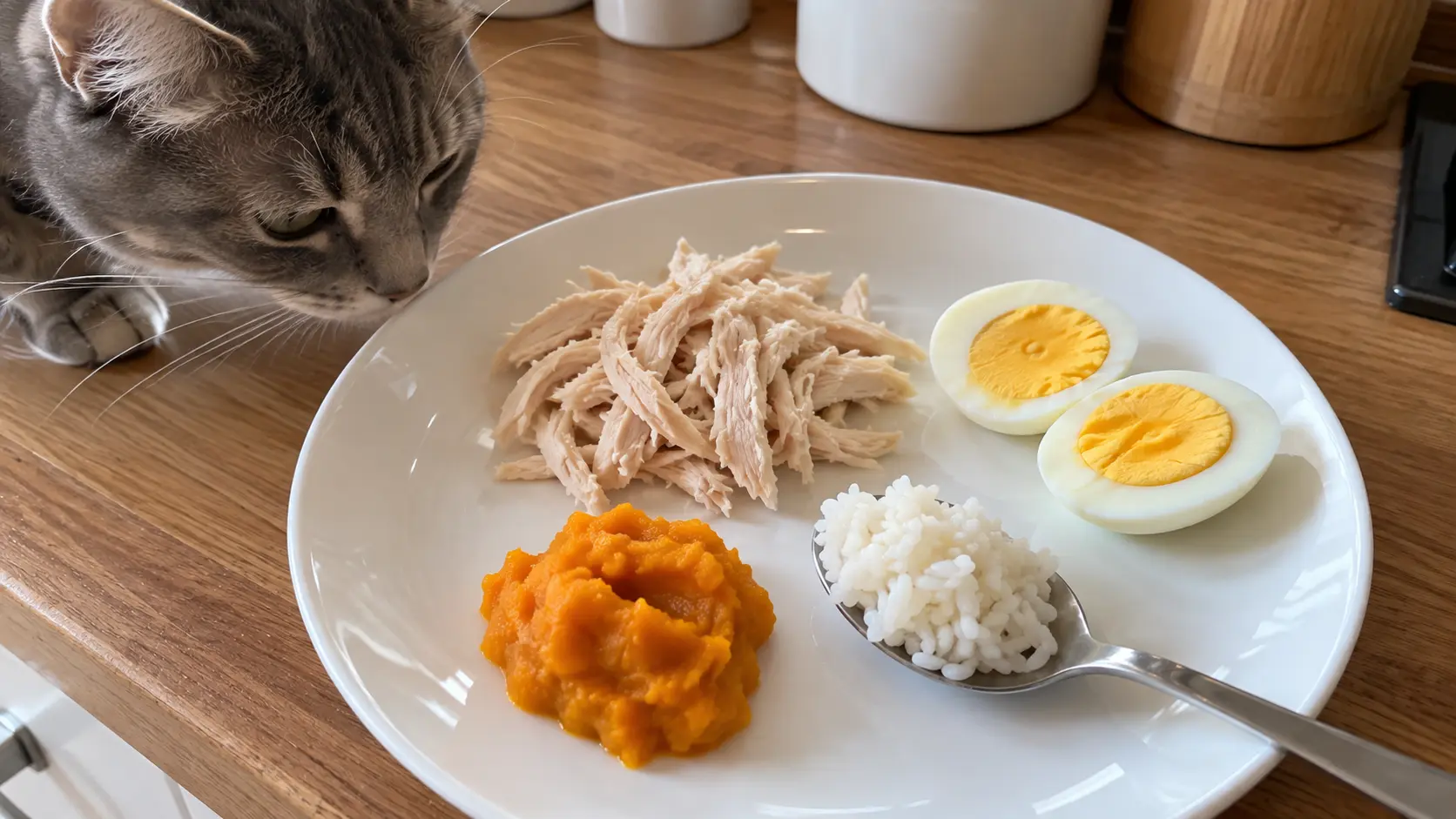
Cooked chicken, turkey, and lean beef are the best human foods to share. Serve them plain: no skin, no seasoning, no garlic or onion powder, and no bones. My oldest cat gets a thumbnail-sized piece when I cook chicken, and that’s plenty for her.
Fish
Cooked salmon, cod, and plain tuna are fine now and then. Tuna is where most owners go wrong. Cats love it so much they start to refuse their real food, and too much adds up in mercury. I explain the safe amount in can cats eat tuna.
Eggs
Scrambled or hard-boiled eggs with nothing added are a great protein treat. Always cook them. Raw egg whites can carry salmonella and contain avidin, which blocks biotin. More on portions in can cats eat eggs, and if you’re wondering about the shells, see can cats eat egg shells.
Rice and Pumpkin
Cats don’t need carbohydrates, but a spoonful of plain cooked rice or plain canned pumpkin is safe. Vets sometimes suggest bland food like this for a short spell of loose stool. See can cats eat rice for when it helps and when it doesn’t.
Vegetables and Fruit
Steamed carrots, green beans, peas, and cucumber are safe in tiny pieces. So are blueberries, seedless melon, and peeled apple without seeds. Most cats ignore them, and that’s fine. Fun fact: cats can’t taste sweetness, so if yours licks melon, it’s the smell or texture they like.
How Much Is Safe? Portion Guide
People ask “can my cat eat this?” but forget to ask “how much?” Here’s what I use for my cats as a single treat:
| Food | How to serve it | Treat-size portion* |
|---|---|---|
| Chicken or turkey | Boiled or baked, no skin, no seasoning, no bones | 1 tablespoon, chopped |
| Egg | Scrambled or hard-boiled, no butter or salt | About ¼ of an egg |
| Salmon or cod | Cooked, boneless, plain | 1 tablespoon |
| Canned tuna | In spring water, drained | 1 teaspoon, once a week |
| Rice | Plain, well cooked, no butter | 1–2 teaspoons |
| Pumpkin | Plain canned purée (not pie filling) | 1–2 teaspoons |
| Blueberries | Fresh, cut in half | 2–3 berries |
| Steamed carrots or green beans | Soft-cooked, chopped small | 1–2 small pieces |
*For an average 10 lb (4.5 kg) adult cat. Give one of these per day at most, not all of them. Kittens, seniors, and cats with kidney disease, diabetes, or a sensitive stomach should only get new foods after checking with your vet.
Foods That Are Okay Only Occasionally
Can Cats Eat Bread?
Plain baked bread isn’t toxic, but it’s empty calories. A small bite won’t hurt. The real danger is raw yeast dough: it keeps rising in the warm stomach and the yeast produces alcohol. That’s an emergency, not a snack.
Cheese and Milk
Most adult cats are lactose intolerant. The classic saucer of milk often ends in diarrhea. Hard cheese has less lactose, so a crumb is usually tolerated, but it’s high in fat and salt. Water is the only drink your cat needs.
Liver, Deli Meat, and Dog Food
Liver is very rich in vitamin A, so a little is fine but often is not. Ham and deli meats are packed with salt and often contain garlic. Dog food won’t harm a cat in a few bites, but it lacks enough taurine for cats long term. Details in can cats eat dog food.
What Can Cats Not Eat?
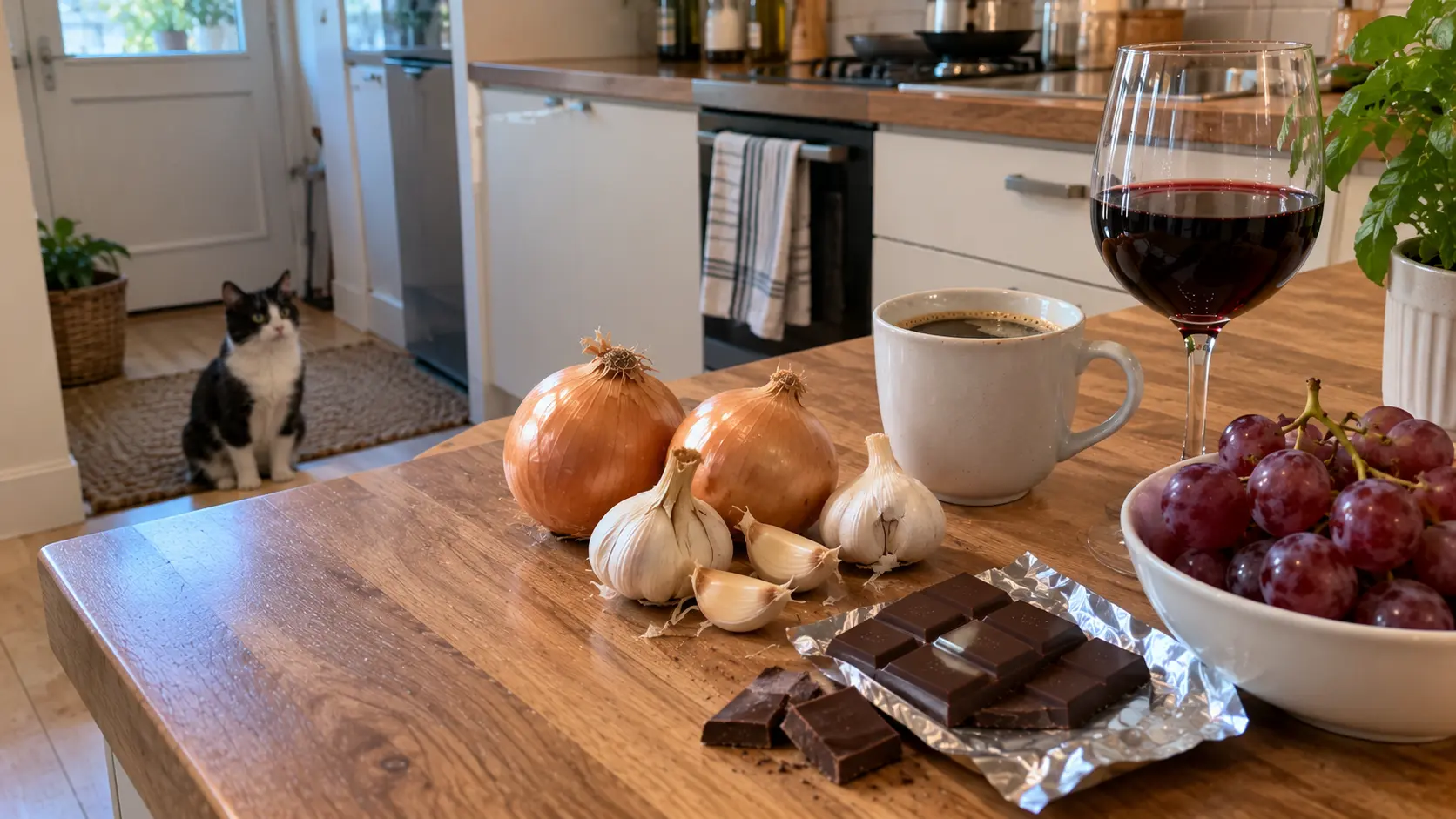
This is the part of what your cat can and can’t eat that matters most. These foods should never be shared, even in small amounts.
| Food | What it does | Signs to watch for |
|---|---|---|
| Onions, garlic, chives, leeks | Destroy red blood cells; effects can show days later | Weakness, pale gums, fast breathing, orange or red urine |
| Chocolate, coffee, tea | Stimulants overload the heart and nerves | Vomiting, restlessness, racing heart, tremors, seizures |
| Alcohol and raw dough | Alcohol poisoning; dough also bloats the stomach | Wobbling, vomiting, swollen belly, collapse |
| Grapes and raisins | Possible sudden kidney damage | Vomiting, not eating, drinking or peeing less |
| Cooked bones | Sharp splinters | Gagging, vomiting, straining, blood in stool |
| Raw fish (regular feeding) | Thiaminase breaks down vitamin B1 | Loss of appetite, head tilting, wobbly walking |
| Fatty scraps | Can trigger stomach upset and pancreatitis | Vomiting, diarrhea, hiding, belly pain |
Xylitol belongs on this list too. It’s a sweetener in sugar-free gum, candy, and some peanut butter. It’s proven very dangerous for dogs; cat data is limited, so the safe choice is to keep it out of reach.
One non-food warning: lilies. Every part of the plant, even pollen or vase water, can cause kidney failure in cats. I wrote about it in my cat ate a lily and nothing happened.
Hidden Sources of Onion and Garlic
Most cats don’t eat a raw onion. They get it from foods where you can’t see it. Check labels before sharing any of these:
- Gravy, stock, and bone broth
- Baby food (often used to tempt sick cats, but many jars contain onion powder)
- Soup, stew, and pasta sauce
- Rotisserie chicken skin and seasoned meat
- Pizza, burgers, and takeout leftovers
What Can Cats Eat From the Fridge?
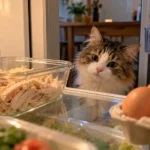
If you’ve run out of cat food and need something for one meal, these are the safest fridge options:
- Leftover plain cooked chicken or turkey (check for seasoning)
- A plain cooked egg
- Plain canned tuna or salmon in water, not oil or brine
Skip deli meat, sausages, and anything marinated. Then buy proper cat food as soon as you can, because one meal of chicken is fine but a week of it is not balanced.
What Human Food Can Cats Eat Every Day?
Honestly, none of it should be a daily habit unless it’s part of a complete recipe. Plain cooked meat comes closest, but meat alone is missing calcium, taurine, and vitamins that cat food adds. If you want to feed homemade, use a recipe built with a proper supplement, ideally with your vet’s input.
Can Cats Be Vegetarian?
No. A cat on a vegetarian or vegan diet can develop heart disease (dilated cardiomyopathy from low taurine) and vision loss. If you’re vegetarian yourself, that’s completely fine. Your cat still needs meat.
What Do Little Cats (Kittens) Eat?
Kittens need food labeled for growth or “all life stages.” They grow fast and need more protein, fat, and calories per pound than adults. Keep human food for kittens to a minimum, since a small tummy has little room for anything but their real food.
Signs Your Cat Ate Something Bad
Some toxic foods cause symptoms within an hour. Others, like onion and garlic, can take two to five days. Watch for:
- Vomiting or diarrhea
- Drooling or pawing at the mouth
- Hiding, weakness, or unusual sleepiness
- Pale or yellow gums
- Trembling, wobbling, or seizures
- Not eating, or drinking and peeing less
If your cat stops eating or seems very weak, read my cat is not eating or drinking and very weak and get them seen the same day.
If Your Cat Ate Something Toxic

🚨 What to do right now
- Remove any remaining food and keep the packaging.
- Note what was eaten, roughly how much, and when.
- Call your vet or an emergency clinic right away.
- You can also call the ASPCA Animal Poison Control Center (888-426-4435) or the Pet Poison Helpline (855-764-7661). Both may charge a consultation fee.
- Don’t make your cat vomit at home. Methods used for dogs, like hydrogen peroxide, can hurt cats.
My House Rules for Keeping 4 Cats Safe
- Nothing stays on the counter. Bread, fruit bowls, and chocolate go in cupboards.
- The trash has a lid. Cooked bones and onion scraps are the biggest risk in the bin.
- Guests get told. Visitors love to “just give a little bite,” so I ask them not to feed the cats.
- Treats come from one place. One container, one person, so nobody doubles up.
- Labels get read. Anything with onion or garlic powder is off the list.
Common Mistakes Cat Owners Make
- Giving milk because cats “love it” (most can’t digest it)
- Sharing seasoned leftovers, gravy, or broth that hides onion or garlic
- Feeding tuna every day until the cat refuses anything else
- Assuming that anything safe for dogs is safe for cats
- Letting treats creep above 10% of daily calories, which leads to weight gain
FAQ
What’s something a cat can’t eat?
Onions and garlic are the most common hidden danger, because they show up in so many cooked foods, sauces, and broths. Chocolate, grapes, alcohol, and raw dough are also on the never list.
Do cats know what they can and can’t eat?
Not reliably. Cats are pickier than dogs, which protects them a little, but they will still lick garlic butter or chew a lily. Their instincts don’t recognize modern foods and houseplants as dangerous, so it’s on us to know what your cat can and can’t eat.
What do cats eat and drink?
A complete cat food (wet, dry, or both) and fresh water. That’s it. Wet food helps with hydration, which is why many vets like it. If yours only eats dry, here’s how to get your cat to eat wet food.
Can cats eat bananas or strawberries?
Yes, a small slice now and then. They aren’t toxic, but they’re higher in sugar than blueberries, so keep them rare, especially for overweight or diabetic cats.
Can cats eat peanut butter?
It isn’t toxic in tiny amounts, but it’s sticky, fatty, and some brands contain xylitol. There’s no benefit, so I don’t offer it.
Can cats eat cheese?
A crumb of hard cheese is usually fine. Soft cheese and large amounts often cause diarrhea because of lactose.
The Bottom Line
Feed a complete cat food, keep treats under 10%, and stick to plain cooked meat, fish, and eggs when you want to share. Keep onions, garlic, chocolate, grapes, alcohol, raw dough, and lilies far away. If you’re ever unsure, the safest answer is “no,” and a quick call to your vet costs less than an emergency visit.