You set down the bowl. Your cat walks over, sniffs it, and walks away, and that untouched bowl is one of the most unsettling things a cat owner can face. Loss of appetite in cats is almost always a signal worth paying attention to.
Here are the 9 most common reasons why my cat won’t eat, what to do at home, and exactly when the situation requires a vet call.
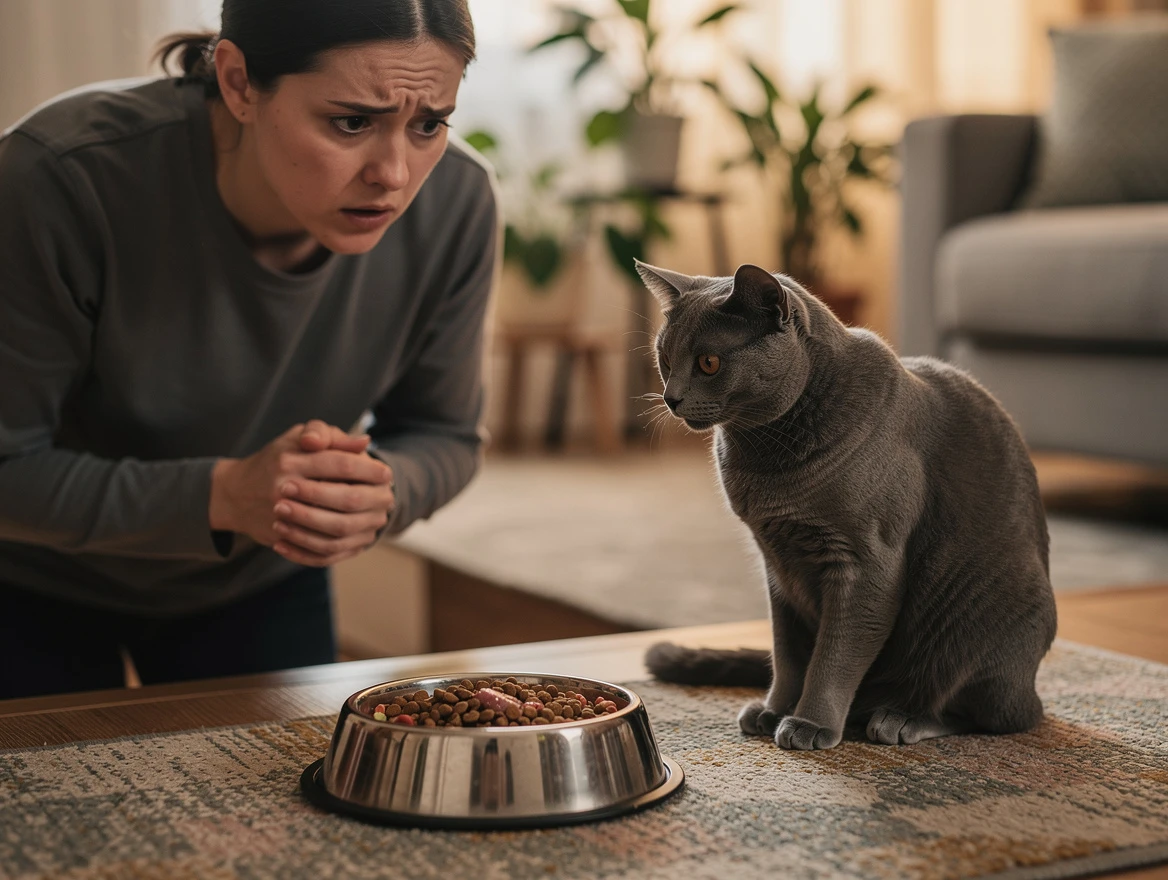
The most common causes are illness, dental pain, stress, or food-related issues. A cat that refuses food for more than 24 hours needs a vet call — not because one missed meal is dangerous, but because cats can develop fatal hepatic lipidosis (fatty liver disease) after 48–72 hours without eating.
- No food or water for more than 24 hours
- Vomiting multiple times alongside not eating
- Yellow tinge to skin, gums, or eyes — possible jaundice
- Extreme lethargy — cannot hold head up or respond normally
- Difficulty breathing or visible pain
- Kitten or senior cat — they deteriorate faster
9 Reasons My Cat Won’t Eat
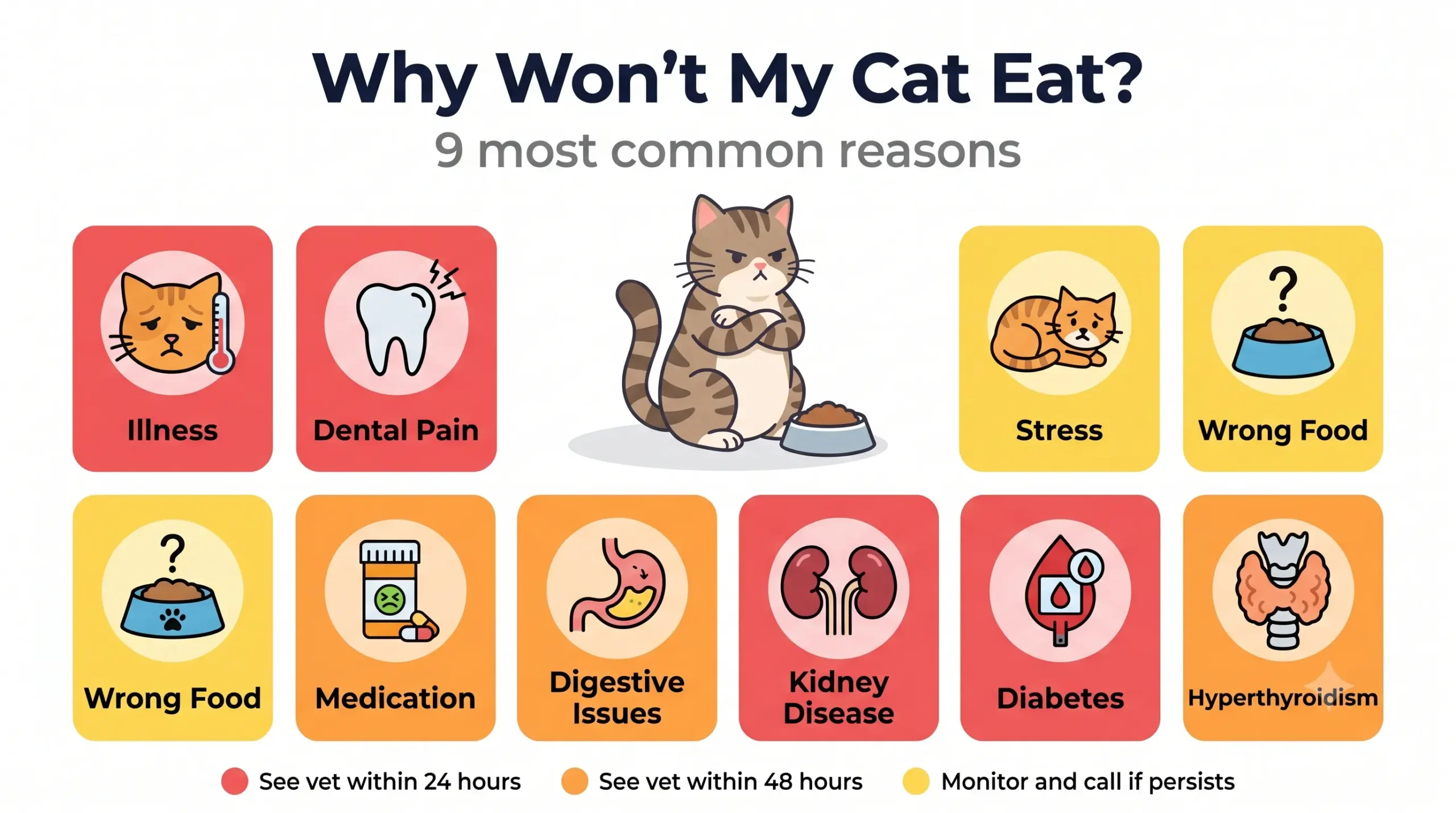
| Cause | Key Signs | Urgency |
|---|---|---|
| Illness or infection | Lethargy, vomiting, fever | Vet within 24 hours |
| Dental pain | Drooling, pawing at mouth, bad breath | Vet within 48 hours |
| Stress or anxiety | Hiding, overgrooming, changed routine | Monitor 24–48 hours |
| Food issue or change | Sudden refusal of familiar food | Try home steps first |
| Respiratory infection | Sneezing, watery eyes, congestion | Vet if not improving |
| Medication side effects | Nausea, vomiting after new meds | Call vet for advice |
| Digestive upset | Vomiting, diarrhea, discomfort | Vet if persists 24hrs |
| Chronic disease | Weight loss, thirst, lethargy | Vet — diagnostics needed |
| Pain anywhere in body | Hunched posture, hiding, sensitive to touch | Vet same day |
1. Illness or Infection
Loss of appetite is the most universal sign of illness in cats. Kidney disease, hyperthyroidism, pancreatitis, respiratory infections — all commonly start with a cat that simply stops eating. If the food refusal came with any other change in behavior or appearance — call the vet.
2. Dental Pain
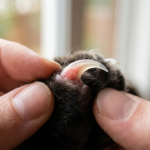
One of the most missed causes. A cat with a cracked tooth, infected gum, or abscess will avoid food because eating hurts. Signs: drooling, pawing at the mouth, bad breath, or eating on one side only. Related: My Cat Lost a Fang Tooth — dental disease is often the cause.
3. Stress or Anxiety
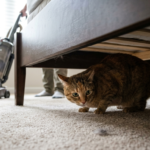
Cats notice everything — a new pet, a moved piece of furniture, a change in your schedule. When their sense of safety is disrupted, eating feels risky. One of my cats stopped eating entirely for two days when we had guests staying over. A calm environment and familiar routines usually bring appetite back within 24–48 hours.
4. Food Issue
Cats can reject food that is too cold, a changed formula, or simply something they have decided they no longer want. If the food seems fine to you but the cat refuses — try warming it to near body temperature. The warmth releases aroma and aroma is what actually triggers appetite in cats.
5. Respiratory Infection
Smell drives appetite in cats more than almost anything else. A stuffy nose from a respiratory infection blocks that entirely — a cat that can’t smell food often won’t touch it, even if they’re hungry. Watch for sneezing, watery eyes, or congestion alongside the food refusal.
6. Medication Side Effects
New medications, including antibiotics and some pain relievers, commonly cause nausea in cats. If food refusal started shortly after starting a new prescription, call your vet — they may be able to adjust the dose or switch medications.
7. Digestive Upset
Vomiting, diarrhea, or general stomach discomfort can make eating feel unpleasant enough that a cat avoids food altogether. This is usually short-lived, but worth a vet call if it persists past 24 hours.
8. Chronic Disease
Ongoing conditions like diabetes or kidney disease often cause a gradual decline in appetite rather than a sudden stop. Watch for accompanying weight loss, increased thirst, or persistent lethargy — these point toward something that needs proper diagnostics rather than home management.
9. Pain Anywhere in the Body
Pain doesn’t have to be in the mouth or stomach to suppress appetite — an injury, arthritis, or pain anywhere in the body can do the same thing. A hunched posture, reluctance to move, or sensitivity when touched are worth mentioning to your vet.
Related: My Cat Is Lethargic But Eating and Drinking — when appetite changes alongside energy changes.
Not Eating but Acting Normal
This is the most common scenario — the cat seems fine in every other way but is refusing food. Most likely causes: food preference change, mild stress, or the food is too cold. Give it 12–24 hours with home strategies before calling the vet. If it extends beyond 24 hours — call regardless of how normal they seem.
Refusing Food and Water
Refusing both food and water together is more urgent than food alone. Dehydration sets in fast in cats, and a cat that is not eating or drinking and very weak needs same-day veterinary attention. Check gums — pale, dry, or tacky gums indicate dehydration. Do not wait overnight on this combination.
Not Eating and Sleeping More Than Usual
No eating, no drinking, and excessive sleeping or hiding — this combination is a medical red flag. It suggests something systemic is going on — not a picky mood. Call the vet immediately. If it is after hours, an emergency animal clinic is worth the trip.
Only Eating Treats
A cat that refuses meals but accepts treats is almost certainly experiencing dental pain, nausea, or food aversion — not starvation. The treats are softer, more aromatic, or more novel. This is not a solution — it is a sign. A cat living on treats is not getting adequate nutrition and needs a vet visit to find the underlying cause.
When It’s a Male Cat Eating Less
Unneutered male cats sometimes reduce eating during territorial or hormonal periods — this is more common in intact males. However, any male cat eating significantly less than usual for more than 24 hours warrants a vet check. Male cats are particularly prone to urinary blockages which suppress appetite — and urinary blockages are a life-threatening emergency.
A New Cat Refusing Food
Almost always stress. A new environment is overwhelming — strange smells, sounds, people. The nervous system prioritizes threat detection over eating. Give your new cat a small quiet room, keep food and water in consistent spots, and do not hover. Most new cats eat within 24–48 hours once they feel safer. If refusal extends past 48–72 hours — vet visit to rule out illness.
What to Feed a Sick Cat That Won’t Eat
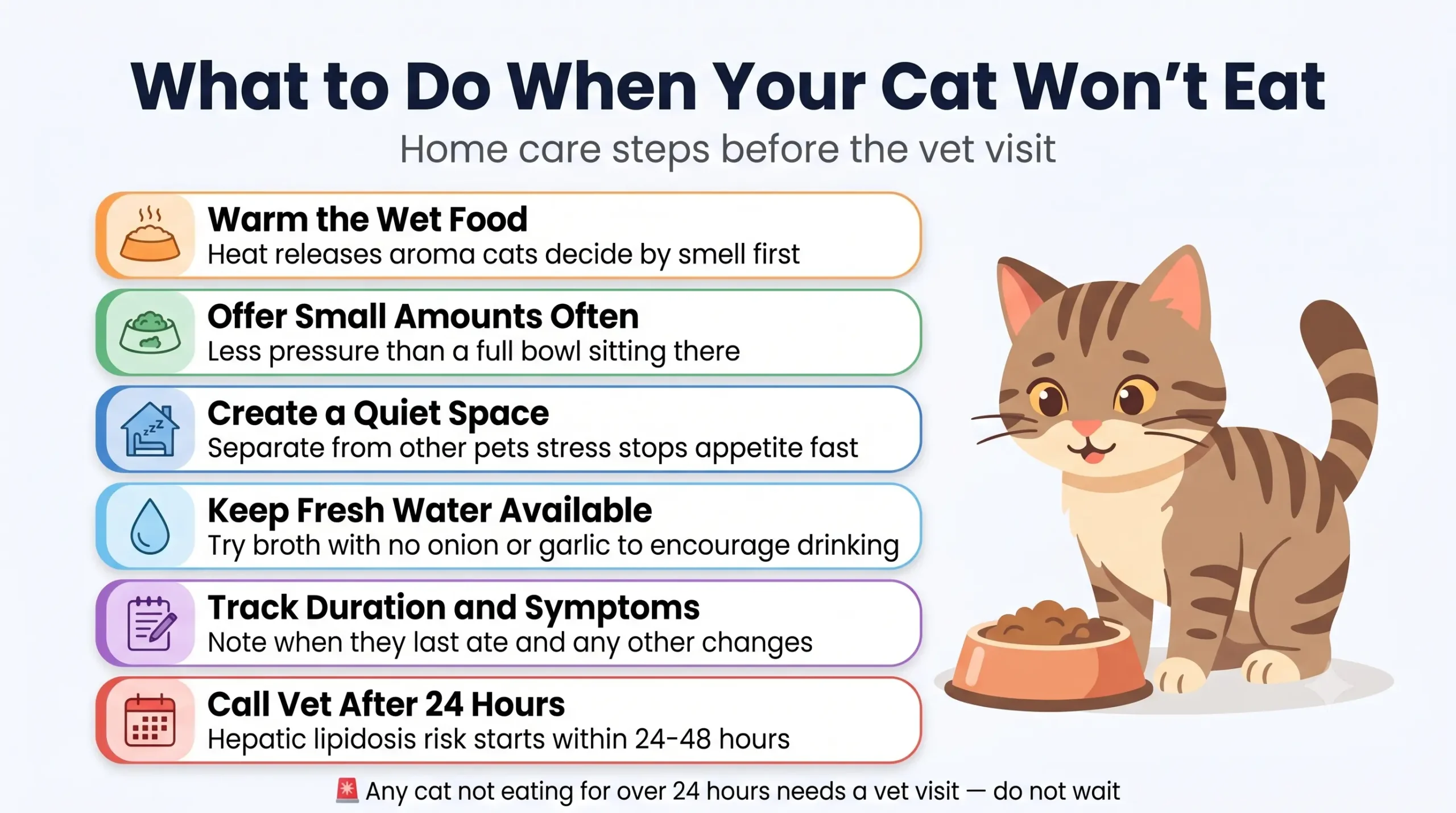
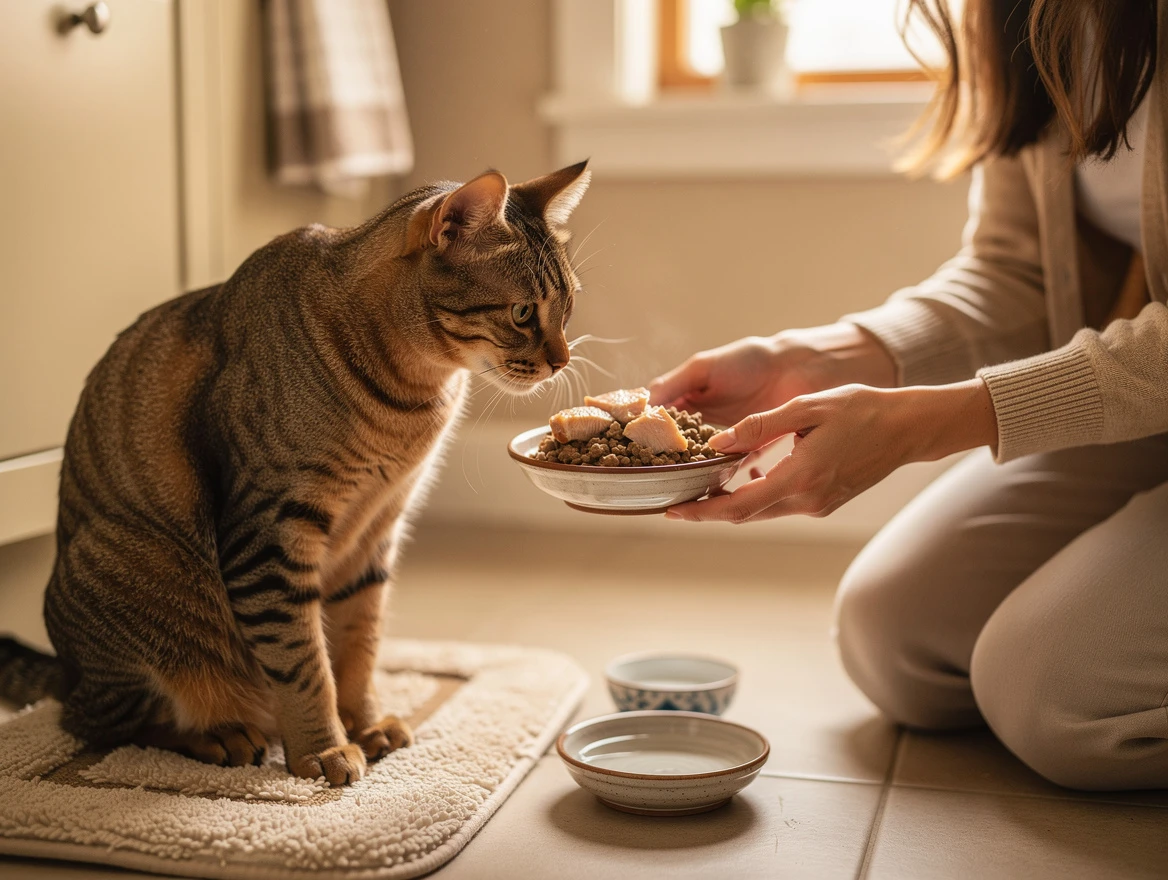
- Warm wet food to near body temperature — heat releases aroma, the main trigger for cat appetite
- Add low-sodium chicken broth — drizzle over regular food, the smell is often irresistible
- Try a different texture — if pâté is refused, try shredded or broth-based food
- Plain cooked chicken — small pieces of unseasoned cooked chicken can spark appetite
- Meat-based baby food — plain chicken or turkey, no onion or garlic, is often accepted when nothing else works
- Hand feeding — offer a tiny amount from your finger, your scent and interaction can help
How Long Can a Cat Go Without Eating?
A healthy adult cat can survive 1–2 weeks without food in theory — but will develop life-threatening hepatic lipidosis (fatty liver disease) within 48–72 hours of not eating, particularly overweight cats. This condition can become fatal within days without treatment.
The answer to “how long” is not the right question. The right question is: why is my cat not eating and what can I do about it right now. Do not wait to find out how long they can go.
🩺 When to See a Vet
- No food for more than 24 hours — call the vet
- No food AND no water for 12+ hours — same day
- Vomiting alongside not eating — same day
- Male cat not eating + litter box straining — emergency
- Kitten or senior cat not eating for 12+ hours — call immediately
- Any other symptoms present — do not wait
Frequently Asked Questions
For a healthy adult cat — 24 hours maximum before calling the vet. For kittens, seniors, or cats with existing health issues — 12 hours. Hepatic lipidosis can develop after about 2–3 days of not eating.
Most likely a food preference issue, mild stress, or food that is too cold. Try warming the food and observe for 12–24 hours. If refusal continues — call the vet even if the cat seems otherwise fine.
The most common reasons: food served cold, formula changed by the manufacturer, dental pain making wet food unpleasant, or simple preference change. Try warming the food first. If they avoid all food — not just wet — the cause is more likely medical.
Yes. This combination — no eating, no drinking, excessive sleeping — suggests something systemic. Call the vet immediately or go to an emergency clinic.
No. Treats alone are not nutritionally complete and this pattern signals an underlying problem — dental pain, nausea, or food aversion. Get a vet check to find the cause.
This specific pattern — circling the bowl, seeming interested, then walking away without eating — usually points to pain rather than lack of appetite. Dental pain and nausea are the most common culprits: the cat wants to eat but something stops them physically. If this happens more than once, a vet check for mouth pain or nausea is worth it.
Yes, treat this combination as more urgent than either symptom alone. Vomiting plus appetite loss together often points to something more specific than simple stress or pickiness — digestive upset, an obstruction, or an underlying illness. If your cat won’t eat and is throwing up for more than a few hours, or vomits more than once or twice, call your vet the same day.
The Bottom Line
A cat refusing food is always a signal worth taking seriously. One skipped meal in an otherwise healthy adult cat is not a crisis. Anything beyond 24 hours is a reason to call the vet, regardless of how normal the cat appears.
Start with the simple steps — warm the food, reduce stressors, check for obvious mouth pain. If nothing changes within 24 hours — pick up the phone.
Related Articles
When energy drops alongside appetite changes.