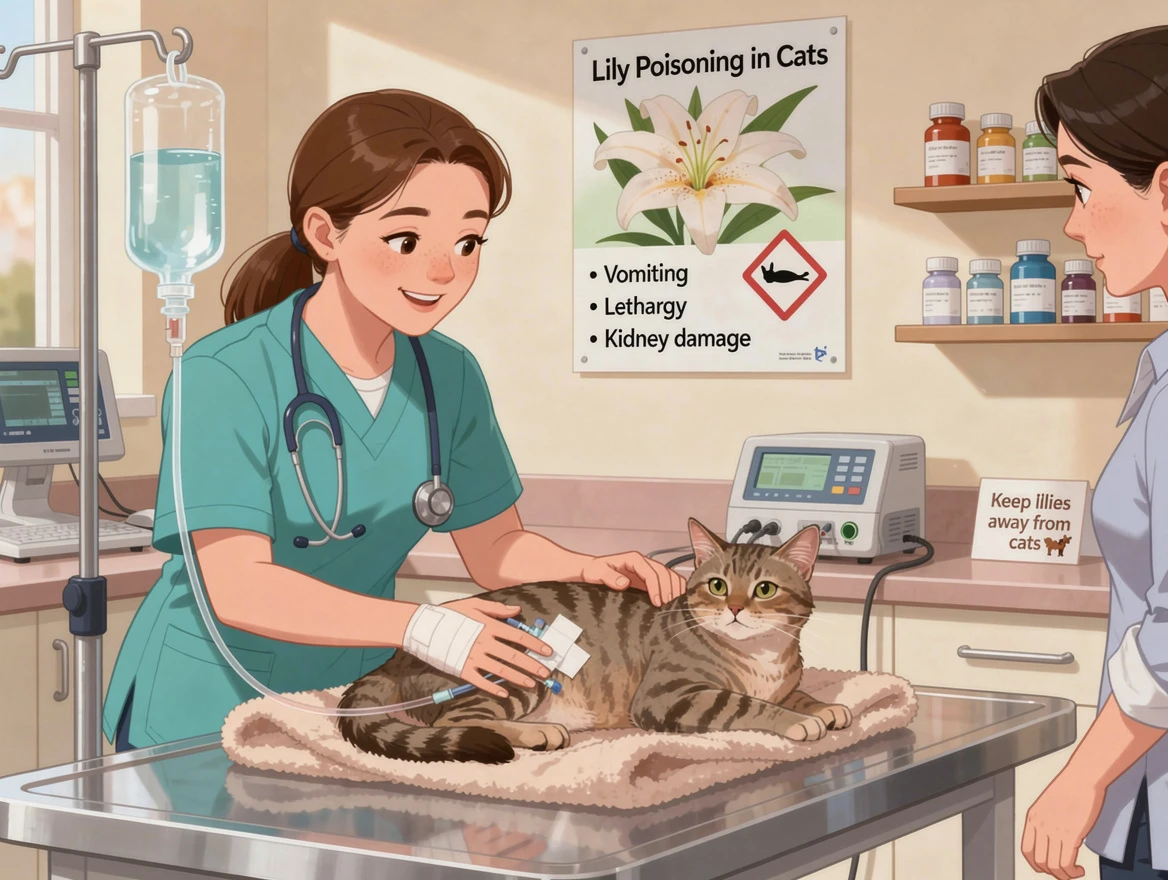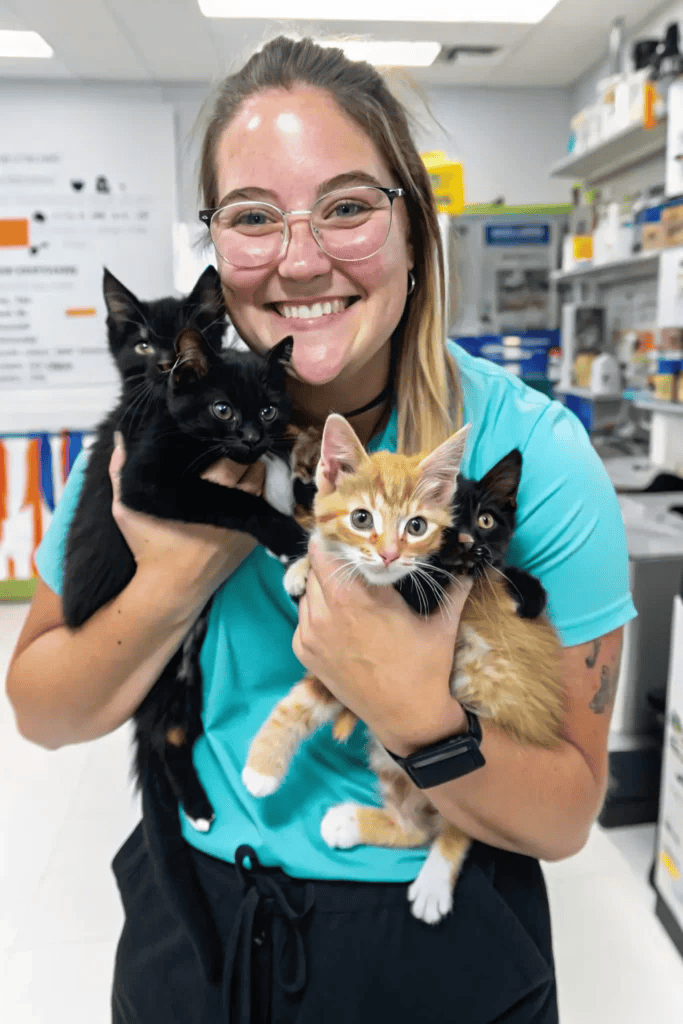
My cat ate a lily and nothing happened — and if that sentence describes your situation right now, keep reading before you relax. I have four cats, and I lived through this exact moment with Milo, my most adventurous one, who nibbled a lily from my balcony and walked away completely unbothered.
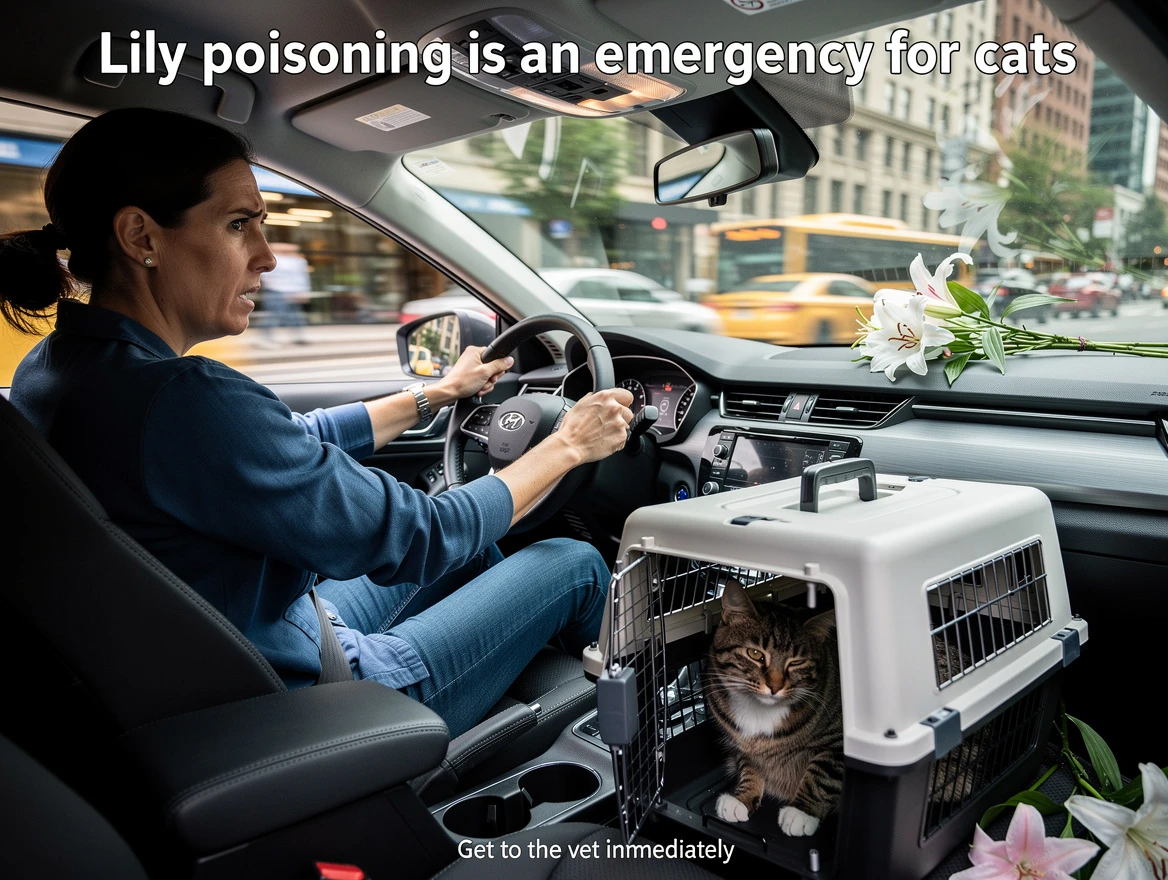
I made the mistake of waiting. By the next morning I was driving him to the emergency vet at 2am.
This guide covers why that “nothing happened” feeling is deceptive, and the precise window you have to act before the outcome changes completely.
Lily poisoning has a delayed onset of 6 to 24 hours — your cat can feel fine while kidney damage is already beginning. Even a single petal or sip of vase water is enough to cause fatal kidney failure. Call your vet now regardless of how fine your cat looks. Treatment within 18 hours dramatically improves survival odds.
Emergency Warning
My cat ate a lily and nothing happened in the first few hours — that’s expected. But if you see any of these signs, you’re already past the early window and need emergency care now:
- Vomiting — often the first sign, appearing 6 to 12 hours after exposure
- Complete refusal to eat or drink
- Extreme lethargy or inability to stand
- Increased or decreased urination
- Drooling or pawing at the mouth
- Dehydration — dry gums, sunken eyes, skin slow to spring back when pinched
- Any symptoms in a kitten — they deteriorate faster
At a Glance: Lily Poisoning in Cats
| Factor | Details | Action Required |
|---|---|---|
| Toxic plants | All true lilies (Lilium), daylilies (Hemerocallis) | Remove all lilies immediately if cats are present |
| Toxic dose | Even one petal, leaf, or sip of vase water | Treat as emergency regardless of amount |
| Symptoms onset | 6 to 24 hours after exposure | Do not wait for symptoms to appear |
| Primary danger | Acute kidney failure | Immediate vet visit — kidneys cannot recover without treatment |
| Treatment | Induced vomiting, activated charcoal, IV fluids | Hospitalization often required for 48 to 72 hours |
| Prognosis with early care | Good if treated within 18 hours | Prognosis becomes poor after kidney failure sets in |
| Prevention | No lilies in any home with cats | Substitute with cat-safe plants like roses or sunflowers |
Are Lilies Toxic to Cats?
Yes — completely, and without any safe threshold. Every part of a true lily (genus Lilium) and daylily (genus Hemerocallis) is toxic to cats. A single petal is enough to cause fatal kidney failure in an untreated cat.
This toxicity is specific to cats. Dogs may get mild stomach upset from lilies but don’t develop the same kidney failure, and humans aren’t affected at all. The compounds in true lilies damage feline kidney tissue in a way that doesn’t have a real equivalent in other species.
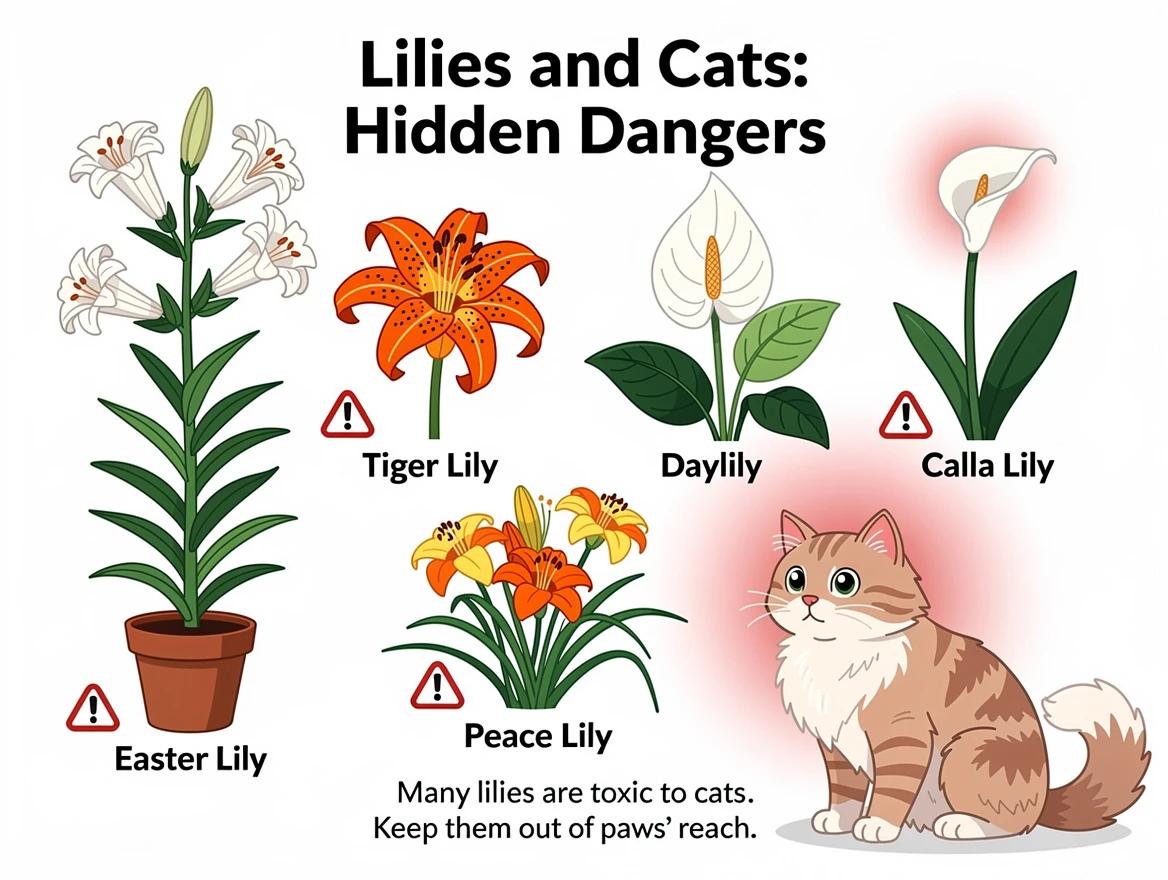
The ASPCA lists true lilies as one of the most dangerous plants for cats, with no established safe exposure level. Peace lilies and calla lilies are a different genus and cause milder effects, but should still be kept away from cats until you’re sure which one you’re dealing with.
My cat ate a lily and nothing happened — why it doesn’t show up right away
Lily toxicity doesn’t work like an instant reaction. It works more like a delayed internal process that starts damaging kidney tissue well before any outward signs appear.
The Damage Is Invisible at First
Kidney cells begin dying within two to three hours of ingestion, but cats show no external signs during this stage. Your cat feels and behaves completely normal while the damage builds underneath.
Symptoms Are Delayed 6 to 24 Hours
A cat that ate a lily at breakfast and seems totally fine at lunch can be vomiting and collapsed by dinner. This delay is what makes the situation genuinely dangerous.
Small Amounts Still Cause Full Toxicity
There’s no minimum safe dose. That your cat seems fine right now isn’t evidence the amount was too small to matter — it’s evidence the harm hasn’t become visible yet.
Just a Sniff, or Pollen on Their Fur?
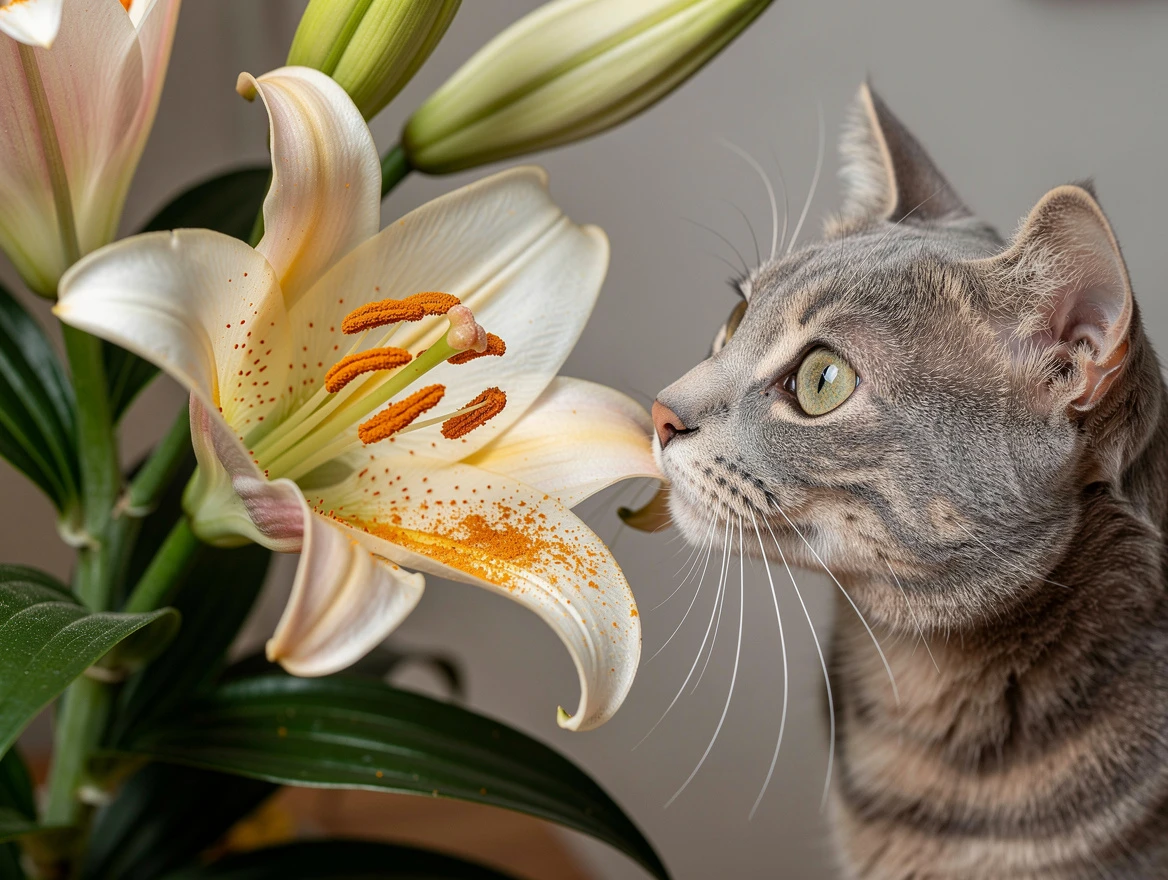
Did your cat sniff a lily, or brush past pollen without eating anything? A sniff alone, with no pollen transfer, generally isn’t dangerous — cats don’t absorb the toxin through inhalation.
The real risk comes right after. Lily pollen is fine and sticky, and transfers easily onto fur with the lightest contact. Cats groom constantly, and any pollen that lands on them gets swallowed during grooming — making pollen exposure functionally equivalent to direct ingestion.
One of my cats once came home with a fine dusting of pollen on her face after brushing past a bouquet a guest had brought over. I wiped it off immediately and called the vet, because the grooming afterward was the real risk, not the initial contact.
First Signs to Watch For
If your cat ate a lily and nothing happened yet, here’s what to actually watch for in that first 6-24 hour window, roughly in the order symptoms tend to appear:
- Mild drooling or a single vomiting episode in the first couple hours (not always present)
- Repeated vomiting starting around the 6 to 12 hour mark
- Reduced interest in food, or skipping a meal
- Lethargy — sleeping more, less interested in activity
- Drinking noticeably more water
- Urinating more, then later, less or not at all
- Dehydration signs — dry gums, skin slow to spring back when pinched
None of these need to all be present to justify calling your vet. Any one of them, after known or suspected exposure, is enough.
Didn’t See It Happen? Signs to Check
Plenty of exposures aren’t witnessed directly. A few circumstantial clues are worth checking for: missing or disturbed petals, chewed edges, or petals on the floor; pollen smudges on your cat’s face or paws; a disturbed vase with less water than you remember; or bite marks on leaves or stems.
If you spot any of these and there’s real uncertainty, treat it as a confirmed exposure and call your vet. It costs you a phone call either way — waiting for certainty costs you the treatment window.
What to Do Right Now
Whether you witnessed it, found chewed leaves, or noticed pollen on their face, the steps are the same regardless of how much was eaten or how fine your cat currently seems.
Call Your Vet or Emergency Clinic Right Now
Call within minutes of discovering it, not after watching your cat for a few hours. Give as much detail as possible: type of lily, approximate amount, timing, and your cat’s weight. The ASPCA Poison Control Hotline (888-426-4435) is available 24 hours if your regular vet is closed.
Remove All Lilies and Vase Water Immediately
Take every lily, dropped petal, and the vase water out of reach. Your cat doesn’t need to eat plant material to be poisoned — drinking the water alone is enough.
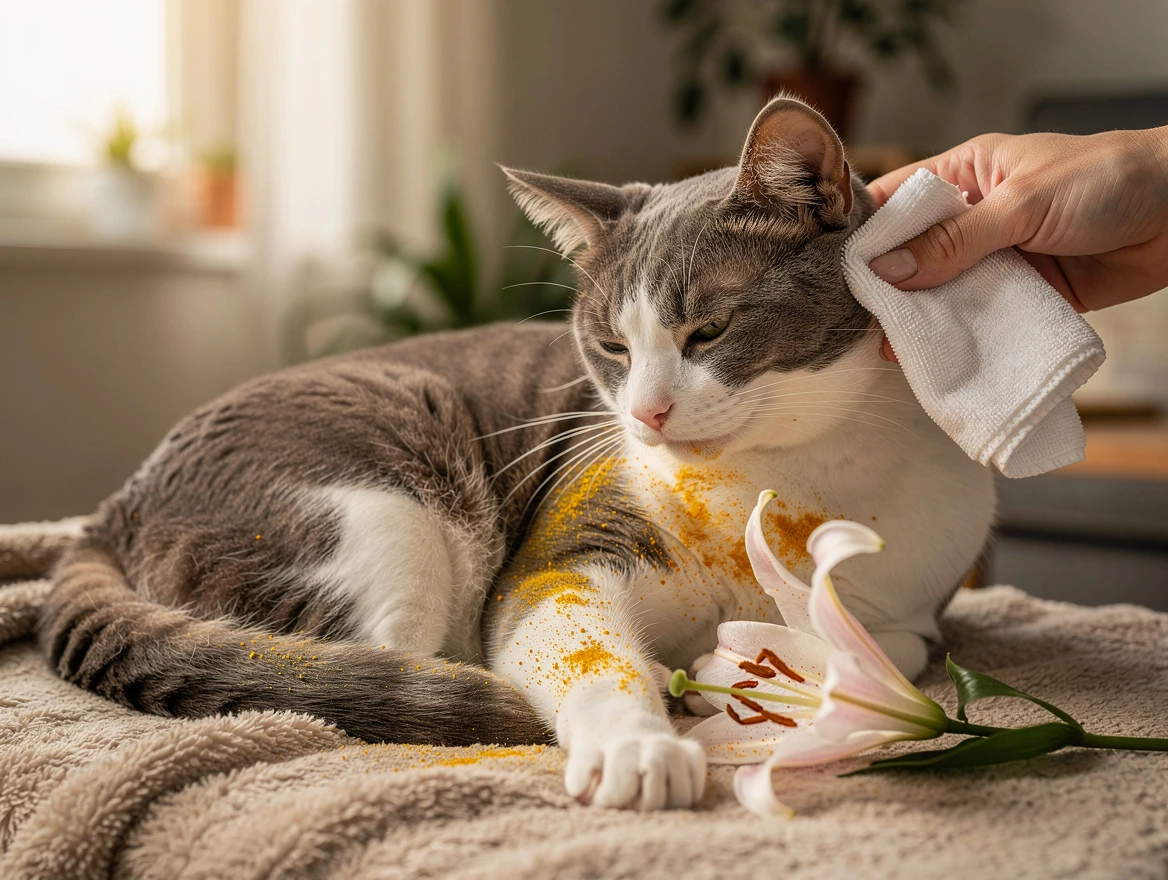
Clean Pollen Off Your Cat’s Fur and Face
Wipe visible pollen off gently with a damp cloth before your cat can groom it away. Pollen ingested through self-grooming is just as toxic as eating the plant directly.
Don’t Induce Vomiting Without Vet Instruction
Don’t attempt this at home without specific veterinary guidance. Your vet may walk you through it by phone if you’re far from a clinic and the exposure was very recent, but hydrogen peroxide given incorrectly can cause additional harm to an already stressed cat.
Expect Possible Hospitalization
Treatment often requires IV fluid therapy for 48 to 72 hours, which can’t be done at home. Costs vary widely by clinic and location, but multi-day emergency treatment like this commonly falls somewhere in the $1,500 to $5,000+ range — ask your vet for an estimate upfront.
Caught early, most cats make a complete recovery. Caught after kidney failure has set in, the outlook changes significantly.
Lily Poisoning Timeline
My cat ate a lily and nothing happened for the first several hours — that’s normal. Symptoms tend to progress in predictable stages once they start:
Stage 1: 0 to 6 Hours
“Nothing happened” during this window is expected. Some cats show mild drooling or vomiting early on, but many show nothing at all while kidney damage begins invisibly.
Stage 2: 6 to 24 Hours
Symptoms become visible — vomiting, appetite loss, lethargy, urination changes. This is still the window where full recovery is most likely.
Stage 3: 24 to 72 Hours
Acute kidney failure sets in if treatment hasn’t started. Urination may stop entirely, the cat becomes severely weak, and neurological signs including seizures can occur. Prognosis is significantly worse at this stage.
Which Parts of Lilies Are Toxic to Cats?
Every part of a true lily is toxic, without exception:
- Flowers and petals — the part most cats are attracted to and most likely to be eaten
- Leaves and stems — just as toxic despite looking less appealing
- Pollen — falls onto fur and gets ingested through normal grooming, the most common exposure route for indoor cats
- Vase water — lilies leach toxins into water within hours
- Roots and bulbs — also toxic, sometimes accessible in potted plants
Dried lily material stays dangerous too — the toxic compounds don’t break down once the flowers wilt. Clear out dead flowers and fallen petals from anywhere your cat can reach.
Common Mistakes After Lily Exposure
These are the mistakes that turn a survivable situation into a tragedy:
- ❌ Waiting for symptoms before calling the vet — the treatment window narrows fast once vomiting starts
- ❌ Assuming a tiny amount is safe — even pollen exposure is enough
- ❌ Ignoring vase water — many owners remove the plant but leave the water, which stays toxic
- ❌ Wiping off pollen without checking for ingestion — hours of prior grooming likely means it’s already happened
- ❌ Assuming “pollen-free” lilies are safe — every other part of the plant is still toxic
- ❌ Delaying because of cost concerns — early treatment is typically cheaper and far more likely to succeed
How to Prevent Lily Poisoning
The only reliable prevention is a full ban on lilies in any home with cats:
- Never bring lilies into a home with cats — check what’s actually in a bouquet before accepting one as a gift
- Remove lilies from store-bought arrangements before bringing them indoors
- Give family and regular visitors a heads-up — a lot of cases happen when a well-meaning guest brings flowers
- Check outdoor areas your cat can access for wild-growing daylilies, common in gardens
- Genuinely nice cat-safe alternatives: sunflowers, roses, snapdragons, and orchids
- Save the ASPCA Poison Control number now: 888-426-4435
Lily vs. Other Common Cat Poisons
| Toxic Plant/Substance | Symptom Onset | Primary Danger | Prognosis if Treated Early |
|---|---|---|---|
| True Lilies and Daylilies | 6 to 24 hours | Acute kidney failure | Good if treated within 18 hours |
| Azaleas and Rhododendrons | 1 to 6 hours | Cardiovascular shock | Guarded |
| Grapes and Raisins | 6 to 24 hours | Kidney injury (well-documented in dogs; feline evidence is more limited, but caution is still advised) | Guarded — call your vet regardless |
| Sago Palm | 6 to 12 hours | Liver failure | Poor — high fatality rate |
| Lilac | 12 to 48 hours | GI upset only | Excellent |
| Peace Lily (not a true lily) | Immediate | Oral irritation, GI upset | Excellent with supportive care |
Frequently Asked Questions
No — “my cat ate a lily and nothing happened” feels like permission to wait, and that’s exactly the danger. Kidney damage is already occurring during that silent window. Call your vet now regardless of how fine your cat looks.
Yes, completely. There’s no established safe minimum dose. A single petal, pollen groomed off fur, or a small sip of vase water are all enough to cause kidney failure without treatment.
Yes — cats treated within the first 18 hours generally have a good prognosis. Treatment involves inducing vomiting, activated charcoal, and IV fluid therapy for 48 to 72 hours. Time really is the critical factor.
Yes, and it should be treated with the same urgency. Lilies leach toxic compounds into their water within hours.
No. Leaves are just as toxic as petals. Treat it exactly the same as if you’d seen obvious symptoms, and call your vet now.
You’re at the edge of the early treatment window, but treatment is still urgently needed. Go to an emergency vet immediately rather than waiting until your regular vet opens.
The Bottom Line
My cat ate a lily and nothing happened is not a safe outcome — it’s a deceptive delay that gives you a window to act before things become irreversible. Lily poisoning is very survivable when treated within the first 18 hours, and becomes potentially fatal when owners wait for symptoms before calling the vet.
That quiet period isn’t evidence of safety. It’s the treatment window closing while you wait. Remove every lily from your home today, brief anyone who might bring flowers into your space, and save the ASPCA Poison Control number now: 888-426-4435.