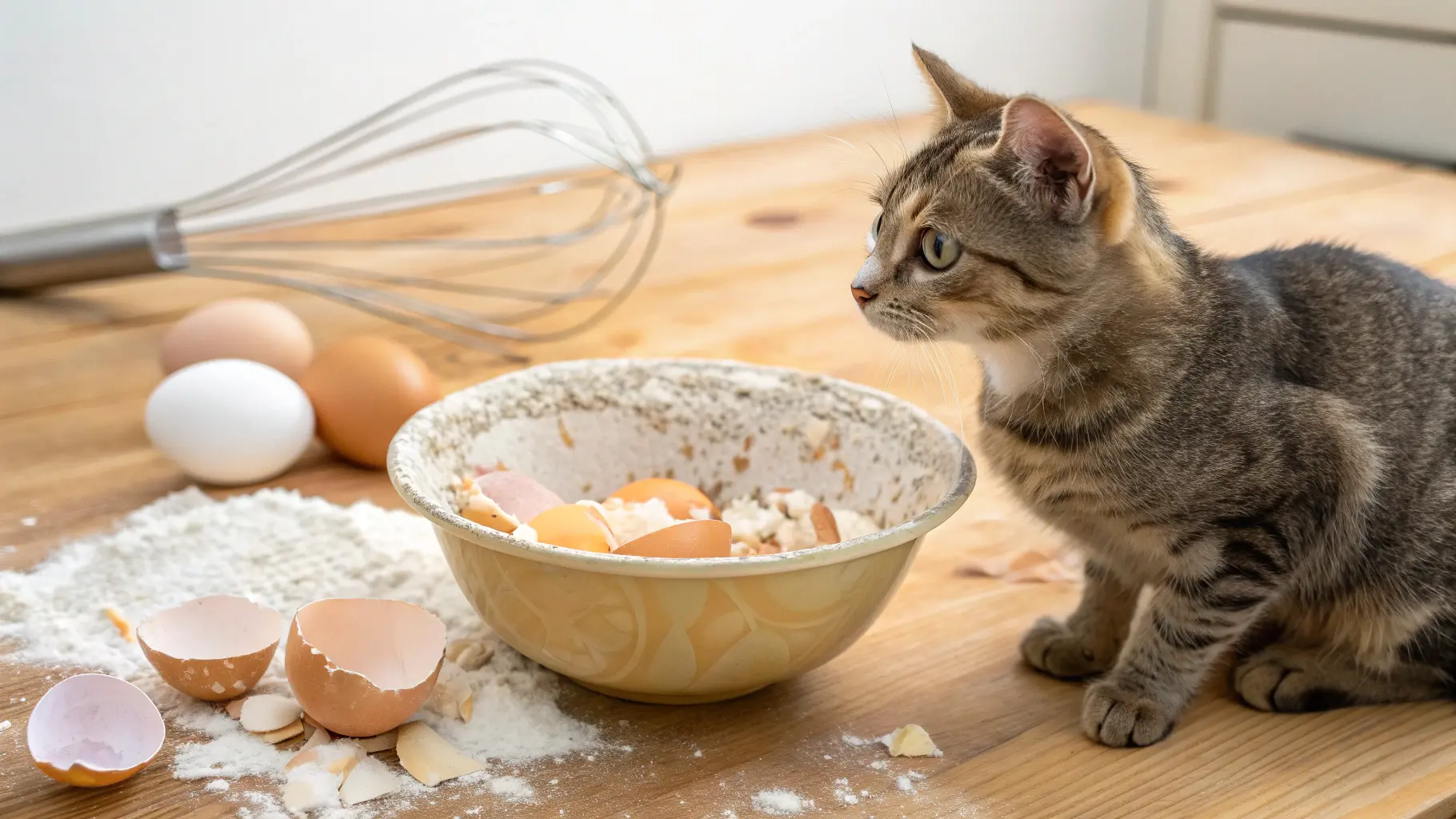
Can cats eat egg shells? Yes, and when prepared correctly, eggshells are one of the best natural calcium supplements available for cats. But there is a right way and a wrong way to do it. Raw shells carry bacterial risks. Whole pieces are a choking hazard. And too much calcium causes real problems.
I researched this for my own four cats — two of whom are seniors that need extra joint support. What I found is that eggshell powder, properly prepared, is just as effective and far cheaper than most commercial calcium supplements.
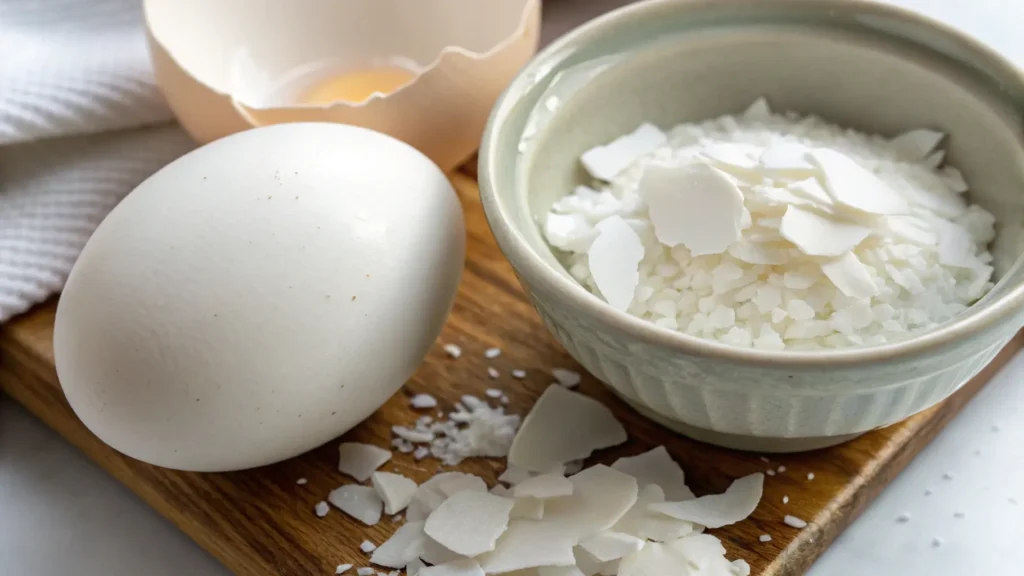
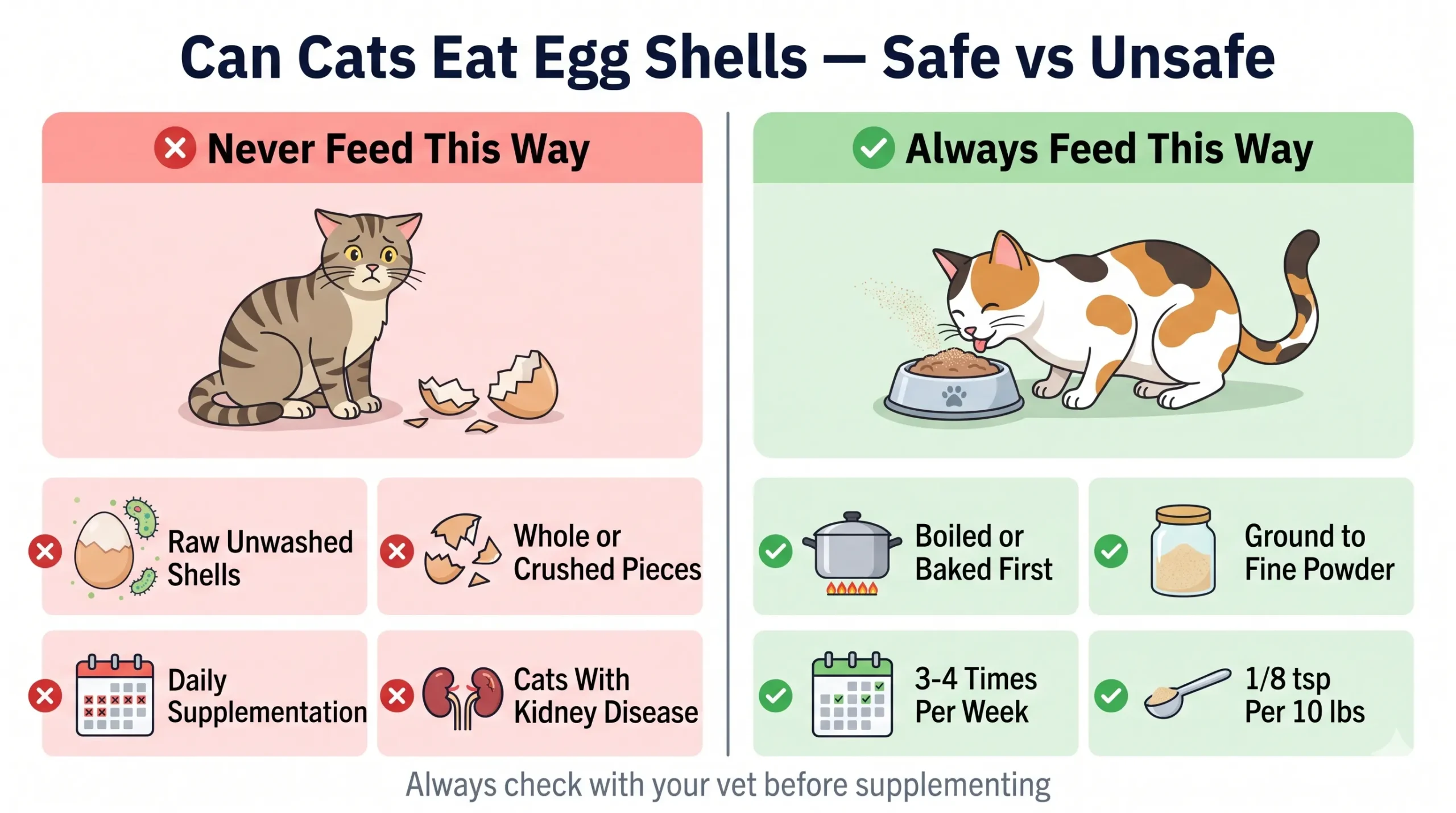
Yes, but only as finely ground powder from boiled or baked shells. Give 1/8 teaspoon per 10 lbs of body weight, 3–4 times per week on wet food. Never feed raw or unground shells. Cats on commercial food may not need supplementation — ask your vet first.
Are Egg Shells Safe for Cats?
Yes, when properly prepared. Eggshells are approximately 95% calcium carbonate, making them one of the most calcium-dense natural foods available. A whole eggshell contains roughly 1,800–2,200 mg of calcium; once ground into powder, about half a teaspoon supplies approximately 750–800 mg.
For cats, calcium is essential for bone density, muscle function, nerve signaling, and dental health. The thin membrane inside the shell also contains glucosamine, chondroitin, and collagen, which may support joint health in aging cats.
Homemade diets commonly run low on calcium relative to phosphorus, which is one of the more frequent nutritional gaps in cats fed raw or homemade food. Eggshell powder is a low-cost way to help correct that imbalance.
| Question | Answer |
|---|---|
| Can cats eat egg shells? | ✅ Yes — when properly prepared as powder |
| Can cats eat raw egg shells? | ⚠️ Not recommended — bacterial risk + sharp edges |
| Can cats eat cooked egg shells? | ✅ Yes — safest option |
| Best form to feed | Finely ground eggshell powder |
| How much per serving | 1/8 teaspoon per 10 lbs body weight |
| How often | 3–4 times per week maximum |
| Can cats eat egg shells every day? | ❌ No — over-supplementation risk |
Can Cats Eat Raw Egg Shells?
Technically yes, but it is not recommended for two reasons:
1. Bacterial contamination. Raw shells can harbor Salmonella on their outer surface, even when the eggs look clean. Salmonella in cats causes vomiting, diarrhea, lethargy, and in severe cases systemic infection.
2. Sharp edges. Unprocessed raw shell fragments have jagged edges that can irritate or cut your cat’s mouth, throat, and digestive tract. This risk is completely eliminated when shells are ground into fine powder.
Can Cats Eat Cooked Egg Shells?
Yes, and this is the recommended approach. Boiling for 5–10 minutes or baking at 200°F (93°C) for 10–15 minutes kills surface bacteria without reducing the calcium content. Calcium carbonate is heat-stable.
Cooked eggshells are also easier to grind into a uniform fine powder, which is the safest and most practical form for feeding.
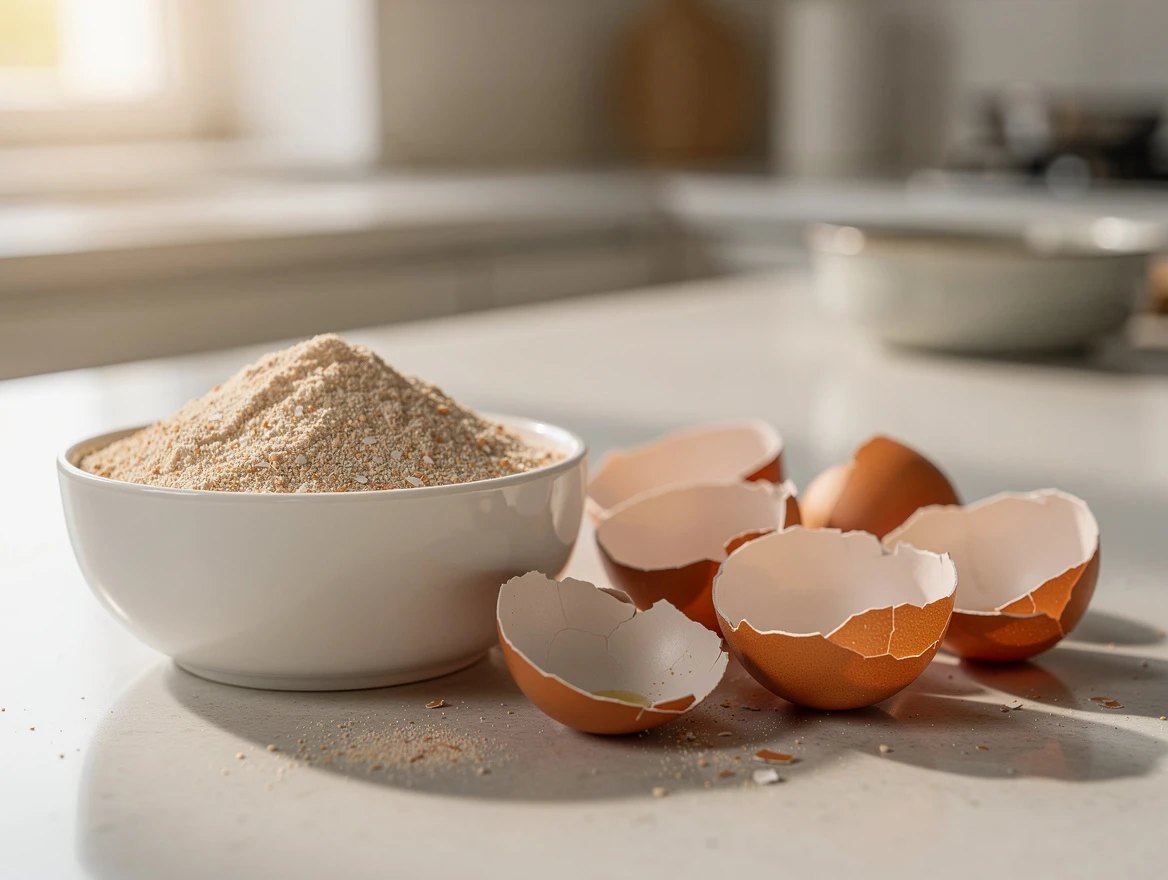
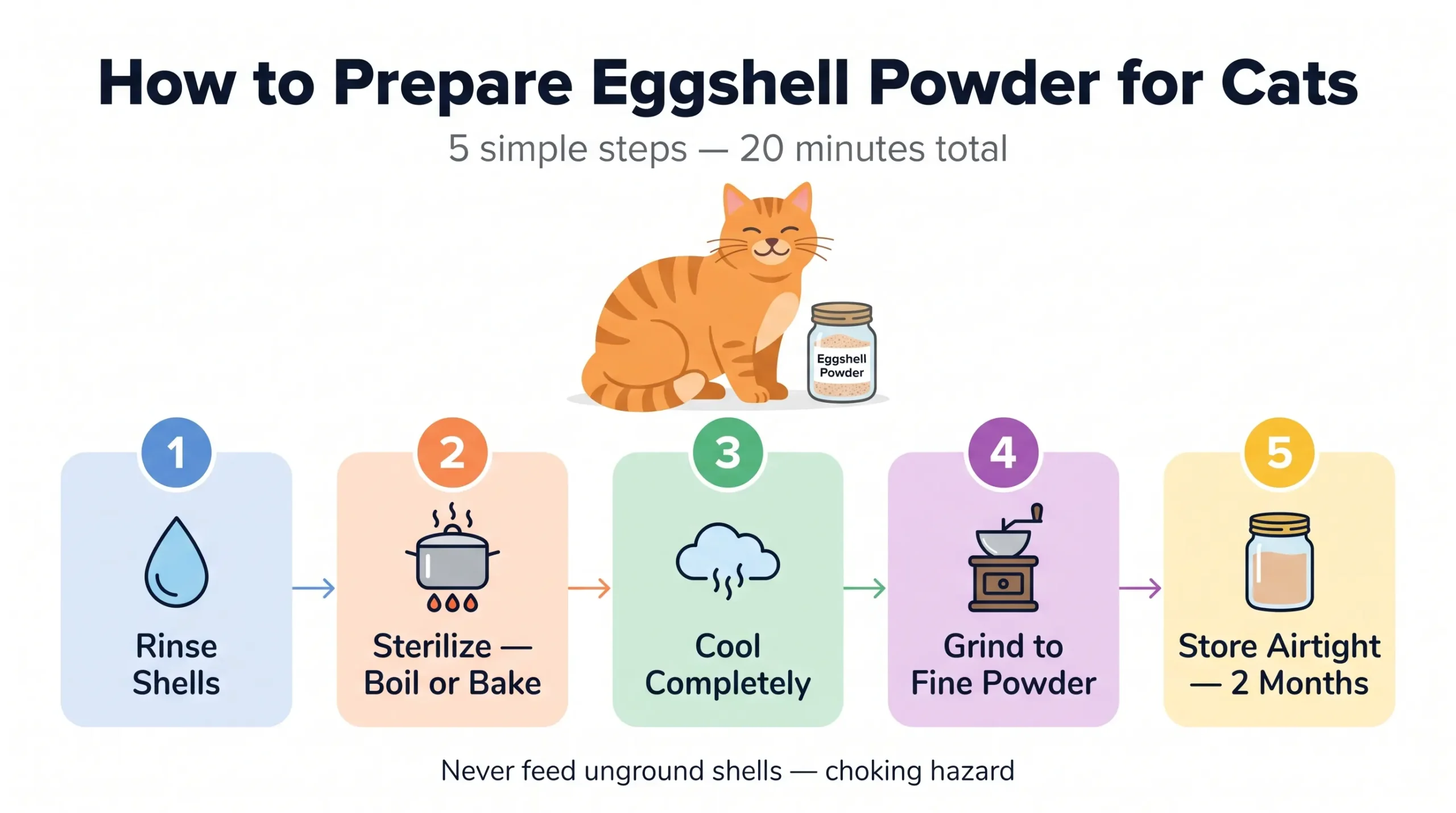
How to Prepare Eggshell Powder for Cats — Step by Step
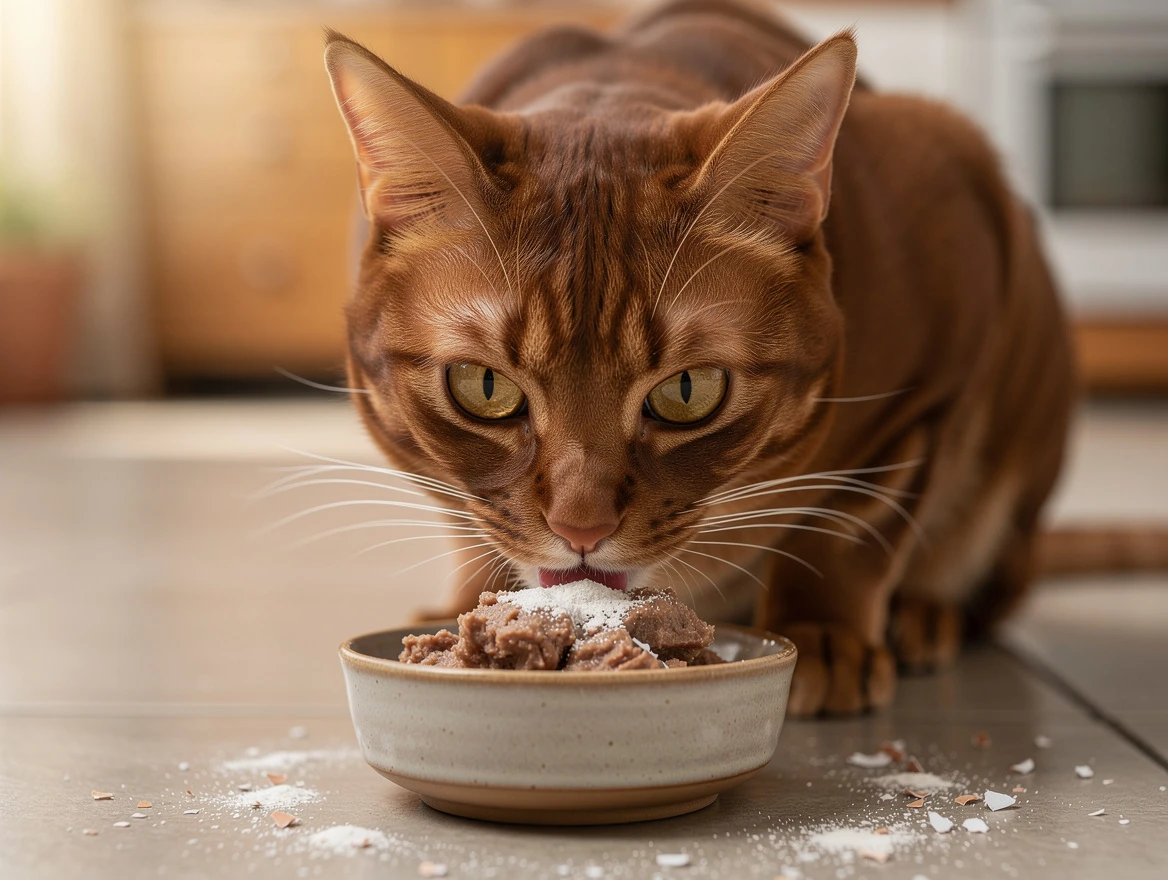
This is the safest way for your cat to eat egg shells. Eggshell powder mixes seamlessly into wet food with no choking risk and no taste change.
- Rinse — rinse cracked shells under warm water to remove any remaining egg white
- Sterilize — boil for 5–10 minutes OR bake at 200°F for 10–15 minutes until dry
- Cool — let shells cool completely before grinding
- Grind — use a coffee grinder or food processor until you have uniform fine powder with no visible pieces. Any fragments are a choking hazard.
- Store — transfer to an airtight glass container. Keeps for up to 2 months in a cool, dry place.
How Much Eggshell Powder to Give Your Cat
Too much is a real concern — excess calcium causes hypercalcemia, kidney stones, bladder crystals, and constipation, which is exactly why dosage matters more than most owners assume.
| Cat Size | Amount Per Serving | Frequency |
|---|---|---|
| Under 5 lbs (kitten/small cat) | 1/16 teaspoon | 2–3x per week |
| 5–10 lbs (average adult) | 1/8 teaspoon | 3–4x per week |
| 10–15 lbs (large cat) | 1/8–1/4 teaspoon | 3–4x per week |
| Over 15 lbs | Consult your vet | — |
How to feed it: Sprinkle directly onto wet food and mix in. Most cats do not notice it — it is tasteless and blends completely.
If your cat eats complete commercial cat food, they are likely getting adequate calcium already. Eggshell supplementation is most useful for cats on raw or homemade diets, senior cats with joint issues, or cats with diagnosed calcium deficiency. Always confirm with your vet before starting. Related: Home Cooked Cat Food Recipes — homemade diets need calcium supplementation.
Which Cats Benefit Most From Egg Shells
- Cats on raw or homemade diets — most homemade recipes lack balanced calcium-to-phosphorus ratios. Eggshell powder corrects this.
- Senior cats with arthritis — the membrane inside the shell contains glucosamine and collagen that may support joint health
- Cats with dental problems or loose teeth — calcium supports dental health. Related: My Cats Tooth Is Loose Can I Pull It Out
- Kittens during rapid bone growth — only under vet guidance; excess calcium during growth can cause its own skeletal problems
Signs Your Cat May Need More Calcium
- Brittle or weak nails
- Dental problems or loose teeth
- Stiffness or reluctance to jump (in older cats)
- Muscle tremors or twitching. Related: Why Does My Cat Twitch in His Sleep — twitching can sometimes indicate nutritional deficiency
- Bone fractures from minor impacts
Risks and Who Should NOT Have Egg Shells
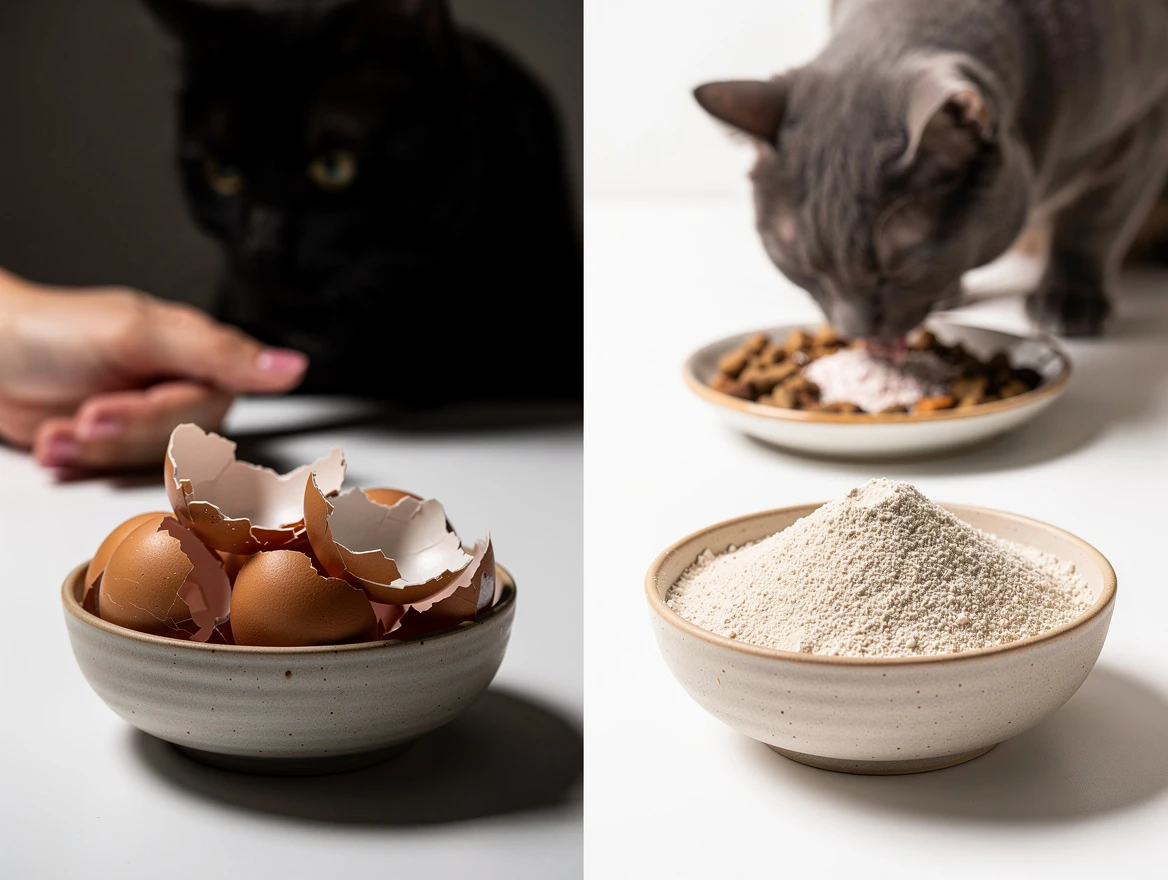
- Choking hazard — only feed as finely ground powder, never whole or partially crushed pieces
- Over-supplementation — too much calcium disrupts the calcium-phosphorus balance, causing kidney stones and bladder crystals
- Bacterial contamination — always sterilize before feeding. Never skip this step.
- Drug interactions — calcium interferes with some antibiotics and thyroid medications. Check with your vet if your cat takes any prescription medication.
🩺 Do NOT Give Egg Shells To (Without Vet Guidance):
- Cats with kidney disease — excess calcium worsens kidney function. Related: Signs of Kidney Failure in Cats
- Cats with history of urinary crystals or bladder stones
- Cats on calcium-supplemented commercial food without vet guidance
- Cats on thyroid medication — calcium can interfere with absorption
- Pregnant or nursing cats — calcium supplementation during pregnancy is generally discouraged, since it can suppress the hormonal system that regulates calcium and increase the risk of eclampsia (dangerous low calcium) after birth. Any calcium during pregnancy should be vet-directed only, never added on your own.
Raw vs Cooked vs Powder — Comparison
| Form | Safety | Ease | Recommended? |
|---|---|---|---|
| Raw whole shell | ⚠️ Bacteria + sharp edges | Difficult | ❌ No |
| Raw crushed fragments | ⚠️ Sharp edge risk | Difficult | ❌ No |
| Boiled/baked whole shell | ✅ Safe | Medium | 🟡 Acceptable |
| Eggshell powder (sterilized first) | ✅ Safest | Easy | ✅ Best option |
Can Cats Eat Quail Egg Shells?
Yes, using the same preparation method. Quail shells are thinner and easier to grind. The calcium content per weight is comparable to chicken eggshells. Prepare, sterilize, and grind them exactly the same way.
Eggshells vs Commercial Calcium Supplements
| Feature | Eggshell Powder | Commercial Supplements |
|---|---|---|
| Source | Natural — 95% calcium carbonate | Varies — synthetic or natural |
| Calcium per serving | ~750-800 mg per 1/2 tsp powder | Controlled, precise dosage |
| Preparation | Boil, dry, grind — 20 minutes | Ready to use |
| Cost | Essentially free | $10–30 per bottle |
| Risk level | Higher if not ground properly | Lower with controlled dosing |
| Joint support | May help — membrane contains glucosamine | Only if specifically formulated |
| Taste | Tasteless when finely ground | Flavored for acceptance |
Common Mistakes Cat Owners Make
- Feeding whole or chunky pieces — always grind to fine powder, never skip this step
- Skipping sterilization — raw shells carry Salmonella. Always boil or bake first.
- Daily supplementation — too much calcium causes kidney stones and bladder issues. 3–4 times per week maximum.
- Not checking with the vet — cats on commercial food may already get enough calcium
- Using eggshells for cats with kidney disease — excess calcium worsens kidney function
Frequently Asked Questions
Eggshell powder is not a treatment for allergies. However, the eggshell membrane contains compounds that may support immune function. If your cat has allergies, consult your vet for proper treatment rather than relying on supplements alone.
Cats are attracted to the calcium and minerals in eggshells. Some also like the residual egg white on the shell. If your cat is seeking out eggshells, it may indicate a calcium craving — especially in cats on homemade or raw diets.
The Bottom Line
Eggshell powder is one of the safest and most affordable natural calcium supplements available for cats. Boil or bake first, grind to fine powder, and give 1/8 teaspoon on wet food a few times per week. The cats that benefit most are those on homemade or raw diets, senior cats with joint concerns, and cats with diagnosed calcium deficiency. If your cat eats commercial food and is healthy, check with your vet first — they may already be getting everything they need. Related: Can Cats Eat Eggs — the complete guide to feeding eggs (not just the shells) safely. Also: Can Cats Eat Rice — another common human food and its safety for cats.