How to Get Your Cat to Love Wet Food

How to Get Cat to Eat Wet Food — 7 Tricks That Actually Work

🐾 MyPawellness.com — Real Advice from a Real Pet Owner
Cat Nutrition

How to Get Cat to Eat Wet Food — 7 Tricks That Actually Work

By Luna Saber | Updated May 2026 | 🐱 Owner of 1 dog + 4 cats
How to get cat to eat wet food is one of the most searched cat nutrition questions — and one of the most worth solving. How do I get my cat to eat wet food when they have only ever eaten dry food? How can I get my cat to eat wet food when they treat it like it does not exist? These are the questions I was asking with all four of my cats — including Jasper, my most stubborn dry food addict who refused everything for three weeks before the right combination finally worked.

This guide covers the 7 proven tricks for how to get your cat to eat wet food, a complete 7-day transition plan, what to do when your cat suddenly stopped eating wet food, the fussy and stubborn cat protocol, and exactly when the problem is medical rather than behavioral.

⚡ Quick Answer

How to get cat to eat wet food — even a confirmed dry food addict — comes down to five principles: warm the food to body temperature to boost aroma, transition gradually over 7 to 10 days by mixing wet into dry, try different textures since most cats have strong texture preferences, add a small amount of low-sodium chicken broth as a topper, and remove dry food availability between meals. Most cats accept wet food within two weeks when these steps are followed consistently.


⚠️ When Refusing Wet Food Is a Vet Emergency

How to get cat to eat wet food is usually a behavioral and preference challenge — but sometimes food refusal signals something medical that no food trick will fix. Call your vet if your cat shows any of these alongside refusing wet food:

🚨 Call Your Vet — Not a Recipe — If You See:
  • Not eating any food — wet or dry — for more than 24 hours
  • Drooling excessively, pawing at mouth, or dropping food mid-chew (dental pain)
  • Vomiting after attempting to eat
  • Sudden weight loss alongside reduced appetite
  • Lethargy, hiding, or behavioral change alongside the food refusal
  • A cat that previously ate wet food enthusiastically and suddenly stopped entirely

These signs mean the problem is medical — not pickiness. See our guide on why your cat won’t eat for a full breakdown of when food refusal needs urgent attention.


At a Glance: 7 Tricks to Get Cat to Eat Wet Food

# Trick Why It Works Time to Results Best For
1 Warm the food Heat releases aroma — the #1 thing cats use to decide if food is acceptable Immediate All cats, especially seniors
2 Gradual mixing Disguises wet food as familiar until habit forms 7–10 days Dry food addicts
3 Broth or tuna topper Irresistible smell bridges the gap from dry to wet 1–3 days Food motivated cats
4 Texture switching Many cats reject one texture but love another 1–7 days Picky and fussy cats
5 Remove dry food between meals Mild hunger makes wet food more appealing 2–5 days Cats with unlimited dry access
6 Wide shallow bowl Eliminates whisker fatigue — a hidden reason for refusal Immediate Cats that eat a few bites then stop
7 Hand feeding to start Builds positive association through trust 3–7 days Anxious or stressed cats

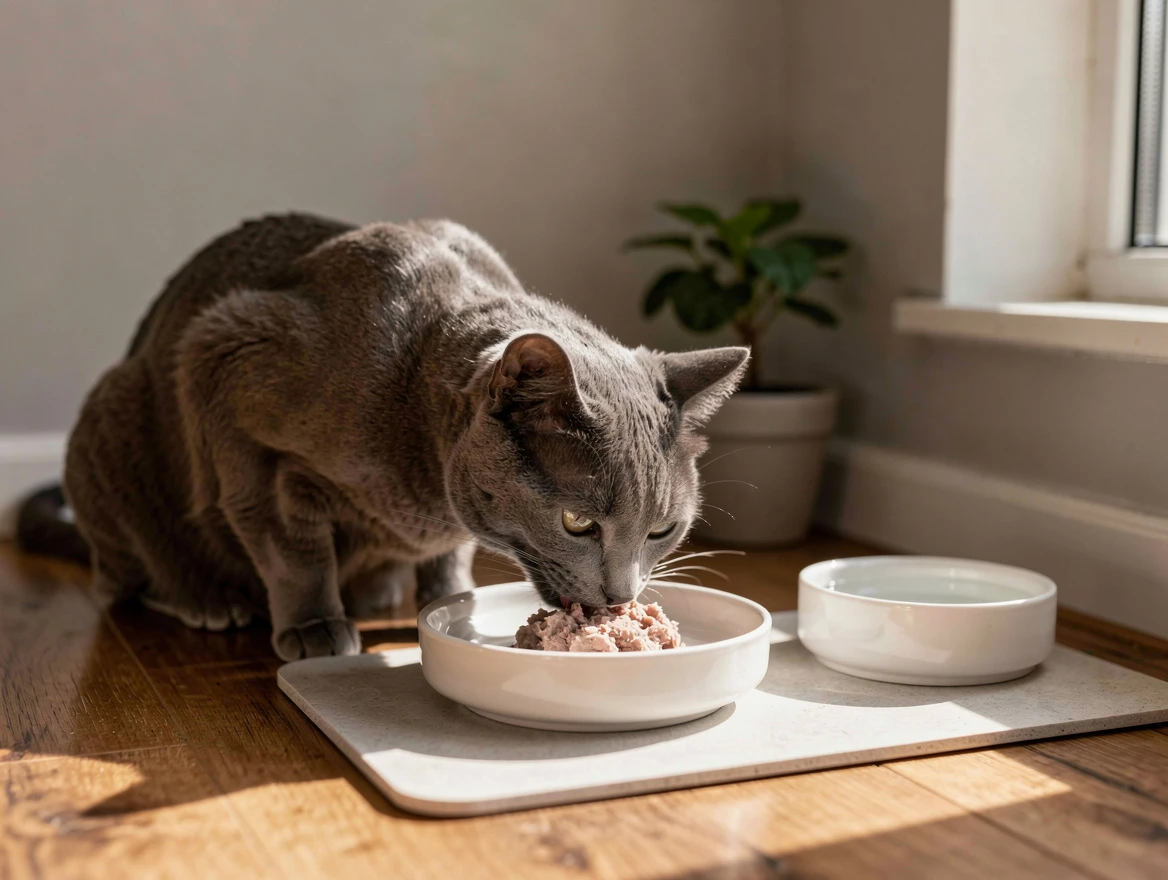
How to get cat to eat wet food — cat eating from shallow bowl in calm quiet corner


Why Cats Refuse Wet Food — The Real Reasons

How to get cat to eat wet food starts with understanding why your specific cat is refusing it. The reason matters because different causes need different solutions — there is no single universal trick for how to get cat to eat wet food.

1. Habit and Imprinting

Cats are neophobic — they instinctively distrust new foods. A cat that has eaten only dry food for years has been conditioned to recognize kibble as safe food. Wet food smells, looks, and feels completely different. The refusal is not stubbornness — it is a hardwired survival instinct. This is the most common reason cats refuse wet food, and it is entirely solvable with the gradual transition approach below.

2. Temperature and Aroma

Cats decide whether to eat primarily through smell, not taste. Cold wet food from the refrigerator has suppressed aroma — it smells like almost nothing. This is why warming the food is the single most effective first step for how to get cat to eat wet food. According to the Cornell Feline Health Center, cats prefer food at approximately body temperature — around 38°C or 100°F — which is what prey would be fresh.

3. Texture Preference

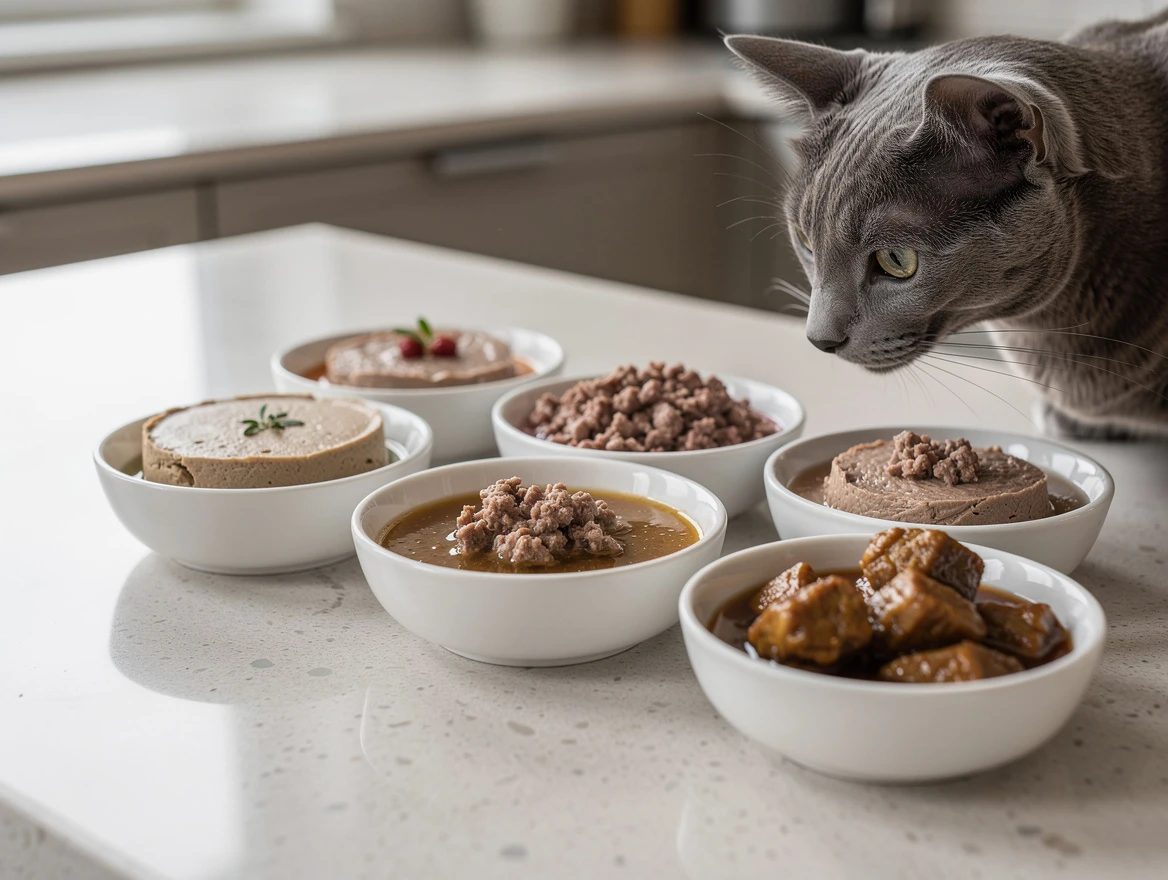
Wet cat food comes in radically different textures — smooth pâté, chunky pieces in gravy, shredded, minced, and mousse. A cat that rejects pâté might enthusiastically eat shredded chicken in broth. Many owners give up after trying one texture and conclude their cat hates wet food entirely — when the cat actually just hates that specific texture.

4. Whisker Fatigue

If your cat eats a few bites and then steps back or seems interested but won’t continue — whisker fatigue may be the cause. Deep narrow bowls force a cat’s whiskers to touch the sides, which is uncomfortable. Switching to a wide shallow dish or flat plate often solves the how to get cat to eat wet food problem immediately.

5. The Bowl Is Wrong

Plastic bowls absorb and retain odors from previous meals — smells cats find off-putting. Stainless steel or ceramic bowls are significantly better. Location also matters — cats refuse food near their litter box or in high-traffic areas.

“Jasper — my most stubborn dry food addict — refused every wet food I tried for three weeks. I was ready to give up. Then I switched from a deep ceramic bowl to a flat plate and warmed the food to room temperature. He finished the entire portion. Three years later he eats only wet food and his kidney bloodwork has been perfect. The plate change was it.” — Luna Saber

Cat refusing wet food from bowl — common reasons cats reject wet food explained


7 Tricks to Get Your Cat to Eat Wet Food

How to get your cat to eat wet food — whether they are a dry food addict, a stubborn refuser, or a cat that used to eat wet food and stopped — comes down to matching the right trick to the right cause. How to get cats to eat wet food reliably requires starting with Trick 1 regardless of your cat’s specific situation:

Trick 1 — Warm the Food (Most Effective First Step)

This is the single highest-success first step for how to get cat to eat wet food. Take wet food from the refrigerator and microwave for 10 to 15 seconds, stir thoroughly, and test the temperature — it should feel slightly warm to the touch, not hot. Never serve straight from the fridge.

Why it works: Warming releases volatile aroma compounds that make the food significantly more attractive. Cold food has almost no detectable smell for a cat.

Pro tip: Add one to two teaspoons of warm water and stir — this brings the food to body temperature more evenly and increases the moisture content, which is the main health benefit of wet food in the first place.

Trick 2 — Use a Broth or Tuna Juice Topper

Drizzle one to two teaspoons of low-sodium chicken broth or the liquid from plain canned tuna over the wet food surface. This creates an irresistible aroma that many dry-food addicts cannot resist investigating — and investigating leads to tasting, which is how to get cat to eat wet food with the most resistant cats.

Critical rule: Use only broths with no onion, garlic, chives, or leeks — these are toxic to cats. Plain bone broth or homemade chicken broth with no additives is the safest option. Once your cat reliably eats the wet food, gradually reduce the topper over one to two weeks.

Trick 3 — Try Every Texture Before Giving Up

This is the most commonly skipped step and the reason many owners incorrectly conclude their cat hates wet food. If your cat rejected one brand or texture, the experiment is not over. The texture hierarchy to try in order:

  • Pâté — smooth, dense, no liquid
  • Chunks in gravy — most popular with cats that like to chew
  • Shredded in broth — closest to prey texture, often accepted by resistant cats
  • Mousse/whipped — very smooth, lighter than pâté
  • Minced — fine pieces, good middle ground

Buy one small pouch or single-serve can of each before committing to a large quantity. Many cats have very strong texture preferences that override everything else in the how to get cat to eat wet food equation. If your cat has a sensitive stomach, our guide on wet cat food for sensitive stomach covers which textures and formulas tend to be best tolerated. For cats that do well on grain-free options, our grain-free wet cat food guide breaks down the top choices by texture.

Trick 4 — Switch to a Wide Shallow Bowl or Flat Plate

If your cat approaches the food, smells it, takes a few bites, then walks away — whisker fatigue is the most likely cause. Switch to the flattest, widest dish you have — a small dinner plate works perfectly. Many owners discover this is the entire solution to how to get cat to eat wet food without any other changes needed.

Trick 5 — Remove Free Access to Dry Food

If dry kibble is available all day, your cat has zero reason to try something unfamiliar. Free-feeding dry food is the most common reason gradual wet food introduction fails — the cat simply waits out the wet food and snacks on kibble whenever hungry. Switch to scheduled mealtimes for dry food: two to three set times per day with the bowl removed after 30 minutes. A cat that is genuinely hungry at mealtime is far more willing to try something new.

Important: Do not starve your cat. If they refuse the wet food entirely at a meal, offer a small amount of familiar dry food so they eat something. The goal is motivation, not deprivation.

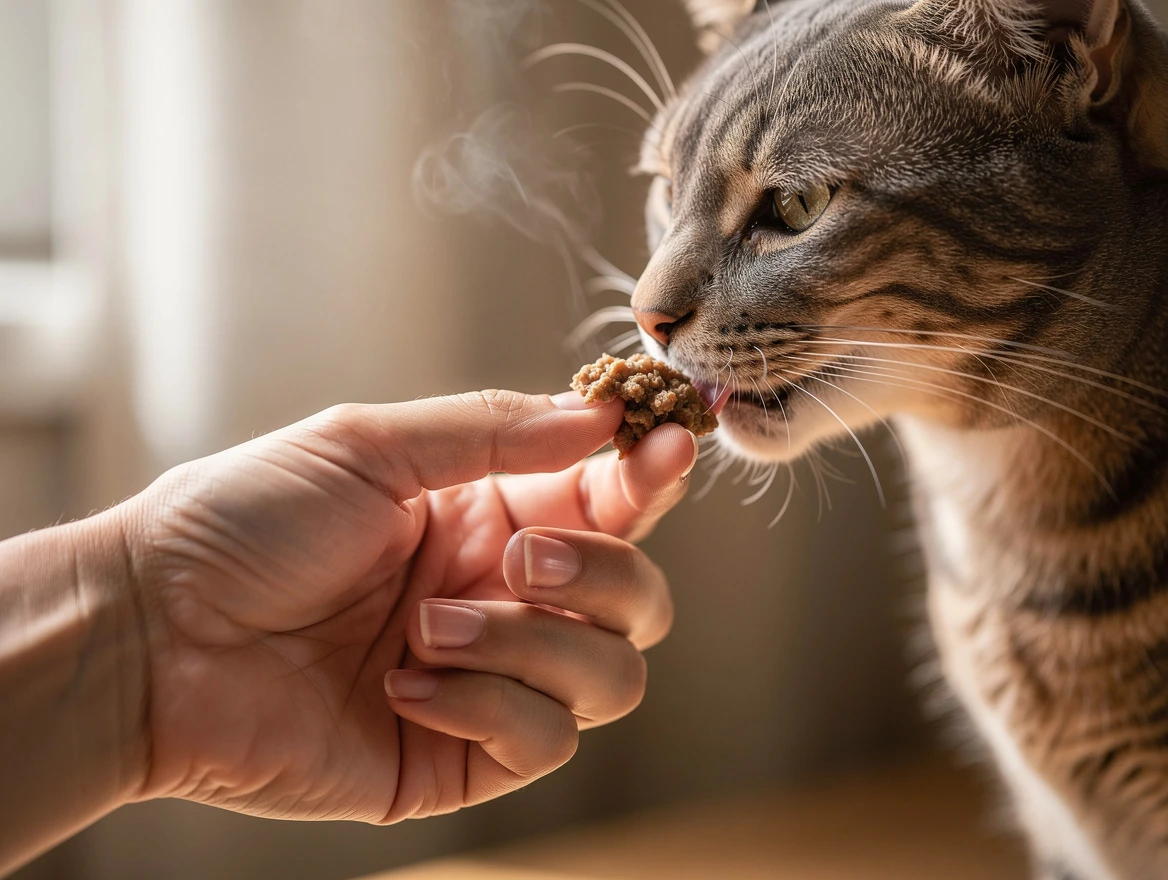
Trick 6 — Hand Feeding to Build Association

For anxious cats, hand feeding wet food builds trust and positive association. Offer a small amount on your fingertip or a spoon. Use this for three to five days as a bridge, then gradually move to offering it from a plate placed right beside your hand, then further away, until the cat eats independently. This is one of the most effective techniques for how to get cat to eat wet food in stress-sensitive cats.

Trick 7 — The Hunger Walk Technique

For particularly resistant cats: offer wet food in the usual spot, leave it for 10 minutes, then remove it. Do not offer anything else for two to three hours, then offer the wet food again freshly warmed. Repeat. This mirrors how cats experience prey in the wild and makes the food feel more real. Most cats that resist wet food for days accept it within one to three days using this approach combined with warming and a shallow bowl.
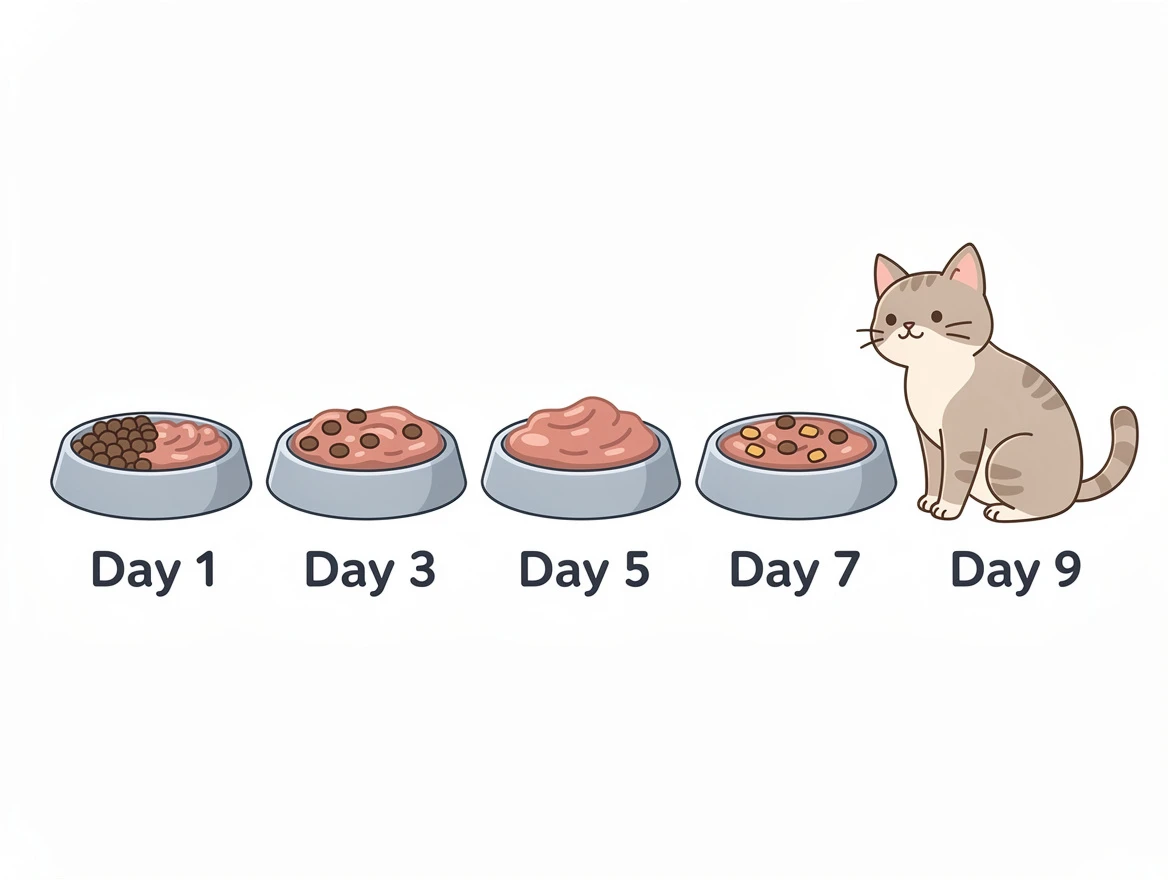
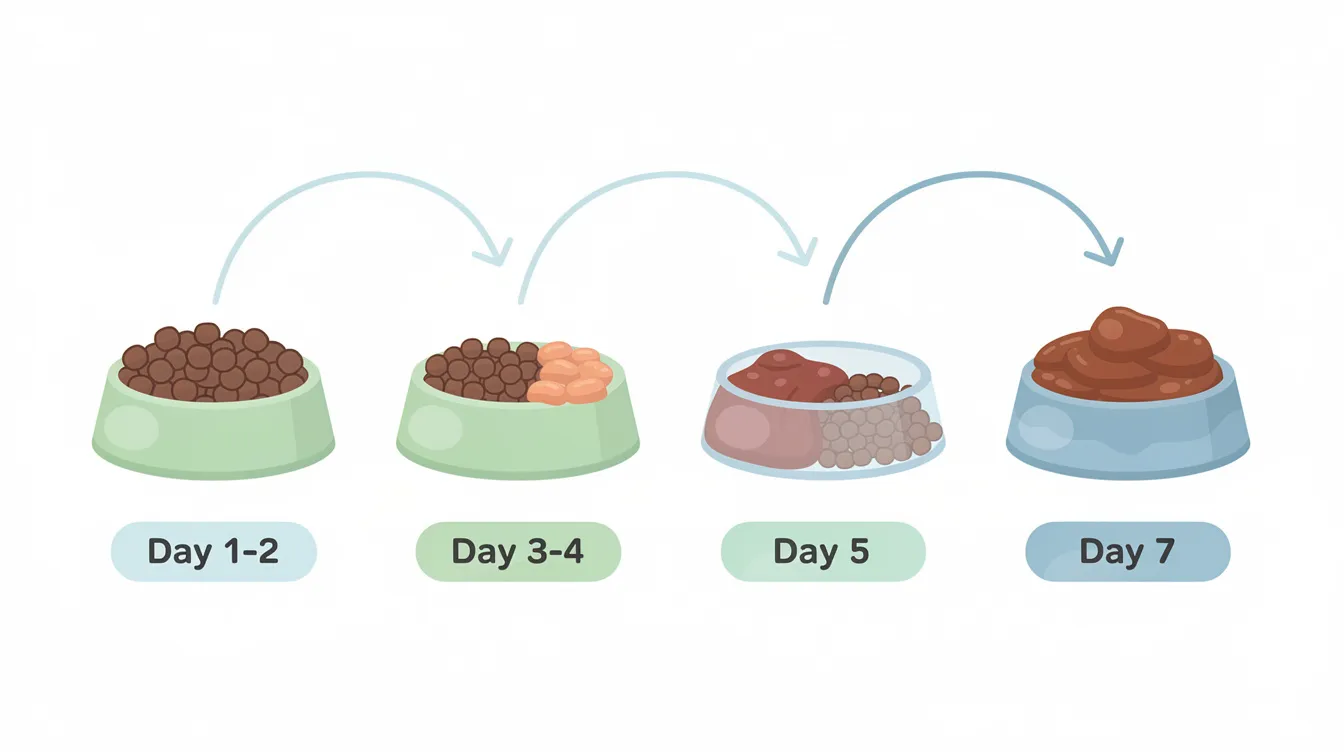
How to transition cat to wet food — gradual 7-day mixing plan from dry kibble to wet


The 7-Day Transition Plan — How to Transition Cat to Wet Food Step by Step

How to transition cat to wet food reliably requires a structured plan — not random offering. Whether you are wondering how to get my cat to eat wet food for the first time or how to get cats to eat wet food after a long dry-only diet, this 7-day plan is aligned with standard veterinary dietary transition guidance and has worked with all four of my cats.

Day 1–2: Introduction Only

Place a very small amount of wet food — one teaspoon — alongside the dry food bowl, not mixed in. The goal is smell familiarity, not eating. Warm to room temperature. Most cats will sniff and walk away — that is fine. You are building scent familiarity for how to get cat to eat wet food over time, not expecting immediate results.

Day 3–4: Mix 25% Wet into Dry

Mix one part wet food into three parts dry food. Warm the mixture slightly. Add broth topper if needed. The cat is eating mostly familiar food with a small amount of wet incorporated. Most cats accept this without noticing.

Day 5: Mix 50/50

Equal parts wet and dry, warmed, with topper if still needed. This is often where resistance first appears. If your cat refuses, hold at this ratio for an extra day before moving forward — do not rush how to get cat to eat wet food at this stage.

Day 6: Mix 75% Wet into 25% Dry

Mostly wet food with just a small amount of kibble. At this point many cats are eating the mixture without noticing the shift.

Day 7: Wet Food Only

Serve wet food on a flat plate, warmed to body temperature. If the cat eats — transition complete. If resistance continues, extend Day 5 or 6 for another two to three days before attempting full wet food.

💡 The most important rule for how to get cat to eat wet food: Never rush a step because the previous one went well. Cats lock in food preferences through repetition — the habit needs to form at each ratio before moving forward. Rushing causes backsliding that takes longer to recover from than going slowly would have.

Why Did My Cat Stop Eating Wet Food but Still Eats Dry Food?

Why did my cat stop eating wet food but still eats dry food — and cat stopped eating wet food after months of reliably eating it — are two of the most common questions I receive. The cause is almost never simple preference. Something changed, and identifying what changed is the entire solution:

What Changed What to Check Fix
Brand or formula changed Manufacturer changed recipe — very common Try original formula or find equivalent
Food stored incorrectly Opened can kept too long, absorbed fridge odors Use within 48 hours, cover tightly — see our guide on how long wet cat food can sit out
Bowl not cleaned Residue smell from previous meals Wash bowl with hot water before every meal
Household stress New pet, move, construction, schedule change Address stress source — see our is my cat depressed guide
Dental pain Cat approaches but pulls away after one bite Urgent vet dental check
Illness or nausea Cat also less active, drinking differently Vet visit — check kidney function
Cat aging Senior cat’s sense of smell declining Warm food more, use stronger-smelling toppers

A cat that suddenly stops eating wet food after months or years of reliably eating it — especially a senior cat — warrants a vet visit to rule out early kidney disease or dental problems. Our guide on signs and symptoms of kidney failure in cats explains why reduced appetite for wet food in senior cats is sometimes the first visible sign of kidney disease. Also check our cat wet food can guide for storage and handling best practices — incorrectly stored wet food is one of the most overlooked reasons cat stopped eating wet food after previously accepting it.

Why did my cat stop eating wet food but still eats dry food — common causes explained


How to Get a Picky or Stubborn Cat to Eat Wet Food

How to get a picky cat to eat wet food, how to get my picky cat to eat wet food, how to get a fussy cat to eat wet food, how to get a stubborn cat to eat wet food — these all describe the same challenge: a cat with strong food preferences and resistance to change. The approach requires understanding which type of picky your cat actually is:

For Neophobic (Fear of New Food) Cats

Introduce wet food smell without any expectation of eating for the first five days. Place a small amount near — not in — their dry food bowl. Let them investigate on their own terms. Never hover or watch them eat. Pressure increases neophobia and makes how to get a picky cat to eat wet food significantly harder.

For Learned-Picky Cats (Hold Out for Better Food)

This is the cat that refuses wet food and gets dry food as a result — which reinforces the refusal. The fix for how to get a picky cat to eat wet food: do not offer dry food as a fallback within two hours of a refused wet food meal. The behavior only persists because it is being rewarded with something better.

For Texture-Picky Cats

Buy a variety pack or one single-serve pouch each of pâté, chunks in gravy, shredded, and mousse. Run a systematic test over four days. Document which texture gets the most investigation and the most bites. Start the full transition with whichever texture scores highest — this is the fastest route to how to get a picky cat to eat wet food successfully.


How to Get My Cat to Eat Wet Food Again After Refusing

How to get my cat to eat wet food again after a period of refusal is different from initial introduction. Your cat has associated wet food with something negative — a bad experience, illness, or a formula change — and the association needs to be reset.

The reset protocol for how to get my cat to eat wet food again:

  1. Stop offering the rejected food entirely for three days
  2. Introduce a completely different brand, flavor, and texture — not the one that was refused
  3. Serve it on a different plate in a slightly different location
  4. Use the broth topper technique to make the new food irresistible
  5. Once the new wet food is accepted, reintroduce the original brand gradually if desired

How to get my cat to eat wet food again works through this reset because cats associate refusal with the specific food, bowl, and location simultaneously. Changing all three breaks the negative association and gives you a completely fresh start.


Dry Food vs Wet Food — What Actually Matters for Your Cat’s Health

Understanding why how to get cat to eat wet food is worth the effort requires knowing what the research actually shows about wet versus dry food for cats:

Factor Dry Food Wet Food Winner
Moisture content ~10% 70–80% Wet ✅
Urinary health Increases risk of crystals with low water intake Significantly reduces UTI and crystal risk Wet ✅
Kidney health Lower hydration accelerates kidney disease Higher hydration protects kidney function Wet ✅
Weight management Higher calorie density, easy to overeat Lower calorie density, more satiating Wet ✅
Dental health Marginal benefit — not significant Neutral — no benefit or harm Tie
Convenience Easy storage, no refrigeration Needs refrigeration, shorter storage Dry ✅
Cost Generally cheaper per calorie Generally more expensive Dry ✅
Protein content Often higher carb, lower protein Typically higher protein, lower carb Wet ✅

The bottom line: wet food is genuinely better for most cats’ long-term health — particularly for urinary and kidney health. This is exactly why learning how to get cat to eat wet food is worth the effort. Cats with early kidney disease, urinary crystals, or obesity benefit the most from the switch.


Common Mistakes That Guarantee Your Cat Will Reject Wet Food

These mistakes are the reason most how to get cat to eat wet food attempts fail:

  • Serving cold from the refrigerator — cold wet food has almost no smell. This is the single most common reason how to get cat to eat wet food attempts fail. Always warm it first.
  • Trying one texture and concluding your cat hates wet food — there are five completely different textures. Rejecting pâté tells you nothing about whether your cat would accept shredded or chunks in gravy.
  • Leaving dry food available all day during the transition — free access to familiar dry food removes all motivation to try wet food. Scheduled mealtimes are essential.
  • Rushing the transition — moving from mixed to full wet food in two or three days instead of seven to ten almost always causes rejection and sets the transition back by weeks.
  • Using a deep narrow bowl — whisker contact during eating causes genuine discomfort. Always use wide and shallow for how to get cat to eat wet food successfully.
  • Hovering while the cat eats — anxious and neophobic cats eat less when observed. Place food down and walk away. Check back after 10 minutes.
  • Giving up after one or two refusals — most cats need 7 to 14 consecutive days of a new food being offered before they accept it. One or two refusals are not a verdict.
  • Overfeeding during the transition — if you are wondering how to get cat to eat wet food slower, use puzzle feeders or spread the food across a flat plate rather than piling it up. Eating too fast from wet food can cause digestive upset. If your cat develops a bloated belly during the transition, see our guide on my cat looks bloated but acting normal to understand whether the cause is dietary or something that needs a vet visit.

Common mistakes when getting cat to eat wet food — what to avoid during transition


🩺 When to Stop Trying Food Tricks and Call Your Vet

Call your vet this week:

  • Your cat has refused all food — wet and dry — for more than 24 hours
  • Approaches food but pulls away immediately after sniffing or one bite
  • Drooling, mouth odor, or difficulty chewing alongside food refusal
  • Weight loss visible over the past two to three weeks
  • Senior cat over 8 years that suddenly reduced food intake — rule out kidney disease

Continue home attempts for up to 2 weeks if:

  • Cat is still eating dry food normally with no weight loss
  • No behavioral changes alongside the wet food refusal
  • Cat under 7 years with no known health conditions
  • Refusal started specifically when you introduced the wet food

Frequently Asked Questions

How to get cat to eat wet food when they only like dry?

How to get cat to eat wet food when they are a confirmed dry food addict requires patience and the gradual mixing method over 7 to 10 days. Start with just one teaspoon of warmed wet food mixed into their regular dry food. The key is warming — cold wet food smells like almost nothing and dry food cats will simply ignore it. Most cats accept wet food within two weeks using this approach consistently.

How to get my cat to eat wet food again after they stopped?

How to get my cat to eat wet food again after refusal requires identifying what changed. Check whether the formula was altered, whether the bowl needs cleaning, whether the cat has dental pain, or whether household stress is the cause. If nothing obvious has changed, try a complete reset: different brand, different texture, different bowl, different location, with a broth topper for the first three days. How to get my cat to eat wet food again works best when you treat it as a fresh start rather than trying to reintroduce the rejected food directly.

How to get a picky cat to eat wet food when nothing works?

How to get a picky cat to eat wet food when all standard methods have failed usually comes down to two things being missed: texture (try all five textures systematically) and the free dry food problem (remove dry food access between meals). Most cats labeled impossible to switch have simply not had every texture tried or have had dry food available as a fallback that removes their motivation to try anything new.

What is the 25 rule for cat food?

The 25 rule refers to a labeling regulation — if a food label says “chicken cat food” the product must contain at least 25% chicken by weight. If it says “cat food with chicken” it only needs 3% chicken. This matters when choosing wet food for your how to get cat to eat wet food transition — look for products where the protein is in the top one to two ingredients and the product name uses the protein without a qualifier like “with” or “flavor.”

Is it bad if my cat won’t eat wet food?

A cat that eats only dry food is not in immediate danger, but long-term dry-only diets are associated with higher rates of urinary crystals, UTIs, kidney disease, and obesity because of the low moisture content. Wet food provides the hydration cats evolved to get from prey. Getting your cat to eat wet food — even a partial switch to one meal per day — is genuinely worth the effort for their long-term health.

How long does it take to transition a cat to wet food?

Most cats complete the transition to wet food in 7 to 14 days when the gradual mixing method is used consistently. Very resistant cats may take three to four weeks. How to transition cat to wet food should never be rushed — cats that are switched abruptly often develop food aversions that are harder to overcome than the original resistance would have been. The 7-day plan in this guide is the most reliable framework.

How to get a fussy cat to eat wet food without force?

How to get a fussy cat to eat wet food is always about positive association — never pressure or force. The most effective non-force approach: warm the wet food, add one teaspoon of chicken broth, and place it next to — not replacing — their dry food for three to five days. Let the cat investigate and taste on their own terms. Once they are licking the topper regularly, they are almost always ready to accept the wet food beneath it.

How to get cat to eat wet food slower to avoid vomiting?

How to get cat to eat wet food slower — spread the wet food thinly across a flat plate or use a slow feeder mat rather than piling it in a bowl. Puzzle feeders designed for wet food also work well. Some cats eat wet food faster than dry because the texture is easier to gulp, which leads to vomiting. If your cat develops digestive upset or a bloated belly during the transition, our guide on my cat looks bloated but acting normal helps identify whether it is dietary or something requiring a vet visit.

My cat would rather starve than eat wet food — what do I do?

My cat would rather starve than eat wet food is a common frustration — but the solution is almost always a texture change combined with removing dry food fallback access. The cat is not actually choosing starvation — they are waiting for the food they know. Remove free dry food access, try every texture systematically especially shredded in broth, and use the hunger walk technique from Trick 7. Very few cats genuinely hold out beyond 3 to 4 days when all dry food fallback is removed and wet food is offered warmed and in the right texture.

How to get my cat to eat more wet food when they only eat a little?

How to get my cat to eat more wet food when they take a few bites and stop usually comes down to whisker fatigue (switch to a flat plate), temperature (warm it more), or portion size — offer less more frequently rather than one large serving. Some cats strongly prefer their wet food fresh — warming a new portion rather than offering refrigerator leftovers can double how much they eat at each meal.


The Bottom Line

How to get cat to eat wet food is one of the most common questions cat owners ask — and one of the most worth solving. The answer is almost always a combination of temperature (warm it), texture (try all five), bowl shape (wide and shallow), gradual transition (7 to 10 days), and removing dry food access between meals.

How to get cat to eat wet food becomes significantly easier once you understand that most cats refusing wet food are not expressing a permanent preference — they are expressing unfamiliarity with something new presented in a way that does not appeal to them yet. The cat that refuses cold pâté from a deep bowl after one offering is not a lost cause. They just need the right approach and enough consistent repetition for the new habit to form.

How to get cat to eat wet food is worth every bit of the effort when you look at the long-term health benefit — particularly for kidney and urinary health. If your cat has been eating wet food successfully and suddenly stopped, take it more seriously than new resistance — that behavioral change often signals something worth a vet conversation, especially in any cat over 8 years old.

🐾
Luna Saber — Pet Owner and Writer

Real experiences from life with 1 dog and 4 cats in a NYC apartment. Not a vet — just someone who has navigated these situations many times and done the research. Always consult your vet for medical decisions about your specific pet.


Related Articles

Cat Nutrition

How Often Should I Feed My Cat Wet Food?

Best feeding schedule once your cat accepts wet food.

Cat Nutrition

Wet Cat Food for Sensitive Stomach

Best options for cats with digestive issues.

Cat Nutrition

Grain-Free Wet Cat Food Guide

Top grain-free options by texture and protein.

Cat Nutrition

How Long Can Wet Cat Food Sit Out?

Safe storage rules to prevent food rejection.

Cat Nutrition

How Much Wet Food to Feed a Cat

Correct portion sizes after the switch.

Cat Health

My Cat Won’t Eat — When to Worry

When food refusal needs veterinary attention.