What Can I Give My Cat for Constipation at Home?

What Can I Give My Cat for Constipation at Home?

🐾 MyPawellness.com — Real Advice from a Real Pet Owner
Cat Health

What Can I Give My Cat for Constipation at Home?

By Luna Saber | Updated May 2026 | 🐱 Owner of 1 dog + 4 cats
What can I give my cat for constipation at home — illustrated guide to safe home remediesWhat can I give my cat for constipation at home is one of the most common questions I get — and one I have dealt with myself with my four cats. Constipation in cats is uncomfortable, sometimes painful, and if left too long, it can become a serious health problem. The good news is that most mild cases respond well to simple home remedies when you know the right ones to use and the right amounts to give.

Here is everything that actually works — with exact doses, real explanations, and clear signs of when home care is no longer enough.

⚡ Quick Answer

What can I give my cat for constipation at home? The safest and most effective options are plain canned pumpkin (½ tsp per meal), olive oil (½ tsp mixed into food), increased wet food, cat-safe laxatives like Miralax, probiotics, and fiber supplements. Always confirm with your vet before giving any laxative medication.


Cat Constipation Symptoms — How to Tell

Before figuring out what can I give my cat for constipation at home, you need to confirm that constipation is actually what you are dealing with. A healthy cat has a bowel movement every 24 to 36 hours. If your cat has not pooped in more than 48 to 72 hours, constipation is likely.

Signs of constipation in cats include:

  • Straining in the litter box without producing anything or producing very little
  • Hard, dry, small stools — often darker than normal
  • Crying or vocalizing while trying to use the litter box
  • Entering and exiting the litter box multiple times
  • Loss of appetite or reduced interest in food
  • A bloated or firm belly
  • Lethargy or hiding more than usual
  • Vomiting alongside straining

If the belly looks or feels distended, this could be something more serious — read: My Cat Looks Bloated But Acting Normal to understand when bloating becomes a different kind of concern.

If your cat is also lethargic alongside constipation, that combination always warrants a vet call — read: My Cat Is Lethargic But Eating and Drinking


What Can Make a Cat Constipated Quickly?

Understanding the cause helps you choose the right remedy. The most common causes of cat constipation include:

Cause Why It Happens Fix
Dehydration Not enough water intake dries out stools More wet food, water fountain
Dry food diet Kibble has very low moisture content Switch to or add wet food
Hairballs Swallowed fur blocks the digestive tract Hairball remedy, regular grooming
Low fiber diet Fiber keeps stools moving through the colon Add pumpkin or fiber supplement
Stress or anxiety Stress disrupts normal gut motility Reduce stressors, pheromone diffuser
Obesity Excess weight slows intestinal movement Controlled diet, exercise
Underlying illness Kidney disease, hyperthyroidism, megacolon Vet diagnosis required

Kidney disease is a less obvious but important cause of chronic constipation in cats — it leads to dehydration which directly affects stool consistency. Read: Signs and Symptoms of Kidney Failure in Cats


What Can I Give My Cat for Constipation at Home? 7 Safe Remedies

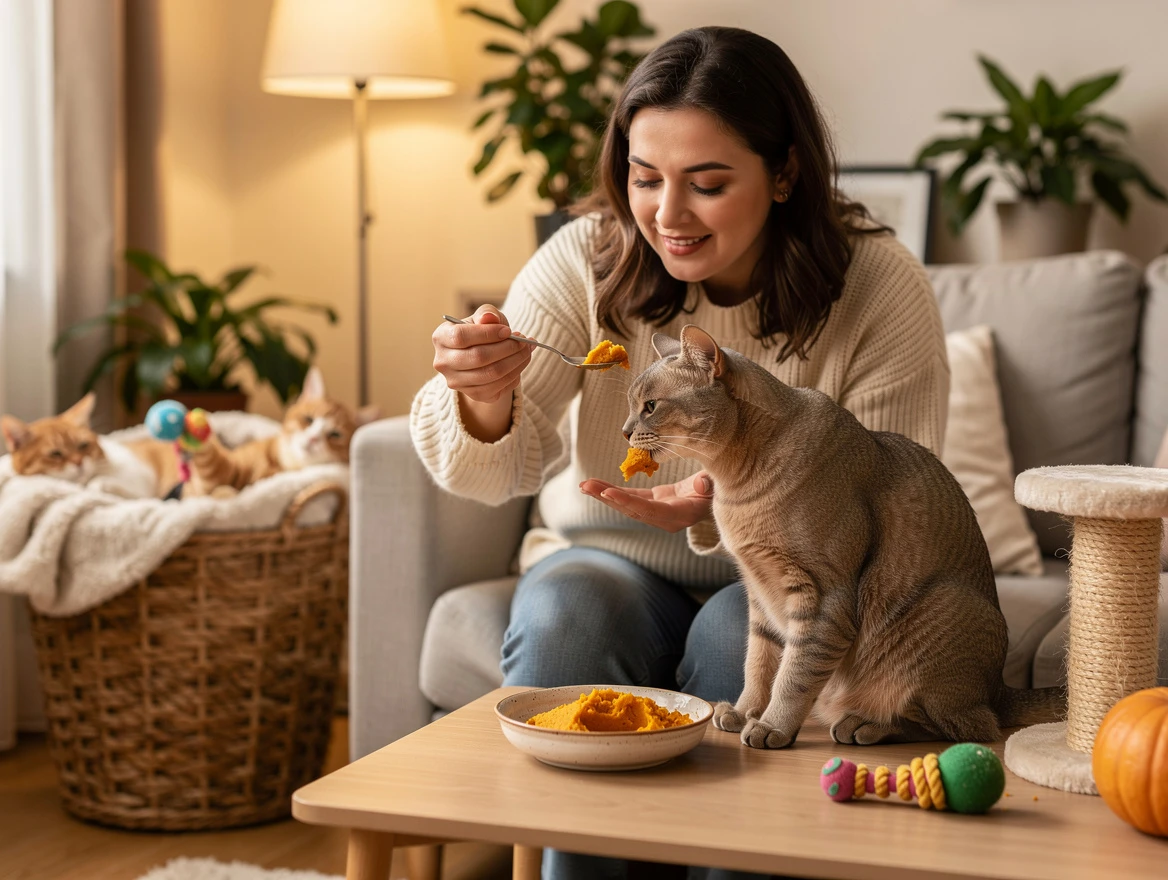
Owner feeding a cat at home — what can I give my cat for constipation at home

1. Plain Canned Pumpkin

Plain canned pumpkin — not pumpkin pie filling, which contains sugar and spices — is the most widely recommended home remedy for cat constipation. It is high in soluble fiber, which adds bulk to the stool and helps move things through the colon more efficiently.

🥄 Exact dose: ½ teaspoon mixed into wet food once or twice a day. Start with ½ tsp and increase to 1 tsp if needed after 48 hours. Do not exceed 1 teaspoon per day without vet guidance.
“This is always my first step when what can I give my cat for constipation at home crosses my mind. Cosmo has had two constipation episodes and both resolved within 24 hours of adding pumpkin to his food.” — Luna

2. Olive Oil or Coconut Oil

A small amount of olive oil acts as a gentle lubricant in the digestive tract, helping hard stools pass more easily. It is safe for cats in small amounts and most cats accept it when mixed into food.

🫒 Exact dose: ½ teaspoon of olive oil mixed into wet food once a day for no more than 3 days. Do not use more than this — too much oil causes diarrhea and can affect nutrient absorption long-term.

Do not use mineral oil — it can be inhaled and cause lipoid pneumonia in cats. Stick to olive or coconut oil only.

3. Increased Wet Food and Water

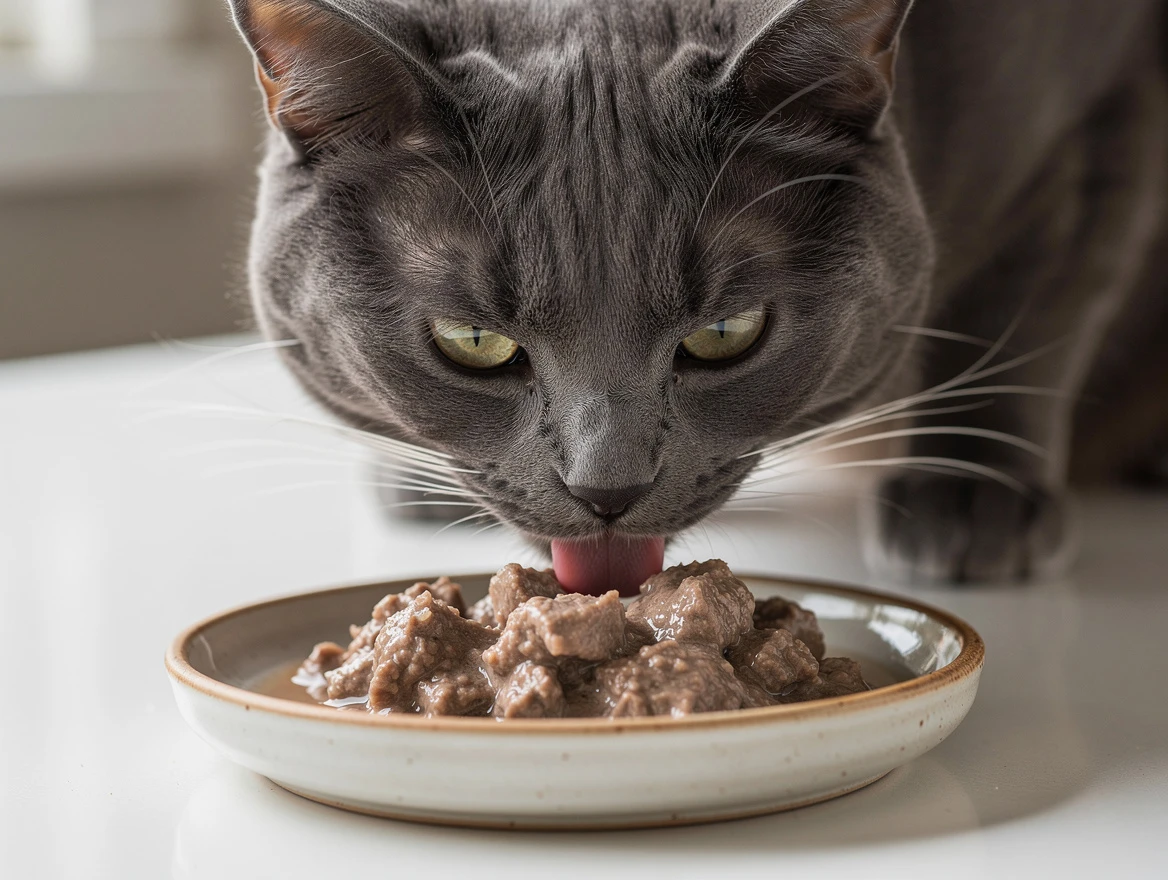
Dehydration is the single most common cause of cat constipation, and the simplest fix is increasing moisture in the diet. Wet food is approximately 70–80% water compared to dry kibble which is only 6–10%. Switching fully to wet food during a constipation episode often resolves mild cases within 24 hours.

Cat eating wet food — increasing wet food is one of the best answers to what can I give my cat for constipation at home

🍲 What to do: Replace dry food with wet food entirely during the constipation episode. Add a small amount of warm low-sodium chicken broth to wet food to further increase fluid intake.

→ Not sure how to transition your cat to wet food? Read: How to Get a Cat to Eat Wet Food

→ For exact feeding amounts: How Much Wet Food to Feed a Cat

4. A Cat Water Fountain

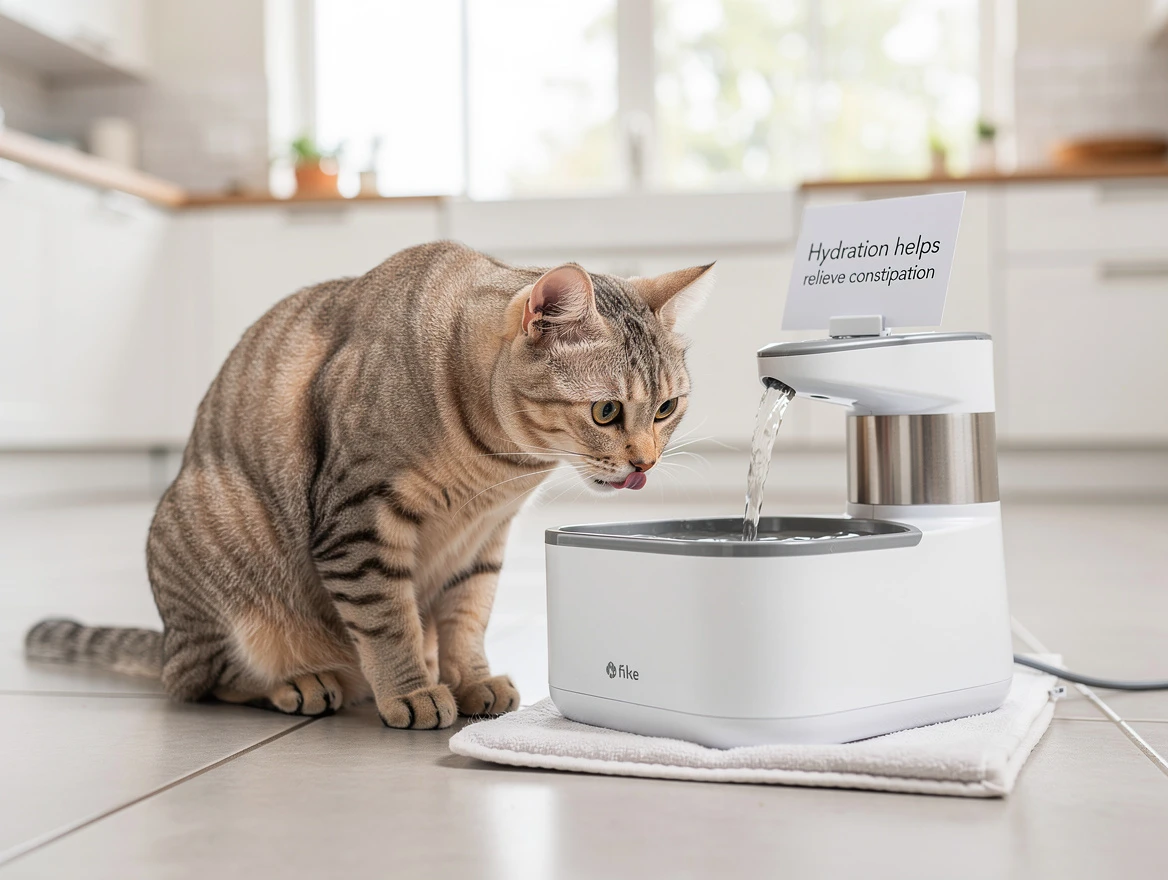
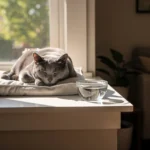
Cat in front of water bowl — hydration is key when asking what can I give my cat for constipation at homeMany cats simply do not drink enough from a standing bowl. Cats are instinctively attracted to moving water — a cat water fountain dramatically increases daily water intake in most cats. More water means softer stools and easier bowel movements.

💧 What to do: Place a running water fountain in a different location from the food bowl — cats prefer water away from their food. Clean it every 2–3 days to keep it appealing.

5. Fiber Supplements

Psyllium husk powder is a soluble fiber supplement that is safe for cats and works similarly to pumpkin — it draws water into the colon and softens stools. It is tasteless and mixes easily into wet food.

🌿 Exact dose: ¼ teaspoon of plain psyllium husk powder (like Metamucil unflavored — never flavored versions) mixed into wet food once a day. Always ensure fresh water is available when using fiber supplements.

6. Probiotics

Probiotics support healthy gut bacteria which keep the intestines moving normally. For cats with recurring constipation, a daily probiotic can help regulate bowel habits long-term rather than just treating individual episodes.

🦠 What to use: Cat-specific probiotics like FortiFlora or Proviable are the safest options. Follow package dosing. Do not use human probiotics — the bacterial strains are different.

7. Gentle Exercise and Belly Massage

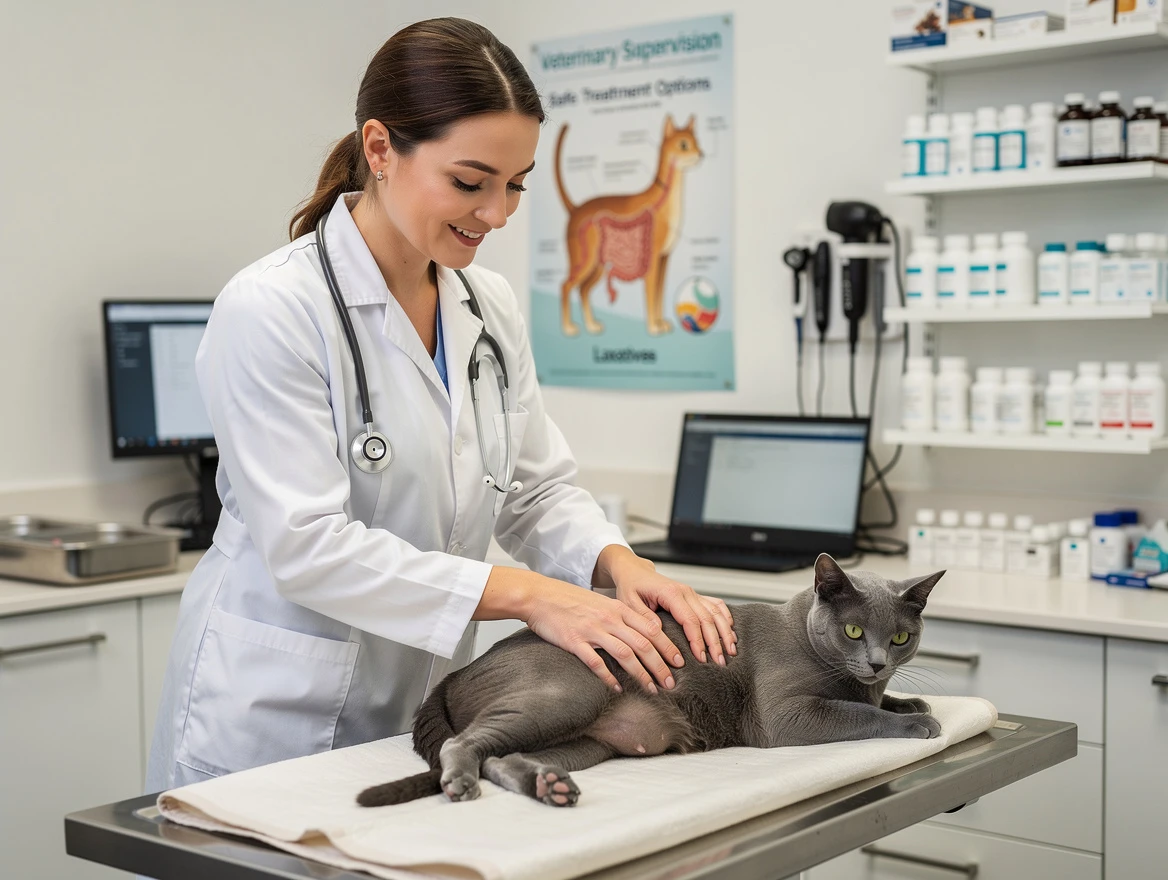
Physical activity stimulates intestinal motility — the movement of the gut that pushes stool forward. For a constipated cat, encouraging play for 10–15 minutes can sometimes trigger a bowel movement within hours. A gentle clockwise belly massage for 2–3 minutes can also help stimulate movement in the intestines.

🐾 How to massage: With the cat relaxed and lying down, use two fingers to make gentle clockwise circles on the lower belly. Stop immediately if the cat shows any discomfort. Never press hard.

What Can I Give My Cat for Constipation Homemade

When looking for what can I give my cat for constipation at home using only things already in the kitchen, these are the safest homemade options:

  • Plain canned pumpkin — ½ tsp in wet food (most effective homemade remedy)
  • Olive oil — ½ tsp in wet food for up to 3 days
  • Low-sodium chicken broth — a tablespoon warmed and mixed into food increases moisture intake significantly
  • Cooked plain butternut squash — similar fiber content to pumpkin, mashed and mixed into food at ½ tsp serving

For cats that need more dietary variety and are prone to digestive issues, homemade cat food recipes designed specifically for sensitive stomachs can help prevent recurrence — read: Home Cooked Cat Food Recipes


Cat Constipation Olive Oil — Does It Really Work?

Yes — olive oil works as a short-term lubricant laxative for cats. It coats the intestinal walls and stool surface, making it easier for hard, dry stools to pass through the colon. It is not a cure for the underlying cause but it can provide relief within 12–24 hours in mild cases.

The key rules for cat constipation olive oil use:

  • Use only plain olive oil — not flavored or infused varieties
  • Maximum ½ teaspoon once a day
  • Use for no more than 2–3 consecutive days
  • Always mix into food — never give it directly by mouth or syringe
  • If no improvement after 48 hours, stop and contact your vet

Cat Laxative for Constipation

When natural remedies are not enough, a cat laxative for constipation may be needed. The most commonly used options are:

Laxative How It Works Dose Notes
Miralax (PEG 3350) Osmotic — draws water into the colon ⅛ tsp mixed into wet food once daily Most commonly vet-recommended for cats
Lactulose Osmotic — prescription only Vet prescribed dose Very effective for chronic constipation
Laxatone Lubricant — helps hairballs and mild constipation 1–2 inches from tube daily OTC, most cats accept the flavor

Important: Never give human laxatives like dulcolax, senna, or castor oil to a cat. Many are toxic. Always confirm the dose with your vet before using any laxative, even Miralax. If your cat needs a laxative regularly, giving a pill alongside other treatment may also be necessary — read: How to Give a Cat a Pill


How to Make a Cat Poop Instantly

There is no single method that makes a cat poop instantly in every case, but the combination most likely to produce fast results is:

  1. Warm up wet food slightly and mix in ½ tsp olive oil or pumpkin
  2. Offer fresh warm water or low-sodium broth alongside
  3. Do a gentle 2–3 minute clockwise belly massage
  4. Encourage 10–15 minutes of active play immediately after eating
  5. Make sure the litter box is clean — cats often avoid a dirty box

This combination stimulates the gastrocolic reflex — the natural urge to defecate triggered by eating — while the massage and movement support intestinal motility. Results can occur within 1–6 hours in mild cases.


How to Make a Cat Poop Instantly Naturally

If you want to know how to make a cat poop instantly naturally without any medication, the most effective natural approach combines three things: hydration, fiber, and movement.

  • Hydration first — offer a water fountain, warm broth, or switch entirely to wet food
  • Add natural fiber — ½ tsp plain canned pumpkin mixed into the next meal
  • Stimulate with movement — wand toy play for 10–15 minutes after eating
  • Belly massage — gentle clockwise circles on the lower abdomen for 2–3 minutes
  • Clean litter box — a fresh, clean box removes one of the most common reasons cats avoid going

Most cats with mild constipation respond to this natural combination within 12–24 hours.


What Can I Feed My Cat to Help Them Poop?

Diet is the most powerful long-term tool for preventing and treating cat constipation. When deciding what can I give my cat for constipation at home through food choices specifically, prioritize:

  • High-moisture wet food — the single most important dietary change. Cats on wet food diets have significantly fewer constipation episodes than cats on dry-only diets
  • Pumpkin-enriched food — mix plain canned pumpkin into regular meals
  • High-fiber cat food — look for cat foods with added psyllium or beet pulp
  • Sensitive stomach wet food — easier to digest and higher in moisture

→ For cats with sensitive digestion: Wet Cat Food for Sensitive Stomach

→ For general wet food guidance: How Often Should I Feed My Cat Wet Food


How Do I Stimulate My Cat to Poop?

Beyond diet, physical stimulation can help trigger a bowel movement in a constipated cat. Here is what works:

Belly Massage

Gently massage the lower abdomen in slow, clockwise circles using two fingers. Do this for 2–3 minutes while the cat is relaxed. Clockwise follows the direction of the large intestine and can stimulate movement. Stop immediately if the cat shows any sign of pain or discomfort.

Warm Compress

A warm damp cloth placed gently on the lower belly for a few minutes can relax the abdominal muscles and help stimulate bowel activity. Make sure it is warm, not hot.

Exercise

Active play — wand toys, laser pointer, anything that gets the cat running — stimulates the entire digestive system. Even 10 minutes of active play after meals can make a significant difference in cats prone to constipation.

Clean the Litter Box

Cats are extremely particular about litter box cleanliness. A dirty or full box is one of the most common reasons cats avoid defecating even when they need to. Scoop at least twice daily during a constipation episode and try a different box location if the cat seems reluctant.


What Can I Give My Cat for Constipation Home Remedy? — Quick Reference

Remedy Dose How Fast Best For
Plain canned pumpkin ½ tsp in wet food, 1–2x daily 12–24 hours Mild to moderate constipation
Olive oil ½ tsp in wet food, once daily, max 3 days 12–24 hours Hard, dry stools
Wet food switch Replace all dry food temporarily 24–48 hours Dehydration-related constipation
Warm chicken broth 1 tbsp mixed into food 12–24 hours Cats reluctant to drink water
Psyllium husk ¼ tsp in wet food, once daily 24–48 hours Recurring constipation
Probiotics Per package instructions Days to weeks Long-term gut health
Miralax ⅛ tsp in wet food, vet confirmed 12–24 hours Moderate constipation

Cat Constipation When to Worry

Most constipation cases are mild and resolve within 24–48 hours of home treatment. Cat constipation when to worry becomes a real question when:

  • The cat has not produced any stool in more than 72 hours
  • Home remedies have been tried for 48 hours with no result
  • The cat is vomiting alongside constipation — read: Why Is My Cat Throwing Up?
  • The cat has stopped eating or drinking — read: My Cat Won’t Eat
  • The belly feels hard, distended, or painful to touch
  • There is blood in the stool or around the anus
  • The cat is crying or vocalizing in the litter box

Any of these signs means the situation has moved beyond what home remedies can address. Contact your vet.


Is Cat Constipation an Emergency?

Take your cat to the vet immediately — when cat constipation becomes an emergencyIn most cases, no — mild constipation is not an emergency. But it can become one. The condition that turns cat constipation into a true emergency is called obstipation — complete blockage of the colon that the cat cannot clear on its own. This can lead to megacolon, a permanently enlarged and damaged colon.

Go to an emergency vet immediately if your cat shows:

🚨 Emergency Signs — Do Not Wait:
  • No stool for more than 72–96 hours despite home treatment
  • Repeated vomiting alongside straining — read: Cat Vomiting White Foam
  • Complete loss of appetite for more than 24 hours
  • Extreme lethargy or collapse
  • A visibly distended, rock-hard abdomen
  • Crying in pain when the belly is touched

If your cat also has any respiratory symptoms alongside digestive issues, that combination needs urgent evaluation — read: My Cat Sounds Congested When Breathing


Common Mistakes Cat Owners Make

  • Using pumpkin pie filling instead of plain pumpkin — pumpkin pie filling contains sugar, xylitol, and spices that are harmful to cats. Always check the label — it should say 100% pure pumpkin, nothing else.
  • Giving too much olive oil — more than ½ tsp per day causes diarrhea and can interfere with fat-soluble vitamin absorption. Use the minimum effective amount.
  • Using human laxatives — dulcolax, senna, castor oil, and many other human laxatives are toxic to cats. Never give these without explicit vet approval.
  • Waiting too long — mild constipation treated within 24–48 hours almost always resolves at home. Waiting 4–5 days risks the situation becoming an obstipation emergency.
  • Not addressing the root cause — giving pumpkin once solves the episode but if the cat is on a dry-only diet, constipation will return. Fix the diet long-term.
  • Giving fiber without enough water — fiber supplements draw water into the colon to work. Without adequate hydration, adding fiber actually makes constipation worse.

🩺 When to See a Vet About Cat Constipation

Cat being examined at the vet — when home remedies are not enough for cat constipation

  • No bowel movement in more than 72 hours
  • Home remedies tried for 48 hours with no improvement
  • Vomiting, lethargy, or complete appetite loss alongside constipation
  • Blood in the stool or straining with visible pain
  • A hard, distended belly
  • Second or third constipation episode in a month — recurring constipation needs a diagnosis, not just more home treatment

Frequently Asked Questions

What can I give my cat for constipation at home right now?

Start with ½ teaspoon of plain canned pumpkin mixed into wet food. Add warm low-sodium chicken broth to increase moisture intake. Do a gentle clockwise belly massage for 2–3 minutes and encourage 10–15 minutes of active play. This combination works within 12–24 hours for most mild cases.

How long can a cat go without pooping?

A healthy cat should poop every 24–36 hours. Going up to 48 hours without a bowel movement can be normal depending on the cat’s diet and habits. Beyond 48–72 hours, constipation should be treated actively. Beyond 72–96 hours with no result from home treatment, contact your vet.

Is olive oil safe for cats with constipation?

Yes — in small amounts. Half a teaspoon of plain olive oil mixed into wet food once a day for up to 3 days is safe and effective for mild constipation. Do not exceed this amount and do not use it long-term as it can affect nutrient absorption.

Can I give my cat Miralax for constipation?

Miralax (PEG 3350) is commonly used by vets for cat constipation. The typical dose is ⅛ teaspoon mixed into wet food once daily. However, always confirm this with your vet before giving it — the correct dose depends on your cat’s weight and health status.

What can I give my cat for constipation home remedy that is the safest?

Plain canned pumpkin is the safest home remedy — it is natural, gentle, and effective. Paired with increased wet food and water intake, it resolves most mild cases without any risk of side effects at the recommended dose of ½ teaspoon per meal.

Is cat constipation an emergency?

Mild constipation is not an emergency. It becomes one when the cat has not pooped for more than 72–96 hours, is vomiting, has a distended hard belly, or is in visible pain. Those signs require immediate veterinary care — do not try more home remedies at that point.

What can make a cat constipated quickly?

The fastest causes of sudden constipation are dehydration, a switch to a dry-only diet, stress, hairball accumulation, and ingesting something that partially blocks the digestive tract. If constipation appeared suddenly alongside behavior changes, a vet visit is recommended to rule out a blockage.


The Bottom Line

When asking what can I give my cat for constipation at home, the answer is almost always one of the same core remedies — plain pumpkin, olive oil, increased wet food, more water, fiber, and movement. Most mild cases resolve within 24–48 hours when you use the right remedy at the right dose.

The key is not waiting too long. What can I give my cat for constipation at home works best in the early stages of the problem — the longer constipation goes untreated, the harder it becomes to resolve without veterinary intervention. Start with pumpkin and wet food, monitor closely, and call your vet if there is no improvement within 48 hours.

🐾
Luna Saber — Pet Owner and Writer

Real experiences from life with 1 dog and 4 cats in a NYC apartment. Not a vet — just someone who has navigated these situations many times and done the research. Always consult your vet for medical decisions about your specific pet.

This article is for educational purposes only and does not replace professional veterinary advice. If your cat’s constipation is severe, recurring, or accompanied by other symptoms, consult a licensed veterinarian immediately.


Related Articles

Cat Health

My Cat Looks Bloated But Acting Normal

When bloating needs urgent attention.

Cat Health

My Cat Sounds Congested When Breathing

5 serious causes and what to do.

Cat Health

Cat Vomiting White Foam

What it means and when to act.

Cat Health

Signs of Kidney Failure in Cats

Early signs every cat owner should know.