If your cat’s paws start twitching mid-nap, the instinct is to worry — but nine times out of ten, it’s something much better than it looks.
Why does my cat twitch in his sleep when he seems fully relaxed otherwise, in almost every case, comes down to one word: dreaming. This question shows up constantly on forums too — why does my cat twitch in his sleep reddit threads are full of owners describing the exact same paw flutters and whisker twitches.
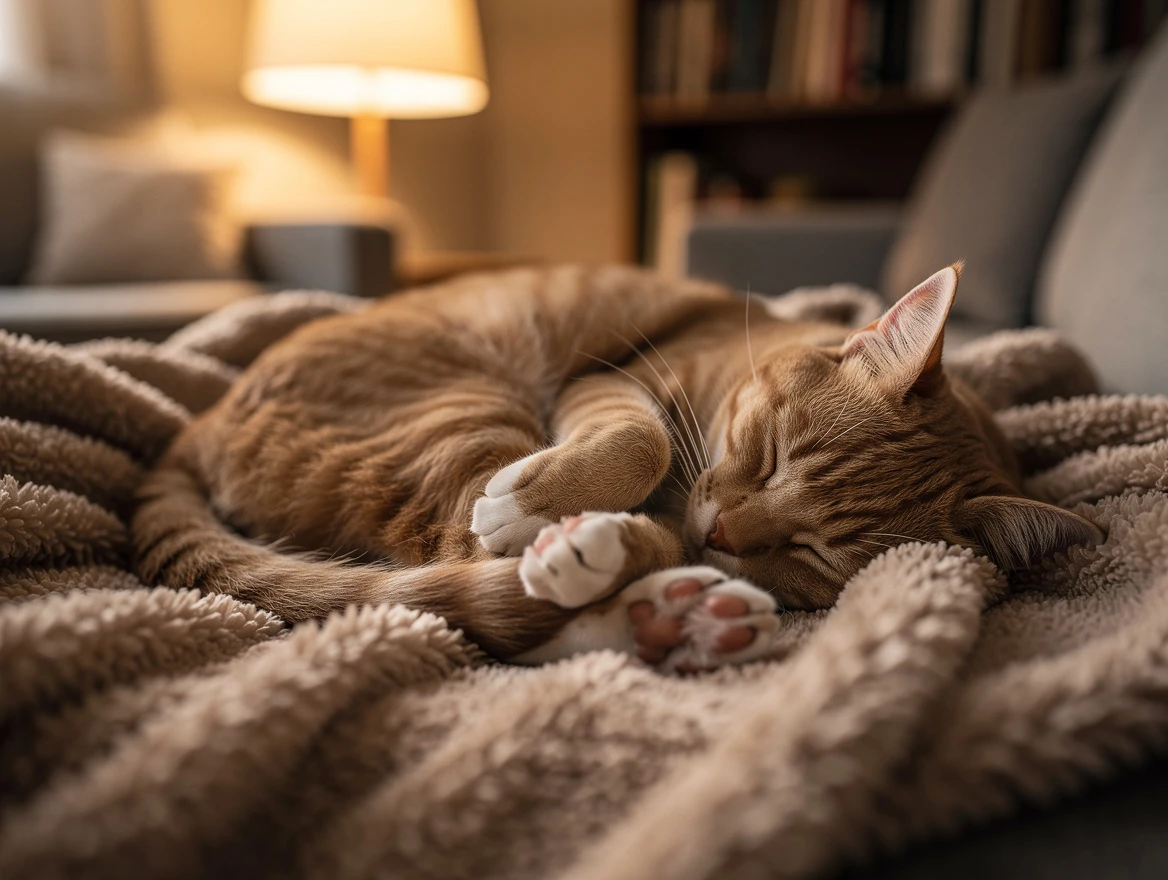
Twitching during sleep happens during REM (Rapid Eye Movement), the phase where your cat’s brain is actively processing the day. Those little paw movements, whisker flutters, and ear flicks are very likely a moth chase replaying in real time.
I watch my four cats twitch nearly every night. My oldest does full leg kicks like she’s running. My youngest just flutters his whiskers and makes tiny chirping sounds.
The first time I saw one of them jerk violently, I nearly woke him — turned out he was just deep in an intense dream. That scare sent me down a research hole into the difference between normal twitching and a real seizure. It turns out that difference matters more than most owners realize.
Cat twitching in sleep is almost always normal — it happens during REM sleep, when the brain is actively dreaming while the body stays mostly paralyzed. Small nerve signals “leak” through, causing the paw, whisker, and ear twitches you see. It’s only a concern if the twitching lasts more than 30 seconds continuously, the body goes rigid, your cat can’t be woken, or it also happens while fully awake — those signs point toward a possible seizure rather than a dream.
Why It Actually Happens
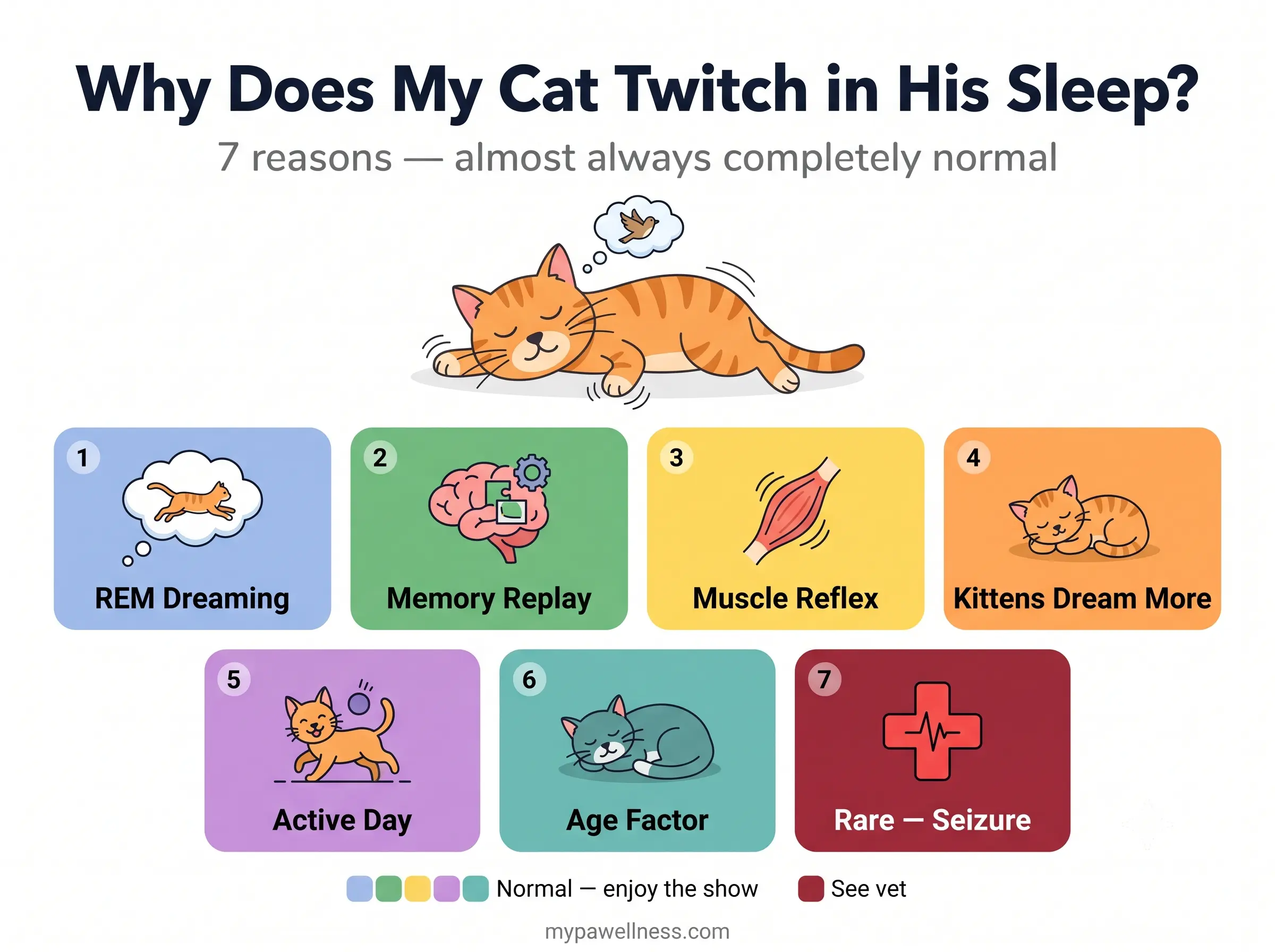
REM sleep dreaming — by far the most common reason (and why does my cat twitch in his sleep sometimes but not always)
Cats spend around 50% of their sleep in REM, far more than humans. During REM, the brain is highly active while the body stays mostly paralyzed.
Small nerve signals “leak” through that paralysis, causing the twitches you see in paws, whiskers, ears, and tail. This alone answers why does my cat twitch in his sleep so much: it simply means they’re dreaming deeply.
Replaying the day
Research shows cats replay their waking experiences during sleep — hunting, exploring, playing. Why does my cat leg twitch in his sleep specifically? They’re probably running in the dream. Whisker twitches usually mean sniffing or tracking something; ear flicks mean listening to a dream sound. Your cat is, quite literally, reliving their day.
A developing nervous system, if they’re a kitten
Why do kittens twitch in their sleep more than adults? Kittens twitch noticeably more than adult cats — this isn’t just extra dreaming, it’s their nervous system actively developing and calibrating. The twitching helps build the neural pathways that control movement, and it’s entirely normal, even essential, for healthy development.
Plain involuntary muscle spasms
Sometimes a twitch is just a random nerve firing, unrelated to any dream — a brief, isolated contraction that happens to all mammals during sleep. A single jerk followed by continued peaceful sleep is completely harmless.
Responding to something nearby
A sleeping cat can twitch in response to a sound, a temperature shift, or a light touch — the brain partially registers it and produces a reflexive twitch without a full wake-up. This is why an ear flicks when you whisper nearby.
Simple temperature regulation
Slight muscle contractions during sleep also help regulate body temperature, similar to a human shiver. In a cooler room, you may notice a bit more twitching as your cat’s body works to stay warm.
The rare medical exception
In rare cases, excessive or violent twitching does point to something else — seizures, neurological conditions, or pain.
Why does my cat twitch violently in his sleep, why does my cat twitch and jerk in his sleep, or why does my cat twitch so hard in his sleep all point to the same question.
The answer matters most if the body stiffens, the cat seems disoriented after waking, or the twitching also happens while fully awake. Related: Why Is My Cat Breathing Fast.
“My second cat does this thing where he chirps and paddles his paws mid-sleep — looks exactly like he’s chasing something. I recorded it and showed my vet, who laughed and confirmed he was 100% dreaming about hunting.”
“She also mentioned that the more active a cat is during the day, the more vivid their dream-twitching tends to be. My most active cat twitches the most. My laziest one barely moves at all.” — Luna
Cat Twitching in Sleep or Seizure — The Difference That Actually Matters
This is the one part of this topic worth reading closely, because the two can look similar for a split second before the pattern reveals itself:
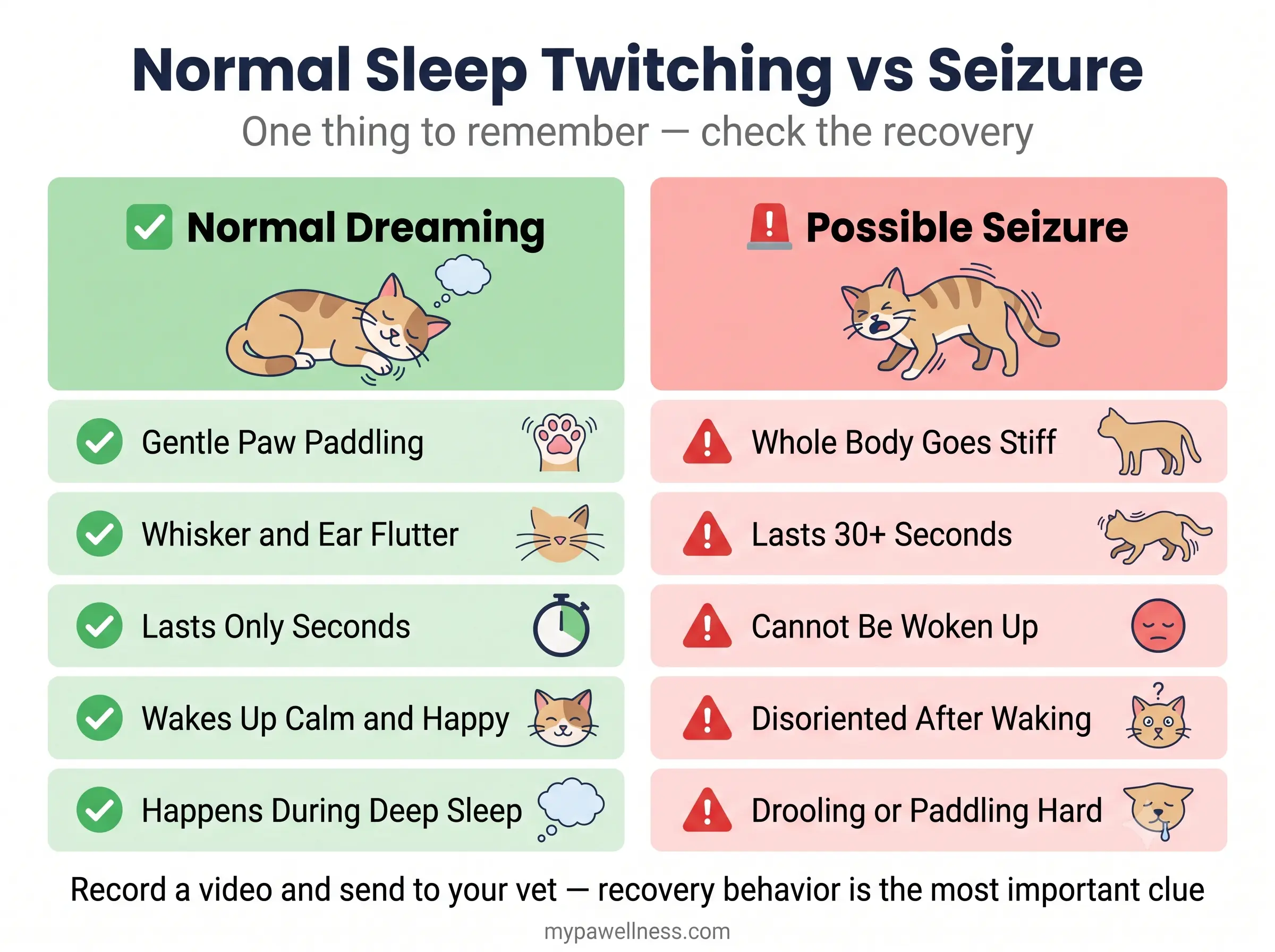
| Feature | Normal Twitching (Dreaming) | Seizure |
|---|---|---|
| Duration | Brief — seconds at a time | 30+ seconds, continuous |
| Body | Relaxed between twitches | Stiff, rigid |
| Can you wake them? | Yes — wakes easily, acts normal | Cannot be woken, or disoriented after |
| Movement | Small — paws, whiskers, ears, tail | Violent — full-body jerking |
| Eyes | Closed or partially open, relaxed | Wide open, unfocused, dilated |
| After waking | Immediately normal | Confused, wobbly, drooling |
| Happens while awake? | No — sleep only | Can happen awake or asleep |
| Bladder/bowel control | No loss | Possible loss |
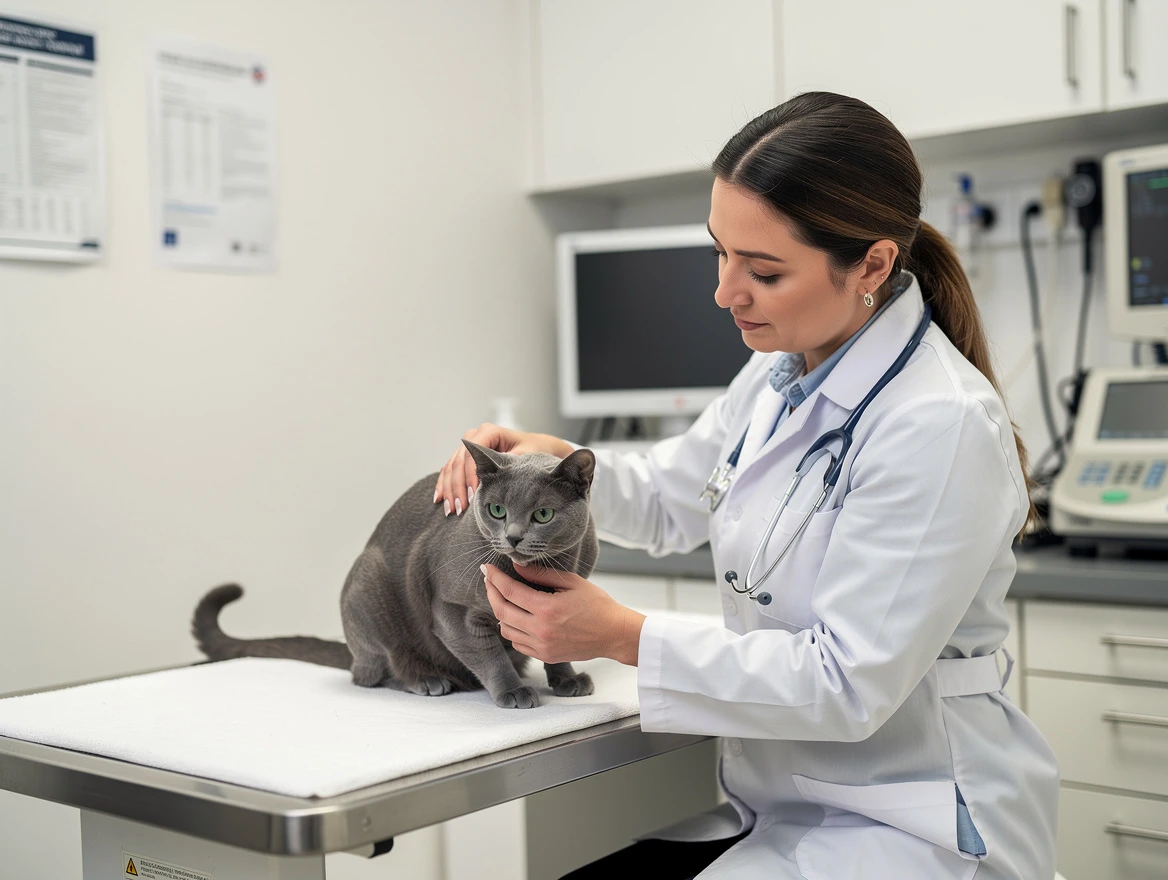
The easiest test: gently call your cat’s name. If they wake up, look at you, and drift back to sleep — it was a dream. If they don’t respond, the body stays stiff, or they seem confused afterward, it may be a seizure. Record a video if you can and call your vet.
What Do Cats Dream About
Sleep researchers have long studied how animals process their waking experiences during REM sleep. Some of the earliest and most influential work came from Michel Jouvet’s lab at the University of Lyon in the 1960s, which found that cats act out physical behaviors — stalking, pouncing, attacking — during REM sleep when a specific brainstem mechanism is disabled. It’s one of the reasons scientists believe cats dream about things closely tied to their waking lives, like hunting and play.
So when the paws paddle, they’re likely chasing prey. When the whiskers twitch, they’re probably sniffing something interesting. When they chirp or chatter, they’re vocalizing at a dream-bird. A well-stimulated, actively played-with cat tends to twitch noticeably more than a bored, sedentary one — which is a nice argument for a few extra minutes of play before bed.
A Few Specific Situations Worth Addressing
Cat twitching in sleep with eyes open is common and usually normal — cats have a third eyelid that may partially cover the eye during sleep while the outer lids stay slightly open. Only worry if the eyes are wide open, pupils fully dilated, and the cat is unresponsive to their name — that combination leans toward seizure rather than sleep. Related: Why Is My Cat Squinting One Eye.
Older cat twitching in sleep — why does my old cat twitch in his sleep more than he used to? It can increase with age-related nervous system changes, joint pain causing involuntary movement, or medication side effects. Mild increases are usually harmless.
But new-onset twitching in a senior cat that never used to twitch much is worth a vet check, especially alongside weight loss or appetite changes. Hyperthyroidism, kidney disease, and neurological conditions can all be culprits. Related: Signs of Kidney Failure in Cats.
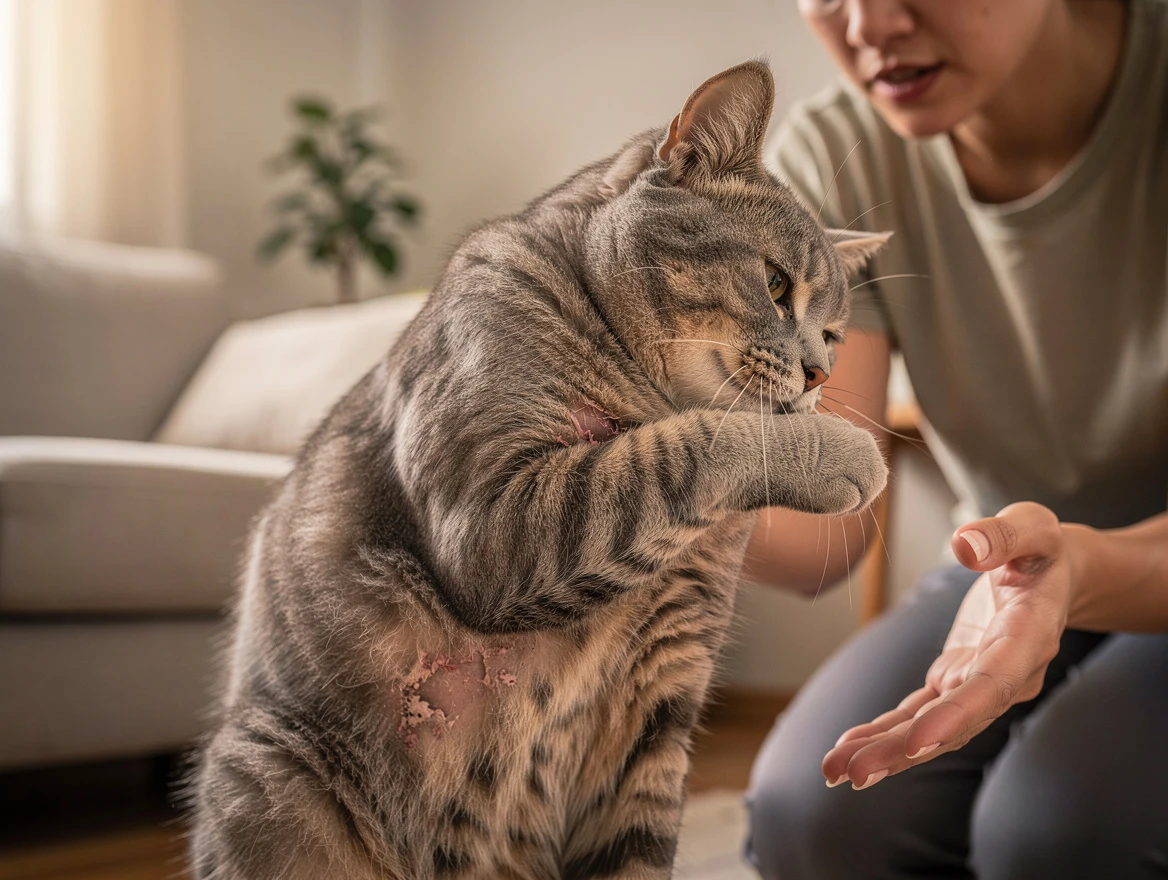
Why is my cat twitching while awake — a genuinely different, more concerning question than sleep twitching. Awake twitches can stem from skin irritation like fleas or dermatitis (related: How Can I Soothe My Cats Itchy Skin), feline hyperesthesia syndrome, or localized pain.
Other causes include a seizure disorder, toxin exposure (related: My Cat Licked Toilet Cleaner), or low blood sugar in diabetic cats (related: Cat Diabetes Symptoms). New or frequent waking twitches deserve a vet visit.
Should I wake my cat up if he’s twitching? No — let them finish. Waking a cat mid-REM interrupts restorative sleep and can leave them startled or irritable.
Owners often ask why does my cat twitch and shake in his sleep hard enough to look alarming — usually it settles on its own within seconds.
The only exception is if you genuinely suspect a seizure (stiff body, unresponsive, violent jerking past 30 seconds) — in that case don’t restrain them, just move nearby objects out of the way, note the time, and call your vet once it passes. Related: My Cat Jumps Out of Sleep Scared.
🩺 See Your Vet If:
- Twitching lasts more than 30 seconds continuously without stopping
- The body is stiff or rigid during the episode
- Your cat can’t be woken, or seems disoriented after waking
- There’s drooling, foaming, or loss of bladder/bowel control
- Twitching also happens while fully awake
- It’s new onset in a senior cat
- Episodes are getting more frequent or intense over time
A Couple More Questions Worth Answering
Yes — completely normal. Cats spend about 50% of their sleep in REM, and twitching there is a sign of healthy brain activity and restorative sleep. Kittens twitch even more as their nervous systems develop.
Better not to do either. Petting a sleeping cat mid-twitch can startle them awake disoriented, and some react with a reflexive scratch before fully realizing what happened. Let them finish the dream cycle and wait for a natural wake-up to interact.
Active, well-stimulated cats twitch more because they simply have more to replay. Frequent twitching in an otherwise healthy cat is actually a sign of good brain health and deep, restorative sleep, not something to worry about.
Why does my cat twitch in his sleep, at the end of it, mostly comes down to a very good thing: your cat is dreaming, and they feel safe enough in your home to fall that deeply asleep. Let them finish.
The only real exception is when twitching turns violent, continuous, happens while awake, or leaves the cat disoriented afterward — those are the moments worth a call to the vet rather than a smile.