
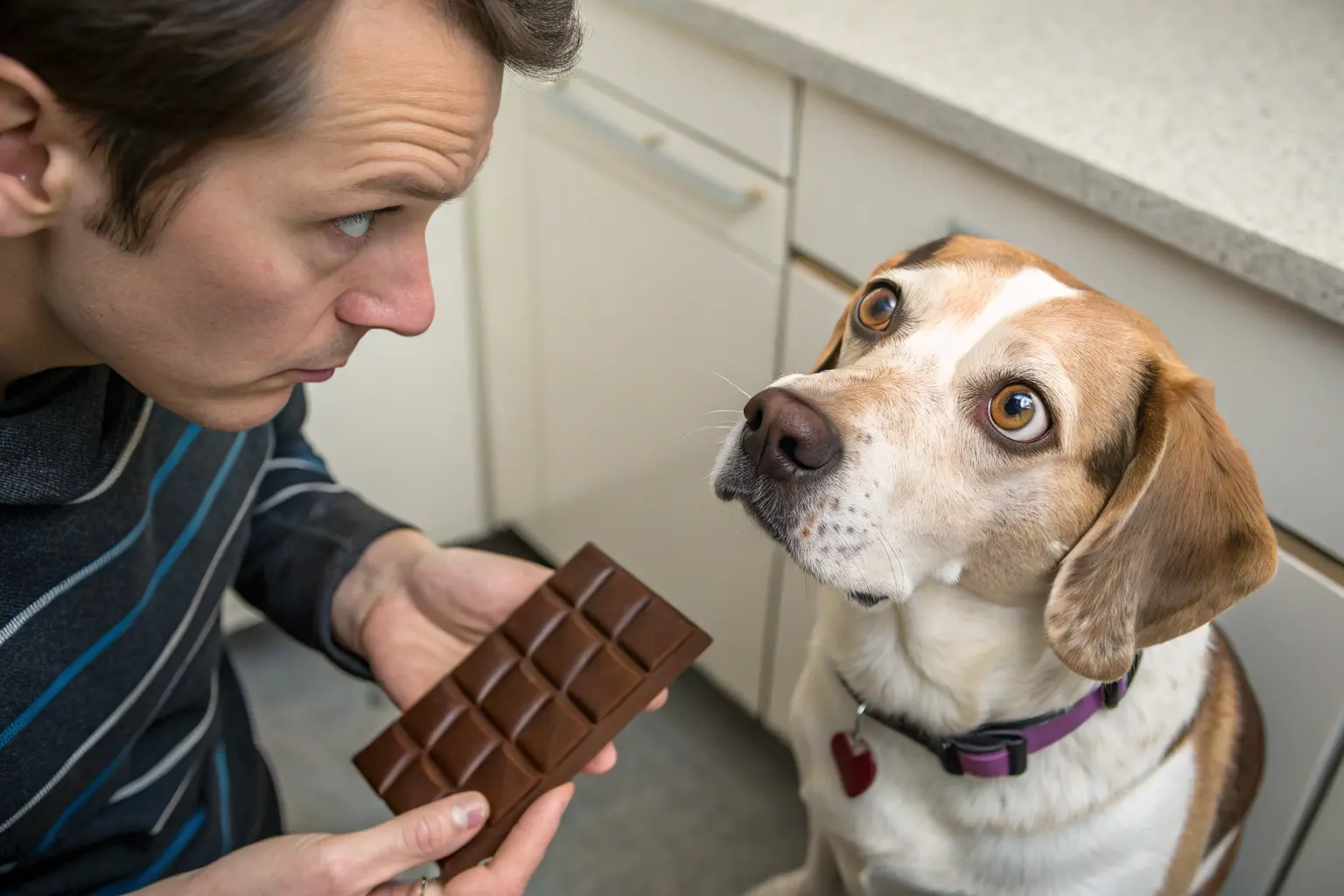
My Dog Ate Chocolate but Is Acting Fine: 7 Essential Facts
This guide covers everything I learned from that experience and from our vet: why dogs can seem normal after chocolate, how much chocolate is toxic to dogs depending on the type, exactly what symptoms to watch for, and the precise steps to take in the next 24 hours.
My dog ate chocolate but is acting fine right now — this is a good sign but not a safe one. Chocolate contains theobromine which dogs metabolize very slowly, and symptoms can take 6 to 12 hours to appear. The amount eaten, the type of chocolate, and your dog’s size all determine the risk. Call your vet immediately, monitor closely for 24 hours, and do not wait for symptoms before acting.
⚠️ Emergency Warning Signs — Act Immediately
My dog ate chocolate but is acting fine is often the situation in the first few hours — but these warning signs mean you need emergency help right now, not monitoring at home.
- Vomiting or diarrhea that starts within hours of eating chocolate
- Extreme restlessness, pacing, or inability to settle
- Rapid breathing or heavy panting without exercise
- Elevated or irregular heartbeat — you can feel this by placing your hand on their chest
- Muscle tremors or seizures
- Sudden weakness, stumbling, or collapse
- Excessive thirst and urination together

At a Glance: Chocolate Toxicity Facts
| Factor | Information |
|---|---|
| Toxic Ingredients | Theobromine and caffeine |
| Most Dangerous Types | Dark chocolate, baking chocolate, bittersweet chocolate |
| Lowest Risk Type | White chocolate — minimal theobromine but still harmful in large amounts |
| Toxic Dose (approximate) | 20 mg of theobromine per kg of body weight |
| Time for Symptoms to Appear | 6 to 12 hours, sometimes up to 24 hours |
| First Action | Call your vet or Pet Poison Helpline immediately |
| Prognosis with Early Treatment | Usually very good if treated promptly |
What Makes Chocolate Toxic to Dogs?
When my dog ate chocolate but is acting fine, the first thing our vet explained was that the danger is not immediate — it is a slow-burning problem caused by theobromine. Theobromine is a stimulant in the methylxanthine family that affects the heart, kidneys, nervous system, and digestive tract. Dogs metabolize theobromine at a fraction of the speed humans do, which means it builds up in their system and causes delayed toxicity.
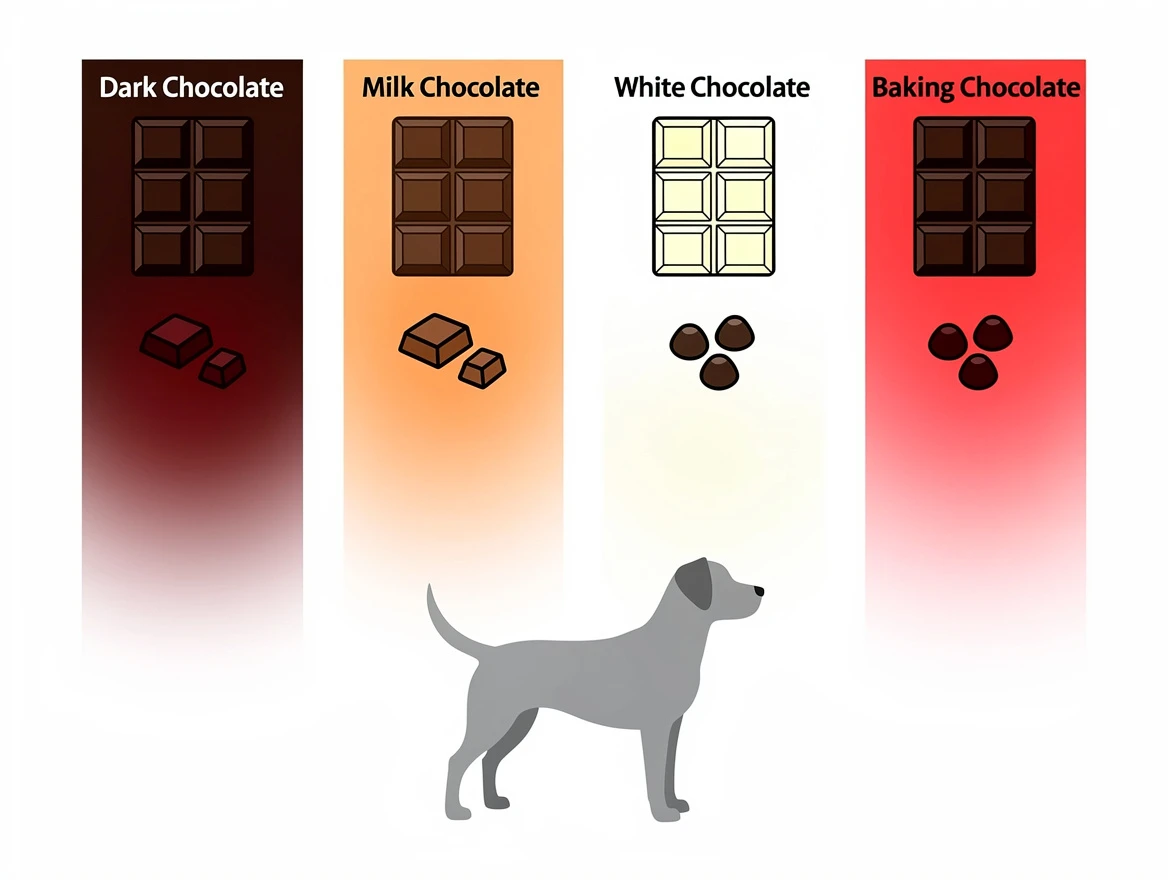 Caffeine is the second toxic compound in chocolate, also a methylxanthine. Together they create a compound problem that is why even a small amount of very dark chocolate can cause serious symptoms in a small dog while a large dog might eat milk chocolate and show nothing for hours. The delay is exactly what makes the situation feel deceptive — your dog feels completely fine while the theobromine is still being absorbed.
How Much Chocolate Is Toxic to Dogs?
How much chocolate is toxic to dogs is the most important calculation to make immediately after an incident. The answer depends entirely on three things: the type of chocolate, the amount consumed, and your dog’s body weight. Here is the exact breakdown our vet walked me through:
| Chocolate Type | Theobromine per oz | Risk for 20 lb Dog | Symptoms to Watch For |
|---|---|---|---|
| White Chocolate | 0.1 mg | Very low — unlikely to cause toxicity | Stomach upset from fat/sugar only |
| Milk Chocolate | 44 to 60 mg | Toxic at approximately 1.5 oz | Vomiting, hyperactivity, diarrhea |
| Dark Chocolate | 130 to 450 mg | Toxic at less than 0.5 oz | Severe symptoms, possible seizures |
| Baking Chocolate | 390 to 1600 mg | Toxic at less than 0.25 oz | Potentially life-threatening |
How much chocolate is toxic to dogs also depends on individual health factors — older dogs, dogs with heart conditions, and small breeds are more vulnerable at lower doses. If you are not sure how much was eaten, always treat it as a potential emergency and call your vet rather than waiting to see what happens.
Why Is My Dog Acting Fine After Eating Chocolate?
My dog ate chocolate but is acting fine because of one or more of these reasons — and understanding them helps you assess the real risk level:

The Amount Was Very Small
A single small crumb or a tiny lick of milk chocolate is often below the toxic threshold for a medium or large dog. Your dog’s body can handle a very small amount without producing visible symptoms.
The Type Was Low-Risk
White chocolate contains almost no theobromine. Milk chocolate has far less than dark or baking chocolate. If your dog got into a white or milk chocolate product in a small quantity, the risk is genuinely lower.
Your Dog Is Large
Theobromine toxicity is dose-dependent by body weight. A 70 lb Labrador can tolerate a much higher dose than a 10 lb Chihuahua. Large dogs eating small amounts of milk chocolate often show no symptoms at all.
Symptoms Are Still Developing
This is the most important reason not to relax just because your dog seems fine right now. Theobromine takes 6 to 12 hours to cause visible symptoms — sometimes longer. Your dog being calm in the first hour after eating chocolate tells you almost nothing about what the next 12 hours will look like.
Symptoms of Chocolate Toxicity to Watch For
Even when my dog ate chocolate but is acting fine initially, I watch for all of these symptoms continuously for the full 24 hours after the incident:
- Vomiting — often the first sign, appearing 4 to 6 hours after ingestion
- Diarrhea — may appear alongside or after vomiting
- Excessive thirst and frequent urination
- Restlessness or hyperactivity that does not settle down
- Rapid or labored breathing
- Elevated or irregular heart rate
- Muscle stiffness or twitching
- Seizures — a serious emergency requiring immediate vet care
- Collapse or extreme weakness
If you notice diarrhea developing while your dog is otherwise acting fine, do not dismiss it — it can be an early sign of theobromine moving through the system. The same applies if your dog suddenly stops eating but keeps drinking water, which can indicate early GI distress from toxin exposure.
Exact Steps to Take Right Now
When my dog ate chocolate but is acting fine, these are the exact steps I followed based on our vet’s guidance — in order:
Figure Out What and How Much Was Eaten
Check what is missing, look at packaging for the chocolate type, and estimate the amount as accurately as possible. Note your dog’s current weight. This information is the first thing your vet or poison control will ask for and determines whether treatment is needed at all.
Call Your Vet or Pet Poison Helpline Immediately
Do not wait for symptoms. Call even if your dog seems completely fine. The Pet Poison Helpline number is 855-213-6680. Your vet may recommend inducing vomiting within the first two hours to prevent further absorption — but never attempt this without veterinary guidance as it can cause harm if done incorrectly.
Follow the Vet’s Instructions Exactly
Your vet may recommend bringing your dog in for activated charcoal treatment to bind remaining theobromine in the gut, IV fluids, or heart monitoring. If they say come in, go immediately. If they say monitor at home, follow their exact instructions rather than searching for home remedies.
Monitor Continuously for 24 Hours
Check your dog every 30 minutes during the first 6 hours, then every hour after that. Note any changes in behavior, energy, appetite, breathing, or bathroom habits. Keep fresh water available at all times. Do not leave them alone for extended periods during the monitoring window.
Do Not Give Human Medications
Do not give aspirin, ibuprofen, acetaminophen, or any other human medication. Many common human pain relievers and antacids are toxic to dogs and will make the situation worse. If your dog vomits repeatedly and you want to help settle their stomach, ask your vet specifically before giving anything.
Common Mistakes Dog Owners Make
I made one of these myself the first time my dog ate chocolate but is acting fine — assuming the calm behavior meant I did not need to call the vet:
- ❌ Assuming acting fine means being fine — theobromine symptoms are delayed by hours, so calm behavior in the first hour is not reassuring
- ❌ Skipping the vet call — even if you decide not to bring your dog in, a phone call takes three minutes and gives you a professional risk assessment
- ❌ Not knowing the chocolate type or amount — this is the most critical information for determining real risk and most owners cannot provide it
- ❌ Inducing vomiting without guidance — hydrogen peroxide given incorrectly can cause serious harm; always get instructions first
- ❌ Waiting for symptoms to appear before calling — by the time seizures or cardiac symptoms appear, treatment becomes much harder
- ❌ Giving human medications to help — ibuprofen and acetaminophen are toxic to dogs and will compound the problem
How to Prevent It Happening Again
After my dog ate chocolate but is acting fine and we got through the scare, I completely redesigned how we store anything chocolate-containing in our apartment. If you have also been through the same situation with a panic incident involving another toxic food like grapes, you know how much energy and anxiety these situations cost.
Understanding how much chocolate is toxic to dogs by type makes clear that even small amounts of dark or baking chocolate warrant genuine concern — which means storage standards need to reflect that, not just common sense about keeping treats away from dogs.
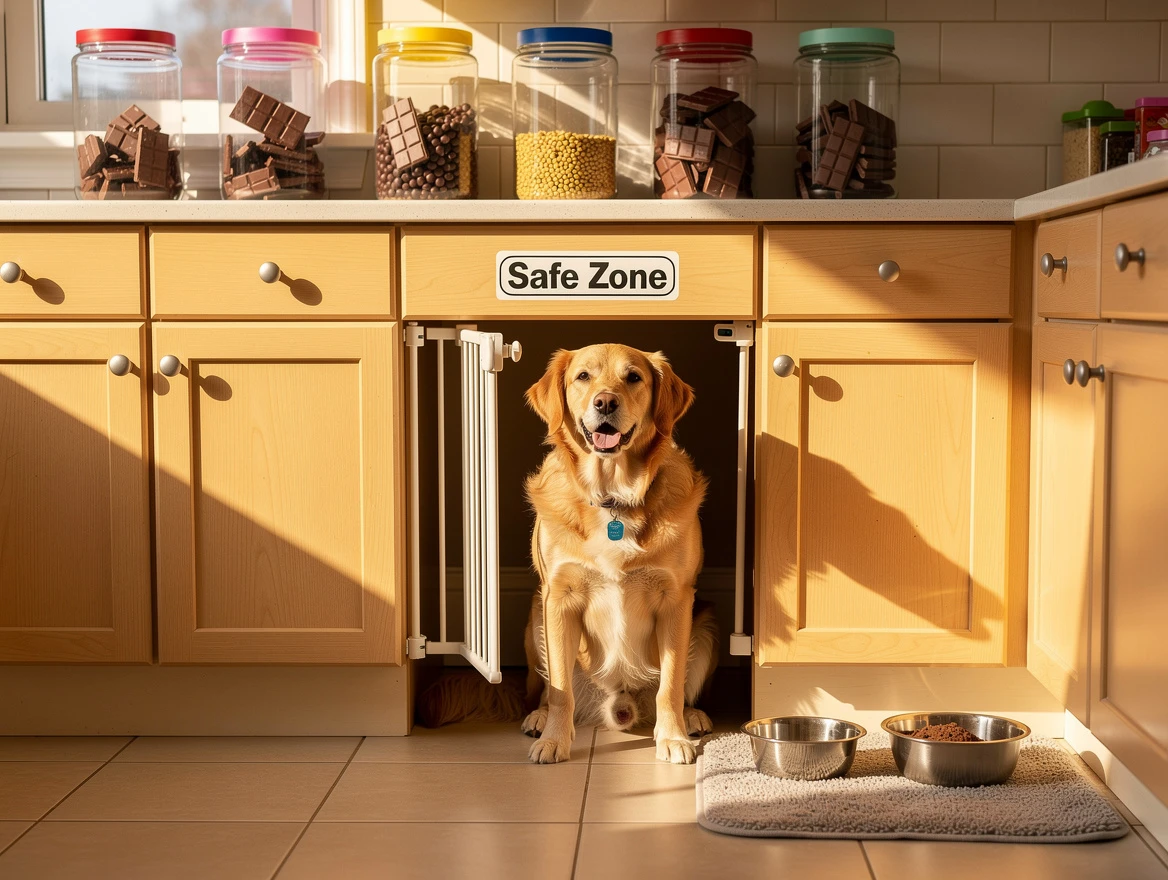
Storage Rules That Actually Work
- Store all chocolate in closed cabinets above counter height — dogs can reach counters
- Use childproof cabinet latches on lower cabinets where baking supplies are stored
- Never leave chocolate on coffee tables, side tables, or nightstands
- Brief every visitor and house guest — holiday visitors are responsible for many chocolate incidents
- Keep the Pet Poison Helpline number (855-213-6680) saved in your phone
- Store safe dog treats prominently so there is always an alternative to offer when humans are snacking
If your dog tends to be a persistent counter-surfer or food thief, also consider whether other behavioral issues are driving the food-seeking, which can sometimes be connected to sudden changes in behavior and anxiety that are worth addressing separately.
Frequently Asked Questions
Yes, always. When my dog ate chocolate but is acting fine, calling the vet is still the right move because theobromine symptoms take 6 to 12 hours to appear. Your vet can calculate the risk based on the type and amount eaten and your dog’s weight — that calculation, not your dog’s current behavior, determines whether treatment is needed.
How much chocolate is toxic to dogs depends on the type: milk chocolate becomes dangerous at roughly 1.5 oz for a 20 lb dog, dark chocolate at less than 0.5 oz, and baking chocolate at less than 0.25 oz. White chocolate has almost no theobromine but can still cause stomach upset from its fat content. The toxic threshold is approximately 20 mg of theobromine per kilogram of body weight.
Symptoms typically appear within 6 to 12 hours of ingestion, though in some cases they can take up to 24 hours. This delay is the most dangerous aspect of chocolate toxicity — a dog that seems perfectly fine at hour two may be showing serious cardiac or neurological symptoms by hour ten. Monitoring for the full 24-hour window is essential.
Only under direct veterinary guidance. Your vet may recommend hydrogen peroxide to induce vomiting within the first two hours, but the dosage must be precise and the method matters. Attempting this incorrectly can cause aspiration pneumonia or internal irritation. Always call first and follow exact instructions rather than acting on general internet advice.
White chocolate contains almost no theobromine and is unlikely to cause chocolate toxicity. However, it is very high in fat and sugar, which can cause vomiting, diarrhea, and pancreatitis in large amounts. A small piece is unlikely to be dangerous, but it is still not a food dogs should be eating regularly or in any significant quantity.
Treatment depends on the amount eaten and how much time has passed. In the first two hours, your vet may induce vomiting. Activated charcoal may be given to bind remaining theobromine in the gut. For more serious cases, IV fluids, medications to control heart rate, and anti-seizure treatment may be needed. Prognosis is very good when treatment begins early.
Yes, in serious cases — particularly with large amounts of dark or baking chocolate, small dogs, or delayed treatment. However, most cases of chocolate ingestion that receive prompt veterinary attention have an excellent prognosis. The key word is prompt. Death from chocolate toxicity is almost always associated with delayed treatment rather than the ingestion itself.
When my dog ate chocolate but is acting fine at night, I called the Pet Poison Helpline (855-213-6680) which operates 24 hours. They can give you an immediate risk assessment and tell you whether an emergency vet visit is needed or whether home monitoring is safe. Many emergency vet clinics also have 24-hour phone advice lines — call rather than wait until morning.
The Bottom Line
My dog ate chocolate but is acting fine is never a reason to relax and watch — it is a reason to call your vet right now while the window for effective treatment is still open. Theobromine’s delayed timeline is exactly what makes chocolate incidents so deceptive and so dangerous. Your dog’s calm behavior in the first hours after eating chocolate tells you nothing about what the next 12 hours will look like.
The three things that matter most: call your vet or the Pet Poison Helpline immediately, know the type and amount of chocolate that was eaten, and monitor continuously for the full 24 hours. Early action almost always leads to a full recovery. My own dog is proof of that — one scary afternoon, one vet phone call, 24 hours of watchful monitoring, and we came out fine on the other side.
If you want to read more about other toxic food situations, I wrote about what happened when my dog ate a grape and seemed fine — another situation where acting fine in the moment absolutely did not mean everything was okay.