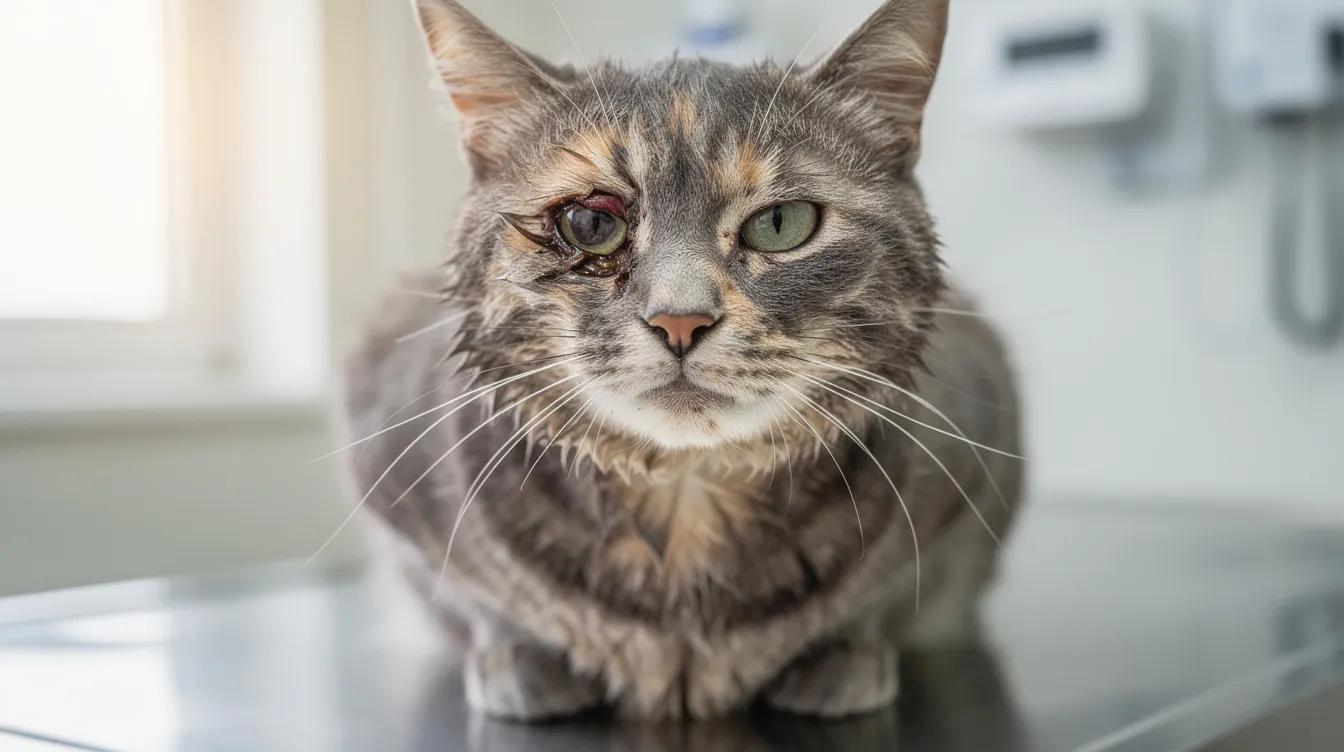
A cat eye infection is one of the most common reasons cat owners end up searching frantically at 11pm, watery eyes, crust along the lids, or discharge that wasn’t there yesterday. Most cat eye infections are treatable, but the right approach depends heavily on the cause and the type of discharge you’re seeing.
One of my cats developed a gooey, yellow discharge in one eye seemingly overnight. She was otherwise completely normal, eating, playing, purring, which almost made me second-guess taking her in. The vet confirmed a bacterial infection that needed prescription drops. Left untreated, it likely would have spread to her other eye within days.
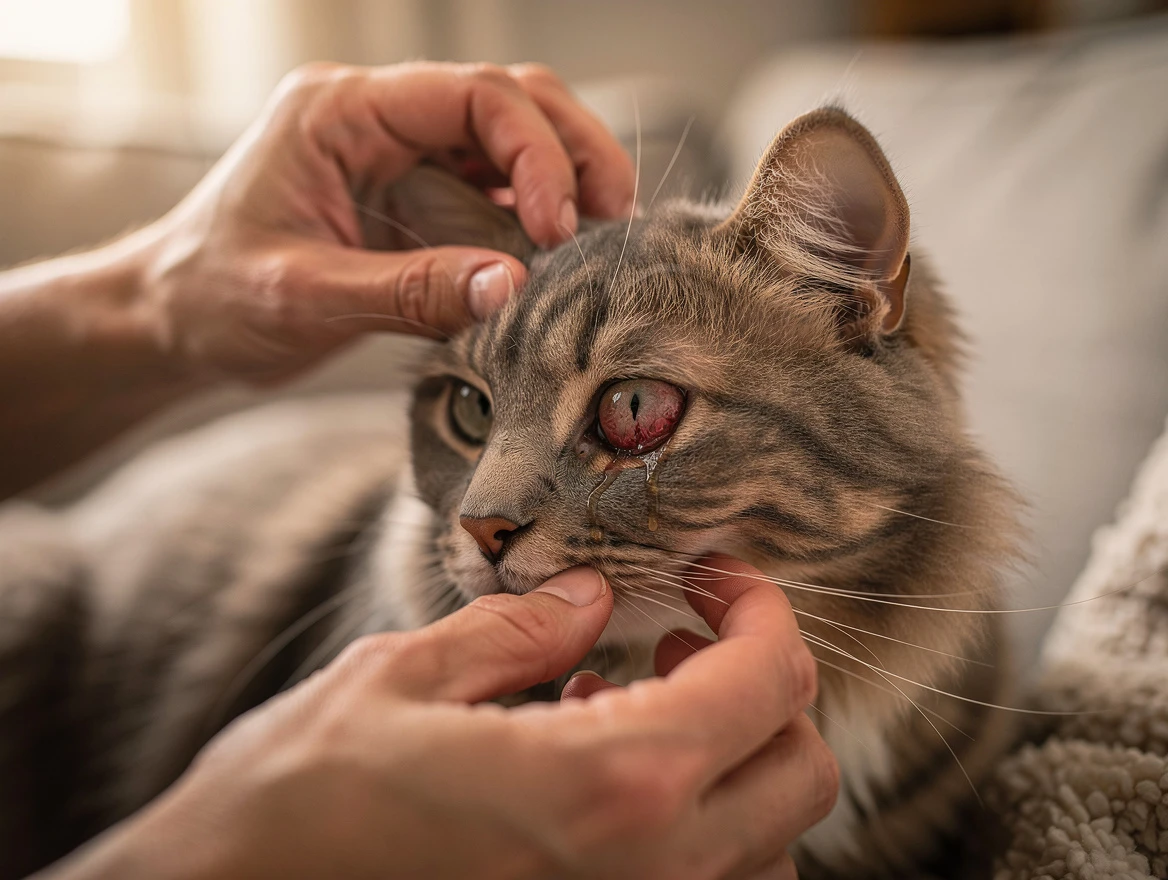
Common signs include discharge, redness, squinting, and swelling. Causes range from viral infections (feline herpesvirus is the most common) to bacterial infections, allergies, or injury. Mild cases can sometimes be managed with gentle cleaning at home, but yellow or green discharge, swelling, or pain almost always needs vet-prescribed antibiotic drops. Left untreated, infections can spread and cause lasting eye damage.
Symptoms to Watch For
- Discharge — watery, cloudy, yellow, or green
- Redness of the eyelid or the white of the eye
- Squinting or holding the eye partially closed. Related: Why Is My Cat Squinting One Eye
- Swelling around the eye or eyelid. Related: Why Is My Cat’s Eye Swollen
- Excessive blinking or pawing at the eye
- Cloudiness or a change in eye color
- Crusty or matted fur around the eye
- Sensitivity to light
Discharge Color — What It Means
| Discharge Color | Likely Cause | Urgency |
|---|---|---|
| Clear, watery | Mild irritation, allergy, or early viral infection | Monitor 24 hours |
| Yellow, thick | Bacterial infection | Vet visit needed — antibiotics required |
| Green, thick | More advanced bacterial infection | Vet visit soon — do not delay |
| Bloody or pink-tinged | Injury, ulcer, or severe inflammation | 🚨 Vet same day |
| Recurring watery discharge | Chronic viral infection (herpesvirus flare-ups) | Vet for management plan |
Types of Cat Eye Infections
1. Conjunctivitis
Inflammation of the pink tissue lining the eyelid. The most common type of cat eye infection, often viral (feline herpesvirus) or bacterial in origin.
2. Feline Herpesvirus (FHV-1)
The single most common underlying cause of chronic and recurring cat eye infections. Most cats are exposed as kittens and the virus can flare up throughout life during stress or illness.
3. Chlamydophila felis
A bacterial infection causing conjunctivitis, often with watery-to-mucus discharge, more common in multi-cat households and kittens.
4. Corneal Ulcers
A scratch or wound on the surface of the eye, often from trauma or severe infection. Causes pain, squinting, and cloudiness. Requires prompt veterinary care.
5. Uveitis
Inflammation inside the eye, sometimes linked to systemic disease. Causes redness, cloudiness, and pupil changes. Related: My Cat’s Pupils Are Different Sizes.
Common Causes
- Feline herpesvirus and calicivirus — the most common infectious causes, especially in cats exposed as kittens
- Bacterial infection — often secondary to viral infection or injury
- Allergies — dust, pollen, or household irritants
- Foreign objects — debris, dust, or plant matter trapped under the eyelid
- Injury or trauma — scratches from play, fights, or environmental hazards
- Blocked tear ducts — more common in flat-faced breeds
How Did My Indoor Cat Get an Eye Infection
Indoor status doesn’t protect against the most common cause: feline herpesvirus, which most cats carry latently from kittenhood regardless of current lifestyle. Stress, another illness, or a weakened immune system can trigger a flare-up years later, even in a cat that has never gone outside. Indoor cats can also develop infections from dust, allergens, or minor injuries during normal play.
Home Treatment — What Actually Helps
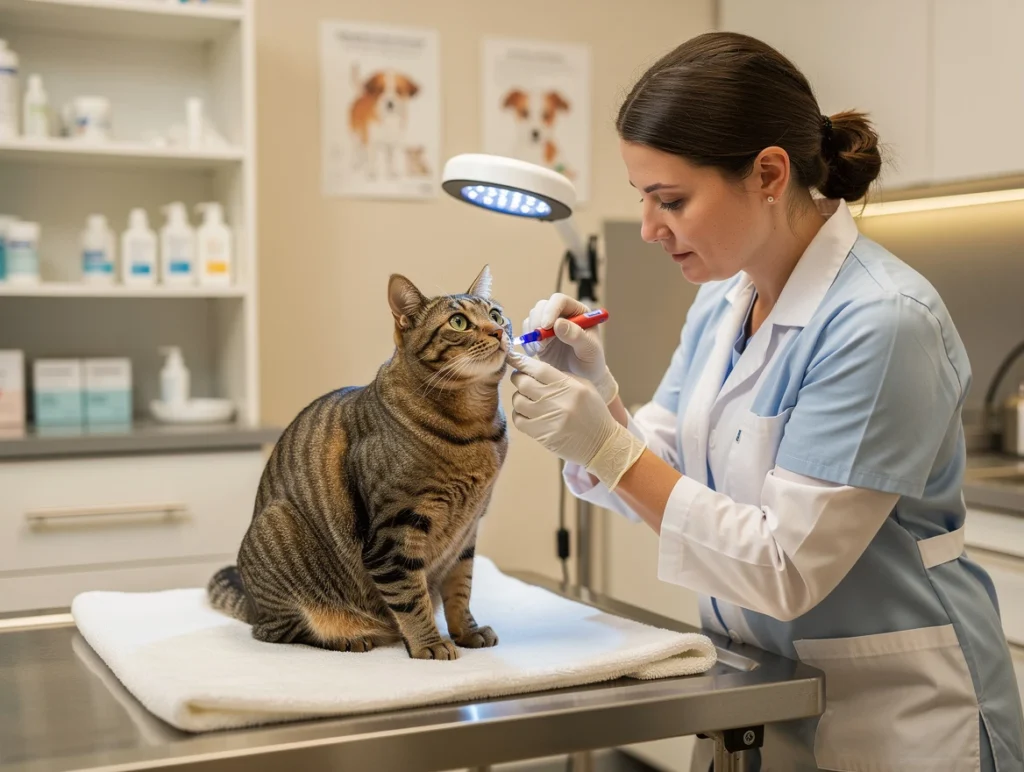
Home treatment should be considered supportive care alongside, not a replacement for, veterinary treatment when discharge is colored or symptoms are more than mild:
- Warm compress — a clean, warm damp cloth held gently against the closed eye for a few minutes softens crust and soothes irritation
- Gentle cleaning — wipe outward from the corner of the eye using a fresh cotton pad per wipe, never reused
- Sterile saline rinse — pet-safe saline solution can flush mild irritants
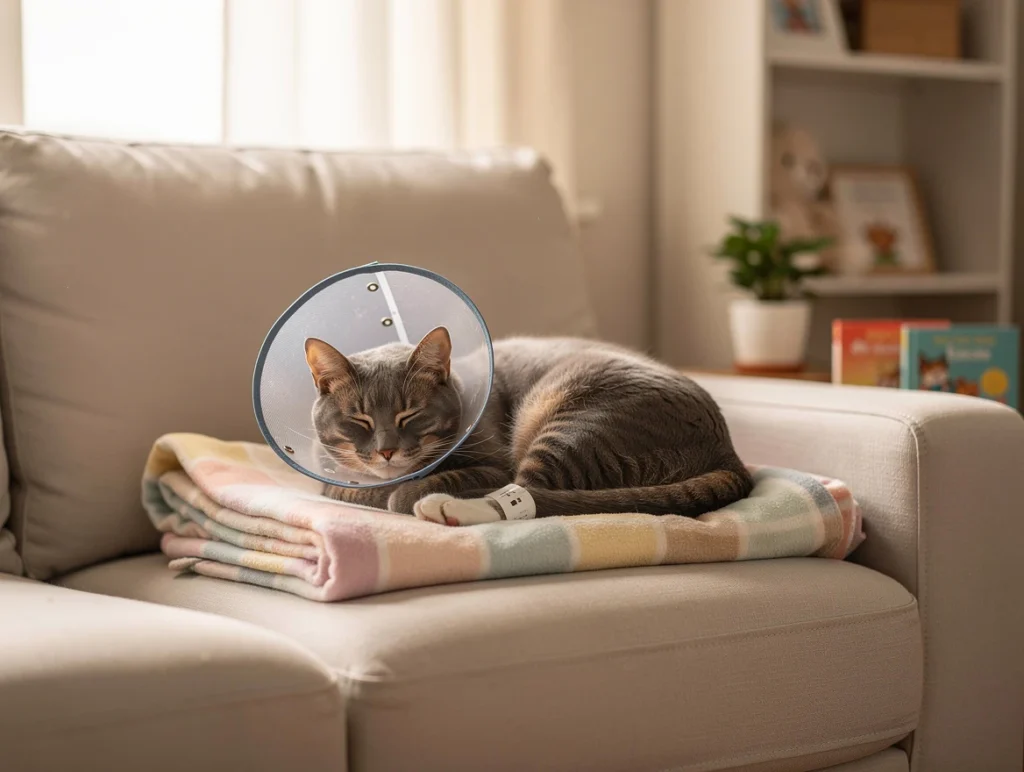
- E-collar — prevents your cat from scratching and worsening the irritation
Human eye drops, hydrogen peroxide, essential oils, or any unprescribed medication in a cat’s eye. These can cause serious damage to sensitive eye tissue.
Best Eye Drops and Medicine
| Treatment | Used For | Prescription Needed? |
|---|---|---|
| Erythromycin ophthalmic ointment | Bacterial conjunctivitis | ✅ Yes |
| Famciclovir (oral) | Feline herpesvirus flare-ups | ✅ Yes |
| Tobramycin drops | Bacterial infections, broader spectrum | ✅ Yes |
| Sterile saline eye wash | Gentle cleaning, mild irritation | ❌ No — OTC pet-safe |
| L-lysine supplement | Sometimes used for herpesvirus, evidence is mixed | ❌ No — but ask your vet first |
L-lysine was long recommended as a standard herpesvirus management supplement, but more recent controlled studies show little to no clear benefit. Some vets still suggest trying it since it’s low-risk, but don’t rely on it as a primary treatment.
Best antibiotic choice depends entirely on the specific bacteria or virus involved, your vet will often take a swab or simply examine the discharge and symptom pattern to prescribe the right one. There is genuinely no reliable “best” over-the-counter option; over-the-counter treatment is largely limited to sterile saline rinses for mild irritation, not true infections.
Can It Go Away on Its Own
Mild, clear, watery discharge from minor irritation sometimes resolves within a day or two with gentle cleaning. However, true infections, especially anything with yellow or green discharge, rarely resolve completely without treatment and often worsen or spread to the other eye if left alone. Viral flare-ups (herpesvirus) can also subside temporarily only to return during the next stressful period.
Can It Spread to Humans
Most feline eye infections (herpesvirus, calicivirus) are species-specific and do not transmit to people. Chlamydophila felis carries a very low, rare risk of transmission, primarily to immunocompromised individuals. Standard hygiene, washing hands after applying drops or cleaning your cat’s eye, is sufficient precaution for virtually all cases.
When to See the Vet
🩺 See Your Vet If:
- Discharge is yellow, green, or bloody
- Your cat is squinting, pawing at the eye, or showing pain
- Symptoms last more than 24–48 hours
- Swelling or visible cloudiness develops
- One eye’s symptoms spread to the other
- Your cat stops eating or seems lethargic alongside the eye issue
- This is a kitten — kittens can deteriorate quickly with eye infections
Frequently Asked Questions
Yes, this is genuinely worth knowing if you have more than one cat. Feline herpesvirus, calicivirus, and Chlamydophila felis are all contagious between cats through direct contact, shared bowls, or bedding. If one cat in your household is diagnosed, keeping bowls, bedding, and litter boxes separate during treatment, and washing your hands between handling each cat, reduces the risk to the others.
Simple conjunctivitis on its own rarely causes lasting vision damage. The real risk comes from corneal ulcers and uveitis specifically, both can threaten vision if left untreated, which is exactly why any cloudiness, pain, or symptoms lasting more than a day or two deserve a prompt vet visit rather than a wait-and-see approach.
Black tea compresses are a common folk remedy, but tea isn’t sterile and the tannins can irritate an already inflamed eye, especially if there’s an undiagnosed corneal ulcer underneath, which is exactly the kind of injury tea shouldn’t be anywhere near. Sterile saline does the same soothing job safely and is the better choice.
The Bottom Line
A cat eye infection is common and usually very treatable, but the discharge color tells you a lot, clear and watery can often be monitored, while yellow, green, or bloody discharge needs a vet visit and likely prescription drops. Waiting too long risks the infection spreading or causing lasting damage. Related: Why Is My Cat Squinting One Eye and Why Is My Cat’s Eye Swollen.