Published:27 March 2026 | Last Updated:27 March 2026 | Read Time: 10 minutes
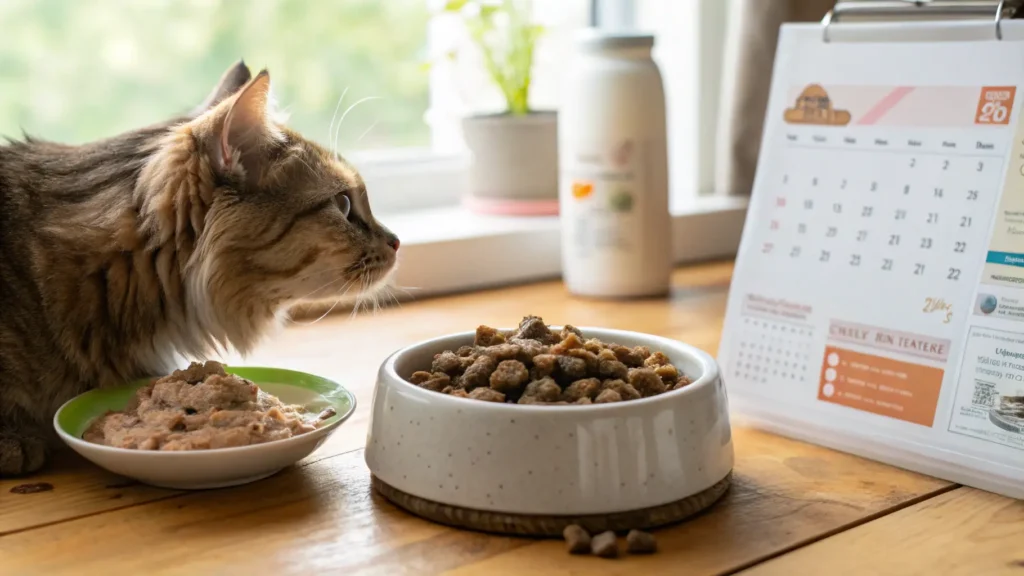
How often should I feed my cat wet food is one of those questions that sounds simple but has a surprisingly nuanced answer — because the right frequency depends on your cat’s age, weight, health status, and whether you’re combining wet food with dry. I’ve navigated this with four cats at completely different life stages, and what works for a young, active cat is very different from what a senior cat or an overweight one needs. This guide breaks it all down clearly so you can build a feeding routine that actually fits your cat.
Quick Answer: How Often to Feed Wet Food by Life Stage
| Life Stage | Age | Wet Food Frequency | Meals Per Day |
|---|---|---|---|
| Kitten | 0–6 months | 3–4x daily | Small portions |
| Junior | 6–12 months | 2–3x daily | Moderate portions |
| Adult | 1–7 years | 2x daily | Full portions |
| Senior | 7+ years | 2–3x daily | Smaller, more frequent |
| Pregnant/Nursing | Any | 3–4x daily | Increased portions |
| Overweight | Any | 2x daily | Reduced portions |
| Diabetic | Any | Timed with insulin | Vet-directed |
Why Wet Food Frequency Matters More Than You Think
How often you feed your cat wet food affects more than just their hunger. It impacts hydration, digestion, weight management, and even behavior. Cats are obligate carnivores with digestive systems designed for multiple small meals — not one large daily feeding.
According to the Cornell Feline Health Center, adult cats fed two scheduled wet food meals per day maintain better body weight, show fewer stress behaviors, and have more predictable litter box habits than cats fed inconsistently or on a free-choice basis.
Wet food specifically — as opposed to dry — has the added benefit of contributing to your cat’s daily water intake. Cats evolved in arid environments and have a naturally low thirst drive. Wet food, which is typically 70–80% moisture, helps prevent the chronic mild dehydration that contributes to urinary tract issues and kidney disease over time.
How Often Should I Feed My Cat Wet Food by Life Stage
🐱 Kittens (0–6 Months)
Kittens have tiny stomachs and enormous energy needs. They need wet food 3–4 times per day in small amounts — typically 1–2 tablespoons per feeding, depending on their size and the caloric density of the food.
At this stage, wet food is especially important because kittens can become dehydrated quickly and benefit enormously from the high protein content of quality wet food for muscle and organ development.
Practical tip: Space feedings evenly — morning, midday, afternoon, evening. If you work during the day, a midday feeding via automatic feeder works well. I did this with my youngest cat during her first six months and it made a visible difference in her energy consistency throughout the day.
What to avoid: Don’t leave wet food out for more than 30–60 minutes — bacteria multiply quickly at room temperature. Discard uneaten portions and rinse the bowl before the next meal.
🐱 Junior Cats (6–12 Months)
From 6 months onward, you can gradually reduce to 2–3 wet food meals per day as their stomach capacity increases and their growth rate slows slightly. Portion sizes increase, but meal frequency decreases.
This is the transition period where establishing a consistent routine pays off most. Cats who learn to expect meals at specific times become less anxious around food and are easier to portion control as adults.
🐱 Adult Cats (1–7 Years)
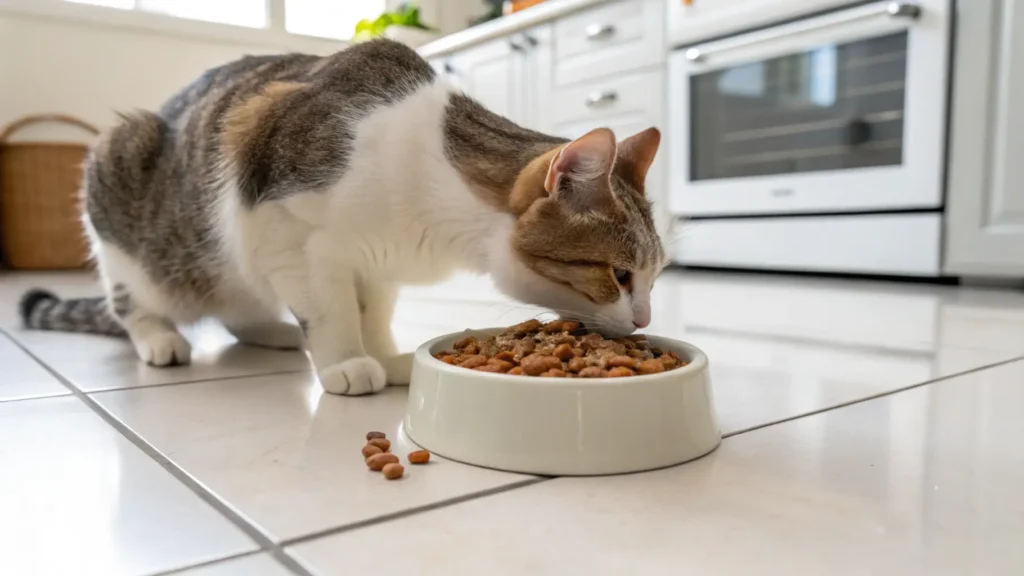
For most healthy adult cats, the answer to “how often should I feed my cat wet food” is twice daily — morning and evening, approximately 12 hours apart.
This matches a cat’s natural predatory cycle (most cats instinctively hunt at dawn and dusk) and maintains steady blood sugar and energy levels throughout the day. Two meals also makes it easy to monitor intake — if your cat consistently leaves food at one meal, you may be overfeeding.
Portion reference for an average adult cat (8–10 lbs):
- Wet food only: approximately 3–4 oz (85–113g) per meal, twice daily
- Wet food + dry food: approximately 2 oz (57g) wet per meal, with dry food measured separately
Always check the specific calorie content of the food you’re using — quality varies enormously between brands, and higher-protein foods often require smaller portions.
🐱 Senior Cats (7+ Years)
Senior cats often benefit from 3 smaller wet food meals per day rather than 2 larger ones. As cats age, their digestive efficiency decreases and their kidneys become less effective at processing concentrated waste. Smaller, more frequent meals reduce the digestive load and are easier on aging organs.
Senior cats also tend to lose muscle mass (a condition called sarcopenia), making high-protein wet food increasingly important to maintain lean body weight. Look for senior-specific wet foods with elevated protein and reduced phosphorus — the latter being important for kidney health.
If your senior cat has stopped eating as enthusiastically, warming their wet food slightly (10–15 seconds in the microwave, then testing the temperature) releases aroma that stimulates appetite. This made an immediate difference with my oldest cat when she entered her senior years.
How Often Should I Feed My Cat Wet Food vs. Dry?
One of the most common questions alongside feeding frequency: should you feed wet only, or combine wet and dry?
| Feeding Approach | Best For | Key Benefit | Watch Out For |
|---|---|---|---|
| Wet food only | Cats with urinary issues, kidney disease, overweight cats | Maximum hydration | Higher cost, needs refrigeration |
| Dry food only | Owners with busy schedules | Convenience, dental benefits | Low moisture, higher carbs |
| Mixed (wet + dry) | Most healthy adult cats | Balance of hydration and convenience | Easy to overfeed total calories |
| Wet twice daily + dry free choice | Active, healthy cats maintaining ideal weight | Flexibility | Risk of overfeeding dry |
The most important thing when combining wet and dry food is calculating total daily calories from both sources combined — not just estimating portions of each separately. Over-feeding is the most common mistake in mixed-feeding households.
How Often Should I Feed My Indoor Cat Wet Food?
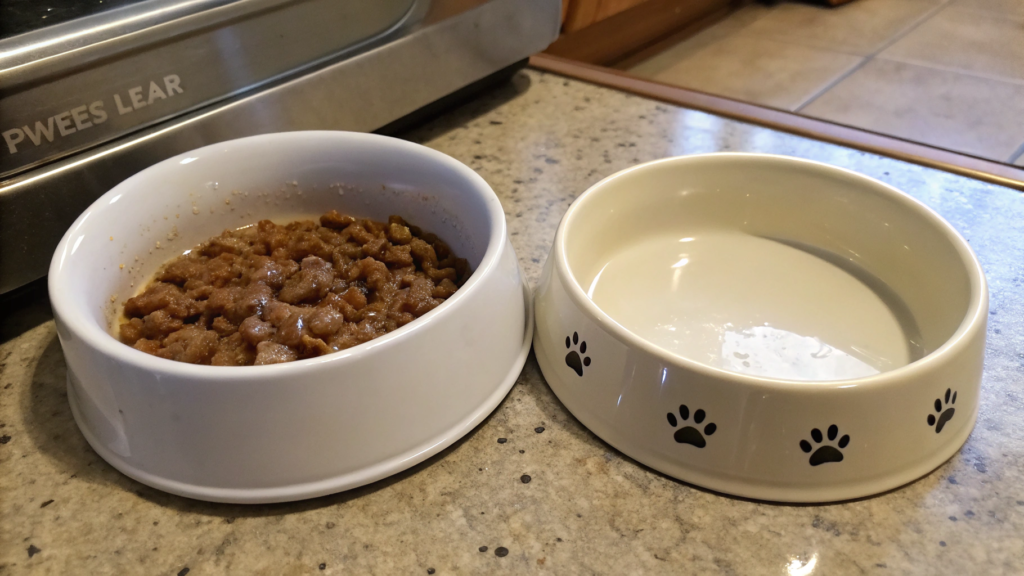
Indoor cats have lower activity levels than outdoor cats, which means their calorie needs are typically 20–30% lower. How often should I feed my indoor cat wet food? The frequency stays the same — twice daily — but portion sizes should be adjusted downward.
The bigger risk with indoor cats isn’t feeding frequency; it’s feeding too much. Indoor cats that are bored often become food-motivated, leading owners to overfeed in response to begging behaviors. Establishing strict meal times (rather than free-feeding) is the single most effective intervention for preventing obesity in indoor cats.
According to the American Association of Feline Practitioners, indoor cats have significantly higher rates of obesity than their outdoor counterparts — and obesity in cats is directly linked to diabetes, joint disease, and shortened lifespan.
Enrichment tip: Using puzzle feeders or food-dispensing toys for wet food portions adds mental stimulation and slows eating speed, both of which benefit indoor cats significantly.
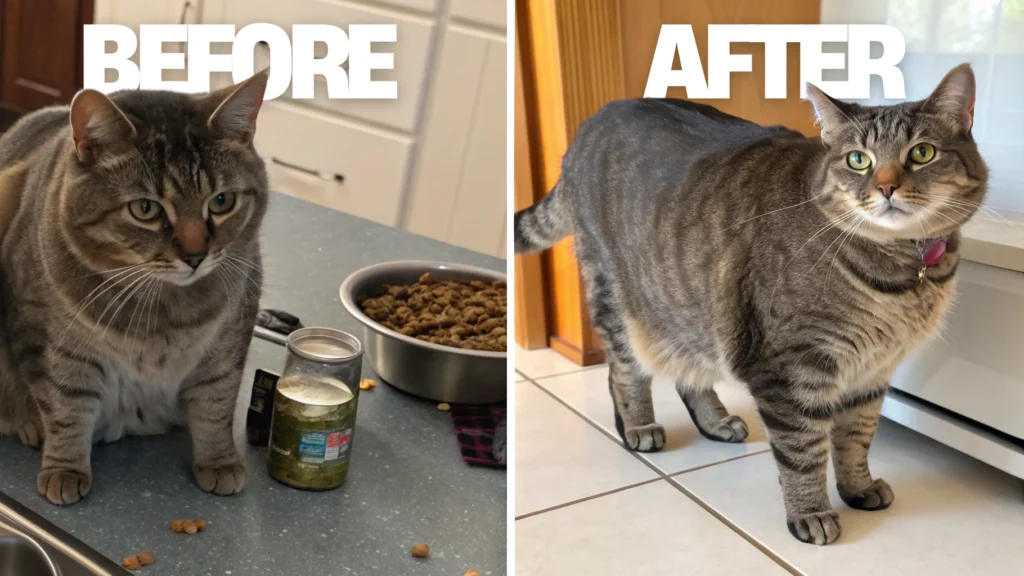
How Often Should I Feed My Overweight Cat Wet Food?
If your cat is overweight, how often should you feed wet food? Stick to twice daily — but be very precise about portions and switch to a lower-calorie, high-protein wet food specifically.
The goal is reducing total calories while keeping your cat satiated. High-protein, low-carbohydrate wet food achieves this better than dry food because protein is more satiating per calorie than carbohydrates.
Weight loss feeding protocol:
- Get your cat’s current weight from your vet
- Calculate their target calorie intake for slow weight loss (your vet can help — typically 80% of resting energy requirement)
- Feed that amount divided into exactly 2 meals per day
- No treats, or count treats toward the daily calorie total
- Weigh monthly and adjust
What NOT to do: Don’t suddenly reduce your cat’s food intake dramatically. Cats who lose weight too quickly develop hepatic lipidosis (fatty liver disease) — a serious and potentially fatal condition. Weight loss in cats should be slow and supervised: no more than 0.5–1% of body weight per week.
How Often Should I Feed My Diabetic Cat Wet Food?
Diabetic cats require the most precise feeding schedule of any life stage. How often should I feed my diabetic cat wet food? Meals must be timed to coordinate with insulin injections — typically twice daily, exactly 12 hours apart, given immediately before or alongside each insulin dose.
The timing matters because the glucose spike from a meal is what the insulin dose is calibrated to manage. An inconsistent feeding schedule makes blood sugar management nearly impossible.
Diabetic cats also benefit specifically from wet food because of its lower carbohydrate content. According to the Cornell Feline Health Center, a low-carbohydrate, high-protein wet food diet is the dietary standard of care for diabetic cats — some cats even achieve diabetic remission through diet change alone.
If you’ve noticed signs that your cat might be diabetic — excessive thirst, frequent urination, weight loss despite eating — our guide on 7 diabetic cat signs covers what to watch for and when to see a vet.
How Often Should I Feed My Senior Cat Wet Food?
Senior cats (7+ years) benefit from 2–3 wet food meals per day in smaller portions. As covered above, this reduces digestive strain and helps maintain hydration — especially critical as kidney function typically declines with age.
For senior cats who have lost interest in food, the most effective interventions are:
- Warming the food slightly to release aroma
- Switching to a softer texture (pâté vs. chunks)
- Offering smaller amounts more frequently
- Adding a small amount of low-sodium chicken broth for palatability
If your senior cat has stopped eating or is showing other behavioral changes alongside appetite loss, that warrants a same-day vet call — not a wait-and-see approach.
Signs You’re Feeding Wet Food Too Often (Or Not Enough)
Signs of overfeeding:
- Leaving food consistently at each meal (reduce portion size)
- Visible weight gain over 4–6 weeks
- Loose stools or frequent vomiting shortly after eating
- Begging constantly between scheduled meals (may indicate boredom rather than hunger — distinguish carefully)
Signs of underfeeding:
- Finishing food immediately and crying for more
- Visible weight loss or prominent spine/hip bones
- Lethargy or reduced activity
- Hunting behavior intensifying (pouncing on feet, obsessive toy play)
- Waking you at night for food earlier than scheduled
Signs the feeding schedule is working:
- Cat waits calmly at regular meal times
- Finishes food within 15–20 minutes without rushing
- Maintains stable weight month to month
- No food-related anxiety behaviors
How to Store Leftover Wet Food
How often should I feed my cat wet food is closely connected to how you handle leftovers — because improperly stored wet food is a genuine health risk.
Storage rules:
- Opened wet food: cover and refrigerate immediately, use within 3–5 days
- Never leave wet food at room temperature for more than 1 hour
- Refrigerated wet food should be warmed to room temperature or slightly above before serving (cold food is less palatable and harder to digest)
- Freeze unopened cans in bulk for storage — thaw in refrigerator 24 hours before use
- Discard any wet food with unusual smell, color change, or mold
Frequently Asked Questions
How often should I feed my cats wet food if I have multiple cats?
Feed each cat separately if possible — this prevents resource guarding and ensures each cat eats their own portion. Two scheduled meals per day applies to multi-cat households the same as single-cat ones. Watch for any cat consistently finishing faster than others and then attempting to eat from remaining bowls.
How often should I feed my cat wet food at night?
Most cats do well with their second wet food meal in the evening — around the same time each day. Avoid feeding too close to your own bedtime if your cat tends to demand food in the early morning; a consistent evening meal time helps regulate their internal schedule.
Can I feed my cat wet food once a day?
Once daily is generally not recommended for adult cats. One large meal per day can cause stomach upset, longer periods of hunger, and increased food-anxiety behaviors. Two smaller meals more closely match how cats are designed to eat.
How often should I feed my cat wet food in hot weather?
More frequently — but with smaller portions per meal. Heat speeds bacterial growth in wet food. In summer, reduce portions slightly and feed the same daily amount across 3 meals rather than 2. Always discard uneaten wet food within 30 minutes in hot weather.
How often should I feed my cat wet food if they’re also eating dry?
Twice daily for wet food is standard even in mixed-feeding households. The key is calculating total daily calories from both food types combined and not exceeding that target. Most owners underestimate how many calories their cat gets from dry food left out between wet food meals.
My cat throws up after wet food — what’s wrong?
Occasional vomiting after eating too quickly is common, especially in cats who eat enthusiastically. Slow-feeder bowls or spreading food on a flat plate can help. If vomiting is frequent or happens consistently regardless of eating speed, see our guide on why is my cat throwing up for causes worth investigating.
Bottom Line
How often should I feed my cat wet food comes down to twice daily for most healthy adult cats — with adjustments for life stage, weight, and health conditions. The schedule matters as much as the frequency: consistent meal times at the same hour each day reduce food anxiety, simplify portion control, and make it easier to notice when something changes in your cat’s appetite. Start with twice daily, observe for two weeks, and adjust portion size based on what your cat leaves or asks for. When in doubt, your vet can calculate an exact calorie target for your cat’s specific body weight and health status.
This article is for informational purposes only and does not constitute veterinary nutritional advice. Always consult a licensed veterinarian for personalized feeding recommendations for your cat.
Related Articles
- Why Is My Cat Throwing Up? — Feeding frequency and food type are among the most common causes.
- Why Is My Cat Hissing at Me All of a Sudden? 9 Common Reasons
- Cat Breathing Fast But Otherwise Normal? — Health monitoring that goes alongside good nutritional care.
- Can Cats Eat Egg Shells? — Nutritional supplements that can complement a wet food diet.