Signs of ear infection in cats are easy to miss in the early stages because cats hide discomfort so well. By the time most owners notice the scratching and head shaking, the infection has often been developing for days. Catching them early makes treatment faster, cheaper, and far less painful for your cat.
One of my cats started tilting her head slightly to the left. No scratching, no discharge, no smell, just a subtle tilt. I almost ignored it. My vet found a yeast infection deep in her ear canal that would have become severe within another week. That tiny head tilt was the only sign.
Signs include persistent scratching at the ears, head shaking, head tilting, dark or colored discharge, foul smell from the ears, redness or swelling, and sensitivity when the ears are touched. The most common causes are ear mites, yeast, or bacteria. Most ear infections do NOT go away on their own and need veterinary treatment.
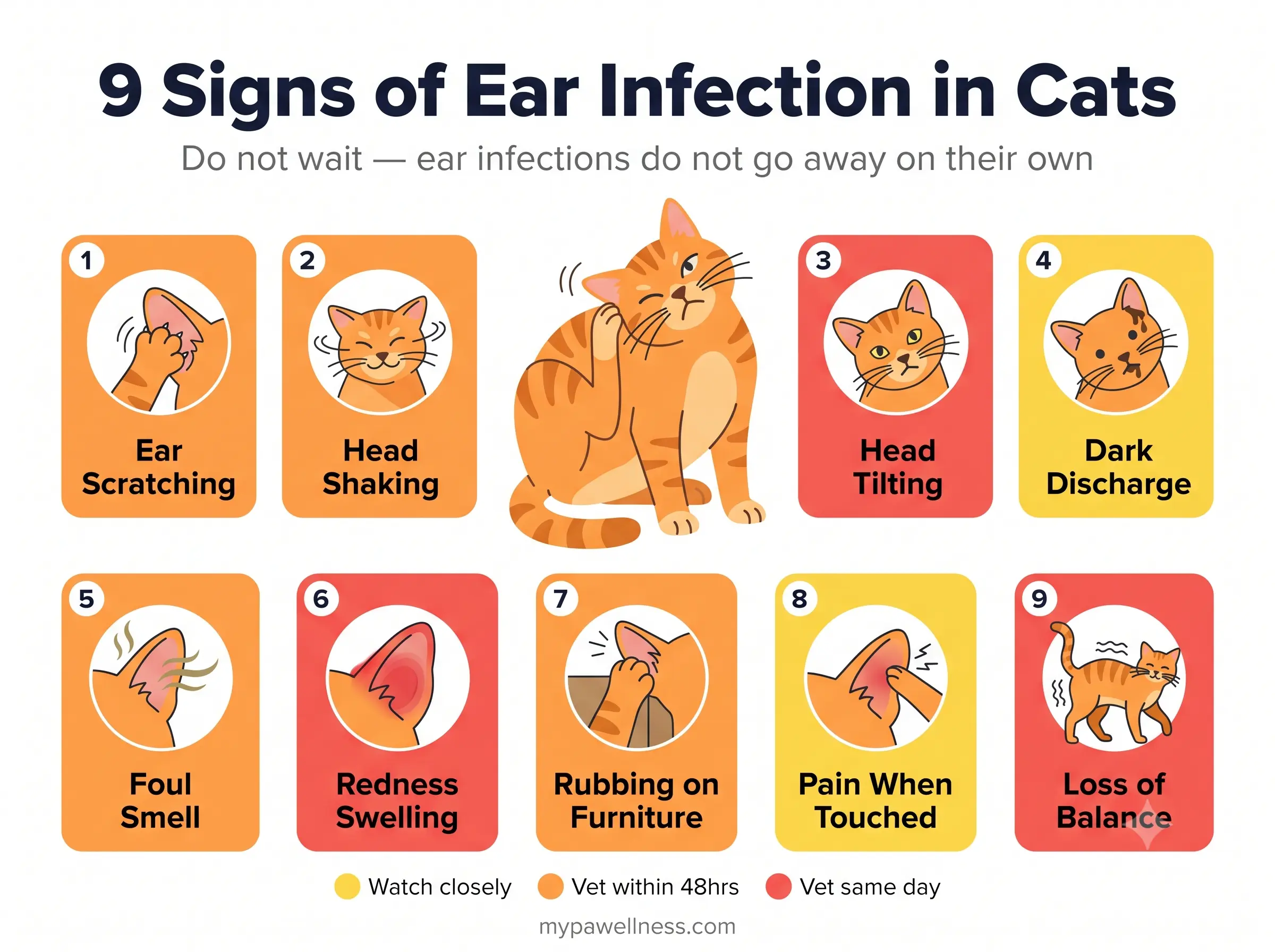
9 Warning Signs
1. Persistent Scratching at the Ears
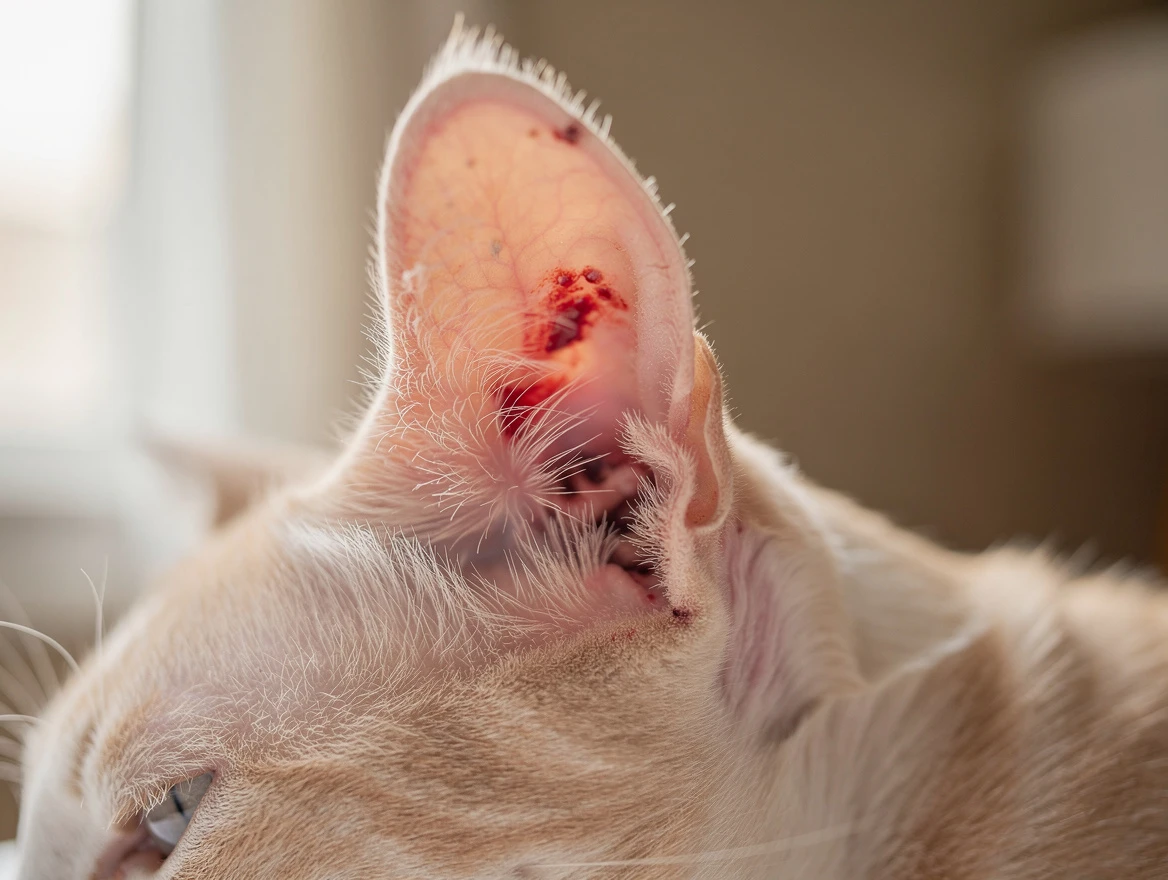
The most obvious sign. Your cat keeps scratching at the ear and shaking their head repeatedly throughout the day. Occasional ear scratching is normal, persistent, frantic scratching is not. Some cats scratch so aggressively they create sores and bleeding on the ear flap.
2. Head Shaking
Frequent, vigorous head shaking, as if trying to dislodge something from the ear canal. This is your cat trying to relieve the discomfort inside the ear. Head shaking combined with scratching is one of the strongest signs.
3. Head Tilting
A persistent tilt to one side indicates the infection is affecting balance or causing pain on that side. This is often an early sign that owners miss because it’s subtle. Inner ear infection symptoms almost always include head tilting.
4. Dark or Colored Discharge
Discharge is one of the most diagnostic signs. The color and consistency tell you the likely cause — see the discharge table below. Any discharge that wasn’t there before is abnormal.
5. Foul Smell From the Ears
Healthy cat ears have no noticeable odor. A yeasty, sour, or rotten smell from one or both ears strongly indicates infection. The worse the smell, the more advanced the infection.
6. Redness and Swelling
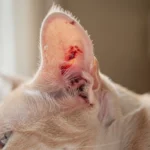
Look inside the ear flap — redness, swelling, or warmth indicates inflammation from infection. Severe cases include visible swelling that partially closes the ear canal.
7. Pain When Ears Are Touched
If your cat flinches, cries, hisses, or pulls away when you touch their ears, they’re in pain. A cat that previously loved ear scratches but now avoids them is showing a clear sign.
8. Loss of Balance or Disorientation
Walking in circles, stumbling, falling over, or general unsteadiness indicates the infection has spread to the inner ear, which controls balance. This always requires urgent veterinary care.
9. Changes in Behavior
Hiding, irritability, loss of appetite, or lethargy alongside ear symptoms indicates the infection is causing significant pain. Severe ear pain can cause appetite loss, since pain from chewing can worsen ear discomfort. Related: My Cat Is Not Eating and Very Weak.

What the Discharge Tells You
Discharge is one of the best diagnostic clues. Here’s what each type typically indicates:
| Discharge Type | Appearance | Most Likely Cause |
|---|---|---|
| Dark brown/black, coffee-ground-like | Dry, crumbly, gritty | Ear mites (most common in cats) |
| Yellow or green, thick | Pus-like, wet | Bacterial infection |
| Brown, waxy, sticky | Greasy, may smell yeasty | Yeast infection (Malassezia) |
| Clear or slightly cloudy | Watery | Allergies or early infection |
| Blood-tinged | Red or pink | Scratching damage, polyp, or severe infection |
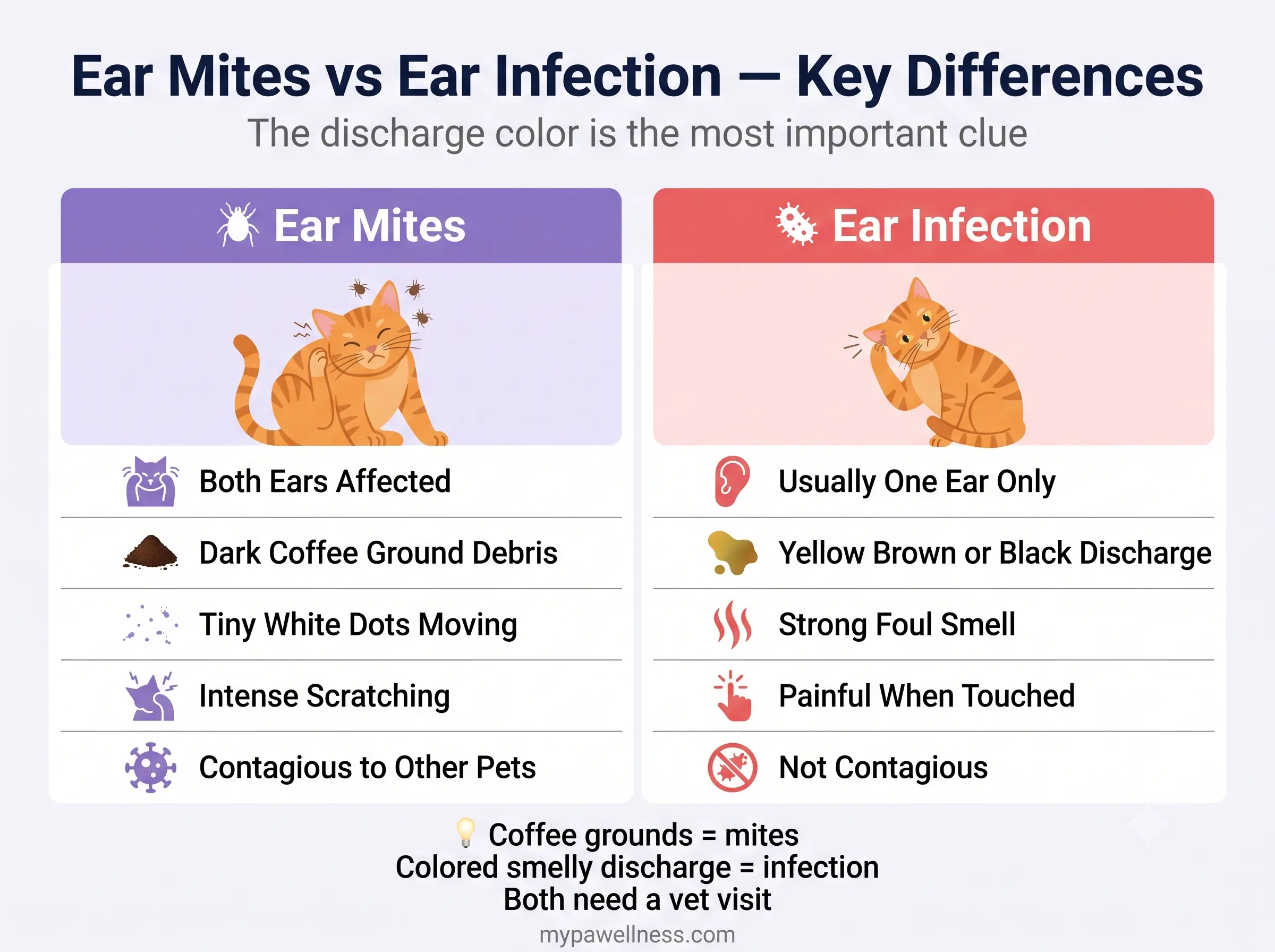
Ear Mites vs Infection — How to Tell the Difference
This is one of the most commonly asked questions because the symptoms overlap significantly. Here’s how to tell them apart:
| Feature | Ear Mites | Bacterial/Yeast Infection |
|---|---|---|
| Discharge | Dark, dry, coffee-ground-like | Yellow, green, brown, wet/waxy |
| Smell | Minimal or none | Strong foul or yeasty odor |
| Itchiness | Intense — frantic scratching | Moderate scratching |
| Both ears? | Usually both ears | Often one ear (can be both) |
| Age | More common in kittens | Any age |
| Contagious? | Yes — highly contagious to other cats | No — not contagious |
| Visible mites? | Sometimes — tiny white dots moving | No visible organisms |
| Treatment | Anti-parasitic drops | Antibiotic or antifungal drops |
Ear mites are contagious between cats (and sometimes dogs). Bacterial and yeast infections are not contagious. If one cat has ear mites, check and treat all cats in the household. Related: My Cat Has Worms How Do I Clean My House — similar multi-cat treatment approach.
Inner Ear Infection Symptoms
These are more serious than outer ear infections because the inner ear controls balance and hearing. Signs include:
- Persistent head tilt that doesn’t resolve
- Loss of balance — stumbling, falling, walking in circles
- Rapid eye movement (nystagmus) — eyes flicking side to side
- Vomiting or nausea from dizziness
- Hearing loss on the affected side
- Facial nerve paralysis — drooping lip or eyelid on one side (rare but serious)
Inner ear infections are veterinary emergencies. They don’t resolve on their own and can cause permanent hearing loss or chronic balance problems if untreated.
Home Remedies
Options are limited because most ear infections need prescription medication. However, these can help alongside veterinary treatment or for very mild cases:
- Warm compress — hold a warm (not hot) damp cloth against the ear for 5 minutes to reduce swelling and pain
- Coconut oil — a tiny amount on the outer ear flap only, never inside the canal, can soothe irritated skin
- Keep ears dry — moisture worsens infections. Dry ears gently after baths.
- Gentle cleaning — use vet-approved ear cleaner on a cotton ball. Never use cotton swabs (Q-tips) inside the ear canal.
Home remedies can soothe mild irritation but cannot cure bacterial, yeast, or mite infections. These require prescription ear drops, antibiotic, antifungal, or anti-parasitic medication from your vet. Delaying proper treatment allows the infection to worsen and potentially spread to the inner ear.
Related: How Can I Soothe My Cat’s Itchy Skin — allergies cause both skin and ear problems.
Can It Go Away on Its Own
Rarely. Very mild irritation from allergies or a tiny amount of debris may resolve. But bacterial infections, yeast infections, and ear mites do NOT go away without treatment. They get worse.
Untreated ear infections can lead to chronic ear damage, hearing loss, eardrum rupture, and spread to the inner ear causing permanent balance problems. A $50-100 vet visit and ear drops are almost always cheaper than treating the complications of a neglected infection.
Is a Cat Ear Infection an Emergency
Most ear infections are not emergencies but do need vet attention within a few days. However, these situations ARE emergencies:
- Loss of balance, falling, walking in circles (inner ear involvement)
- Sudden hearing loss
- Facial drooping on one side
- Extreme pain — cat screaming or becoming aggressive when ear is touched
- Bleeding from inside the ear canal
- Cat has stopped eating for 24+ hours due to ear pain
- Rapid onset swelling of the ear flap (possible hematoma from scratching)
When to See the Vet
🩺 See Your Vet If:
- Any colored discharge (yellow, green, brown, black)
- Foul smell from the ears
- Persistent scratching and head shaking lasting more than 2 days
- Head tilting
- Pain when ears are touched
- Visible redness or swelling inside the ear
- Any balance issues — stumbling, circling, falling
- Ear problems recurring after previous treatment
- Multiple cats showing symptoms (likely ear mites)
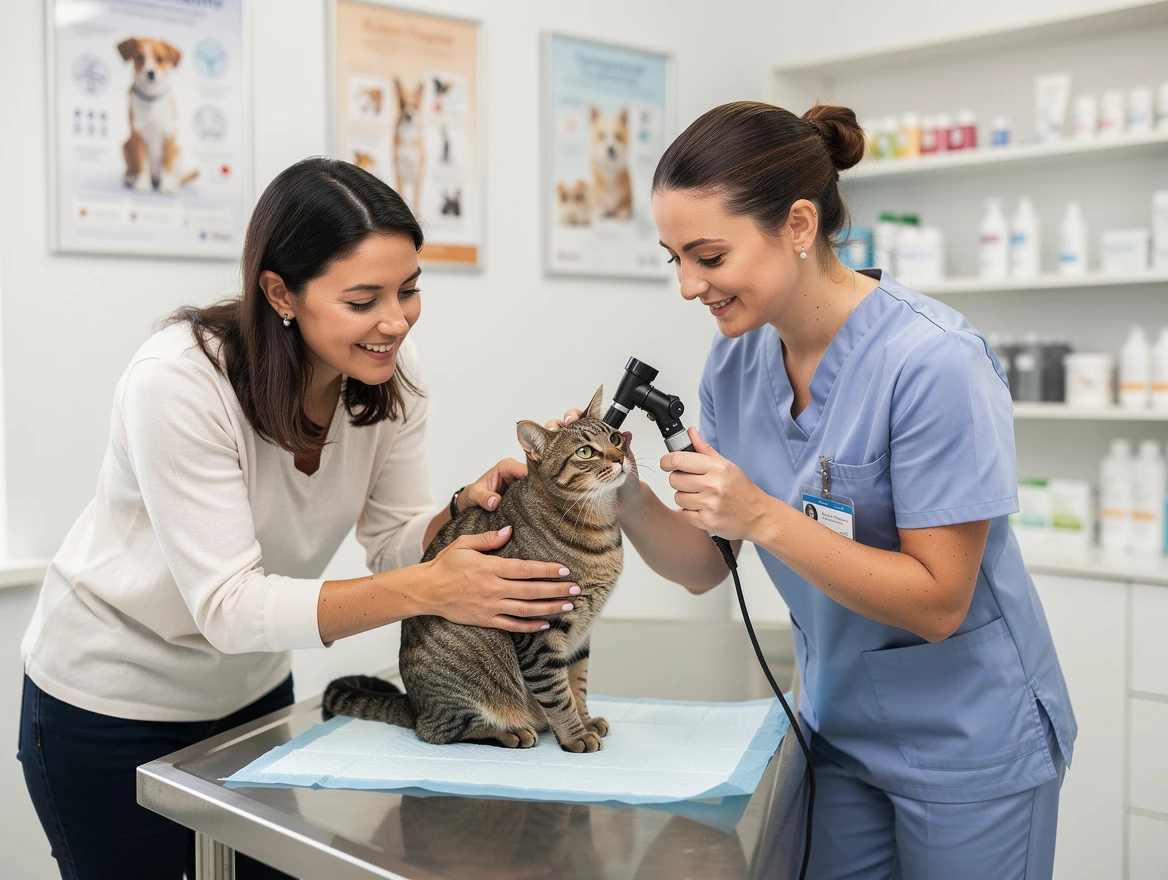
Your vet will examine the ear with an otoscope, take a sample of the discharge to identify the cause (mites vs bacteria vs yeast), and prescribe the correct treatment. Related: Cat Eye Infection Facts — ear and eye infections often occur together from the same virus.
Common Mistakes
- Using Q-tips inside the ear canal — pushes debris deeper and risks eardrum damage
- Using dog ear medication on cats — some dog ear drops contain ingredients toxic to cats
- Stopping treatment early — finish the full course of ear drops even if symptoms improve. Stopping early causes relapse.
- Treating only one cat — if the cause is ear mites, ALL cats in the household need treatment
- Assuming ear scratching is normal — occasional scratching is fine, persistent scratching is not
- Waiting too long — early treatment is faster and cheaper than treating a chronic or deep infection
Frequently Asked Questions
The earliest signs are subtle head tilting, slightly increased ear scratching, rubbing ears on furniture, and a minor increase in ear wax. These are easy to miss but catching them early means faster, simpler treatment.
They contain medication that kills the specific cause — antibiotics for bacteria, antifungals for yeast, or anti-parasitics for mites. Some combination drops treat all three at once. Your vet prescribes based on what the ear exam reveals.
The Bottom Line
The clearest warnings are persistent scratching, head shaking, discharge, smell, and head tilting. Don’t wait for the infection to resolve on its own, it won’t. A vet visit catches the cause early and treatment with ear drops is straightforward.
Check your cats’ ears weekly. It takes 10 seconds and catches problems before they become painful.
Related: Why Is My Cat Sneezing So Much — upper respiratory infections often accompany ear problems.