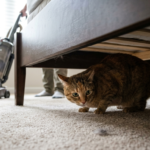
How Long Can You Leave a Cat Alone at Home

How Long Can You Leave a Cat Alone at Home?

🐾 MyPawellness.com — Real Advice from a Real Pet Owner
Cat Care

How Long Can You Leave a Cat Alone at Home?

By Luna Saber | Updated May 2026 | 🐱 Owner of 1 dog + 4 cats
How long can you leave a cat alone at home is one of the most common questions I get — and one where the honest answer depends entirely on your cat’s age, health, and what you set up before you leave.

How long can you leave a cat alone in the house, how long can you leave a cat alone for without any preparation, how long can you leave a cat alone overnight — I have been asking all of these with four cats for years, including one with early-stage diabetes who needs medication twice daily.

This guide gives you specific answers for every situation — by age, by number of days, and by what you have arranged — not a single generic number that ignores your cat’s individual circumstances.

⚡ Quick Answer

How long can you leave a cat alone: healthy adult cats can safely be left alone for 8 to 12 hours for a normal workday. With proper preparation — auto feeder, multiple water sources, clean litter boxes — up to 24 to 48 hours is generally safe. Beyond 48 hours, a check-in from someone is strongly recommended. How long can you leave a cat alone overnight is generally fine for healthy adults. Kittens should never be left more than 4 to 6 hours. Senior cats need check-ins every 12 hours minimum.


⚠️ When Leaving a Cat Alone Becomes Dangerous

How long can you leave a cat alone becomes the wrong question entirely when any of these apply to your specific cat:

🚨 These Cats Require a Pet Sitter or Boarding — Not Just a Setup:
  • Your cat is on medication that cannot be skipped — insulin, heart medication, thyroid treatment
  • Your cat is recovering from surgery or illness
  • Your cat has a history of urinary blockages — in male cats this is life-threatening within 24 to 72 hours
  • Your cat is under 4 months old — kittens can develop hypoglycemia and need feeding every few hours
  • Your cat is over 12 years old with known health conditions
  • Your cat has shown signs of severe separation anxiety or depression when previously left alone

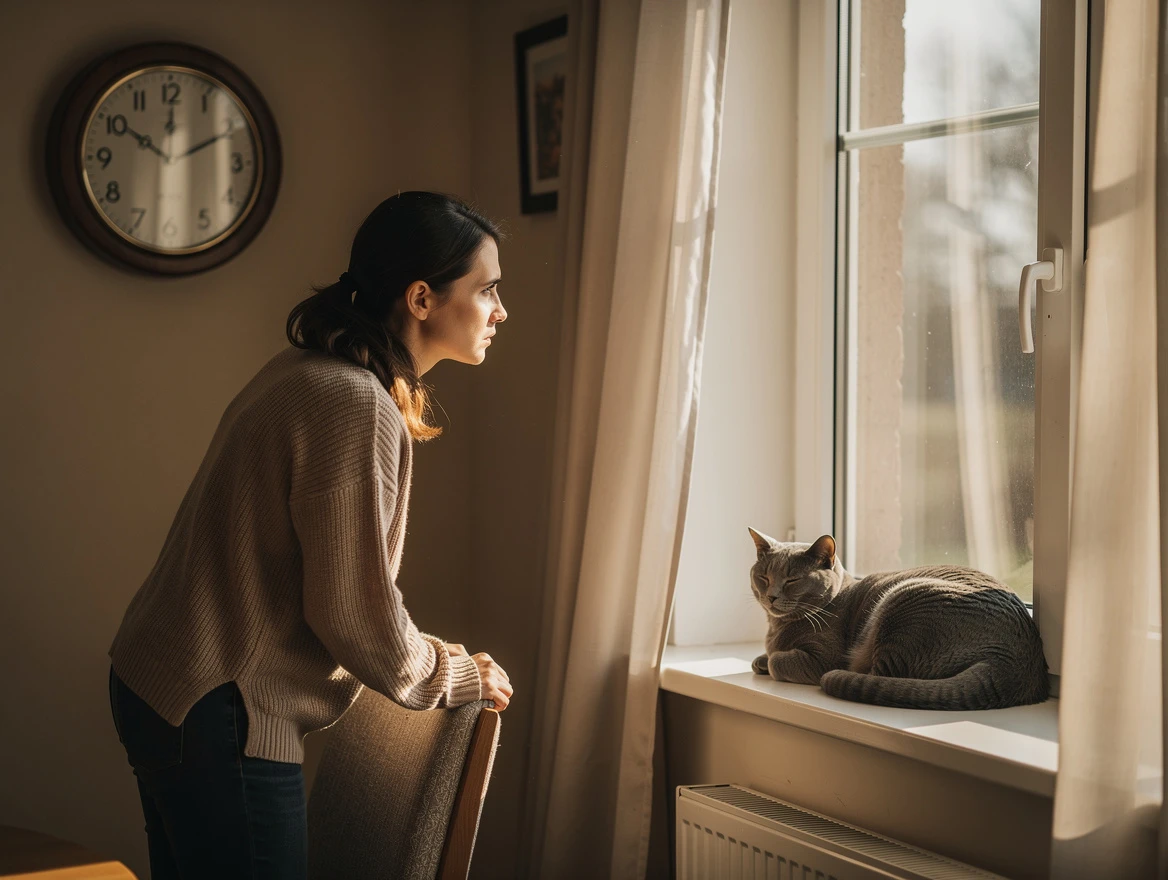
How long can you leave a cat alone — cat sitting by window watching outside while owner is away


At a Glance: How Long Can You Leave a Cat Alone at Home

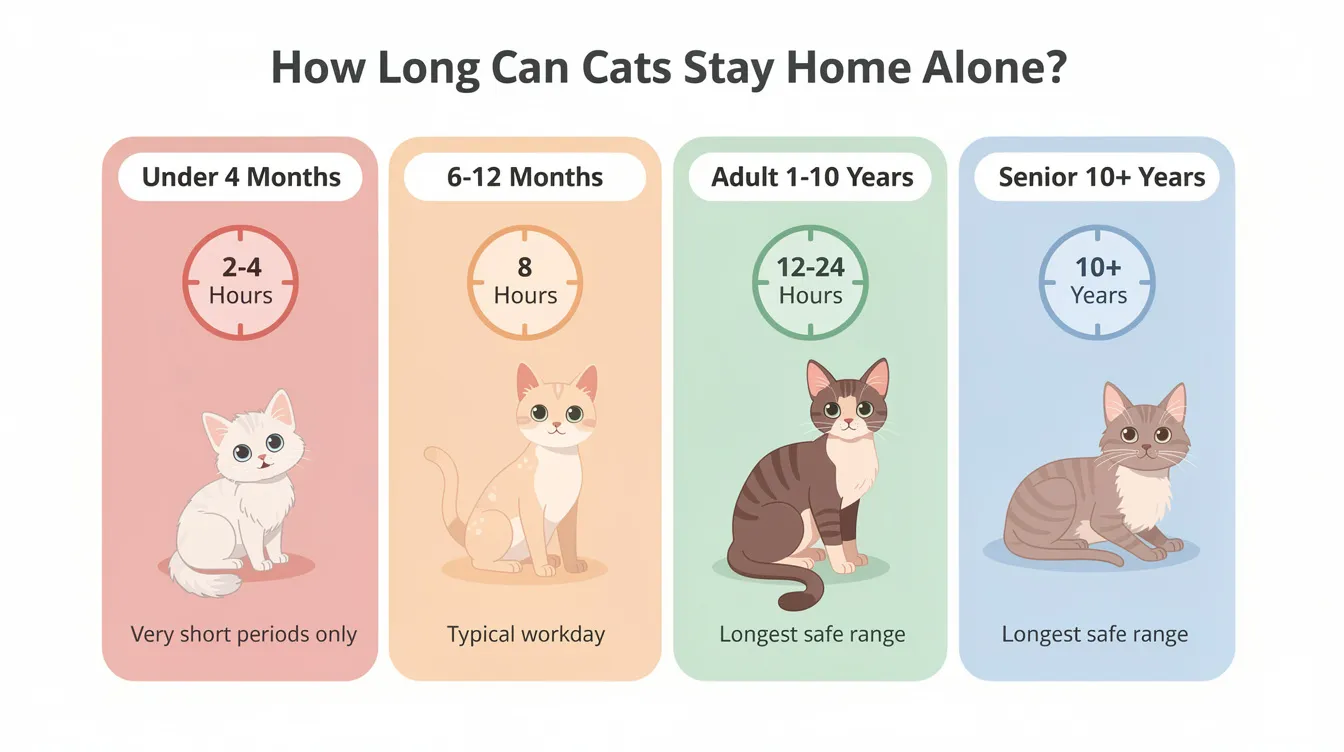
Cat Type Safe Alone Time Maximum With Preparation Needs Sitter After
Healthy adult (1–10 years) 8–12 hours 24–48 hours 48 hours
Multi-cat household 12–24 hours 48 hours 48 hours
Kitten (under 6 months) 2–4 hours 6 hours maximum Any overnight
Senior cat (10+ years) 8–12 hours 24 hours 24 hours
Sick or medicated cat Hours only Never extended Always
Cat with anxiety history 8 hours 24 hours with enrichment 24 hours

How Long Can You Leave a Cat Alone — By Age

How long can you leave a cat alone changes significantly at different life stages. The same house and the same setup produce very different outcomes depending on your cat’s age — this is the most important variable in answering how long can you leave a cat alone for any specific situation.

Kittens Under 4 Months

Maximum 2 to 3 hours. Kittens this young need feeding every 3 to 4 hours, are prone to hypoglycemia if they miss meals, and can get into dangerous situations they cannot escape. How long can you leave a cat alone at this age: never overnight under any circumstances.

Kittens 4–6 Months

Maximum 4 to 6 hours. Still need frequent meals and benefit significantly from a check-in during any workday absence.

Young Adults 6 Months – 1 Year

8 to 12 hours is generally safe. This is when cats begin to reliably self-regulate and can handle a standard workday alone. Still benefit from enrichment — puzzle feeders, climbing options, window access.

Healthy Adults 1–10 Years

8 to 12 hours for a normal day. With proper preparation, 24 to 48 hours is manageable. How long can you leave a cat alone in the house in this age group is the most flexible — but flexible does not mean unlimited.

Senior Cats 10+ Years

8 to 12 hours maximum without a check-in. Senior cats have less reserve — a missed medication, a fall they cannot recover from, a litter box situation they cannot manage. Any absence over 24 hours needs someone checking in. See the senior cat section below for specifics.

“I have four cats at different life stages. My youngest at 2 years old handles a full workday without any sign of stress. My 11-year-old with early kidney disease is a completely different situation. Even a 14-hour absence means someone checks on her. Same house, same setup, completely different rules for how long can you leave a cat alone.” — Luna Saber

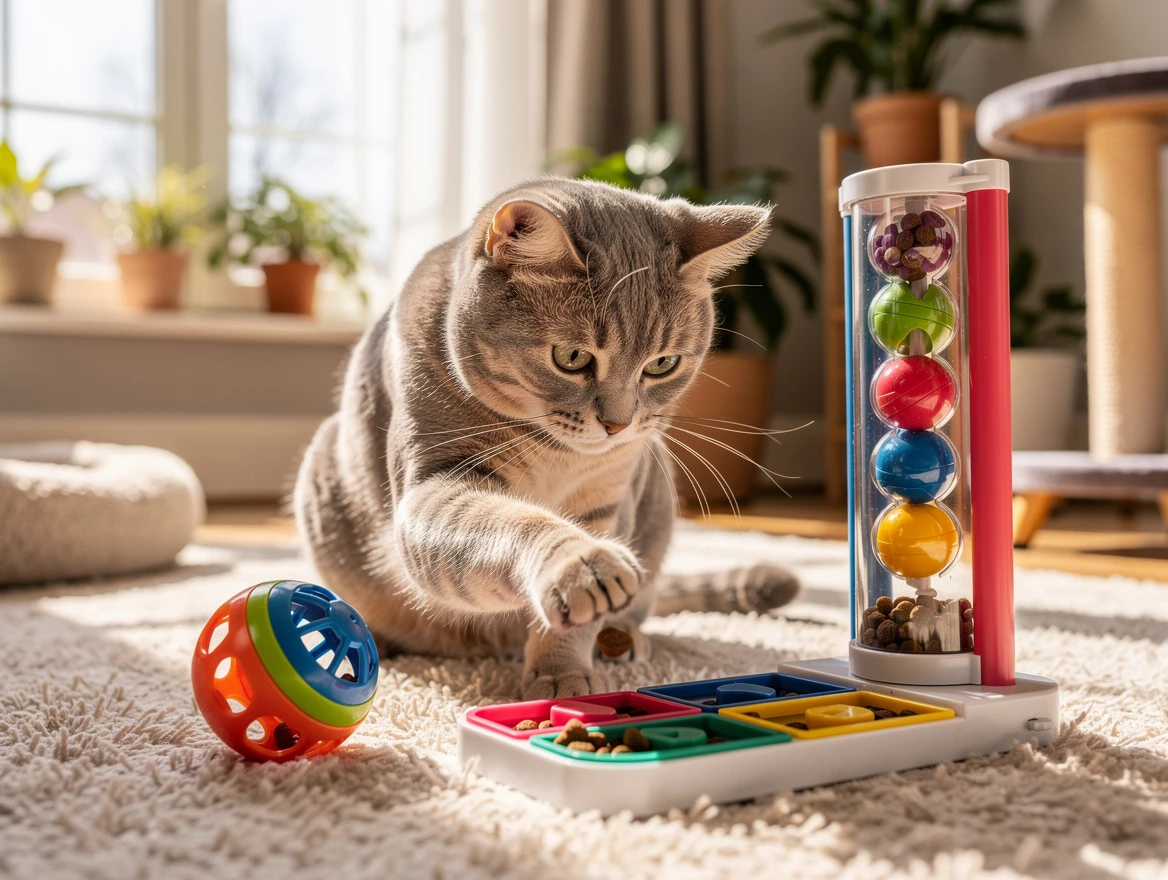
Cat alone at home playing with puzzle feeder and enrichment toys


Can I Leave My Cat Alone for 2 Days?

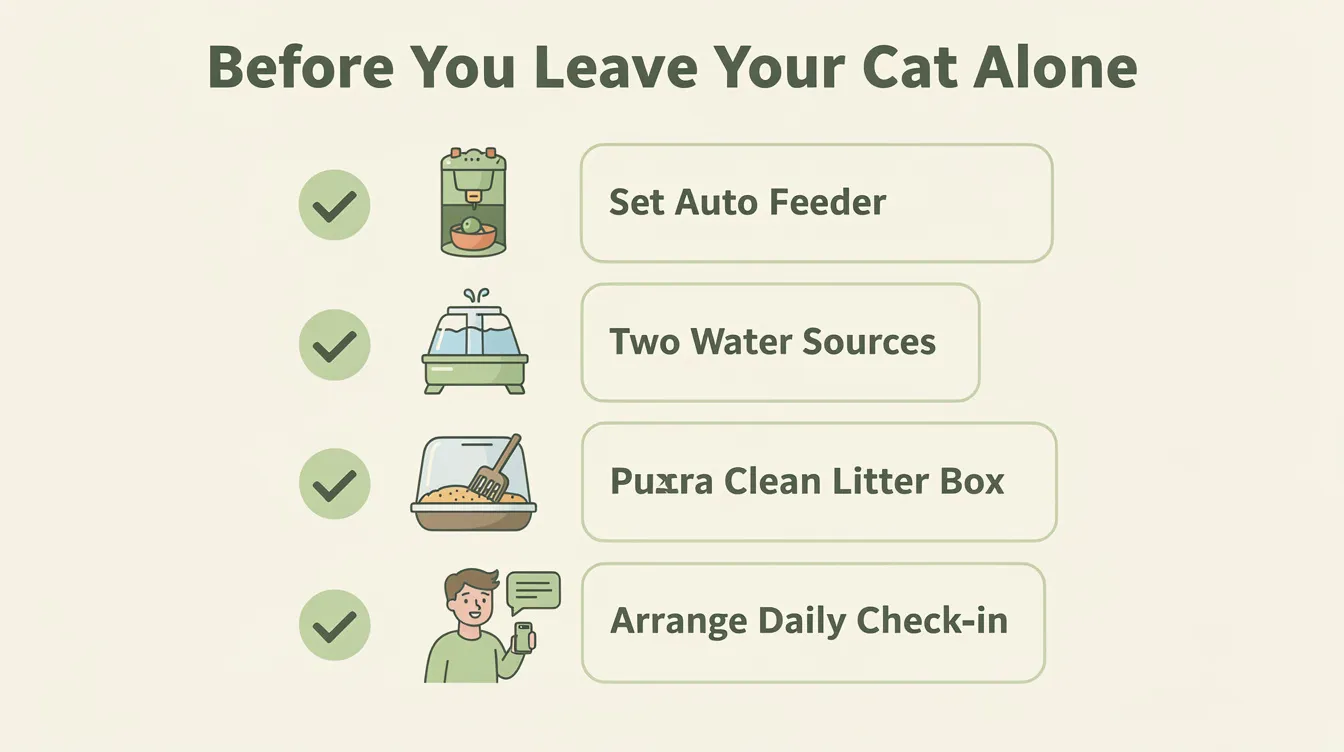
Can I leave my cat alone for 2 days — how long can you leave a cat alone at 2 days specifically — is yes for a healthy adult cat with the right setup. But right setup requires more than just leaving extra food:

  • Automatic feeder set to dispense measured portions 2 to 3 times daily — not a large pile of food left out
  • At least two water sources — a bowl plus a cat water fountain so there is always fresh water even if one is knocked over
  • Two litter boxes — one per cat plus one extra. Two days without scooping becomes uncomfortable and many cats will stop using it
  • Environmental enrichment — a window with a bird feeder view, puzzle toys, something to climb
  • No wet food left out — it spoils within 2 to 4 hours and becomes a bacteria risk
💡 The 48-hour rule: Most veterinary behaviorists consider 48 hours the outer limit of responsible solo time for a healthy adult cat with good setup. Beyond this, risks — empty water, full litter box, minor injury undetected, sudden illness — begin to outweigh the convenience.

If your cat eats wet food exclusively, 2 days alone is significantly harder to manage safely. See our guide on how long wet cat food can sit out for the food safety rules you need before leaving. If you are considering switching to dry food for your trip, our guide on how to get your cat to eat wet food covers transitioning back after you return.


Can I Leave My Cat Alone for 3 Days? Will My Cat Be Okay?

Can I leave my cat alone for 3 days — will my cat be okay if I leave for 3 days — how long can you leave a cat alone at this duration depends primarily on whether your cat has any health issues and whether someone can check in at least once on day 2.

3 days alone — minimum requirements:

  • Automatic feeder with enough capacity for 3 days of measured portions
  • Water fountain plus a backup large bowl — a 3-day water supply needs redundancy
  • Three litter boxes — the practical minimum for a 3-day absence without cleaning
  • One check-in on day 2 — to scoop litter, refresh water, confirm the cat is healthy
  • Emergency vet contact left with the person checking in

Will my cat be okay if I leave for 3 days with zero check-ins and a healthy setup — probably yes for a healthy adult.

But a single visit on day 2 eliminates the main risk entirely. A cat that develops a urinary blockage on day 1 will be in a critical condition by day 3 without intervention. How long can you leave a cat alone at 3 days without a check-in is technically possible — but it is a risk that costs almost nothing to remove.


Leaving Cats Alone for 4 Days — What You Need

Leaving cats alone for 4 days is a significant absence. How long can you leave a cat alone at 4 days requires a proper care plan, not just equipment. Here is what 4 days actually looks like in practice:

Day What Your Cat Needs Who Provides It
Day 1 Normal feeding, water, litter Automatic systems
Day 2 Litter scoop, water refresh, health check Pet sitter or friend — visit required
Day 3 Feeding check, litter scoop, playtime Pet sitter or friend — visit required
Day 4 Full refresh before you return Pet sitter or friend — visit required

Leaving cats alone for 4 days without any human check-in is not recommended even for the healthiest, most independent cat. Equipment handles food and water — it cannot handle an emergency, a health change, or the psychological impact of 4 days of complete solitude.

If you are wondering how long can you leave a cat alone without it affecting your bond or your cat’s behavior, 4 days without contact is where most cats begin showing stress signs on your return.


Leaving Cat Alone for a Week or 5 Days

Leaving cat alone for a week — 5, 6, or 7 days — requires daily human check-ins without exception. How long can you leave a cat alone for at this duration is unlimited provided someone visits every day to feed, clean, and spend time with your cat. Without daily visits, leaving cat alone for a week creates compounding risks that no automated setup can manage:

  • Automatic feeders can jam or malfunction — nobody notices for days
  • Water fountains need cleaning every few days
  • Litter boxes become unusable after 3 to 4 days for most cats, leading to accidents
  • Any health change goes undetected for the full duration

The practical rule for leaving cat alone for a week: arrange daily pet sitter home visits or boarding. There is no equipment combination that safely substitutes for daily human contact at this duration.


How Long Can You Leave a Cat Alone While on Vacation

How long can you leave a cat alone while on vacation depends entirely on what support you arrange — not on the length of the vacation itself. The duration is less important than whether someone competent checks on your cat every day.

✅ Option 1 — Pet Sitter Comes to Your Home (Best)

Daily visits from a pet sitter who feeds, plays with, cleans the litter box, and monitors your cat in their own familiar environment. This is the gold standard for how long can you leave a cat alone while on vacation — any duration, handled safely. Your cat stays in their territory, maintains routine, and has daily human contact. Typical cost: $15 to $30 per visit depending on location.

⚠️ Option 2 — Trusted Friend or Neighbor Checks In

Someone reliable visits once or twice daily. Less professional but sufficient for healthy cats. Leave written feeding instructions, vet contact, and your emergency number. Brief them specifically on what normal looks like for your cat — cats that seem fine to a stranger may be showing early signs of illness to someone who knows them.

❌ Option 3 — Fully Automated, Nobody Checks In

How long can you leave a cat alone while on vacation with zero human check-ins: 48 hours maximum. Equipment fails, cats get sick, situations arise that no automatic feeder can address. This is not a vacation plan — it is a risk.

How long can you leave a cat alone while on vacation — pet sitter visiting cat at home


Leaving a Cat Alone for 10 Days — Is This Too Long?

Leaving a cat alone for 10 days with no human check-in is too long for any cat regardless of age or health. How long can you leave a cat alone for at 10 days with no daily visits: the answer is that you should not. Over 10 days without daily monitoring, compounding risks exceed what any preparation can manage:

  • Automatic feeders can jam or run out — 10 days is a very long time for equipment to run unchecked
  • Water fountains can stop working or grow bacteria without cleaning
  • Litter boxes become completely unusable — cats will find alternative locations in your home
  • Any health issue — kidney crisis, dental pain, urinary blockage, injury — goes undetected for the full duration
  • Social isolation stress accumulates — even independent cats show behavioral changes after extended solitude

For a 10-day absence: Daily pet sitter visits or boarding are the only responsible options. Cat boarding is typically $15 to $30 per day and significantly less stressful than 10 days of complete solitude.


How Long Can You Leave a Cat Alone With Food and Water

How long can you leave a cat alone with food and water — and nothing else arranged — depends entirely on how the food and water are provided:

Setup Safe Duration Why
Dry food pile + single water bowl 24 hours maximum Bowl can be knocked over, no portion control
Auto feeder + water fountain 48 hours Redundancy in food delivery, fresh circulating water
Auto feeder + multiple water sources 48–72 hours Maximum safety margin for food and water provision alone
Wet food left out + water bowl 4 hours maximum Wet food spoils rapidly — serious bacteria risk

How long can you leave a cat alone with food and water alone is 48 to 72 hours at absolute maximum with the best possible setup. Food and water provision does not address litter box management, health monitoring, or emotional needs — all of which matter for any absence beyond 24 hours.


How Long Can You Leave a Cat Alone With Someone Checking In

How long can you leave a cat alone with someone checking in is a far more flexible situation. A daily check-in changes the calculus entirely — it provides health monitoring, litter management, fresh water, and social contact that removes the main risks of extended absence.

  • Once-daily check-ins: Most healthy adult cats can be managed comfortably for 1 to 2 weeks
  • Twice-daily check-ins: Most cats including seniors can be managed for any reasonable vacation length

The check-in must include:

  • Confirming the cat is eating and drinking normally
  • Scooping and if needed replacing litter
  • Refreshing water
  • 10 to 15 minutes of interaction — play, petting, talking to the cat
  • A quick visual health check — any vomiting, diarrhea, hiding, limping

Cats are more socially aware than their independent reputation suggests. If you have noticed your cat staring at you intently when you are home — our guide on why your cat stares at you explains just how much cats track and rely on their owner’s presence. That attentiveness is exactly why how long can you leave a cat alone with someone checking in produces noticeably better outcomes than any automated-only setup.


How Long Can a Kitten Be Left Alone

How long can a kitten be left alone is significantly shorter than for adult cats — and the younger the kitten, the shorter the safe window. How long can you leave a cat alone when it is still a kitten is one of the most important age-specific limits to know:

Kitten Age Maximum Alone Time Main Risk
Under 4 months 2–3 hours Hypoglycemia, getting stuck or trapped, temperature regulation
4–6 months 4–6 hours Hunger, loneliness, destructive behavior from boredom
6–12 months 8 hours Boredom, energy needs, still developing independence

How long can a kitten be left alone is not just a food question — it is a developmental one. Extended solitude during the 4 to 6 month period is associated with increased anxiety, aggression, and attachment disorders in adult cats. The socialization that happens during this window shapes adult temperament in ways that are difficult to reverse.

💡 Working full-time with a new kitten: Consider adopting two kittens simultaneously — they entertain and comfort each other during the day. Two kittens are not twice the work — they occupy each other so effectively that many owners find two easier than one.

How long can a kitten be left alone — young kitten waiting by door for owner to return


How Long Can an Indoor Cat Be Left Alone

How long can an indoor cat be left alone is the same as any cat of the same age and health. Being indoors does not extend how long can you leave a cat alone — it removes outdoor risks like traffic and predators, but it does not change food, water, litter, health monitoring, or social needs.

In fact, indoor cats may experience boredom more intensely during extended alone periods because their environment is more limited. How long can an indoor cat be left alone without environmental enrichment — puzzle feeders, window access, climbing structures — is shorter in practical terms even if the technical time limits are the same.

How long can you leave a cat alone in the house is the same question as how long can you leave any cat alone: the answer depends on age, health, and setup.


Senior Cat Left Alone at Home — Extra Risks

How long can you leave a cat alone when that cat is a senior requires a lower threshold than standard adult guidance. Senior cats over 10 years have specific vulnerabilities that change the safe alone time calculation significantly:

Higher Medical Risk

Senior cats have significantly higher rates of kidney disease, hyperthyroidism, heart disease, and diabetes — all of which can deteriorate rapidly without daily monitoring. Our guide on signs and symptoms of kidney failure in cats explains how quickly this can progress from manageable to critical without daily observation.

Mobility Issues

Arthritis is common in senior cats. A cat that falls from a surface they used to jump from easily, or gets stuck somewhere, may not be able to free themselves — and may not vocalize distress the way a younger cat would. How long can you leave a cat alone when mobility is reduced: not long without a check-in.

Litter Box Urgency

Senior cats often have less bladder and bowel control. A litter box not cleaned for 24 hours may be refused — and the accident that follows is physical necessity, not stubbornness.

Senior cat rule: Maximum 12 to 16 hours without a check-in for healthy seniors. Maximum 8 to 12 hours for seniors with any known health condition. Any absence over 24 hours requires a daily sitter visit — no exceptions for cats over 10 with health histories.


How to Prepare Your Home Before Leaving Your Cat Alone

Food Setup

  • Automatic feeder with enough capacity for your absence — test it 24 hours before you leave
  • Never leave a large pile of food — cats gorge then have nothing, or food goes stale
  • If using wet food: only leave amounts eaten within 2 to 4 hours

Water Setup

  • Water fountain as primary source — circulating water stays fresher and encourages drinking
  • Backup large bowl in a different location in case the fountain fails or is knocked over
  • Never rely on a single water source for any absence over 12 hours

Litter Box Setup

  • One litter box per cat plus one extra — the standard recommendation
  • Clean all boxes thoroughly before leaving
  • For absences over 24 hours: someone must scoop daily

Environment Setup

  • Access to a window with an interesting outdoor view — birds, movement, daylight
  • Safe climbing options — cats spend vertical time, not just floor time
  • Puzzle feeders or treat-dispensing toys for mental stimulation
  • Leave an unwashed item of clothing — your scent reduces separation anxiety
  • Low-volume background noise — radio or TV set to a calm channel
  • Safe temperature — never let the home drop below 15°C / 60°F or exceed 27°C / 80°F

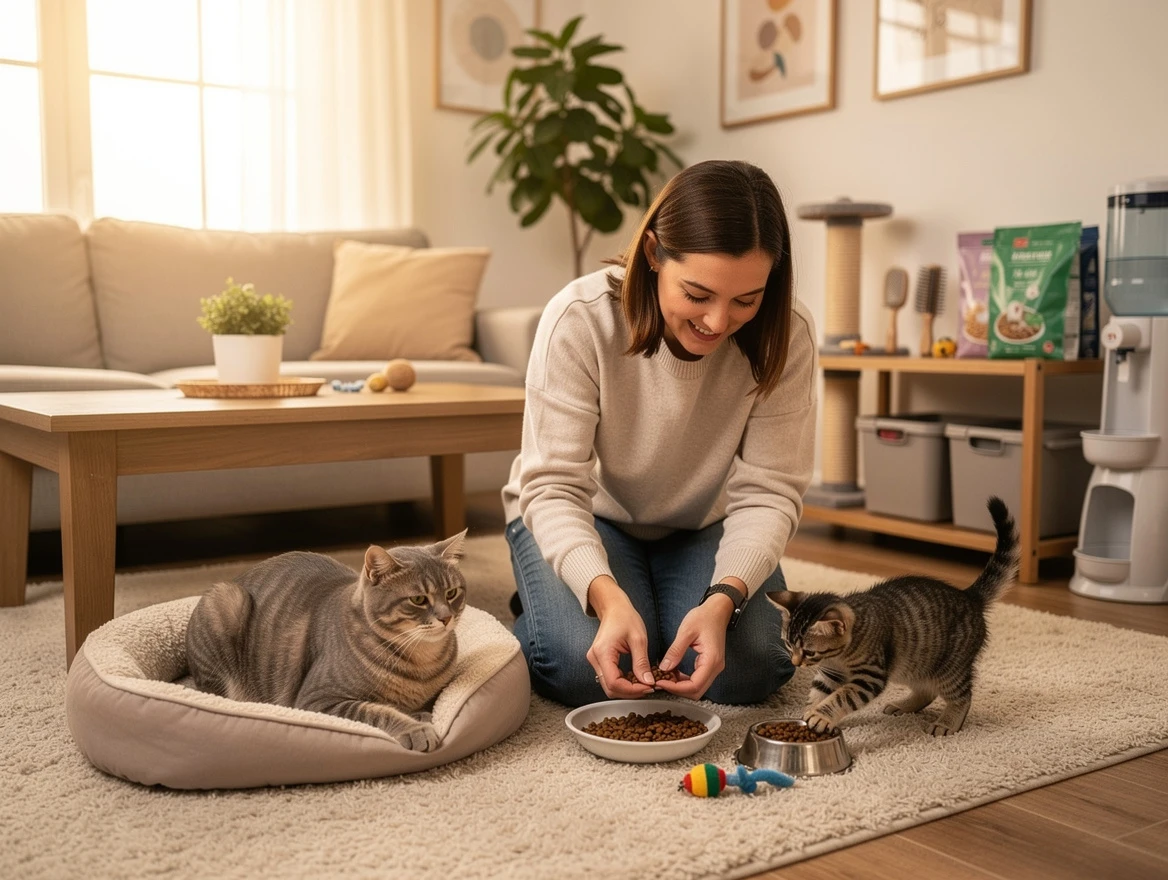
How to prepare home before leaving cat alone — auto feeder water fountain litter box setup


Common Mistakes When Leaving Cats Alone

  • Leaving wet food out for multiple days — wet food spoils within 2 to 4 hours at room temperature. This creates a serious bacteria risk and removes the food benefit you intended to leave
  • Single water source — one bowl can be knocked over, develop bacteria, or run dry. Always leave at least two water sources for any absence over 12 hours
  • Assuming independent cat means no needs — even highly independent cats show stress behaviors after 48 hours of complete solitude. Independence means they tolerate solitude better than dogs — not that they have no social or monitoring needs at all
  • Not testing the automatic feeder before leaving — test your auto feeder for 24 hours before a trip. They jam. They dispense wrong amounts. Discovering this while away is not useful
  • Applying the same rules to kittens and adult cats — how long can a kitten be left alone versus an adult cat are completely different calculations. Age-appropriate limits matter significantly
  • Not leaving vet information with your sitter — whoever checks on your cat should have your vet’s number, your cat’s medical history summary, and permission to authorize emergency treatment if you are unreachable

How long can you leave a cat alone — cat greeting owner at door after being home alone


🩺 When to Call the Vet After Returning Home

Call your vet if your cat shows any of these after you return:

  • Not eating or drinking for more than 24 hours after your return
  • Signs of dehydration — dry gums, skin that tents when gently pinched
  • Lethargy that persists more than 24 hours after your return
  • Vomiting more than twice in 24 hours
  • Any sign of urinary issues — straining, blood, accidents outside the litter box
  • Visible weight loss from before your trip to after
  • Behavioral changes — hiding, aggression, excessive vocalization — persisting more than 48 hours after return

Some behavioral adjustment after your return is normal — cats re-establish routine. Signs that persist beyond 48 hours warrant a vet call rather than continued waiting.


Frequently Asked Questions

How long can you leave a cat alone at home safely?

How long can you leave a cat alone at home safely is 8 to 12 hours for a healthy adult cat — a standard workday. With proper preparation including an automatic feeder, water fountain, and clean litter boxes, 24 to 48 hours is generally safe. Beyond 48 hours, a check-in from someone is strongly recommended regardless of how well-prepared the home is.

How long can you leave a cat alone overnight?

How long can you leave a cat alone overnight — a standard 8 to 12 hour overnight — is generally fine for healthy adult cats with food, water, and a clean litter box available. If the overnight extends beyond 12 to 14 hours, an auto feeder and water fountain make the setup more comfortable. Kittens under 6 months should not be left alone overnight.

Can I leave my cat alone for 2 days?

Can I leave my cat alone for 2 days — yes for a healthy adult cat with the right setup: automatic feeder, multiple water sources, and at least two clean litter boxes. A check-in on day 2 is ideal but not strictly required for a healthy adult with no medical issues. Kittens and senior cats should not be left 2 days without a check-in.

Will my cat be okay if I leave for 3 days?

Will my cat be okay if I leave for 3 days — yes for a healthy adult cat with automatic feeder, multiple water sources, and at least two litter boxes, plus one check-in visit on day 2. Without a check-in, 3 days is at the outer limit of safe solo time — the check-in is not about food and water, it is about catching any health change before it becomes a crisis.

How long can you leave a cat alone with food and water only?

How long can you leave a cat alone with food and water only depends on the setup. Auto feeder plus water fountain gives you 48 to 72 hours at maximum. A single bowl of food and one water bowl gives you 24 hours at most before risks from water supply failure or a full litter box become significant. Food and water alone do not address litter management or health monitoring.

How long can you leave a cat alone RSPCA guidance says?

How long can you leave a cat alone RSPCA — the RSPCA recommends that cats should not be left alone for more than 24 hours without a welfare check. Their guidance emphasizes that even for short absences, adequate food, water, and a clean litter environment must be in place. For any absence beyond 24 hours, they recommend a trusted person checking in daily on the cat’s welfare, health, and behavior.

Is there a 3-3-3 rule for cats?

The 3-3-3 rule is primarily a dog adoption adjustment guideline. For cats, a similar adjustment principle applies with different timelines. For alone time specifically: 3 hours maximum for young kittens, up to 12 hours for healthy adults on a normal day, and 3 days maximum with daily check-ins for short trips away.

Do cats get lonely when left alone?

Do cats get lonely when left alone — yes. Cats form genuine social bonds and experience something equivalent to loneliness, though they express it differently from dogs. Signs include excessive vocalization when you return, over-grooming, reduced appetite, or sudden clinginess after extended absences. Cats left alone frequently for long periods can develop depression and anxiety that affects their long-term health and behavior.

Should I leave the TV on for my cat?

Should I leave the TV on for my cat — low-volume background noise can reduce anxiety for cats used to a noisy household. It is not necessary for all cats. If your cat typically rests in rooms where the TV is on, leaving it at low volume is beneficial. If your cat normally seeks quiet rooms, silence is better. The more important preparation is environmental enrichment — window access, puzzle feeders, climbing options that keep your cat mentally occupied during the alone hours.

How long can you leave a cat alone while on vacation?

How long can you leave a cat alone while on vacation is unlimited in terms of duration — if you arrange daily pet sitter visits. The vacation length matters less than the quality of daily care during your absence. A 2-week vacation with daily sitter visits is genuinely better for your cat than a 3-day trip with no check-ins at all.

How long can an indoor cat be left alone?

How long can an indoor cat be left alone is the same as any cat of equivalent age and health. Being indoor does not extend safe alone time — it removes outdoor risks but does not change food, water, litter, or social needs. Indoor cats may actually experience boredom more intensely during extended absences because their environment is more limited. Environmental enrichment matters more for indoor-only cats during any absence.


The Bottom Line

How long can you leave a cat alone comes down to three variables: your cat’s age and health, what you set up before you leave, and whether someone checks in during extended absences. The 8 to 12 hour workday is the reliable baseline for healthy adults. The 48-hour limit is where most cats begin to need human support — not because they will starve, but because health monitoring and litter management require a person, not just equipment.

How long can you leave a cat alone for any absence beyond 48 hours — the answer is always the same: arrange daily check-ins. Your cat may not show obvious distress. Cats hide discomfort instinctively. But that does not mean they are comfortable or safe without someone checking in. The difference between a cat that is fine and a cat that is quietly unwell is visible only to someone who sees them in person.

How long can you leave a cat alone is ultimately a question about your specific cat — not a universal number. A healthy 3-year-old with an auto feeder handles 48 hours with ease. A 12-year-old with kidney disease handles 12 hours. Know your cat’s specific needs and plan accordingly — that is the only answer that actually matters.

🐾
Luna Saber — Pet Owner and Writer

Real experiences from life with 1 dog and 4 cats in a NYC apartment. Not a vet — just someone who has navigated these situations many times and done the research. Always consult your vet for medical decisions about your specific pet.


Related Articles

Cat Behavior

Is My Cat Depressed?

Signs that extended alone time is affecting your cat.

Cat Behavior

Why Does My Cat Stare at Me?

How much cats track and rely on your presence at home.

Cat Health

Signs of Kidney Failure in Cats

Why senior cats need daily monitoring when you are away.

Cat Nutrition

How Long Can Wet Cat Food Sit Out?

Food safety rules for when you leave.

Cat Nutrition

How to Get Cat to Eat Wet Food

Useful if you need to adjust your cat’s diet before a trip.

Cat Health

My Cat Won’t Eat

What to check when you return home.