Published: March 15, 2026 | Last Updated: March 15, 2026 | Read Time: 14 minutes
If you’ve noticed white flakes scattered across your cat’s back near the tail, you’re probably wondering how to treat dandruff on cat’s back near tail quickly and effectively. The good news? You’re not alone, and in most cases, this problem is completely treatable at home.
Dandruff on cat’s back near tail is one of the most common skin concerns cat owners face. Those flaky white specks are dead skin cells shedding faster than normal — a condition veterinarians call sebaceous dermatitis. While it looks concerning, it’s usually more of a cosmetic nuisance than a serious health threat.
But here’s what most people don’t realize: there’s a very specific anatomical reason why dandruff tends to concentrate on your cat’s back near the tail. And once you understand the cause, knowing how to treat dandruff on cat’s back near tail becomes much simpler.
In this guide, you’ll learn exactly what causes this problem, how to tell dandruff apart from fleas or mites, and nine proven remedies that veterinarians actually recommend. Whether you want to treat dandruff on cat’s back near tail naturally or need to know when it’s time for a vet visit, we’ve got you covered.
Table of Contents
What Does Dandruff on Cat’s Back Near Tail Look Like?
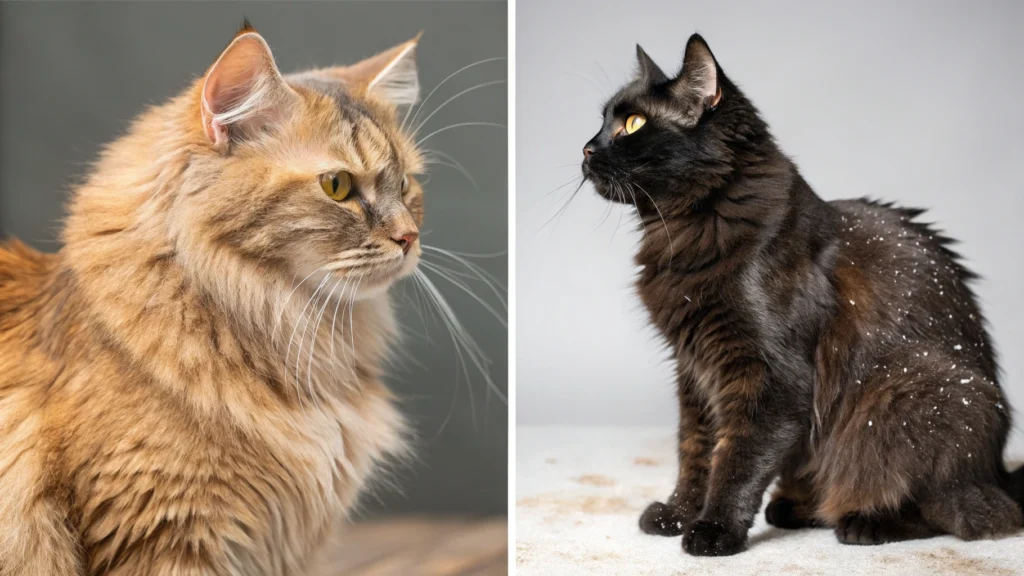
Before learning how to treat dandruff on cat’s back near tail, you need to confirm that dandruff is actually what you’re dealing with. Cat dandruff appears as small, dry, white or grayish flakes sitting on top of your cat’s fur or clinging to the hair shafts near the base of the tail.
When you part the fur on your cat’s back near the tail, you might notice:
- White flakes resting on the skin surface
- Dry, flaky patches that shed when you pet or brush your cat
- Dull, rough-looking coat in the affected area
- Slight redness underneath the flakes in some cases
The flakes are essentially dead skin cells shedding faster than normal. A small amount of skin shedding is completely natural, but when it becomes visible and noticeable, that’s dandruff — and it’s time to take action.
Cat Dandruff vs. Fleas: How to Tell the Difference
The wet paper towel test: Take some of the flakes from your cat’s back and place them on a damp white paper towel. If the specks turn reddish-brown, that’s flea dirt (dried blood), not dandruff. True dandruff flakes will stay white and simply dissolve or fall apart.
Do Cat Mites Look Like Dandruff?
Yes, they absolutely can. One type of mite called Cheyletiella is actually nicknamed “walking dandruff” because the tiny white mites look almost identical to dandruff flakes. The giveaway? If you look very closely and the flakes appear to be moving, that’s not dandruff — that’s mites.
According to the Merck Veterinary Manual’s guide on skin disorders in cats, Cheyletiella mites require prescription antiparasitic treatment from your veterinarian.
Signs it might be mites instead of dandruff:
- Flakes that seem to move on their own
- Intense scratching and itching
- Hair loss around the affected area
- Skin irritation or scabs
- Other pets in the household showing similar symptoms
If you suspect mites, skip the home remedies and head straight to your vet.
How to Treat Dandruff on Cat’s Back Near Tail: 9 Proven Remedies
Now for what you came here for — exactly how to treat dandruff on cat’s back near tail with remedies that actually work. These methods range from simple home treatments to professional veterinary care.
Here’s the quick list if you’re in a hurry:
- Brush the area daily
- Add an omega-3 fatty acid supplement
- Upgrade to a high-quality diet
- Apply coconut oil topically
- Use a humidifier
- Increase your cat’s water intake
- Use a cat dandruff shampoo
- Try a diluted apple cider vinegar rinse
- Visit your veterinarian
Let’s break each one down with exactly how to do it.
1. Brush Your Cat’s Back Near the Tail Daily
Why it works: When figuring out how to treat dandruff on cat’s back near tail, this is the easiest and most immediate fix. Brushing does what your cat may not be able to do for themselves — it removes dead skin cells, stimulates blood circulation, and distributes natural oils through the coat.
How to do it:
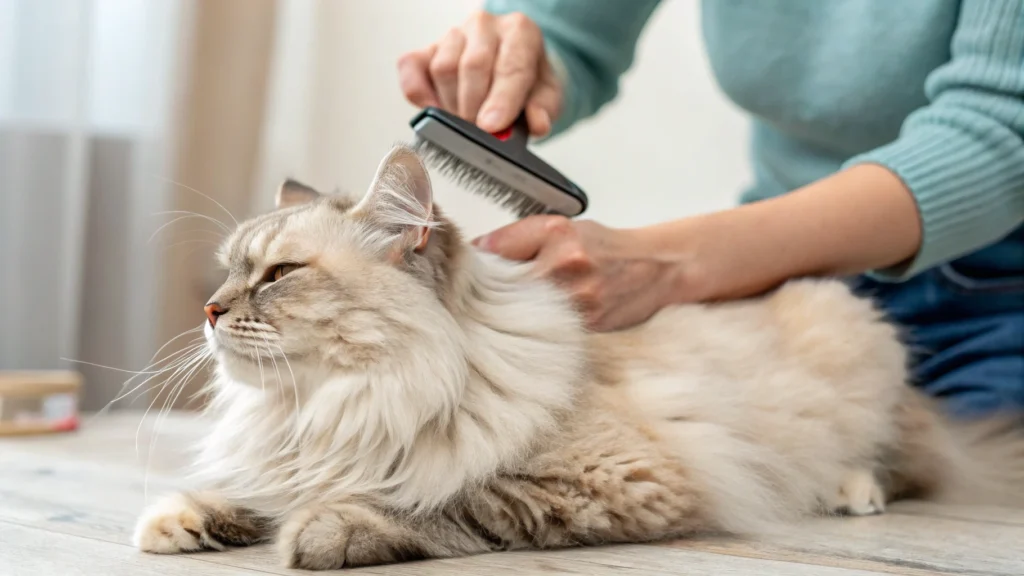
- Use a soft-bristle brush or rubber grooming mitt for sensitive skin
- Brush gently along the back toward the tail for 5-10 minutes daily
- Don’t press hard — you want to lift flakes away, not irritate the skin
- If your cat resists, start with short 2-minute sessions and build up
Best brushes for dandruff-prone cats:
- A rubber curry brush works well for short-haired cats
- A slicker brush with fine bristles works for longer coats
- Avoid stiff wire brushes that can scratch irritated skin
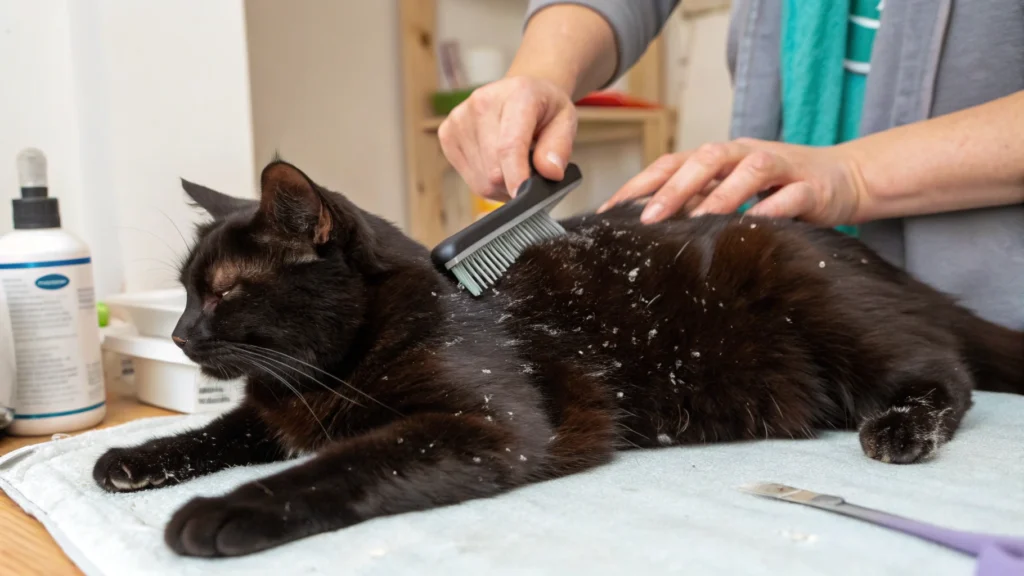
Pay attention to how your cat responds to brushing — if they lean into it, purr, or paw at you, that’s your cat’s way of communicating that they enjoy it and want more.
Daily brushing also helps reduce loose fur and flakes on your furniture — if you’re also dealing with pet hair around your home, regular brushing tackles both problems at once.
Pro tip: Brush your cat on a dark towel or surface so you can see how much dandruff is actually coming off. This helps you track improvement over time.
Expected results: You should notice visible improvement within 1-2 weeks of daily brushing.
2. Add an Omega-3 Fatty Acid Supplement
Why it works: Omega-3 fatty acids (EPA and DHA) are essential for healthy skin cell function and moisture retention. They reduce inflammation and help the skin produce balanced oils. This is one of the most effective ways to treat dandruff on cat’s back near tail naturally, as most commercial cat foods don’t contain enough omega-3s for optimal skin health.
How to do it:
- Fish oil is the most effective and widely recommended supplement
- Look for products specifically formulated for cats
- Typical dosage: Follow the product label or ask your vet (usually based on body weight)
- Add the oil directly to your cat’s food at meal time
What to look for in a supplement:
- Wild-caught fish oil (salmon, sardine, anchovy)
- Products specifically labeled for cats
- Third-party tested for purity
- EPA and DHA amounts clearly listed on the label
Important: Avoid cod liver oil, which contains high levels of vitamins A and D that can be toxic to cats in excess.
Expected results: Omega-3 supplementation typically takes 4-6 weeks to show visible improvement in skin and coat quality. Be patient and stay consistent.
3. Upgrade to a High-Quality Diet
Why it works: Your cat’s skin is their largest organ, and it needs proper nutrition to stay healthy. A diet rich in quality proteins and healthy fats gives the skin everything it needs to maintain its moisture barrier and regulate cell turnover. Improving your cat’s diet is one of the most impactful ways to treat dandruff on cat’s back near tail from the inside out.
What to change:
Switch to wet food (or add wet food):
Wet food provides significantly more hydration than dry kibble. If your cat currently eats only dry food, try switching to a mix of wet and dry, or transition fully to wet food.
Look for these ingredients:
- Named animal protein as the first ingredient (chicken, salmon, turkey)
- Added omega-3 and omega-6 fatty acids
- No artificial preservatives, colors, or flavors
- Vitamin E and zinc (both support skin health)
Best foods for cats with dandruff:
- Salmon-based formulas (naturally high in omega-3s)
- Limited ingredient diets (if allergies are suspected)
- Skin and coat specific formulas from reputable brands
Foods to avoid:
- Cheap kibble with corn, wheat, or soy as primary ingredients
- Foods with unnamed “meat by-products”
- Anything your cat shows intolerance to (vomiting, diarrhea, itching)
How to switch: Don’t change food abruptly. Transition gradually over 7-10 days by mixing increasing amounts of the new food with the old food to prevent digestive upset.
Expected results: 3-6 weeks for noticeable skin improvement after a diet change.
4. Apply Coconut Oil (Topically and Orally)
Why it works: If you want to treat dandruff on cat’s back near tail naturally, coconut oil is one of the most popular and effective options. It contains lauric acid, which has natural moisturizing and antimicrobial properties. It soothes dry, flaky skin when applied directly and supports skin health when ingested in small amounts.
How to use topically:
- Warm a tiny amount (pea-sized) of virgin, unrefined coconut oil between your fingers
- Gently massage it into the flaky area on your cat’s back near the tail
- Your cat will likely try to lick it off — that’s perfectly okay, coconut oil is safe for cats to ingest
- Apply 2-3 times per week
- Don’t overdo it — a little goes a long way
How to use orally:
- Add 1/4 teaspoon to your cat’s food
- Start with a tiny amount and increase gradually
- Too much can cause digestive upset or diarrhea
Cautions:
- Always use pure, virgin, unrefined coconut oil with no additives
- Start with small amounts to make sure your cat tolerates it well
- If your cat has a history of pancreatitis, check with your vet first (coconut oil is high in fat)
- Don’t apply to broken skin, open wounds, or infected areas
Expected results: Topical moisturizing effect is almost immediate. Lasting improvement in dandruff on cat’s back near tail takes 2-4 weeks of regular use.
5. Use a Humidifier
Why it works: Dry air is one of the biggest contributors to dandruff on cat’s back near tail, especially during winter when indoor heating is running constantly. A humidifier adds moisture back into the air and helps prevent your cat’s skin from drying out and flaking.
How to do it:
- Place a humidifier in the room where your cat spends the most time
- Aim for indoor humidity between 45-55%
- Clean the humidifier regularly to prevent mold and bacteria growth
- A cool-mist humidifier is safer around pets than a warm-mist model
Best placement: Near your cat’s favorite sleeping or resting area.
Budget alternatives if you don’t want to buy a humidifier:
- Leave the bathroom door open when you shower (steam adds moisture)
- Place bowls of water near heating vents
- Hang damp towels to dry indoors
- Add houseplants that release moisture into the air
Expected results: Improvement within 1-2 weeks if dry air was a primary contributing cause.
6. Increase Your Cat’s Water Intake
Why it works: Dehydration affects the skin from the inside out. When a cat doesn’t drink enough water, their skin loses elasticity and moisture, leading to dryness and visible flaking. Learning how to treat dandruff on cat’s back near tail often starts with something as simple as getting your cat to drink more water.
Cats evolved as desert animals and naturally have a low thirst drive, which means many domestic cats are mildly dehydrated without their owners even realizing it.
How to do it:
Get a cat water fountain:
Many cats strongly prefer running water over still water. A fountain encourages them to drink more frequently throughout the day. This single change makes a noticeable difference for many cats with dandruff.
Other hydration tricks:
- Place multiple water bowls in different rooms around your home
- Keep water bowls away from food bowls (cats instinctively prefer this separation)
- Use wide, shallow bowls (cats dislike their whiskers touching the sides)
- Add a small amount of low-sodium chicken broth (no onion or garlic) to water for flavor
- Add 1-2 tablespoons of water directly to their food at each meal
- Switch to or add wet food (75-80% moisture vs. 10% in kibble)
How much should a cat drink daily?
A healthy cat needs approximately 4 ounces of water per 5 pounds of body weight per day. So a 10-pound cat should be consuming roughly one cup of water daily from all sources including food.
Expected results: 2-4 weeks for skin hydration to improve noticeably.
7. Use a Cat Dandruff Shampoo
Why it works: A good cat dandruff shampoo helps remove excess flakes, moisturizes the underlying skin, and can address issues like fungal overgrowth or excess oil production. This is an effective part of any cat dandruff treatment plan, especially for moderate to severe cases.
The critical detail: never use human dandruff shampoo on a cat. Products like Head & Shoulders contain ingredients that are harmful to cats.
How to do it:
- Choose a cat-formulated moisturizing or antiseborrheic shampoo
- Use lukewarm water (never hot)
- Wet your cat thoroughly, then apply a small amount of shampoo
- Gently massage into the back and tail area where dandruff is concentrated
- Leave on for 3-5 minutes (or as directed on the product label)
- Rinse thoroughly — leftover shampoo residue can actually make dandruff worse
- Towel dry gently and keep your cat warm until fully dry
Types of cat dandruff shampoo:
| Type | Best For | Active Ingredients |
|---|---|---|
| Moisturizing | Mild dry skin dandruff | Oatmeal, aloe vera, vitamin E |
| Antiseborrheic | Moderate to severe dandruff | Salicylic acid, sulfur |
| Medicated | Fungal or bacterial-related dandruff | Chlorhexidine, miconazole |
| Hypoallergenic | Allergy-related dandruff | Minimal ingredients, fragrance-free |
How often to bathe:
- Once every 2-4 weeks maximum
- Over-bathing strips natural oils and makes dandruff on cat’s back near tail worse
- If your cat absolutely hates baths, try a waterless cat shampoo or grooming wipes as an alternative
NEVER use these on your cat:
- ❌ Human dandruff shampoo (Head & Shoulders, Selsun Blue, etc.)
- ❌ Tea tree oil products (toxic to cats)
- ❌ Dog shampoo (different pH formulation)
- ❌ Essential oil-based products (many essential oils are toxic to cats)
Expected results: Visible improvement after 1-2 baths, with continued improvement over several weeks of consistent use.
8. Try a Diluted Apple Cider Vinegar Rinse
Why it works: Apple cider vinegar (ACV) helps balance the skin’s pH level, has mild antimicrobial properties, and can reduce flaking. Many cat owners recommend this as a way to treat dandruff on cat’s back near tail naturally, though it should always be used properly diluted.
How to do it:
- Mix 1 part raw, unfiltered apple cider vinegar with 4 parts water
- After bathing your cat (or as a standalone treatment), pour or spray the diluted mixture onto the affected area on the back near the tail
- Gently massage it into the skin
- Do NOT rinse it off — let it air dry completely
- Use once per week maximum
Important cautions:
- Never apply undiluted ACV — it will burn and irritate the skin
- Never apply to broken skin, cuts, scratches, or open wounds
- Stop use immediately if your cat shows signs of irritation (increased redness, excessive scratching)
- Some cats absolutely hate the smell — if yours does, don’t force this treatment
- This remedy works best as a complement to other treatments, not as a standalone fix
Expected results: Some owners report improvement within 1-2 weeks. Results vary significantly between cats.
9. Visit Your Veterinarian
Why it’s essential: If you’ve been trying to treat dandruff on cat’s back near tail at home for 4-6 weeks without seeing improvement, it’s time for a professional evaluation. Dandruff can sometimes be a symptom of an underlying health condition that home remedies simply cannot address.
When to see your vet sooner rather than later:
- Dandruff appeared suddenly with no obvious environmental cause
- Your cat is scratching excessively at the area
- You notice hair loss, bald patches, or thinning fur
- The skin looks red, inflamed, or has open sores
- Flakes appear to be moving (possible Cheyletiella mites)
- Your cat is losing weight, drinking more water than usual, or acting lethargic
- Black dandruff flakes are present (could indicate fleas or fungal infection)
- Home cat dandruff treatment is making things worse instead of better
What your vet will do:
- Physical examination of the skin and coat
- Skin scraping to check for mites or fungal infections
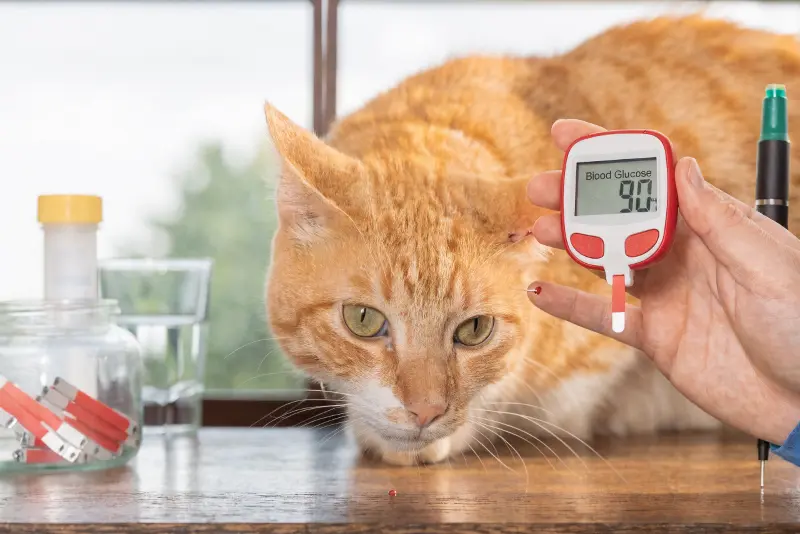
- Bloodwork to rule out diabetes, hyperthyroidism, or kidney disease
- Allergy testing if allergies are suspected
- Dietary assessment and personalized recommendations
According to Cornell University’s College of Veterinary Medicine, regular veterinary checkups are important for catching underlying conditions that can manifest as skin problems.
Possible veterinary treatments:
- Prescription medicated shampoo
- Antifungal medication
- Antiparasitic treatment for mites or fleas
- Prescription diet formulated for skin health
- Steroid or anti-inflammatory medication for allergies
- Treatment for underlying metabolic disease
Why Does My Cat Have Dandruff on Their Back Near the Tail?
Understanding why dandruff appears in this specific spot is the first step in knowing how to treat dandruff on cat’s back near tail effectively. There’s actually a fascinating anatomical reason for it.
The Supracaudal Gland
Cats have a cluster of oil-producing glands at the base of their tail called the supracaudal gland (sometimes called the “tail gland”). This gland produces sebaceous secretions that help keep the skin and coat healthy.
When this gland overproduces or underproduces oil, it creates the perfect conditions for dandruff right in that area. Veterinary dermatologists refer to this as seborrhea in cats, and it commonly affects the back near the tail.
Add to that the fact that many cats — especially older, overweight, or arthritic cats — can’t easily reach this spot to groom themselves, and you’ve got a recipe for flaky buildup.
Common Causes of Dandruff on Cat’s Back Near Tail
1. Difficulty Self-Grooming
This is the number one reason dandruff appears specifically near the tail. Cats are normally meticulous groomers, but certain conditions make it physically hard for them to reach their lower back:
- Obesity — extra weight restricts flexibility
- Arthritis — joint pain makes twisting uncomfortable
- Old age — decreased mobility and energy for grooming
- Injury — pain that limits movement
This is especially common in larger breeds like Maine Coons and senior cats whose size or age makes it difficult to twist and reach their lower back. If your cat is overweight or elderly and has dandruff concentrated near the tail, limited grooming ability is almost certainly a contributing factor.
2. Dry Skin and Low Humidity
Indoor cats are especially prone to dry skin during winter months when heating systems drain moisture from the air. Veterinary dermatologists note that indoor humidity below 30% can significantly dry out a cat’s skin, leading to visible flaking — particularly on the back near the tail where natural oils are already concentrated.
3. Poor Diet and Nutritional Deficiencies
A diet lacking in omega-3 and omega-6 fatty acids is one of the most common nutritional causes of dandruff on cat’s back near tail. Cats fed exclusively dry kibble may also experience mild chronic dehydration, which directly affects skin health.
Dry cat food contains roughly 10% moisture compared to wet food’s 75-80% moisture. That difference matters significantly for skin hydration.
4. Allergies
Food allergies, environmental allergens (dust, pollen), and contact allergies can all trigger excessive skin flaking. If the dandruff is accompanied by itching, redness, or hair loss, allergies could be driving the problem.
5. Parasites
Fleas, Cheyletiella mites (walking dandruff), and other parasites can cause dandruff-like symptoms. The back near the tail is a favorite feeding spot for fleas, making parasites an important rule-out when figuring out how to treat dandruff on cat’s back near tail.
6. Fungal or Bacterial Infections
Ringworm and bacterial skin infections can cause flaking that mimics dandruff but requires specific medical treatment.
7. Underlying Health Conditions
Several medical conditions can manifest as skin problems including dandruff:
- Diabetes
- Hyperthyroidism
- Kidney disease
- Liver disease
This is why persistent dandruff that doesn’t respond to cat dandruff treatment at home warrants a veterinary visit.
Why Is My Indoor Cat Getting Dandruff?
Indoor cats are actually more prone to dandruff than outdoor cats for several reasons:
- Lower humidity indoors, especially with central heating or air conditioning
- Less physical activity, which can lead to weight gain and reduced grooming ability
- Controlled diets that may lack sufficient fatty acids
- Less exposure to natural UV light, which plays a role in skin health
Being indoors doesn’t protect against dandruff — in many cases, it actually contributes to it.
When to Worry About Cat Dandruff
Most cases of dandruff on cat’s back near tail are mild and completely manageable at home with the remedies above. However, there are situations where dandruff signals something that needs professional attention.
Red Flags That Need Veterinary Attention:
Schedule a vet appointment if you notice:
- Dandruff combined with significant hair loss
- Intense itching, scratching, or biting at the skin
- Red, irritated, or inflamed skin underneath the flakes
- Black or unusually dark flakes (possible flea dirt or fungal infection)
- Crusty or scabby patches developing
- Greasy, oily dandruff rather than dry flakes (could be seborrhea oleosa)
- Foul smell coming from the skin
- Behavioral changes like lethargy, hiding, or refusing food
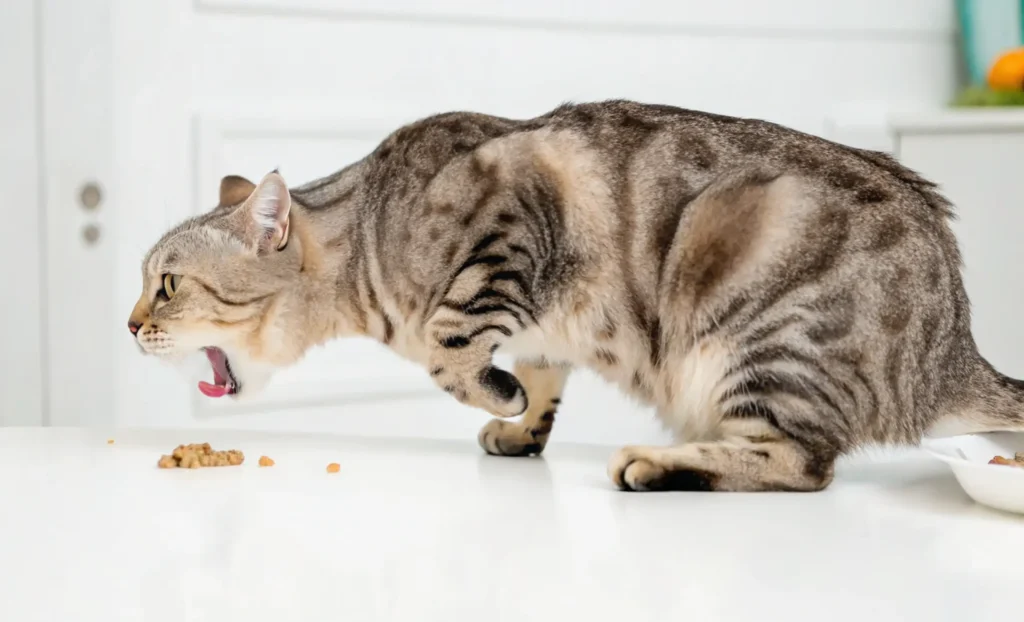
If your cat’s dandruff is accompanied by other concerning symptoms like weight loss, lethargy, or vomiting white foam, these could be signs of an underlying health condition that needs urgent veterinary attention.
What Parasite Causes Cat Dandruff?
Several parasites can cause dandruff-like symptoms on your cat’s back near the tail:
- Cheyletiella mites — “Walking dandruff” that literally looks like moving flakes
- Fleas — Flea bites cause skin irritation and flaking, especially near the tail base
- Demodex mites — Less common in cats but can cause scaly, flaky skin
- Lice — Rare in indoor cats but possible
All parasitic causes require proper veterinary treatment. Over-the-counter flea treatments alone may not be sufficient for mites or lice infestations.
What Is the Silent Killer of Cats?
While not directly related to dandruff, the term “silent killer” in cats most commonly refers to chronic kidney disease (CKD). It develops slowly with subtle symptoms that are incredibly easy to miss in the early stages.
The connection to dandruff? Kidney disease causes dehydration and poor coat condition, which can include dandruff — particularly on the back near the tail. If your older cat suddenly develops dandruff along with increased thirst, increased urination, weight loss, or decreased appetite, ask your vet to check kidney function with bloodwork.
Other conditions sometimes called silent killers in cats include hypertrophic cardiomyopathy (HCM) and hyperthyroidism — both of which can negatively affect skin and coat quality.
Frequently Asked Questions About How to Treat Dandruff on Cat’s Back Near Tail
How do you get rid of dandruff on a cat’s back?
The most effective way to get rid of dandruff on a cat’s back is to brush the area daily with a soft brush, add omega-3 fatty acid supplements to their diet, and ensure your cat stays properly hydrated. For dandruff on cat’s back near tail specifically, focus on gentle brushing since many cats physically can’t groom this spot themselves. Apply a small amount of coconut oil to the flaky area 2-3 times per week, and consider switching to a high-quality wet food. If dandruff persists after 4-6 weeks of consistent home care, see your veterinarian to rule out underlying health issues, parasites, or allergies.
How to treat cat tail dandruff?
To treat dandruff on cat’s back near tail, start by brushing the base of the tail gently every day with a soft-bristle brush or rubber grooming mitt. Apply a pea-sized amount of virgin coconut oil to the flaky area 2-3 times per week, and supplement your cat’s diet with omega-3 fish oil. Keep indoor humidity between 45-55% using a humidifier, and make sure your cat is drinking enough water daily. If the dandruff is severe, try a moisturizing cat dandruff shampoo once every 2-4 weeks. Consult your vet if you don’t see improvement within a month.
Are there home remedies for cat dandruff?
Yes, there are several effective home remedies for cat dandruff treatment at home. The most proven options include daily brushing, omega-3 fish oil supplements added to food, coconut oil applied topically to the affected area, increasing water intake through a cat fountain, using a humidifier to combat dry air, switching to higher-quality wet food, and diluted apple cider vinegar rinses. Most mild to moderate cases of dandruff on cat’s back near tail respond well to these home treatments within 2-6 weeks of consistent application.
Can you rub coconut oil on a dandruff cat?
Yes, you can safely apply a small amount of virgin, unrefined coconut oil to your cat’s dandruff-prone areas. This is one of the simplest ways to treat dandruff on cat’s back near tail naturally. Warm a pea-sized amount between your fingers and gently massage it into the flaky skin. Use it 2-3 times per week for best results. It’s completely safe if your cat licks it off. However, avoid using large amounts (coconut oil is high in fat and may cause digestive upset in large quantities) and never apply it to broken, wounded, or infected skin.
Why did my cat get dandruff?
The most common reasons cats develop dandruff include dry indoor air (especially during winter months), poor diet lacking omega fatty acids, chronic mild dehydration, obesity that prevents proper self-grooming, environmental or food allergies, parasites like fleas or mites, or underlying health conditions like diabetes or hyperthyroidism. Dandruff on cat’s back near tail is particularly common because cats often can’t reach this area to groom themselves, and the supracaudal gland at the tail base can contribute to oil imbalances in that specific area.
Why is my indoor cat getting dandruff?
Indoor cats are actually more prone to dandruff than outdoor cats. Central heating and air conditioning systems significantly dry out indoor air, reducing skin moisture throughout the year. Indoor cats may also be less physically active (leading to weight gain and reduced grooming ability), drink less water than they should, and eat diets that lack sufficient omega fatty acids for optimal skin health. To treat dandruff on cat’s back near tail for indoor cats, using a humidifier and ensuring proper hydration through wet food and water fountains can make a dramatic difference.
When to worry about cat dandruff?
You should be concerned about cat dandruff when it’s accompanied by excessive scratching, noticeable hair loss, red or inflamed skin underneath the flakes, significant behavioral changes, unexplained weight loss, or if the flakes appear to be moving (which could indicate Cheyletiella mites). Also see your vet promptly if home remedies don’t improve the dandruff on cat’s back near tail within 4-6 weeks of consistent treatment, if dandruff appears very suddenly without an obvious cause, or if your cat is also showing signs of illness like increased thirst, frequent urination, or persistent lethargy.
What is the best food for cats with dandruff?
The best foods for cats with dandruff are high-quality wet foods that are rich in omega-3 and omega-6 fatty acids. Look for named animal proteins (salmon, chicken, turkey) as the first ingredient, added fish oil or flaxseed for essential fatty acids, and no artificial additives or fillers. Salmon-based formulas are particularly beneficial because they’re naturally high in omega-3s. Avoid cheap dry kibble with corn, wheat, or soy as primary ingredients, as these provide minimal nutritional support for skin health and can contribute to dandruff on cat’s back near tail.
How to tell if a cat has skin mites?
Signs that your cat may have skin mites rather than simple dandruff include flakes that appear to move on their own under close inspection, intense persistent itching and scratching, patchy hair loss around the affected area, red or irritated skin with visible scabs, and crusty patches that don’t improve with standard dandruff treatment. Cheyletiella mites (“walking dandruff”) are the most common type that closely mimics regular dandruff. Your vet can confirm the presence of mites through a simple skin scraping test and will prescribe appropriate antiparasitic treatment.
Do cat mites look like dandruff?
Yes. Cheyletiella mites look remarkably similar to ordinary dandruff, which is exactly why they’re nicknamed “walking dandruff.” These mites are tiny, white, and rest on the skin surface just like dandruff flakes do. The key difference is that if you look very closely (using a magnifying glass helps significantly), mite-caused “dandruff” will appear to shift or move slightly on its own. If you suspect your cat has mites rather than simple dandruff on cat’s back near tail, see your vet immediately — mites require specific medical treatment and can spread to other pets and even humans.
Putting It All Together: Your Complete Action Plan
Now that you know exactly how to treat dandruff on cat’s back near tail, here’s a simple week-by-week plan to follow:
Week 1: Start these immediately
- Begin brushing the affected area on your cat’s back near the tail gently every day
- Add an omega-3 fish oil supplement to your cat’s food
- Set up a water fountain or add multiple water bowls around your home
- Turn on a humidifier in your cat’s favorite room
Week 2: Address diet and topical care
5. Start transitioning to a higher-quality wet food (gradual 7-10 day transition)
6. Apply a small amount of coconut oil to the flaky area 2-3 times per week
7. Consider a gentle oatmeal-based cat dandruff shampoo bath if needed (optional)
Weeks 3-6: Monitor progress and stay consistent
8. Continue all of the above treatments consistently
9. Track improvement — take photos weekly to compare the dandruff on cat’s back near tail
10. You should see noticeable improvement by week 4-6
If no improvement by week 6:
11. Schedule a veterinary appointment
12. Bring your photos and notes to show your vet the progression and what you’ve already tried
Most cats respond very well to this combined approach. Using external care (daily brushing, proper humidity, topical coconut oil treatments) together with internal support (improved diet, better hydration, omega-3 supplements) addresses dandruff on cat’s back near tail from both angles for the best possible results.
Remember: Consistency matters more than any single remedy. Pick 3-4 of these treatments and commit to them daily for at least a full month before deciding they aren’t working.
Your cat’s skin didn’t become flaky overnight, and it won’t heal overnight either. But with patience, the right approach, and the proven remedies in this guide, the dandruff on your cat’s back near the tail can absolutely be managed and in many cases eliminated entirely.