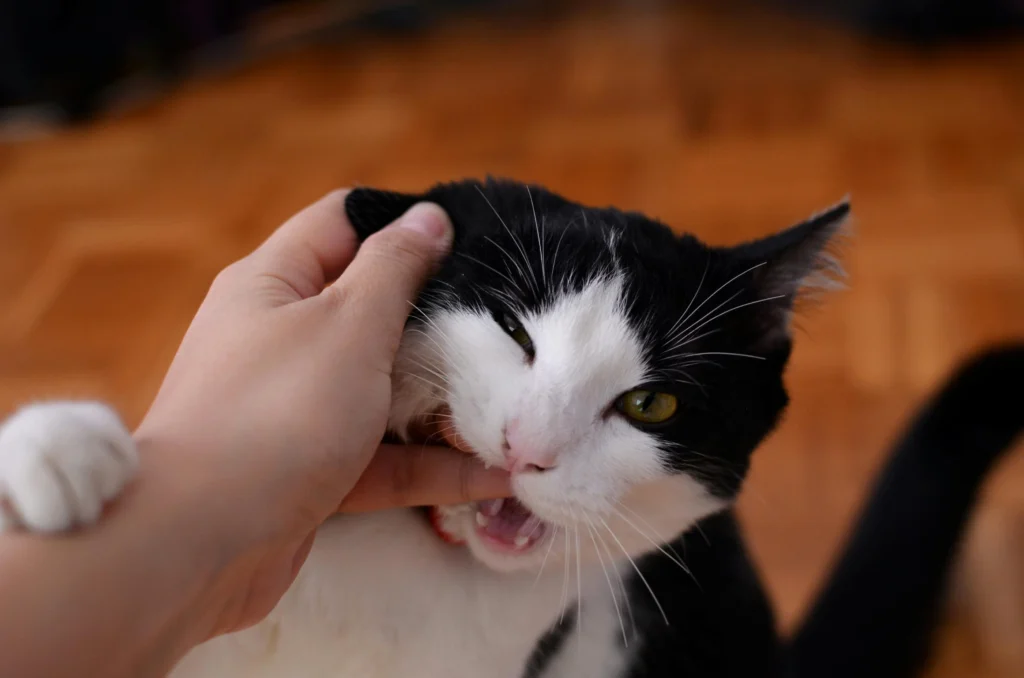
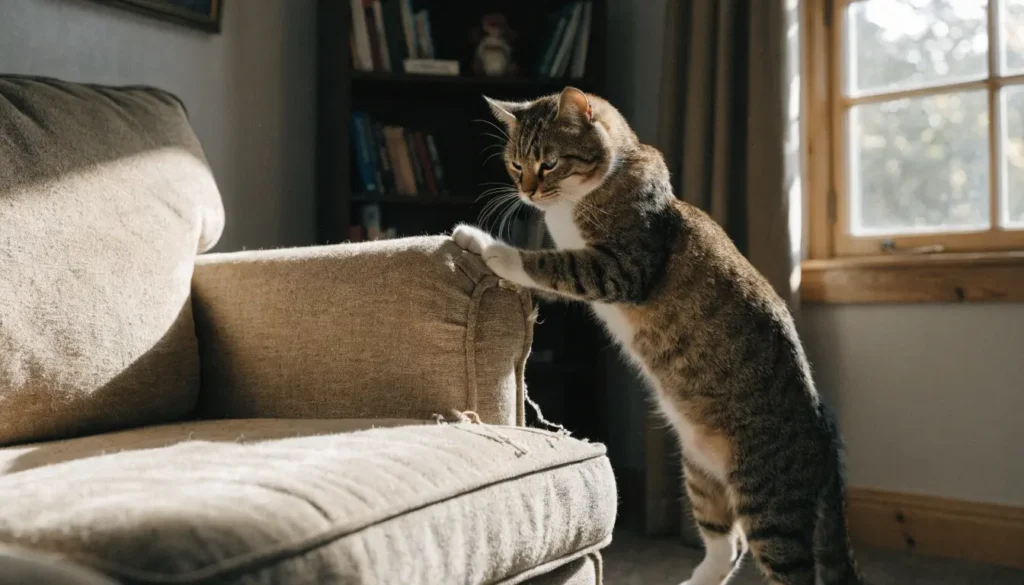
Learning how to stop a cat from scratching furniture is one of the most frustrating challenges cat owners face — and yet it’s one of the most completely solvable ones, without ever considering declawing.
I still remember the look on my client Maria’s face when she walked into my exam room holding up a photo on her phone — not of her cat, but of what used to be her brand new velvet sofa. Three weeks of ownership. Completely destroyed along one arm, shredded from top to bottom with the kind of dedication only a truly committed cat can deliver.
“Is there something wrong with him?” she asked. “Why does he do this?”
And that’s where I had to smile — because the answer is: absolutely nothing is wrong with him. In fact, he’s doing everything exactly right from a cat’s perspective. Understanding why cats scratch is the fastest way to figure out how to stop a cat from scratching furniture for good.
In this guide, I’m walking you through every proven method — sprays, protectors, training, and redirection — so you can protect your furniture without harming your cat. Let’s get into it. 🐾
Why Do Cats Scratch Furniture in the First Place?
Before we fix the problem, we need to understand it — because scratching is not bad behavior. It is deeply normal, healthy, necessary cat behavior that serves multiple purposes at once.
First, scratching is physical maintenance. When a cat drags their claws down a surface, they’re shedding the outer dead layer of their claws, revealing sharper ones underneath. Your sofa is essentially functioning as a giant nail file.
Second, scratching is a full-body stretch. Watch your cat the next time they scratch — they extend their entire spine, shoulders, and front legs. It’s essentially yoga, and cats often scratch immediately after waking up for exactly this reason.
Third — and this surprises people — scratching is communication. Cats have scent glands in their paw pads. Every time they scratch a surface, they leave both a visual mark and an invisible scent message: “I live here. This is mine.” This is why cats return to the same spots repeatedly, and why removing a scratching post without replacing it never solves anything.
When you understand that scratching is instinctual, physical, and communicative all at once, it becomes clear why yelling at your cat never works. You can’t train away a biological drive — but you absolutely can redirect it. And redirecting it is exactly how to stop a cat from scratching furniture permanently.
How to Stop a Cat From Scratching Furniture: The Core Strategy
The most effective way to stop a cat from scratching furniture is combining two things working together at the same time: redirection and deterrence. You need to give your cat a better option and make the furniture a less appealing one — simultaneously. Do only one without the other and you’ll get limited, temporary results.
Step 1: Provide the Right Scratching Alternatives
This is non-negotiable. If you want your cat to stop scratching the couch, they need something equally satisfying — or more satisfying — to scratch instead. Most owners underestimate what ‘right’ actually means here.
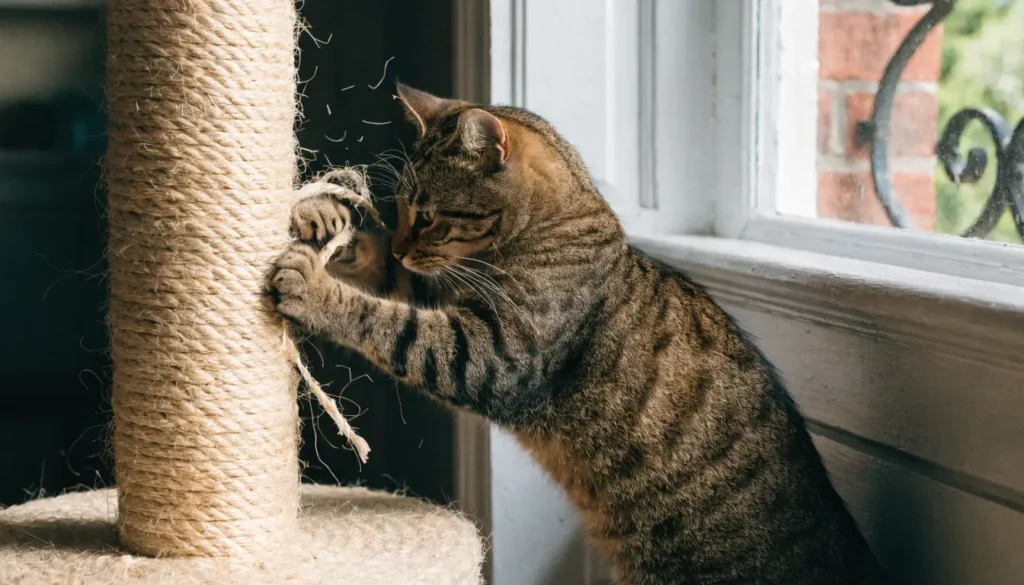
Scratching posts need to be tall enough for a full stretch — at least 28 to 32 inches for an average adult cat. The majority of posts sold in pet stores are too short, which is exactly why cats ignore them. If your cat can’t fully extend their spine against it, they’re simply not interested.
Texture matters enormously too. Sisal rope is the gold standard for most cats — it has the right resistance and shreds satisfyingly. Some cats prefer corrugated cardboard, others like carpet. If your cat is scratching a specific furniture texture, match it with a scratcher that offers something similar.
Placement is everything. Put the scratcher right next to the furniture your cat currently targets — not across the room, right beside it. Gradually move it to your preferred location over several weeks once the habit forms.
Step 2: Use Deterrents on the Furniture Itself
While you’re building the new scratching habit, you also need to make the furniture itself less inviting. Here are the approaches that actually work:
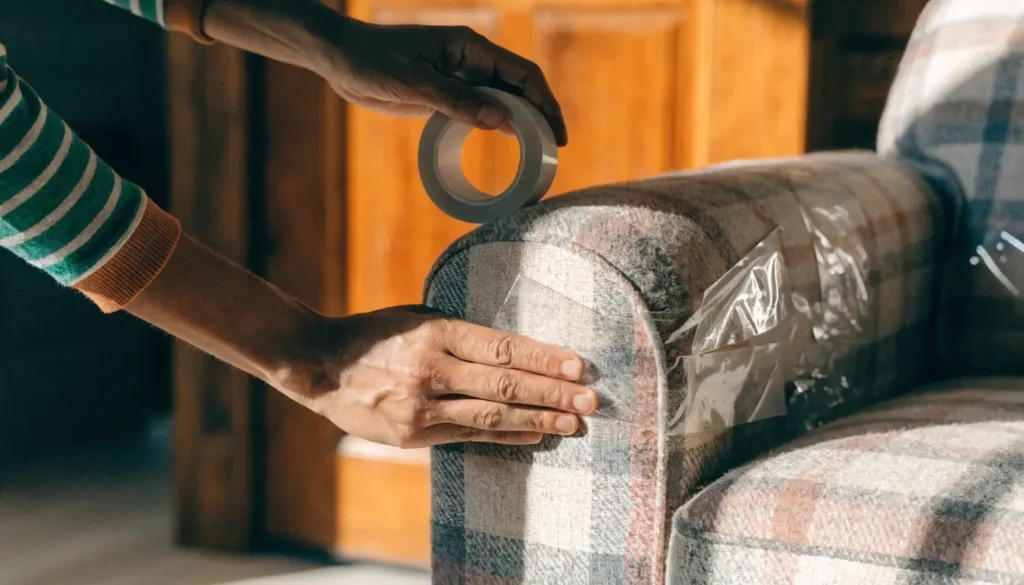
- Double-sided tape. Cats despise sticky textures on their paws. Apply it to the areas being scratched and most cats will avoid those spots immediately. Remove gradually once the new scratcher habit is established.
- Cat scratch furniture protectors. Clear plastic or vinyl panels cover the sides and arms of sofas. Completely transparent, effective, and easy to remove once the problem is resolved.
- Aluminum foil. Temporary and a little unsightly, but the texture and sound deter most cats quickly. Good for the active training period.
- Spray to stop cats from scratching furniture. Applied to surfaces, these sprays use scents cats dislike — typically citrus or herbal compounds — to discourage scratching. Reapply every few days for best results.
Homemade Spray to Stop Cats From Scratching Furniture
Good news — you don’t need to buy anything special. This homemade spray is one of the easiest and most affordable ways to stop a cat from scratching furniture naturally, using ingredients you almost certainly already have.
Basic Citrus Deterrent Spray
- 1 cup water
- 10-15 drops of lemon or orange essential oil (pure, not synthetic)
- 1 tablespoon white vinegar (optional — adds extra deterrent power)
Mix in a spray bottle, shake well, and apply lightly to furniture surfaces. Cats have an extremely sensitive sense of smell and most find citrus genuinely repellent. Reapply every 2-3 days or after cleaning the furniture.
Important: always test a small hidden area of fabric first to check for staining. Avoid spraying near food or water bowls. Never apply directly to your cat — this spray is for surfaces only.
Rosemary and Water Spray
Boil a handful of fresh rosemary in two cups of water for 10 minutes. Let it cool completely, strain, and pour into a spray bottle. Rosemary is another natural deterrent most cats dislike but that won’t harm them or damage fabric.
How to Keep Cats From Scratching Leather Furniture
Leather deserves its own section because it presents a unique challenge — and a unique solution. Knowing how to stop a cat from scratching furniture made of leather specifically requires a slightly different approach because leather picks up scent easily.
If your cat has already scratched a leather spot, their scent is now embedded there — which draws them back every time. Clean the scratched area thoroughly with a pet-safe leather cleaner before applying any deterrent, otherwise you’re fighting uphill.
The most effective protection for leather is a combination of clear vinyl scratch guard panels along the edges and corners — the highest-target zones — plus a deterrent spray applied regularly. Clear vinyl guards adhere directly to leather without damaging it and are essentially invisible in normal use.
For cats particularly drawn to leather, sisal scratching posts positioned right beside the furniture tend to work well because sisal offers similar resistance that satisfies the same scratching urge.
How to Train a Cat Not to Scratch Furniture — The Positive Approach
Here’s something that will save you a lot of frustration: punishment does not work with cats. Spraying them with water, yelling, or clapping will not teach your cat how to stop scratching furniture — it will only teach them not to do it when you’re watching. The moment you leave the room, the behavior resumes.
Positive reinforcement paired with redirection is the kindest and most permanent way to stop a cat from scratching furniture without stress for you or your cat. Here’s the practical version:
- The moment you see your cat approaching the scratcher instead of the furniture — reward immediately. A small treat, a verbal ‘yes!’, or a quick play session. Make that scratcher the most rewarding object in the room.
- If you catch your cat scratching furniture, calmly redirect — carry them to the scratcher, gently place their paws on it, and reward any interaction with it. No scolding, no drama.
- Use catnip strategically. Rub dried catnip into your scratching posts to make them irresistible. Most cats can’t walk past a catnip-rubbed post without investigating it.
- Keep nails trimmed regularly. A cat with trimmed nails does significantly less damage even when they do scratch. Your vet can show you the right technique if you’re unsure.
- Consider nail caps. Soft vinyl caps that fit over your cat’s claws, applied with pet-safe adhesive. Completely harmless, lasts 4-6 weeks, and prevents scratching damage entirely during the retraining period.
Why Declawing Is Never the Answer
Declawing is not a nail trim. It is the surgical amputation of the last bone of each toe — the equivalent of removing a human finger at the last knuckle. It causes lasting pain, changes the way cats walk, and is strongly linked to increased biting and litter box avoidance. The Humane World organization firmly opposes declawing and it is already banned or restricted across many countries and a growing number of U.S. states.
Every owner who asks how to stop a cat from scratching furniture deserves to know that declawing solves nothing — it simply removes the cat’s ability to perform a natural behavior while creating new painful problems. Every solution in this guide works. The scratching problem is genuinely solvable without it.
Cat Scratch Furniture Protectors — What Actually Works
The market for furniture scratch protection is enormous and quality varies widely. Here’s a practical breakdown of what’s actually worth using when you’re working on how to stop a cat from scratching furniture:
Clear Vinyl/Plastic Panels
These stick directly to the sides and arms of sofas using adhesive strips. Completely transparent, they protect the surface without changing the look of your furniture. Best for sofas and armchairs. Remove once your cat has established a consistent scratching post habit.
Corner Scratch Guards
L-shaped plastic or silicone guards that clip or adhere over corners — the most targeted scratching zones for most cats. Easy to install, effective, and a great starting point if your cat focuses mainly on corners and edges.
Double-Sided Sticky Tape Strips
Inexpensive, highly effective, and temporary. Apply along the scratching zones and remove gradually as new habits form. Test a hidden area of fabric first as they can leave residue on some materials.
Slipcovers
For the active retraining period, a slipcover over the sofa completely removes the satisfaction of the familiar texture. Not a permanent solution, but very useful during the transition phase while new scratching habits are forming.
Special Situations: Kittens, Multi-Cat Homes, and Stubborn Scratchers
How to Keep Kittens From Scratching Furniture
Start early and you’ll save yourself enormous trouble later. Kittens are still forming habits, which makes them much easier to redirect than adult cats with years of established routines. Introduce scratching posts on day one. Make them catnip-scented and treat-rewarded from the very beginning — prevention is always easier than correction.
Multi-Cat Households
In homes with multiple cats, scratching carries an even stronger territorial communication function. You’ll need more scratching surfaces — at least one per cat plus one extra — placed in different locations. Position scratchers near doorways and common spaces where cats naturally want to mark their presence.
The Persistent Scratcher Who Ignores Everything
Some cats are extraordinarily committed to one specific piece of furniture. In these cases, temporarily making the target completely unavailable — covering it entirely or moving it out of the room — while the new scratching habit solidifies is often the missing piece. As cat behaviorist Jackson Galaxy points out, cats scratch where their scent already exists, so removing the scent trigger with a thorough clean before applying deterrents is critical.
How Scratching Connects to Your Cat’s Overall Health
A sudden increase in scratching can sometimes signal stress, anxiety, or environmental changes rather than just a stubborn habit. If you notice your cat targeting new furniture alongside other behavioral shifts — like appetite changes — it’s worth a vet visit. Our guides on My Cat Won’t Eat and My Dog Won’t Eat cover how stress shows up across all pet behaviors. A happy, well-nourished cat is also a much easier cat to redirect — check out our Home Cooked Cat Food Recipes for ideas on supporting your cat’s health from the inside out.
Frequently Asked Questions
Why does my cat scratch furniture even when they have a scratching post?
The most common reason owners struggle to stop a cat from scratching furniture is providing a post that doesn’t actually meet their cat’s needs — usually because it’s too short, the wrong texture, or in the wrong location. Try a tall sisal post placed directly next to the furniture they’re targeting, rubbed with catnip and rewarded with treats. Most cats redirect within days once the alternative genuinely satisfies them.
What is the best spray to stop cats from scratching furniture?
Commercial citrus-based deterrent sprays work well for most cats. For a homemade spray to stop cats from scratching furniture, mix water with 10-15 drops of lemon or orange essential oil and a splash of white vinegar. Apply lightly to furniture surfaces and reapply every 2-3 days. Always test on a hidden area first to check for discoloration.
Do cat scratch furniture protectors actually work?
Yes — clear vinyl panels and double-sided tape are both consistently effective at protecting furniture from cat scratches. The key is using them as part of a complete strategy, not alone. Protectors work best when combined with a good scratching alternative placed nearby. Use them during the retraining period, then gradually remove once new habits are established.
How do I stop my cat from scratching leather furniture?
Clean the scratched area first to remove your cat’s embedded scent, then apply clear vinyl scratch guards along the arms and corners. Position a sisal scratching post right beside the sofa. Add a deterrent spray along the edges. This combination — scent removal, physical barrier, and attractive alternative — resolves most leather scratching problems within a few weeks.
How long does it take to stop a cat from scratching furniture?
With consistent redirection and deterrents applied to furniture, most cats shift their habits within 2-4 weeks. Older cats with deeply ingrained habits may take 6-8 weeks. Consistency is the number one factor — every person in the household needs to follow the same approach, because mixed signals are the most common reason retraining fails.
Is declawing ever a solution to stop cats from scratching furniture?
No — and this position is now shared by the majority of veterinary and animal welfare organizations worldwide. Declawing is a surgical amputation that causes chronic pain and leads to new behavioral problems including increased biting and litter box avoidance. Every problem owners hope to solve with declawing can be resolved with the redirection and deterrence approaches in this guide.
Can stress make my cat scratch furniture more?
Absolutely. Scratching is a territorial marking behavior that intensifies when cats feel their environment is uncertain — new pets, new people, moving homes, or schedule changes all commonly trigger a sudden increase in scratching. If the behavior escalated without an obvious cause, a vet check to rule out underlying anxiety or discomfort is a reasonable next step.
Do all cats scratch furniture or just some?
All cats scratch — it’s a universal feline behavior. The difference is whether they scratch your furniture or a designated scratching surface. That outcome is almost entirely determined by what alternatives you provide, where you put them, and how consistently you redirect. No cat is born a furniture destroyer — they scratch whatever is available and satisfying.
Final Thoughts From Your Vet
The mindset shift that makes all the difference: your cat isn’t scratching your furniture to spite you. They’re doing it because they’re a cat — and this is what cats do. The goal isn’t to stop the scratching. It’s to redirect where it happens.
Give them something better to scratch. Make the furniture less appealing. Use the homemade spray to stop cats from scratching furniture, add cat scratch furniture protectors during the transition, and be consistent. That combination works every single time when given enough patience to take hold.
Maria — the one with the destroyed velvet sofa? She came back three months later with photos again. This time, her cat was completely absorbed in a tall sisal post in the corner of her living room, while the sofa sat untouched right beside it.
She figured out how to stop a cat from scratching furniture. So can you.
Your furniture can be saved. And your cat gets to keep all their claws. 🐾