Why Does My Dog Bark in His Sleep? 7 Reasons Explained
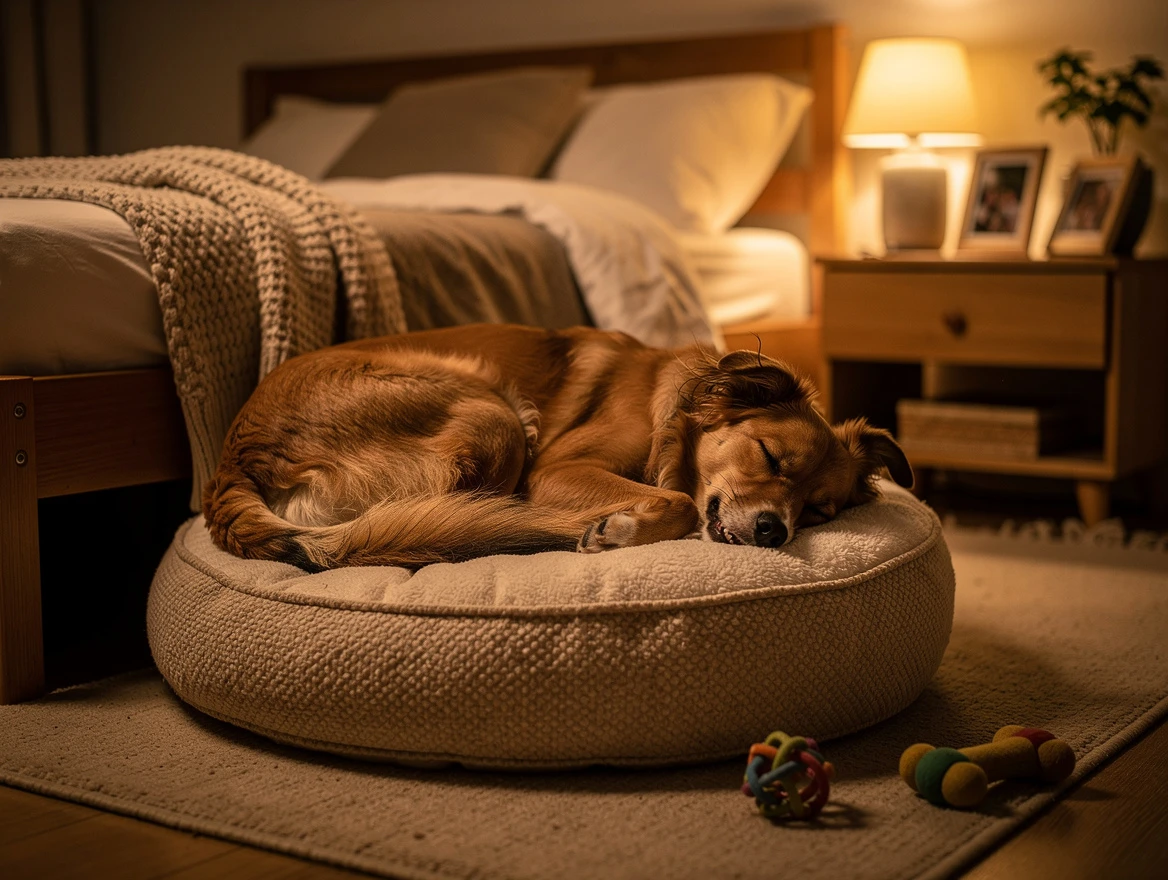
Why does my dog bark in his sleep — the short answer is your dog is dreaming. Dogs experience REM sleep just like humans, and during that deep sleep phase their brain replays the day’s experiences. The barking, twitching, and whimpering you hear are their body responding to whatever dream is playing out.
The first time my dog did this I genuinely thought something was wrong. He was flat on his side, legs paddling, letting out soft barks at nothing. I nearly woke him up — but learned quickly that sleep barking is almost always completely normal.

Why does my dog bark in his sleep — your dog is dreaming during REM sleep. Their brain is replaying experiences from the day, and their body responds with barking, whining, twitching, and leg paddling. This is completely normal in most cases. Only see a vet if the behavior is new, your dog seems distressed after waking, or sleep movements are violent.
The Science — REM Sleep in Dogs
Dogs go through sleep cycles similar to humans — including REM (Rapid Eye Movement) sleep, the phase where dreaming happens. During REM, the brain is highly active, processing memories and emotions from the day. The body responds to dream content with muscle twitches, eye movement, and vocalizations.
A part of the brainstem called the pons normally paralyzes the major muscle groups during REM sleep to prevent your dog from physically acting out their dreams. But the vocal cords remain partially active — which is why you hear barking even when your dog is deeply asleep and otherwise still. This explains why does my dog bark in his sleep but not when awake — their dream brain is triggering the behavior while waking inhibitions are off.
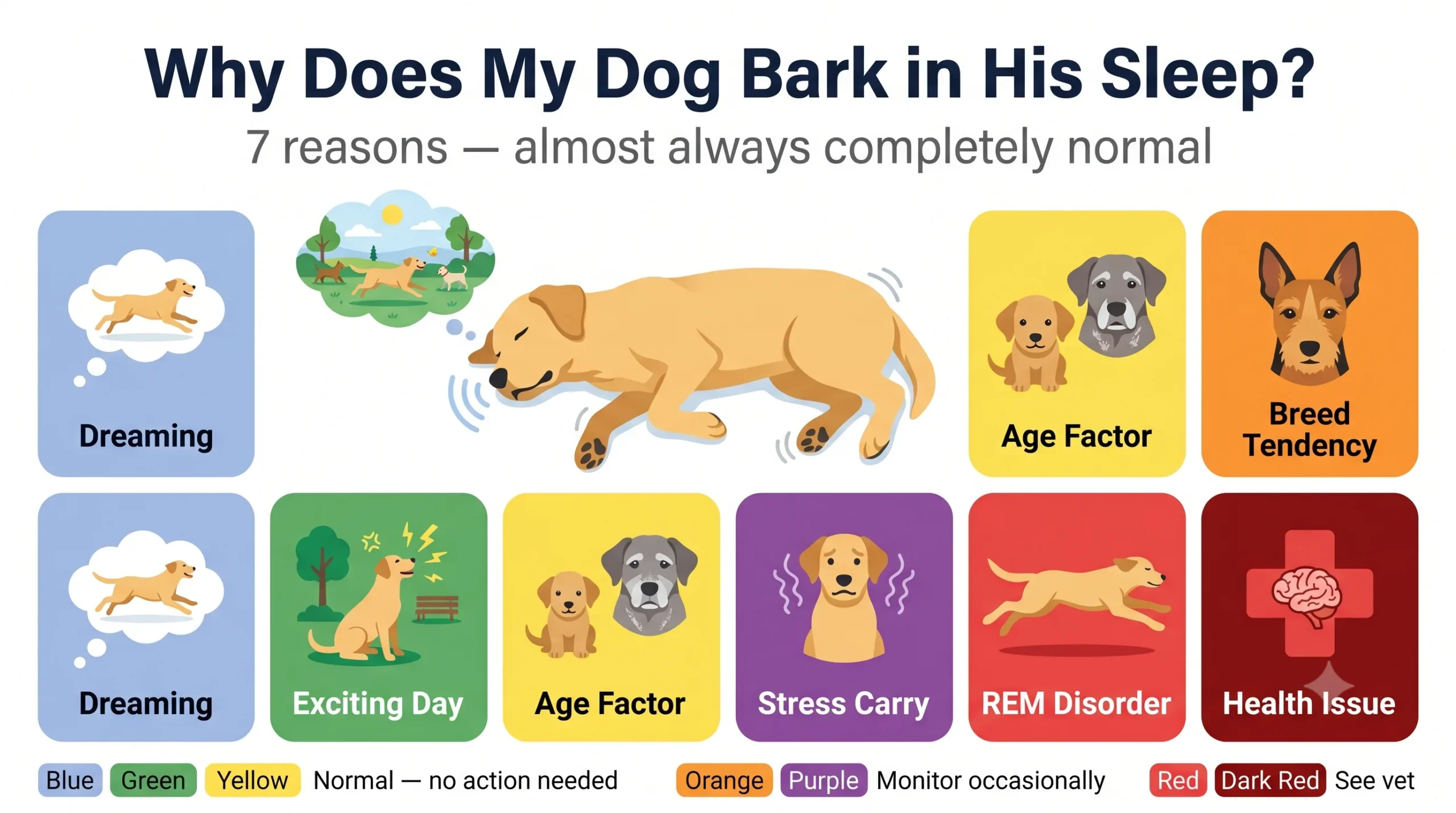
7 Reasons Your Dog Barks in His Sleep
1. Dreaming — The Most Common Reason
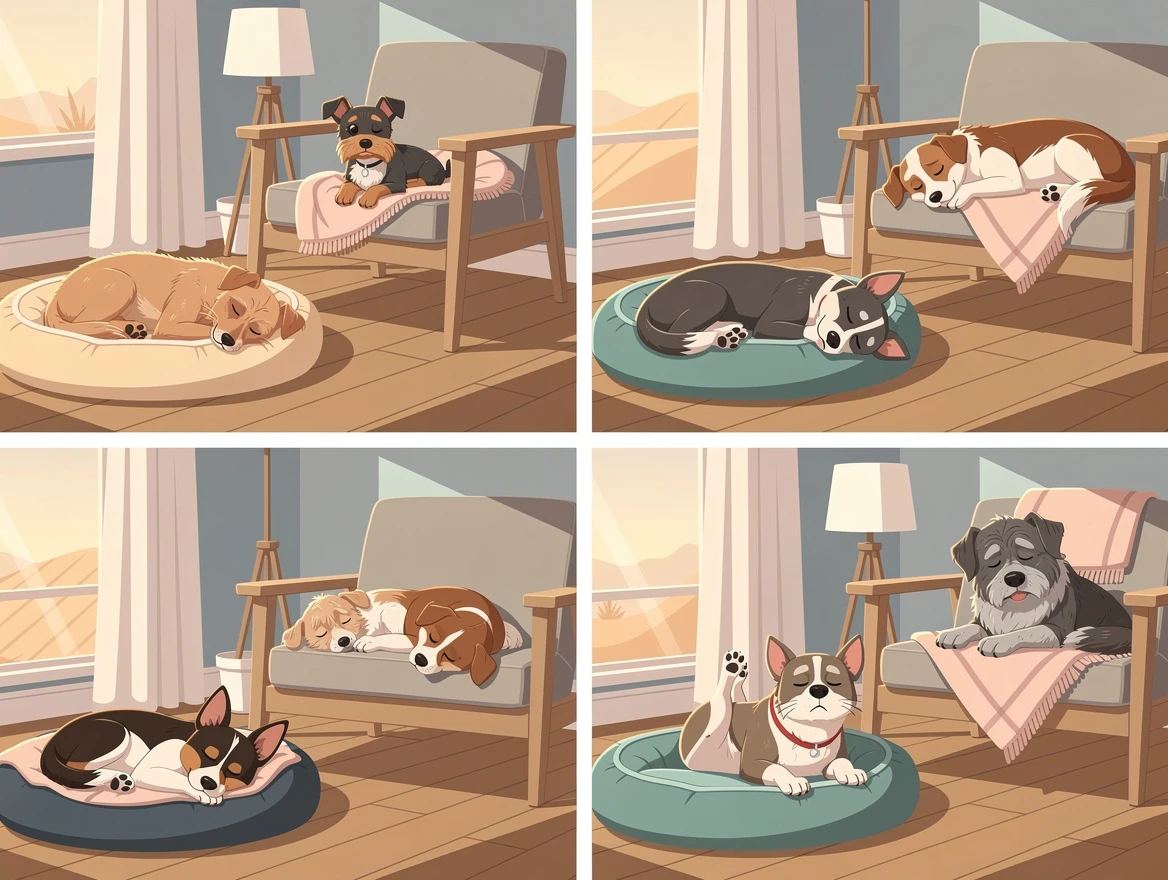
Your dog is replaying the day — running, playing, barking at something exciting. This is behind the vast majority of sleep barking. Small dogs tend to dream more frequently than large breeds, which is why a terrier might bark in their sleep nightly while a Great Dane sleeps silently.
2. Processing an Exciting or Stressful Day
Sleep is when the brain consolidates memories. A dog that had a stimulating day — a trip to the dog park, a car ride, meeting new people — will have more active dreams and more sleep vocalizations. Why does my dog bark in his sleep more some nights? Because some days give the brain more to process.
3. Age — Puppies and Senior Dogs Are More Active Sleepers
Puppies process enormous amounts of new information daily — every sight, sound, and smell is new. Their brains work overtime during sleep, producing frequent twitching, whimpering, and barking. Senior dogs also vocalize more during sleep as neurological changes affect the sleep cycle. If your older dog recently started barking more in sleep, mention it to your vet at the next visit.
4. Breed Tendencies
Breeds developed for alertness and reactivity — terriers, beagles, hounds, herding breeds — tend to have more active dream states and more sleep vocalizations. Their brains are wired for heightened response, and this carries into sleep. If you have a vocal breed, nightly sleep barking may simply be their nature.
5. Stress or Anxiety Carried Into Sleep
A dog experiencing chronic stress or anxiety during the day will carry that emotional state into sleep. Their dreams may sound more distressed — whining, crying, or low growling rather than playful barking. If sleep sounds seem genuinely distressed and your dog wakes up anxious or disoriented, consider whether there is an underlying stress issue. If your dog is also showing daytime anxiety like sudden clinginess, see: Why Is My Dog Suddenly Clingy.
6. REM Sleep Behavior Disorder
In rare cases, the brainstem mechanism that suppresses movement during REM sleep fails. The dog physically acts out their dreams — not just twitching but actually running, jumping, or thrashing. This is different from normal sleep barking. A dog with REM Sleep Behavior Disorder moves in large, sometimes violent ways that can cause injury. This is more common in older dogs and requires veterinary evaluation.
7. Underlying Health Conditions
New or changed sleep vocalizations can signal pain, neurological changes, or cognitive dysfunction syndrome in senior dogs. If why does my dog bark in his sleep is a new question — meaning this behavior just started recently — and it is accompanied by appetite changes, disorientation, or behavioral shifts during waking hours, see your vet. Related: My Dog Won’t Eat — appetite changes alongside new sleep behavior may point to the same underlying issue.
Which Sleep Sounds Are Normal
| Sound | Meaning | Concern Level |
|---|---|---|
| Soft barking and yipping | Dreaming — completely normal | None |
| Whining or whimpering | Usually dreaming — monitor if frequent | Low |
| Growling | Dream content — normal in alert breeds | None |
| Twitching and leg paddling | Classic REM movement — running in dream | None |
| Pained crying | May indicate discomfort — rule out pain | Medium |
| Violent thrashing + running | Possible REM Behavior Disorder | See vet |
The key is change. Any new or significantly different sleep behavior in a dog that previously slept quietly is worth mentioning to your vet — especially in senior dogs.
Should I Wake My Dog Up If He Is Barking in His Sleep
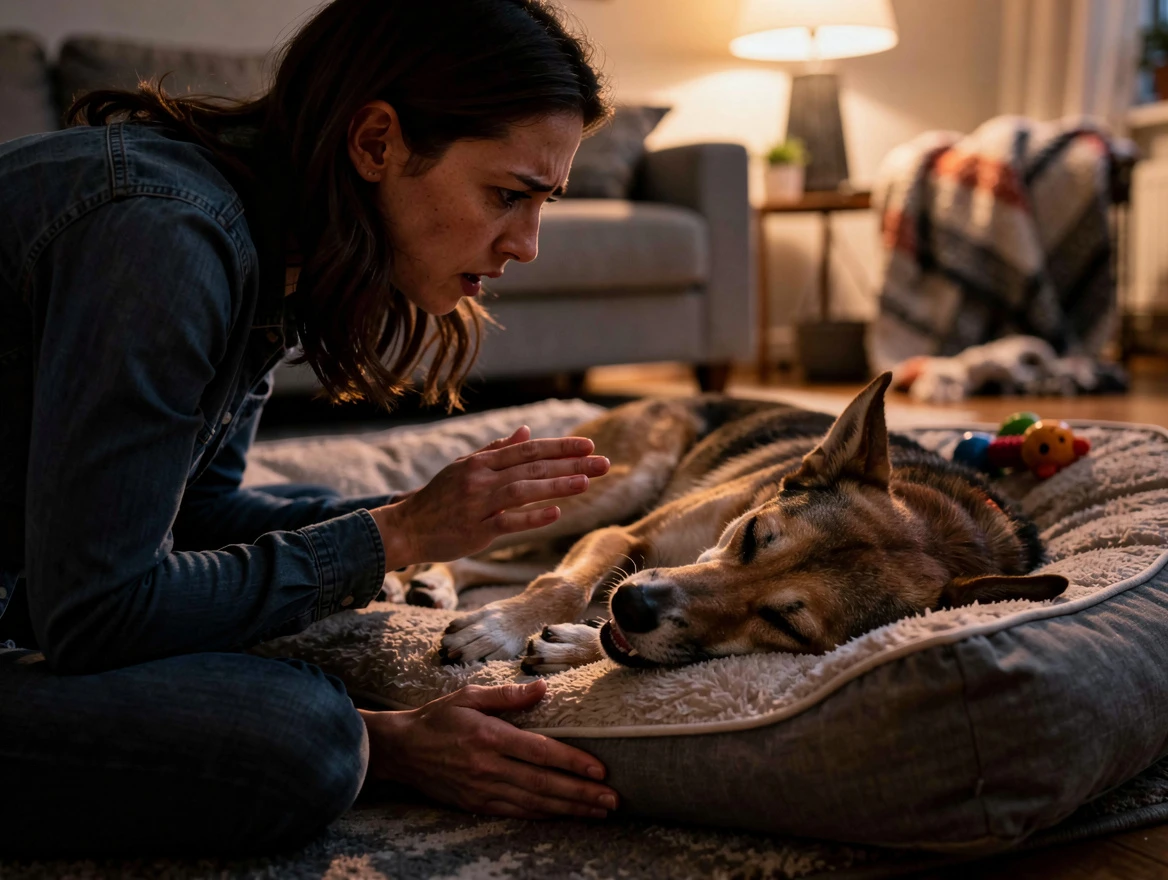
In most cases — no. Let the dream pass naturally. It usually lasts only seconds to a minute. Waking a dog abruptly from deep REM sleep is disorienting and startling. A confused, startled dog can snap or bite reflexively — even the gentlest, most well-trained dog.
If you feel you must wake them, call their name softly from a distance. Do not reach in and touch a sleeping dog suddenly. The exception is if your dog appears to be in genuine physical distress — rapid breathing, violent movements, or inability to settle after the episode passes.
How to Help Your Dog Sleep More Peacefully
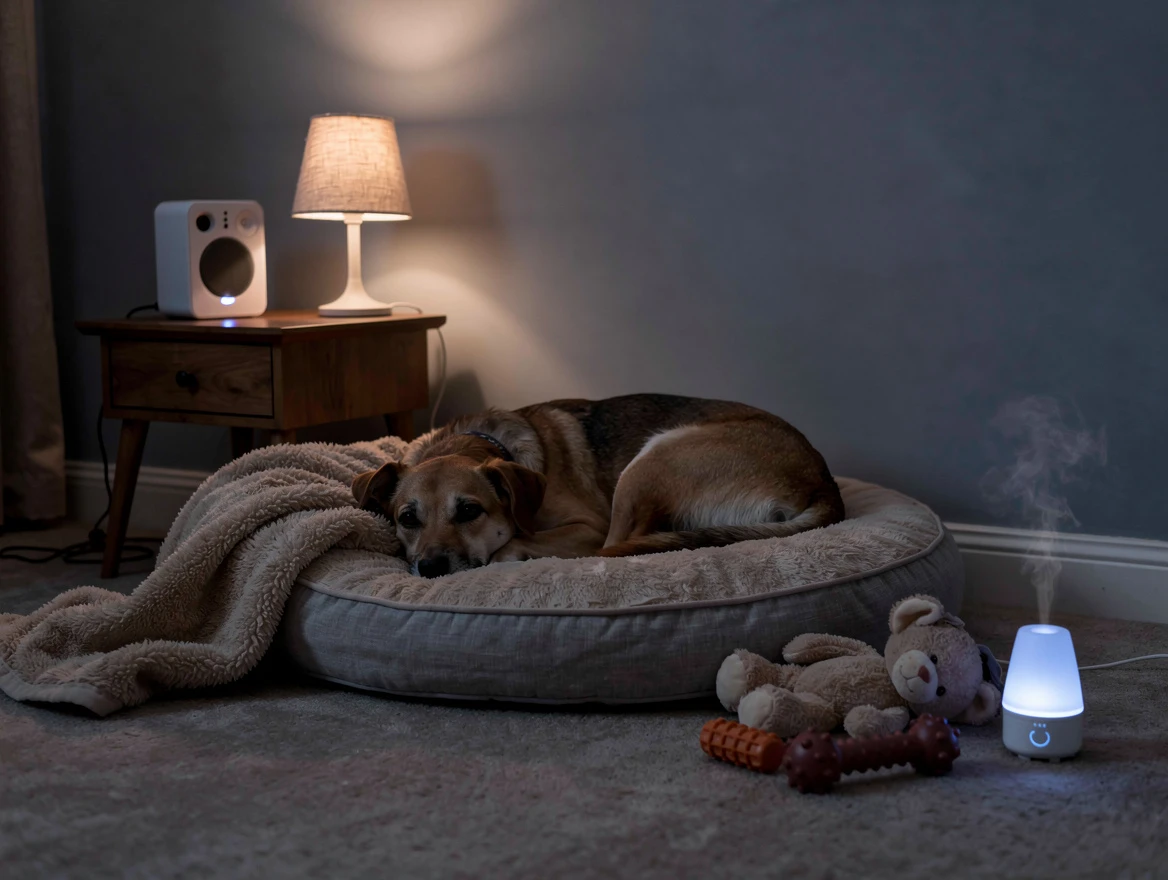
- Consistent sleep space — a dedicated bed in a quiet area away from foot traffic and noise supports calmer sleep
- Adequate daytime exercise — a well-exercised dog sleeps more deeply and calmly. Match exercise to breed and age.
- Calming pre-sleep routine — a quiet evening walk followed by calm time signals to the nervous system that it is time to settle
- Reduce overstimulation before bed — avoid intense play or exciting activities in the hour before sleep
- Comfortable temperature — dogs sleep best in a cool, well-ventilated room
When to See the Vet About Sleep Barking
🩺 See Your Vet If:
- Sleep barking started suddenly in a dog that never did this before
- Your dog seems disoriented or anxious after waking from episodes
- The sounds are genuinely distressed — pained crying, not dream barking
- Your dog physically acts out dreams with large, violent movements
- Sleep changes are accompanied by appetite loss, behavioral changes, or disorientation when awake
- Your dog is a senior and sleep behavior has changed significantly
If your dog is also showing digestive changes alongside sleep disturbances, see: Home Remedies for Dog Diarrhea — gut discomfort can disrupt sleep patterns. And if shedding has also increased — a common stress signal — see: How to Stop Dog Shedding.
Normal Sleep Barking vs Problematic Barking
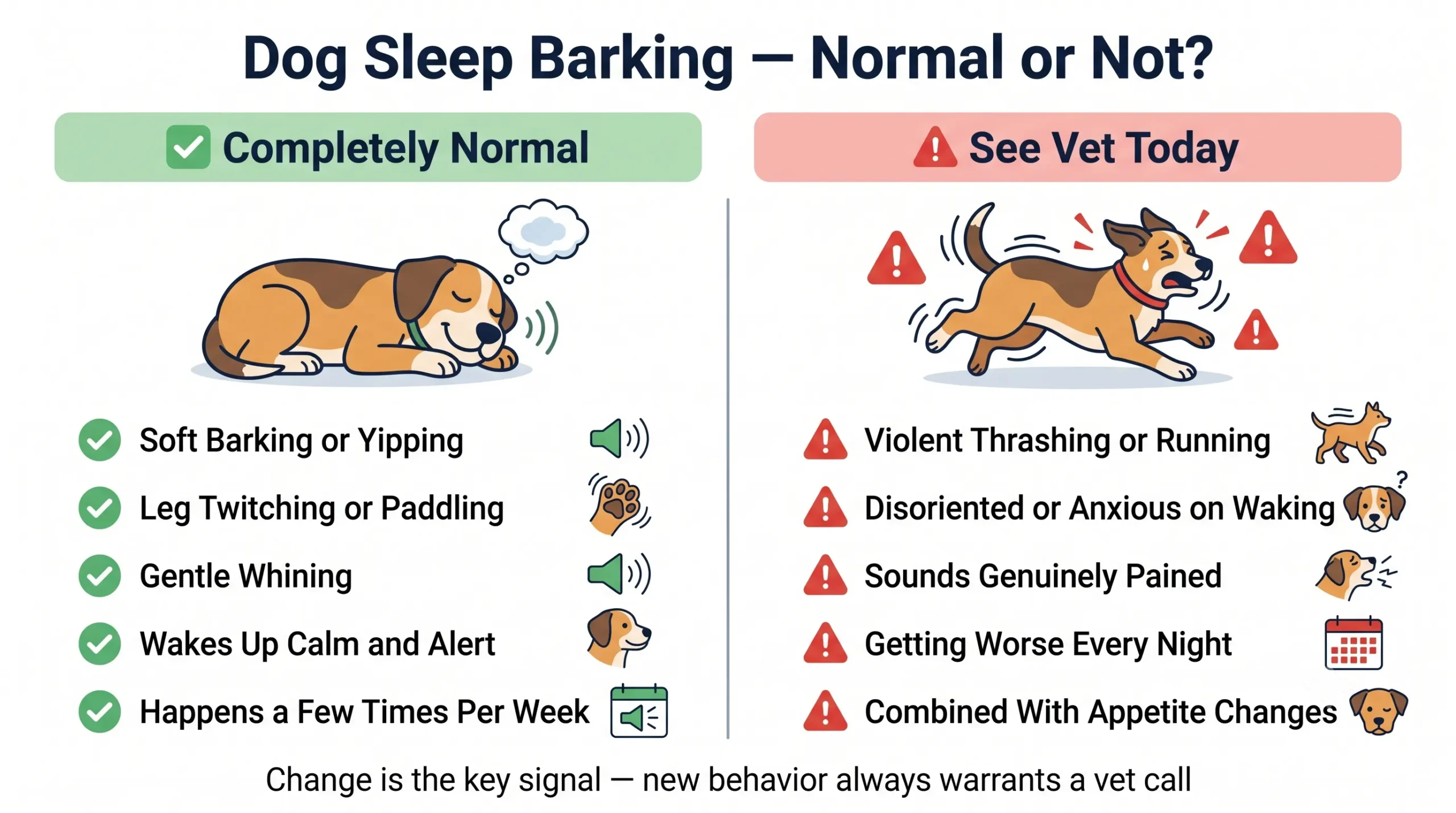
| Feature | Normal | Problematic — See Vet |
|---|---|---|
| Frequency | Occasional, a few times per week | Nightly, frequent, getting worse |
| Dog’s reaction on waking | Calm, alert, normal | Disoriented, anxious, trembling |
| Duration | Seconds to one minute | Prolonged, repeated episodes |
| Other symptoms | None — dog is healthy when awake | Panting, appetite changes, behavioral shifts |
| Physical movement | Twitching, light paw paddling | Violent thrashing, running, possible injury |
Common Mistakes Dog Owners Make
- Waking the dog abruptly — startled dogs can snap reflexively. Always call their name softly from a distance if you must wake them.
- Punishing sleep barking — your dog has zero control over this. Punishment only creates anxiety and makes sleep worse.
- Overstimulating before bed — intense play right before sleep leads to more active and restless dreaming.
- Ignoring sudden changes — new sleep barking in a dog that never did it before can signal pain or neurological issues.
- Not keeping a sleep log — tracking when barking happens, how long it lasts, and what happened that day helps your vet identify patterns.
Frequently Asked Questions
Night terrors are rare in dogs but possible. They cause extreme fear and confusion when waking — your dog may appear panicked, disoriented, or aggressive for several seconds after waking. If this happens regularly, see your vet to rule out neurological conditions.
Your dog is dreaming during REM sleep. Their brain is replaying experiences from the day and their body responds with barking, whining, and twitching. This is completely normal and healthy in most cases.
Yes — sleep barking is a sign of healthy REM sleep and active dreaming. Dogs process memories and emotions during sleep just like humans. Barking, whining, and twitching are natural expressions of that process.
Generally no — let the dream pass naturally. Waking a dog abruptly from deep sleep can be disorienting and they may snap reflexively. If you must wake them, call their name softly from a distance.
Gentle whining and crying during sleep is usually dream behavior — completely normal. If the crying sounds genuinely pained and your dog seems unsettled after waking, rule out pain or anxiety with your vet.
Twitching is classic REM sleep activity — your dog’s muscles are responding to dream content. It is completely normal and especially common in puppies and active breeds. Related: Why Does My Cat Twitch in His Sleep — cats do the same thing for the same reasons.
Dream content — your dog is dreaming about something that triggers their alert or protective instincts. This is completely normal, especially in watchdog and reactive breeds.
Nightly sleep barking reflects an active dreamer. High-energy breeds, working breeds, and young dogs dream more actively and vocalize frequently. As long as your dog seems comfortable and rested when awake, nightly barking is not a concern.
During REM sleep, the brain suppresses large muscle movement but does not fully suppress vocal cord activity. The dream brain triggers barking while waking inhibitory mechanisms are inactive. This is normal sleep physiology.
The Bottom Line
Why does my dog bark in his sleep — your dog is dreaming, and it is almost always completely normal. REM sleep produces barking, whining, twitching, and leg paddling as the brain processes the day’s experiences. Let them sleep through it, never punish sleep behavior, and only see the vet if the behavior is new, sounds genuinely distressed, or involves violent physical movements. Your dog’s sleep barking is not a problem — it is a sign of a healthy, actively dreaming brain.

This article is for educational purposes only and does not replace professional veterinary advice.
Related Articles
Pain can cause both sleep disturbance and limping.