How Can I Soothe My Cat’s Itchy Skin? 8 Remedies That Work
How can I soothe my cat’s itchy skin — the most effective approach combines an oatmeal bath for immediate relief, omega-3 supplements for long-term skin health, and identifying the root cause so the itching does not keep coming back.
One of my cats scratched herself raw behind her ears last winter. I tried everything before finding what actually worked — and it was not what I expected. The solution was not a fancy product. It was switching her food and adding fish oil. Within three weeks the scratching stopped completely.
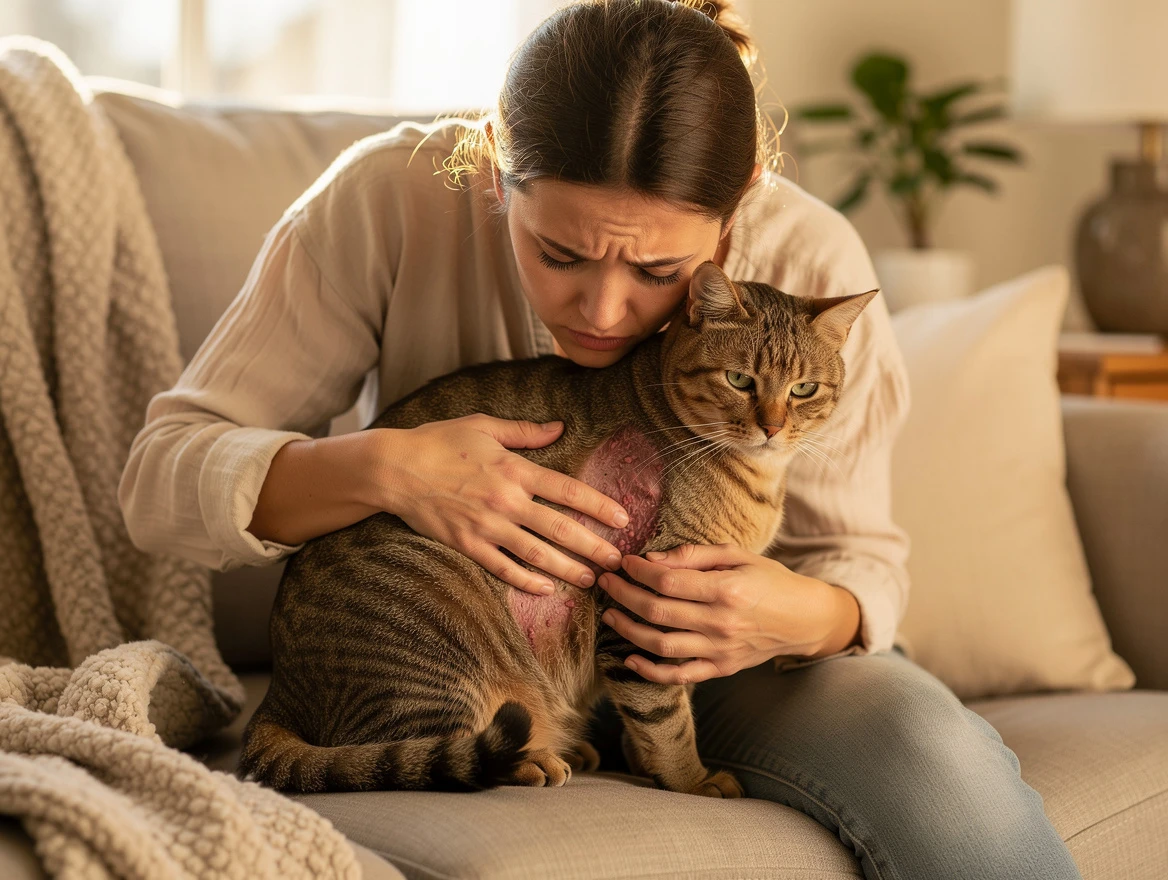
How can I soothe my cat’s itchy skin — give a lukewarm oatmeal bath for immediate relief, add omega-3 fish oil to food daily, apply pure coconut oil to dry patches, and rule out fleas as the cause. Never use human anti-itch products on cats — many are toxic. See a vet if itching persists beyond 2 weeks, causes hair loss, or produces scabs.
🚨 Contact Your Vet Immediately If Your Cat:
- Develops open sores or bleeds from scratching
- Stops eating or becomes lethargic
- Has facial swelling or difficulty breathing
- Scratches nonstop for more than 24 hours
- Shows signs of infection — redness, heat, discharge, or foul smell
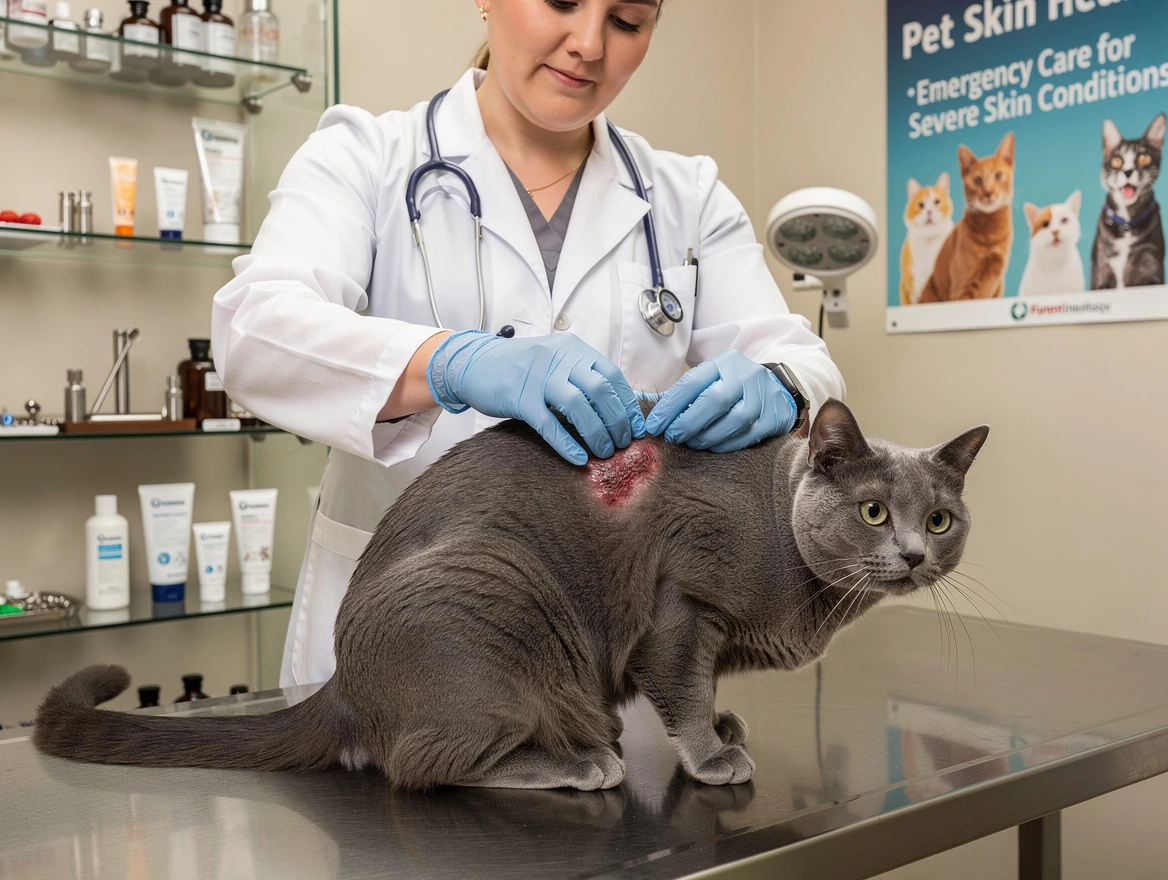
What Causes Itchy Skin in Cats
Before learning how can I soothe my cat’s itchy skin, it helps to understand what is causing the itch. The treatment depends entirely on the cause.
| Cause | Key Signs | Where It Itches | Treatment Approach |
|---|---|---|---|
| Fleas | Black specks (flea dirt), intense scratching | Base of tail, neck, belly | Flea treatment + environment cleaning |
| Food allergy | Year-round itching, ear issues, GI symptoms | Head, neck, ears | Elimination diet |
| Environmental allergy | Seasonal itching, sneezing | Face, paws, belly | Allergen reduction + antihistamines |
| Dry skin | Flaking, dull coat, dandruff | Back near tail, flanks | Omega-3s, humidifier, wet food |
| Mites | Intense scratching, crusty skin, hair loss | Ears, head, neck | Prescription antiparasitic |
| Fungal infection (ringworm) | Circular bald patches, crusty edges | Head, ears, front legs | Antifungal medication from vet |
| Stress/anxiety | Over-grooming, bald patches on belly | Belly, inner legs | Environmental enrichment, Feliway |
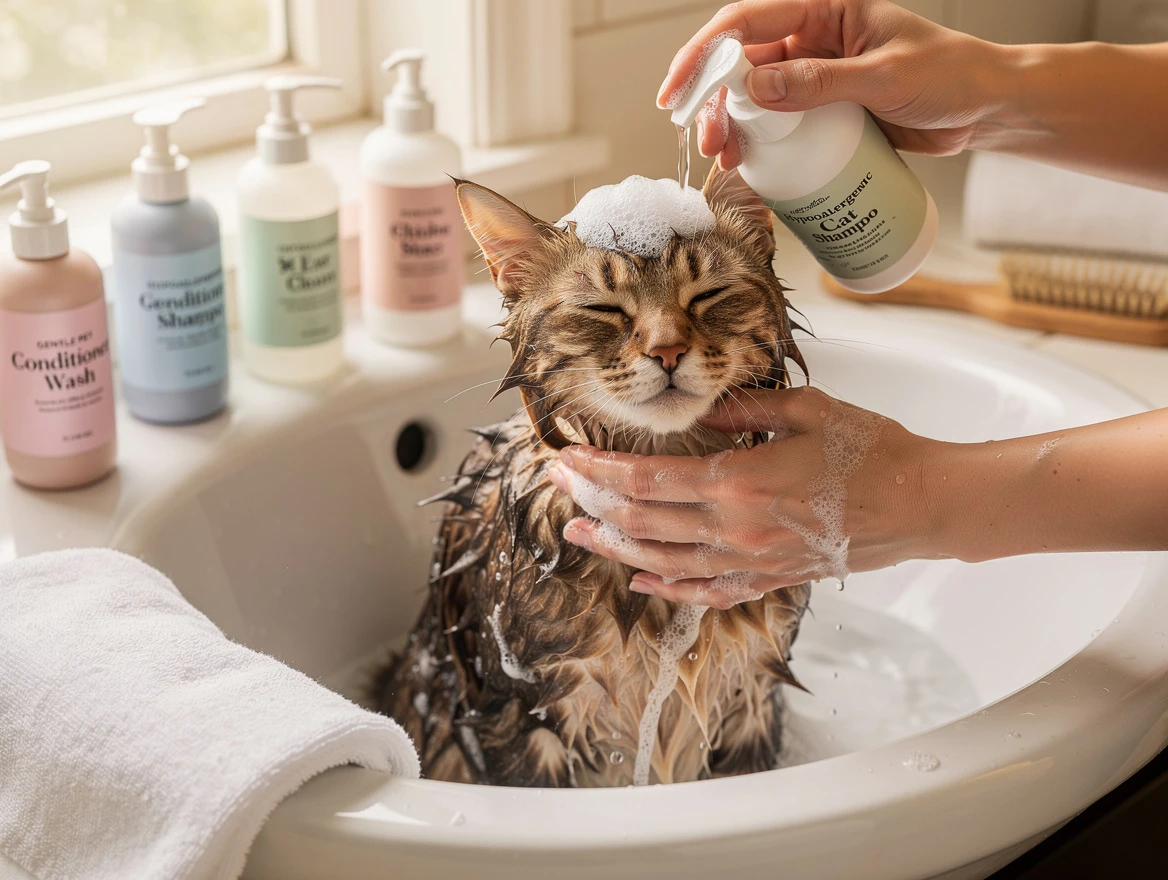
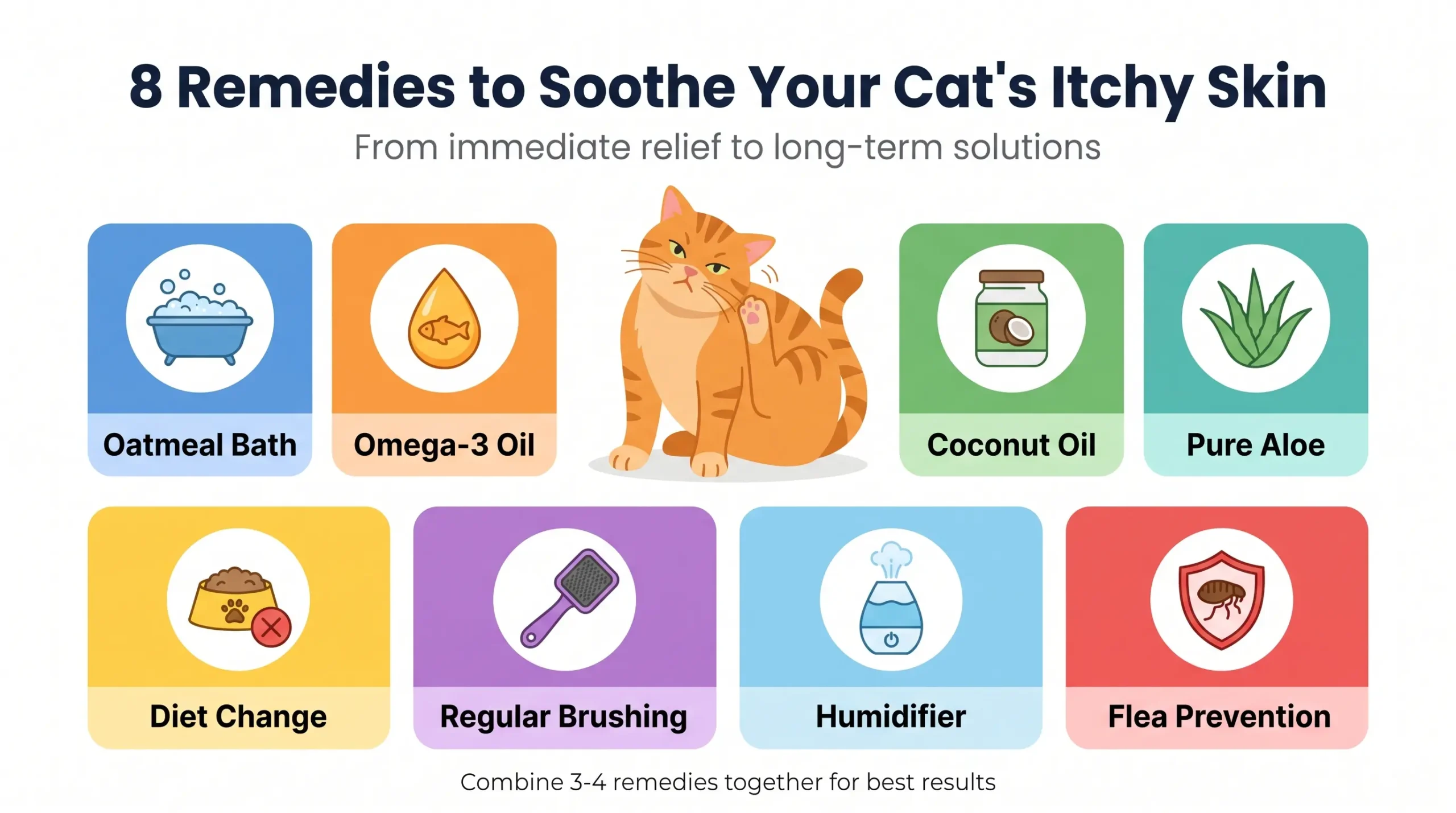
8 Remedies — How Can I Soothe My Cat’s Itchy Skin
1. Oatmeal Bath
The fastest relief for how can I soothe my cat’s itchy skin naturally. Colloidal oatmeal reduces inflammation and moisturizes dry skin on contact. Use lukewarm water (never hot), a cat-safe oatmeal shampoo, and soak for 5–10 minutes. Rinse thoroughly — leftover residue makes itching worse. Maximum once every 2–4 weeks to avoid stripping natural oils.
2. Omega-3 Fish Oil Supplement
The single most effective long-term solution. Omega-3 fatty acids (EPA and DHA) reduce inflammation from the inside and strengthen the skin barrier. Add wild-caught fish oil to wet food daily. Avoid cod liver oil (too much vitamin A for cats). Results take 4–6 weeks but this addresses the root cause, not just symptoms. Related: How Much Wet Food to Feed a Cat — wet food also improves skin hydration.
3. Coconut Oil (Topical)
Is coconut oil good for cat’s itchy skin? Yes — warm a pea-sized amount of virgin unrefined coconut oil and apply directly to dry, flaky, or irritated patches. It moisturizes immediately and has mild antimicrobial properties. Safe if your cat licks it off. Use 2–3 times per week on affected areas. Related: How to Treat Dandruff on Cat’s Back Near Tail — coconut oil also helps with dandruff.
4. Pure Aloe Vera
Pure aloe vera gel (directly from the plant, not store-bought with additives) has natural anti-inflammatory properties. Dab onto hot, irritated spots for cooling relief. Avoid any aloe products with added chemicals, fragrances, or alcohol — these are toxic to cats.
5. Upgrade Diet — Eliminate Allergens
Food allergies are one of the most under-diagnosed causes of itchy skin in cats. Common triggers include chicken, fish, dairy, and grains. Switch to a limited-ingredient or novel-protein diet (like turkey or duck) for 8–12 weeks and monitor changes. If itching improves — you found the cause. Related: Home Cooked Cat Food Recipes — control exactly what goes into your cat’s food.
6. Regular Brushing
Brushing removes loose fur, dander, and trapped environmental allergens from the coat. It also distributes natural oils that protect and moisturize the skin. Brush 5–10 minutes daily with a soft-bristle brush or rubber grooming mitt. Related: How to Stop Dog Shedding — the same brushing principles apply.
7. Humidifier + Clean Environment
Dry indoor air strips moisture from skin — especially in winter with heating. Place a cool-mist humidifier in your cat’s favorite room (aim for 45–55% humidity). Wash bedding weekly in hot water to remove allergens. Switch from plastic food bowls to ceramic or stainless steel — plastic causes chin acne and facial itching in many cats.
8. Flea Prevention
Fleas are the number one cause of itchy skin in cats. Even one flea bite can trigger flea allergy dermatitis (FAD) — intense itching that lasts days from a single bite. Year-round prescription flea prevention is essential, even for indoor cats. Treat all pets in the household simultaneously. I learned this the hard way — I treated three of my four cats for fleas but skipped my oldest because she “never goes outside.” She was the one re-infesting the entire house. Treat every pet, every time. Related: My Cat Has Worms How Do I Clean My House — parasites require whole-home treatment.
“Another one of my cats developed intense itching after I switched to a new scented litter. She was licking her paws raw and scratching her belly constantly. Once I returned to the unscented litter and added omega-3 fish oil to her wet food — recommended by my vet — the scratching improved within two weeks. Sometimes the cause is something you would never think of.” — Luna
Quick Comparison — What Is Causing the Itch?
| Cause | Itching Level | Hair Loss | Vet Needed? |
|---|---|---|---|
| Dry skin | Mild | Rare | Usually no — home remedies work |
| Fleas | Severe | Sometimes — especially near tail | Often — flea treatment needed |
| Food allergy | Moderate | Possible | Sometimes — elimination diet first |
| Environmental allergy | Moderate — seasonal | Possible | If persistent — allergy testing |
| Ringworm | Moderate | Yes — circular patches | Yes — antifungal medication required |
| Mites | Severe | Yes — crusty skin | Yes — prescription antiparasitic |
| Stress over-grooming | Moderate | Yes — belly, inner legs | If severe — behavioral assessment |
My Cat Keeps Scratching But Doesn’t Have Fleas
This is one of the most common and frustrating situations. If fleas are ruled out, the most likely causes are:
- Food allergy — the most common non-flea cause. Try an elimination diet for 8–12 weeks.
- Environmental allergy — pollen, dust mites, mold. Seasonal patterns are a clue. HEPA air purifiers and regular cleaning help.
- Dry skin — especially in winter. Omega-3 supplements, wet food, and a humidifier address this.
- Stress-related over-grooming — cats lick and scratch when anxious. Provide enrichment, vertical space, and consistent routine. Related: Is My Cat Depressed. Also: Why Is My Cat Drooling Thick Saliva — allergic reactions can cause both itching and drooling.
- Contact allergy — new laundry detergent, cleaning products, or plastic bowls. Change one variable at a time to identify the trigger.
- Mites (Cheyletiella or Demodex) — require vet diagnosis and prescription treatment. Related: How to Treat Dandruff on Cat’s Back Near Tail — mites can look like dandruff.
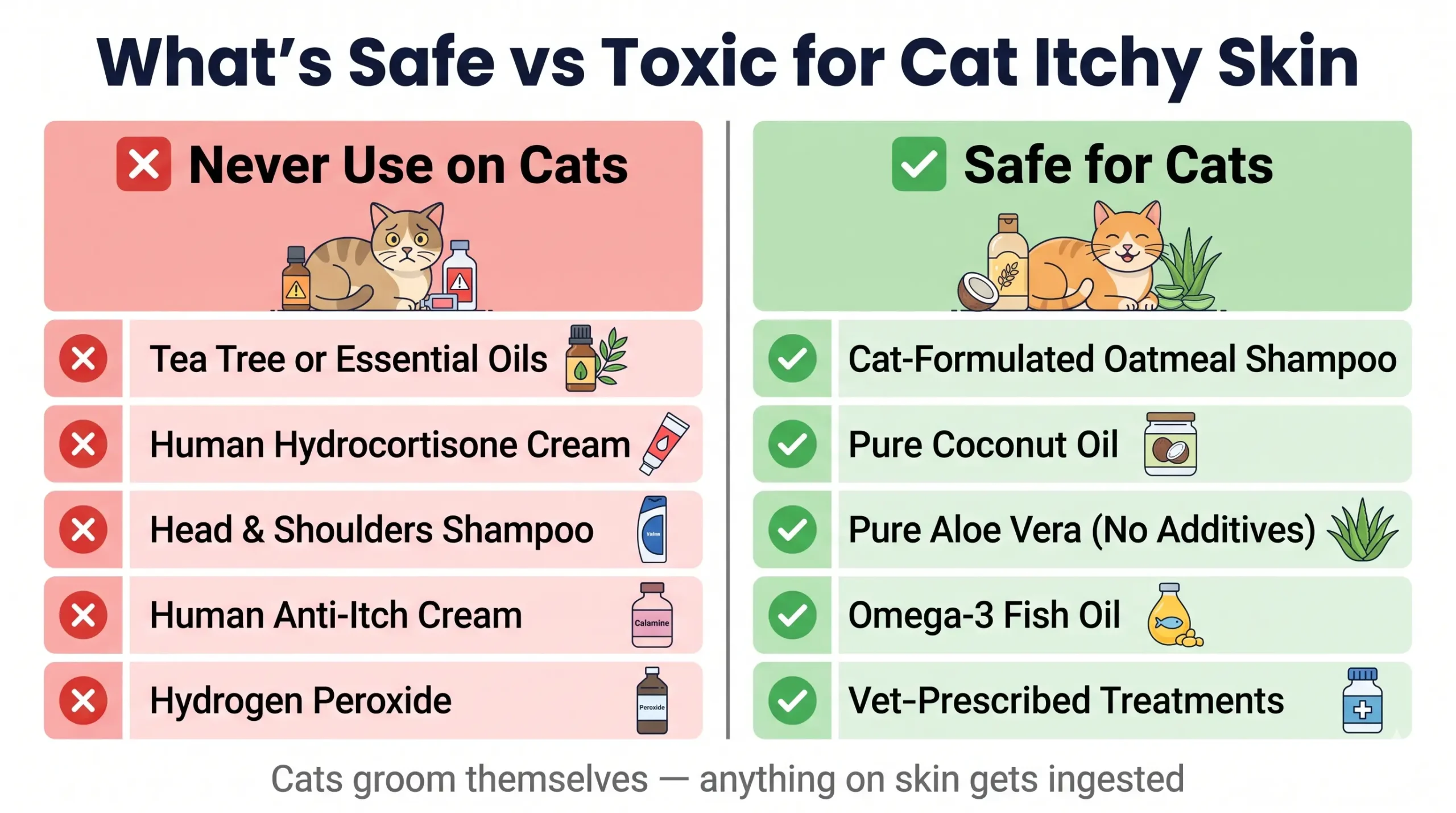
What You Should NEVER Put on Your Cat’s Itchy Skin
- Tea tree oil — highly toxic to cats even in small amounts
- Human hydrocortisone cream — cats ingest it through grooming, causing GI problems
- Essential oils — lavender, peppermint, eucalyptus, and citrus are all toxic to cats
- Human anti-itch cream (Benadryl cream, calamine) — not safe for cats to ingest
- Head & Shoulders or human dandruff shampoo — contains zinc pyrithione, toxic to cats
- Hydrogen peroxide on skin — damages tissue and delays healing
Cats groom themselves constantly. Anything you put on their skin will be ingested. Only use products specifically formulated for cats or confirmed safe by your vet. Related: My Cat Licked Toilet Cleaner — common household substances that are toxic to cats.
When to See the Vet
🩺 See Your Vet If:
- Itching persists beyond 2 weeks despite home remedies
- Hair loss or bald patches developing
- Skin is red, inflamed, or has open sores
- Scabs or crusty patches forming — cat itchy skin scabs need vet evaluation
- Cat is scratching to the point of bleeding
- Itching is accompanied by vomiting, diarrhea, or weight loss
- Circular bald spots (possible ringworm — contagious to humans)
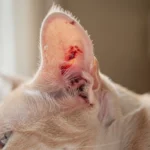
- Ear scratching with dark discharge (possible ear mites)
Your vet can run skin scrapings (checking for mites), fungal cultures (ringworm), allergy testing, and bloodwork to identify the exact cause. Related: Cat Eye Infection Facts — allergies often cause eye symptoms alongside skin itching.
Healing Timeline — What to Expect
One of the most common questions is how long does itchy skin take to heal in cats. The answer depends on the cause and treatment — here is a realistic timeline:
| Treatment | First Relief | Noticeable Improvement | Full Resolution |
|---|---|---|---|
| Oatmeal bath | Within hours | Same day | Temporary — repeats needed |
| Coconut oil topical | Immediate moisturizing | 2–3 days | 2–4 weeks with regular use |
| Flea treatment | 24–48 hours | 3–5 days | 2–4 weeks for skin to fully heal |
| Omega-3 fish oil | No immediate relief | 2–3 weeks | 4–6 weeks |
| Diet change (food allergy) | No immediate relief | 3–4 weeks | 8–12 weeks for full elimination |
| Humidifier (dry skin) | 3–5 days | 1–2 weeks | Ongoing — use continuously |
| Vet prescription (antihistamine/steroid) | 24–48 hours | 3–7 days | Varies by condition |
Common Mistakes to Avoid
- Using human shampoo or anti-itch cream — most are toxic to cats when ingested through grooming
- Bathing too often — strips natural oils and makes dry skin worse. Maximum once every 2–4 weeks.
- Ignoring fleas because “my cat stays indoors” — fleas hitchhike on shoes, clothes, and other pets
- Applying essential oils — lavender, tea tree, peppermint, and citrus are all toxic to cats
- Delaying vet visits — persistent itching with scabs or hair loss needs professional diagnosis
- Overlooking food allergies — diet is one of the most common and under-diagnosed causes of itchy skin
Frequently Asked Questions
The most effective combination is an oatmeal bath for immediate relief, daily omega-3 fish oil supplements for long-term skin health, coconut oil on dry patches, and identifying the root cause (fleas, food allergy, dry skin, or environmental allergens). Never use human anti-itch products.
Effective home remedies include colloidal oatmeal baths, coconut oil applied topically, pure aloe vera gel on irritated spots, omega-3 fish oil in food, daily brushing to remove allergens, and a humidifier to combat dry air. Switch from plastic to ceramic food bowls.
The best natural options are oatmeal baths, virgin coconut oil, pure aloe vera, and omega-3 fish oil supplements. Dietary changes — switching to a limited-ingredient or novel-protein food — also address itching naturally from the inside.
Yes — virgin unrefined coconut oil moisturizes dry skin and has mild antimicrobial properties. Apply a pea-sized amount to irritated areas 2–3 times per week. It is safe if your cat licks it off. Do not apply to open wounds.
The most likely causes are food allergy, environmental allergy (pollen, dust), dry skin, stress-related over-grooming, contact allergy (new detergent or cleaning products), or mites. An elimination diet for 8–12 weeks is the best way to rule out food allergy.
For home use, omega-3 fish oil supplements are the most effective long-term anti-itch treatment. For prescription options, your vet may recommend antihistamines (like chlorpheniramine), corticosteroids for severe cases, or Apoquel/Atopica for chronic allergic skin disease.
First, treat the fleas with a vet-recommended flea treatment on all pets in the household. Wash all bedding in hot water and vacuum thoroughly. Then soothe the irritated skin with an oatmeal bath and coconut oil on the worst spots. Omega-3 supplements help the skin recover faster.
Excessive itching and licking usually indicates fleas, allergies (food or environmental), dry skin, or stress. Cats can also develop compulsive over-grooming from anxiety. If the behavior is new and persistent, see your vet to identify the specific cause.
Scabs on a cat’s skin usually indicate the itching has progressed to the point of self-injury. Common causes include flea allergy dermatitis, food allergies, mites, or fungal infections. Scabs need veterinary evaluation — home remedies alone are unlikely to resolve the underlying cause.
Yes — dry indoor air, especially in winter with central heating, strips moisture from your cat’s skin and causes flaking and itching. A cool-mist humidifier set to 45–55% humidity in your cat’s favorite room makes a noticeable difference within 1–2 weeks.
Yes — omega-3 fish oil (EPA and DHA) reduces inflammation from the inside and strengthens the skin barrier. It is the most effective long-term supplement for itchy skin. Results take 4–6 weeks of daily use. Use wild-caught fish oil formulated for cats.
Absolutely. Indoor cats are exposed to dust mites, mold, cleaning products, scented litter, and food allergens — all of which can cause itchy skin. Indoor cats are also more prone to dry skin from heated or air-conditioned air.
Yes — stressed or anxious cats often over-groom, licking and scratching themselves until they develop bald patches, especially on the belly and inner legs. Environmental enrichment, consistent routine, and pheromone diffusers like Feliway can help reduce stress-related itching.
An oatmeal bath provides relief within hours. Coconut oil soothes dry patches immediately. But root-cause treatments like omega-3 supplements take 4–6 weeks, and dietary changes take 8–12 weeks to show full results. If itching worsens in the first 48 hours despite treatment, see your vet.
Yes — hair loss alongside itching usually indicates a condition that needs treatment, such as allergies, parasites, ringworm, or hormonal imbalance. See your vet for proper diagnosis rather than relying on home remedies alone.
The Bottom Line
How can I soothe my cat’s itchy skin — use an oatmeal bath for same-day relief, add omega-3 fish oil daily for long-term skin health, apply coconut oil to dry patches, and rule out fleas first. If your cat keeps scratching but doesn’t have fleas, investigate food allergies with an 8–12 week elimination diet. Never use human products — cats ingest anything on their skin through grooming.
Remember the timeline: quick fixes provide comfort today, but root-cause treatments take 4–6 weeks. Use both together. And if itching causes hair loss, scabs, open sores, or does not improve after consistent treatment — see your vet. Your cat cannot tell you what is wrong, but their skin is telling you something. Listen to it. Related: Why Is My Cat Sneezing So Much — allergies cause both skin itching and sneezing. Also: My Cats Ears Are Hot — skin conditions often present with multiple symptoms.

This article is for educational purposes only and does not replace professional veterinary advice.