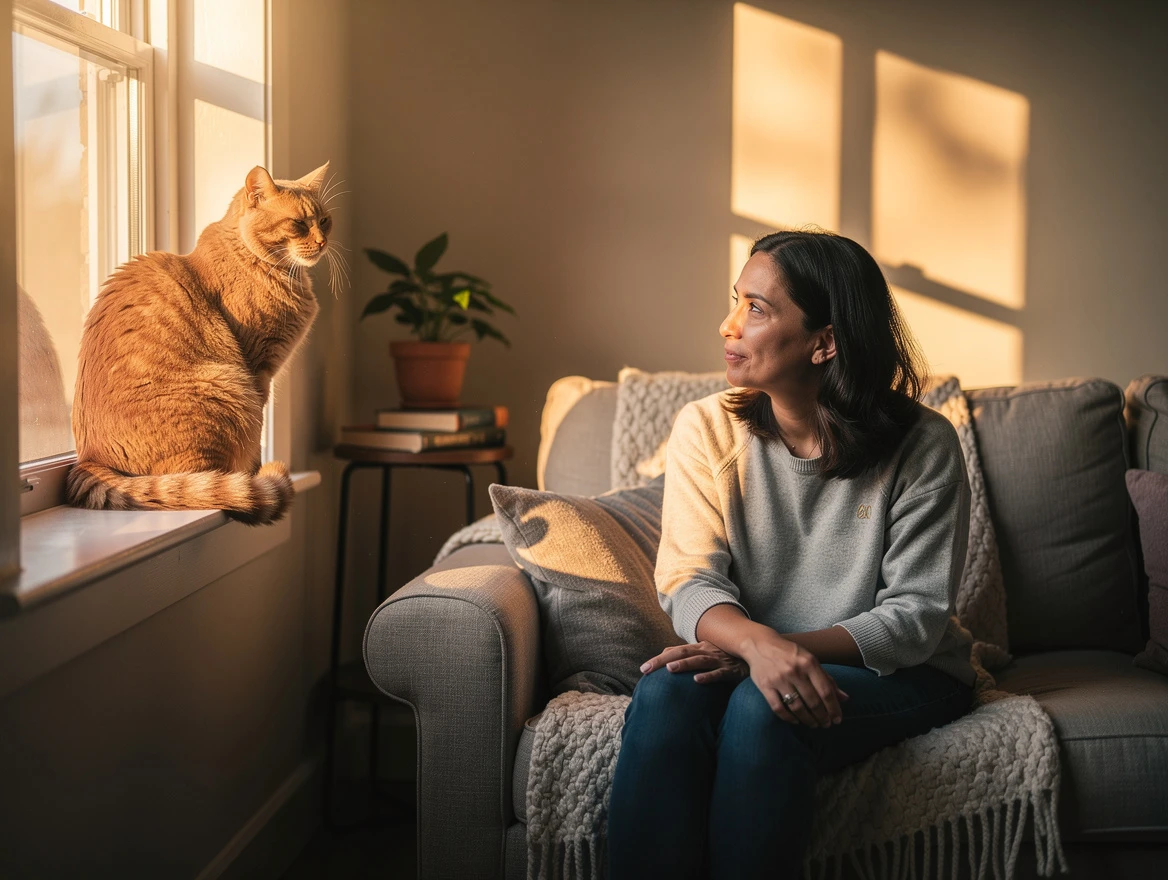
My oldest cat has a stare that used to genuinely unsettle me — dead-on eye contact from across the room, completely unblinking, for what felt like minutes. I spent months half-convinced she was judging my life choices. It took me longer than I’d like to admit to learn that most of the time, “why does my cat stare at me” has a much warmer answer than it looks like from the outside.
Cats don’t have a lot of ways to talk to us directly, so a lot gets said through the eyes. The trick is learning to read which kind of stare you’re actually getting, because they’re not all the same message.
The Short Version
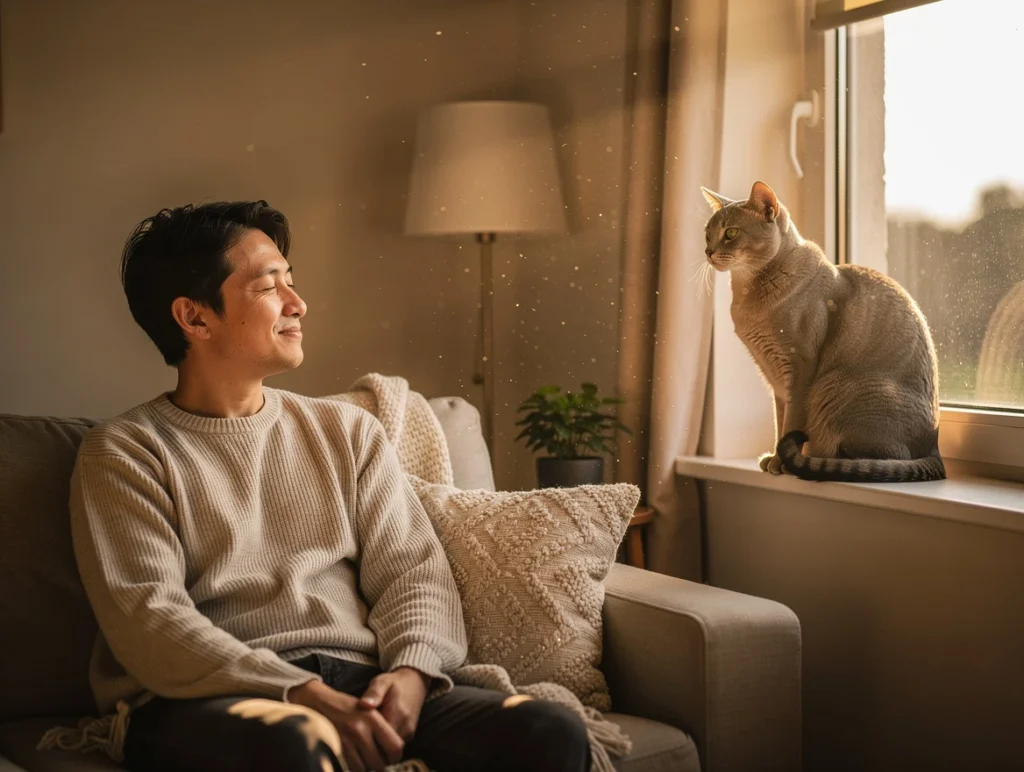
Most staring comes down to one of a few things: affection, curiosity, wanting something specific (food, play, attention), or occasionally discomfort. A soft, slow-blinking stare is love. A wide-eyed, still, unblinking stare paired with a stiff body is a different story entirely — that one is closer to a warning than a compliment. Context and body language are what actually tell you which is which.
Affection — The Slow Blink
This is the stare most owners eventually recognize once someone points it out. Soft eyes, half-closed, a slow deliberate blink aimed right at you, sometimes called a “cat kiss.” It’s their way of saying they trust you enough to make themselves vulnerable in front of you, since closing your eyes near a predator (or in front of one) isn’t something cats do casually.
If your cat gives you this stare, blink slowly back. It genuinely works both ways — most cats will either blink again or visibly relax.
Curiosity — Just Watching the Show
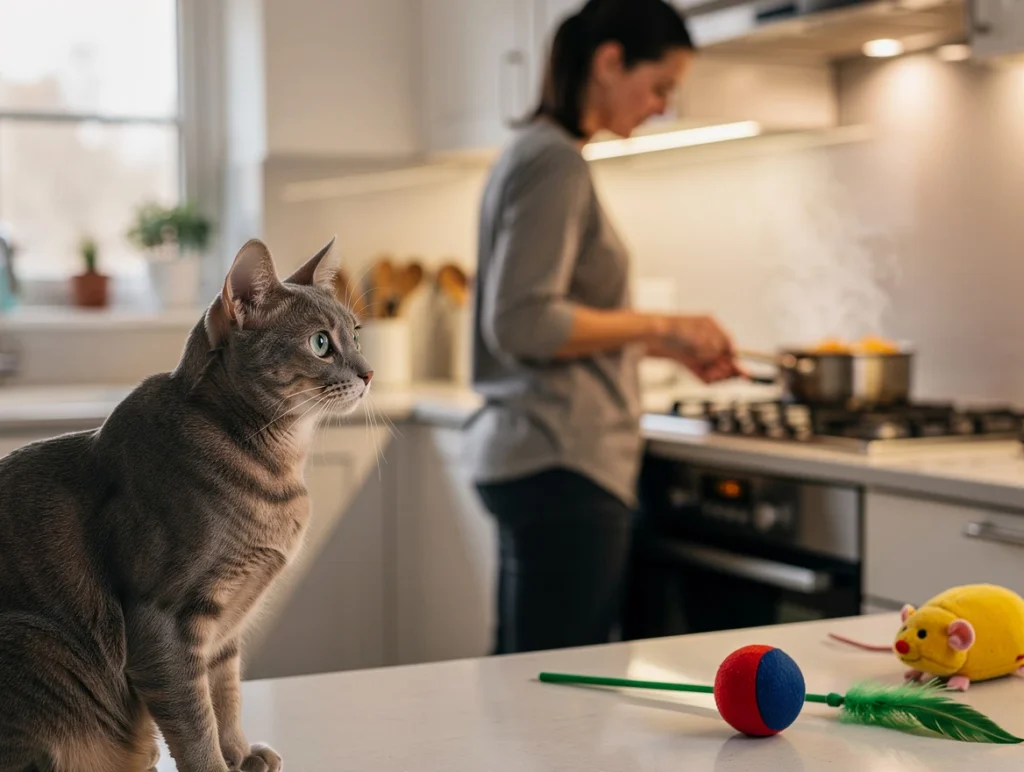
Cats are natural observers, and honestly, humans are pretty entertaining to watch. Cooking, typing, folding laundry — all of it gets studied like it might be relevant information later. A stare with big pupils often falls into this category too; dilated pupils during calm observation usually just mean high alertness or interest, not distress, especially in dim lighting where pupils naturally widen anyway.
They Want Something — And They’re Not Subtle About It
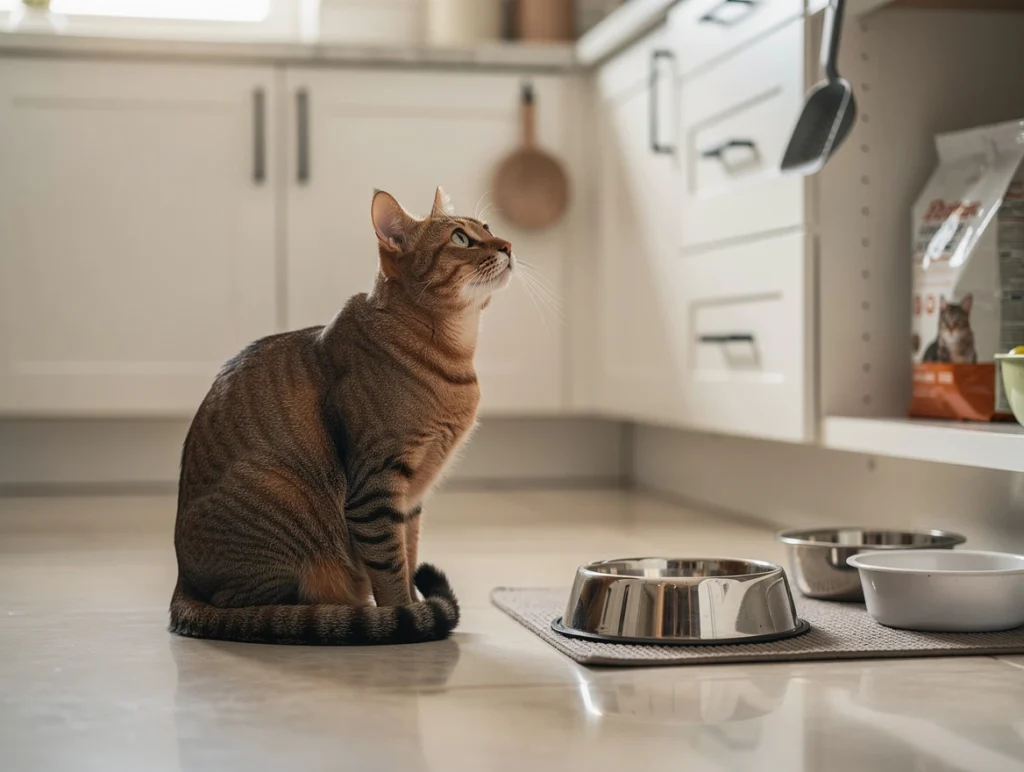
A stare aimed at you near the food bowl, at a normal mealtime, with a bit of meowing thrown in, is about as close to a direct request as a cat gets. This combination, staring plus meowing, is almost always food, attention, or “the water bowl is suspiciously low” energy. Check the obvious things first: feeding schedule, water level, whether a favorite toy has gone missing under the couch again.
Boredom Dressed Up as a Stare
An under-stimulated cat will sometimes just fix their attention on you as the most interesting thing available, especially if you’ve been on your phone or a screen for a while and haven’t so much as glanced their way. It’s honestly a better outcome than the alternative — a bored cat with nothing to stare at tends to find something to destroy instead. A few interactive toys nearby usually solves this quickly.
Communication Without Words
Sometimes a stare is a lead-in to something else — a cat that stares, then walks toward their toy box, then looks back at you, is basically giving directions. Pay attention to what happens right after the stare; it usually tells you more than the stare itself.
When the Stare Turns Into a Warning
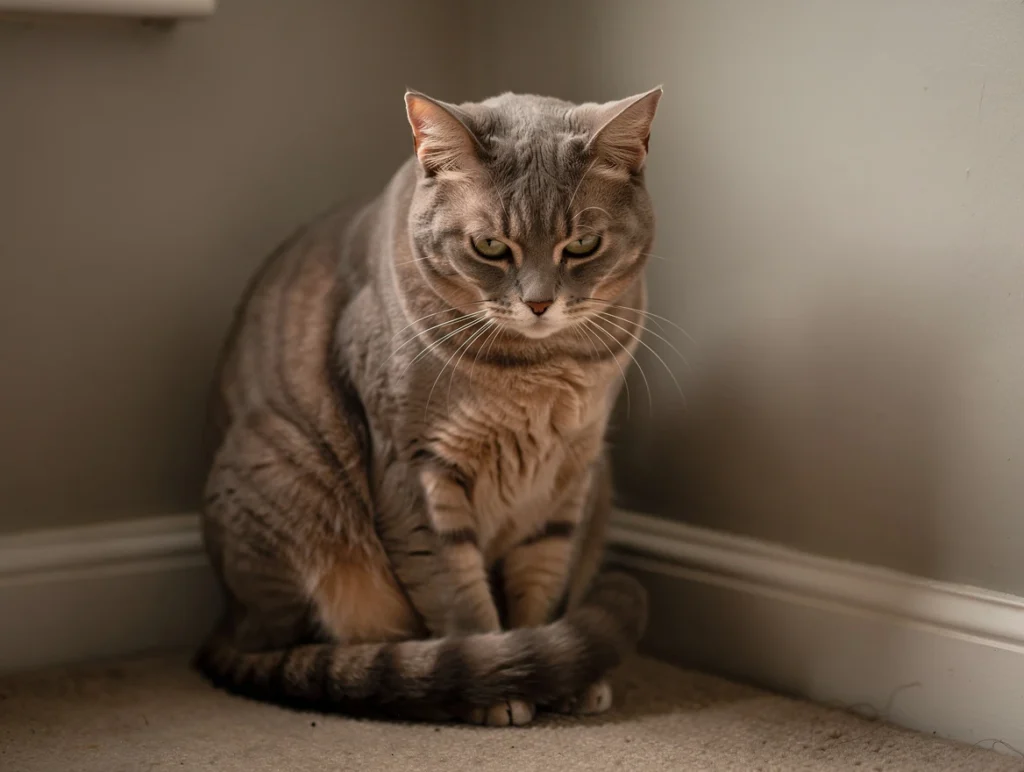
Not every stare is affectionate, and this is the part worth actually paying attention to. A stiff body, dilated pupils that don’t match the lighting, ears flattened or rotated back, and a stare that doesn’t soften no matter what you do, sometimes described as a “creepy” unblinking stare, is a different signal entirely. That combination reads as discomfort or a warning, not affection, and giving the cat space is the right move rather than approaching.
| Stare Type | Body Language | What It Means |
|---|---|---|
| Soft, slow-blinking | Relaxed body, half-closed eyes | Affection, trust |
| Wide-eyed, alert | Ears forward, tail still | Curiosity, interest |
| Fixed near food/toys | Vocalizing, pacing | Wants something specific |
| Persistent, unblinking | Tense body, tail flicking | Boredom or mild demand |
| Hard stare, dilated pupils | Stiff, ears back, possible growl | Discomfort or warning |
| Blank, fixed stare | Confusion, unsteady movement | Possible medical concern |
The Distance and Positioning Questions
Staring from across the room or from a distance is usually just curiosity or affection at a scale your cat feels more comfortable with, some cats prefer to express interest without the vulnerability of being close by. It’s not a lesser form of the same signal, just a more cautious version of it.
Staring while sleeping, or specifically while laying on you, tends to be about pure comfort and trust — a cat settled on or near you, gazing up occasionally, is about as relaxed as the affectionate slow-blink stare, just with the physical closeness added on top. A stare paired with purring is the same category, arguably the clearest combination of “I am completely content right now” a cat can offer.
Why Does My Cat Stare at Me While I Sleep
This is a different scenario from a cat dozing near you, this is your cat watching you while you’re the one asleep, and it trips people up more than almost any other version of this question. Part of it is simple biology: cats are naturally more active around dawn and dusk, right when your sleep is lightest or you’re closest to waking, so the timing lines up more than it might seem. The rest is usually just supervision, your cat checking that everything (and everyone) in their territory is where it should be. It’s rarely anything more unsettling than that, even when it feels that way at 3am.
If your cat seems to do this constantly, staring at you so much it feels like a running theme rather than an occasional thing, it’s worth thinking about whether that’s just their personality (some cats are simply more watchful than others) or whether it lines up with a change, a new pet, a move, a shift in your schedule. The context matters more than the frequency alone.
When It’s Actually a Medical Question
This is the one part of this topic that genuinely deserves a straight answer rather than a cute one.
A blank, fixed stare that doesn’t track movement normally, especially paired with disorientation, wobbliness, or bumping into things, is different from a behavioral stare entirely, and it’s worth taking seriously rather than assuming it’s just a phase.
🩺 See Your Vet If Staring Comes With:
- Confusion, disorientation, or unsteady movement
- A stare that doesn’t respond to sound or movement around them
- Sudden changes in staring behavior with no obvious trigger
- Vomiting, lethargy, limping, or excessive drooling alongside it
- Any sign the eyes themselves look different — cloudy, unequal pupils, or visible discomfort
Related: My Cat’s Pupils Are Different Sizes, a specific pupil-related warning sign worth knowing.
A Few Questions Worth Answering Directly
Depends on the type. For a soft, relaxed stare, yes — a slow blink back is genuinely well received. For a hard, tense stare with dilated pupils, avoid direct prolonged eye contact, since that can read as a challenge to a cat that’s already on edge.
The slow blink is one of the clearest signs, but it’s rarely alone — kneading, sleeping near you, following you room to room, and showing their belly all point the same direction. Related: Signs Your Cat Loves You covers the full picture.
Why does my cat stare at me? Most of the time, it comes down to something genuinely nice — trust, curiosity, or wanting a bit of your attention. The stares worth paying closer attention to are the tense, unblinking ones, or anything that looks disoriented rather than deliberate. Everything else is just your cat’s version of conversation.