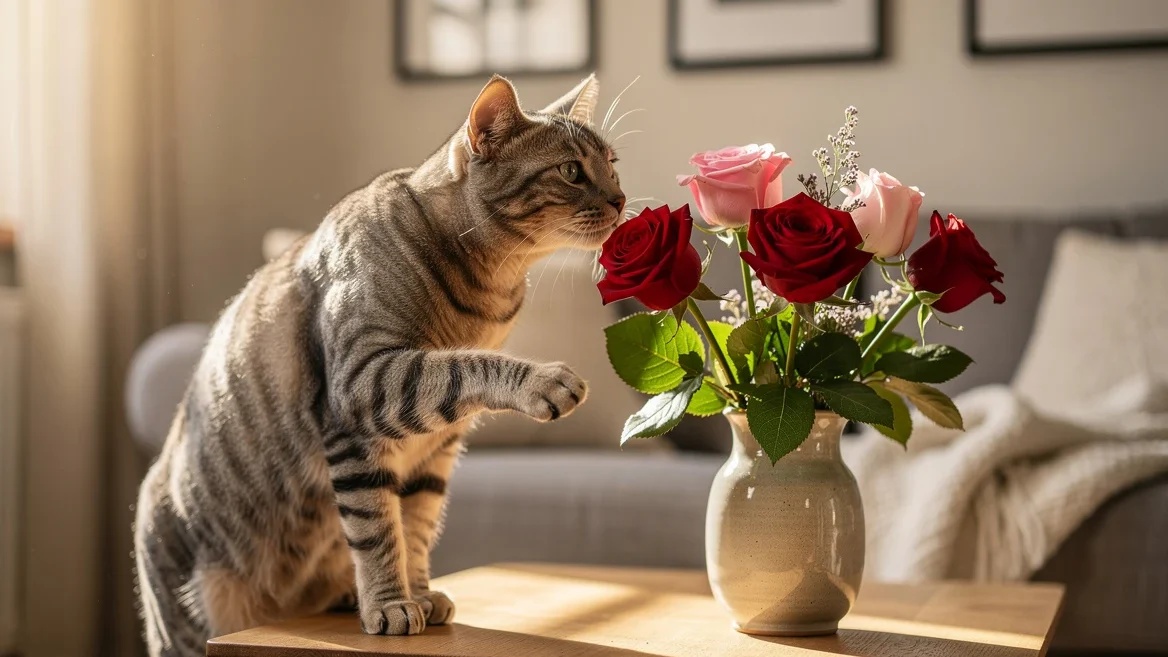
Are roses toxic to cats? No, they’re not, at least not in the way most owners fear. Roses don’t appear on the ASPCA’s list of toxic plants, which puts them in a genuinely different category from lilies, tulips, or other common bouquet flowers. That said, “non-toxic” doesn’t mean “completely harmless,” and there are two things worth knowing before you bring a bouquet home.
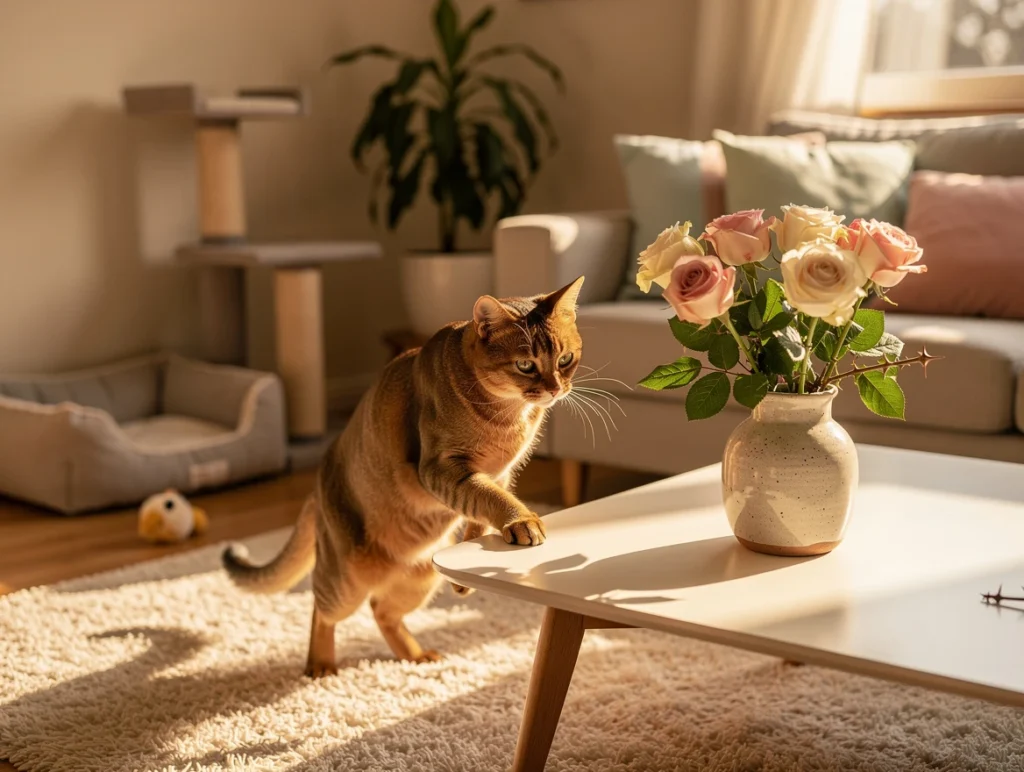
No, roses are not toxic to cats. According to the ASPCA, roses themselves do not contain harmful compounds. However, ingestion can cause mild stomach upset, and thorns can cause real physical injury, so it’s still worth keeping roses out of easy reach.
At a Glance
| Aspect | Details |
|---|---|
| Toxicity Level | Non-toxic to cats |
| Common Symptoms | Mild stomach upset if ingested (vomiting, diarrhea) |
| Physical Risks | Thorn injuries to mouth, paws, or digestive tract |
| Veterinary Advice | Monitor your cat around rose plants; seek vet attention if symptoms persist |
| Safe Alternatives | Cat grass, catnip, or pet-safe flowers |
What “Non-Toxic” Actually Means Here
When vets and poison control resources say roses are non-toxic, they mean the plant itself doesn’t contain compounds that cause organ damage or systemic poisoning the way lilies or tulip bulbs do. It doesn’t mean unlimited access is a good idea.
According to the ASPCA’s Toxic and Non-Toxic Plants list, the garden rose (Rosa species) is not classified as toxic to cats. If your cat takes a curious nibble on a petal or bats a stray leaf around the floor, that alone isn’t cause for alarm.
The two real risks are mechanical, not chemical: thorns can scratch or puncture the mouth or paws, and eating a meaningful amount of stem or petal material can cause a mild stomach ache the same way any unfamiliar plant material might.
What Happens If My Cat Eats Roses
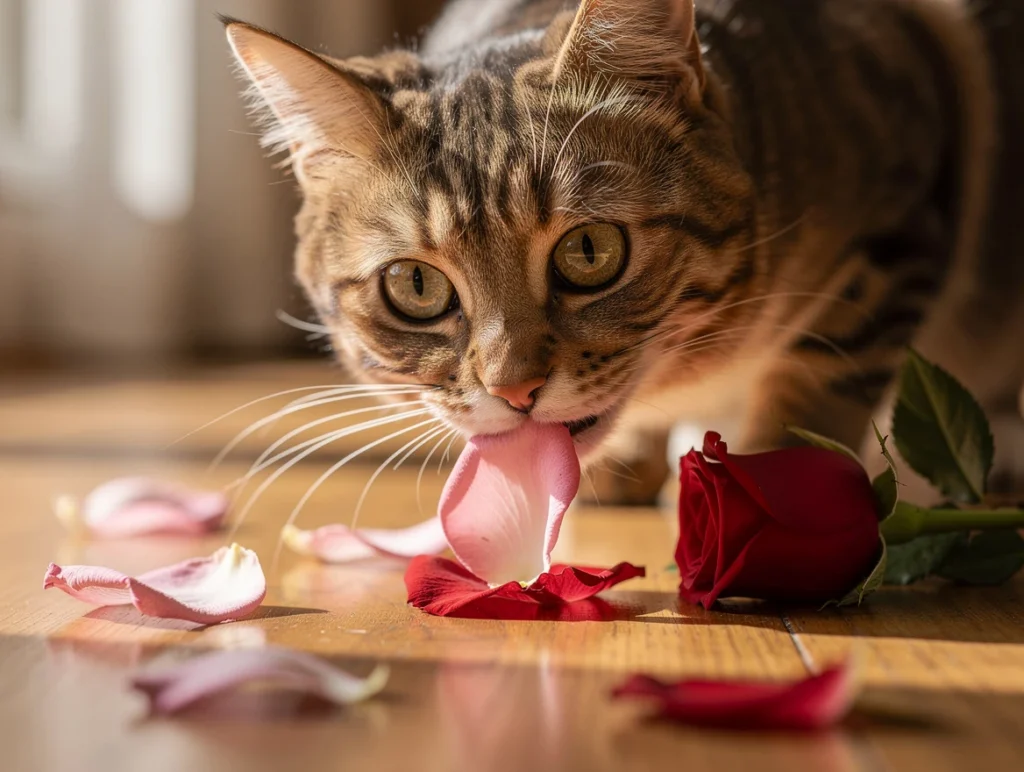
If your cat has eaten a few petals, don’t panic. While roses aren’t toxic, a handful of minor symptoms are possible:
- Vomiting
- Diarrhea
- Mild nausea or reduced appetite
- Oral irritation if a thorn caught the inside of the mouth
These symptoms are usually short-lived and resolve on their own within a day. Still, monitor your cat closely. If vomiting or diarrhea persists for more than 24 hours, or your cat seems increasingly lethargic, that’s the point to call your vet.
Your cat swallowed a large amount of any plant material, or shows swelling, trouble breathing, or seizures. These symptoms go well beyond a typical mild rose reaction and need immediate attention.
Flowers Often Confused With Roses
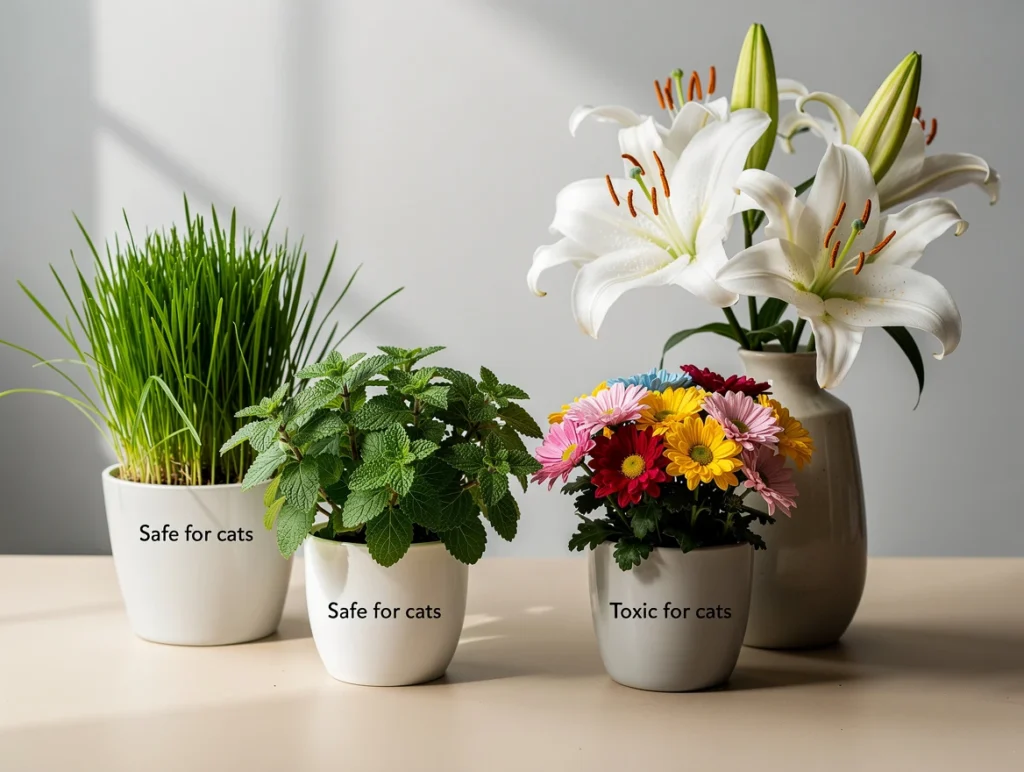
Sometimes when owners ask about rose safety, they’re actually worried about a different flower that’s commonly bundled into the same bouquet. Worth knowing:
- Lilies are highly toxic to cats and should never enter a home with cats, even trace pollen exposure can cause fatal kidney failure.
- Bouquet fillers like yarrow or chrysanthemums are also toxic and commonly bundled alongside roses in mixed arrangements.
The rose itself is generally safe, but a mixed bouquet might be carrying a genuinely dangerous flower alongside it. Always check what else is in the arrangement before assuming the whole bunch is fine.
How to Keep Cats Safe Around Roses
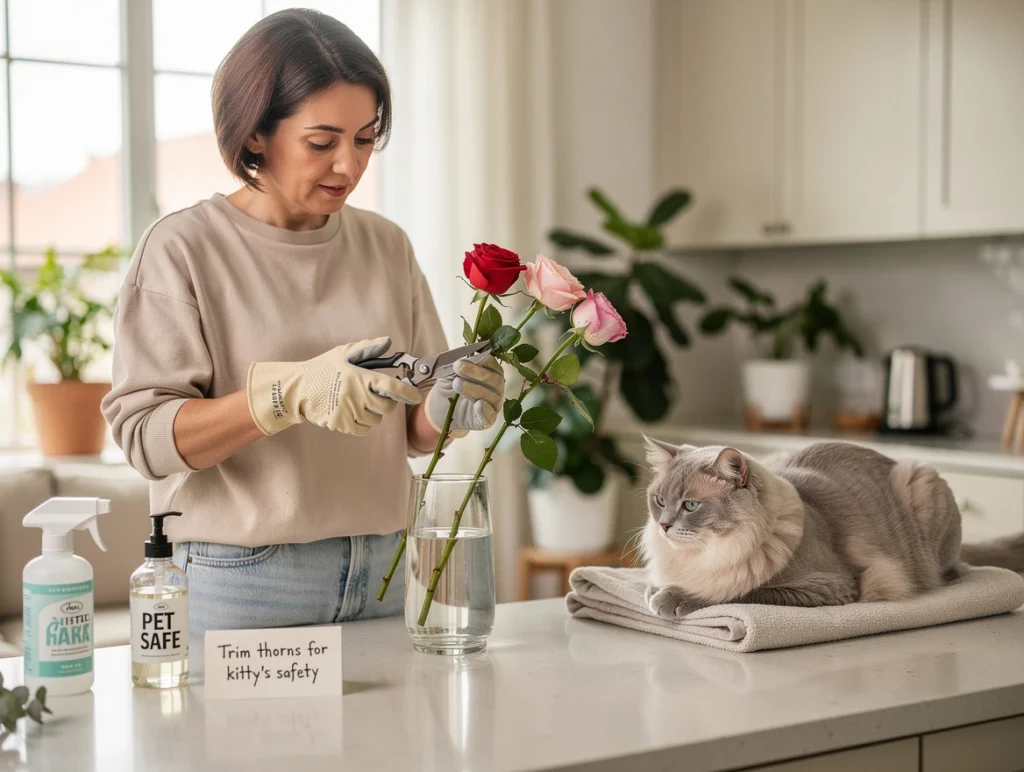
- Trim the thorns — a few seconds with scissors removes most of the physical injury risk entirely
- Place roses out of reach — a high shelf or a room your cat doesn’t frequent works well
- Watch their behavior — if your cat is unusually fixated on the arrangement, supervise more closely or move it
- Offer a safe alternative — cat grass or catnip gives curious cats something to chew that doesn’t carry any risk
Roses vs Other Common Plants Toxic to Cats
| Plant | Toxicity to Cats | Common Symptoms | Recommended Precautions |
|---|---|---|---|
| Roses | Non-toxic | Mild stomach upset, physical injury from thorns | Thorn removal, restricted access |
| Lilies | Highly toxic | Kidney failure, vomiting, lethargy | Avoid completely, emergency vet care |
| Poinsettias | Mildly toxic | Oral irritation, vomiting | Keep away from cats |
| Chrysanthemums | Toxic | Drooling, vomiting, diarrhea | Avoid exposure |
| Cat grass | Safe | None | Provide as a safe chew alternative |
Common Mistakes Cat Owners Make
- Assuming every flower in a bouquet is safe — check individual flowers or ask the florist, mixed arrangements often include genuinely toxic fillers
- Leaving thorny stems within reach — thorn injuries are the actual risk with roses, not toxicity
- Dismissing mild stomach upset after a rose nibble — usually minor, but worth watching rather than ignoring entirely
- Using floral sprays or preservatives without checking them — some of these chemicals are more concerning than the rose itself if your cat licks treated petals or stems
Frequently Asked Questions
No, roses aren’t toxic and won’t cause fatal poisoning. Eating a large amount could still cause an upset stomach or thorn-related injury, so it’s still worth discouraging, but it’s not a poisoning risk.
Some floral sprays and garden fertilizers are more concerning than the rose itself. Always check product labels, and keep cats away from any chemically treated plants until they’ve fully dried or been rinsed.
Dried petals carry the same non-toxic status as fresh ones, no chemical compounds change from drying. Large chewing sessions can still cause mild stomach upset, and any remaining thorns are just as sharp dried as fresh.
Watch for sneezing, watery eyes, or skin irritation after exposure, these point toward a pollen or contact allergy rather than toxicity. True allergic reactions are uncommon but possible, and are worth a vet visit if you notice a consistent pattern.
The Bottom Line
Are roses toxic to cats? No, they’re not. But as any cat owner with a curious cat and a rose habit learns quickly, “not toxic” isn’t the same as “no caution needed.” Thorns and the small chance of mild stomach upset mean a little prevention goes a long way.
Trim the thorns, keep bouquets somewhere your cat can’t easily reach, and offer cat grass as a safer alternative for chewing. If your cat seems off after a floral encounter, especially with any symptoms lasting more than a day, your vet is the right call.