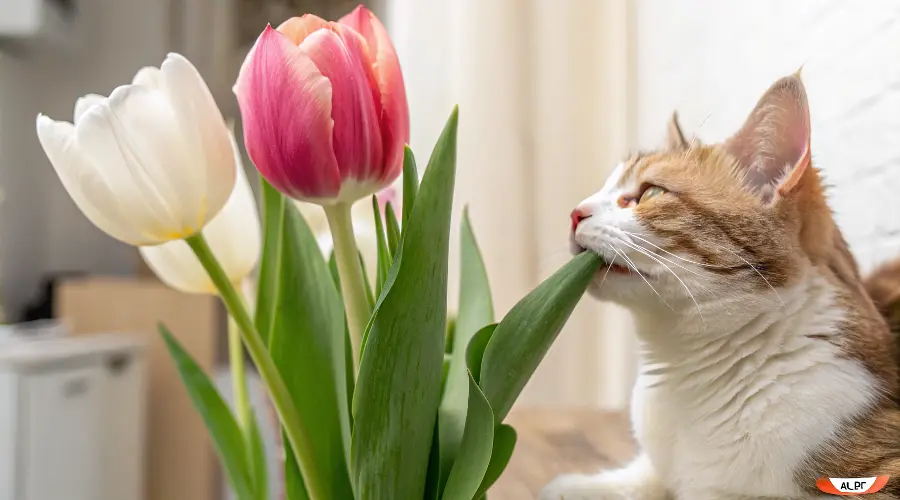
Are tulips toxic to cats? Yes, every part of the plant contains toxic compounds, with the bulb being by far the most dangerous. A curious nibble on a leaf usually causes mild irritation, but eating the bulb can lead to serious symptoms including a racing heart, tremors, and difficulty breathing.
One of my cats got curious about a fallen tulip stem I had left on the counter. A quick lick and some sniffing was all it took for mild drooling to set in. That scare taught me to treat every spring bouquet as a potential hazard the moment it enters the house.

- Excessive drooling or pawing at the mouth
- Repeated vomiting or diarrhea
- Difficulty breathing
- Rapid heart rate, tremors, or seizures
- Extreme lethargy or collapse
If your cat ate any part of a tulip, especially the bulb, do not wait for symptoms. Call your vet or ASPCA Poison Control (888-426-4435) right away.
Yes, all parts contain tulipalin A and B, toxins concentrated most heavily in the bulb. Symptoms include drooling, vomiting, diarrhea, and lethargy, with severe cases causing breathing trouble and a rapid heart rate. Keep tulips, bulbs, stems, leaves, and petals, completely out of reach.
Why Tulips Are Toxic to Cats
Tulips contain toxic compounds called tulipalin A and B, allergenic lactones concentrated most heavily in the bulb, though present throughout the leaves, stems, and petals as well. These compounds irritate the mouth and gastrointestinal tract and, in large amounts, can affect the heart and nervous system.
According to the ASPCA Animal Poison Control Center, all parts of the tulip plant are considered toxic to cats, with the bulb posing the greatest risk due to its concentrated toxin levels.
Symptoms of Tulip Toxicity in Cats
| Amount Ingested | Typical Symptoms | Urgency |
|---|---|---|
| Sniffing only | Usually none, mild nasal irritation possible | No action needed |
| Small nibble (leaf/petal) | Mild drooling, mouth irritation | Call vet, monitor closely |
| Larger amount of plant | Vomiting, diarrhea, lethargy | Vet visit same day |
| Bulb ingestion | Rapid heart rate, tremors, breathing difficulty, seizures | 🚨 Emergency vet now |
- Drooling and pawing at the mouth
- Vomiting and diarrhea
- Lethargy or unusual quietness
- Loss of appetite
- Swelling or redness around the mouth
- Difficulty breathing (severe cases)
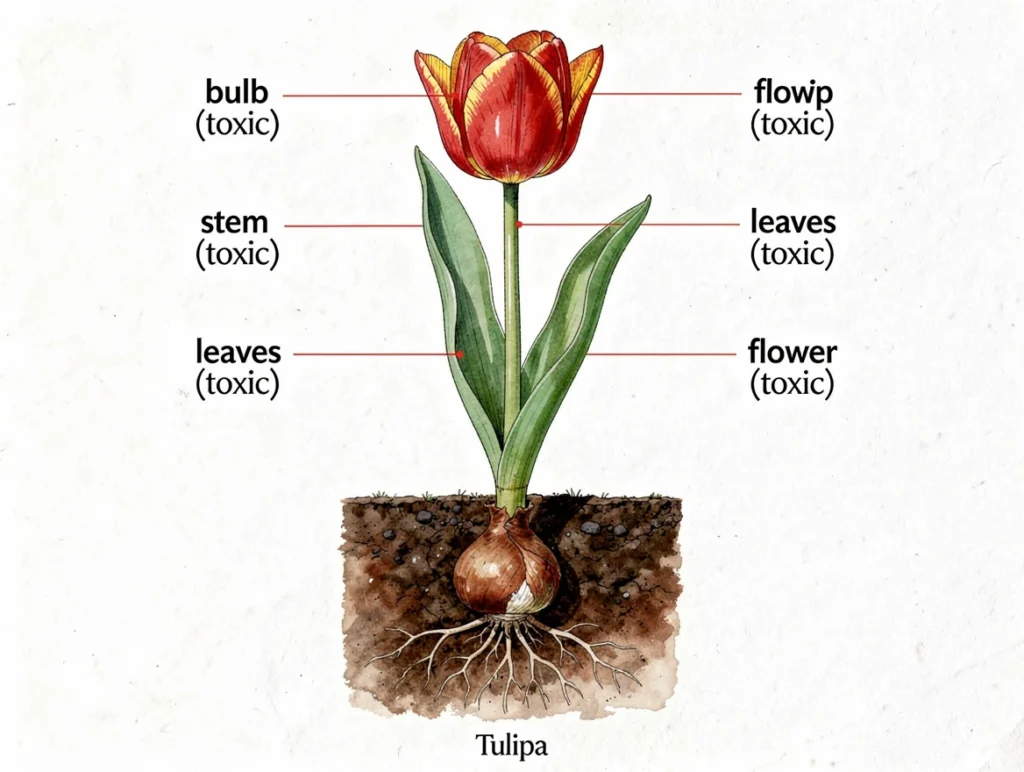
Are All Tulips Toxic to Cats — Every Type and Color
Yes, toxicity comes from compounds present across the entire species, regardless of variety or color.
- Cut tulips — still toxic, cutting the flower does not remove the toxins. Vase water can also absorb trace amounts.
- Dried tulips — still toxic, drying does not neutralize tulipalin A and B. Dried arrangements remain a hazard.
- Color and variety — makes no difference. All tulip varieties, including peony tulips and parrot tulips, contain the same toxic compounds.
- Garden tulips — equally toxic, with bulbs in soil posing extra risk if a cat digs them up.
What Happens If My Cat Sniffs Tulips
Typically nothing serious. The toxins are not significantly airborne, so sniffing alone rarely causes real toxicity, and meaningful exposure requires actual contact or ingestion rather than just proximity.
A sensitive cat might get mild nasal or skin irritation from close contact, but the dangerous symptoms come from ingestion, not smell. Direct skin contact, rubbing against the plant, can occasionally cause localized irritation or dermatitis, but this is far less serious than eating any part of the plant.
Can you have tulips in the house with a cat? It’s safer not to, given how curious cats are. If you do, keep them completely inaccessible, high shelves, closed rooms, or skip them entirely for pet-safe alternatives.
How Vets Treat Tulip Poisoning
There is no specific antidote. Treatment focuses on supportive care:
- IV fluids — combat dehydration from vomiting
- Anti-nausea medication — controls ongoing vomiting
- Activated charcoal — binds remaining toxins in the gut if given soon after ingestion
- Monitoring — heart rate and breathing checked closely in bulb ingestion cases
Are Tulips Toxic to Dogs and People
Dogs experience similar symptoms to cats: drooling, vomiting, and irritation, with the bulb again being most dangerous. Both species react to the same tulipalin compounds, though exact sensitivity can vary by individual animal.
For people, mild skin irritation (contact dermatitis) can occur in sensitive individuals, especially those who handle bulbs frequently, a known issue among florists and gardeners sometimes called “tulip fingers.” Tulips are not typically dangerous to humans in normal household exposure.
Compared to lilies specifically, tulips are considerably less dangerous. True lilies can cause fatal kidney failure in cats from even minimal exposure, while tulips typically cause gastrointestinal and cardiac symptoms without the same kidney risk. Lilies hold the distinction of being the single most toxic common flower to cats, making them even more dangerous than tulips.
Prevention Tips

- Skip tulips entirely — the simplest and safest solution for cat households
- Choose cat-safe alternatives — spider plants, cat grass, or orchids make safer substitutes
- Keep bulbs sealed and stored — never leave garden bulbs accessible indoors
- Wash hands after handling bulbs — bulb handling can cause skin irritation in people (sometimes called “tulip fingers”), so it’s worth doing for your own sake regardless
- Warn guests — ask visitors not to bring tulip bouquets into your home
- Clean up thoroughly — dispose of fallen petals, leaves, and stems promptly
Common Mistakes
- Leaving cut tulips within reach — countertops and low tables are not safe from a curious cat
- Ignoring early symptoms — drooling or mild pawing at the mouth should not be dismissed
- Waiting to see if symptoms resolve on their own — delaying care allows toxicity to progress
- Assuming dried or cut flowers are safer — toxin levels remain present regardless of the flower’s condition
Frequently Asked Questions

Yes, every part of the tulip plant contains tulipalin A and B, toxic compounds most concentrated in the bulb. Symptoms range from mild drooling to severe breathing difficulty depending on the amount ingested.
A single petal usually causes only mild irritation, but call your vet to report the exposure and watch closely for drooling, vomiting, or lethargy over the next few hours. When in doubt, a quick call to your vet or ASPCA Poison Control is always worthwhile.
Yes, tulip toxicity comes from compounds present across the entire species, not a specific variety. Peony tulips, parrot tulips, and every standard garden tulip contain the same tulipalin A and B regardless of how different they look.
The Bottom Line
Are tulips toxic to cats? Yes, without question. Every part of the plant carries risk, with the bulb posing the greatest danger. The safest approach is skipping tulips entirely in a cat household and choosing pet-safe alternatives like spider plants or orchids instead. If your cat does get into a tulip, bulb, leaf, or petal, contact your vet promptly rather than waiting to see if symptoms appear.
Related: My Cat Licked Toilet Cleaner, another common household toxin exposure with a similar response protocol. Also: Cat Vomiting White Foam, recognizing poisoning symptoms early.