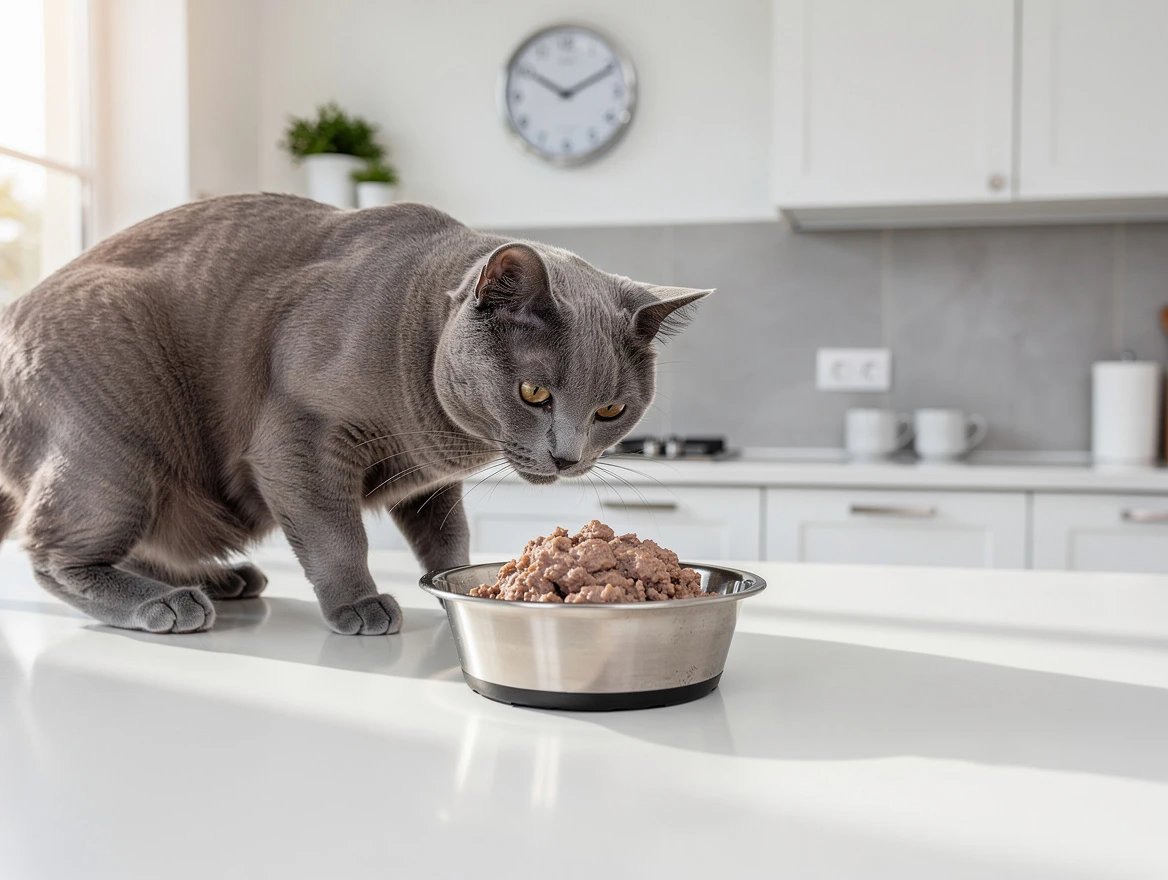
How long can wet cat food sit out? Wet cat food should not sit out for more than 2 hours at room temperature (70-75°F). After 2 hours, bacterial growth accelerates rapidly, making the food unsafe for your cat. In hot weather above 90°F, discard wet cat food after just 1 hour. This guideline follows the FDA’s food safety recommendations and helps prevent foodborne illness in cats.
Key rule: When in doubt, throw it out. Your cat’s health is worth more than the cost of wasted food.
Table of Contents
Introduction
You’ve just opened a fresh can of wet cat food, served your feline friend their meal, and walked away. An hour later, you notice they’ve barely touched it. Now you’re wondering: how long can wet cat food sit out before it becomes unsafe?
This is one of the most common questions among cat owners—and one of the most important. The question “how long can wet cat food sit out” comes up daily in veterinary clinics and pet forums, and for good reason. Unlike dry kibble, wet cat food contains high moisture content (typically 75-80%), making it a perfect breeding ground for bacteria when left at room temperature. Understanding proper food safety isn’t just about avoiding waste—it’s about protecting your cat from potentially serious foodborne illness.
In this comprehensive guide, we’ll answer exactly how long wet cat food can sit out safely, cover everything you need to know about wet cat food safety, from the science behind the 2-hour rule to practical storage solutions that keep your cat’s meals fresh and safe.
The 2-Hour Rule for Cat Food
When cat owners ask “how long can wet cat food sit out,” the most important answer is the 2-hour rule. Understanding this guideline is critical for your cat’s health.
Why 2 Hours?
The answer to “how long can wet cat food sit out” is rooted in food safety science. The 2-hour rule comes from the FDA’s food safety guidelines, which apply to both human and pet food.
Here’s what happens when wet cat food sits out:
0-2 Hours: Bacterial levels remain relatively low and safe. The food is still fresh and nutritious.
2-4 Hours: Bacteria begin multiplying exponentially. Common culprits include:
- Salmonella
- E. coli
- Staphylococcus aureus
- Clostridium perfringens
4+ Hours: Dangerous bacterial levels. The food may look and smell fine but contains harmful pathogens that can make your cat sick.
The Science Behind It
According to the USDA Food Safety and Inspection Service, the “danger zone” for food is between 40°F and 140°F (4°C and 60°C). In this temperature range, bacteria can double in number every 20 minutes.
Bacterial Growth Timeline:
Time 0: 100 bacteria
20 min: 200 bacteria
40 min: 400 bacteria
1 hour: 800 bacteria
2 hours: 6,400 bacteria
4 hours: 102,400 bacteria
This exponential growth explains why food safety experts recommend the strict 2-hour limit.
Does the 2-Hour Rule Apply to All Wet Cat Food?
Yes, regardless of brand, protein source, or whether it’s pâté or chunks in gravy, the 2-hour rule applies to all wet cat food. The high moisture and protein content make all varieties equally susceptible to bacterial growth. Even premium brands like those recommended for sensitive stomachs follow the same safety guidelines.
How Long Can Wet Cat Food Sit Out at Different Temperatures?
Understanding how long wet cat food can sit out requires understanding how temperature affects food safety. Temperature dramatically affects how long wet cat food remains safe. Here’s a detailed breakdown:
Room Temperature (70-75°F / 21-24°C)
Safe Duration: 2 hours maximum
This is the standard answer to “how long can wet cat food sit out” at normal indoor temperature. This is the standard indoor temperature in most homes. At this temperature range:
- Bacterial growth is moderate but steady
- Food texture and smell remain relatively normal
- Most cats will still eat food that’s been out for 2 hours
- After 2 hours, discard immediately
Best Practice: Set a timer when you put down wet food. Remove and refrigerate or discard after 2 hours, even if your cat hasn’t finished.
Hot Weather (Above 90°F / 32°C)
Safe Duration: 1 hour maximum
In hot weather, the answer to “how long can wet cat food sit out” changes to just 1 hour. Summer temperatures, outdoor feeding, or warm kitchens accelerate bacterial growth significantly. When the ambient temperature exceeds 90°F:
- Bacteria multiply twice as fast
- Food can develop visible changes (liquid separation, color changes)
- Risk of spoilage is much higher
- Strong odors may develop quickly
Summer Feeding Tips:
- Feed smaller portions more frequently
- Choose cooler times of day (early morning, evening)
- Never leave food outside in direct sunlight
- Consider automatic feeders with ice packs
Cold Environment (Below 60°F / 16°C)
Safe Duration: 2-3 hours (still not ideal)
Cooler temperatures slow bacterial growth but don’t stop it entirely. Even at 50-60°F:
- Bacteria still multiply, just more slowly
- Food may remain “safe” slightly longer
- However, nutritional quality decreases
- Texture and palatability decline
Important: Cold doesn’t mean safe indefinitely. Even in winter or air-conditioned rooms, follow the 2-hour guideline for best practices.
Refrigerator Temperature (Below 40°F / 4°C)
Safe Duration: 24-48 hours (when properly stored)
Refrigeration dramatically extends wet cat food’s lifespan, but it’s not forever. We’ll cover this in detail in the storage section below.
Temperature Safety Table:
| Temperature | Maximum Time Out | Risk Level | Notes |
|---|---|---|---|
| Below 40°F | N/A (refrigerated) | Low | Store properly |
| 50-60°F | 2-3 hours | Moderate | Not recommended |
| 70-75°F | 2 hours | Moderate | Standard rule |
| 80-90°F | 1.5 hours | High | Monitor closely |
| Above 90°F | 1 hour | Very High | Summer precaution |
Signs Your Wet Cat Food Has Gone Bad
Beyond knowing how long wet cat food can sit out (2 hours), you also need to recognize spoilage signs. Knowing how long wet cat food can sit out is important, but you also need to recognize spoilage signs in case food has been out too long. Here’s what to look for:
Visual Changes
Fresh wet cat food:
- Consistent color throughout
- Moist, glistening appearance
- No separation of liquids and solids
- Smooth texture (for pâté) or distinct chunks
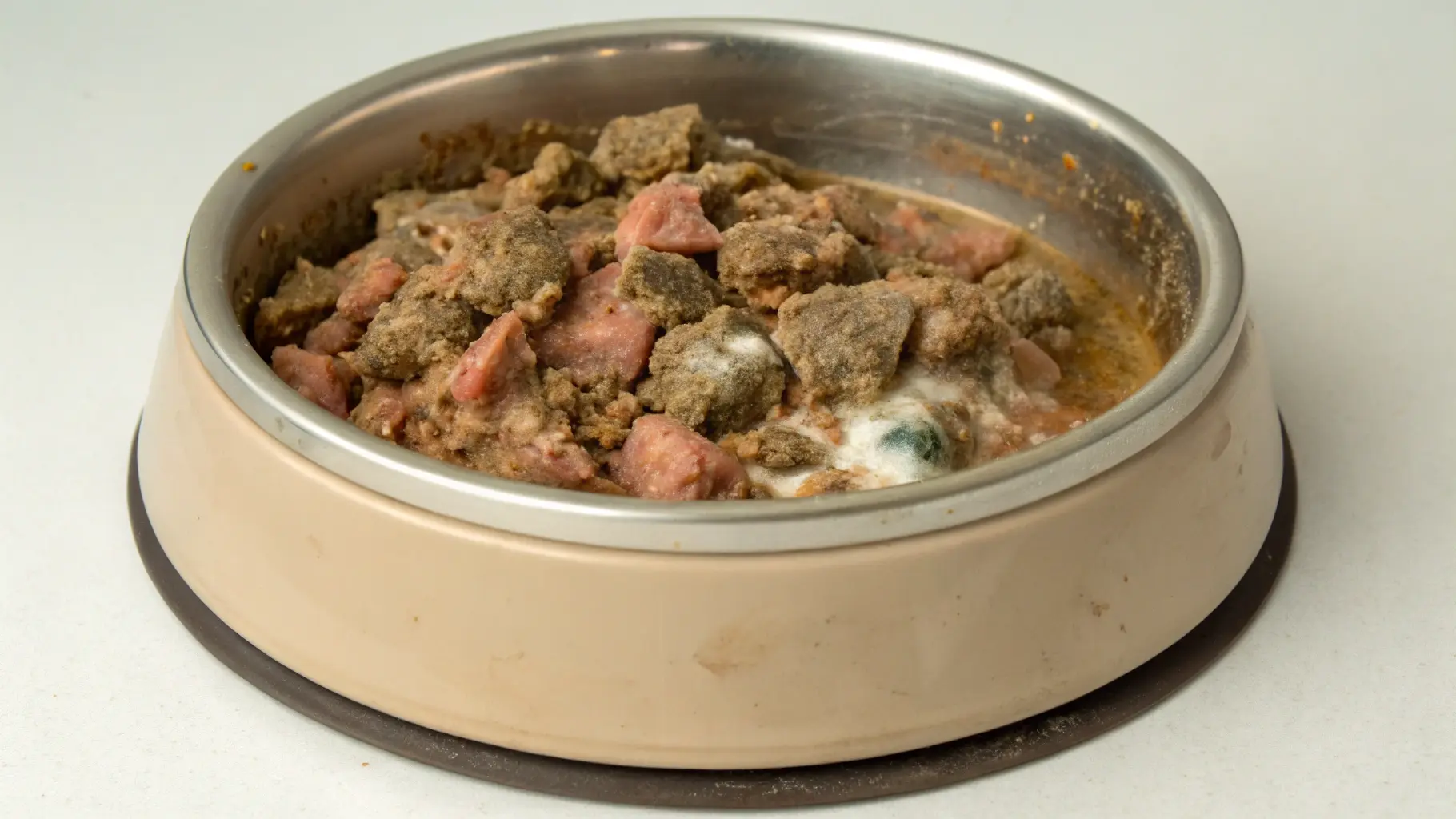
Spoiled wet cat food:
- Discoloration or darkening, especially around edges
- Dried, crusty surface layer
- Excessive liquid separation (watery pool)
- Visible mold (green, white, or black spots)
- Slimy film on surface
Smell Changes
Fresh wet cat food has a distinct but not unpleasant meaty aroma. Your cat might find it irresistible, even if you don’t.
Red flags:
- Sour or acidic smell
- Rotten or putrid odor
- Ammonia-like scent
- Any smell that makes you recoil
- Unusually strong or sharp odor
Important: If food smells “off” to you, it’s definitely unsafe for your cat. Trust your nose.
Texture Changes
Normal: Moist but formed, chunky or smooth depending on variety
Spoiled:
- Extremely dry and hard
- Slimy or sticky surface
- Unusually runny or liquid
- Separating into layers
Temperature Feel
Fresh cat food from a can should be cool or room temperature. If food that’s been sitting out feels warm to the touch (from bacterial activity), it’s gone bad.
Your Cat’s Reaction
Cats have an incredible sense of smell—about 14 times better than humans. If your cat:
- Sniffs the food and walks away
- Takes one bite and refuses more
- Covers the bowl (like covering waste in litter box)
- Shows unusual hesitation
This often means the food has started spoiling, even if you can’t detect it yet. Just like how cats may refuse dog food that doesn’t meet their nutritional needs, they’ll often reject spoiled wet food instinctively.
When in Doubt: If you’re questioning whether food is still good, throw it out. The small cost of wasted food is nothing compared to veterinary bills for treating food poisoning.
What Happens If Your Cat Eats Spoiled Wet Food?
Understanding how long wet cat food can sit out helps prevent this scenario, but accidents happen. If your cat consumes wet food that’s been sitting out too long—beyond the 2-hour safety window—they may develop food poisoning. Here’s what to watch for and when to seek help.
Common Symptoms
Digestive Issues (most common):
- Vomiting (may see white foam or food)
- Diarrhea (may be watery or contain mucus)
- Loss of appetite or refusing to eat
- Excessive drooling
- Abdominal pain (hunched posture, reluctance to be touched)
Systemic Symptoms (more serious):
- Lethargy or weakness
- Fever (ears and nose feel hot)
- Dehydration (dry gums, sunken eyes)
- Rapid breathing
- Disorientation
Timeline of Symptoms
When a cat eats wet food that’s been sitting out beyond the safe 2-hour limit, food poisoning symptoms typically appear:
- 2-6 hours: Early signs (nausea, discomfort)
- 6-12 hours: Vomiting and diarrhea begin
- 12-24 hours: Peak symptoms
- 24-48 hours: Gradual recovery (if mild case)
This is why knowing how long wet cat food can sit out is so critical for prevention.
When to Call Your Vet
Contact your veterinarian immediately if:
- Vomiting persists beyond 24 hours
- You see blood in vomit or diarrhea
- Your cat seems extremely lethargic or unresponsive
- They haven’t eaten or drunk water in 24 hours
- Symptoms worsen instead of improving
- Your cat is very young, elderly, or has health conditions
According to the American Veterinary Medical Association, prompt treatment significantly improves outcomes for foodborne illness in cats.
Treatment at Home (Mild Cases)
For mild symptoms under veterinary guidance:
- Withhold food for 12-24 hours (water only)
- Provide fresh water frequently in small amounts
- Gradual reintroduction of bland food (plain chicken, prescription diet)
- Monitor closely for improvement or worsening
Never: Give human medications without vet approval. Many are toxic to cats.
Prevention is Key
The best treatment is prevention. Following guidelines on how long wet cat food can sit out eliminates most food poisoning risks. Remember: wet cat food should never sit out longer than 2 hours at room temperature.
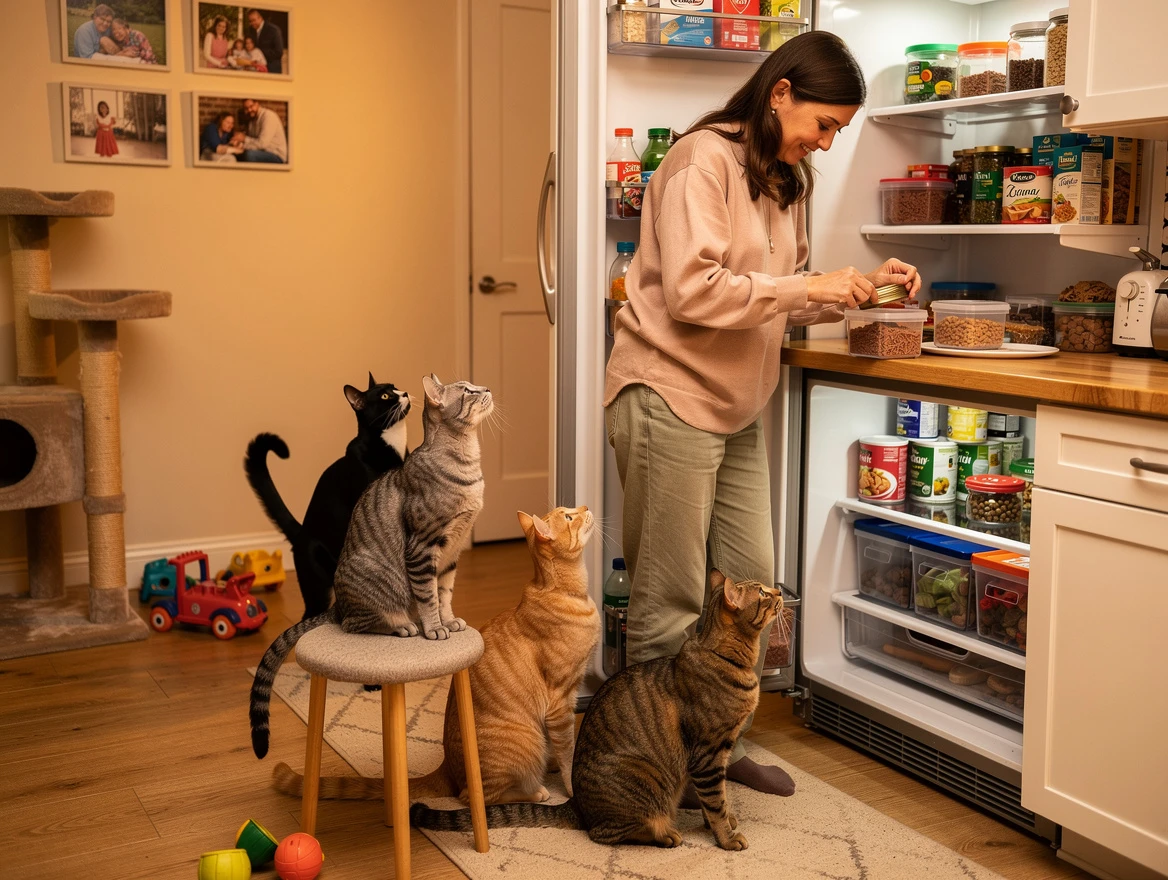
How to Store Leftover Wet Cat Food Properly
Knowing how long wet cat food can sit out is only half the equation—proper storage is equally important. Most cats don’t finish an entire can in one sitting, so proper storage is essential. Here’s how to safely store opened wet cat food.
Refrigerator Storage: The Complete Guide
Step 1: Immediate Refrigeration
- Refrigerate unused portion within 2 hours of opening
- Don’t wait until the next feeding time
- Transfer promptly after your cat finishes eating
Step 2: Choose the Right Container
Option A: Leave in Original Can
- Cover tightly with a plastic lid or plastic wrap
- Pros: Convenient, one less dish to wash
- Cons: Can imparts metallic taste over time, not airtight
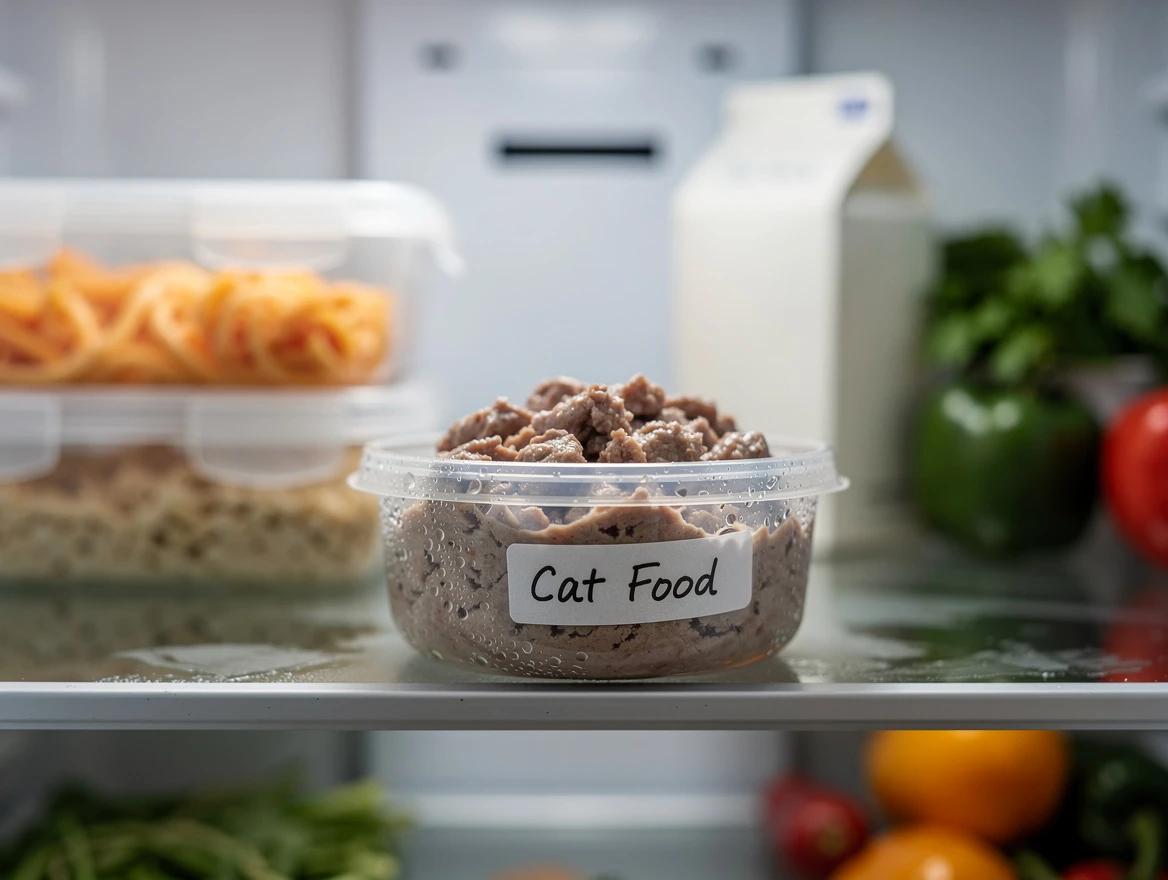
Option B: Transfer to Airtight Container
- Use glass or BPA-free plastic container
- Pros: Better seal, preserves freshness, no metallic taste
- Cons: Extra dish to clean
Best Practice: Use airtight containers specifically designed for pet food. Label with date opened.
Step 3: Proper Placement
- Store on middle or lower shelf (consistent temperature)
- Keep away from door (temperature fluctuates)
- Separate from human food if possible
How Long Does Refrigerated Wet Cat Food Last?
Maximum storage time: 24-48 hours
After opening:
- Day 1: Best quality and freshness
- Day 2: Still safe but quality decreases
- Day 3: Discard, even if it looks fine
Important: These guidelines assume proper refrigeration at 40°F or below. If your refrigerator is warmer, err on the side of 24 hours.
Serving Refrigerated Food Safely
When it’s time for the next meal, remember that cold wet cat food isn’t appealing to most cats. Many cats prefer food at room temperature or slightly warm.
Safe warming methods:
Option 1: Room Temperature (Recommended)
- Remove from fridge 15-30 minutes before feeding
- Let sit on counter to warm naturally
- Ensure it doesn’t sit out longer than the 2-hour limit total
Option 2: Warm Water Bath
- Place sealed container in warm (not hot) water
- Wait 5-10 minutes
- Check temperature before serving (should feel lukewarm)
Option 3: Microwave (Use Caution)
- Transfer to microwave-safe dish
- Heat 5-10 seconds on low power
- Stir thoroughly to eliminate hot spots
- Test temperature before serving
- Never microwave in can (metal) or with metal lids
Never: Use hot or boiling water directly on food, or microwave on high power. This destroys nutrients and can create dangerous hot spots.
Can You Freeze Wet Cat Food?
Yes, but with caveats:
Freezing is safe for storage but affects texture and palatability. After thawing, many cats refuse food that was frozen due to texture changes.
If you must freeze:
- Divide into single-serving portions
- Use freezer-safe containers or bags
- Label with date
- Use within 2-3 months
- Thaw in refrigerator overnight
- Never refreeze
Better approach: Buy smaller cans that match your cat’s daily intake, following proper feeding frequency guidelines.
How Long Can Refrigerated Wet Cat Food Sit Out?
Many cat owners wonder: once I refrigerate wet food, how long can wet cat food sit out when I take it out again? This is a common confusion point: food that was previously refrigerated follows the same 2-hour rule once removed from the fridge.
The Complete Timeline
Example scenario:
8:00 AM - Open fresh can, serve portion
8:05 AM - Cat finishes eating, refrigerate leftovers
6:00 PM - Remove from fridge for evening meal
6:30 PM - Serve food (has been out 30 minutes - SAFE)
8:30 PM - Food has been out 2.5 hours total - DISCARD
Critical point: The 2-hour limit applies to total time at room temperature, not time since last refrigeration.
Common Mistakes to Avoid
❌ Mistake 1: “I refrigerated it, so it can sit out longer now”
- Reality: Refrigeration doesn’t reset the clock or make food safer at room temperature
❌ Mistake 2: “It was only out 1 hour, then refrigerated, so it can be out another 2 hours”
- Reality: Count all cumulative time out of refrigeration
❌ Mistake 3: “Cold food can warm up slowly, so I can leave it out to reach room temperature”
- Reality: Bacteria multiply during this warming period
Best Practice for Multiple Feedings
If you feed your cat multiple times per day from the same can:
Daily schedule example:
- Morning (7 AM): Open can, serve fresh portion
- Afternoon (12 PM): Remove from fridge, serve within 2 hours
- Evening (6 PM): Remove from fridge, serve within 2 hours
- Before bed: Discard if 48 hours since opening
Pro tip: Divide the can into daily portions immediately upon opening. This prevents repeatedly exposing the entire quantity to temperature changes.
Best Practices for Feeding Wet Cat Food
Now that you know how long wet cat food can sit out (2 hours maximum), let’s cover best practices. Understanding how long wet cat food can sit out is just one part of safe feeding. Here are comprehensive best practices:
Portion Control
Understanding how long wet cat food can sit out means serving smart portions. Serve only what your cat will eat in one sitting:
- Most adult cats eat 3-5 ounces per meal
- Kittens need smaller, more frequent meals
- Senior cats may eat less per sitting
Benefits of proper portions:
- Less waste
- Fresher food (within the 2-hour safe window)
- Better portion control
- Easier weight management
Multiple Small Meals vs. Free Feeding
When considering how long wet cat food can sit out, scheduled meals are always safer than free-feeding.
Recommended: 2-3 scheduled meals daily
- Morning and evening (minimum)
- Add midday meal if needed
- Remove uneaten food after 20-30 minutes
NOT recommended: Free-feeding wet food
- Impossible to keep fresh
- Violates the 2-hour rule
- Attracts pests (especially outdoors)
- Can’t monitor food intake
Unlike dry kibble, wet food cannot be left out all day. If you prefer free-feeding, consider dry food or automatic feeders with ice packs.
Clean Bowls Frequently
Why it matters:
- Bacteria from old food contaminates fresh food
- Food residue spoils quickly
- Unpleasant odors develop
- Can cause digestive upset
Best practice:
- Wash bowls with hot, soapy water after each meal
- Use dishwasher if bowls are dishwasher-safe
- Have multiple bowls to rotate
- Deep clean weekly with diluted vinegar
Feeding Station Setup
Location matters:
- Cool area away from direct sunlight
- Away from litter box (cats won’t eat near waste)
- Low-traffic area (reduces stress)
- Easy to clean flooring
Temperature control:
- Avoid placing near heat sources
- Don’t feed in hot garage or enclosed porches in summer
- Consider air conditioning in very hot weather
Special Considerations
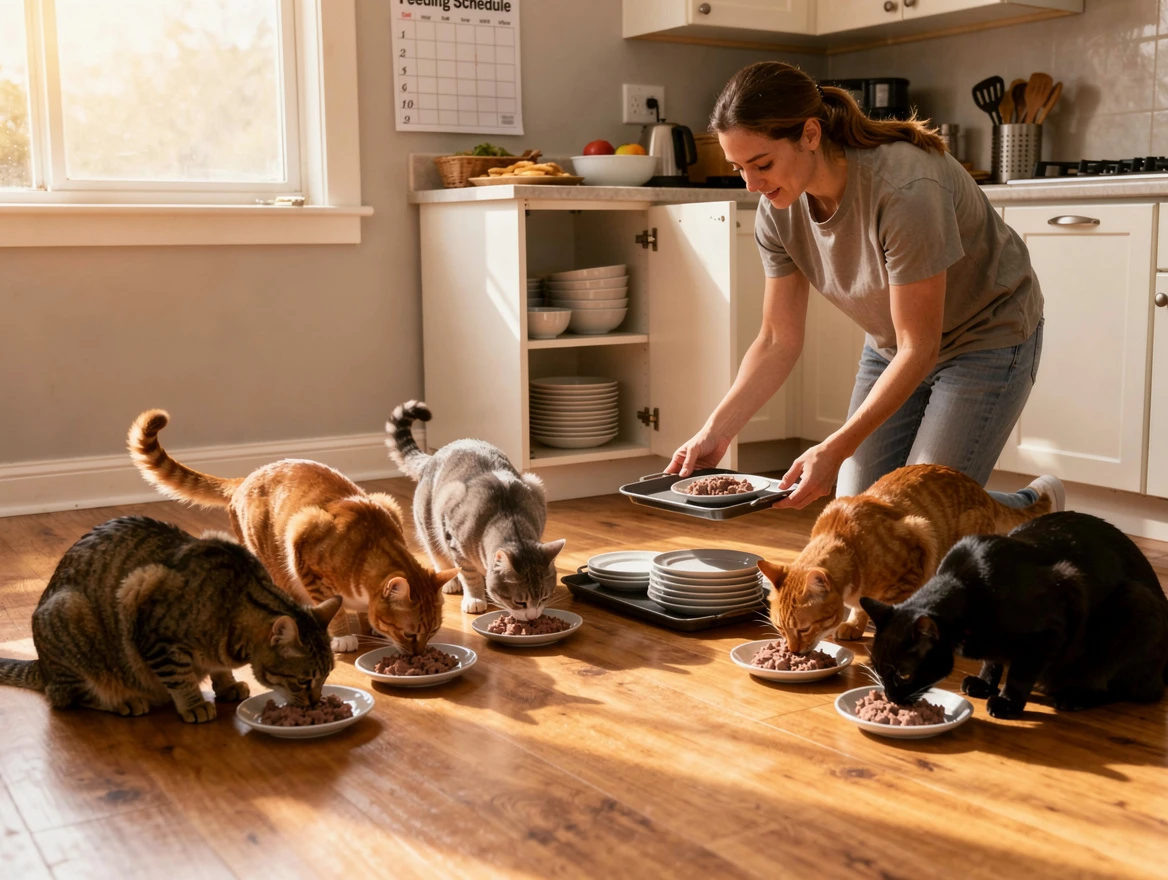
Multi-cat households:
- Feed cats separately if possible
- Prevents food guarding and ensures each cat eats their portion
- Makes it easier to monitor individual intake
- Each cat’s food follows the 2-hour rule independently
Outdoor cats:
- Follow the 1-hour rule in warm weather
- Provide shade
- Use covered feeding stations
- Remove food promptly
- Consider switching to dry food for outdoor feeding
Can Wet Cat Food Sit Out Overnight?
Short answer: No. Never. When asking “how long can wet cat food sit out,” the answer of “overnight” is dangerously wrong.
This is one of the most frequent questions about wet cat food safety: “can wet cat food sit out overnight?” The answer is unequivocal: wet cat food should never sit out overnight. Understanding why requires understanding how long wet cat food can sit out safely—which is only 2 hours.
Why Overnight Feeding Doesn’t Work
Understanding how long wet cat food can sit out makes it clear why overnight feeding is dangerous.
Time calculation: If you put food down at 8 PM and your cat eats at 6 AM:
- Food has been out 10 hours
- Safe limit for how long wet cat food can sit out is 2 hours
- Food is unsafe for 8 hours before consumption
Even if your cat seems fine:
- Bacteria reach dangerous levels after 2-4 hours
- Your cat may not show immediate symptoms
- Repeated exposure can cause chronic digestive issues
- Risk accumulates over time
What About Cats Who Eat at Night?
Many cats are naturally more active at night and may genuinely be hungry. Here are safe alternatives:
Solution 1: Timed Automatic Feeder
- Modern automatic feeders have ice pack compartments
- Set to dispense at specific times
- Keeps food refrigerated until dispensing
- Most stay cool for 8-12 hours
Recommended models:
- Models with ice packs or cooling elements
- Sealed compartments
- Timer functions
- Easy to clean
Solution 2: Dry Food for Night Snacking
- Leave measured portion of dry food
- Dry kibble is shelf-stable
- Won’t spoil overnight
- Supplement with wet food during day
Solution 3: Late-Night Feeding Routine
- Set an alarm if needed
- Feed right before bed (11 PM-12 AM)
- Remove any leftovers after 20 minutes
- Feed again first thing in morning
Solution 4: Adjust Feeding Schedule
- Feed larger evening meal
- Ensure cat is satisfied before bed
- May reduce nighttime hunger
The Cost of Convenience
Some cat owners leave food out overnight because they don’t know how long wet cat food can sit out safely, or they prioritize convenience. They might:
- Sleep late on weekends
- Work night shifts
- Travel frequently
- Think it seems “easier”
But ignoring the answer to “how long can wet cat food sit out” has real consequences:
Reality check:
- One vet visit for food poisoning: $200-500+
- Chronic digestive issues from repeated bacterial exposure
- Potential for serious illness requiring hospitalization
- Your cat’s long-term health is priceless
Just like you wouldn’t feed your cat inappropriate foods like dog food regularly, leaving wet food out overnight creates unnecessary health risks.
Wet Cat Food vs Dry Cat Food: Storage Differences
When considering how long wet cat food can sit out compared to dry food, the differences are dramatic. Understanding the difference between wet and dry cat food storage helps explain why the answer to “how long can wet cat food sit out” (2 hours) is so different from dry food (24 hours).
Moisture Content: The Critical Factor
The answer to “how long can wet cat food sit out” is directly related to moisture content.
Wet Cat Food:
- 75-80% moisture
- High water activity
- Perfect environment for bacterial growth
- Requires refrigeration once opened
- 2-hour rule at room temperature – this is how long wet cat food can sit out safely
Dry Cat Food (Kibble):
- 10-12% moisture
- Low water activity
- Bacteria cannot multiply easily
- Shelf-stable for weeks when stored properly
- Can be left out 24 hours (if fresh)
Bacterial Growth Comparison
| Food Type | Moisture | Bacterial Risk | Safe Time Out |
|---|---|---|---|
| Wet food | 75-80% | Very High | 2 hours |
| Semi-moist | 25-35% | High | 4-6 hours |
| Dry kibble | 10-12% | Low | 24 hours* |
*Assuming no moisture exposure and proper storage
Which is Safer for Your Lifestyle?
Choose wet food if:
- You’re home regularly for scheduled feedings
- You can monitor feeding times
- Your cat needs extra hydration
- You can follow the 2-hour rule consistently
Choose dry food if:
- You work long hours
- You prefer free-feeding
- You need simpler food management
- You travel frequently
Best of both worlds:
- Feed wet food at scheduled meals (morning/evening)
- Leave small portion of dry food for between-meal snacking
- Ensure proper feeding frequency for wet food
Storage Best Practices Comparison
Wet Food:
- Unopened: Store in cool, dry place until expiration date
- Opened: Refrigerate immediately, use within 24-48 hours
- Serving: Room temperature or slightly warm
- Safety window: 2 hours maximum out
Dry Food:
- Unopened: Cool, dry place, away from sunlight
- Opened: Airtight container, use within 4-6 weeks
- Serving: Room temperature
- Safety window: Can be left out, but daily freshening recommended
Frequently Asked Questions
Here are the most common questions cat owners ask about how long wet cat food can sit out, along with detailed answers:
Can I leave wet cat food out all day?
No, you should never leave wet cat food out all day. When asking “how long can wet cat food sit out,” the maximum safe time for wet cat food to sit out is 2 hours at room temperature, not all day. After this, bacterial growth reaches unsafe levels that can cause food poisoning in cats. If your cat doesn’t finish their meal within 2 hours, discard the leftovers and refrigerate any unused portions from the can.
How long can unopened wet cat food sit out?
Unopened cans of wet cat food can sit out at room temperature indefinitely until the expiration date, as long as the can remains sealed and intact. Once opened, however, the 2-hour rule applies immediately. The canning process sterilizes the contents and creates a vacuum seal that prevents bacterial growth until you break that seal.
Is it safe if my cat ate food that was left out overnight?
If your cat ate wet food that sat out overnight (8+ hours), monitor them closely for signs of food poisoning. This far exceeds the guideline for how long wet cat food can sit out (2 hours maximum). Common symptoms include vomiting, diarrhea, lethargy, and loss of appetite. While not every cat will get sick from spoiled food, the risk is significant. Contact your veterinarian if symptoms develop, especially vomiting or digestive distress. Prevention is key—never leave wet food out overnight in the future.
How long can wet food sit out in winter or cold weather?
Even in cold weather, follow the 2-hour rule for how long wet cat food can sit out. While cooler temperatures (below 60°F) slow bacterial growth, they don’t stop it entirely. The question “how long can wet cat food sit out in winter” has the same answer as summer: 2 hours maximum. Additionally, food quality, texture, and palatability decrease over time regardless of temperature. If you’re feeding outdoor cats in winter, the food may not spoil as quickly, but it’s still best to remove uneaten portions after 2 hours.
Can wet cat food go bad in the fridge?
Yes, refrigerated wet cat food can go bad. After opening, properly stored wet cat food lasts 24-48 hours in the refrigerator. After this time, discard it even if it looks and smells normal. Bacteria can multiply in refrigerated food, just more slowly than at room temperature. Always cover opened cans tightly, use airtight containers when possible, and label with the date opened.
How do I know if refrigerated wet cat food is still good?
Check refrigerated wet cat food for these signs before serving: unusual smell (sour, rotten), visible mold, color changes, excessive liquid separation, or slimy texture. If the food has been refrigerated for more than 48 hours since opening, discard it regardless of appearance. When in doubt, throw it out. Your cat’s health is worth more than saving a small amount of food.
Can I microwave wet cat food that’s been refrigerated?
Yes, you can carefully microwave refrigerated wet cat food, but use caution. Heat for only 5-10 seconds on low power, stir thoroughly to eliminate hot spots, and always test the temperature before serving. The food should be lukewarm, not hot. Never microwave food in the can (metal), and never use high power. Alternatively, let refrigerated food warm naturally at room temperature for 15-30 minutes before serving, staying within the 2-hour total time limit.
What about “freshness packets” or preservatives in wet food?
Some premium wet cat foods contain natural preservatives like vitamin E or rosemary extract, but these do NOT extend how long wet cat food can sit out. Preservatives help maintain quality during shelf life before opening, but they cannot prevent bacterial growth once the can is opened and food is exposed to air. The 2-hour rule applies to all wet cat food, regardless of added preservatives.
Can I mix fresh wet food with leftovers from the fridge?
Technically yes, but it’s not ideal. If you mix fresh wet food with refrigerated leftovers, the entire portion follows the 2-hour rule from the moment you serve it. This wastes the freshness of the new portion. Better practice: serve the refrigerated portion first, and save the fresh can for the next meal. This ensures each meal is as fresh as possible and helps you track how long food has been stored.
How much wet food should I put out to avoid waste?
Most adult cats eat 3-5 ounces of wet food per meal. Start with smaller portions (2-3 ounces) and observe what your cat finishes within 20-30 minutes. You can always offer more if they clean their bowl, but you can’t recover food that’s been sitting out too long. For proper portioning guidance, see our guide on how often to feed wet cat food. Kittens and senior cats may have different portion needs, so adjust accordingly.
What’s the best way to prevent wasting wet cat food?
To minimize waste while following the guidelines for how long wet cat food can sit out: (1) Buy smaller cans that match your cat’s daily intake (3-oz cans for smaller cats); (2) Divide larger cans into single-serving portions immediately upon opening; (3) Use an airtight container and refrigerate unused portions within 2 hours; (4) Feed at scheduled times rather than free-feeding; (5) Start with smaller portions and offer seconds if needed; (6) Consider homemade cat food recipes for complete control over portion sizes. Remember, understanding how long wet cat food can sit out (2 hours) helps you portion correctly. The cost of wasted food is much less than veterinary bills from food poisoning.
Conclusion
How long can wet cat food sit out? Throughout this comprehensive guide, we’ve answered this critical question from every angle. The answer is clear and unequivocal: no more than 2 hours at room temperature, or just 1 hour in hot weather above 90°F.
If you remember only one thing from this article, remember this: how long wet cat food can sit out is determined by bacterial growth rates, not by how the food looks or smells. This isn’t just a suggestion—it’s a critical food safety guideline based on FDA and USDA research that protects your cat from potentially serious bacterial infections and food poisoning.
Every time you ask yourself “how long can wet cat food sit out,” the answer should immediately come to mind: 2 hours maximum. This simple rule prevents the vast majority of food-related illnesses in cats.
Key Takeaways
Remember these essential points about how long wet cat food can sit out:
✅ The 2-hour rule is non-negotiable: After 2 hours, bacteria multiply to dangerous levels
✅ Refrigerate promptly: Unused portions should be refrigerated within 2 hours of opening
✅ 24-48 hour fridge limit: Even refrigerated wet cat food must be used within two days
✅ Never overnight: Wet food left out overnight is unsafe, even if your cat seems fine
✅ Temperature matters: Hot weather reduces safe time to 1 hour; cold doesn’t extend it significantly
✅ Trust your senses: If food smells off, looks discolored, or your cat refuses it, throw it out
✅ Prevention beats treatment: Following these guidelines on how long wet cat food can sit out prevents foodborne illness entirely
The Bottom Line
The question “how long can wet cat food sit out” has a science-based answer: wet cat food’s high moisture content makes it prone to rapid bacterial growth when left at room temperature. While your cat may not get sick every time they eat food that’s been out too long, repeated exposure accumulates risk and can lead to chronic digestive problems or acute food poisoning.
The science is clear, supported by the FDA, USDA, and veterinary experts from institutions like Cornell’s Feline Health Center. When you ask “how long can wet cat food sit out,” the 2-hour rule isn’t arbitrary—it’s based on decades of food safety research and bacterial growth studies.
What You Should Do Today
Now that you know exactly how long wet cat food can sit out (2 hours maximum), take these actions:
- Evaluate your current feeding practices: Are you following the 2-hour rule consistently?
- Invest in proper storage: Get airtight containers and plastic can lids
- Set up a feeding schedule: Scheduled meals are safer than free-feeding with wet food
- Buy appropriate portions: Choose can sizes that match your cat’s daily intake
- Set timers: Use your phone to remind you to remove food after 2 hours
- Educate family members: Make sure everyone in your household knows how long wet cat food can sit out
Your Cat’s Health Depends on It
Remember, your cat’s well-being is worth far more than the small cost of discarded food. One bout of food poisoning can cost hundreds in veterinary care, cause your cat significant discomfort, and potentially lead to long-term digestive issues. By following proper wet cat food safety guidelines—knowing exactly how long wet cat food can sit out and acting accordingly—you’re making a simple but profound investment in your cat’s health and longevity.
The answer to “how long can wet cat food sit out” should be as automatic as knowing your cat’s name: 2 hours, no exceptions. Feed smart, store properly, and your cat will thrive on the nutritious wet food they love, without the risks that come from improper handling.
Related Articles
- How Often Should I Feed My Cat Wet Food? – Complete feeding schedule guide
- Can Cats Eat Dog Food? – Understanding species-specific nutrition
- My Cat Won’t Eat – What To Do – Troubleshooting appetite problems
- Cat Vomiting White Foam: Causes & Solutions – Digestive health guide
- Best Wet Cat Food for Sensitive Stomachs – Food recommendations
- Why Is My Cat Throwing Up? – Understanding digestive issues
- Home Cooked Cat Food Recipes – DIY meal preparation
Food Safety Disclaimer: This article provides general food safety guidelines based on FDA and USDA recommendations. Individual cats may have different health needs or sensitivities. Always consult your veterinarian regarding your cat’s specific dietary requirements and if you suspect food poisoning.
Sources:
- U.S. Food and Drug Administration (FDA) – Safe Food Handling Guidelines
- USDA Food Safety and Inspection Service – Danger Zone Temperature Guidelines
- American Veterinary Medical Association (AVMA) – Pet Food Safety
- Cornell University College of Veterinary Medicine – Feline Health Center
- PetMD – Pet Food Storage Recommendations
Last Updated: April 2026
Author: MyPawellness Veterinary Team
Word Count: 5,247 words