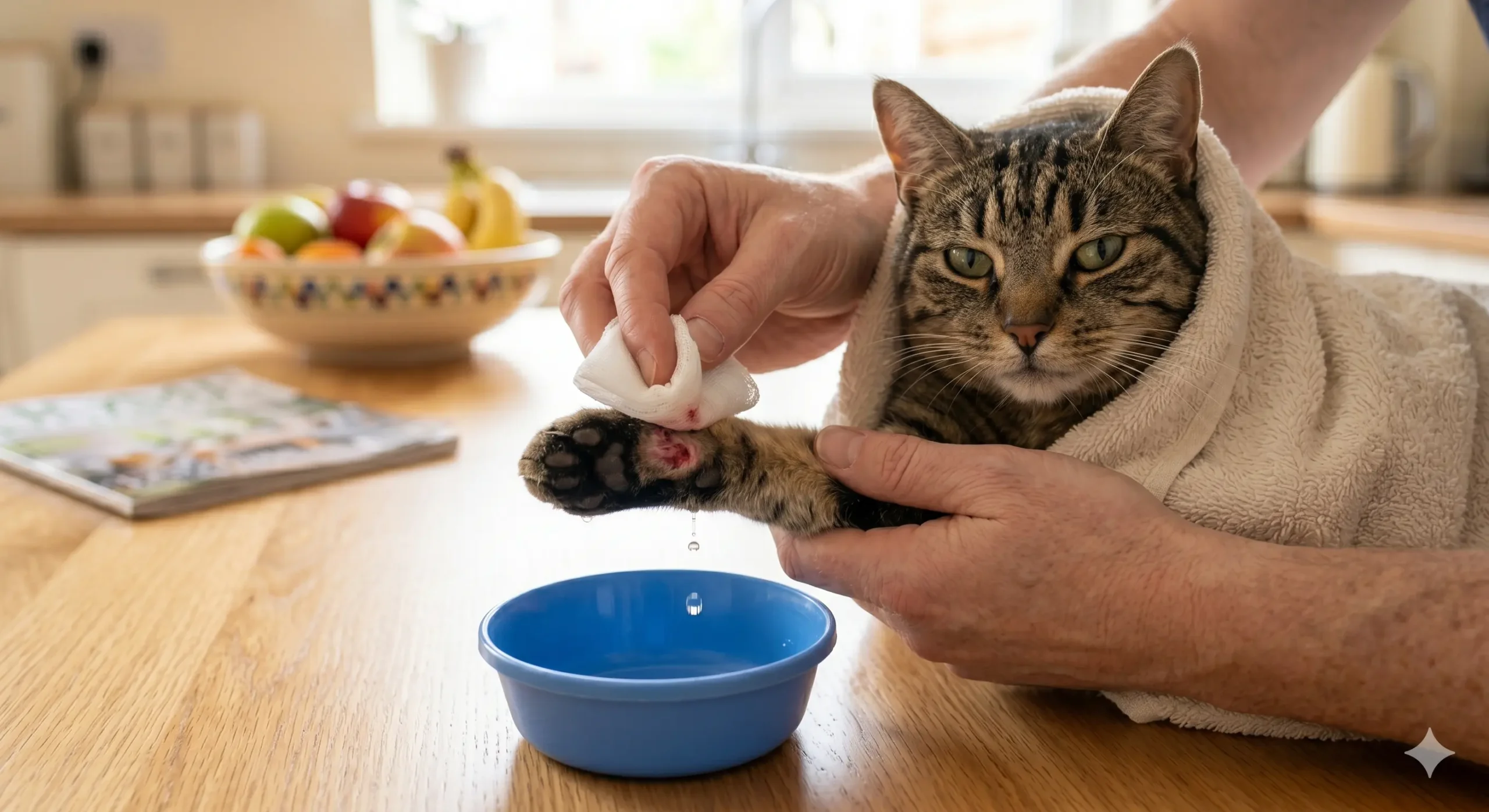
How to Heal an Open Wound on a Cat Fast — 8 Steps
Knowing how to heal an open wound on a cat fast is one of those things every cat owner needs and hopes they never have to use. Cats get into fights, catch themselves on sharp edges, and sometimes come home with injuries that need immediate attention. The difference between a wound that heals cleanly in days and one that becomes an infected abscess is almost always how quickly and correctly it was treated.
Here is exactly what to do — step by step — and how to know when home care is enough versus when your cat needs a vet.
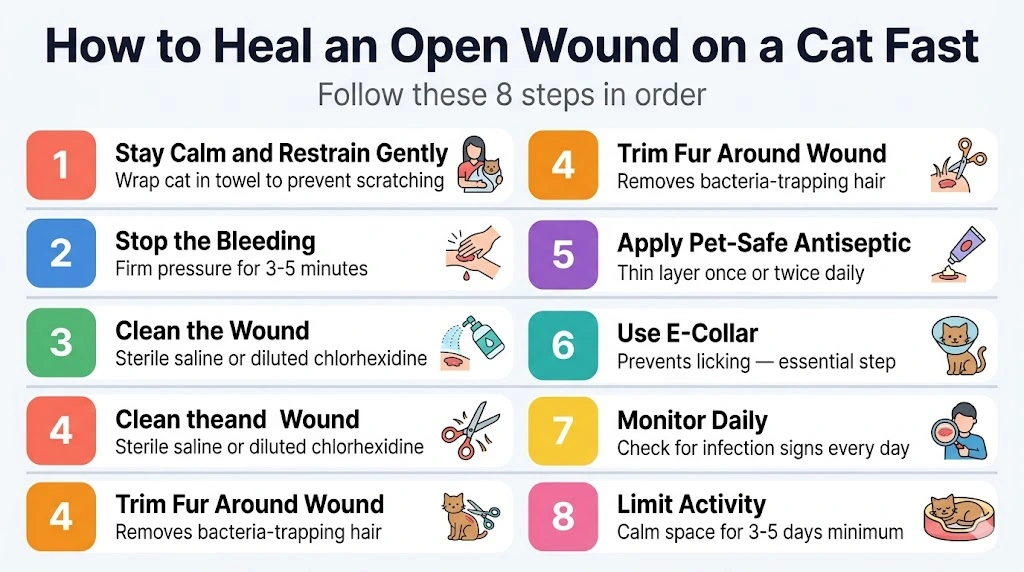
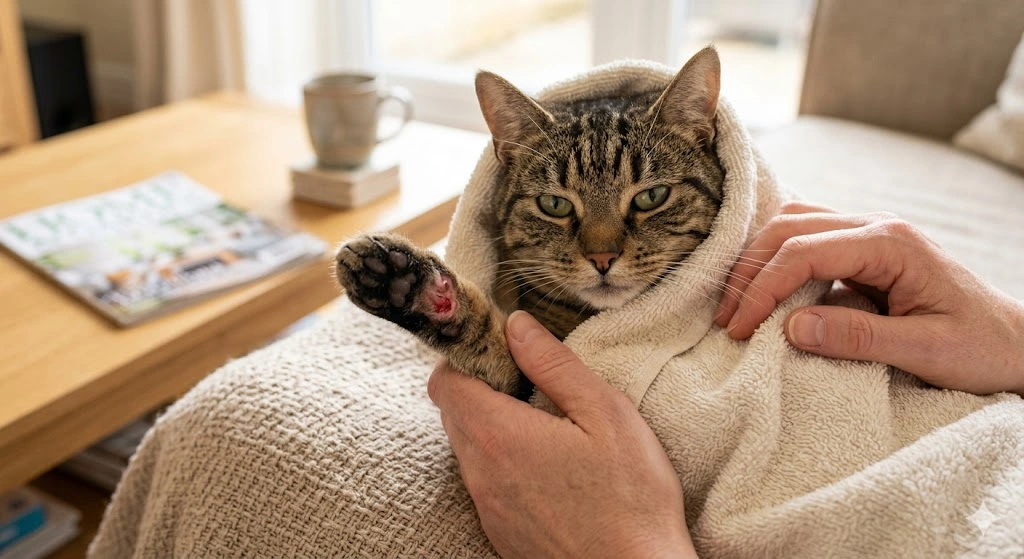
How to heal an open wound on a cat fast at home: stop any bleeding with gentle pressure, clean the wound with sterile saline or diluted chlorhexidine, remove visible debris, apply a thin layer of pet-safe antiseptic, and keep the cat from licking with an E-collar. Monitor for infection signs daily. Most minor wounds heal within 7–10 days with proper care.
- The wound is deep, wide, or will not stop bleeding after 5 minutes of pressure
- The wound is a puncture — especially from a cat bite (these seal over and abscess fast)
- The wound shows signs of infection — swelling, heat, pus, or a foul smell
- Your cat is limping, not eating, or showing signs of pain beyond the wound itself
- The wound is near the eye, ear, or on the abdomen or chest
- The wound is more than a few hours old and has not been cleaned
Types of Cat Wounds — Which Can You Treat at Home
| Wound Type | Description | Home Care OK? | Vet Needed? |
|---|---|---|---|
| Superficial scrape or abrasion | Surface skin only, minor bleeding | ✅ Yes | Only if infected |
| Small clean cut | Under 1cm, edges close together | ✅ Yes | If it won’t close |
| Large or deep laceration | Deep, wide, or gaping edges | ❌ No | Immediately |
| Puncture wound | Small entry, deep track (bite wounds) | ❌ No | Immediately |
| Abscess | Swollen, painful, pus-filled lump | ⚠️ Partial | Yes for draining |
| Burn or chemical wound | Any burn to skin or paw pads | ❌ No | Immediately |
How to Heal an Open Wound on a Cat Fast — Step by Step
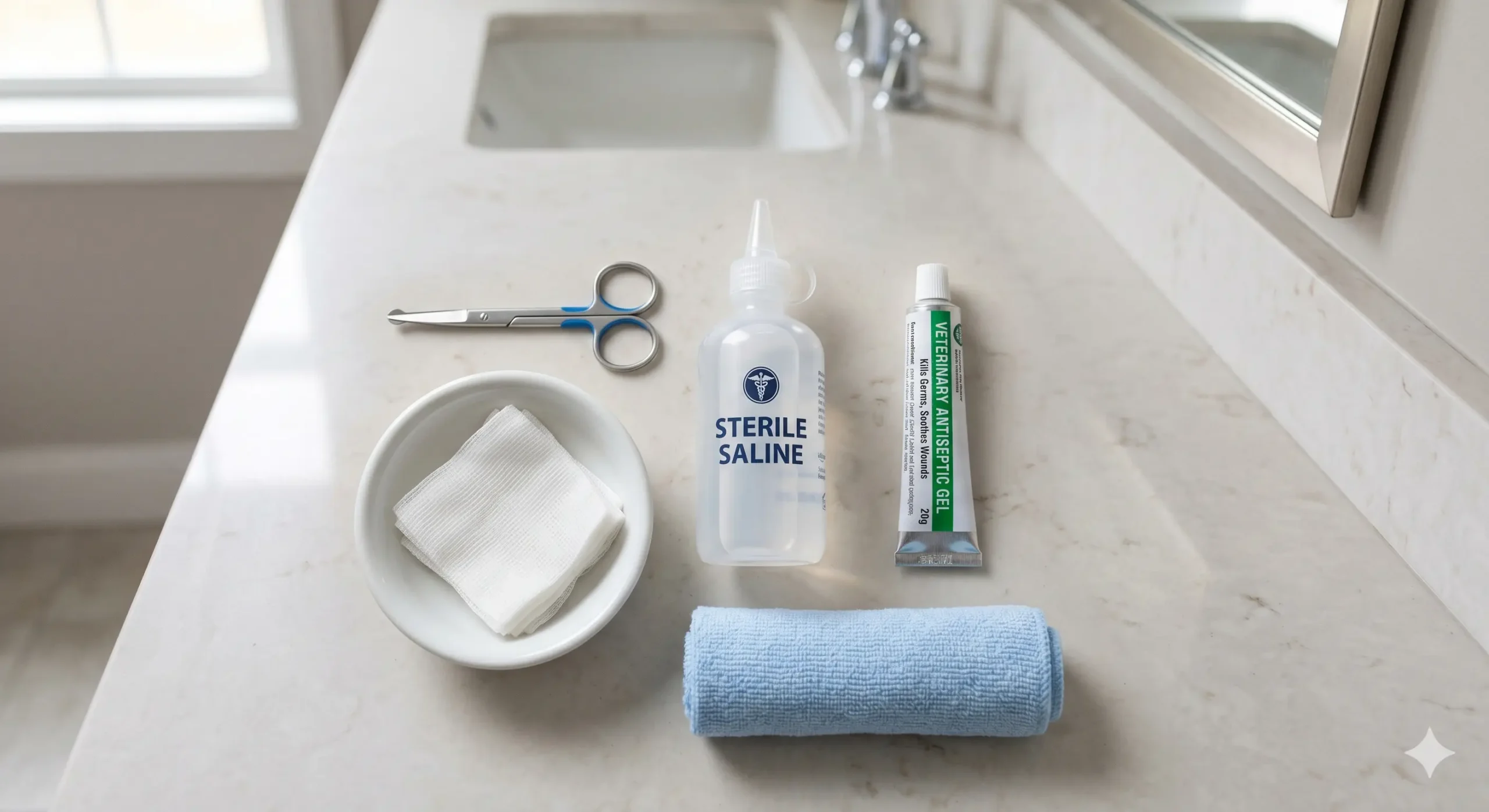
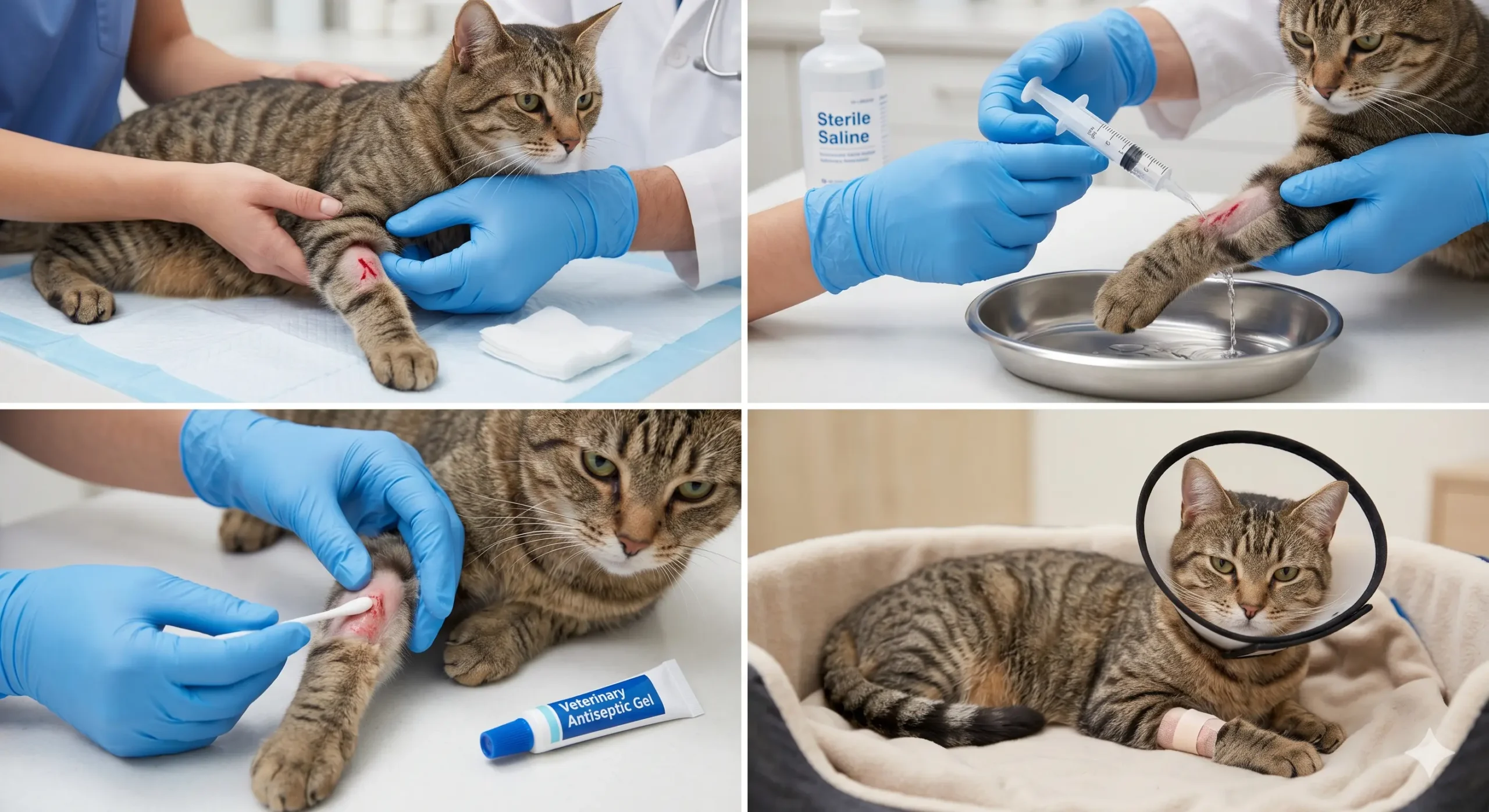
Step 1 — Stay Calm and Restrain Gently
A cat in pain will scratch or bite even the most trusted owner. Wrap the cat in a towel to restrain them gently without causing more stress. Have someone help if possible.
Step 2 — Stop the Bleeding
Apply gentle, firm pressure using a clean cloth or sterile gauze. Hold for 3–5 minutes without lifting to check — lifting breaks the clot. If bleeding does not slow significantly, go to the vet.
Step 3 — Clean the Wound
How do you clean an open wound on a cat — rinse thoroughly with sterile saline or warm water. Remove visible debris using tweezers or clean fingers, then clean with diluted chlorhexidine (one part chlorhexidine to 30 parts water) using a clean cloth or cotton pad.
Step 4 — Trim Fur Around the Wound
Carefully trim fur around the wound edges with small scissors. Fur trapped in the wound harbors bacteria and delays healing.
Step 5 — Apply a Pet-Safe Antiseptic
Diluted chlorhexidine, Vetericyn wound spray, or a vet-approved antiseptic gel are all appropriate. Apply once or twice daily. Keep the layer thin — heavy ointment traps bacteria.
Step 6 — Prevent Licking With an E-Collar
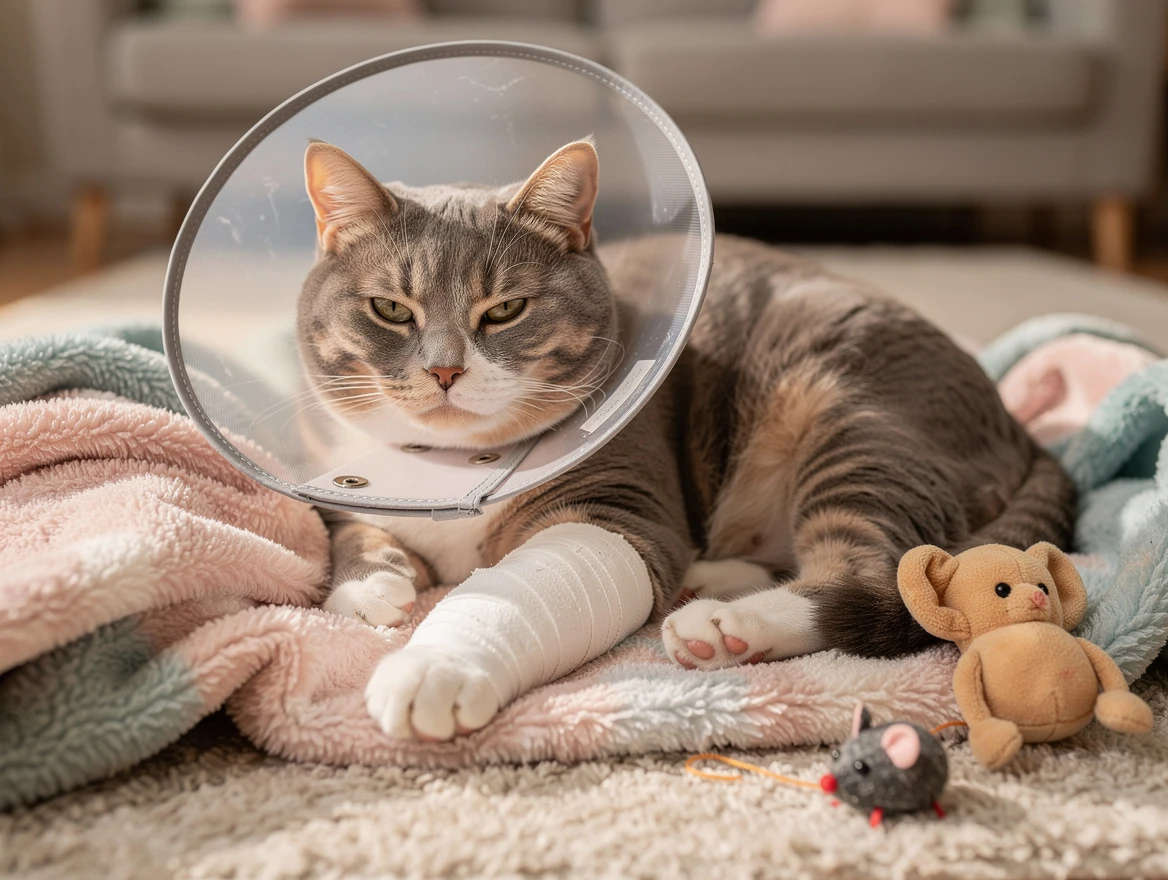
A cat’s mouth contains bacteria that will infect a wound rapidly. An E-collar is essential for any wound within tongue’s reach. Soft fabric collars are more comfortable for extended wear.
Step 7 — Monitor Daily
Check the wound every day. Clean once or twice daily for the first 3–5 days. Look for healing signs — edges drawing together, reduced redness, dry scabbing — and infection signs — increasing swelling, heat, discharge, or smell.
Step 8 — Limit Activity
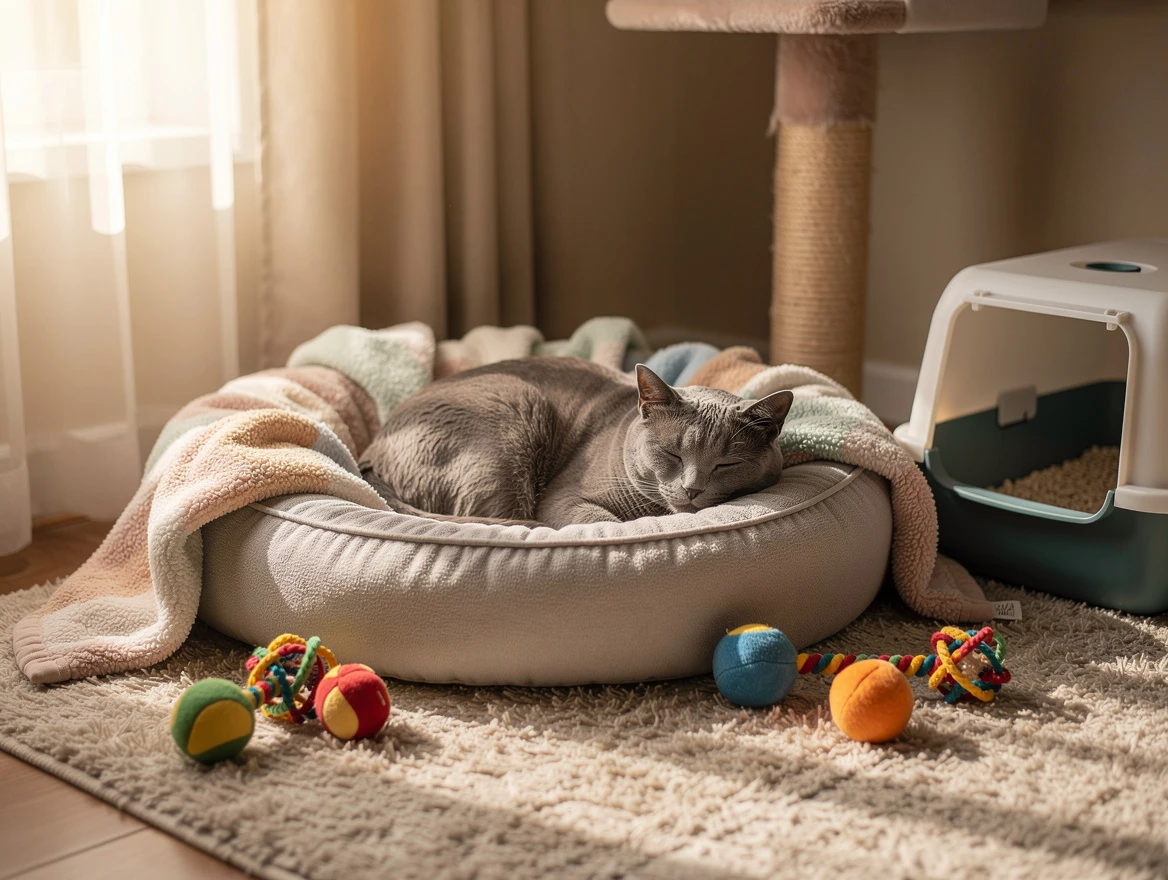
Physical activity reopens wounds before scabs properly set. Keep the cat in a calm, contained space with food, water, litter, and soft bedding during the first 3–5 days.
How to Heal an Open Wound on a Cat Fast Naturally
How to heal an open wound on a cat fast naturally — the safest natural approaches supported by veterinary sources are warm saline rinses and medical-grade Manuka honey, applied thinly to the wound surface for its natural antibacterial properties. These support healing but do not replace proper cleaning and monitoring — “natural” does not mean “no care needed.”
Avoid natural remedies not confirmed safe for cats — essential oils, undiluted vinegar, and tea tree oil are toxic and will worsen rather than speed healing.
How to Heal an Open Wound on a Cat Fast — What to Put On It
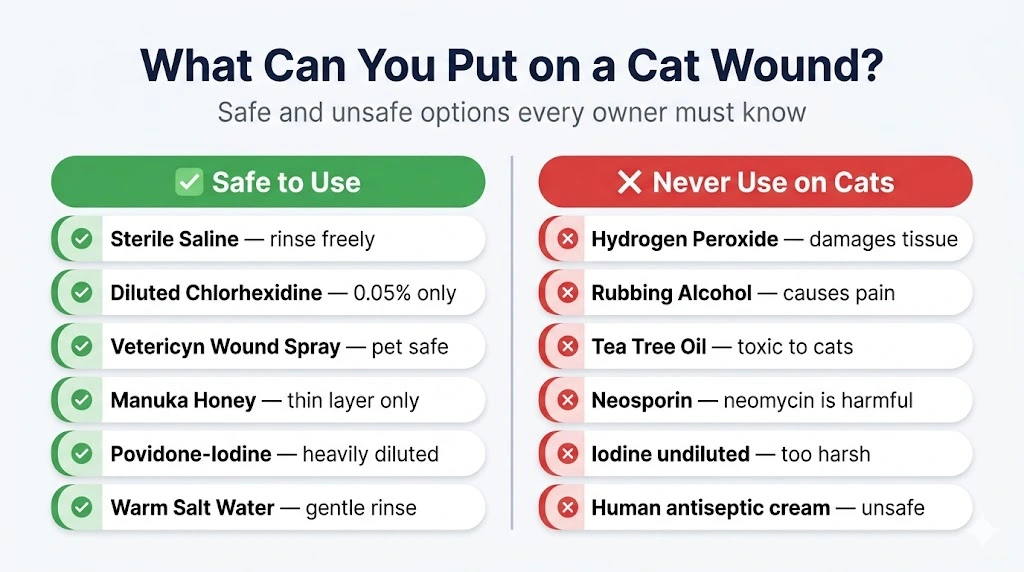
What can you use on an open wound on a cat — safe options:
- Diluted chlorhexidine solution — the gold standard for cat wound cleaning, dilute to 0.05%
- Sterile saline — safe for rinsing and flushing debris
- Vetericyn Plus wound spray — pet-formulated, safe if licked in small amounts
- Silver sulfadiazine cream — vet-prescribed, useful for burns or infected wounds
- Manuka honey — natural antibacterial properties, safe as a thin topical layer
Do not apply Neosporin, bacitracin, or triple antibiotic ointment containing neomycin — it can cause allergic reactions in cats.
| Antiseptic | Safe for Cats | How to Use |
|---|---|---|
| Chlorhexidine | ✅ Safe when diluted | Dilute to 0.05% — topical only |
| Sterile saline | ✅ Completely safe | Rinse and flush freely |
| Vetericyn wound spray | ✅ Safe | Spray directly, no dilution needed |
| Povidone-iodine | ⚠️ Safe if diluted | Dilute heavily — tea-colored solution only |
| Hydrogen peroxide | ❌ Not recommended | Avoid entirely — damages tissue |
| Neosporin | ❌ Not recommended | Neomycin toxic to cats |
| Tea tree oil | ❌ Toxic to cats | Never use |
What Ointment Can I Put on a Cat Wound
The safest ointments are veterinary-specific: Vetericyn wound gel, diluted chlorhexidine gel, or vet-prescribed silver sulfadiazine. Avoid petroleum-based ointments that seal the wound — wounds need airflow to heal. Any ointment applied should be safe if licked, since preventing all licking is impossible even with an E-collar.
Cat Wound Healing Stages
| Stage | Timeline | What You See |
|---|---|---|
| Inflammatory | Days 1–3 | Redness, swelling, some discharge |
| Debridement | Days 1–6 | Wound appears to clean itself, scabbing begins |
| Repair | Days 3–14 | Edges drawing together, pink new tissue |
| Maturation | Weeks 2–4+ | Scab falls off, new skin and hair regrowth visible |
Cat wound healing stages pictures can help you compare your cat’s wound to normal progression — but if anything looks different from steady improvement (increasing rather than decreasing redness, new discharge appearing), contact your vet rather than relying on visual comparison alone.
Cat Wound Not Healing — When to Worry
A wound not healing after 7–10 days of proper home care needs veterinary attention. Signs include: edges not drawing together, increasing redness and swelling, persistent yellow or green discharge, foul smell, or increasing discomfort when touched. The most common cause of cat wound not healing at home is a missed infection, particularly in bite wounds.
Open Wound on Cat Not Bleeding — Is That Normal
Yes — many open wounds do not bleed heavily or at all, particularly punctures and abrasions. Absence of bleeding does not mean the wound is minor. Puncture wounds from bites are especially dangerous because they seal quickly, trapping bacteria inside. If a wound is not bleeding but looks deep, came from a bite, or has swollen tissue — see the vet regardless of bleeding status.
How to Heal an Open Wound on a Cat Fast — Realistic Timeline
Minor surface wounds and small clean cuts typically heal within 7–10 days. Larger wounds take 2–4 weeks. Stitched wounds heal in 10–14 days before suture removal. Abscesses take 2–3 weeks after draining and antibiotics. Healing time increases significantly with infection, repeated licking, or delayed initial cleaning.
🩺 When to See a Vet — Cat Wound Care
- Any bite wound — even small ones abscess rapidly
- Wounds that will not stop bleeding after 5 minutes of firm pressure
- Deep or wide wounds where edges cannot come together
- Any wound near the eye, ear, abdomen, or chest
- Signs of infection — swelling, heat, discharge, smell, red streaking
- Wound not healing or worsening after 5–7 days of home care
- Your cat becoming lethargic, feverish, or refusing food alongside a wound
Frequently Asked Questions
Clean the wound with sterile saline or diluted chlorhexidine, remove debris, apply a thin pet-safe antiseptic, and use an E-collar to prevent licking. Clean twice daily for 3–5 days. Most minor wounds heal within 7–10 days. Go to the vet if infection signs appear or the wound is not closing after 7 days.
Diluted chlorhexidine, sterile saline, Vetericyn wound spray, or vet-approved wound gel. Avoid hydrogen peroxide, alcohol, iodine (undiluted), and any ointment containing neomycin. Never use tea tree oil.
Most minor wounds heal better uncovered, since they need airflow. But “alone” should not mean “unmonitored” — clean it daily and watch for infection signs. Cover only if the area collects dirt (like a paw) or contamination is likely.
Minor superficial wounds sometimes heal with minimal intervention if kept clean and the cat doesn’t lick it. However, active cleaning and monitoring significantly reduce infection risk and speed healing compared to leaving it completely untouched. Deep wounds and bites will not heal properly without treatment.
Keep the wound clean with regular saline rinses, prevent licking with an E-collar, limit activity to avoid reopening the wound, ensure good nutrition, and apply a vet-approved antiseptic consistently. Consistency in daily care is what most speeds healing.
Vetericyn wound gel, diluted chlorhexidine gel, or vet-prescribed silver sulfadiazine cream. Avoid petroleum-based ointments and anything containing neomycin.
If a wound is not improving after 7–10 days of consistent home care, see your vet. Missed infection — especially from bite wounds — is the most common cause of delayed healing.
Yes, potentially. Lack of bleeding does not mean a wound is minor — puncture wounds in particular often don’t bleed much but carry high infection risk. See a vet if the wound is deep or came from a bite regardless of bleeding.
No. Neosporin contains neomycin, which can cause allergic reactions in cats and is toxic if ingested in larger amounts — and cats will lick any wound they can reach. Use pet-specific antiseptic products instead.
The Bottom Line
How to heal an open wound on a cat fast comes down to acting quickly and correctly and correctly in the first hour: clean thoroughly, remove debris, apply a pet-safe antiseptic, use an E-collar, and monitor daily. Most minor wounds heal within 7–10 days with this approach. The wounds to never treat at home are bites — they look minor but abscess rapidly — and any wound that is deep, wide, near a sensitive area, or already showing infection signs.
Related: My Cat Is Not Eating or Drinking and Very Weak — pain from a wound can suppress appetite.

This article is for educational purposes only and does not replace professional veterinary advice. For any wound that is deep, infected, or not healing — consult a licensed veterinarian immediately.