My Cat Is Limping But Still Jumping and Running — Why?
My cat is limping but still jumping and running — and that combination is confusing. If the leg was seriously injured, how can they still leap onto the couch? The truth is that cats are exceptional at masking pain, and continued activity does not mean the injury is minor. It means your cat is pushing through discomfort that a human would have stopped for immediately.
Here is what is most likely causing the limp, what to watch for at home, and when the vet needs to be involved.
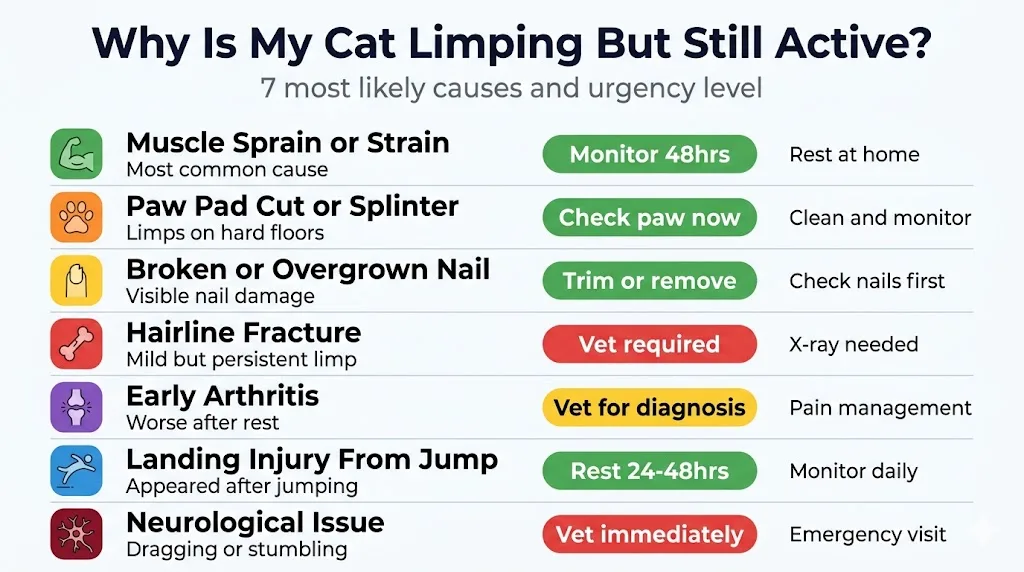
When my cat is limping but still jumping and running, the most common causes are a minor sprain or muscle strain, a small cut or object embedded in the paw pad, a nail issue, joint pain from early arthritis, or a hairline fracture. Most mild limps resolve within 24–48 hours with rest. Any limp that persists beyond 48 hours, worsens, or is accompanied by swelling needs a vet visit.
- The limping leg is visibly swollen, bent at an odd angle, or dragging
- Your cat is crying or vocalizing when the leg is touched
- There is an open wound, bleeding, or bone visible
- The cat refuses to put any weight on the leg at all
- The limping appeared after a fall from height or being hit by something
- The cat is also lethargic, not eating, or has a fever alongside the limp
Why My Cat Is Limping But Still Jumping and Running
 Cats have a remarkably high pain threshold. This is not a myth — it is an evolutionary survival mechanism. In the wild, showing weakness invites predators. So cats continue moving, jumping, and behaving normally even when something hurts. The limp is the signal that something is wrong. The continued jumping tells you it is probably not a complete fracture or full dislocation.
The combination of limping plus continued activity most commonly points to a partial injury — a sprain, strain, small fracture, or soft tissue issue — rather than a complete structural break.
7 Most Likely Causes When My Cat Is Limping But Still Jumping and Running
| Cause | Limp Type | Other Signs | Home Care OK? |
|---|---|---|---|
| Muscle sprain or strain | Mild, intermittent | None or slight stiffness | ✅ Rest 48 hours |
| Paw pad cut or splinter | Consistent, especially on hard floors | Licking paw frequently | ✅ Clean and monitor |
| Nail issue (broken or overgrown) | Mild, may worsen on hard surfaces | Nail looks different | ✅ Trim or remove |
| Hairline fracture | Mild but persistent | Slight swelling possible | ❌ Vet required |
| Early arthritis or joint pain | Worse after rest, better after moving | Stiffness getting up | ⚠️ Vet for diagnosis |
| Soft tissue injury from jump | Appeared after landing or jump | May hold paw up briefly | ✅ Rest 24–48 hours |
| Neurological issue | Dragging limb or unusual gait | Weakness, stumbling, loss of coordination | ❌ Vet immediately |
1. Muscle Sprain or Strain
The most common cause when my cat is limping but still jumping and running. Cats land from jumps at high force — even a slightly awkward landing can overstretch a ligament or muscle. The sprain causes a limp but the cat can still function because the structural integrity of the leg is intact. Rest is the primary treatment. Most sprains improve significantly within 24–48 hours.
2. Paw Pad Injury — Cut, Splinter or Embedded Object
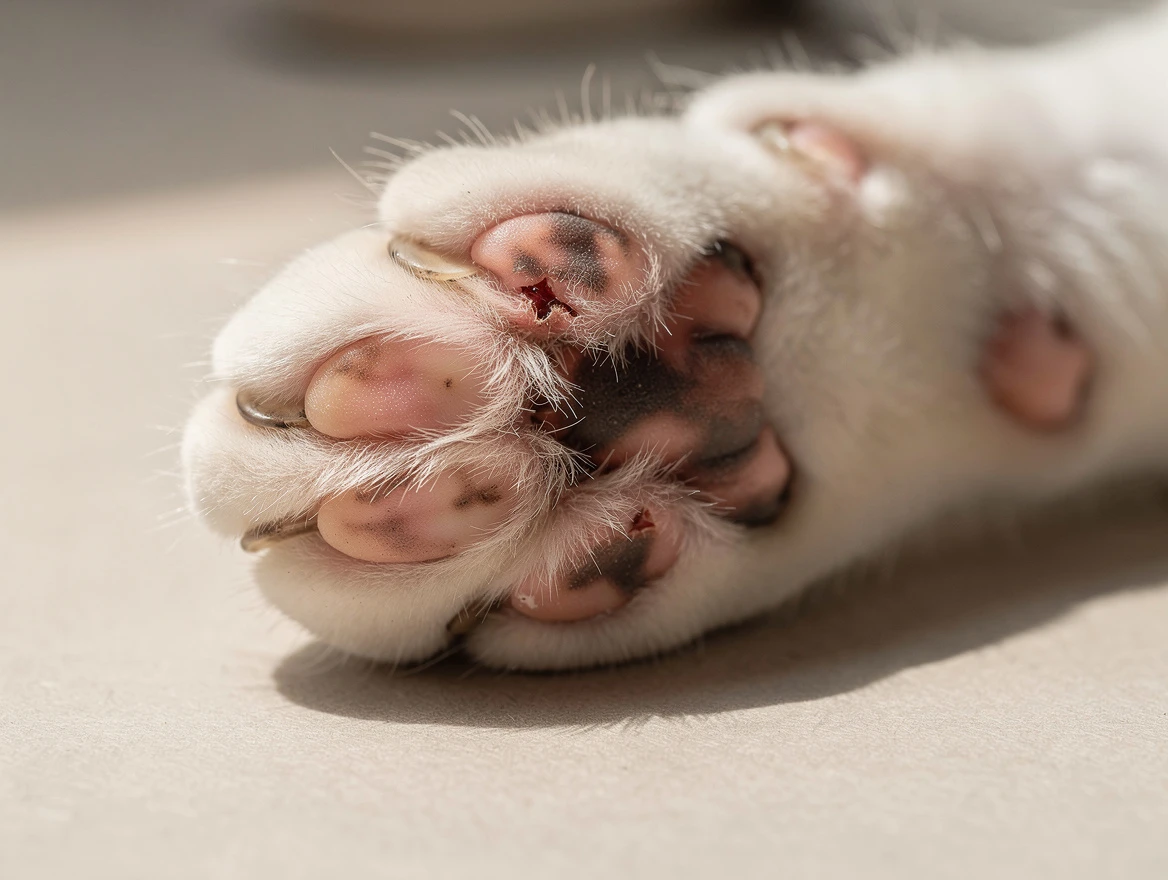 A small cut on the paw pad, a splinter, a piece of glass, or a grass seed embedded between the toes causes a consistent limp — particularly noticeable on hard floors or outdoors. The cat still jumps because the leg structure is fine — only the paw itself hurts on contact with surfaces. Frequent licking of one paw is the clearest signal to look closely.
3. Broken or Overgrown Nail
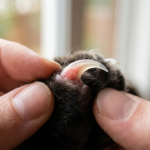
A nail that has broken at the base, split, or grown so long it curves into the paw pad causes a limp that looks mild from a distance. Check each nail on the affected leg. A broken nail at the base will often bleed slightly. An overgrown nail curling into the pad will show redness and sometimes swelling at the contact point.
4. Hairline Fracture
Small bones in the toes and feet can crack without completely breaking — a hairline fracture still allows some weight bearing and activity, which is why a cat with one can still jump. The limp is mild but persistent and does not improve with rest the way a sprain does. This needs veterinary diagnosis with X-ray to confirm.
5. Early Arthritis or Joint Pain
In cats over 7 years old, early joint degeneration is extremely common — studies suggest over 90% of cats over 12 have some degree of arthritis. The limp is often worse after periods of rest (stiff after sleeping) and improves slightly after the cat has been moving for a few minutes. This pattern — worse at first, better after warming up — is the key sign.
6. Soft Tissue Injury From Jump or Impact
Landing badly from a jump, catching a leg on furniture, or a collision during play can cause bruising, swelling, and micro-tears in soft tissue without breaking a bone. The cat still moves because the structural integrity is intact — but the tissue damage causes a limp. These injuries typically improve within 2–5 days with rest.
7. Neurological Issue
Less common but important to know — nerve damage or neurological conditions can affect how a cat moves a limb. The signs are different from a typical limp: the cat may drag the leg slightly, have an unusual gait, stumble, or show weakness rather than just favoring one leg. If the limp looks more like loss of coordination than pain avoidance — this needs immediate veterinary evaluation.
Cat Limping Front Leg — What It Means
When my cat is limping but still jumping and running and the limp is in a front leg, the most common causes are paw pad injuries, nail issues, wrist or elbow soft tissue injuries, and occasionally bite wounds from other cats that become infected. Front leg limps are also associated with landing impact injuries — cats lead with their front legs when jumping down.
Check the front paw pads, between the toes, and the nails first. Feel gently up the leg for any swelling or heat. A front leg limp that includes the cat holding the paw completely off the ground needs a vet visit.
Cat Suddenly Limping Back Leg
A sudden back leg limp that appears with no obvious cause needs more attention than a front leg limp. The back legs carry significant structural load and back leg injuries — particularly in older cats — can sometimes indicate more serious conditions including aortic thromboembolism (blood clot), which causes sudden paralysis or weakness in one or both back legs. This is a medical emergency.
If the back leg limp appeared suddenly, the leg feels cold compared to the other one, or your cat is crying in pain — go to the vet immediately. If the back leg limp is mild, the cat is still using the leg, and there is no dramatic onset — monitor for 24 hours and then decide.
My Cat Is Limping But Acting Normal
When my cat is limping but still jumping and running and otherwise acting completely normal — eating, grooming, interacting — the limp is almost always a minor soft tissue injury or paw pad issue. The cat’s normal behavior tells you the overall health is fine. The limp tells you one specific area hurts.
Monitor for 24–48 hours. Restrict activity if possible. If the limp is improving — good sign, continue rest. If the limp is staying the same or getting worse after 48 hours of rest — that needs veterinary evaluation regardless of how normal the cat is acting otherwise.
My Cat Is Limping But No Sign of Injury
This is where many owners get confused. No visible wound does not mean no injury. Sprains, hairline fractures, joint inflammation, and soft tissue damage are all internal — there is nothing to see on the outside. A cat limping with no visible injury is not faking it. Something hurts inside the leg that requires either rest to resolve or X-ray to diagnose.
Why Is My Cat Limping After Jumping
A limp that appeared directly after a jump is almost always a landing injury — sprain, strain, or soft tissue bruising from impact. Cats can generate significant force on landing and a slightly misjudged jump angle or landing on an uneven surface can cause a muscle or ligament to stretch or tear partially. Rest for 24–48 hours and monitor. If the limp does not improve — X-ray to rule out fracture.
My Cat Is Limping Treatment — What to Do at Home
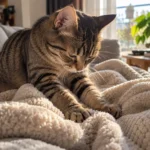
 alt=”Cat resting in a calm quiet space — resting is the most important treatment when my cat is limping but still jumping and running” style=”width:100% !important;height:auto !important;max-width:100% !important;border-radius:8px;display:block;margin:1.2rem 0 1.8rem;” />
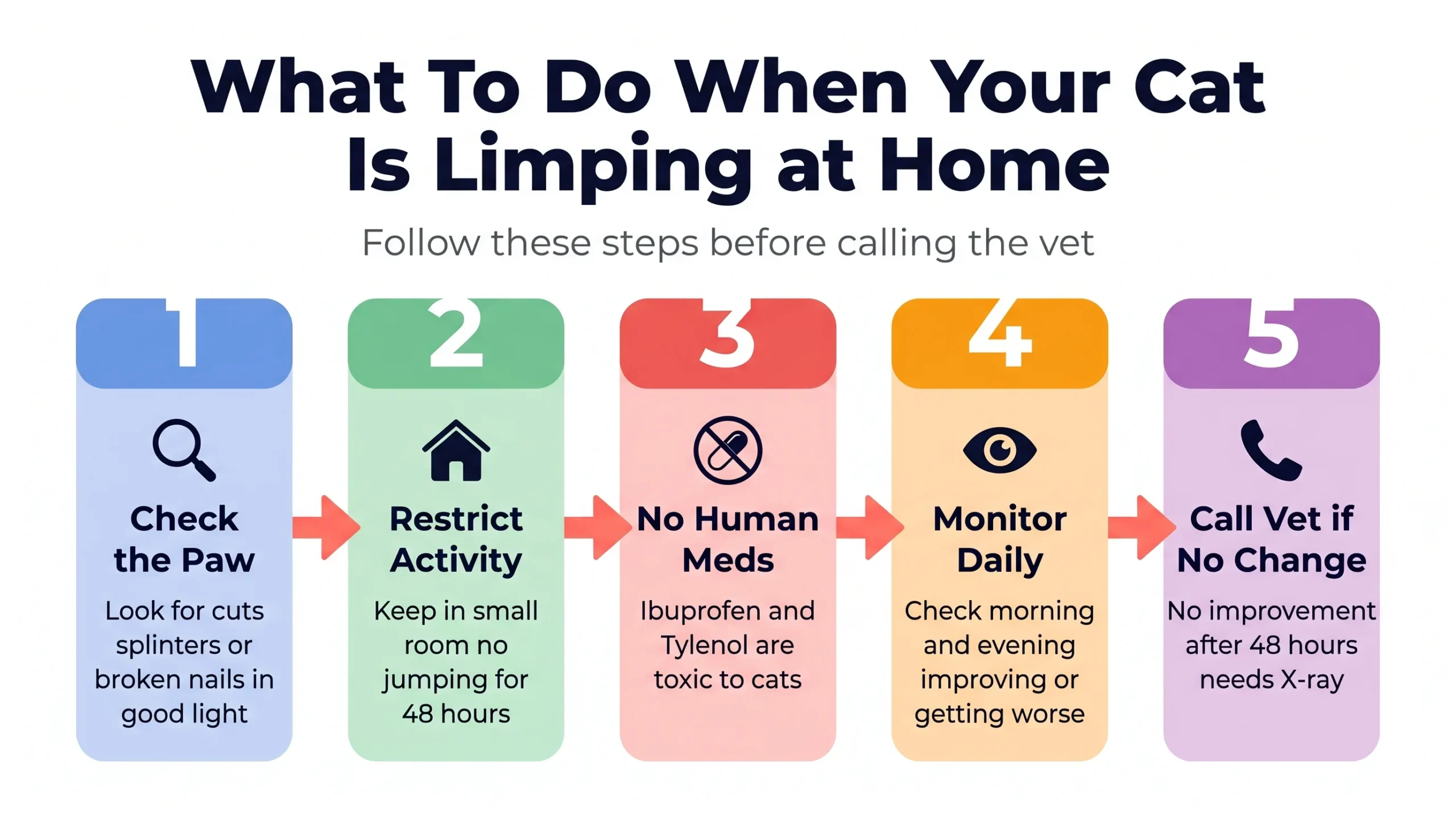
Step 1 — Examine the Paw Carefully
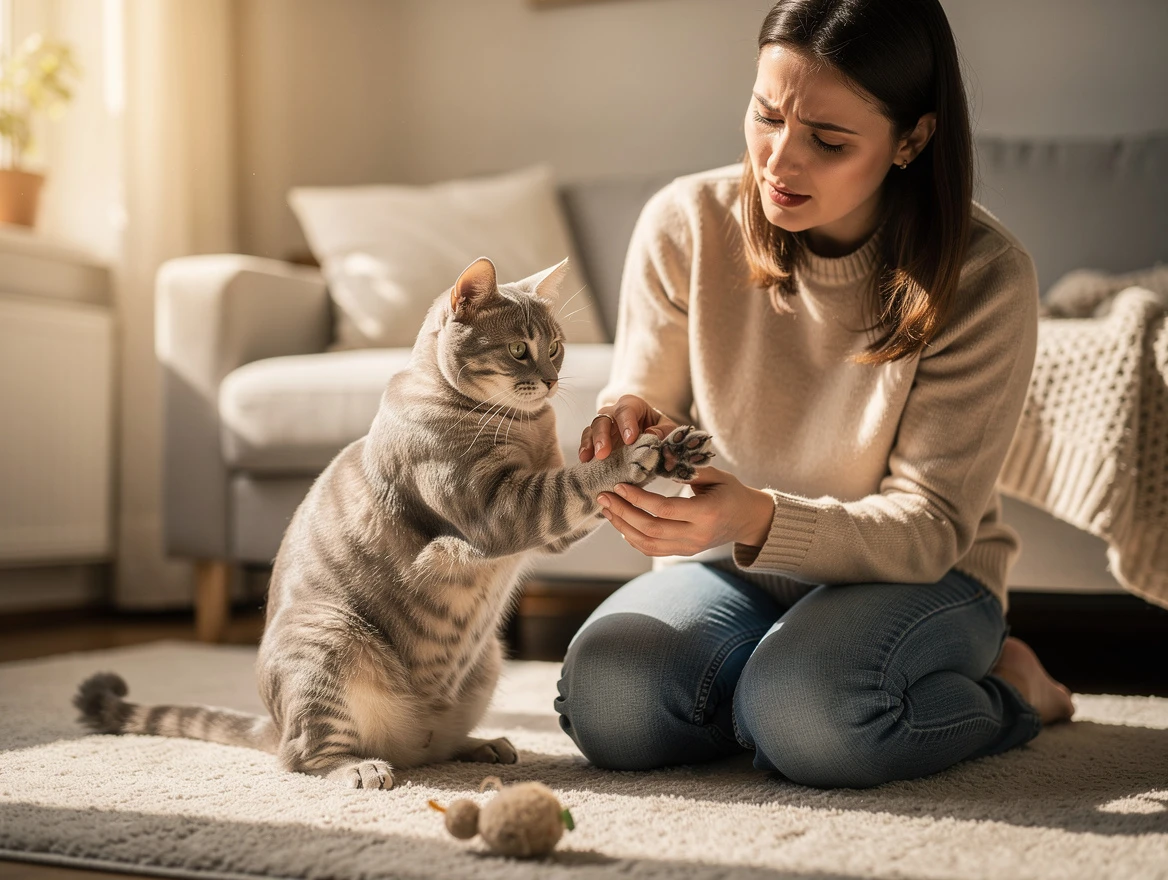
In good light, check every paw pad on the affected leg, between each toe, and each nail. Look for cuts, swelling, redness, embedded objects, or a nail that looks broken or too long. This takes two minutes and rules out the most common causes.
Step 2 — Restrict Activity for 48 Hours
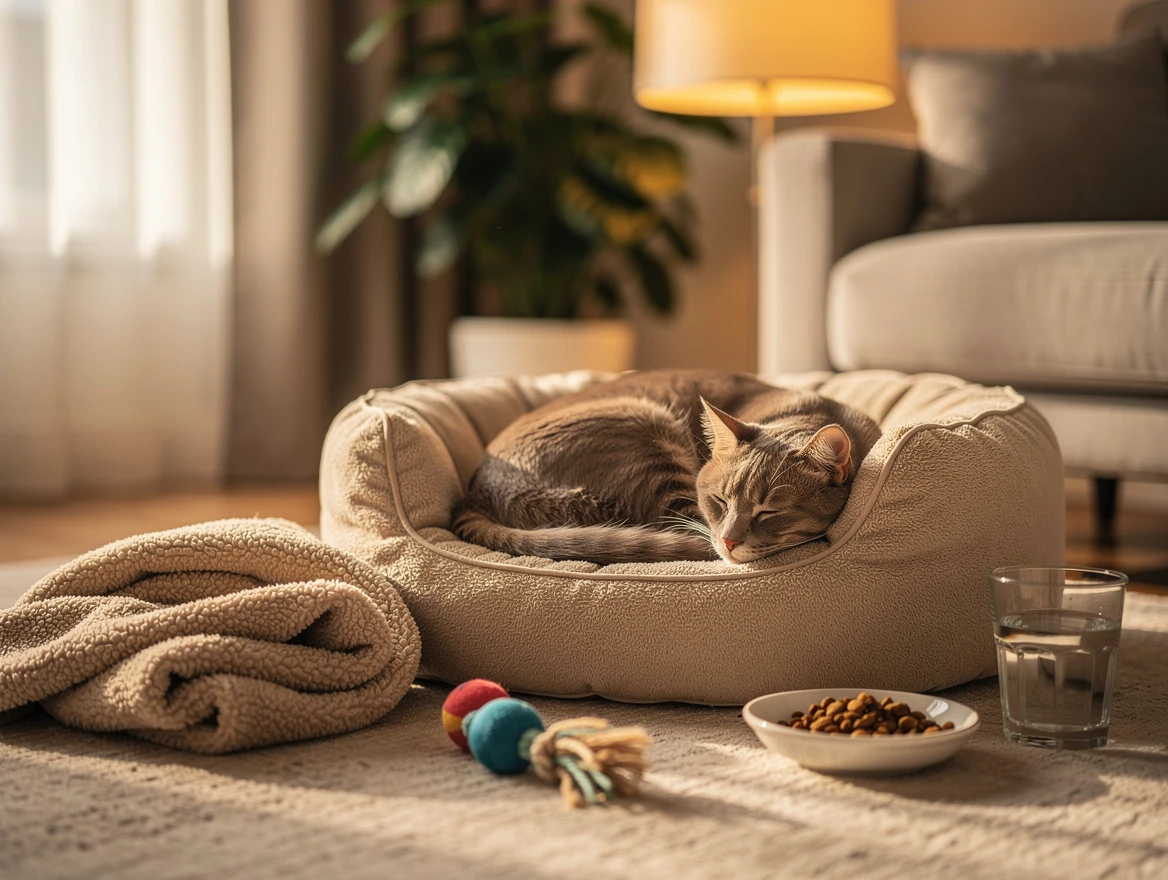
Keep the cat in a smaller space — a room without high furniture to jump from. No stairs, no jumping, no rough play. Rest is the primary treatment for sprains and soft tissue injuries. One or two days of enforced calm is often all a mild limp needs.
Step 3 — Do Not Give Human Pain Medication
Never give ibuprofen, acetaminophen, or aspirin to a cat. All are toxic to cats — ibuprofen and acetaminophen can be fatal. If pain management is needed, a vet-prescribed medication is the only safe option.
Step 4 — Monitor Daily
Check the limp morning and evening. Is it improving, staying the same, or getting worse? Improving — continue rest. Same after 48 hours — vet visit. Worse at any point — vet visit immediately.
Step 5 — Try a Warm Compress
For suspected muscle strains, a warm (not hot) compress applied gently to the affected leg for 5–10 minutes twice a day can soothe sore muscles and improve circulation. Use a warm damp cloth. Stop immediately if the cat shows any sign of discomfort. Never apply heat to a swollen or visibly injured area — cold is better for swelling.
Limping Causes — Treatment and Prognosis
| Cause | Home Treatment | Vet Needed | Prognosis |
|---|---|---|---|
| Muscle strain or sprain | Rest, warm compress | If no improvement in 48hrs | ✅ Good with rest |
| Paw pad injury | Clean and monitor | Deep wounds or infection | ✅ Excellent if treated |
| Soft tissue inflammation | Rest, reduce activity | Anti-inflammatory meds | ✅ Good with timely care |
| Arthritis | Low-impact movement | Pain meds, supplements | ⚠️ Manageable long term |
| Hairline fracture | None — needs diagnosis | X-ray required | ✅ Good with treatment |
| Foreign body in paw | Remove if visible | Embedded or infected | ✅ Good if removed promptly |
| Neurological issue | None effective | Immediately | ⚠️ Depends on cause |
How Long Will a Cat Limp With a Sprain
A mild sprain typically improves within 24–72 hours of rest. A moderate sprain may take 1–2 weeks to fully resolve. If the limp has not improved at all after 48 hours of proper rest, it is either more than a sprain or the cat is not resting enough. Most cats with sprains show noticeable improvement by day 2 — if they do not, that is your cue to call the vet.
Can a Cat Still Jump With a Broken Leg
It depends on the type of fracture. A complete fracture — where the bone is fully broken — almost always prevents weight bearing entirely. A hairline fracture or stress fracture allows partial weight bearing and continued movement. So yes, a cat can still jump with a hairline fracture, which is exactly why a persistent mild limp should not be dismissed just because the cat is still active. Only an X-ray can rule this out.
🩺 When to See a Vet — Cat Limping
- Limp does not improve after 48 hours of rest
- Limp is getting worse instead of better
- The leg is visibly swollen, hot, or bent at an angle
- Cat refuses to put any weight on the leg
- Open wound, bleeding, or visible bone
- Sudden back leg weakness or paralysis — emergency
- Cat is also not eating, lethargic, or running a fever
- The cat is over 8 years old and the limp is recurring — arthritis needs diagnosis
Frequently Asked Questions
Not immediately — but do not dismiss it. Monitor closely for 48 hours with restricted activity. Most mild limps from sprains or minor injuries resolve with rest. If the limp is not improving after 48 hours or is getting worse at any point, see the vet.
Check the paw thoroughly for cuts, splinters, broken nails, or swelling. Restrict activity for 48 hours. Do not give human pain medication. Monitor morning and evening. If the limp persists beyond 48 hours without improvement — vet visit.
A mild sprain typically shows improvement within 24–72 hours of rest. A moderate sprain may take 1–2 weeks to fully resolve. No improvement after 48 hours of rest means something more than a simple sprain needs to be ruled out.
A limp that appeared directly after a jump is almost always a landing injury — sprain, strain, or soft tissue bruising. Rest for 48 hours and monitor. If no improvement, X-ray to rule out hairline fracture.
Yes — if the fracture is a hairline or stress fracture rather than a complete break. Complete fractures almost always prevent weight bearing entirely. A cat that is still jumping but limping may have a hairline fracture that requires X-ray to diagnose.
Internal injuries — sprains, hairline fractures, joint inflammation — have no visible external signs. A limp with no visible wound is not imagined. Rest for 48 hours and if no improvement, a vet visit with X-ray is needed to see what is happening internally.
A sudden back leg limp needs more attention than a front leg limp. If the onset was gradual and the cat is still using the leg — monitor for 24 hours then decide. If the onset was sudden and dramatic, the leg feels cold, or the cat is in obvious pain — go to the vet immediately. Sudden back leg weakness can indicate a serious circulatory condition.
The Bottom Line
When my cat is limping but still jumping and running, the most likely cause is a minor soft tissue injury — a sprain, strain, or small paw pad issue. The continued activity tells you it is probably not a complete fracture. The limp tells you something hurts and needs attention.
Check the paw, restrict activity for 48 hours, and monitor daily. Most mild limps in otherwise healthy cats resolve with rest alone. The ones that do not improve in 48 hours need an X-ray — not because something is definitely seriously wrong, but because you cannot tell from the outside whether it is a sprain or a hairline fracture without one.
This article is for educational purposes only and does not replace professional veterinary advice. If your cat’s limp is severe, worsening, or accompanied by other symptoms — consult a licensed veterinarian immediately.