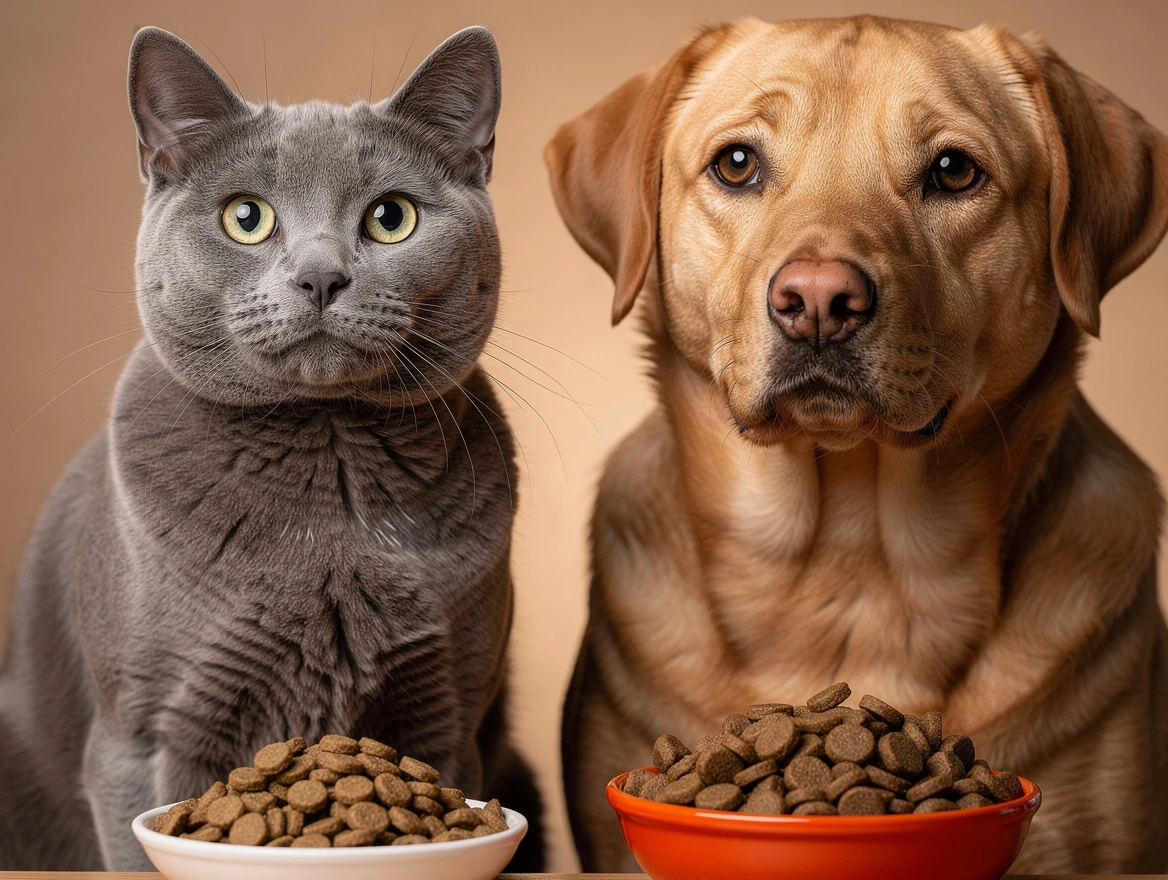

Can cats eat dog food? Yes, cats can eat dog food occasionally without immediate harm, but it should NEVER be their regular diet. Dog food lacks taurine and other essential nutrients that cats need to survive. A few bites won’t hurt your cat, but feeding dog food long-term can cause serious health problems including blindness, heart disease, and immune system failure.
Key takeaway: Dog food is for dogs, cat food is for cats. While one-time snacking is usually safe, regular consumption can be life-threatening for your feline friend.
Table of Contents
Introduction
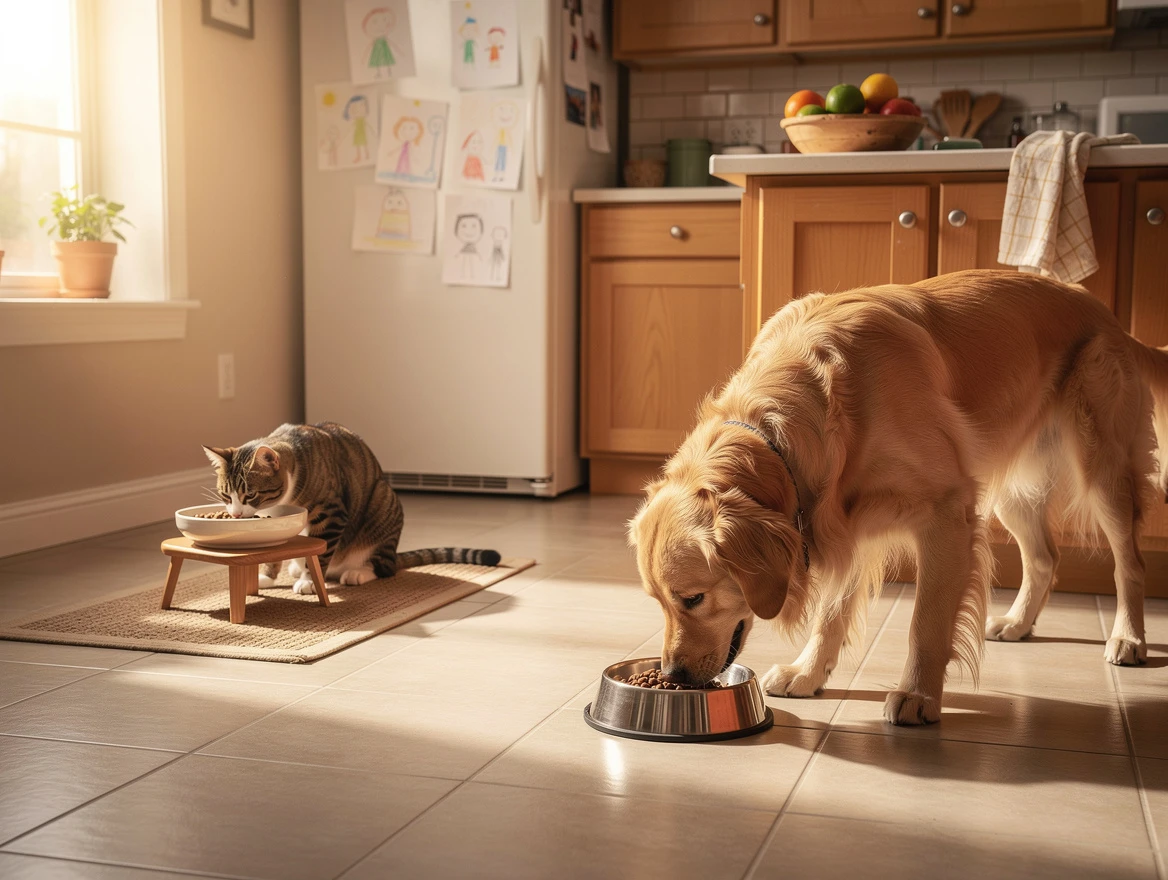
Caught your cat sneaking bites from the dog’s bowl? You’re not alone. Many multi-pet households face this common scenario, and it naturally raises concerns: can cats eat dog food safely?
The short answer is nuanced: while a few stolen bites won’t harm your cat immediately, dog food is not formulated for feline nutritional needs. Unlike dogs, who are omnivores, cats are obligate carnivores with very specific dietary requirements that dog food simply cannot meet.
The question “can cats eat dog food” is one of the most common concerns among pet owners with both species. In this comprehensive guide, we’ll explore everything you need to know about cats eating dog food, including the health risks, emergency situations, and practical solutions to keep your cat away from the dog’s dinner.
Why Cats Can’t Eat Dog Food Long-Term
Many pet owners wonder “can cats eat dog food” as a regular diet. The answer is a definitive no, and here’s why.
The Taurine Problem
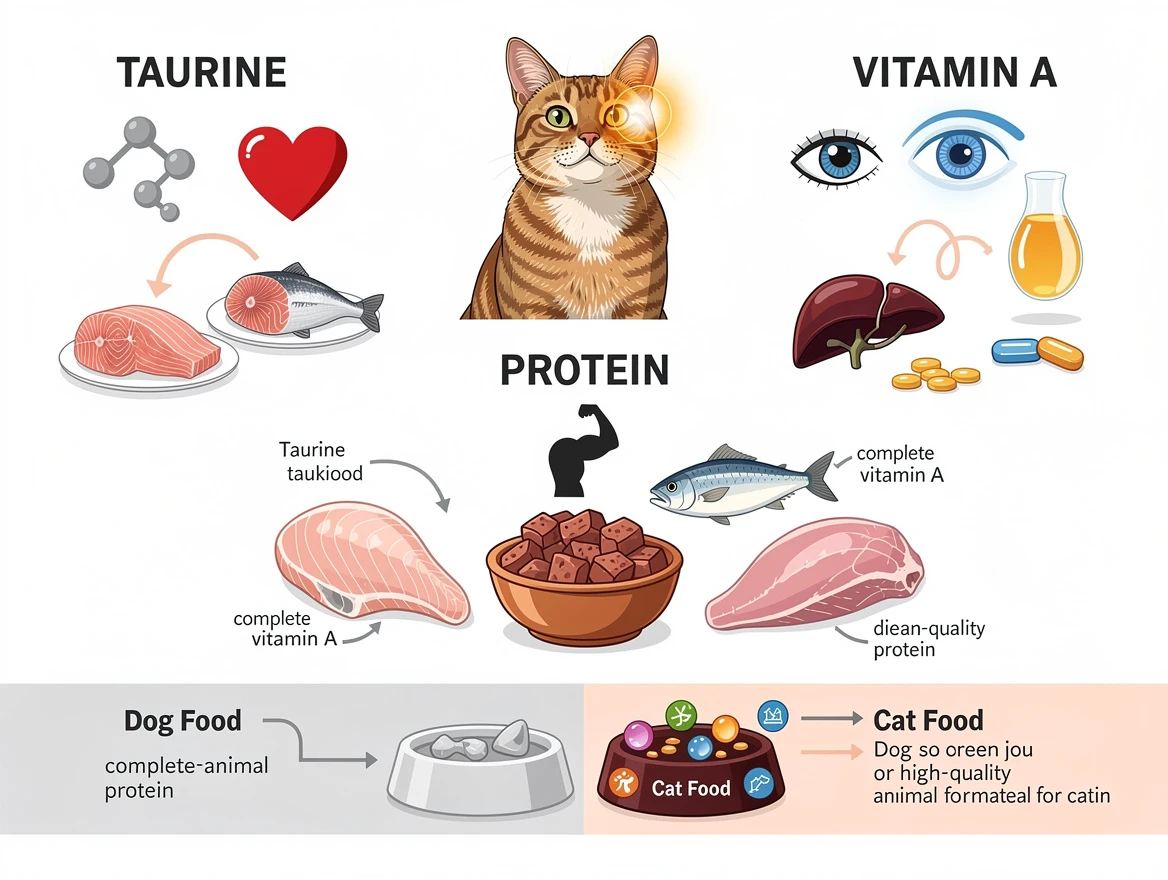
The most critical difference between cat food and dog food is taurine content. This is the primary reason why cats can’t eat dog food as a regular diet. Taurine is an essential amino acid that cats absolutely must get from their diet because their bodies cannot produce it in sufficient quantities.
Why taurine matters:
- Essential for heart function
- Crucial for eye health and vision
- Supports immune system
- Aids in digestion and bile production
- Necessary for reproductive health
Dog food typically contains little to no taurine because dogs can synthesize it internally. When cats don’t get enough taurine, they develop serious health conditions:
- Dilated cardiomyopathy (DCM): A heart disease that can be fatal
- Central retinal degeneration: Progressive blindness
- Immune system dysfunction: Increased susceptibility to infections
- Reproductive problems: In unspayed/unneutered cats
- Digestive issues: Poor nutrient absorption
According to the American Veterinary Medical Association, taurine deficiency is one of the leading preventable causes of heart disease in cats.
Protein Requirements
Cats require significantly more protein than dogs:
- Cats need: 26-30% protein minimum (35-40% optimal)
- Dogs need: 18-25% protein minimum
This isn’t just about quantity—it’s about quality. Cats need animal-based proteins with specific amino acid profiles. Dog food often contains more plant-based proteins and fillers, which cats cannot digest efficiently.
Other Missing Nutrients
Beyond taurine and protein, dog food lacks several other essential nutrients for cats:
Vitamin A: Cats cannot convert beta-carotene to vitamin A like dogs can. They need preformed vitamin A from animal sources.
Arachidonic acid: This essential fatty acid is crucial for skin health, reproduction, and inflammatory response. Dogs can produce it from linoleic acid, but cats cannot.
Niacin (Vitamin B3): Cats have higher niacin requirements than dogs and cannot synthesize it from tryptophan efficiently.
Arginine: An essential amino acid for cats that supports ammonia detoxification. Even a single meal deficient in arginine can cause serious health issues in cats.
What Happens If My Cat Eats Dog Food?
The effects depend on how much and how often your cat consumes dog food.
Short-Term Effects (One-Time Snacking)
If your cat sneaks a few bites of dog food once or twice, you’ll likely see no adverse effects. Most cats will be perfectly fine. However, some sensitive cats may experience:
- Mild stomach upset
- Temporary diarrhea
- Slight vomiting
- Gas or bloating
- Decreased appetite for a day
These symptoms usually resolve within 24 hours. If your cat won’t eat their regular food after eating dog food, monitor them closely.
Long-Term Effects (Regular Feeding)
The question “can cats eat dog food long-term” has a clear answer: absolutely not. Here’s what happens when cats eat dog food regularly:
Week 1-2: Early warning signs
- Decreased energy levels
- Changes in coat quality (dullness, excessive shedding)
- Mild digestive disturbances
- Increased thirst
Month 1-3: Developing problems
- Noticeable weight loss or muscle wasting
- Poor coat condition
- Frequent vomiting or digestive issues
- Lethargy and weakness
- Eye problems (dilated pupils, difficulty seeing in dim light)
Month 6+: Serious health crisis
- Heart disease: Dilated cardiomyopathy from taurine deficiency
- Blindness: Central retinal degeneration
- Severe malnutrition: Despite eating regularly
- Immune suppression: Frequent infections
- Liver problems: From inadequate protein quality
- Reproductive issues: In breeding cats
According to a study published in the Journal of Feline Medicine and Surgery, cats fed dog food exclusively developed taurine deficiency symptoms within 3-4 months, with irreversible damage occurring by 6 months.
Real Case Example
Dr. Lisa Pierson, DVM, documented a case where a cat owner unknowingly fed their cat dog food for 5 months. The cat developed:
- Severe dilated cardiomyopathy
- Partial vision loss
- Weight loss of 3 pounds (25% body weight)
- Required months of veterinary care and supplementation
While the cat survived with treatment, some damage was permanent. This underscores why dog food should never replace wet cat food for sensitive stomachs or any proper cat diet.
Can Cats Temporarily Eat Dog Food?
One of the most common questions is: “Can cats eat dog food in emergencies?” Let’s address this important scenario.
Emergency Situations Only
There are rare scenarios where feeding dog food to your cat might be unavoidable:
- Ran out of cat food late at night: Stores are closed, no delivery options
- Natural disaster or emergency: Limited food supplies
- Traveling emergency: Lost luggage with cat food
- Financial hardship: Temporary situation until next paycheck
Maximum Safe Duration: 2-3 Days
The answer to “can cats eat dog food temporarily” is yes, but only for a very short period. If you absolutely must feed your cat dog food:
Day 1-2: Relatively safe
- Mix dog food with any cat food you have
- Supplement with plain cooked chicken or tuna
- Ensure access to fresh water
Day 3: Maximum recommended limit
- Start seeking proper cat food urgently
- Consider home-cooked cat food recipes as alternative
Day 4+: Health risk zone
- Nutritional deficiencies begin
- Seek veterinary advice
- Explore food banks, shelters, or veterinary assistance programs
What to Supplement
If feeding dog food temporarily, add:
- Plain cooked chicken or turkey: Provides quality protein and some taurine
- Canned tuna in water: Good taurine source (limit to avoid mercury)
- Plain cooked fish: Additional protein and omega-3s
- Scrambled eggs: Protein and nutrients
- Small amount of liver: Rich in vitamin A and taurine
Important: Never rely on dog food alone for more than 48 hours.
Dog Food vs Cat Food: Key Differences
Understanding why cats can’t eat dog food requires knowing the fundamental differences between these two pet food types.
Comprehensive Nutrient Comparison
| Nutrient | Cat Food | Dog Food | Why Cats Need More |
|---|---|---|---|
| Protein | 30-40% | 18-25% | Obligate carnivores with higher protein metabolism |
| Taurine | 1000-2000 mg/kg | 0-trace amounts | Cannot synthesize; essential for heart and eyes |
| Vitamin A | Preformed retinol | Beta-carotene | Cannot convert beta-carotene efficiently |
| Arachidonic Acid | 0.05-0.1% | Optional | Cannot synthesize from linoleic acid |
| Niacin | 60-80 mg/kg | 11-13 mg/kg | Higher metabolic need; cannot synthesize from tryptophan |
| Fat | 15-25% | 10-15% | Higher energy needs per body weight |
| Arginine | 1.0-1.25% | 0.4-0.6% | Essential for ammonia detoxification |
Ingredient Quality Differences
Understanding why cats can’t eat dog food also requires looking at ingredient quality. The differences go beyond just nutrient percentages.
Cat food typically contains:
- Higher percentage of named meat sources (chicken, fish, turkey)
- Animal-based fats
- Fewer plant fillers
- More organ meats (rich in vitamins and taurine)
- Fish oil for omega-3s
Dog food typically contains:
- More grain and vegetable content
- Plant-based proteins (soy, peas)
- More carbohydrate fillers
- Plant oils instead of animal fats
- Fewer animal organs
Caloric Density
Cat food is more calorically dense because cats need more calories per pound of body weight than dogs. A 10-pound cat needs roughly 200-250 calories daily, similar to a 20-25 pound dog.
Can Cats Eat Wet Dog Food vs Dry Dog Food?
When asking “can cats eat dog food,” the type matters. Many pet owners wonder if wet dog food is safer than dry kibble for their cats.
Wet Dog Food
Pros:
- Higher moisture content (good for hydration)
- More palatable smell may attract cats
- Easier to digest than dry food
- May contain slightly more meat
Cons:
- Still lacks essential feline nutrients
- Not formulated for cat nutritional needs
- Can cause digestive upset
- No dental benefits
Verdict: Slightly better than dry dog food in an emergency, but still not suitable for cats beyond a day or two. Always prefer proper wet cat food instead.
Dry Dog Food (Kibble)
Pros:
- Longer shelf life
- More affordable per serving
- Some dental cleaning effect
Cons:
- Very low moisture content (bad for cats)
- Harder for cats to digest
- More plant-based ingredients
- Higher carbohydrate content
- Can cause dehydration
Verdict: Worse option than wet dog food. The low moisture content and high carbohydrate load make dry dog food particularly unsuitable for cats.
Can Cats Eat Puppy Food?
Puppy food is even worse for cats than adult dog food because:
- Higher carbohydrate content for growing dogs
- Different protein-to-fat ratios
- Still lacks taurine and essential feline nutrients
- May cause more digestive upset
- Higher calorie density can lead to obesity in cats
Never feed puppy food to cats, even in emergencies.
Warning Signs Your Cat Ate Too Much Dog Food
Understanding whether cats can eat dog food safely requires recognizing the warning signs of problems. Here’s what to watch for if your cat has been consuming dog food.
Immediate Symptoms (Within 24 Hours)
If your cat ate a large amount of dog food in one sitting, watch for:
- Vomiting: Throwing up within hours of eating
- Diarrhea: Loose stools or increased frequency
- Lethargy: Unusual tiredness or weakness
- Loss of appetite: Refusing normal cat food
- Excessive thirst: Drinking more water than usual
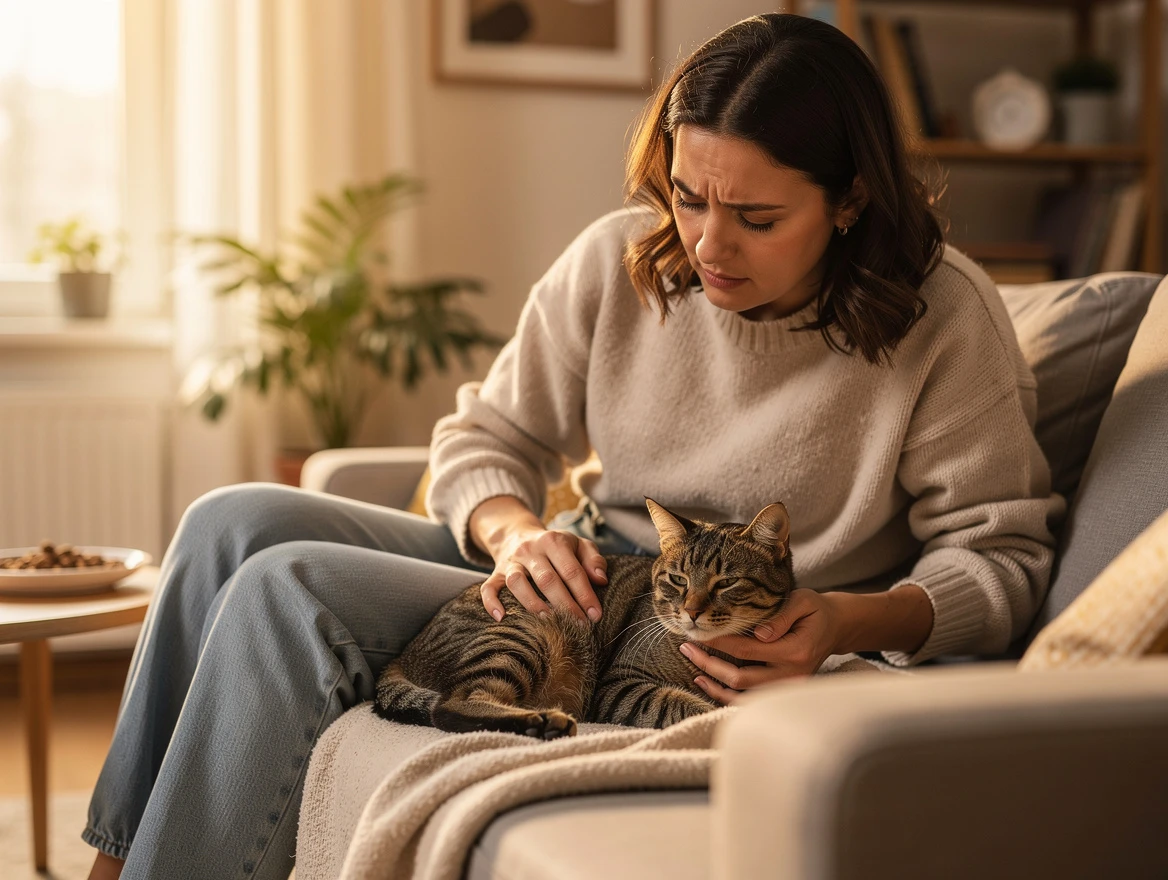
- Abdominal discomfort: Hunched posture, reluctance to be touched
- Gas and bloating: Visible abdominal distension
Most of these symptoms resolve within 24 hours. However, if your cat experiences vomiting white foam or persistent vomiting, contact your vet.
Long-Term Symptoms (Weeks to Months)
If your cat has been eating dog food regularly, look for:
Vision Changes:
- Difficulty navigating in low light
- Bumping into objects
- Dilated pupils that don’t constrict properly
- Reluctance to jump or climb
Cardiovascular Signs:
- Rapid breathing or panting
- Exercise intolerance
- Weakness or collapse
- Irregular heartbeat
Nutritional Deficiency Indicators:
- Poor coat quality (dull, dry, excessive shedding)
- Weight loss despite normal appetite
- Muscle wasting (especially noticeable on spine and hips)
- Skin problems or wounds that heal slowly
Behavioral Changes:
- Increased sleeping
- Less playful or active
- Hiding more than usual
- Irritability or aggression
Digestive Issues:
- Chronic diarrhea or constipation
- Frequent vomiting
- Changes in litter box habits
When to Call Your Vet Immediately
Contact your veterinarian urgently if:
- Vomiting persists beyond 24 hours
- Your cat shows signs of heart problems (rapid breathing, weakness)
- Vision seems impaired
- Your cat won’t eat or drink
- Severe lethargy or collapse
- Your cat has been eating primarily dog food for weeks
What To Do If Your Cat Ate Dog Food
If you’ve discovered your cat eating from the dog’s bowl, here’s your action plan. Whether cats can eat dog food safely depends on frequency and quantity.
Step 1: Don’t Panic
If your cat ate dog food once or occasionally, they’ll likely be fine. One-time consumption rarely causes serious problems.
Step 2: Monitor for 24 Hours
Watch for the immediate symptoms listed above. Most cats will show no ill effects, but sensitive cats might have mild digestive upset.
Step 3: Ensure Access to Cat Food
Remove the dog food and provide your cat’s regular food. If they seem disinterested, try:
- Warming the food slightly to enhance aroma
- Offering different textures (wet vs. dry)
- Hand-feeding a small amount
- Adding a small amount of tuna juice for flavor
Step 4: Provide Fresh Water
Ensure your cat has unlimited access to fresh water, especially if they ate dry dog food. The lower moisture content and higher sodium can increase dehydration risk.
Step 5: Document What Happened
Note:
- How much dog food was consumed
- Type of dog food (wet/dry, brand)
- Time of consumption
- Any symptoms that develop
This information helps your vet if problems arise.
Step 6: Call Your Vet If Concerned
Contact your veterinarian if:
- Your cat has pre-existing health conditions
- Symptoms persist beyond 24 hours
- Your cat has been eating dog food regularly
- You notice any concerning changes
For Regular Dog Food Consumption
If your cat has been eating dog food as their primary diet:
- Schedule a vet visit immediately: Your cat may need bloodwork and cardiac evaluation
- Transition gradually: Switch to cat food over 7-10 days to avoid digestive upset
- Consider taurine supplementation: Your vet may recommend supplements temporarily
- Monitor closely: Watch for improvement over weeks
- Follow-up care: Regular vet checks to assess recovery
How To Stop Your Cat From Eating Dog Food
If your cat constantly raids the dog’s bowl, you’re probably asking “can cats eat dog food” and “how do I stop this behavior?” Here are proven strategies to keep each pet eating their own food.
1. Separate Feeding Areas
Best solution: Feed pets in completely different rooms with closed doors.
Setup:
- Cat eats in bathroom, bedroom, or laundry room
- Dog eats in kitchen, mudroom, or garage
- Keep doors closed during meal times (15-30 minutes)
- Remove bowls after feeding time
Benefits:
- 100% effective
- Reduces stress for both pets
- Allows monitoring of individual intake
2. Elevated Dog Bowls
Place dog food on a raised platform that dogs can reach but cats cannot.
Options:
- Counter-height feeding station for large dogs
- Sturdy table or bench for medium dogs
- Custom elevated feeder (18-24 inches high)
Considerations:
- Only works if your cat can’t jump that high
- Some athletic cats can reach 6+ feet
- Not suitable for small dogs with large cats
3. Scheduled Feeding Times
Switch from free-feeding to scheduled meals:
Morning:
- 7:00 AM: Put down cat food (15 minutes)
- 7:20 AM: Put down dog food (20 minutes)
- 7:40 AM: Remove all bowls
Evening:
- 6:00 PM: Repeat process
Benefits:
- Complete control over who eats what
- Easy to monitor food intake
- Prevents overeating
- Establishes routine
4. Supervised Meals
If you work from home or have time:
- Put down both bowls simultaneously
- Watch to ensure each pet eats from their own bowl
- Gently redirect if cat approaches dog’s bowl
- Remove bowls when done
5. Automatic Feeders with RFID
Modern solution: Microchip-activated feeders that only open for the designated pet.
Popular options:
- SureFeed Microchip Pet Feeder
- Cat Mate C500 Digital Feeder
- PetSafe Smart Feed
Benefits:
- Each pet has access only to their food
- Works even when you’re not home
- Good for multi-pet households
- Prevents food theft completely
Cost: $50-$200 per feeder
6. Baby Gates or Pet Barriers
Create physical separation:
- Install a baby gate with a small cat door
- Cat can access their feeding area
- Dog cannot fit through cat door
Works best for:
- Small-to-medium dogs
- Agile cats
- Homes with space for separate areas
7. Training and Deterrents
For cats:
- Use positive reinforcement when cat eats from their own bowl
- Redirect with treats when approaching dog food
- Provide engaging alternative (food puzzle toys)
For dogs:
- Train “leave it” command to protect their food from cat
- Reward dog for ignoring cat near their bowl
8. Make Cat Food More Appealing
Sometimes cats eat dog food because it seems more interesting:
- Rotate cat food flavors regularly
- Add warm water to dry food for aroma
- Try wet cat food varieties
- Use food puzzle toys to make meals engaging
- Add small amounts of bonito flakes or freeze-dried treats
Can Stray Cats Eat Dog Food?
If you’re feeding stray cats, you might wonder: can cats eat dog food when it’s all you have available? Dog food is better than nothing, but cat food should always be the priority.
For Emergency Stray Feeding
If dog food is all you have:
- ✅ Better than letting cats starve
- ✅ Provides some calories and protein
- ❌ But nutritionally inadequate long-term
- ❌ Won’t support health properly
Better Alternatives for Strays
If you regularly feed community cats:
- Buy affordable cat food: Many budget cat foods are better than premium dog foods for cats
- DIY options: Home-cooked cat food can be cost-effective
- Contact local rescues: Many provide free or low-cost cat food for TNR caregivers
- Community support: Some pet stores donate unsold cat food
Mixing Dog Food for Strays
If you must stretch cat food:
- Mix 75% cat food + 25% dog food
- Add canned tuna or cooked chicken
- Never go above 50% dog food
- Transition back to 100% cat food when possible
Frequently Asked Questions
Here are the most common questions pet owners ask about whether cats can eat dog food:
Can cats eat dog food in an emergency?
Yes, cats can eat dog food for 1-2 days in a true emergency when no cat food is available. However, supplement with plain cooked chicken or tuna if possible, and return to proper cat food as soon as you can. Never extend beyond 2-3 days without veterinary guidance.
How long can a cat survive on dog food?
A cat can survive on dog food for several months, but they won’t thrive. Serious nutritional deficiencies typically appear within 3-4 months, with life-threatening complications developing by 6 months. Survival doesn’t mean health—permanent damage can occur even if the cat appears outwardly fine initially.
Will dog food kill my cat?
Dog food alone won’t immediately kill your cat, but long-term consumption can lead to fatal conditions like dilated cardiomyopathy (heart disease) from taurine deficiency. Some cats have died from complications of malnutrition after eating only dog food for extended periods. It’s a gradual but serious threat.
Can kittens eat dog food?
No, kittens should never eat dog food. Kittens have even higher nutritional requirements than adult cats and need specific nutrients for proper development. Dog food can cause severe developmental problems, stunted growth, and permanent health issues in kittens. Always feed kitten-specific formula or food.
Is wet dog food better than dry for cats?
Wet dog food is slightly better than dry dog food in an emergency because it provides more moisture and is easier to digest. However, both lack essential feline nutrients like adequate taurine, vitamin A, and arachidonic acid. Neither is suitable for regular feeding—always choose cat-specific food.
Can cats eat puppy food?
No, puppy food is not suitable for cats and may be worse than adult dog food. Puppy formulas are designed for rapid growth in dogs and contain even less of what cats need. They’re typically higher in carbohydrates and different in protein ratios. Never feed puppy food to cats.
My cat prefers dog food—why?
Some cats prefer dog food because:
- Different aroma or flavor
- Higher fat content in some dog foods
- Novelty (forbidden food seems more interesting)
- Texture preferences
- Competition with the dog makes it more appealing
Make cat food more enticing by warming it, adding toppers, or using food puzzles. Rule out any medical issues affecting appetite with your vet.
Can I mix cat food with dog food?
Mixing is better than feeding only dog food, but still not ideal. If you must mix:
- Keep it 75% cat food minimum
- Use as temporary solution only
- Ensure your cat gets proper nutrition
- Consider egg shells for cats as calcium supplement
The goal should always be 100% cat-appropriate food.
What if my cat only eats dog food now?
If your cat has become addicted to dog food:
- Schedule a vet check immediately (may have nutritional deficiencies)
- Gradually transition: Start with 75% dog food + 25% cat food
- Decrease dog food by 10% every 3 days
- Make cat food more appealing (warm it, add toppers)
- Remove dog food access completely
- Consider appetite stimulants from your vet if needed
With patience, most cats will adjust within 2-3 weeks.
Can cats eat dog treats?
Occasional small dog treats won’t harm cats, but they shouldn’t be regular snacks. Dog treats lack feline-specific nutrients and may contain ingredients cats don’t digest well. Stick to cat treats, or offer small amounts of plain cooked chicken, freeze-dried meat, or commercial cat treats instead.
Is dog food cheaper—can I save money?
While dog food is sometimes cheaper per pound, feeding it to cats will cost you much more in veterinary bills. Treating taurine deficiency, heart disease, or vision loss can easily run into thousands of dollars. Buying proper cat food, even budget brands, is far more economical than dealing with health complications from dog food.
Can cats eat dog food mixed with cat food?
This is better than dog food alone but still not ideal. If financial constraints require stretching cat food, aim for at least 75% cat food, 25% dog food maximum. Supplement with home-cooked options when possible. Many affordable cat food brands are available that don’t require mixing with dog food.
Cat eating dog food side effects?
Short-term side effects (1-2 days):
- Digestive upset, diarrhea, vomiting
- Reduced appetite
- Lethargy
Long-term side effects (weeks to months):
- Taurine deficiency
- Heart disease (dilated cardiomyopathy)
- Vision loss or blindness
- Poor coat quality
- Weight loss
- Weakened immune system
- Liver problems
Can cats eat dry dog food in an emergency?
Yes, but wet dog food or canned dog food is preferable if you have a choice. Dry dog food is very low in moisture, which is problematic for cats who need hydration from food. If feeding dry dog food, ensure unlimited fresh water access and limit to 24-48 hours maximum. Add water to the kibble if your cat will accept it.
Can cats eat dog food for a week?
A week is too long. While your cat may appear fine for a week, nutritional deficiencies begin developing. The maximum recommended duration is 2-3 days, and only in genuine emergencies. Beyond this, you risk serious health consequences. If you’re facing extended cat food shortages, contact local animal welfare organizations, veterinarians, or pet food banks for assistance.
Can cats eat dog food Reddit community advice?
Many Reddit users share experiences with cats eating dog food. The overwhelming consensus is: occasional accidental consumption is fine, but never make it regular. Some Redditors report their cats showed no issues short-term, but veterinary professionals consistently warn against long-term feeding. Trust veterinary science over anecdotal evidence—what seems fine today can cause serious problems months later.
Conclusion
Can cats eat dog food? This is one of the most frequently asked questions by multi-pet owners, and the answer is nuanced but clear: while cats can physically eat dog food without immediate poisoning, it’s nutritionally inadequate and potentially dangerous for regular consumption.
Throughout this guide, we’ve examined every aspect of the question “can cats eat dog food,” from emergency situations to long-term health risks. The scientific evidence is overwhelming: dog food lacks essential nutrients that cats absolutely need to thrive.
Key Takeaways
✅ One-time snacking: Usually harmless, monitor for 24 hours ✅ Emergency feeding: Acceptable for 1-2 days maximum when asking “can cats eat dog food temporarily” ❌ Regular diet: Absolutely not—causes serious health problems ❌ Long-term feeding: Can lead to heart disease, blindness, and death
The Bottom Line
Dog food is formulated for canine nutritional needs, which are fundamentally different from feline requirements. The most critical deficiency—taurine—can cause irreversible heart and eye damage within months. So while the answer to “can cats eat dog food occasionally” might be yes, the answer to “should cats eat dog food regularly” is an emphatic no.
If your cat occasionally steals a bite from the dog’s bowl, don’t panic. But if you’re considering feeding dog food regularly due to cost or convenience, don’t. The veterinary bills from treating malnutrition-related diseases will far exceed any savings from buying dog food instead of cat food.
What To Do Now
- If your cat ate dog food once: Monitor for digestive upset, ensure access to proper cat food
- If considering whether cats can eat dog food as main diet: Don’t—explore budget cat food options or homemade recipes instead
- If your cat prefers dog food: Implement feeding separation strategies outlined above
- If your cat has been eating dog food regularly: Schedule a veterinary appointment immediately for health assessment
Remember: your cat depends on you to provide appropriate nutrition. When pet owners ask “can cats eat dog food,” they need to understand that species-appropriate feeding is non-negotiable. Keep the dog food for the dog and cat food for the cat—your feline friend’s life may depend on it.
Related Articles
- How Often Should I Feed My Cat Wet Food? – Complete feeding schedule guide
- My Cat Won’t Eat – Causes and Solutions – When appetite problems signal trouble
- Cat Vomiting White Foam: What It Means – Understanding digestive issues
- Home-Cooked Cat Food Recipes – Budget-friendly nutrition options
- Best Wet Cat Food for Sensitive Stomachs – Finding the right diet
Medical Disclaimer: This article is for informational purposes only and does not replace professional veterinary advice. Always consult with your veterinarian regarding your cat’s specific dietary needs and health concerns.