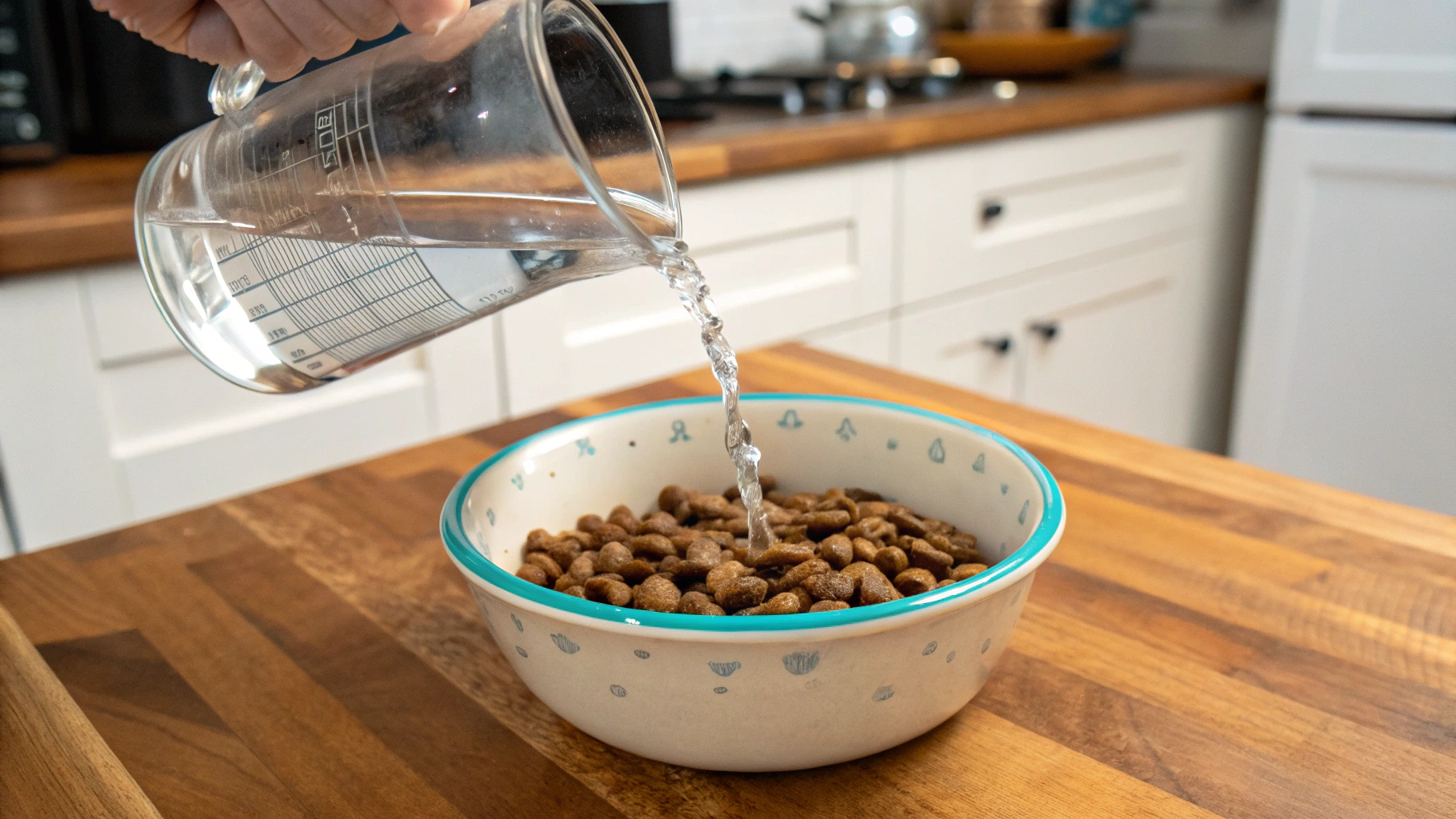
How much water to rehydrate dried cat food comes down to a simple starting point: a 1:1 ratio, equal parts water and kibble. I started doing this after one of my cats kept vomiting within an hour of eating dry food. The vet told me to soften it first, and the vomiting stopped completely within days.
Use a 1:1 ratio. For every 1/4 cup of dry food, add 1/4 cup of lukewarm water. Let it sit for 3–5 minutes until the kibble softens to a chunky stew consistency. Adjust wetter (1:1.5) or drier (1:0.75) based on your cat’s preference — and never leave rehydrated food sitting out longer than about 30 minutes.
How to Soften Dry Cat Food — Step by Step
Measure the Food
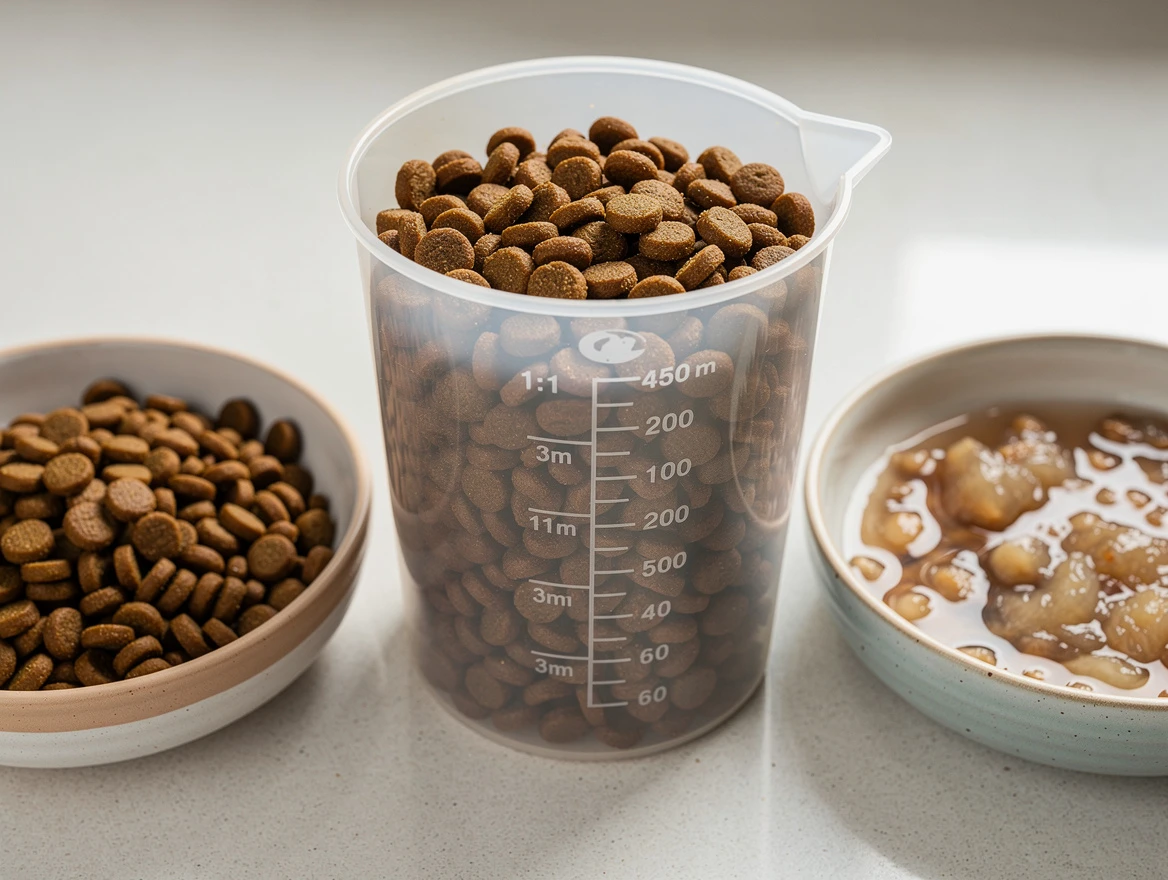
Use a measuring cup. For most adult cats, one meal is typically 1/4 to 1/3 cup — see the portions guide if you’re unsure how much your cat actually needs.
Add Equal Water
Pour an equal amount of lukewarm water over the kibble. 1/4 cup food = 1/4 cup water. Warm water softens kibble faster and makes the food smell more appealing.
Wait 3–5 Minutes
Let the food sit and absorb. With warm water this takes 3–5 minutes. Room temperature water takes 5–10 minutes. Do not use hot water — it can destroy nutrients and burn your cat’s mouth.
Check Consistency
The goal is a chunky stew — soft pieces with some gravy-like liquid around them. If too dry, add a splash more water. If too soupy, add a few more kibble pieces.
Water Ratios Explained
| Ratio (Food : Water) | Consistency | Best For |
|---|---|---|
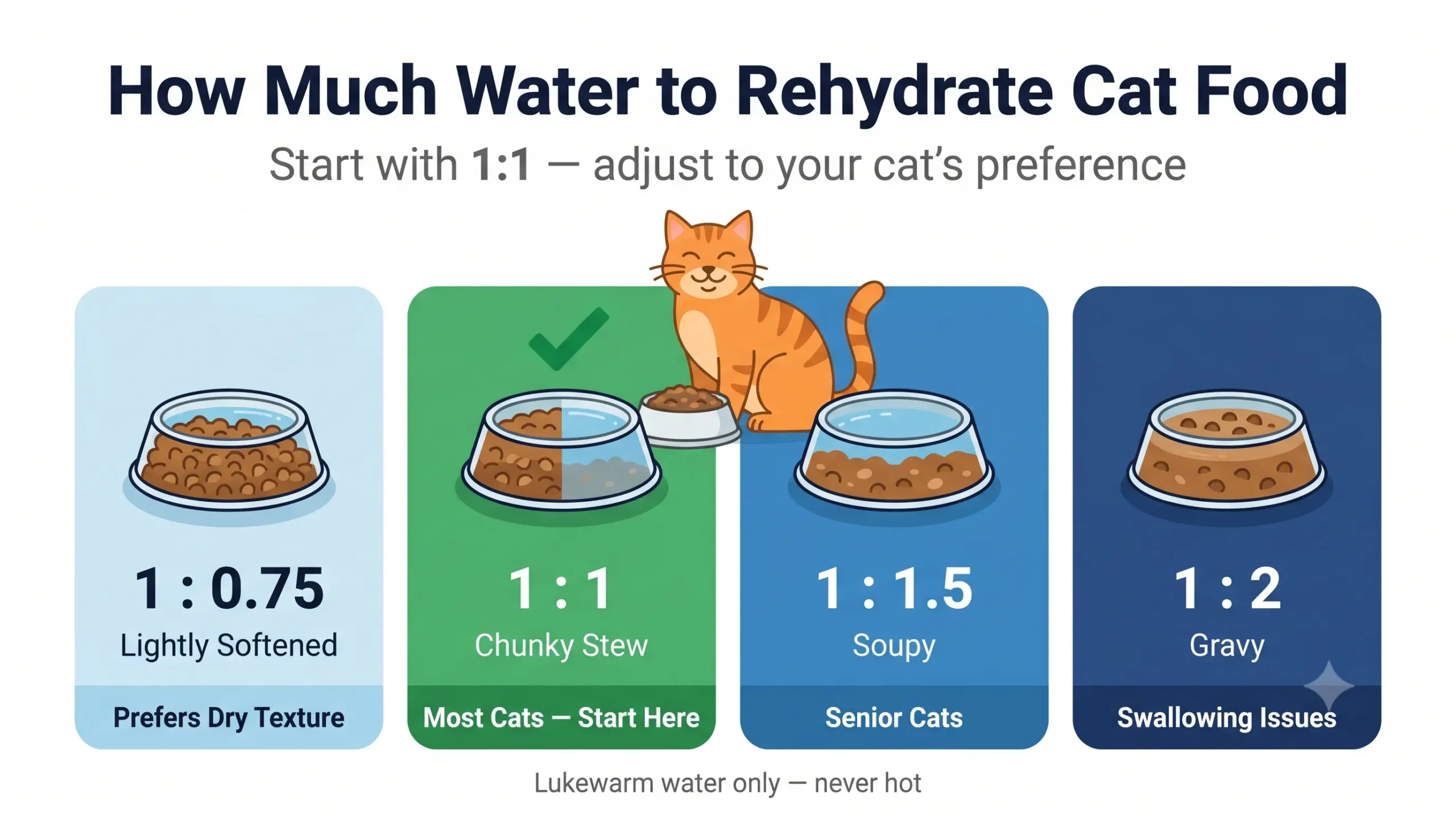
| 1 : 0.75 | Lightly softened, still chunky | Cats who prefer dry texture but need slight softening |
| 1 : 1 (standard) | Chunky stew | Most cats, sensitive stomachs, general rehydration |
| 1 : 1.5 | Soupy, mostly liquid | Senior cats, cats with swallowing issues |
| 1 : 2 | Very soupy gravy | Cats with severe digestive issues or refusing food |
Start with 1:1 and adjust over 3–4 days. Some cats love it soupy, others refuse anything that is not still slightly crunchy. The right ratio is the one your cat actually eats.
Why Rehydrate — Who Benefits Most
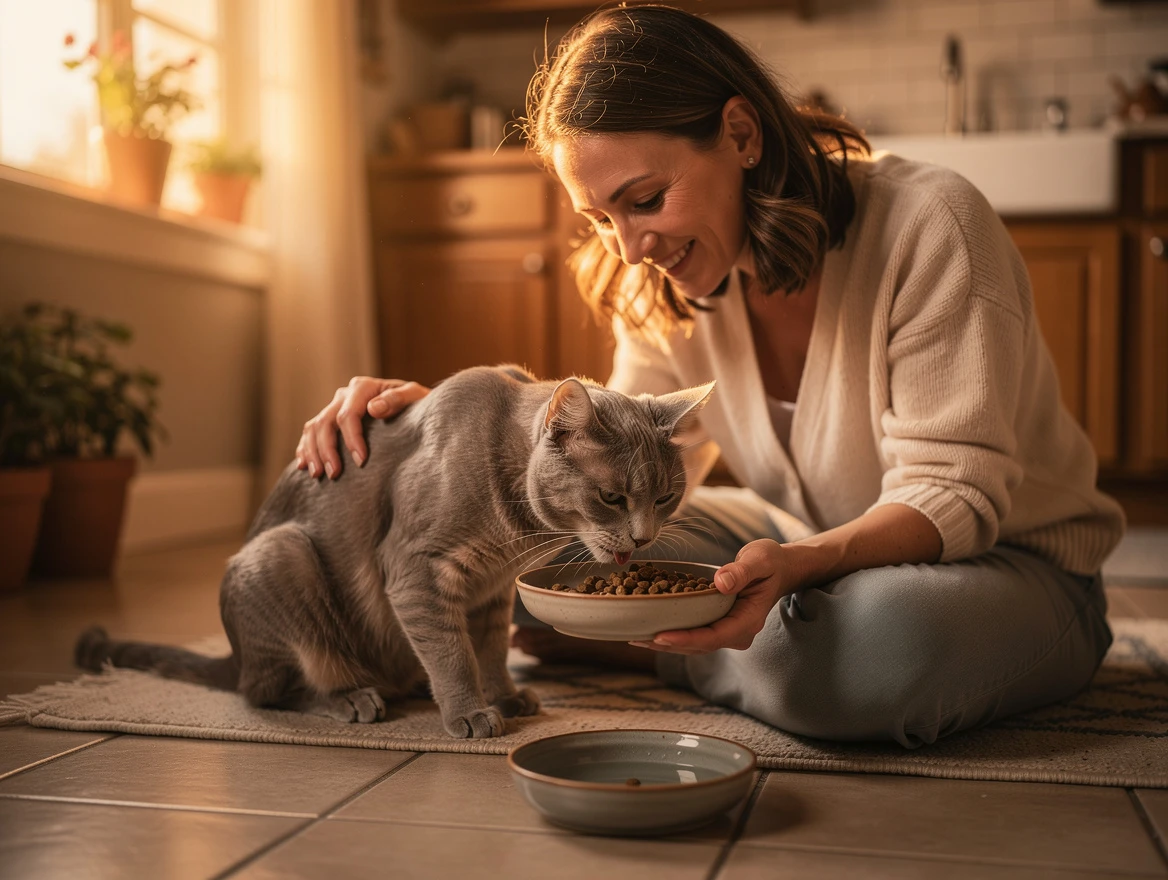
Dry kibble contains only about 10% moisture, compared to the 60–75% moisture in a cat’s natural prey. Softening it with water doesn’t turn kibble into wet food nutritionally, but it does close some of that hydration gap and makes the food easier to eat and digest.
- Senior cats — weaker teeth and slower digestion handle softened food much more comfortably
- Cats with dental pain or missing teeth — softened kibble requires far less chewing effort
- Picky eaters — warm, softened food releases more aroma, which often makes reluctant cats more interested
- Cats prone to vomiting after dry food — kibble can expand as it absorbs stomach fluid after a fast meal, and pre-softening it removes that sudden expansion. If your cat regularly vomits after dry meals, rehydrating for a week is worth trying before assuming something more serious. Related: Why Is My Cat Throwing Up.
Worth noting: softened kibble is still dry food nutritionally — the water improves texture and hydration, not the underlying formula. If you’re weighing dry against wet food more broadly, that’s a separate question with its own tradeoffs.
Storage and Safety
This is the part most guides skip, and it matters: once water is added, rehydrated kibble becomes a genuine bacterial growth medium, much faster than dry kibble ever would sitting in a bowl. Treat it with the same care you would wet food, not dry.
- Room temperature: discard after about 20–30 minutes — don’t stretch this, especially in a warm room
- Do not refrigerate leftovers in the bowl — if you must save extra, transfer it to a sealed container immediately, and use within 24 hours
- Never rehydrate more than one meal at a time — prepare fresh for each feeding rather than batching ahead
The safest approach is genuinely just preparing it fresh each meal — it takes under 5 minutes, and it means you’re never guessing how long a bowl has been sitting out. Related: How Long Can Wet Cat Food Sit Out — the same spoilage principles apply.
Common Mistakes to Avoid
- Using hot water — hot water destroys nutrients and can burn your cat’s mouth. Lukewarm is the maximum temperature.
- Making it too soupy right away — some cats refuse food that looks like soup. Start with 1:1 and only increase if your cat prefers it wetter.
- Leaving rehydrated food out too long — this is the mistake with the most real consequence. Prepare fresh each meal rather than trusting a bowl that’s been sitting.
- Rehydrating large batches in advance — bacteria grows rapidly in moist food. Only prepare what your cat will eat in one sitting.
- Skipping vet advice for special conditions — cats with kidney disease, diabetes, or urinary tract issues need specific dietary guidance before any food changes.
Frequently Asked Questions
Yes, but use low-sodium or sodium-free broth only. Regular broth has too much salt for cats. Use broth occasionally for aroma — water should remain the primary rehydration liquid.
Use a 1:1.5 ratio with warm water for senior cats. The extra moisture makes it easier to chew and digest. Let it sit for 5–7 minutes for maximum softness.
Yes — this is one of the most common uses. A slightly soupier ratio (around 1:1.5) makes it easier for young kittens transitioning off nursing to eat solid food before they can fully manage hard kibble.
The Bottom Line
How much water to rehydrate dried cat food starts with a 1:1 ratio, lukewarm water, and 3–5 minutes to soften. It’s a genuinely useful trick for senior cats, cats with dental pain, and picky eaters — but only if you respect the safety side: rehydrated food spoils fast, so prepare fresh for each meal and don’t leave it sitting out. If you’re deciding between wet and dry food more broadly, or working out daily portions, those are worth their own look: How Much Wet Food to Feed a Cat and Wet Cat Food for Sensitive Stomach.