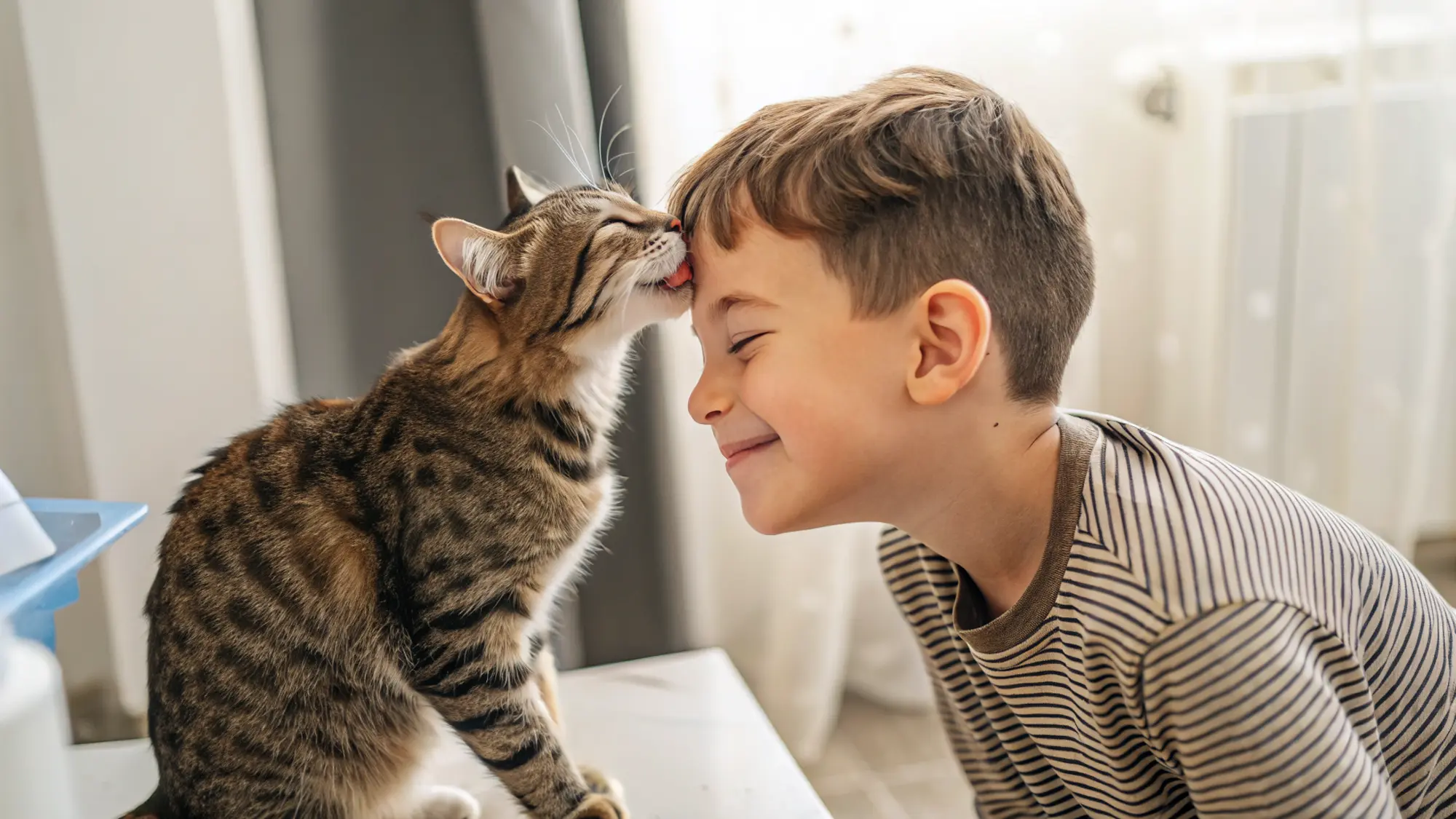
Why does my cat lick me? In almost every case, it’s one of the clearest signs of feline affection there is. Cats groom the members of their social group, and if your cat is licking you, they’ve placed you firmly in that circle of trust. It looks strange, sometimes feels a little scratchy, but it’s one of the most genuine compliments a cat can give.
My oldest cat licks my hand every single night before bed, the same three or four strokes, every time, like a ritual. Learning to read these different licking patterns changed how I understood what my cats were actually trying to tell me.
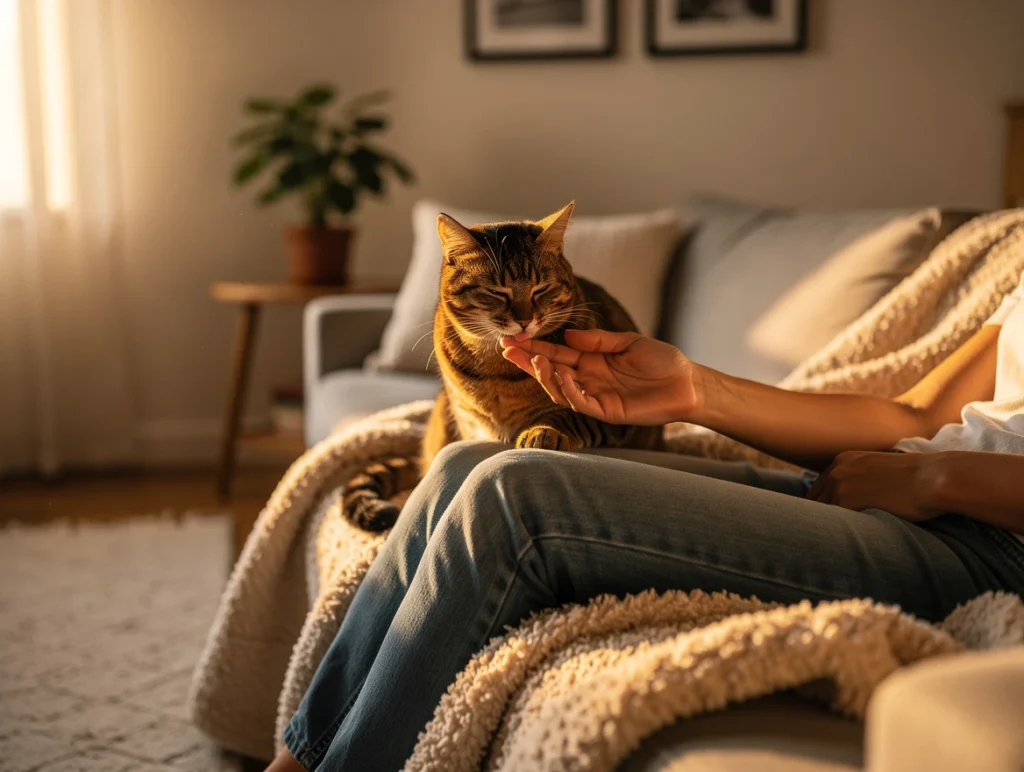
This is called allogrooming, a bonding behavior cats use with trusted family members. It signals affection, marks you with their scent, and can also indicate seeking attention, comfort, or even mild stress. Licking followed by a gentle bite is usually a sign of overstimulation, not aggression. Occasional licking is safe to allow; excessive or raw-skin licking is worth monitoring.
The Real Reasons Behind It
1. Bonding and Affection (Allogrooming)
Cats groom other cats they consider family — this is called allogrooming. When your cat licks you, they’re extending that same trusted-family behavior to you. It’s one of the clearest, most reliable signs of feline love. Related: Signs Your Cat Loves You.
2. Scent Marking
Cats have scent glands and licking deposits their scent onto you, marking you as part of their territory and social group. This is why licking can happen frequently — repeated licking reinforces the scent bond over time.
3. Seeking Attention
If licking gets an immediate reaction — petting, talking, picking them up — some cats learn to lick specifically to get your attention, especially if they feel ignored.
4. Comfort and Self-Soothing
Grooming behaviors release calming endorphins in cats. Licking you can be a way for your cat to self-soothe using you as the comfort object, particularly during stressful moments.
5. Taste or Smell Curiosity
Lotion, salt from sweat, food residue, or unfamiliar scents on your skin can trigger investigative licking that has nothing to do with grooming behavior specifically.
6. Learned From Kittenhood
Kittens are groomed extensively by their mother. Some cats separated too early or who were hand-raised may over-rely on licking as a primary comfort behavior into adulthood.
Licks Then Bites — Gentle vs Aggressive
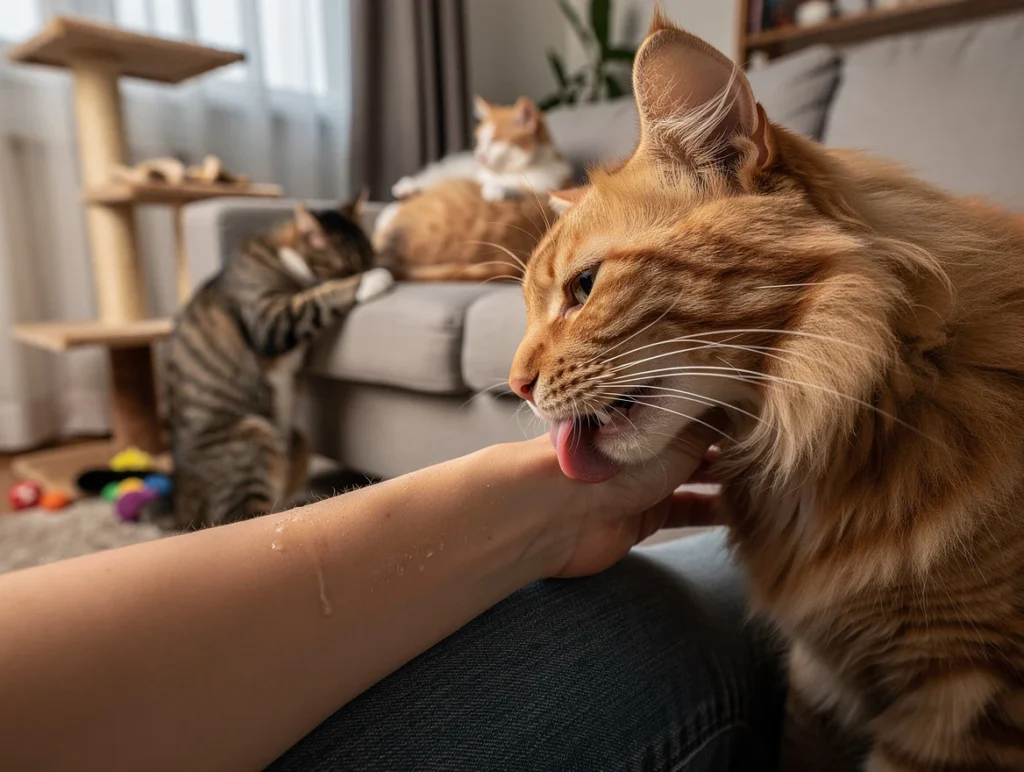
This is one of the most common and most misunderstood cat behaviors. It’s usually not aggression. Cat mothers groom kittens and occasionally give a gentle nip to redirect them, some adult cats replicate this exact pattern with trusted people.
| Pattern | Likely Meaning |
|---|---|
| Lick, lick, gentle nibble | Affection — mimics maternal grooming behavior |
| Lick then bite while purring | Overstimulation during a pleasant interaction |
| Repeated licking, then sudden hard bite | “Had enough” signal — stop petting |
| Licking then biting after petting the belly | Overstimulation in a sensitive area |
When this sequence happens while your cat is purring, that confirms it’s affectionate overstimulation, not irritation. The bite is a “that’s enough for now” signal, not a warning of aggression. Pull your hand away calmly rather than pulling back sharply, which can turn it into a game. For the fuller picture on petting-related biting generally, see: Why Does My Cat Bite Me When I Pet Him.
Why Your Cat Licks You and Not Someone Else
This is a common question — cats often form a primary bond with one person, typically whoever provides the most consistent care, feeding, or quiet one-on-one time. This doesn’t mean your cat dislikes anyone else — it simply means the licking behavior is reserved for their most trusted bond.
Licking So Much at Night or in the Morning
Nighttime licking often happens because cats are naturally more active during dawn and dusk hours (crepuscular activity patterns), and licking can be both an affection ritual and a way of waking you for attention or food. Related: Why Does My Cat Twitch in His Sleep.
Morning licking follows the same pattern — it’s frequently tied to hunger, wanting attention before your day starts, or simply your cat’s natural wake-up window overlapping with yours.
After a Shower or After Biting You
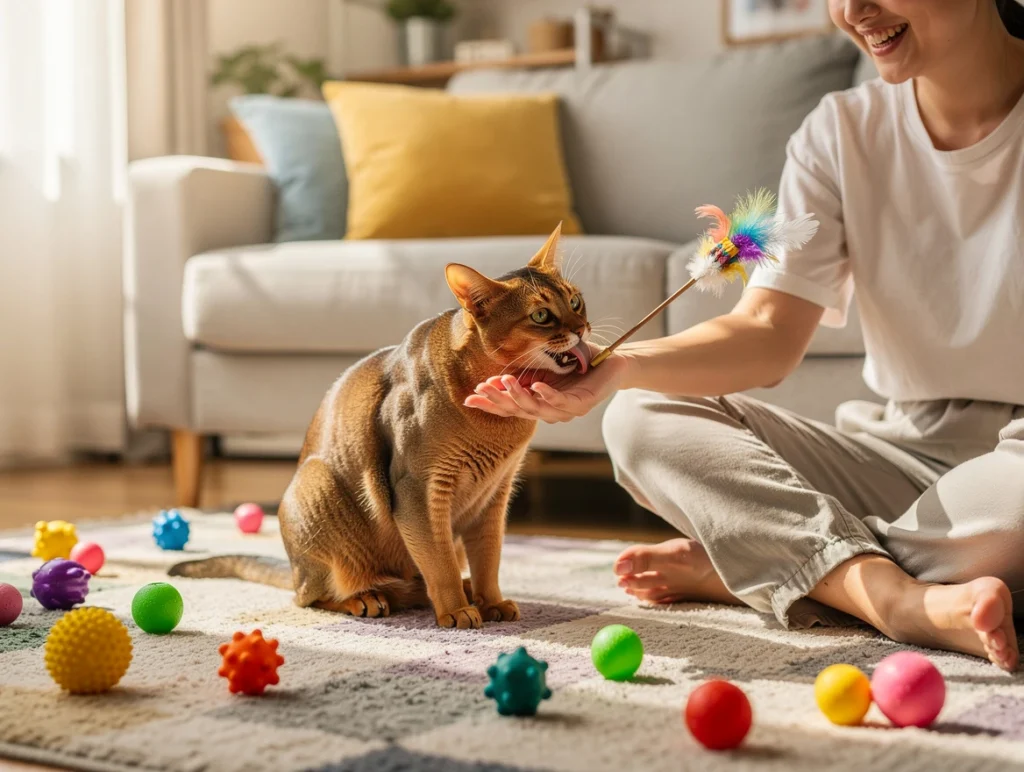
Unfamiliar soap, shampoo, or lotion scents trigger curious investigative licking. Your cat is essentially “re-marking” you with familiar scent after you’ve temporarily smelled different to them.
The reversed sequence — biting then licking — is often an apology behavior. After an accidental overstimulation bite, some cats immediately groom the same spot as a form of repair, similar to how cats groom each other after a minor scuffle.
Licking While Purring
This combination is one of the clearest positive affection signals a cat can give. Purring during licking indicates genuine contentment and comfort, not stress or anxiety. Enjoy it — this is your cat at their most relaxed and trusting.
Should You Let Your Cat Lick You
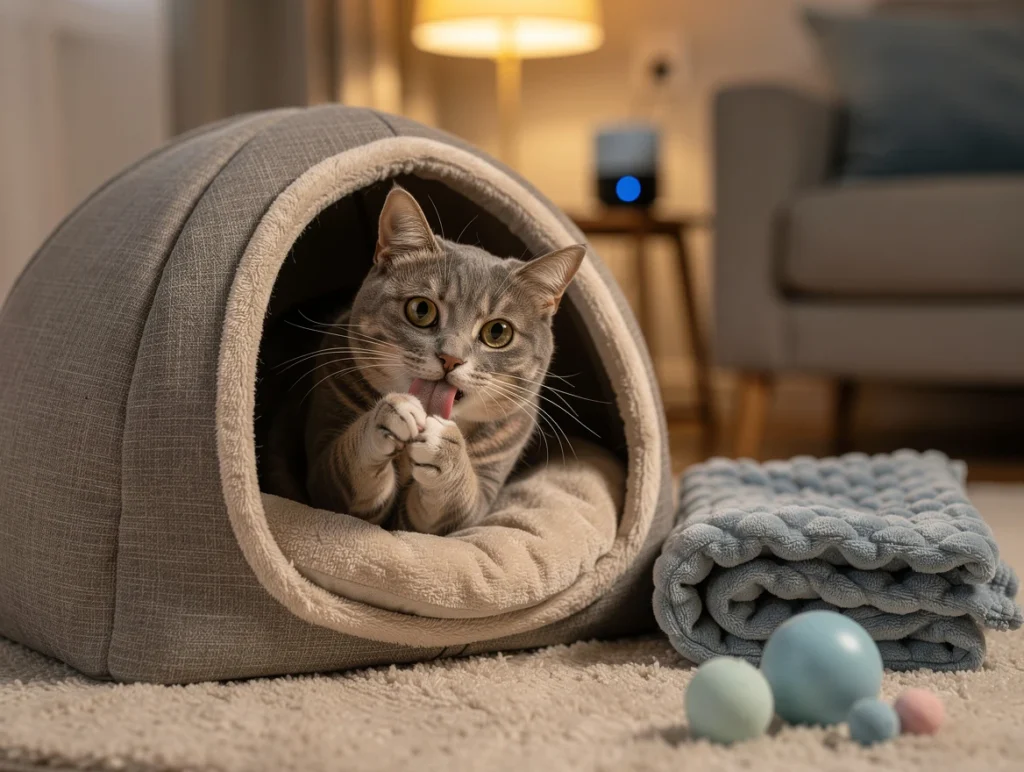
In most cases, yes, occasional licking is completely safe. A cat’s tongue does carry bacteria, so it’s worth avoiding letting them lick open wounds, your eyes, or your mouth. Washing the area afterward with soap and water is a simple precaution, especially for children or anyone with a compromised immune system.
Are cats happy when they lick you? Generally yes. Licking directed at you specifically, especially combined with purring, kneading, or slow blinking, is one of the strongest indicators your cat feels safe and content in your presence.
How Do I Say Sorry to My Cat
If you’ve accidentally startled, stepped on, or upset your cat, cats respond best to calm, quiet presence rather than verbal apology. Sit nearby without forcing interaction, use a soft voice, offer a favorite treat, and let them approach you when ready. Slow blinking at your cat is a genuine feline “I’m sorry, I still trust you” signal they understand.
When Licking Becomes a Concern
⚠️ Monitor: sudden increase in licking frequency, licking that leaves your skin raw, or licking that seems anxious/repetitive rather than affectionate.
A sudden change in licking behavior — especially combined with other behavior changes — can sometimes point to stress or an underlying medical issue. Related: Is My Cat Depressed.
Frequently Asked Questions
This behavior is called allogrooming, a bonding behavior cats use with trusted family members. It signals affection, marks you with their scent, and can also indicate they want attention or comfort.
Not every lick fits neatly into a category like “after a shower” or “at night.” Cats also groom impulsively, the same way you might absentmindedly fidget with something. If there’s no clear trigger and your cat is otherwise relaxed, it’s most likely just a spontaneous affection or comfort behavior rather than something with a specific cause worth tracking down.
True aggressive licking is rare — what often looks aggressive is actually intense affection or overstimulation. If licking is paired with flattened ears, a swishing tail, or growling, give your cat space rather than continuing the interaction.
The Bottom Line
Why does my cat lick me? In nearly every situation, this is a genuine sign of trust and affection. Whether it happens at night, after a shower, or right before a gentle nibble, licking places you firmly inside your cat’s inner circle. Enjoy it, let it happen when it’s comfortable for both of you, and pay attention to the small variations — they’re your cat’s own way of talking to you.
Related: Why Does My Cat Sleep on Me and Signs Your Cat Loves You.