Published: March 13, 2026 | Last Updated: March 15, 2026 | Read Time: 14 minutes
Maine Coon lifespan is one of the first things I looked up when I started seriously considering adding a Maine Coon to my apartment — and honestly, the answer surprised me. With four cats already, I knew breed-specific health risks were something I couldn’t ignore. If you’re wondering how long Maine Coons live and what actually determines that number, this Maine Coon lifespan guide covers everything: average years, the health conditions that cut it short, and the specific steps you can take to keep your Maine Coon thriving well into their teens.
Quick Answer: Maine Coon Lifespan at a Glance
| Factor | Details |
|---|---|
| Average lifespan | 12–15 years |
| With excellent care | Up to 16–18 years |
| Biggest lifespan threat | Hypertrophic Cardiomyopathy (HCM) |
| Other major risks | Obesity, hip dysplasia, dental disease |
| Slow to mature | Not fully grown until age 3–5 |
| Senior stage begins | Around age 7–8 |
| Indoor vs outdoor | Indoor cats live significantly longer |
How Long Do Maine Coons Live?
The average Maine Coon lifespan is 12 to 15 years, though many healthy, well-cared-for Maine Coons reach 16 to 18 years. This puts them roughly in line with the average domestic cat — but Maine Coons face some breed-specific health conditions that can significantly shorten that window if left unmanaged.
One thing that catches many new Maine Coon owners off guard: these cats are extraordinarily slow to mature. Most breeds are fully grown by 12 months. Maine Coons don’t reach full physical maturity until 3 to 5 years of age. That extended kittenhood is part of what makes them so endearing — but it also means their health trajectory looks different from most breeds.
According to the Cornell Feline Health Center, large cat breeds like the Maine Coon tend to have slightly shorter average lifespans than smaller breeds, largely due to the cardiac and joint conditions associated with their size.
What Affects Maine Coon Lifespan Most?
Not all Maine Coons age the same way. I’ve seen this firsthand with my own cats — the ones who thrive into old age have a few things in common. Here’s what the research and real experience both point to:
Genetics and Breeder Screening
This is the factor most people underestimate when thinking about Maine Coon lifespan. A Maine Coon from a responsible breeder who tests for HCM, hip dysplasia, and Pyruvate Kinase Deficiency (PKDef) starts life with a massive advantage over one from an unscreened litter.
According to the Orthopedic Foundation for Animals (OFA), Maine Coons are one of the breeds most commonly tested for hereditary cardiac disease — and results vary enormously between breeding lines.
What to look for: Ask breeders for echocardiogram results on both parents, ideally done annually. Any breeder who can’t provide these is a red flag.
Indoor vs. Outdoor Lifestyle
Outdoor cats face cars, predators, disease, and toxins. The data is consistent: indoor cats live significantly longer — often 3 to 5 years more — than cats with outdoor access. Maine Coon lifespan indoors is measurably longer, and for a breed with cardiac vulnerabilities, those extra years matter enormously.
I keep all four of my cats strictly indoors. The sacrifice is real — they want to explore — but so is the payoff.
Diet and Weight Management
Maine Coons are big cats with big appetites. They’re also prone to obesity, which compounds every other health risk they face: cardiac strain, joint damage, diabetes. Keeping your Maine Coon at a healthy weight isn’t just about aesthetics — it’s directly tied to how long they live.
If you’re navigating how much to feed a large cat, our guide on how much wet food to feed a cat breaks down portions by weight and life stage in a way that actually makes sense for bigger breeds.
Veterinary Care Frequency
Maine Coons need annual cardiac screening — not just a standard wellness exam. An echocardiogram ($300–600) once a year is the only reliable way to catch HCM before it becomes a crisis. Most general practice vets can refer you to a veterinary cardiologist for this.
Senior Maine Coons (7+ years) benefit from twice-yearly checkups to catch kidney disease, dental disease, and metabolic changes early.
The 4 Health Conditions That Shorten Maine Coon Lifespan
Understanding these four conditions is the single most important thing a Maine Coon owner can do for their cat’s longevity. Each one is manageable — but only if you know what to look for.
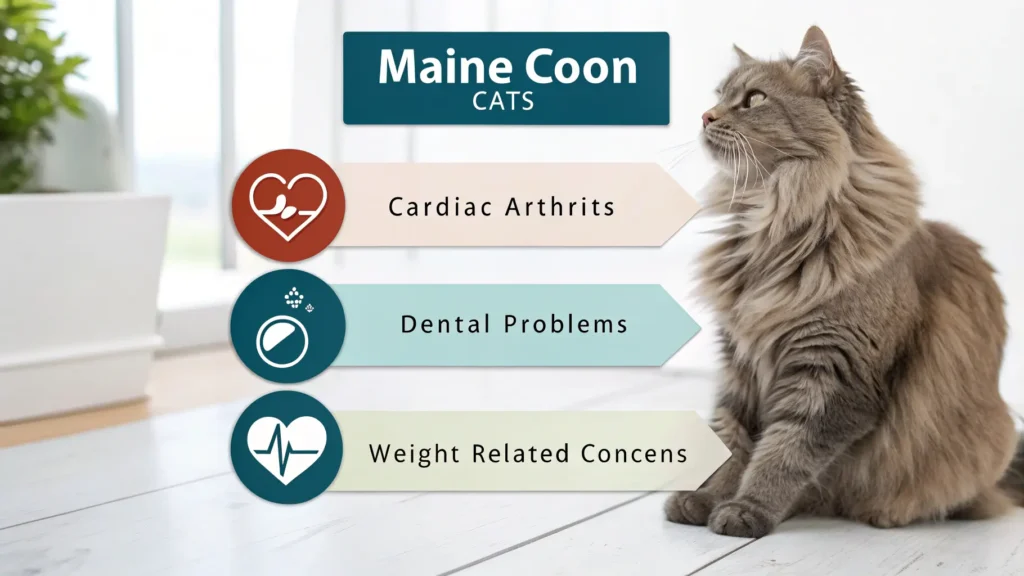
1. Hypertrophic Cardiomyopathy (HCM)
HCM is the leading cause of premature death in Maine Coons and the single biggest threat to Maine Coon lifespan. It’s a thickening of the heart muscle that reduces the heart’s ability to pump effectively — and it can develop silently for years before any symptoms appear.
Maine Coons carry a specific genetic mutation (the MyBPC3-A31P variant) that dramatically increases HCM risk. According to research compiled by the American College of Veterinary Internal Medicine, Maine Coons are one of the highest-risk breeds for HCM of any cat breed, with some studies suggesting up to 30% of Maine Coons develop some degree of cardiac thickening over their lifetime.
Signs to watch for: Elevated resting respiratory rate (above 30 breaths/minute at rest), reduced activity, occasional coughing. If your Maine Coon shows any of these, read our guide on cat breathing fast but otherwise normal — it explains exactly what to track and when to act.
Management: Annual echocardiograms, cardiac medications if diagnosed ($50–200/month depending on protocol), and pet insurance enrolled before any diagnosis.
2. Hip Dysplasia
Hip dysplasia in cats — yes, it’s a real thing, and Maine Coons are particularly susceptible due to their large body size and heavy bone structure. The condition causes abnormal development of the hip joint, leading to pain, mobility issues, and secondary arthritis.
According to OFA hip dysplasia data, Maine Coons show a significantly higher rate of hip dysplasia than most other cat breeds. Many affected cats are never diagnosed because they mask pain so effectively.
Signs: Reluctance to jump, stiffness after rest, visible discomfort when touching the hindquarters, changes in gait. Weight management is the single most impactful intervention — every extra pound puts significant additional stress on already-compromised joints.
3. Obesity and Its Cascade of Consequences
Maine Coons are not naturally slim cats — males regularly reach 15–25 pounds, and some exceed that. The problem is that extra weight accelerates every other health problem on this list.
Obese Maine Coons have higher cardiac strain (worsening HCM progression), more severe hip and joint symptoms, higher diabetes risk, and reduced immune function. Weight is one of the most controllable factors affecting Maine Coon lifespan — a Maine Coon at healthy body weight simply lives longer than an overweight one.
One of my cats, a big orange tabby, crept up to a weight my vet flagged at his annual exam. Switching to measured wet food portions made a visible difference within 8 weeks — he started jumping to his cat tree again.
For cats with weight issues or sensitive digestion, wet food for sensitive stomachs is worth exploring — high-moisture, lower-carbohydrate options tend to support better weight management in large cats.
4. Dental Disease
Dental disease is one of the most undertreated health conditions in Maine Coons — and one of the most consequential. Chronic oral inflammation doesn’t just cause pain and tooth loss. Research increasingly links severe periodontal disease to systemic effects on kidney and cardiac function.
Maine Coons are prone to gingivitis and tartar buildup partly due to their jaw structure. By age 3, a significant percentage of cats have some degree of dental disease — many without any obvious symptoms their owners can detect.
Real cost: A dental cleaning under anesthesia runs $300–800. A tooth extraction adds $100–300 per tooth. This is not a small expense, which is why dental prevention — brushing, dental treats, regular vet checks — is worth establishing early.
7 Ways to Extend Your Maine Coon’s Lifespan
These aren’t generic pet care tips. These are the specific, evidence-backed interventions that make a real difference for Maine Coon lifespan in particular.
1. Get Annual Cardiac Screening — Starting at Age 2
Don’t wait for symptoms. By the time HCM causes obvious breathing issues or lethargy, the disease is typically advanced. Annual echocardiograms starting at age 2 give you a baseline and catch changes early, when medication can genuinely slow progression.
Cost: $300–600 per echo. Expensive — but a fraction of the emergency care cost when HCM reaches crisis stage.
2. Keep Your Maine Coon Strictly Indoors
This is a hard line for Maine Coon longevity. Outdoor access isn’t worth the risk — not for a breed this size, this expensive, and with cardiac vulnerabilities this significant.
If your cat needs outdoor enrichment, a secure catio or leash training (yes, Maine Coons can learn this, they’re highly trainable) gives them stimulation without the mortality risk.
3. Feed Measured Portions of High-Protein Food
Maine Coons thrive on high-protein, moderate-fat diets that mimic their natural carnivore biology. Free-feeding dry food is the fastest route to obesity in this breed. Measure every meal, weigh your cat monthly, and adjust accordingly.
📌 Disclosure: Some product links below are affiliate links. I earn a small commission if you buy through them at no extra cost to you. This doesn’t influence my recommendations.
Look for foods with named meat proteins as the first ingredient, limited fillers, and appropriate calorie density for your cat’s actual body weight — not their ideal body weight. Your vet can help calculate the right target.
4. Brush Their Teeth — Actually Do It
I know. It sounds impossible. With Maine Coons, it’s actually more feasible than most breeds because of their patient, people-oriented temperament. Start slowly with finger brushing, build to a soft brush, use enzymatic cat toothpaste (never human toothpaste). Three times a week makes a measurable difference in tartar accumulation.
Even dental treats formulated by the Veterinary Oral Health Council (VOHC) — look for the VOHC seal — help reduce plaque between brushings.
5. Manage Weight Actively, Not Reactively
Weigh your Maine Coon monthly on a postal scale. Track the number. Don’t wait for your vet to tell you the cat is overweight — by then, you’re already behind. Maine Coon males should generally be 13–18 pounds; females 8–12 pounds. Anything consistently above that range warrants dietary adjustment.
6. Invest in Pet Insurance Before Any Diagnosis
This is specifically critical for Maine Coons. HCM, hip dysplasia, and dental disease are all expensive to treat — and they’re all pre-existing condition exclusions on every policy. Insurance enrolled before age 2, before any cardiac findings on an echo, covers what you need it to cover.
| Provider | Monthly Cost | HCM Covered | Hip Dysplasia |
|---|---|---|---|
| Lemonade Pet | $15–30 | ✅ Pre-diagnosis | ✅ Pre-diagnosis |
| Pumpkin | $20–40 | ✅ Pre-diagnosis | ✅ Pre-diagnosis |
| Nationwide | $35–60 | ✅ | ✅ |
Lemonade and Pumpkin are my top two for Maine Coon owners specifically — their cardiac coverage terms are the most straightforward.
7. Enrich Their Environment to Reduce Chronic Stress
Chronic stress in cats suppresses immune function and has documented effects on long-term health outcomes. Maine Coons are social, intelligent, and easily bored — they need interactive play, vertical space, and ideally feline companionship.
Two Maine Coons who get along thrive better than a single Maine Coon left alone for long stretches. If your cat shows stress behaviors — over-grooming, hiding, appetite changes — address the root cause rather than just managing symptoms.
Maine Coon Lifespan by Life Stage
Understanding what each life stage looks like helps you provide the right care at the right time.
| Life Stage | Age | What to Focus On |
|---|---|---|
| Kitten | 0–6 months | Vaccination, parasite prevention, early socialization |
| Junior | 6 months–2 years | Spay/neuter, dental baseline, first cardiac echo |
| Adult | 2–6 years | Annual cardiac screening, weight monitoring, dental cleanings |
| Mature | 7–10 years | Twice-yearly vet visits, bloodwork, kidney function checks |
| Senior | 11–14 years | Pain management, metabolic support, mobility aids if needed |
| Geriatric | 15+ years | Comfort-focused care, hospice planning if appropriate |
How Long Do Maine Coon Mixes Live?
Maine Coon mixes — cats with some Maine Coon ancestry but not purebred — generally have a slightly longer average Maine Coon lifespan than purebreds. This is the “hybrid vigor” effect: genetic diversity reduces the concentration of breed-specific disease mutations.
A Maine Coon mix may carry some HCM risk if one parent was a Maine Coon, but the risk is typically lower than a purebred. The same care principles apply — cardiac screening is still worthwhile if there’s significant Maine Coon ancestry.
Cost of Owning a Maine Coon Over Their Lifetime
One of the most common questions I get: what does it actually cost to care for a Maine Coon properly? Here’s an honest breakdown.
| Cost Category | Annual Estimate | Over 15 Years |
|---|---|---|
| Food (high-quality) | $600–1,200 | $9,000–18,000 |
| Veterinary (routine) | $300–500 | $4,500–7,500 |
| Cardiac echocardiogram | $300–600 | $4,500–9,000 |
| Dental cleanings (every 2–3 yrs) | $400–800 | $2,000–4,000 |
| Pet insurance | $240–480 | $3,600–7,200 |
| Total estimated lifetime cost | $23,600–45,700 |
This is why Maine Coons are considered a premium commitment — not just because of the upfront cost ($2,800–4,500 for a kitten from a reputable breeder) but because of the ongoing veterinary investment their health requires.
When to See a Veterinarian
Schedule a vet visit soon if your Maine Coon shows:
- Elevated resting breathing rate (above 30 breaths/min at rest)
- Unexplained weight loss or gain (more than 10% of body weight)
- Changes in thirst or litter box use
- Stiffness, limping, or reluctance to jump
- Reduced appetite lasting more than 48 hours
Go to an emergency vet immediately if you see:
- Open-mouth breathing or panting at rest
- Blue, white, or grey gums
- Sudden collapse or extreme weakness
- Labored breathing with visible effort
Frequently Asked Questions
What is the average Maine Coon lifespan? The average Maine Coon lifespan is 12 to 15 years, with well-cared-for individuals sometimes reaching 16 to 18 years. The biggest factor affecting longevity is whether HCM is caught and managed early through annual cardiac screening.
How long do Maine Coon cats live indoors vs. outdoors? Indoor Maine Coons live significantly longer — often 3 to 5 additional years — compared to cats with outdoor access. Given the Maine Coon’s cardiac vulnerabilities and high replacement cost, keeping them indoors is one of the most impactful longevity decisions an owner can make.
Do Maine Coons have a lot of health problems? Maine Coons are generally healthy, but they have three breed-specific vulnerabilities that owners need to actively manage: HCM (heart disease), hip dysplasia, and obesity. With proactive veterinary care and appropriate screening, most Maine Coons live full, comfortable lives.
What is the oldest Maine Coon on record? Some Maine Coons have been reported living into their early 20s, though verified records are rare. A healthy indoor Maine Coon reaching 16–18 years is not unusual with excellent care and good genetics.
How can I tell if my Maine Coon is aging well? Signs of healthy aging: maintaining a stable weight, consistent appetite, regular activity and play, normal litter box habits, and a resting respiratory rate consistently between 20–30 breaths per minute. Any sustained change in these baselines warrants a veterinary check.
When should I start cardiac screening for my Maine Coon? Most veterinary cardiologists recommend a baseline echocardiogram at age 2, with annual repeats throughout the cat’s life. Some breeders include a cardiac exam at the time of purchase — ask for documentation and continue screening independently.
What is the Maine Coon lifespan compared to other cats? Maine Coons live about as long as average domestic cats (12–15 years) but slightly less than smaller breeds like the Siamese or Russian Blue, which can reach 16–20 years. The size-longevity tradeoff is well-documented across species.
Bottom Line
Maine Coon lifespan comes down to three things: genetics you can’t control, health conditions you can screen for, and daily care decisions that compound over years. Get your Maine Coon’s heart screened annually starting at age 2, keep their weight in a healthy range, and enroll them in pet insurance before any cardiac findings ever appear. Do those three things consistently, and a 15-year Maine Coon lifespan is absolutely achievable. Start with a cardiac screening appointment — it’s the single highest-impact thing you can do for your cat’s longevity.
This article is for informational purposes only and does not constitute veterinary medical advice. Always consult a licensed veterinarian for diagnosis and treatment of your pet’s health conditions.
Related Articles
- Cat Breathing Fast But Otherwise Normal? 7 Reasons Vets Want You to Know — Essential reading for Maine Coon owners, since elevated resting respiratory rate is often the first sign of HCM.
- 7 Diabetic Cat Signs You Shouldn’t Ignore — Obesity in Maine Coons raises diabetes risk; know the signs early.
- Why Is My Cat Throwing Up? Causes and What to Do — Vomiting in Maine Coons can signal everything from hairballs to systemic illness.
- How Much Wet Food to Feed a Cat — Portion guidance for large breeds like the Maine Coon.
- Wet Cat Food for Sensitive Stomach — Best food options for Maine Coons managing weight or digestive sensitivity.