Published: March 16, 2026 | Last Updated: March 16, 2026 | Read Time: 14 minutes
Table of Contents
If your dog keeps shaking their head, scratching one ear, or you notice a bad smell coming from the ear canal, you may be dealing with an ear infection. The good news is that mild cases can often be managed at home before they get worse.
If you’re wondering how to treat dog ear infection without vet care, the safest approach is to start with gentle cleaning, reduce moisture, and use proven home or over-the-counter remedies that support healing. Mild infections sometimes improve within a few days, but severe or recurring infections still need professional care.
A lot of owners look for a reliable dog ear infection home remedy because ear problems are common, uncomfortable, and expensive if they keep coming back. This guide will walk you through what to use, what to avoid, and how to tell when home treatment is no longer enough.
How to Treat Dog Ear Infection Without Vet: Quick Answer
For mild cases, you can often treat the problem at home by gently cleaning the ear, keeping it dry, and using safe remedies like green tea, diluted apple cider vinegar, coconut oil, or over-the-counter ear products such as Zymox or Vetericyn.
If you searched how to treat ear infection dog, the short answer is that mild cases can often be managed at home with careful cleaning and the right over-the-counter remedies.
A good dog ear infection treatment plan usually includes:
- gentle ear cleaning
- removing wax and discharge
- reducing moisture
- soothing inflammation
- using a safe ear product consistently for several days
| Symptom | Home Care OK? | Vet Needed? |
|---|---|---|
| Mild redness | Yes | Usually no |
| Light waxy discharge | Yes | Usually no |
| Mild head shaking | Yes | Monitor |
| Strong odor | Sometimes | If it continues |
| Blood or pus | No | Yes |
| Severe swelling | No | Yes |
| Loss of balance | No | Yes, urgently |
Why Dogs Get Ear Infections
Dog ears create a warm, enclosed environment where yeast and bacteria can grow easily, especially when moisture gets trapped inside. Floppy-eared breeds tend to have more problems because air doesn’t move through the ear canal as well.
Common causes include:
- moisture after baths or swimming
- yeast overgrowth
- bacteria
- food allergies
- environmental allergies
- ear mites
- excess wax
- trapped debris like grass seeds or dirt
Some dogs also get repeated infections because of chronic allergies. In those cases, home care may help temporarily, but the root cause still needs attention.
Choosing the right dog ear infection remedy depends on what’s causing the problem. A yeasty ear often smells musty and has brown debris, while a bacterial infection may look more yellow, wet, or inflamed.
According to VCA Animal Hospitals, allergies, moisture, parasites, and ear anatomy are some of the most common reasons dogs develop ear infections.
Signs Your Dog Has an Ear Infection
Before starting treatment, it helps to know whether you’re dealing with a mild outer-ear infection or something more serious.

Common signs include:
- frequent head shaking
- scratching at one ear
- rubbing the ear on furniture or carpet
- redness inside the ear flap
- brown, yellow, or dark discharge
- wax buildup
- bad smell
- sensitivity when touched
These mild symptoms often respond well to a dog ear infection home remedy if you catch them early.
More serious warning signs include:
- bleeding
- thick pus
- intense pain
- crying when the ear is touched
- head tilt
- balance problems
- swelling that blocks the ear canal
If you’re seeing these symptoms, skip home care and call a vet.
How to Treat Dog Ear Infection Without Vet: 7 Effective Remedies
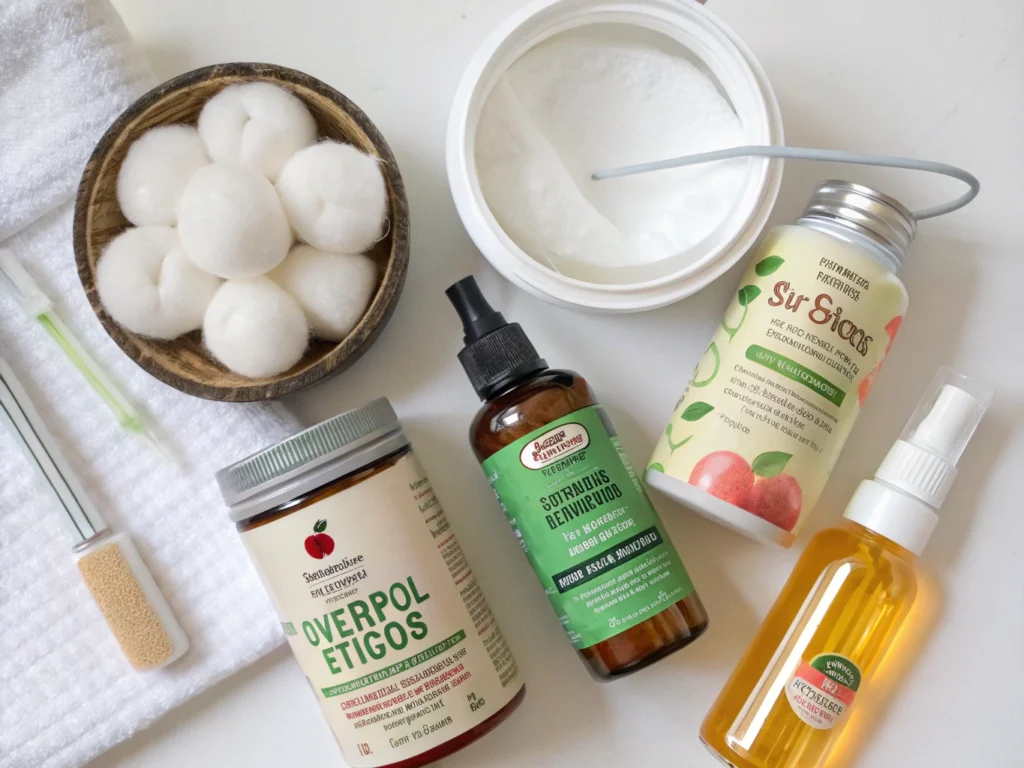
Here are practical ways to manage a mild infection at home. If you want to know how to naturally treat dog ear infection, the safest place to start is with gentle cleaning and non-irritating options.
1. Green Tea Rinse
Green tea is one of the gentlest options for mild irritation and early ear issues.
How to use it:
- Brew one bag of green tea.
- Let it cool fully.
- Dip a cotton ball or gauze into the tea.
- Wipe the visible parts of the ear.
- Let your dog shake its head.
Green tea may help calm irritation and lightly clean away discharge. It’s a simple dog ear infection home remedy for dogs with sensitive ears.
2. Diluted Apple Cider Vinegar
Apple cider vinegar is often used when yeast is suspected, because it creates an environment that yeast doesn’t like.
If you want to know how to treat yeast infection in dogs ear, diluted apple cider vinegar is one of the most commonly tried options for mild cases.
Important: never use vinegar on raw, bleeding, or very inflamed skin because it can sting badly.
How to use it:
- mix equal parts apple cider vinegar and water
- soak a cotton ball
- wipe only the visible part of the ear
- do not pour deep into the canal unless your dog tolerates it and the ear is not badly irritated
This is one of the most popular ways to how to treat dog ear infection without vet care at home, especially when the discharge is brown and yeasty.
3. Coconut Oil
Coconut oil can soothe irritated skin and may help with mild yeast and bacterial overgrowth.
How to use it:
- warm a small amount until liquid
- use a clean dropper or cotton ball
- apply a little to the ear
- massage the base gently
- wipe out loosened debris after your dog shakes
Coconut oil is a simple dog ear infection remedy that many owners like because it’s easy to find and generally gentle.
4. Witch Hazel
Alcohol-free witch hazel can help dry the ear and reduce moisture buildup.
How to use it:
- use only alcohol-free witch hazel
- put some on gauze or cotton
- wipe the visible part of the ear
- avoid overusing it if the ear looks very dry or irritated
This can be a useful dog ear infection treatment when moisture is the main trigger, especially after swimming.
5. Olive Oil
Olive oil is sometimes used to soften wax and loosen debris.
How to use it:
- warm slightly so it’s not cold
- place a few drops in the ear
- massage gently
- let your dog shake
- wipe away loosened wax
Olive oil is not the strongest option, but it can work as a gentle dog ear infection remedy for wax-heavy ears.
6. Zymox Otic
Zymox is one of the most popular over-the-counter products for dog ears.
It’s often recommended when people want a stronger dog ear infection treatment without jumping straight to prescription medication.
Why owners like it:
- easy to apply
- designed for ears
- often used for mild yeast and bacterial issues
- widely available online
Read the label carefully and follow directions exactly. With Zymox, you usually should not pre-clean the ear too aggressively before applying.
If natural remedies haven’t helped after a day or two, this is one of the better ways to how to treat dog ear infection without vet support.
7. Vetericyn Ear Rinse
Vetericyn is another useful over-the-counter product made specifically for ear care.
It works well for:
- regular ear cleaning
- mild irritation
- post-swim care
- early ear problems
If you’re trying to learn how to treat dogs ear infection at home, products like Vetericyn are often easier and safer than mixing random ingredients.
How to Clean Your Dog’s Ears Properly
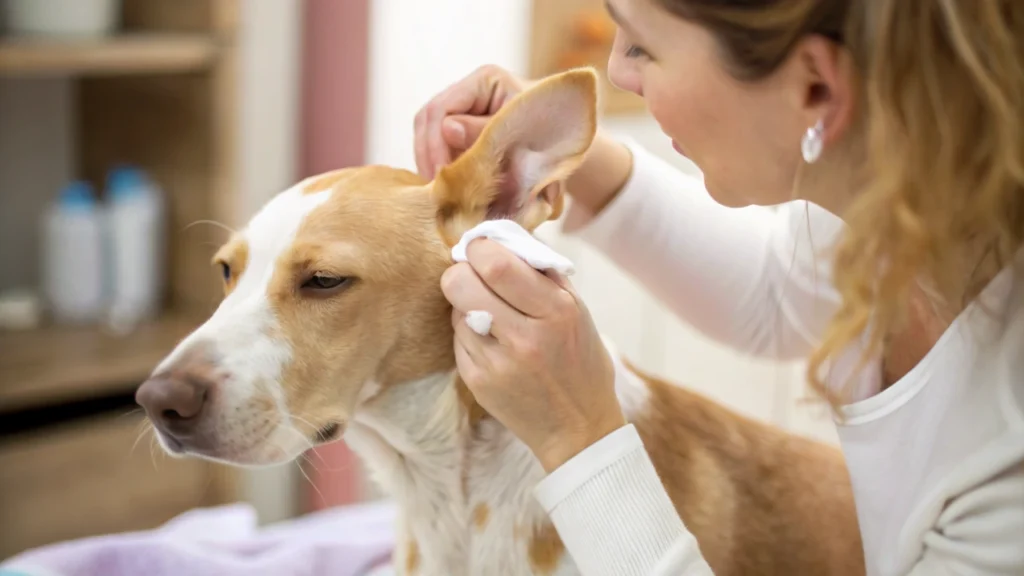
A lot of ear problems get worse because owners either don’t clean the ear at all or clean it too aggressively.
Learning how to treat dogs ear infection at home starts with proper cleaning, because medication works better when wax and debris are removed first.
Safe cleaning steps
- Use gauze or cotton balls, not Q-tips.
- Apply cleaner to the cotton, not deep into the ear unless the product says to.
- Wipe the visible part of the ear gently.
- Massage the base of the ear if using a liquid ear solution.
- Let your dog shake.
- Wipe away what comes out.
Avoid these mistakes
- don’t use hydrogen peroxide
- don’t stick Q-tips deep in the ear
- don’t use vinegar on raw skin
- don’t keep the ear wet
- don’t mix too many products at once
Proper cleaning is one of the most important parts of any dog ear infection treatment plan. For a veterinary reference on safe ear cleaning technique, see this guide from Cornell University College of Veterinary Medicine.
When You Cannot Treat Dog Ear Infection Without Vet
Home treatment is only for mild cases. Some ear infections are too painful, too advanced, or too deep to handle safely on your own.
You should stop home care and call a vet if your dog has:
- severe swelling
- blood in the ear
- green or pus-like discharge
- very strong odor that keeps getting worse
- intense pain
- fever
- head tilt
- balance problems
- repeated infections
- no improvement after 48 to 72 hours
Knowing how to treat a dog ear infection also means knowing when not to keep guessing.
No dog ear infection home remedy can replace proper veterinary care when the infection is severe or recurring. If you’re unsure whether the infection is too advanced for home care, this overview from PetMD’s dog ear infection guide can help you compare symptoms.
Best Products to Treat Dog Ear Infection Without Vet
If you want to keep a few useful items at home, these are the most practical:
Good home basics
- cotton balls or gauze
- alcohol-free witch hazel
- coconut oil
- apple cider vinegar
- green tea bags
Good OTC options
- Zymox Otic
- Vetericyn ear rinse
- dog-specific ear cleansing wipes
- drying ear solution for swimmers
If you’re looking for a stronger dog ear infection treatment, an ear-specific OTC product is usually safer than trying random homemade mixtures.
Frequently Asked Questions
What is the best dog ear infection home remedy?
The best dog ear infection home remedy depends on the cause. For mild irritation, green tea or coconut oil may help. For yeast-related issues, diluted apple cider vinegar is commonly used. For stronger support, many owners choose Zymox or Vetericyn.
How long does home treatment take to work?
Most mild cases should show improvement within 48 to 72 hours. If symptoms stay the same or get worse, your current dog ear infection treatment may not be enough.
What is the best antibiotic for dog ear infection without vet?
There usually isn’t a safe best antibiotic for dog ear infection without vet because antibiotics should match the cause of the infection. Some ear infections are caused by yeast, not bacteria, and using the wrong product can make things worse. For mild cases, over-the-counter ear cleansers like Zymox or Vetericyn may help, but severe, painful, or recurring infections need a veterinarian.
Can I use hydrogen peroxide?
It’s not a good idea. Hydrogen peroxide can irritate the ear canal and slow healing.
Can I use human ear drops?
No. Human ear medicines may contain ingredients that are unsafe for dogs or simply not appropriate for canine ears.
How do I know if it’s yeast?
If you’re searching how to treat yeast infection in dogs ear, look for brown discharge, a musty smell, and chronic itching. Those signs often suggest yeast, though only a vet can confirm for sure.
What if I want to avoid chemicals?
If your goal is how to treat dog ear infection naturally, start with green tea, coconut oil, or diluted apple cider vinegar, but use them carefully and stop if the ear looks worse.
Final Thoughts
If you’ve been trying to figure out how to treat dog ear infection without vet care, the most important thing is to act early and keep the treatment simple. Mild infections often improve with cleaning, drying, and the right remedy.
A good dog ear infection home remedy can absolutely help in early cases, but not every ear problem should be handled at home. If your dog is in pain, off balance, or not improving within a couple of days, it’s time to get professional help.
You now have a practical guide for how to treat a dog ear infection safely at home, including natural options, OTC products, and clear warning signs. Start gently, stay consistent, and don’t ignore symptoms that are getting worse.
For related dog care guides, you can also read: